 Add to Chrome
 Add to Firefox
 Add to Edge
SEED-Story: Multimodal Long Story Generation with Large Language Model
Jul 11, 2024


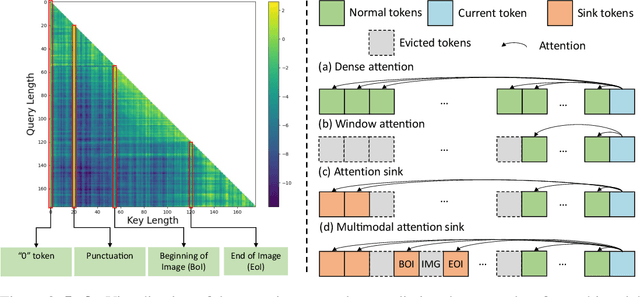

With the remarkable advancements in image generation and open-form text generation, the creation of interleaved image-text content has become an increasingly intriguing field. Multimodal story generation, characterized by producing narrative texts and vivid images in an interleaved manner, has emerged as a valuable and practical task with broad applications. However, this task poses significant challenges, as it necessitates the comprehension of the complex interplay between texts and images, and the ability to generate long sequences of coherent, contextually relevant texts and visuals. In this work, we propose SEED-Story, a novel method that leverages a Multimodal Large Language Model (MLLM) to generate extended multimodal stories. Our model, built upon the powerful comprehension capability of MLLM, predicts text tokens as well as visual tokens, which are subsequently processed with an adapted visual de-tokenizer to produce images with consistent characters and styles. We further propose multimodal attention sink mechanism to enable the generation of stories with up to 25 sequences (only 10 for training) in a highly efficient autoregressive manner. Additionally, we present a large-scale and high-resolution dataset named StoryStream for training our model and quantitatively evaluating the task of multimodal story generation in various aspects.

SAM Fewshot Finetuning for Anatomical Segmentation in Medical Images
Jul 05, 2024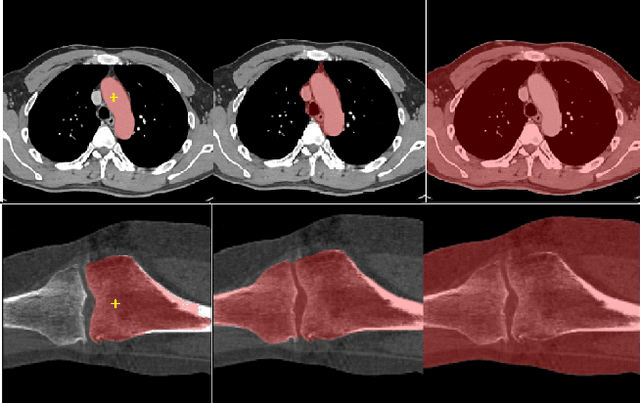
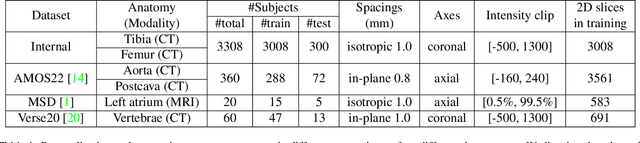
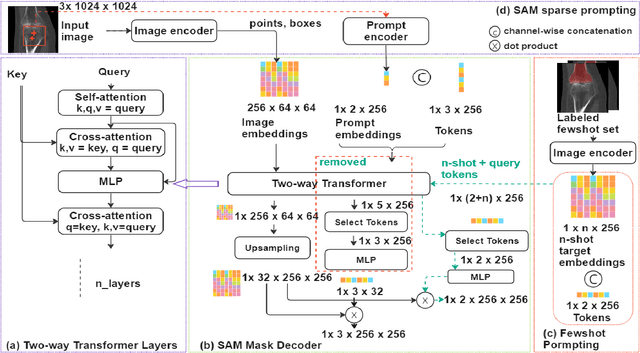
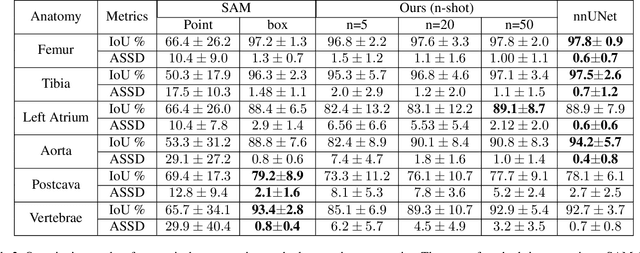
We propose a straightforward yet highly effective few-shot fine-tuning strategy for adapting the Segment Anything (SAM) to anatomical segmentation tasks in medical images. Our novel approach revolves around reformulating the mask decoder within SAM, leveraging few-shot embeddings derived from a limited set of labeled images (few-shot collection) as prompts for querying anatomical objects captured in image embeddings. This innovative reformulation greatly reduces the need for time-consuming online user interactions for labeling volumetric images, such as exhaustively marking points and bounding boxes to provide prompts slice by slice. With our method, users can manually segment a few 2D slices offline, and the embeddings of these annotated image regions serve as effective prompts for online segmentation tasks. Our method prioritizes the efficiency of the fine-tuning process by exclusively training the mask decoder through caching mechanisms while keeping the image encoder frozen. Importantly, this approach is not limited to volumetric medical images, but can generically be applied to any 2D/3D segmentation task. To thoroughly evaluate our method, we conducted extensive validation on four datasets, covering six anatomical segmentation tasks across two modalities. Furthermore, we conducted a comparative analysis of different prompting options within SAM and the fully-supervised nnU-Net. The results demonstrate the superior performance of our method compared to SAM employing only point prompts (approximately 50% improvement in IoU) and performs on-par with fully supervised methods whilst reducing the requirement of labeled data by at least an order of magnitude.
Deciphering interventional dynamical causality from non-intervention systems
Jun 29, 2024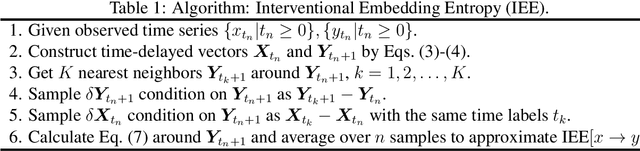
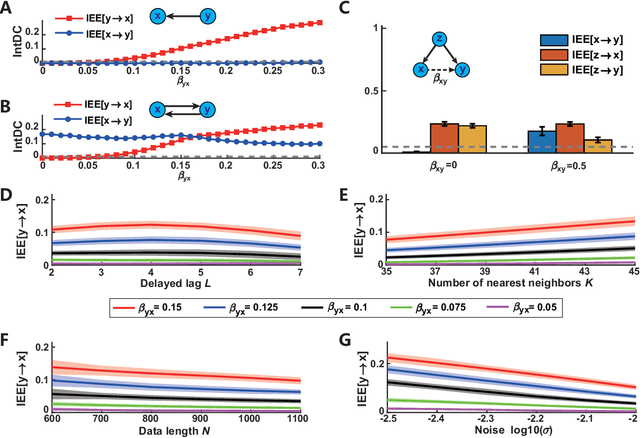
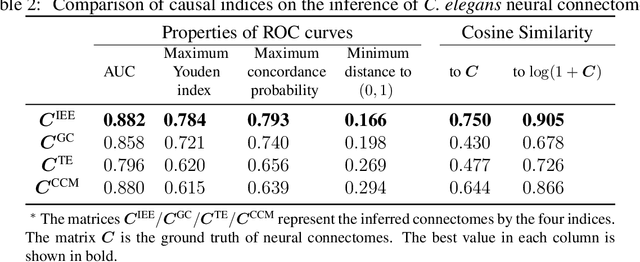
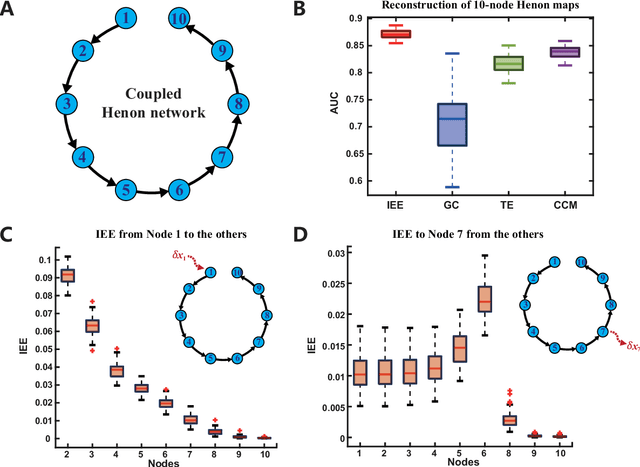
Detecting and quantifying causality is a focal topic in the fields of science, engineering, and interdisciplinary studies. However, causal studies on non-intervention systems attract much attention but remain extremely challenging. To address this challenge, we propose a framework named Interventional Dynamical Causality (IntDC) for such non-intervention systems, along with its computational criterion, Interventional Embedding Entropy (IEE), to quantify causality. The IEE criterion theoretically and numerically enables the deciphering of IntDC solely from observational (non-interventional) time-series data, without requiring any knowledge of dynamical models or real interventions in the considered system. Demonstrations of performance showed the accuracy and robustness of IEE on benchmark simulated systems as well as real-world systems, including the neural connectomes of C. elegans, COVID-19 transmission networks in Japan, and regulatory networks surrounding key circadian genes.
Directly Training Temporal Spiking Neural Network with Sparse Surrogate Gradient
Jun 28, 2024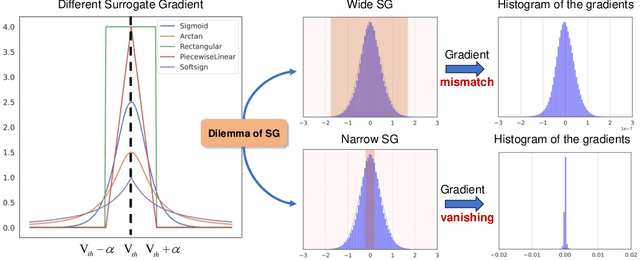


Brain-inspired Spiking Neural Networks (SNNs) have attracted much attention due to their event-based computing and energy-efficient features. However, the spiking all-or-none nature has prevented direct training of SNNs for various applications. The surrogate gradient (SG) algorithm has recently enabled spiking neural networks to shine in neuromorphic hardware. However, introducing surrogate gradients has caused SNNs to lose their original sparsity, thus leading to the potential performance loss. In this paper, we first analyze the current problem of direct training using SGs and then propose Masked Surrogate Gradients (MSGs) to balance the effectiveness of training and the sparseness of the gradient, thereby improving the generalization ability of SNNs. Moreover, we introduce a temporally weighted output (TWO) method to decode the network output, reinforcing the importance of correct timesteps. Extensive experiments on diverse network structures and datasets show that training with MSG and TWO surpasses the SOTA technique.
Spiking Neural Networks with Consistent Mapping Relations Allow High-Accuracy Inference
Jun 08, 2024Spike-based neuromorphic hardware has demonstrated substantial potential in low energy consumption and efficient inference. However, the direct training of deep spiking neural networks is challenging, and conversion-based methods still require substantial time delay owing to unresolved conversion errors. We determine that the primary source of the conversion errors stems from the inconsistency between the mapping relationship of traditional activation functions and the input-output dynamics of spike neurons. To counter this, we introduce the Consistent ANN-SNN Conversion (CASC) framework. It includes the Consistent IF (CIF) neuron model, specifically contrived to minimize the influence of the stable point's upper bound, and the wake-sleep conversion (WSC) method, synergistically ensuring the uniformity of neuron behavior. This method theoretically achieves a loss-free conversion, markedly diminishing time delays and improving inference performance in extensive classification and object detection tasks. Our approach offers a viable pathway toward more efficient and effective neuromorphic systems.
Wings: Learning Multimodal LLMs without Text-only Forgetting
Jun 05, 2024


Multimodal large language models (MLLMs), initiated with a trained LLM, first align images with text and then fine-tune on multimodal mixed inputs. However, the MLLM catastrophically forgets the text-only instructions, which do not include images and can be addressed within the initial LLM. In this paper, we present Wings, a novel MLLM that excels in both text-only dialogues and multimodal comprehension. Analyzing MLLM attention in multimodal instructions reveals that text-only forgetting is related to the attention shifts from pre-image to post-image text. From that, we construct extra modules that act as the boosted learner to compensate for the attention shift. The complementary visual and textual learners, like "wings" on either side, are connected in parallel within each layer's attention block. Initially, image and text inputs are aligned with visual learners operating alongside the main attention, balancing focus on visual elements. Textual learners are later collaboratively integrated with attention-based routing to blend the outputs of the visual and textual learners. We design the Low-Rank Residual Attention (LoRRA) to guarantee high efficiency for learners. Our experimental results demonstrate that Wings outperforms equally-scaled MLLMs in both text-only and visual question-answering tasks. On a newly constructed Interleaved Image-Text (IIT) benchmark, Wings exhibits superior performance from text-only-rich to multimodal-rich question-answering tasks.
Parrot: Multilingual Visual Instruction Tuning
Jun 04, 2024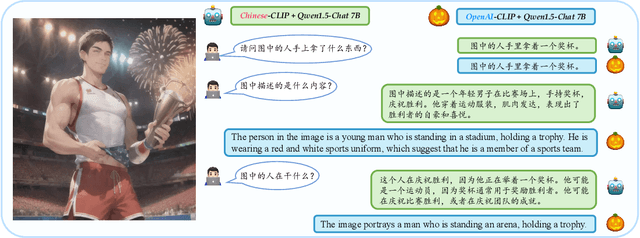


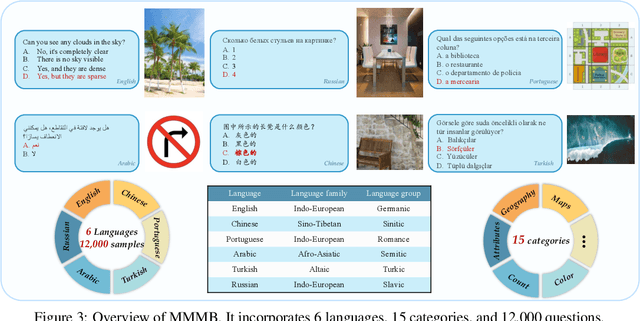
The rapid development of Multimodal Large Language Models (MLLMs) like GPT-4V has marked a significant step towards artificial general intelligence. Existing methods mainly focus on aligning vision encoders with LLMs through supervised fine-tuning (SFT) to endow LLMs with multimodal abilities, making MLLMs' inherent ability to react to multiple languages progressively deteriorate as the training process evolves. We empirically find that the imbalanced SFT datasets, primarily composed of English-centric image-text pairs, lead to significantly reduced performance in non-English languages. This is due to the failure of aligning the vision encoder and LLM with multilingual tokens during the SFT process. In this paper, we introduce Parrot, a novel method that utilizes textual guidance to drive visual token alignment at the language level. Parrot makes the visual tokens condition on diverse language inputs and uses Mixture-of-Experts (MoE) to promote the alignment of multilingual tokens. Specifically, to enhance non-English visual tokens alignment, we compute the cross-attention using the initial visual features and textual embeddings, the result of which is then fed into the MoE router to select the most relevant experts. The selected experts subsequently convert the initial visual tokens into language-specific visual tokens. Moreover, considering the current lack of benchmarks for evaluating multilingual capabilities within the field, we collect and make available a Massive Multilingual Multimodal Benchmark which includes 6 languages, 15 categories, and 12,000 questions, named as MMMB. Our method not only demonstrates state-of-the-art performance on multilingual MMBench and MMMB, but also excels across a broad range of multimodal tasks. Both the source code and the training dataset of Parrot will be made publicly available.
Adaptive Advantage-Guided Policy Regularization for Offline Reinforcement Learning
Jun 01, 2024In offline reinforcement learning, the challenge of out-of-distribution (OOD) is pronounced. To address this, existing methods often constrain the learned policy through policy regularization. However, these methods often suffer from the issue of unnecessary conservativeness, hampering policy improvement. This occurs due to the indiscriminate use of all actions from the behavior policy that generates the offline dataset as constraints. The problem becomes particularly noticeable when the quality of the dataset is suboptimal. Thus, we propose Adaptive Advantage-guided Policy Regularization (A2PR), obtaining high-advantage actions from an augmented behavior policy combined with VAE to guide the learned policy. A2PR can select high-advantage actions that differ from those present in the dataset, while still effectively maintaining conservatism from OOD actions. This is achieved by harnessing the VAE capacity to generate samples matching the distribution of the data points. We theoretically prove that the improvement of the behavior policy is guaranteed. Besides, it effectively mitigates value overestimation with a bounded performance gap. Empirically, we conduct a series of experiments on the D4RL benchmark, where A2PR demonstrates state-of-the-art performance. Furthermore, experimental results on additional suboptimal mixed datasets reveal that A2PR exhibits superior performance. Code is available at https://github.com/ltlhuuu/A2PR.
Non-destructive Degradation Pattern Decoupling for Ultra-early Battery Prototype Verification Using Physics-informed Machine Learning
Jun 01, 2024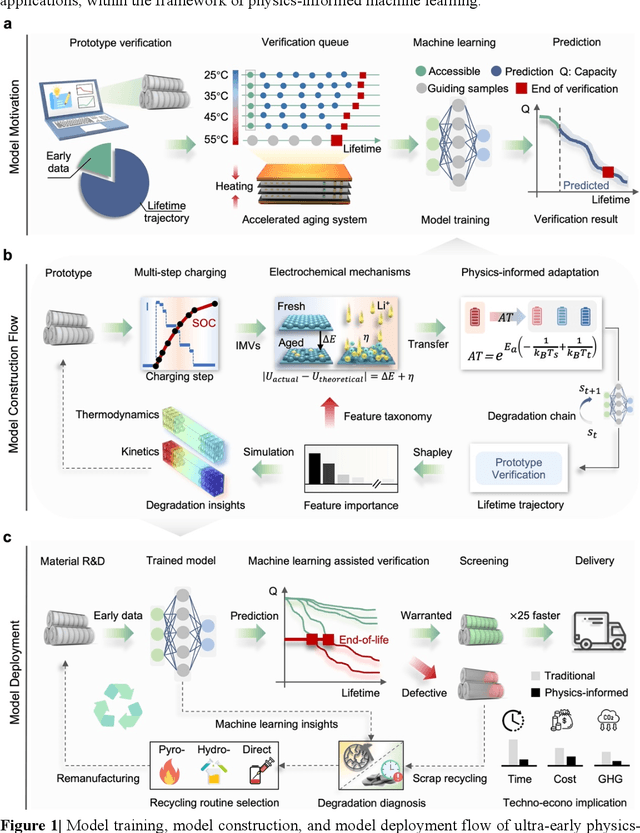
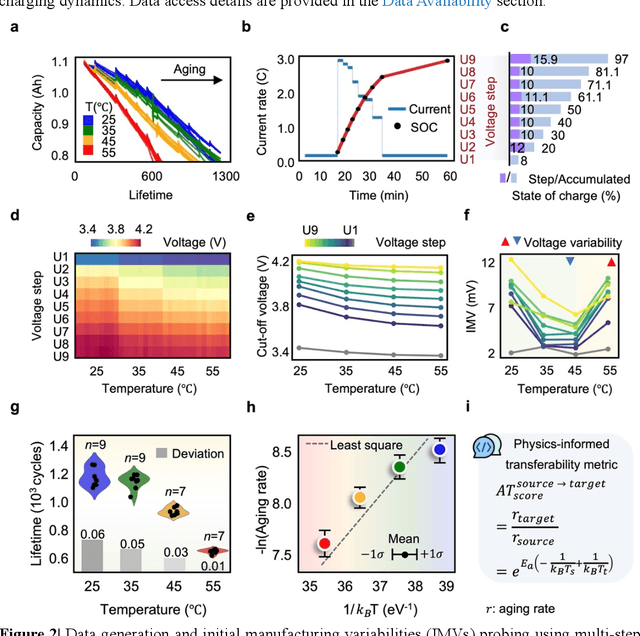
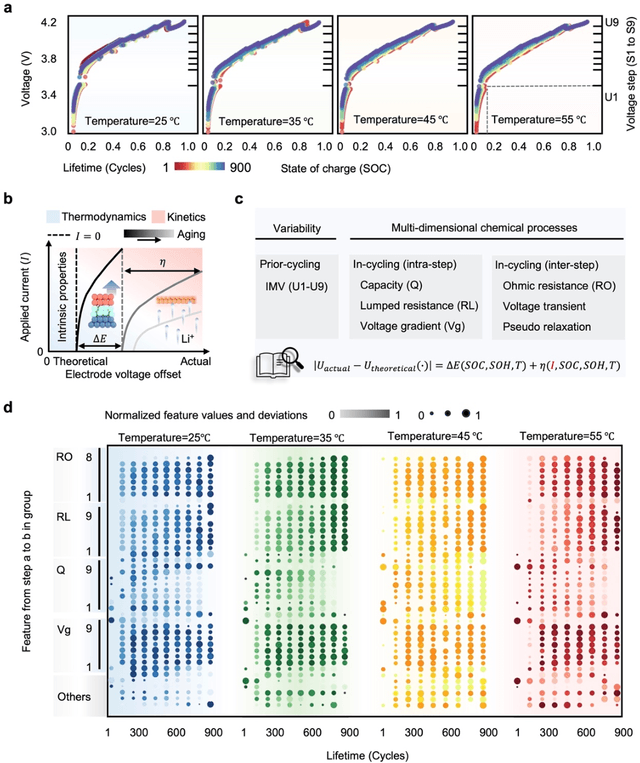
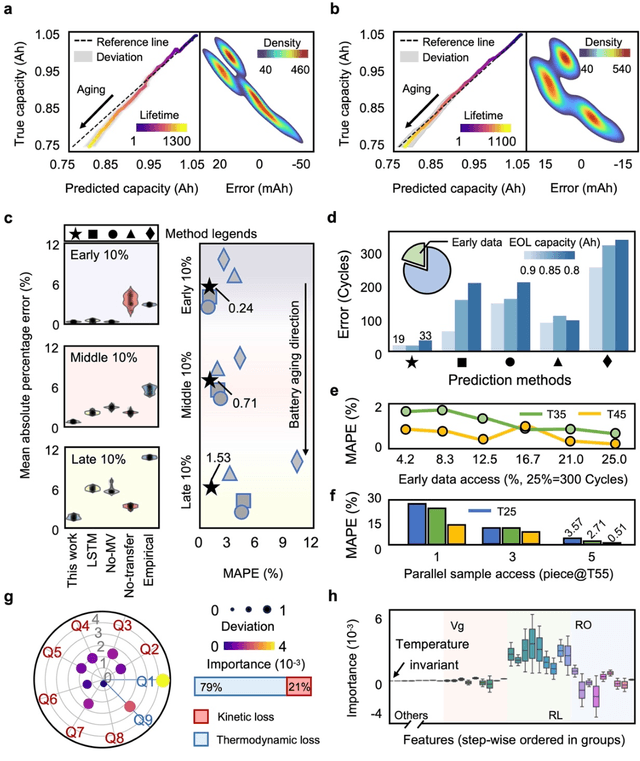
Manufacturing complexities and uncertainties have impeded the transition from material prototypes to commercial batteries, making prototype verification critical to quality assessment. A fundamental challenge involves deciphering intertwined chemical processes to characterize degradation patterns and their quantitative relationship with battery performance. Here we show that a physics-informed machine learning approach can quantify and visualize temporally resolved losses concerning thermodynamics and kinetics only using electric signals. Our method enables non-destructive degradation pattern characterization, expediting temperature-adaptable predictions of entire lifetime trajectories, rather than end-of-life points. The verification speed is 25 times faster yet maintaining 95.1% accuracy across temperatures. Such advances facilitate more sustainable management of defective prototypes before massive production, establishing a 19.76 billion USD scrap material recycling market by 2060 in China. By incorporating stepwise charge acceptance as a measure of the initial manufacturing variability of normally identical batteries, we can immediately identify long-term degradation variations. We attribute the predictive power to interpreting machine learning insights using material-agnostic featurization taxonomy for degradation pattern decoupling. Our findings offer new possibilities for dynamic system analysis, such as battery prototype degradation, demonstrating that complex pattern evolutions can be accurately predicted in a non-destructive and data-driven fashion by integrating physics-informed machine learning.
Ovis: Structural Embedding Alignment for Multimodal Large Language Model
May 31, 2024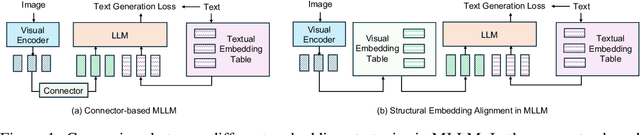
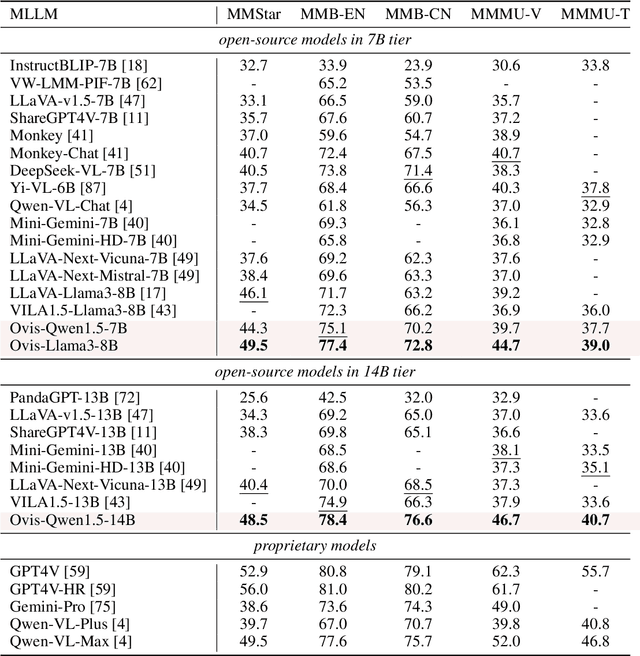
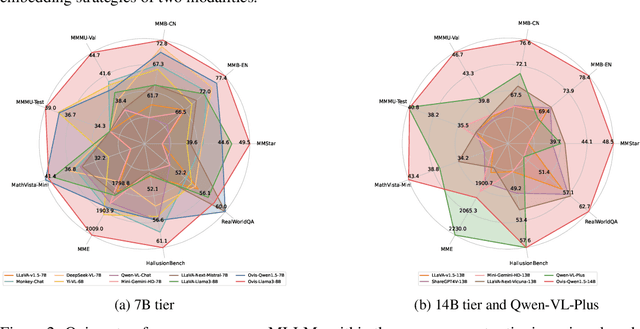
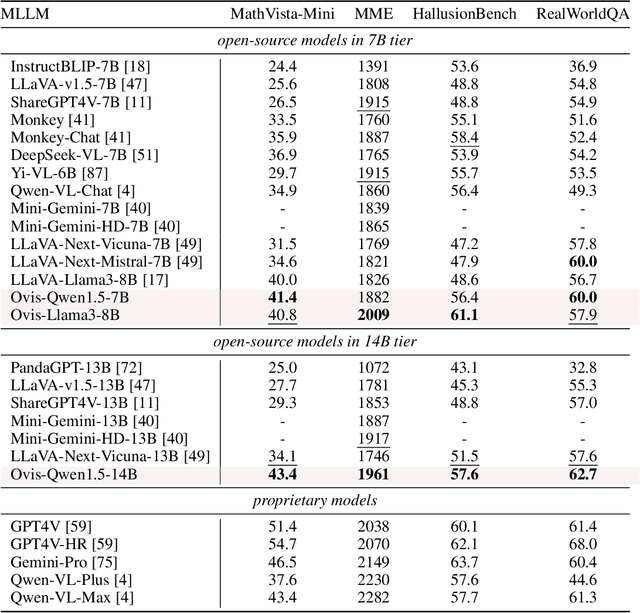
Current Multimodal Large Language Models (MLLMs) typically integrate a pre-trained LLM with another pre-trained vision transformer through a connector, such as an MLP, endowing the LLM with visual capabilities. However, the misalignment between two embedding strategies in MLLMs -- the structural textual embeddings based on an embedding look-up table and the continuous embeddings generated directly by the vision encoder -- makes challenges for a more seamless fusion of visual and textual information. We propose Ovis, a novel MLLM architecture designed to structurally align visual and textual embeddings. Ovis integrates an additional learnable visual embedding table into the visual encoder's process. To capture rich visual semantics, each image patch indexes the visual embedding table multiple times, resulting in a final visual embedding that is a probabilistic combination of the indexed embeddings. This structural approach mirrors the method used for generating textual embeddings. Empirical evaluations on various multimodal benchmarks demonstrate that Ovis outperforms open-source MLLMs of similar parameter scales and even surpasses the proprietary model Qwen-VL-Plus overall. These results highlight the potential of Ovis' structured visual representation for advancing MLLM architectural design and promoting more effective multimodal learning. Both the source code and the training dataset of Ovis will be made publicly available.