 Add to Chrome
 Add to Firefox
 Add to Edge
YuLan: An Open-source Large Language Model
Jun 28, 2024
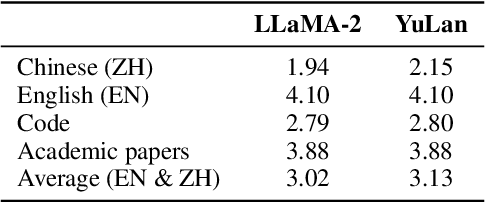

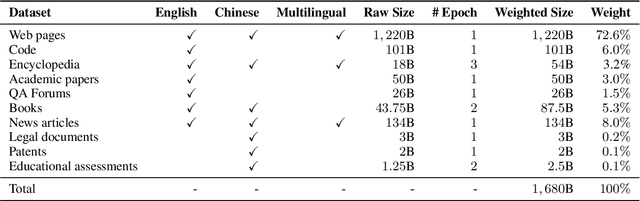

Large language models (LLMs) have become the foundation of many applications, leveraging their extensive capabilities in processing and understanding natural language. While many open-source LLMs have been released with technical reports, the lack of training details hinders further research and development. This paper presents the development of YuLan, a series of open-source LLMs with $12$ billion parameters. The base model of YuLan is pre-trained on approximately $1.7$T tokens derived from a diverse corpus, including massive English, Chinese, and multilingual texts. We design a three-stage pre-training method to enhance YuLan's overall capabilities. Subsequent phases of training incorporate instruction-tuning and human alignment, employing a substantial volume of high-quality synthesized data. To facilitate the learning of complex and long-tail knowledge, we devise a curriculum-learning framework throughout across these stages, which helps LLMs learn knowledge in an easy-to-hard manner. YuLan's training is finished on Jan, 2024 and has achieved performance on par with state-of-the-art LLMs across various English and Chinese benchmarks. This paper outlines a comprehensive technical roadmap for developing LLMs from scratch. Our model and codes are available at https://github.com/RUC-GSAI/YuLan-Chat.

Design and Optimization of Hierarchical Gradient Coding for Distributed Learning at Edge Devices
Jun 16, 2024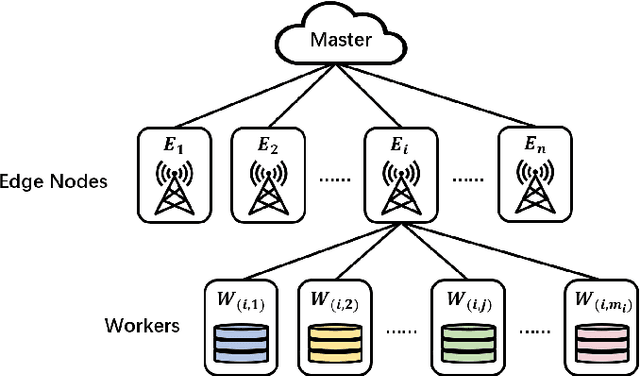
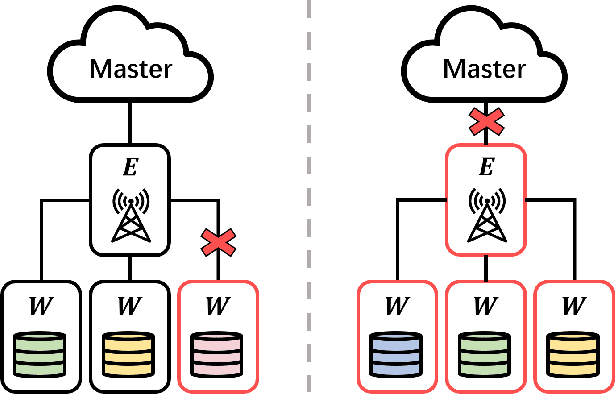
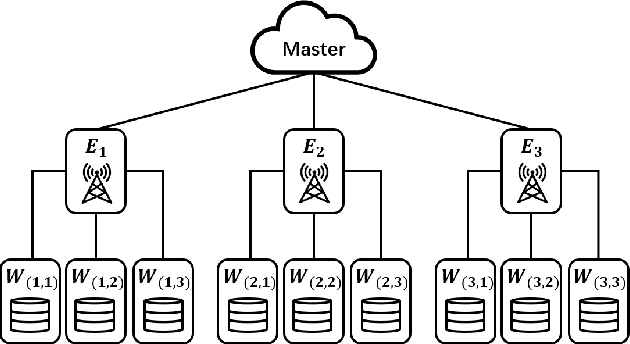
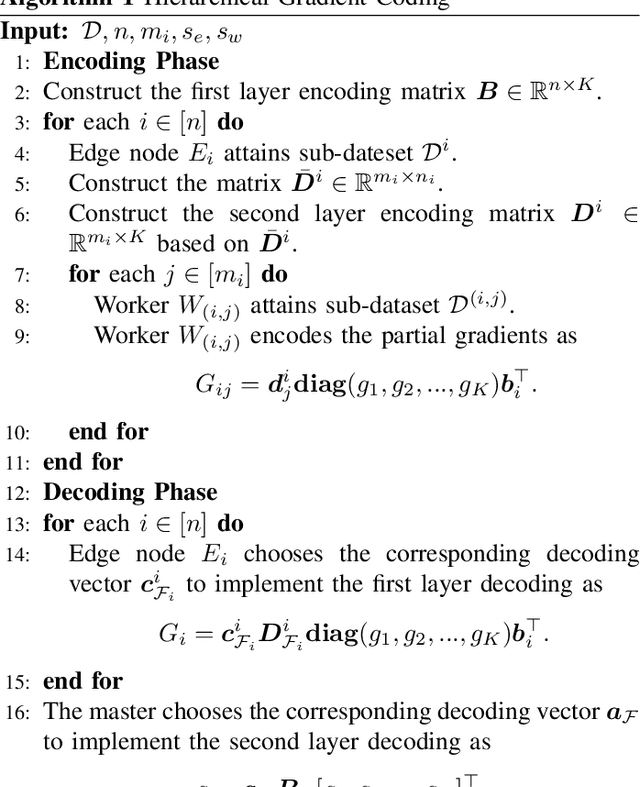
Edge computing has recently emerged as a promising paradigm to boost the performance of distributed learning by leveraging the distributed resources at edge nodes. Architecturally, the introduction of edge nodes adds an additional intermediate layer between the master and workers in the original distributed learning systems, potentially leading to more severe straggler effect. Recently, coding theory-based approaches have been proposed for stragglers mitigation in distributed learning, but the majority focus on the conventional workers-master architecture. In this paper, along a different line, we investigate the problem of mitigating the straggler effect in hierarchical distributed learning systems with an additional layer composed of edge nodes. Technically, we first derive the fundamental trade-off between the computational loads of workers and the stragglers tolerance. Then, we propose a hierarchical gradient coding framework, which provides better stragglers mitigation, to achieve the derived computational trade-off. To further improve the performance of our framework in heterogeneous scenarios, we formulate an optimization problem with the objective of minimizing the expected execution time for each iteration in the learning process. We develop an efficient algorithm to mathematically solve the problem by outputting the optimum strategy. Extensive simulation results demonstrate the superiority of our schemes compared with conventional solutions.
IMFL-AIGC: Incentive Mechanism Design for Federated Learning Empowered by Artificial Intelligence Generated Content
Jun 12, 2024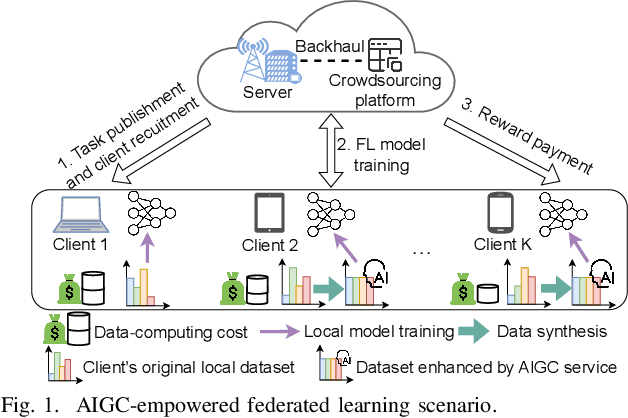
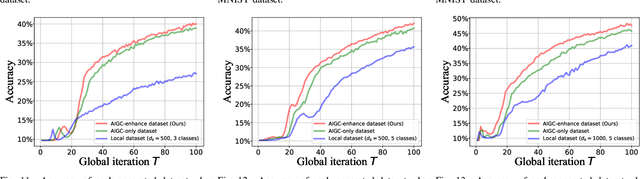
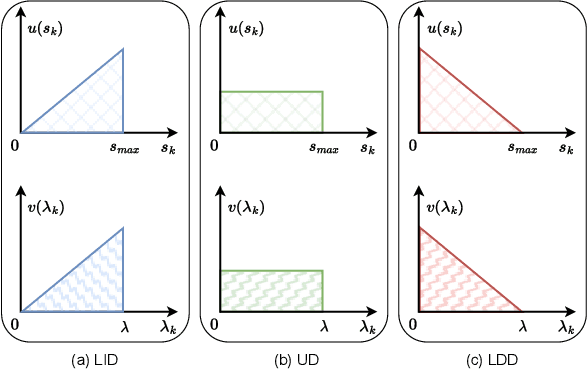
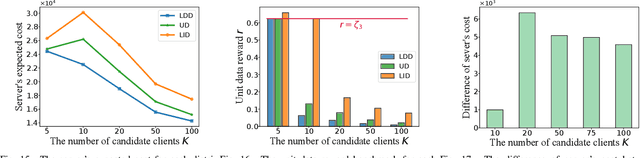
Federated learning (FL) has emerged as a promising paradigm that enables clients to collaboratively train a shared global model without uploading their local data. To alleviate the heterogeneous data quality among clients, artificial intelligence-generated content (AIGC) can be leveraged as a novel data synthesis technique for FL model performance enhancement. Due to various costs incurred by AIGC-empowered FL (e.g., costs of local model computation and data synthesis), however, clients are usually reluctant to participate in FL without adequate economic incentives, which leads to an unexplored critical issue for enabling AIGC-empowered FL. To fill this gap, we first devise a data quality assessment method for data samples generated by AIGC and rigorously analyze the convergence performance of FL model trained using a blend of authentic and AI-generated data samples. We then propose a data quality-aware incentive mechanism to encourage clients' participation. In light of information asymmetry incurred by clients' private multi-dimensional attributes, we investigate clients' behavior patterns and derive the server's optimal incentive strategies to minimize server's cost in terms of both model accuracy loss and incentive payments for both complete and incomplete information scenarios. Numerical results demonstrate that our proposed mechanism exhibits highest training accuracy and reduces up to 53.34% of the server's cost with real-world datasets, compared with existing benchmark mechanisms.
Galaxy: A Resource-Efficient Collaborative Edge AI System for In-situ Transformer Inference
May 27, 2024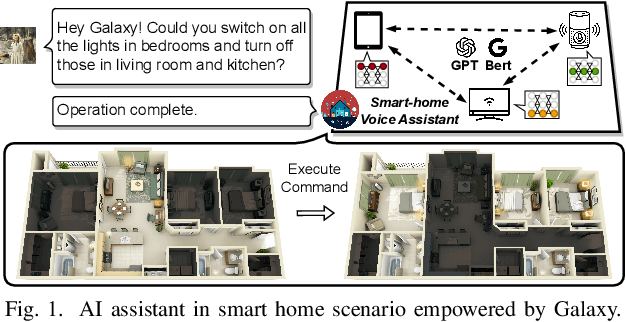


Transformer-based models have unlocked a plethora of powerful intelligent applications at the edge, such as voice assistant in smart home. Traditional deployment approaches offload the inference workloads to the remote cloud server, which would induce substantial pressure on the backbone network as well as raise users' privacy concerns. To address that, in-situ inference has been recently recognized for edge intelligence, but it still confronts significant challenges stemming from the conflict between intensive workloads and limited on-device computing resources. In this paper, we leverage our observation that many edge environments usually comprise a rich set of accompanying trusted edge devices with idle resources and propose Galaxy, a collaborative edge AI system that breaks the resource walls across heterogeneous edge devices for efficient Transformer inference acceleration. Galaxy introduces a novel hybrid model parallelism to orchestrate collaborative inference, along with a heterogeneity-aware parallelism planning for fully exploiting the resource potential. Furthermore, Galaxy devises a tile-based fine-grained overlapping of communication and computation to mitigate the impact of tensor synchronizations on inference latency under bandwidth-constrained edge environments. Extensive evaluation based on prototype implementation demonstrates that Galaxy remarkably outperforms state-of-the-art approaches under various edge environment setups, achieving up to 2.5x end-to-end latency reduction.
Attaining Human`s Desirable Outcomes in Human-AI Interaction via Structural Causal Games
May 26, 2024


In human-AI interaction, a prominent goal is to attain human`s desirable outcome with the assistance of AI agents, which can be ideally delineated as a problem of seeking the optimal Nash Equilibrium that matches the human`s desirable outcome. However, reaching the outcome is usually challenging due to the existence of multiple Nash Equilibria that are related to the assisting task but do not correspond to the human`s desirable outcome. To tackle this issue, we employ a theoretical framework called structural causal game (SCG) to formalize the human-AI interactive process. Furthermore, we introduce a strategy referred to as pre-policy intervention on the SCG to steer AI agents towards attaining the human`s desirable outcome. In more detail, a pre-policy is learned as a generalized intervention to guide the agents` policy selection, under a transparent and interpretable procedure determined by the SCG. To make the framework practical, we propose a reinforcement learning-like algorithm to search out this pre-policy. The proposed algorithm is tested in both gridworld environments and realistic dialogue scenarios with large language models, demonstrating its adaptability in a broader class of problems and potential effectiveness in real-world situations.
Revisiting Counterfactual Regression through the Lens of Gromov-Wasserstein Information Bottleneck
May 24, 2024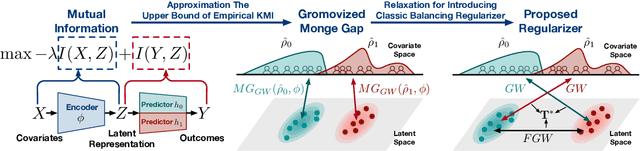
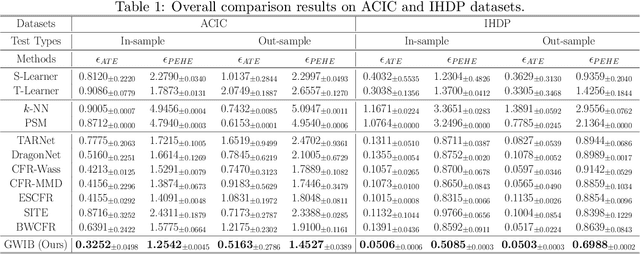
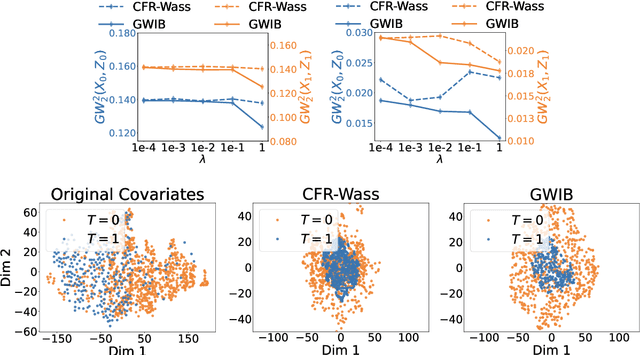
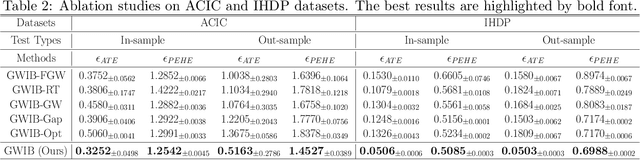
As a promising individualized treatment effect (ITE) estimation method, counterfactual regression (CFR) maps individuals' covariates to a latent space and predicts their counterfactual outcomes. However, the selection bias between control and treatment groups often imbalances the two groups' latent distributions and negatively impacts this method's performance. In this study, we revisit counterfactual regression through the lens of information bottleneck and propose a novel learning paradigm called Gromov-Wasserstein information bottleneck (GWIB). In this paradigm, we learn CFR by maximizing the mutual information between covariates' latent representations and outcomes while penalizing the kernelized mutual information between the latent representations and the covariates. We demonstrate that the upper bound of the penalty term can be implemented as a new regularizer consisting of $i)$ the fused Gromov-Wasserstein distance between the latent representations of different groups and $ii)$ the gap between the transport cost generated by the model and the cross-group Gromov-Wasserstein distance between the latent representations and the covariates. GWIB effectively learns the CFR model through alternating optimization, suppressing selection bias while avoiding trivial latent distributions. Experiments on ITE estimation tasks show that GWIB consistently outperforms state-of-the-art CFR methods. To promote the research community, we release our project at https://github.com/peteryang1031/Causal-GWIB.
Are Long-LLMs A Necessity For Long-Context Tasks?
May 24, 2024The learning and deployment of long-LLMs remains a challenging problem despite recent progresses. In this work, we argue that the long-LLMs are not a necessity to solve long-context tasks, as common long-context tasks are short-context solvable, i.e. they can be solved by purely working with oracle short-contexts within the long-context tasks' inputs. On top of this argument, we propose a framework called LC-Boost (Long-Context Bootstrapper), which enables a short-LLM to address the long-context tasks in a bootstrapping manner. In our framework, the short-LLM prompts itself to reason for two critical decisions: 1) how to access to the appropriate part of context within the input, 2) how to make effective use of the accessed context. By adaptively accessing and utilizing the context based on the presented tasks, LC-Boost can serve as a general framework to handle diversified long-context processing problems. We comprehensively evaluate different types of tasks from popular long-context benchmarks, where LC-Boost is able to achieve a substantially improved performance with a much smaller consumption of resource.
Face Adapter for Pre-Trained Diffusion Models with Fine-Grained ID and Attribute Control
May 21, 2024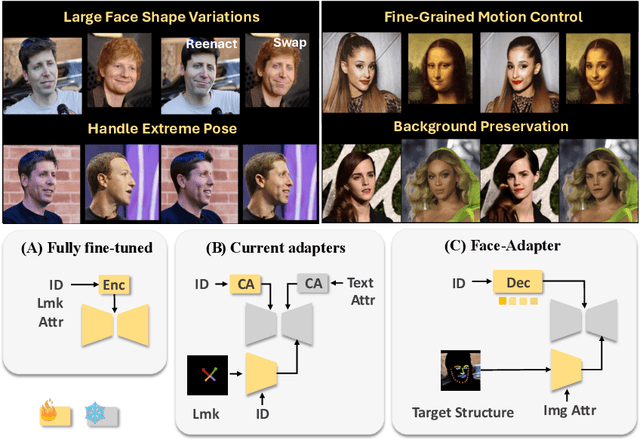
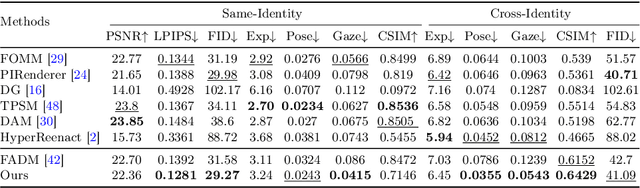

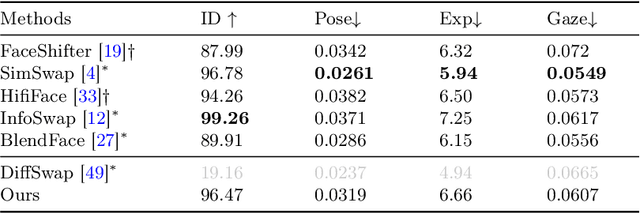
Current face reenactment and swapping methods mainly rely on GAN frameworks, but recent focus has shifted to pre-trained diffusion models for their superior generation capabilities. However, training these models is resource-intensive, and the results have not yet achieved satisfactory performance levels. To address this issue, we introduce Face-Adapter, an efficient and effective adapter designed for high-precision and high-fidelity face editing for pre-trained diffusion models. We observe that both face reenactment/swapping tasks essentially involve combinations of target structure, ID and attribute. We aim to sufficiently decouple the control of these factors to achieve both tasks in one model. Specifically, our method contains: 1) A Spatial Condition Generator that provides precise landmarks and background; 2) A Plug-and-play Identity Encoder that transfers face embeddings to the text space by a transformer decoder. 3) An Attribute Controller that integrates spatial conditions and detailed attributes. Face-Adapter achieves comparable or even superior performance in terms of motion control precision, ID retention capability, and generation quality compared to fully fine-tuned face reenactment/swapping models. Additionally, Face-Adapter seamlessly integrates with various StableDiffusion models.
Generalizing Knowledge Graph Embedding with Universal Orthogonal Parameterization
May 14, 2024
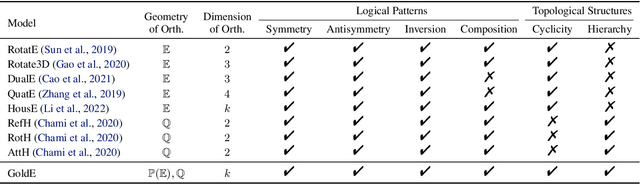

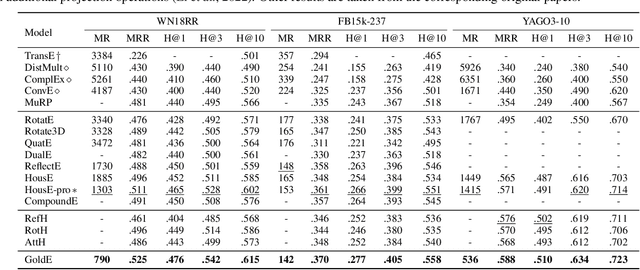
Recent advances in knowledge graph embedding (KGE) rely on Euclidean/hyperbolic orthogonal relation transformations to model intrinsic logical patterns and topological structures. However, existing approaches are confined to rigid relational orthogonalization with restricted dimension and homogeneous geometry, leading to deficient modeling capability. In this work, we move beyond these approaches in terms of both dimension and geometry by introducing a powerful framework named GoldE, which features a universal orthogonal parameterization based on a generalized form of Householder reflection. Such parameterization can naturally achieve dimensional extension and geometric unification with theoretical guarantees, enabling our framework to simultaneously capture crucial logical patterns and inherent topological heterogeneity of knowledge graphs. Empirically, GoldE achieves state-of-the-art performance on three standard benchmarks. Codes are available at https://github.com/xxrep/GoldE.
Graphon Mean Field Games with A Representative Player: Analysis and Learning Algorithm
May 08, 2024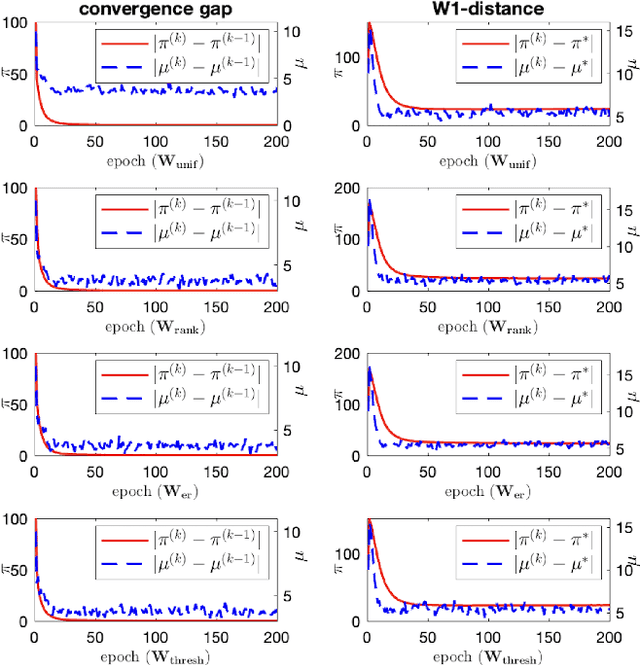
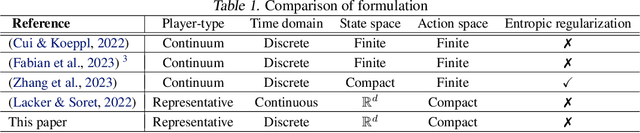
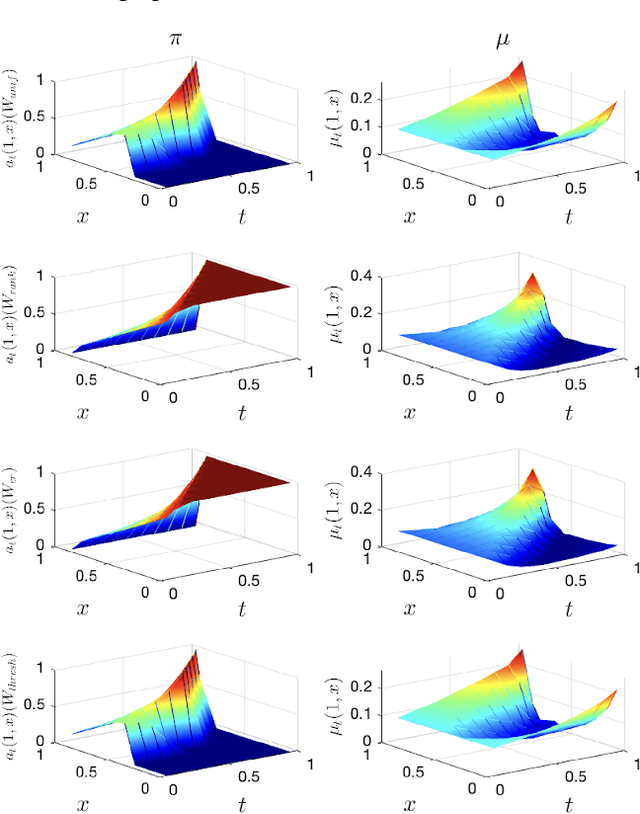
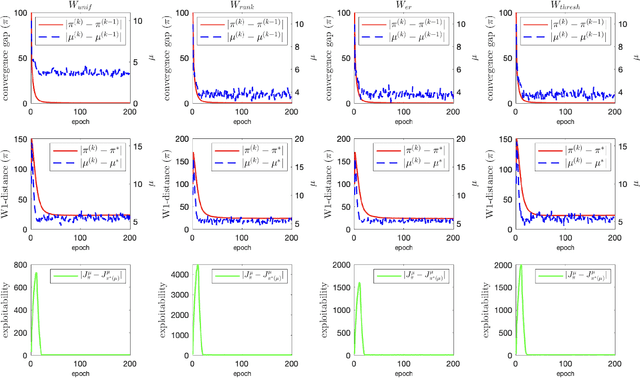
We propose a discrete-time graphon game formulation on continuous state and action spaces using a representative player to study stochastic games with heterogeneous interaction among agents. This formulation admits both philosophical and mathematical advantages, compared to a widely adopted formulation using a continuum of players. We prove the existence and uniqueness of the graphon equilibrium with mild assumptions, and show that this equilibrium can be used to construct an approximate solution for finite player game on networks, which is challenging to analyze and solve due to curse of dimensionality. An online oracle-free learning algorithm is developed to solve the equilibrium numerically, and sample complexity analysis is provided for its convergence.