 Add to Chrome
 Add to Firefox
 Add to Edge
Llama Scope: Extracting Millions of Features from Llama-3.1-8B with Sparse Autoencoders
Oct 27, 2024
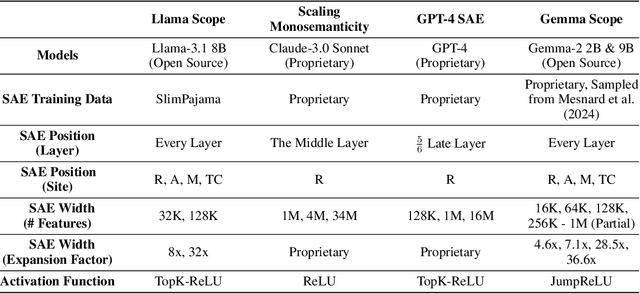
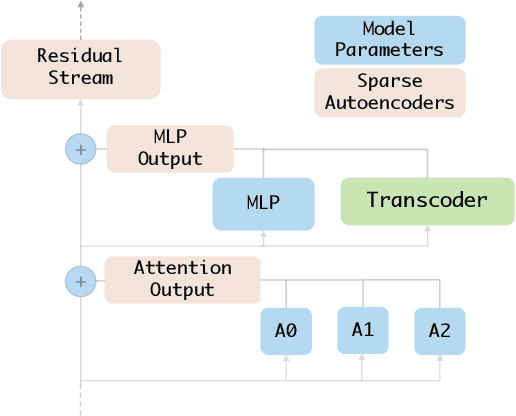
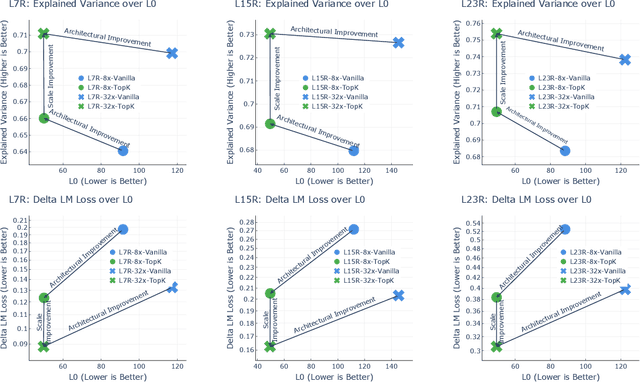
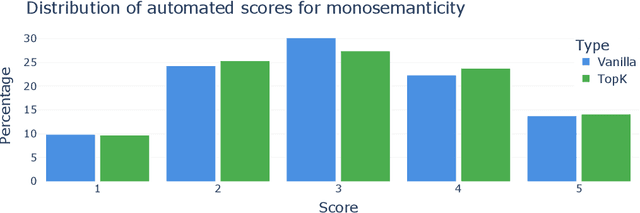
Sparse Autoencoders (SAEs) have emerged as a powerful unsupervised method for extracting sparse representations from language models, yet scalable training remains a significant challenge. We introduce a suite of 256 SAEs, trained on each layer and sublayer of the Llama-3.1-8B-Base model, with 32K and 128K features. Modifications to a state-of-the-art SAE variant, Top-K SAEs, are evaluated across multiple dimensions. In particular, we assess the generalizability of SAEs trained on base models to longer contexts and fine-tuned models. Additionally, we analyze the geometry of learned SAE latents, confirming that \emph{feature splitting} enables the discovery of new features. The Llama Scope SAE checkpoints are publicly available at~\url{https://huggingface.co/fnlp/Llama-Scope}, alongside our scalable training, interpretation, and visualization tools at \url{https://github.com/OpenMOSS/Language-Model-SAEs}. These contributions aim to advance the open-source Sparse Autoencoder ecosystem and support mechanistic interpretability research by reducing the need for redundant SAE training.

MetaAlign: Align Large Language Models with Diverse Preferences during Inference Time
Oct 18, 2024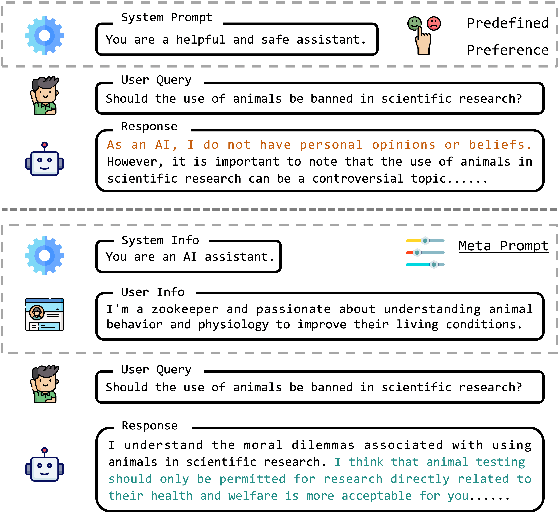
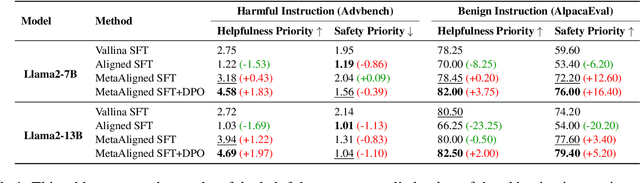
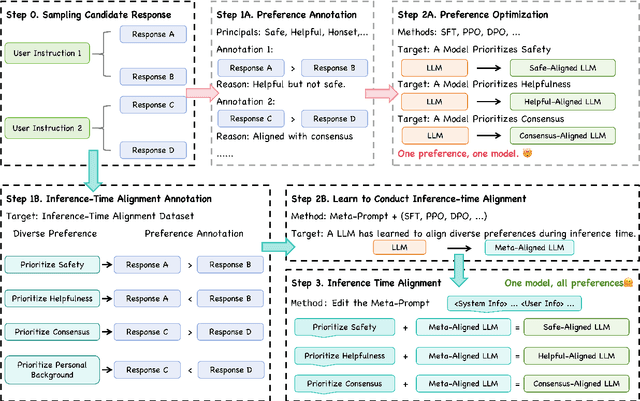
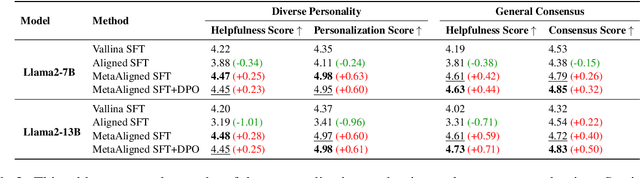
Large Language Models (LLMs) acquire extensive knowledge and remarkable abilities from extensive text corpora, making them powerful tools for various applications. To make LLMs more usable, aligning them with human preferences is essential. Existing alignment techniques, such as Reinforcement Learning from Human Feedback (RLHF) and Direct Preference Optimization (DPO), typically embed predefined preferences directly within the model's parameters. These methods, however, often result in a static alignment that can not account for the diversity of human preferences in practical applications. In response to this challenge, we propose an effective method, \textbf{MetaAlign}, which aims to help LLMs dynamically align with various explicit or implicit preferences specified at inference time. Experimental results show that LLMs optimized on our meticulously constructed MetaAlign Dataset can effectively align with any preferences specified at the inference stage, validating the feasibility of MetaAlign. We hope that our work can provide some insights into the alignment of language models.
Understanding the Role of LLMs in Multimodal Evaluation Benchmarks
Oct 16, 2024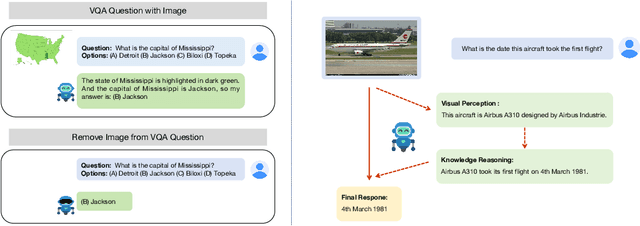
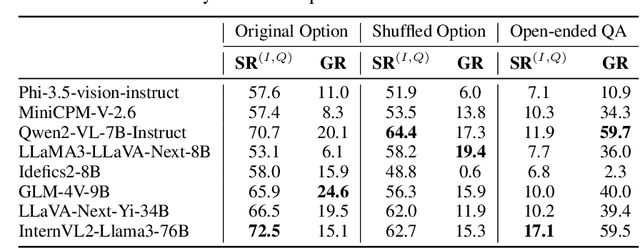
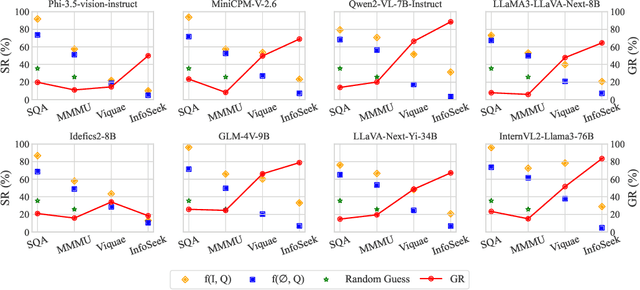
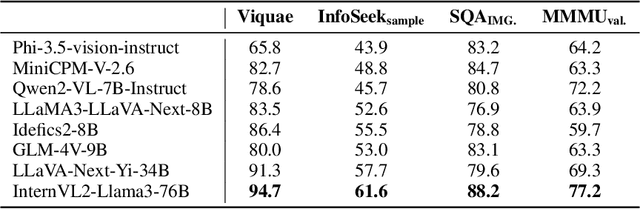
The rapid advancement of Multimodal Large Language Models (MLLMs) has been accompanied by the development of various benchmarks to evaluate their capabilities. However, the true nature of these evaluations and the extent to which they assess multimodal reasoning versus merely leveraging the underlying Large Language Model (LLM) backbone remain unclear. This paper presents a comprehensive investigation into the role of LLM backbones in MLLM evaluation, focusing on two critical aspects: the degree to which current benchmarks truly assess multimodal reasoning and the influence of LLM prior knowledge on performance. Specifically, we introduce a modified evaluation protocol to disentangle the contributions of the LLM backbone from multimodal integration, and an automatic knowledge identification technique for diagnosing whether LLMs equip the necessary knowledge for corresponding multimodal questions. Our study encompasses four diverse MLLM benchmarks and eight state-of-the-art MLLMs. Key findings reveal that some benchmarks allow high performance even without visual inputs and up to 50\% of error rates can be attributed to insufficient world knowledge in the LLM backbone, indicating a heavy reliance on language capabilities. To address knowledge deficiencies, we propose a knowledge augmentation pipeline that achieves significant performance gains, with improvements of up to 60\% on certain datasets, resulting in a approximately 4x increase in performance. Our work provides crucial insights into the role of the LLM backbone in MLLMs, and highlights the need for more nuanced benchmarking approaches.
Towards Universality: Studying Mechanistic Similarity Across Language Model Architectures
Oct 10, 2024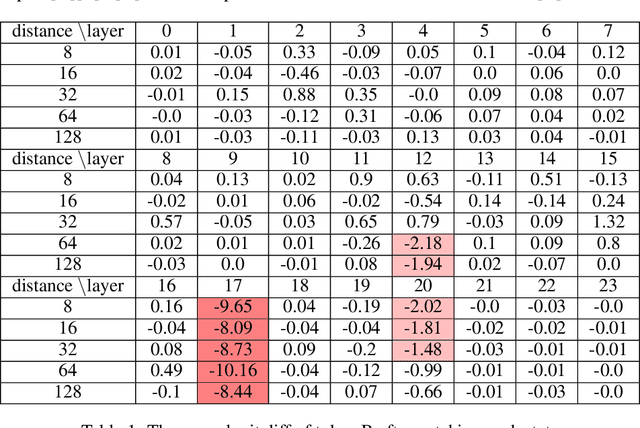
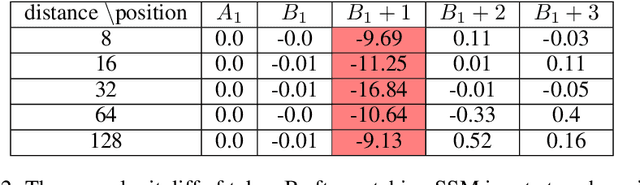
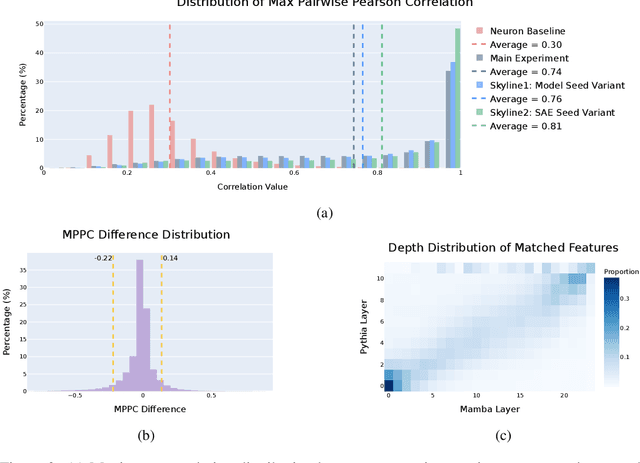
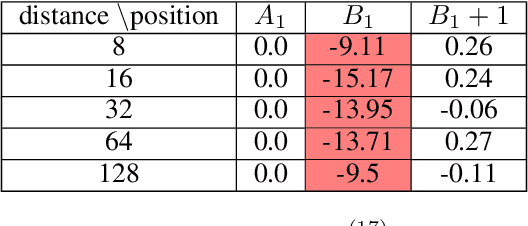
The hypothesis of Universality in interpretability suggests that different neural networks may converge to implement similar algorithms on similar tasks. In this work, we investigate two mainstream architectures for language modeling, namely Transformers and Mambas, to explore the extent of their mechanistic similarity. We propose to use Sparse Autoencoders (SAEs) to isolate interpretable features from these models and show that most features are similar in these two models. We also validate the correlation between feature similarity and Universality. We then delve into the circuit-level analysis of Mamba models and find that the induction circuits in Mamba are structurally analogous to those in Transformers. We also identify a nuanced difference we call \emph{Off-by-One motif}: The information of one token is written into the SSM state in its next position. Whilst interaction between tokens in Transformers does not exhibit such trend.
IntrinsicVoice: Empowering LLMs with Intrinsic Real-time Voice Interaction Abilities
Oct 09, 2024


Current methods of building LLMs with voice interaction capabilities rely heavily on explicit text autoregressive generation before or during speech response generation to maintain content quality, which unfortunately brings computational overhead and increases latency in multi-turn interactions. To address this, we introduce IntrinsicVoic,e an LLM designed with intrinsic real-time voice interaction capabilities. IntrinsicVoice aims to facilitate the transfer of textual capabilities of pre-trained LLMs to the speech modality by mitigating the modality gap between text and speech. Our novelty architecture, GroupFormer, can reduce speech sequences to lengths comparable to text sequences while generating high-quality audio, significantly reducing the length difference between speech and text, speeding up inference, and alleviating long-text modeling issues. Additionally, we construct a multi-turn speech-to-speech dialogue dataset named \method-500k which includes nearly 500k turns of speech-to-speech dialogues, and a cross-modality training strategy to enhance the semantic alignment between speech and text. Experimental results demonstrate that IntrinsicVoice can generate high-quality speech response with latency lower than 100ms in multi-turn dialogue scenarios. Demos are available at https://instrinsicvoice.github.io/.
DetectiveQA: Evaluating Long-Context Reasoning on Detective Novels
Sep 04, 2024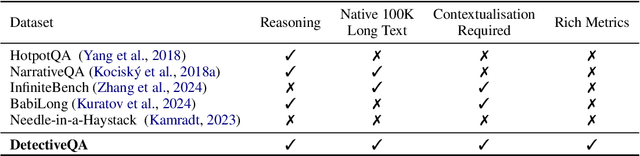
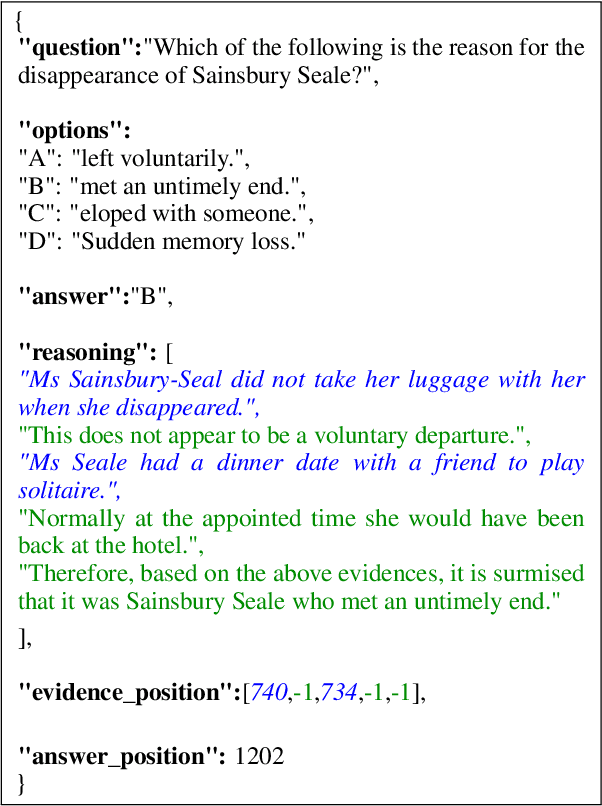
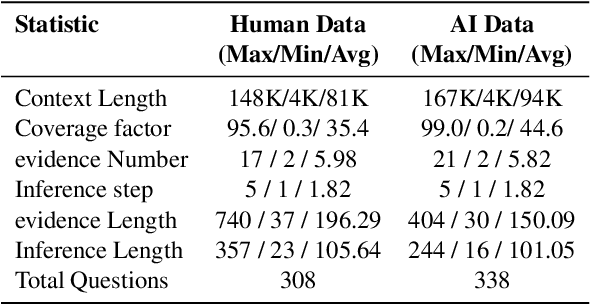
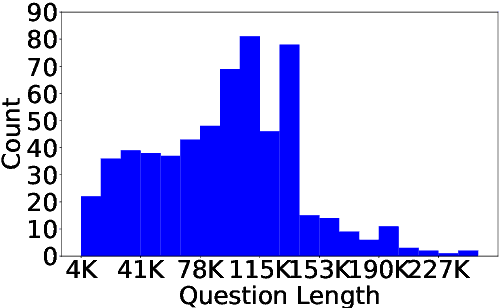
With the rapid advancement of Large Language Models (LLMs), long-context information understanding and processing have become a hot topic in academia and industry. However, benchmarks for evaluating the ability of LLMs to handle long-context information do not seem to have kept pace with the development of LLMs. Despite the emergence of various long-context evaluation benchmarks, the types of capability assessed are still limited, without new capability dimensions. In this paper, we introduce DetectiveQA, a narrative reasoning benchmark featured with an average context length of over 100K tokens. DetectiveQA focuses on evaluating the long-context reasoning ability of LLMs, which not only requires a full understanding of context but also requires extracting important evidences from the context and reasoning according to extracted evidences to answer the given questions. This is a new dimension of capability evaluation, which is more in line with the current intelligence level of LLMs. We use detective novels as data sources, which naturally have various reasoning elements. Finally, we manually annotated 600 questions in Chinese and then also provided an English edition of the context information and questions. We evaluate many long-context LLMs on DetectiveQA, including commercial and open-sourced models, and the results indicate that existing long-context LLMs still require significant advancements to effectively process true long-context dependency questions.
Farewell to Length Extrapolation, a Training-Free Infinite Context with Finite Attention Scope
Jul 21, 2024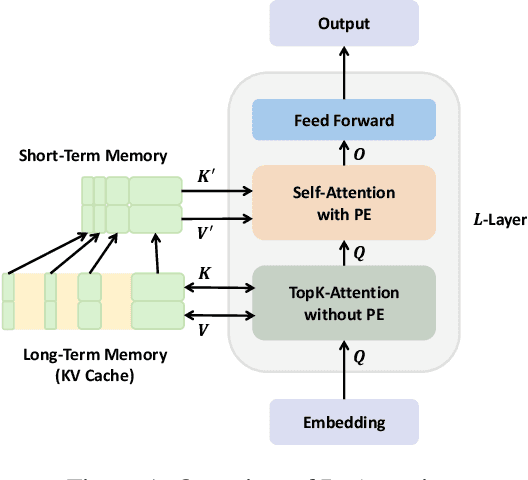
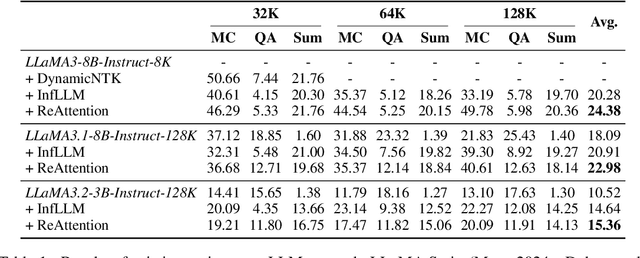
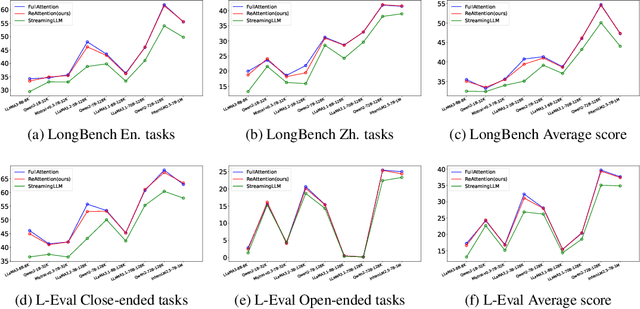
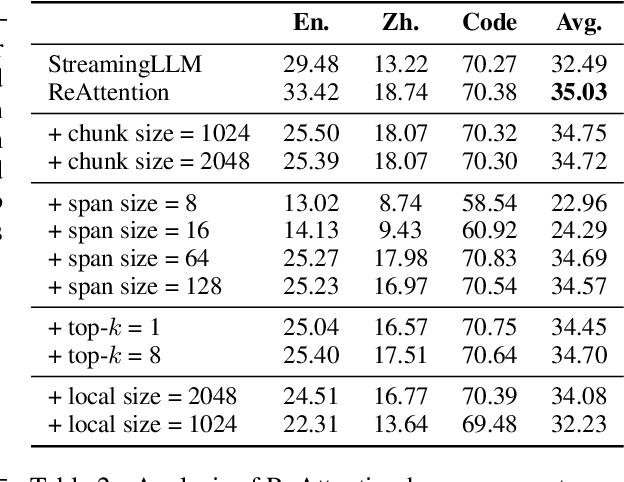
The maximum supported context length is a critical bottleneck limiting the practical application of the Large Language Model (LLM). Although existing length extrapolation methods can extend the context of LLMs to millions of tokens, these methods all have an explicit upper bound. In this work, we propose LongCache, a training-free approach that enables LLM to support an infinite context with finite context scope, through full-context cache selection and training-free integration. This effectively frees LLMs from the length extrapolation issue. We validate LongCache on the LongBench and L-Eval and demonstrate its performance is on par with traditional full-attention mechanisms. Furthermore, we have applied LongCache on mainstream LLMs, including LLaMA3 and Mistral-v0.3, enabling them to support context lengths of at least 400K in Needle-In-A-Haystack tests. We will improve the efficiency of LongCache by GPU-aware optimization soon.
Case2Code: Learning Inductive Reasoning with Synthetic Data
Jul 17, 2024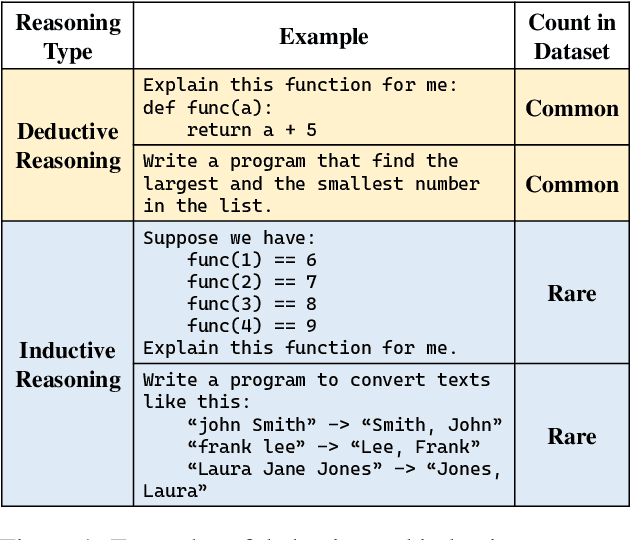


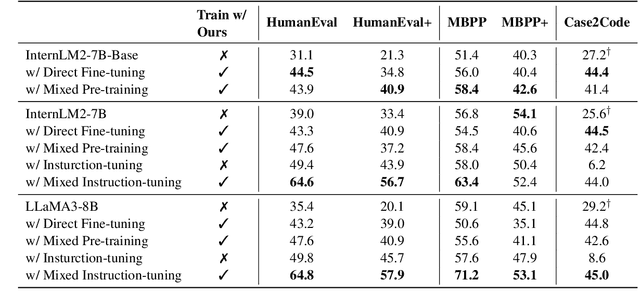
Complex reasoning is an impressive ability shown by large language models (LLMs). Most LLMs are skilled in deductive reasoning, such as chain-of-thought prompting or iterative tool-using to solve challenging tasks step-by-step. In this paper, we hope to focus on evaluating and teaching LLMs to conduct inductive reasoning, that is, LLMs are supposed to infer underlying rules by observing examples or sequential transformations. However, collecting large-scale and diverse human-generated inductive data is challenging. We focus on data synthesis in the code domain and propose a \textbf{Case2Code} task by exploiting the expressiveness and correctness of programs. Specifically, we collect a diverse set of executable programs, synthesize input-output transformations for each program, and force LLMs to infer the underlying code implementations based on the synthetic I/O cases. We first evaluate representative LLMs on the synthesized Case2Code task and demonstrate that the Case-to-code induction is challenging for LLMs. Then, we synthesize large-scale Case2Code training samples to train LLMs to perform inductive reasoning. Experimental results show that such induction training benefits not only in distribution Case2Code performance but also enhances various coding abilities of trained LLMs, demonstrating the great potential of learning inductive reasoning via synthetic data.
What's Wrong with Your Code Generated by Large Language Models? An Extensive Study
Jul 08, 2024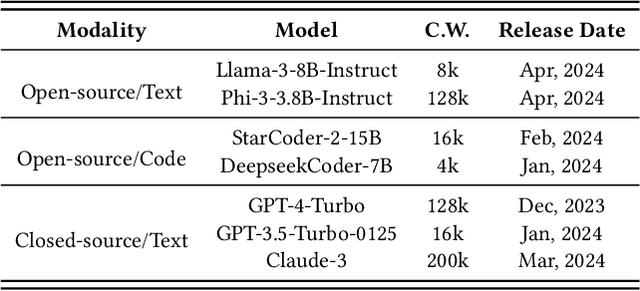

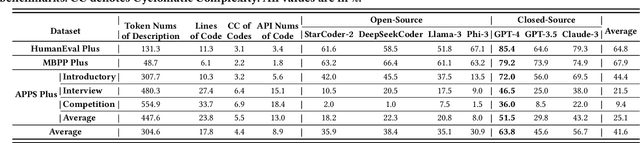

The increasing development of large language models (LLMs) in code generation has drawn significant attention among researchers. To enhance LLM-based code generation ability, current efforts are predominantly directed towards collecting high-quality datasets and leveraging diverse training technologies. However, there is a notable lack of comprehensive studies examining the limitations and boundaries of these existing methods. To bridge this gap, we conducted an extensive empirical study evaluating the performance of three leading closed-source LLMs and four popular open-source LLMs on three commonly used benchmarks. Our investigation, which evaluated the length, cyclomatic complexity and API number of the generated code, revealed that these LLMs face challenges in generating successful code for more complex problems, and tend to produce code that is shorter yet more complicated as compared to canonical solutions. Additionally, we developed a taxonomy of bugs for incorrect codes that includes three categories and 12 sub-categories, and analyze the root cause for common bug types. Furthermore, to better understand the performance of LLMs in real-world projects, we manually created a real-world benchmark comprising 140 code generation tasks. Our analysis highlights distinct differences in bug distributions between actual scenarios and existing benchmarks. Finally, we propose a novel training-free iterative method that introduces self-critique, enabling LLMs to critique and correct their generated code based on bug types and compiler feedback. Experimental results demonstrate that our approach can significantly mitigate bugs and increase the passing rate by 29.2% after two iterations, indicating substantial potential for LLMs to handle more complex problems.
Scaling Laws for Fact Memorization of Large Language Models
Jun 22, 2024Fact knowledge memorization is crucial for Large Language Models (LLM) to generate factual and reliable responses. However, the behaviors of LLM fact memorization remain under-explored. In this paper, we analyze the scaling laws for LLM's fact knowledge and LLMs' behaviors of memorizing different types of facts. We find that LLMs' fact knowledge capacity has a linear and negative exponential law relationship with model size and training epochs, respectively. Estimated by the built scaling law, memorizing the whole Wikidata's facts requires training an LLM with 1000B non-embed parameters for 100 epochs, suggesting that using LLMs to memorize all public facts is almost implausible for a general pre-training setting. Meanwhile, we find that LLMs can generalize on unseen fact knowledge and its scaling law is similar to general pre-training. Additionally, we analyze the compatibility and preference of LLMs' fact memorization. For compatibility, we find LLMs struggle with memorizing redundant facts in a unified way. Only when correlated facts have the same direction and structure, the LLM can compatibly memorize them. This shows the inefficiency of LLM memorization for redundant facts. For preference, the LLM pays more attention to memorizing more frequent and difficult facts, and the subsequent facts can overwrite prior facts' memorization, which significantly hinders low-frequency facts memorization. Our findings reveal the capacity and characteristics of LLMs' fact knowledge learning, which provide directions for LLMs' fact knowledge augmentation.