 Add to Chrome
 Add to Firefox
 Add to Edge
EventRadar: Long-Range Visual UAV Discovery through Spatiotemporal Event Sensing
Jun 09, 2026
Unauthorized unmanned aerial vehicle (UAV) activity around airports, public venues, and other sensitive sites has made protected-airspace monitoring increasingly important. A practical sensing system must search a wide angular region, find small long-range targets, and return both bearing support and UAV-specific evidence before a restricted perimeter is breached. Existing UAV detection paths often rely on spatially organized evidence, such as body extent, silhouette, or track continuity. At long range, however, these cues become difficult to preserve and verify as the target footprint weakens and its image-plane support shrinks. EventRadar follows a complementary cue: propeller-induced temporal periodicity, which recent event-camera sensing studies have shown can reveal UAV-specific motion after appearance becomes weak. We extend this cue to kilometer-scale active sensing with an event-camera prototype. Scene-Anchored Geometry Evidence (SAGE) fuses scanning events with IMU pose to maintain a bearing-indexed scene memory, separating transient candidate support from persistent background clutter. Comb-guided Harmonic-Group Learned Iterative Shrinkage and Thresholding Algorithm (CHG) then treats each candidate as a weak high-rate timing signal and recovers phase-insensitive harmonic evidence with fixed compute. Compared with related event-camera baselines on 700-1500 m UAV event recordings, EventRadar achieves 0.990 mAP$_{.3}$ and 0.949 F1$_{.3}$, reduces FN$_{.3}$ to 0.009, and shows real-time feasibility in prototype profiling.

OneReason Technical Report
Jun 04, 2026Generative recommendation models in the OneRec family have been widely deployed in many real-world services, such as short-video, live-streaming, advertising, and e-commerce. However, these generative models can only benefit from the scaling advantage, while their reasoning ability is hard to activate, since we cannot construct meaningful Chain-of-Thought (CoT) sequences consisting of itemic tokens only. Inspired by the success of the reasoning-style ``think before answer'' paradigm in the LLM field, we conduct preliminary studies (i.e., OneRec-Think, OpenOneRec) to explore reasoning capability in generative recommendation. Nevertheless, we notice an unexpected phenomenon: the thinking mode does not show advantages over the non-thinking mode. Drawing insights from recent findings on CoT robustness in multi-modal language models, we argue that effective reasoning in recommendation rests on two factors: perception, the ability to ground itemic tokens in their underlying language semantics, and cognition, the ability to reorganize a user's behavior sequence into coherent latent interest points. We therefore propose OneReason, which includes: (1) strong itemic token perception in pre-training, (2) a three-level cognition-enhanced CoT format for recommendation tasks in SFT, and (3) a specialize-then-unify training recipe in RL to enhance the thinking ability.
KVServe: Service-Aware KV Cache Compression for Communication-Efficient Disaggregated LLM Serving
May 13, 2026LLMs are widely adopted in production, pushing inference systems to their limits. Disaggregated LLM serving (e.g., PD separation and KV state disaggregation) improves scalability and cost efficiency, but it also turns KV into an explicit payload crossing network and storage boundaries, making KV a dominant end-to-end bottleneck. Existing KV compression are typically static runtime configurations, despite production service context varies over time in workload mix, bandwidth, and SLO/quality budgets. As a result, a fixed choice can be suboptimal or even increase latency. We present \emph{KVServe}, the first service-aware and adaptive KV communication compression framework for disaggregated LLM serving: KVServe (1) unifies KV compression into a modular strategy space with new components and cross-method recomposition; (2) introduces Bayesian Profiling Engine that efficiently searches this space and distills a 3D Pareto candidate set, reducing $50\times$ offline search overhead; and (3) deploys a Service-Aware Online Controller that combines an analytical latency model with a lightweight bandit to select profiles under constraints and correct offline-to-online mismatch. Integrated into vLLM and evaluated across datasets, models, GPUs and networks, KVServe achieves up to $9.13\times$ JCT speedup in PD-separated serving and up to $32.8\times$ TTFT reduction in KV-disaggregated serving.
CCL-D: A High-Precision Diagnostic System for Slow and Hang Anomalies in Large-Scale Model Training
May 06, 2026As training scales grow, collective communication libraries (CCL) increasingly face anomalies arising from complex interactions among hardware, software, and environmental factors. These anomalies typically manifest as slow/hang communication, the most frequent and time-consuming category to diagnose. However, traditional diagnostic methods remain inaccurate and inefficient, frequently requiring hours or even days for root cause analysis. To address this, we propose CCL-D, a high-precision diagnostic system designed to detect and locate slow/hang anomalies in large-scale distributed training. CCL-D integrates a rank-level real-time probe with an intelligent decision analyzer. The probe measures cross-layer anomaly metrics using a lightweight distributed tracing framework to monitor communication traffic. The analyzer performs automated anomaly detection and root-cause location, precisely identifying the faulty GPU rank. Deployed on a 4,000-GPU cluster over one year, CCL-D achieved near-complete coverage of known slow/hang anomalies and pinpointed affected ranks within 6 minutes-substantially outperforming existing solutions.
TACO: Efficient Communication Compression of Intermediate Tensors for Scalable Tensor-Parallel LLM Training
Apr 27, 2026Handling communication overhead in large-scale tensor-parallel training remains a critical challenge due to the dense, near-zero distributions of intermediate tensors, which exacerbate errors under frequent communication and introduce significant computational overhead during compression. To this end, we propose TACO (Tensor-parallel Adaptive COmmunication compression), a robust FP8-based framework for compressing TP intermediate tensors. First, we employ a data-driven reshaping strategy combined with an Adaptive Scale-Hadamard Transform to enable high-fidelity FP8 quantization, while its Dual-Scale Quantization mechanism ensures numerical stability throughout training. Second, we design a highly fused compression operator to reduce memory traffic and kernel launch overhead, allowing efficient overlap with communication. Finally, we integrate TACO with existing state-of-the-art methods for Data and Pipeline Parallelism to develop a compression-enabled 3D-parallel training framework. Detailed experiments on GPT models and Qwen model demonstrate up to 1.87X end-to-end throughput improvement while maintaining near-lossless accuracy, validating the effectiveness and efficiency of TACO in large-scale training.
DocSeeker: Structured Visual Reasoning with Evidence Grounding for Long Document Understanding
Apr 14, 2026Existing Multimodal Large Language Models (MLLMs) suffer from significant performance degradation on the long document understanding task as document length increases. This stems from two fundamental challenges: 1) a low Signal-to-Noise Ratio (SNR), with crucial evidence buried in irrelevant pages; and 2) supervision scarcity, as datasets offering only final short answers provide a weak learning signal. In this paper, we address these challenges by proposing a paradigm that requires the model to execute a structured ``\textbf{Analysis}, \textbf{Localization} and \textbf{Reasoning}'' workflow. To instill this capability, we design a two-stage training framework: we first perform Supervised Fine-Tuning on high-quality data generated via an efficient knowledge distillation strategy. Subsequently, we employ an Evidence-aware Group Relative Policy Optimization which jointly optimizes for both evidence localization and answer accuracy. Additionally, we introduce a Evidence-Guided Resolution Allocation strategy to mitigate memory constraints of training on multi-pages documents. Extensive experiments demonstrate that DocSeeker achieves superior performance on both in-domain and out-of-domain tasks. We show it robustly generalizes from short-page training to ultra-long documents and is naturally synergistic with visual Retrieval-Augmented Generation systems, serving as a solid foundation for their implementation.
Robust Hybrid Beamforming with Liquid Crystal Antennas and Liquid Neural Networks
Apr 08, 2026Sub-terahertz (sub-THz) multi-user multiple-input multiple-output (MU-MIMO) systems unlock immense bandwidth for 6G wireless communications. However, practical deployment of wireless systems in sub-THz bands faces critical challenges such as increased atmospheric absorption, reduced channel coherence time due to increased Doppler spread at higher carrier frequencies, and hardware bottlenecks as low-loss sub-THz phase shifters are difficult to realize. To overcome the hardware and channel estimation challenges of sub-THz systems, this paper proposes a hybrid beamforming (BF) framework that integrates reconfigurable liquid crystal (LC) antennas with a liquid neural network (LNN) for transmitter. Specifically, we employ an LC antenna as the analog BF stage of a hybrid BF architecture, exploiting its voltage-driven permittivity tunability to achieve high-gain beam steering without the need for lossy phase shifters. For digital BF, we utilize an ordinary differential equations-defined LNN to learn temporal channel dynamics, and use a manifold optimization technique to compress the search space. We validated the proposed method on simulated site-specific 108 GHz ray-tracing channels in an urban scenario using NYURay, a ray-tracing simulator validated against 142 GHz propagation measurements. The 108 GHz carrier frequency matches the operating band of the LC antenna hardware. The proposed method achieves an 88.6\% spectral efficiency (SE) gain and higher robustness to imperfect channel estimation compared to the learning-aided gradient descent and gated recurrent unit machine learning baselines, and 1.9 times higher SE than the 3GPP TR~38.901 standard antenna model, highlighting the potential of LC-based hardware for sub-THz communications.
ScaleEnv: Scaling Environment Synthesis from Scratch for Generalist Interactive Tool-Use Agent Training
Feb 06, 2026Training generalist agents capable of adapting to diverse scenarios requires interactive environments for self-exploration. However, interactive environments remain critically scarce, and existing synthesis methods suffer from significant limitations regarding environmental diversity and scalability. To address these challenges, we introduce ScaleEnv, a framework that constructs fully interactive environments and verifiable tasks entirely from scratch. Specifically, ScaleEnv ensures environment reliability through procedural testing, and guarantees task completeness and solvability via tool dependency graph expansion and executable action verification. By enabling agents to learn through exploration within ScaleEnv, we demonstrate significant performance improvements on unseen, multi-turn tool-use benchmarks such as $τ^2$-Bench and VitaBench, highlighting strong generalization capabilities. Furthermore, we investigate the relationship between increasing number of domains and model generalization performance, providing empirical evidence that scaling environmental diversity is critical for robust agent learning.
LongCat-Flash-Thinking-2601 Technical Report
Jan 23, 2026We introduce LongCat-Flash-Thinking-2601, a 560-billion-parameter open-source Mixture-of-Experts (MoE) reasoning model with superior agentic reasoning capability. LongCat-Flash-Thinking-2601 achieves state-of-the-art performance among open-source models on a wide range of agentic benchmarks, including agentic search, agentic tool use, and tool-integrated reasoning. Beyond benchmark performance, the model demonstrates strong generalization to complex tool interactions and robust behavior under noisy real-world environments. Its advanced capability stems from a unified training framework that combines domain-parallel expert training with subsequent fusion, together with an end-to-end co-design of data construction, environments, algorithms, and infrastructure spanning from pre-training to post-training. In particular, the model's strong generalization capability in complex tool-use are driven by our in-depth exploration of environment scaling and principled task construction. To optimize long-tailed, skewed generation and multi-turn agentic interactions, and to enable stable training across over 10,000 environments spanning more than 20 domains, we systematically extend our asynchronous reinforcement learning framework, DORA, for stable and efficient large-scale multi-environment training. Furthermore, recognizing that real-world tasks are inherently noisy, we conduct a systematic analysis and decomposition of real-world noise patterns, and design targeted training procedures to explicitly incorporate such imperfections into the training process, resulting in improved robustness for real-world applications. To further enhance performance on complex reasoning tasks, we introduce a Heavy Thinking mode that enables effective test-time scaling by jointly expanding reasoning depth and width through intensive parallel thinking.
Channel Knowledge Maps for 6G Wireless Networks: Construction, Applications, and Future Challenges
May 30, 2025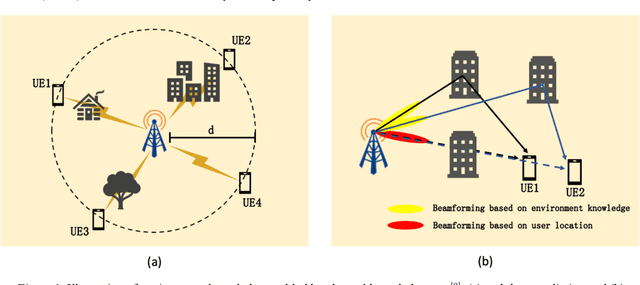
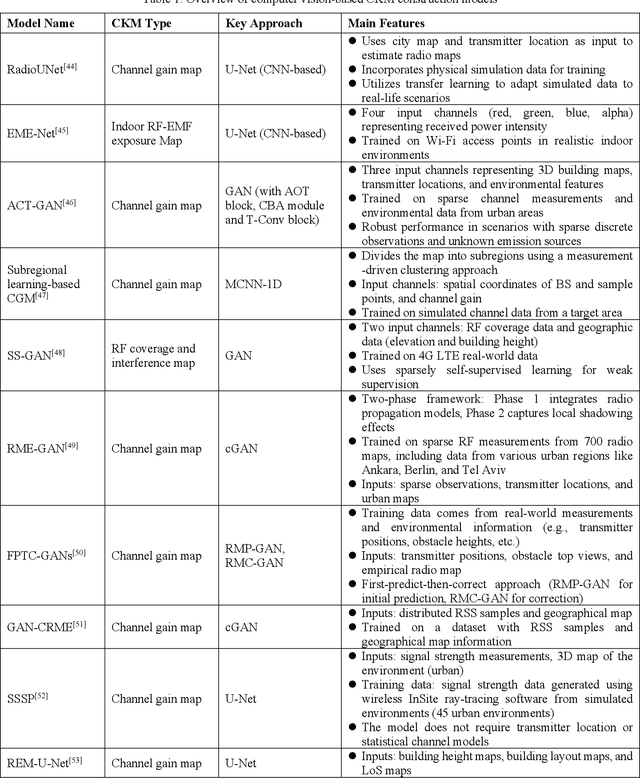
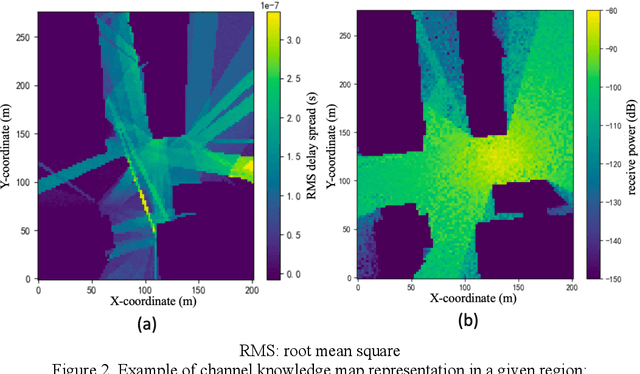
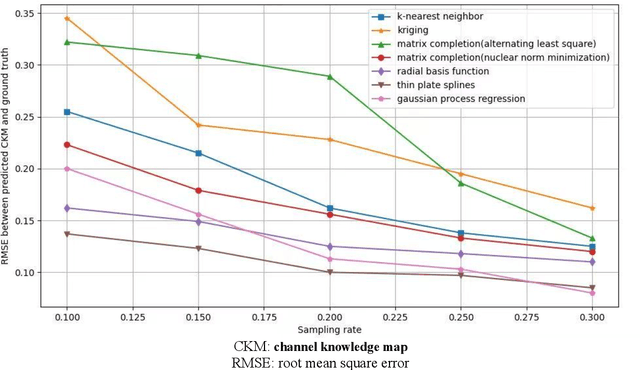
The advent of 6G wireless networks promises unprecedented connectivity, supporting ultra-high data rates, low latency, and massive device connectivity. However, these ambitious goals introduce significant challenges, particularly in channel estimation due to complex and dynamic propagation environments. This paper explores the concept of channel knowledge maps (CKMs) as a solution to these challenges. CKMs enable environment-aware communications by providing location-specific channel information, reducing reliance on real-time pilot measurements. We categorize CKM construction techniques into measurement-based, model-based, and hybrid methods, and examine their key applications in integrated sensing and communication systems, beamforming, trajectory optimization of unmanned aerial vehicles, base station placement, and resource allocation. Furthermore, we discuss open challenges and propose future research directions to enhance the robustness, accuracy, and scalability of CKM-based systems in the evolving 6G landscape.