 Add to Chrome
 Add to Firefox
 Add to Edge
CCL-D: A High-Precision Diagnostic System for Slow and Hang Anomalies in Large-Scale Model Training
May 06, 2026
As training scales grow, collective communication libraries (CCL) increasingly face anomalies arising from complex interactions among hardware, software, and environmental factors. These anomalies typically manifest as slow/hang communication, the most frequent and time-consuming category to diagnose. However, traditional diagnostic methods remain inaccurate and inefficient, frequently requiring hours or even days for root cause analysis. To address this, we propose CCL-D, a high-precision diagnostic system designed to detect and locate slow/hang anomalies in large-scale distributed training. CCL-D integrates a rank-level real-time probe with an intelligent decision analyzer. The probe measures cross-layer anomaly metrics using a lightweight distributed tracing framework to monitor communication traffic. The analyzer performs automated anomaly detection and root-cause location, precisely identifying the faulty GPU rank. Deployed on a 4,000-GPU cluster over one year, CCL-D achieved near-complete coverage of known slow/hang anomalies and pinpointed affected ranks within 6 minutes-substantially outperforming existing solutions.

Every FLOP Counts: Scaling a 300B Mixture-of-Experts LING LLM without Premium GPUs
Mar 07, 2025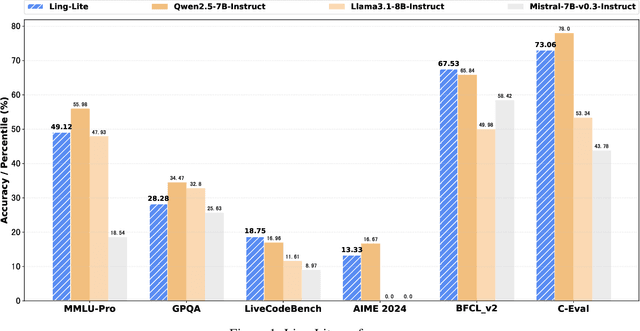
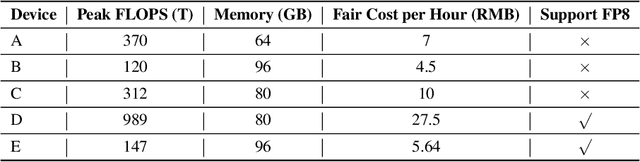
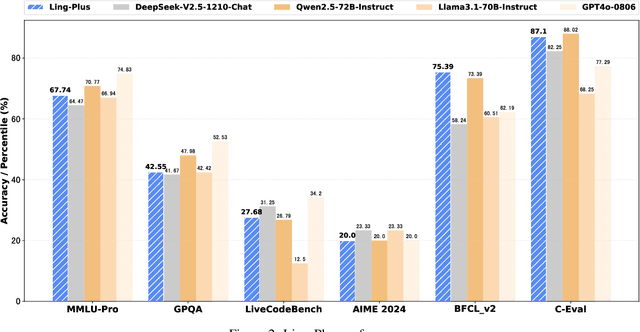
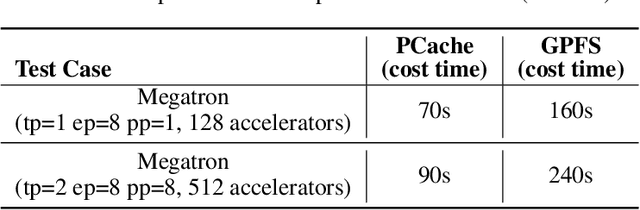
In this technical report, we tackle the challenges of training large-scale Mixture of Experts (MoE) models, focusing on overcoming cost inefficiency and resource limitations prevalent in such systems. To address these issues, we present two differently sized MoE large language models (LLMs), namely Ling-Lite and Ling-Plus (referred to as "Bailing" in Chinese, spelled B\v{a}il\'ing in Pinyin). Ling-Lite contains 16.8 billion parameters with 2.75 billion activated parameters, while Ling-Plus boasts 290 billion parameters with 28.8 billion activated parameters. Both models exhibit comparable performance to leading industry benchmarks. This report offers actionable insights to improve the efficiency and accessibility of AI development in resource-constrained settings, promoting more scalable and sustainable technologies. Specifically, to reduce training costs for large-scale MoE models, we propose innovative methods for (1) optimization of model architecture and training processes, (2) refinement of training anomaly handling, and (3) enhancement of model evaluation efficiency. Additionally, leveraging high-quality data generated from knowledge graphs, our models demonstrate superior capabilities in tool use compared to other models. Ultimately, our experimental findings demonstrate that a 300B MoE LLM can be effectively trained on lower-performance devices while achieving comparable performance to models of a similar scale, including dense and MoE models. Compared to high-performance devices, utilizing a lower-specification hardware system during the pre-training phase demonstrates significant cost savings, reducing computing costs by approximately 20%. The models can be accessed at https://huggingface.co/inclusionAI.