 Add to Chrome
 Add to Firefox
 Add to Edge
CleanGraph: Human-in-the-loop Knowledge Graph Refinement and Completion
May 08, 2024
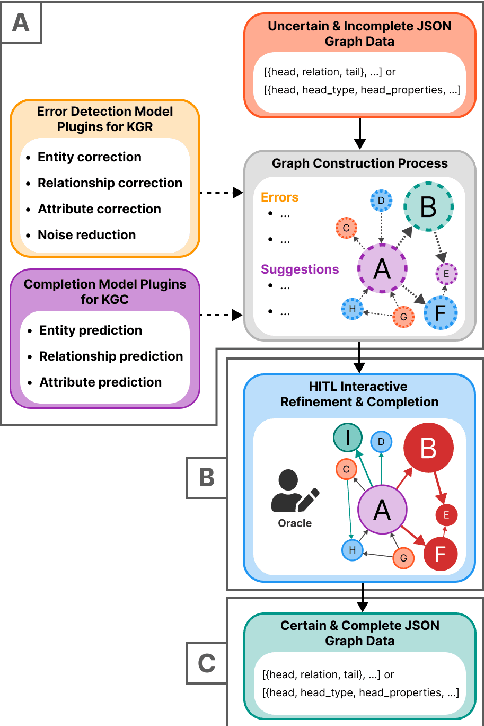
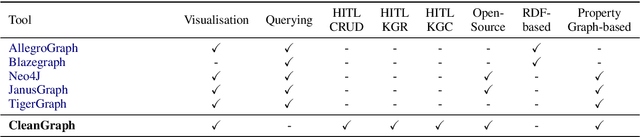
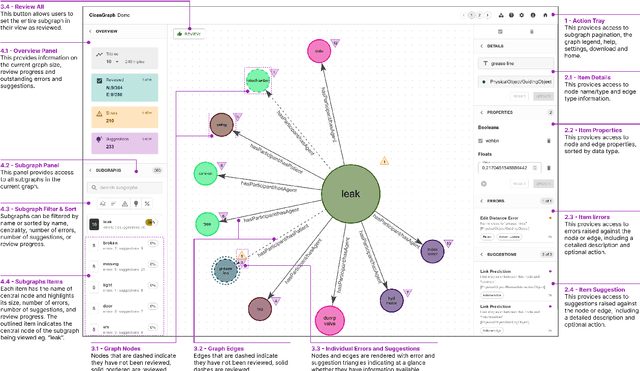
This paper presents CleanGraph, an interactive web-based tool designed to facilitate the refinement and completion of knowledge graphs. Maintaining the reliability of knowledge graphs, which are grounded in high-quality and error-free facts, is crucial for real-world applications such as question-answering and information retrieval systems. These graphs are often automatically assembled from textual sources by extracting semantic triples via information extraction. However, assuring the quality of these extracted triples, especially when dealing with large or low-quality datasets, can pose a significant challenge and adversely affect the performance of downstream applications. CleanGraph allows users to perform Create, Read, Update, and Delete (CRUD) operations on their graphs, as well as apply models in the form of plugins for graph refinement and completion tasks. These functionalities enable users to enhance the integrity and reliability of their graph data. A demonstration of CleanGraph and its source code can be accessed at https://github.com/nlp-tlp/CleanGraph under the MIT License.

Iterative Experience Refinement of Software-Developing Agents
May 07, 2024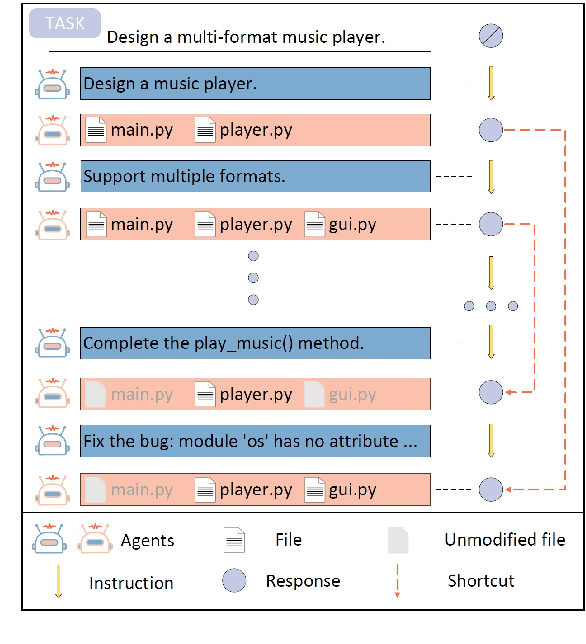
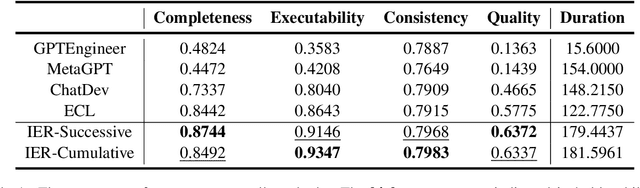
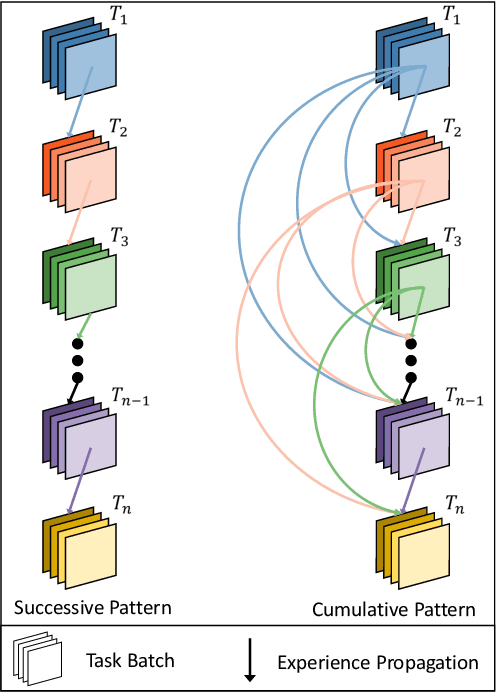
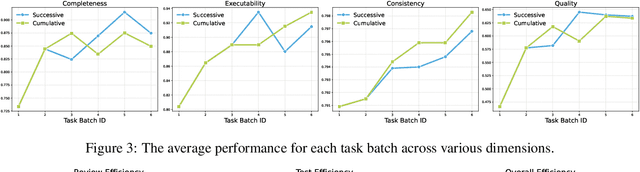
Autonomous agents powered by large language models (LLMs) show significant potential for achieving high autonomy in various scenarios such as software development. Recent research has shown that LLM agents can leverage past experiences to reduce errors and enhance efficiency. However, the static experience paradigm, reliant on a fixed collection of past experiences acquired heuristically, lacks iterative refinement and thus hampers agents' adaptability. In this paper, we introduce the Iterative Experience Refinement framework, enabling LLM agents to refine experiences iteratively during task execution. We propose two fundamental patterns: the successive pattern, refining based on nearest experiences within a task batch, and the cumulative pattern, acquiring experiences across all previous task batches. Augmented with our heuristic experience elimination, the method prioritizes high-quality and frequently-used experiences, effectively managing the experience space and enhancing efficiency. Extensive experiments show that while the successive pattern may yield superior results, the cumulative pattern provides more stable performance. Moreover, experience elimination facilitates achieving better performance using just 11.54% of a high-quality subset.
Energy-Latency Manipulation of Multi-modal Large Language Models via Verbose Samples
Apr 25, 2024Despite the exceptional performance of multi-modal large language models (MLLMs), their deployment requires substantial computational resources. Once malicious users induce high energy consumption and latency time (energy-latency cost), it will exhaust computational resources and harm availability of service. In this paper, we investigate this vulnerability for MLLMs, particularly image-based and video-based ones, and aim to induce high energy-latency cost during inference by crafting an imperceptible perturbation. We find that high energy-latency cost can be manipulated by maximizing the length of generated sequences, which motivates us to propose verbose samples, including verbose images and videos. Concretely, two modality non-specific losses are proposed, including a loss to delay end-of-sequence (EOS) token and an uncertainty loss to increase the uncertainty over each generated token. In addition, improving diversity is important to encourage longer responses by increasing the complexity, which inspires the following modality specific loss. For verbose images, a token diversity loss is proposed to promote diverse hidden states. For verbose videos, a frame feature diversity loss is proposed to increase the feature diversity among frames. To balance these losses, we propose a temporal weight adjustment algorithm. Experiments demonstrate that our verbose samples can largely extend the length of generated sequences.
Atomas: Hierarchical Alignment on Molecule-Text for Unified Molecule Understanding and Generation
Apr 23, 2024Molecule-and-text cross-modal representation learning has emerged as a promising direction for enhancing the quality of molecular representation, thereby improving performance in various scientific fields, including drug discovery and materials science. Existing studies adopt a global alignment approach to learn the knowledge from different modalities. These global alignment approaches fail to capture fine-grained information, such as molecular fragments and their corresponding textual description, which is crucial for downstream tasks. Furthermore, it is incapable to model such information using a similar global alignment strategy due to data scarcity of paired local part annotated data from existing datasets. In this paper, we propose Atomas, a multi-modal molecular representation learning framework to jointly learn representations from SMILES string and text. We design a Hierarchical Adaptive Alignment model to concurrently learn the fine-grained fragment correspondence between two modalities and align these representations of fragments in three levels. Additionally, Atomas's end-to-end training framework incorporates the tasks of understanding and generating molecule, thereby supporting a wider range of downstream tasks. In the retrieval task, Atomas exhibits robust generalization ability and outperforms the baseline by 30.8% of recall@1 on average. In the generation task, Atomas achieves state-of-the-art results in both molecule captioning task and molecule generation task. Moreover, the visualization of the Hierarchical Adaptive Alignment model further confirms the chemical significance of our approach. Our codes can be found at https://anonymous.4open.science/r/Atomas-03C3.
Functional Protein Design with Local Domain Alignment
Apr 18, 2024
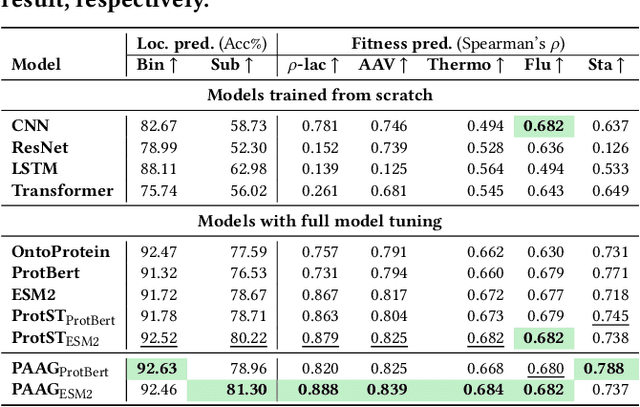


The core challenge of de novo protein design lies in creating proteins with specific functions or properties, guided by certain conditions. Current models explore to generate protein using structural and evolutionary guidance, which only provide indirect conditions concerning functions and properties. However, textual annotations of proteins, especially the annotations for protein domains, which directly describe the protein's high-level functionalities, properties, and their correlation with target amino acid sequences, remain unexplored in the context of protein design tasks. In this paper, we propose Protein-Annotation Alignment Generation (PAAG), a multi-modality protein design framework that integrates the textual annotations extracted from protein database for controllable generation in sequence space. Specifically, within a multi-level alignment module, PAAG can explicitly generate proteins containing specific domains conditioned on the corresponding domain annotations, and can even design novel proteins with flexible combinations of different kinds of annotations. Our experimental results underscore the superiority of the aligned protein representations from PAAG over 7 prediction tasks. Furthermore, PAAG demonstrates a nearly sixfold increase in generation success rate (24.7% vs 4.7% in zinc finger, and 54.3% vs 8.7% in the immunoglobulin domain) in comparison to the existing model.
What Causes the Failure of Explicit to Implicit Discourse Relation Recognition?
Apr 01, 2024We consider an unanswered question in the discourse processing community: why do relation classifiers trained on explicit examples (with connectives removed) perform poorly in real implicit scenarios? Prior work claimed this is due to linguistic dissimilarity between explicit and implicit examples but provided no empirical evidence. In this study, we show that one cause for such failure is a label shift after connectives are eliminated. Specifically, we find that the discourse relations expressed by some explicit instances will change when connectives disappear. Unlike previous work manually analyzing a few examples, we present empirical evidence at the corpus level to prove the existence of such shift. Then, we analyze why label shift occurs by considering factors such as the syntactic role played by connectives, ambiguity of connectives, and more. Finally, we investigate two strategies to mitigate the label shift: filtering out noisy data and joint learning with connectives. Experiments on PDTB 2.0, PDTB 3.0, and the GUM dataset demonstrate that classifiers trained with our strategies outperform strong baselines.
LocalStyleFool: Regional Video Style Transfer Attack Using Segment Anything Model
Mar 27, 2024


Previous work has shown that well-crafted adversarial perturbations can threaten the security of video recognition systems. Attackers can invade such models with a low query budget when the perturbations are semantic-invariant, such as StyleFool. Despite the query efficiency, the naturalness of the minutia areas still requires amelioration, since StyleFool leverages style transfer to all pixels in each frame. To close the gap, we propose LocalStyleFool, an improved black-box video adversarial attack that superimposes regional style-transfer-based perturbations on videos. Benefiting from the popularity and scalably usability of Segment Anything Model (SAM), we first extract different regions according to semantic information and then track them through the video stream to maintain the temporal consistency. Then, we add style-transfer-based perturbations to several regions selected based on the associative criterion of transfer-based gradient information and regional area. Perturbation fine adjustment is followed to make stylized videos adversarial. We demonstrate that LocalStyleFool can improve both intra-frame and inter-frame naturalness through a human-assessed survey, while maintaining competitive fooling rate and query efficiency. Successful experiments on the high-resolution dataset also showcase that scrupulous segmentation of SAM helps to improve the scalability of adversarial attacks under high-resolution data.
Variational Graph Auto-Encoder Based Inductive Learning Method for Semi-Supervised Classification
Mar 26, 2024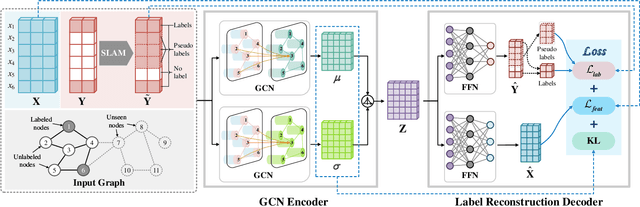
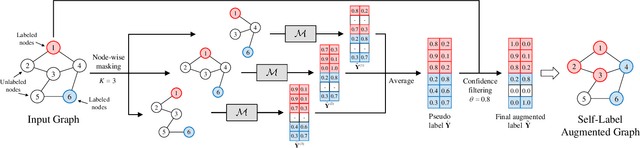
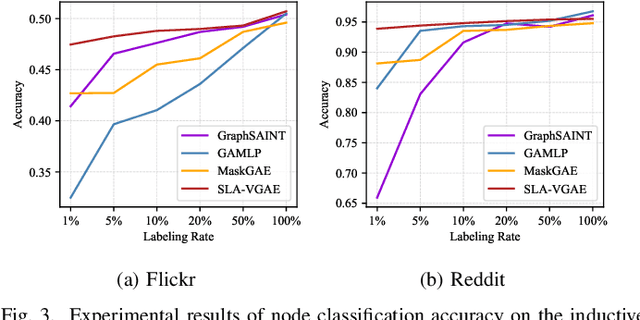
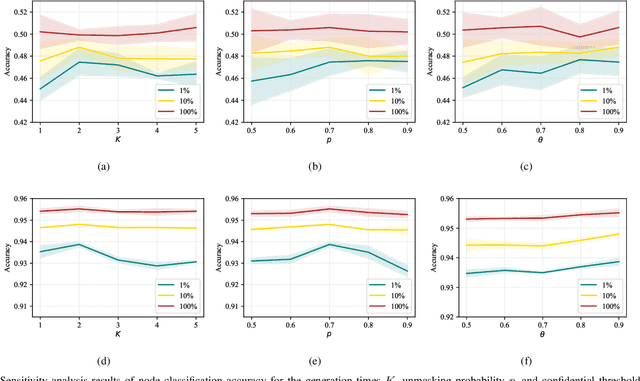
Graph representation learning is a fundamental research issue in various domains of applications, of which the inductive learning problem is particularly challenging as it requires models to generalize to unseen graph structures during inference. In recent years, graph neural networks (GNNs) have emerged as powerful graph models for inductive learning tasks such as node classification, whereas they typically heavily rely on the annotated nodes under a fully supervised training setting. Compared with the GNN-based methods, variational graph auto-encoders (VGAEs) are known to be more generalizable to capture the internal structural information of graphs independent of node labels and have achieved prominent performance on multiple unsupervised learning tasks. However, so far there is still a lack of work focusing on leveraging the VGAE framework for inductive learning, due to the difficulties in training the model in a supervised manner and avoiding over-fitting the proximity information of graphs. To solve these problems and improve the model performance of VGAEs for inductive graph representation learning, in this work, we propose the Self-Label Augmented VGAE model. To leverage the label information for training, our model takes node labels as one-hot encoded inputs and then performs label reconstruction in model training. To overcome the scarcity problem of node labels for semi-supervised settings, we further propose the Self-Label Augmentation Method (SLAM), which uses pseudo labels generated by our model with a node-wise masking approach to enhance the label information. Experiments on benchmark inductive learning graph datasets verify that our proposed model archives promising results on node classification with particular superiority under semi-supervised learning settings.
CodeS: Natural Language to Code Repository via Multi-Layer Sketch
Mar 25, 2024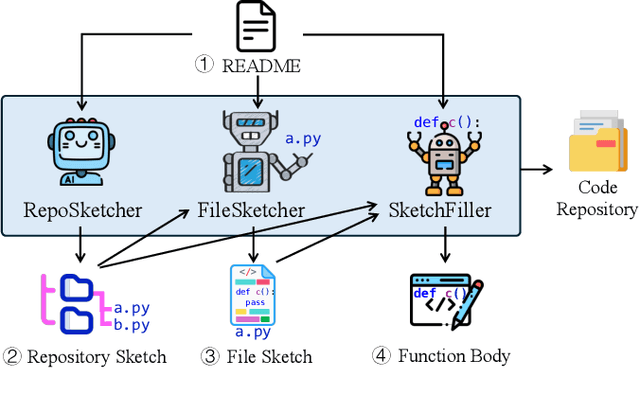
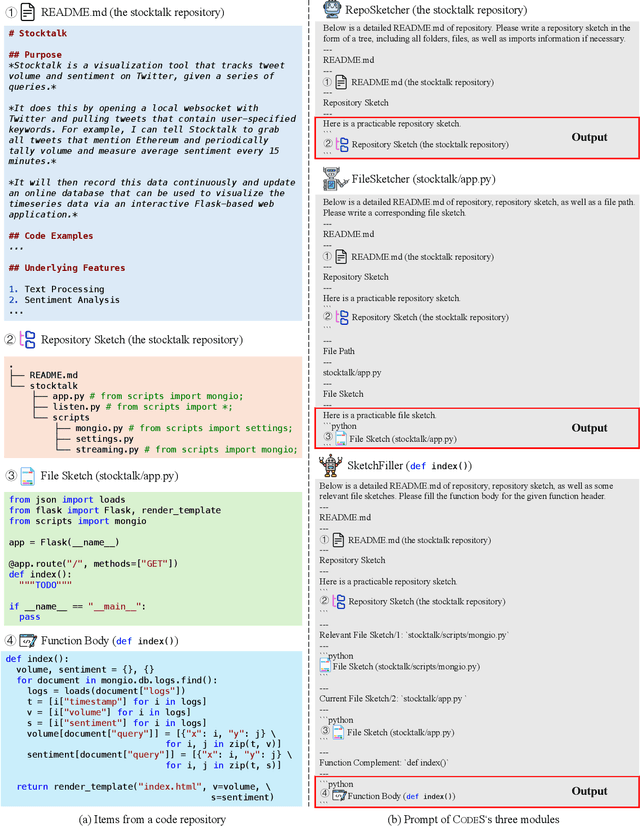

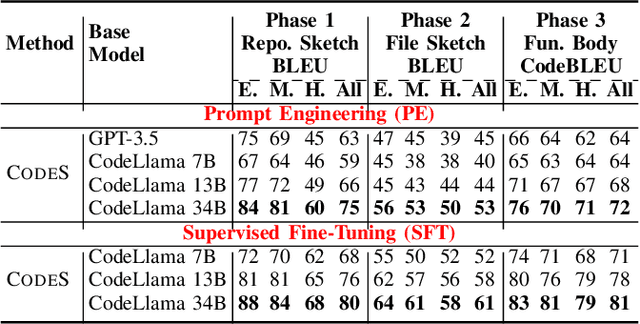
The impressive performance of large language models (LLMs) on code-related tasks has shown the potential of fully automated software development. In light of this, we introduce a new software engineering task, namely Natural Language to code Repository (NL2Repo). This task aims to generate an entire code repository from its natural language requirements. To address this task, we propose a simple yet effective framework CodeS, which decomposes NL2Repo into multiple sub-tasks by a multi-layer sketch. Specifically, CodeS includes three modules: RepoSketcher, FileSketcher, and SketchFiller. RepoSketcher first generates a repository's directory structure for given requirements; FileSketcher then generates a file sketch for each file in the generated structure; SketchFiller finally fills in the details for each function in the generated file sketch. To rigorously assess CodeS on the NL2Repo task, we carry out evaluations through both automated benchmarking and manual feedback analysis. For benchmark-based evaluation, we craft a repository-oriented benchmark, SketchEval, and design an evaluation metric, SketchBLEU. For feedback-based evaluation, we develop a VSCode plugin for CodeS and engage 30 participants in conducting empirical studies. Extensive experiments prove the effectiveness and practicality of CodeS on the NL2Repo task.
Reversible Jump Attack to Textual Classifiers with Modification Reduction
Mar 21, 2024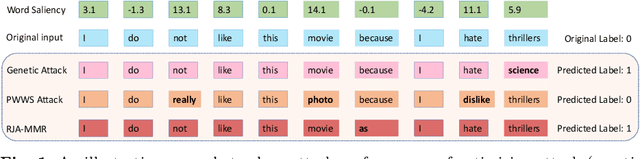
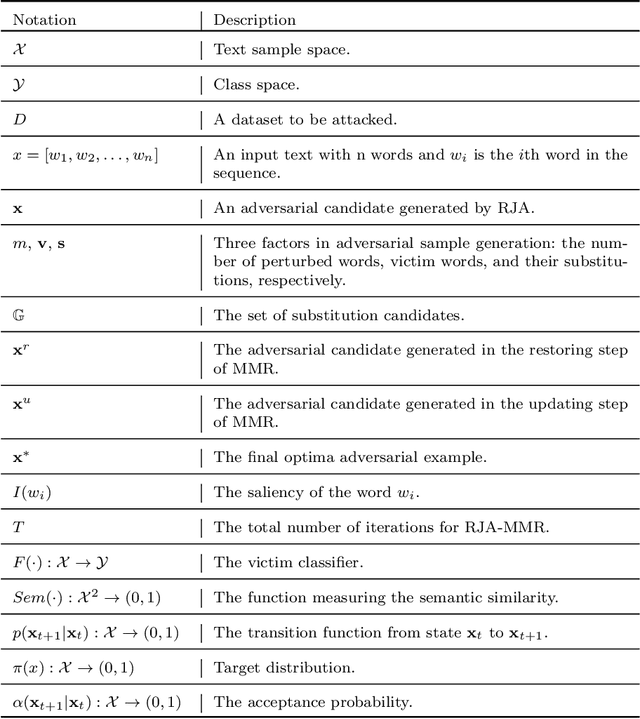
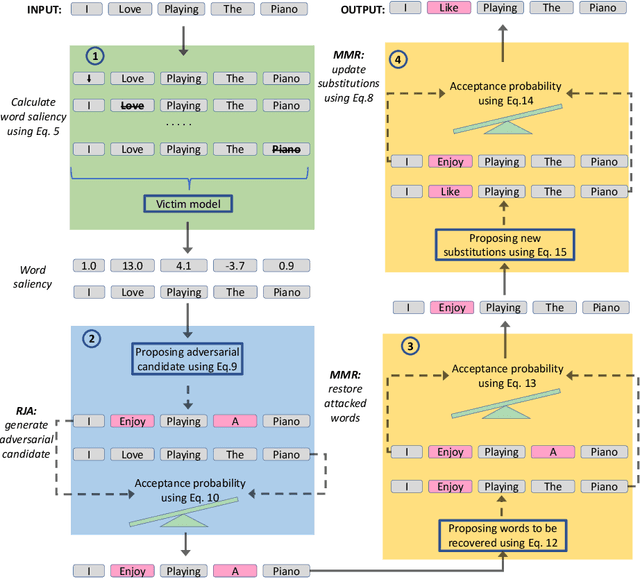
Recent studies on adversarial examples expose vulnerabilities of natural language processing (NLP) models. Existing techniques for generating adversarial examples are typically driven by deterministic hierarchical rules that are agnostic to the optimal adversarial examples, a strategy that often results in adversarial samples with a suboptimal balance between magnitudes of changes and attack successes. To this end, in this research we propose two algorithms, Reversible Jump Attack (RJA) and Metropolis-Hasting Modification Reduction (MMR), to generate highly effective adversarial examples and to improve the imperceptibility of the examples, respectively. RJA utilizes a novel randomization mechanism to enlarge the search space and efficiently adapts to a number of perturbed words for adversarial examples. With these generated adversarial examples, MMR applies the Metropolis-Hasting sampler to enhance the imperceptibility of adversarial examples. Extensive experiments demonstrate that RJA-MMR outperforms current state-of-the-art methods in attack performance, imperceptibility, fluency and grammar correctness.