 Add to Chrome
 Add to Firefox
 Add to Edge
Magnetically Self-Sealed MR Haptic Actuator With PWM-Based Excitation and High-Fidelity Torque Control
Aug 20, 2026
Accurate and stable torque rendering is essential for safe and perceptive human--machine interaction. Magnetorheological fluid (MRF)-based actuators offer a compact and rapidly controllable solution for haptic feedback, but their practical implementation requires reliable fluid sealing, low-hysteresis excitation, accurate torque control, and stable long-duration operation. This article presents an integrated MRF haptic system featuring a compact magnetically self-sealed rotary actuator, low-hysteresis PWM operation, high-fidelity model-based torque rendering, and stable performance during long-time operation. Magnetostatic simulation guides the arrangement of magnetic and nonmagnetic materials to focus flux in the multidisk torque and permanent-magnet sealing regions, enabling a maximum 600 N$\cdot$mm/A output. Experiments show that higher PWM frequencies reduce hysteresis and improve repeatability. At 10 kHz, the response is represented by a nonlinear model that varies with the direction and speed of torque change. The real-time controller combines feedforward, hysteresis compensation, PI feedback, and sliding-mode correction. Compared with PID, it reduces square-wave overshoot, undershoot, and steady-state RMSE by 77.4\%, 61.9\%, and 68.3\%, respectively. It tracks sinusoidal and biomechanics-model-based references, and a 1.5-h test shows only a 2.5 $^\circ$C rise near the coil with no clear tracking loss. This high-fidelity torque rendering will fundamentally transform human--robot collaboration by making interactions safer, more efficient, and more intuitive.

Kimi K3: Open Frontier Intelligence
Jul 27, 2026We introduce Kimi K3, a 2.8T parameter Mixture-of-Experts model with 104 billion activated parameters, native vision capabilities, and a 1-million-token context window. Kimi K3 is built on Kimi Delta Attention and Attention Residuals, which improve information flow across sequence length and model depth. Together with Stable LatentMoE, which effectively activates 16 of 896 routed experts per token, and refined training and data recipes, these advances yield an approximately 2.5x improvement in overall scaling efficiency over Kimi K2. Post-training highlights reinforcement learning across general, agentic, and coding domains and multiple reasoning-effort levels, enabling compositional generalization and robust long-horizon execution. At 2.8T scale, Kimi K3 is supported by infrastructure advances in multiple areas: algorithm-system co-design for KDA, perfectly balanced expert-parallel training with efficient memory management, million-token agentic RL with persistent rollout and sandbox states, and deployment innovations. Extensive evaluations show that Kimi K3 achieves frontier-level performance across long-horizon coding, agentic, knowledge, reasoning, and vision tasks. While its overall performance still trails the most powerful proprietary models, namely Claude Fable 5 and GPT-5.6 Sol, Kimi K3 consistently outperforms other open and proprietary models evaluated in our suite. We release the full Kimi K3 model weights to facilitate future research and accelerate the broader deployment and adoption of frontier intelligence.
Emputation: Identification-Guided Neural Imputation Framework
Jul 06, 2026We propose Emputation, a deep generative framework for learning imputation models. Emputation targets the extrapolation distribution of missing variables given observed variables, and training is guided by specific missingness assumptions that guarantee identification of the target distribution. The training objective, called the emputation risk, is an energy-score-based risk in which the identification assumption determines how observed entries are masked and which observations contribute to training. The resulting framework enables direct conditional sampling for multiple imputation. We show that the population minimizer of the emputation risk recovers the target extrapolation distribution under a broad class of identification assumptions, including several missing-not-at-random assumptions. Simulations show strong performance under both pointwise and distributional evaluation metrics, and an application to an Alzheimer's disease dataset demonstrates its practical value.
VCC-DSA: A Novel Vascular Consistency Constrained DSA Imaging Model for Motion Artifact Suppression
Apr 12, 2026Digital Subtraction Angiography (DSA) is a clinically significant imaging technique for diagnosing cerebrovascular disease, as gold-standard. However, the artifacts caused by motion of high-attenuation tissues such as bones, teeth, and catheters, seriously reduce the visibility of blood vessels. This paper presents a novel Vascular Consistency Constrained DSA Imaging Model (VCC-DSA) for robust motion suppression and precise vascular imaging with the following designs: 1) We specially design a Learning-based Subtraction Mapping Paradigm, so that the ill-posed problem of existing learning-based methods can be solved to enhance the stability of the algorithm. 2) Our model effectively develops Residual Dense Blocks and details-shortcut to improve the performance under complex structures, such as moving bones overlapping with blood vessels, and small features, like peripheral vessels. 3) An innovative Vascular Consistency Strategy is proposed to extract intrinsically consistency from the various relative motions in mask-live images, so that spontaneously distils the vascular structure with contrast-agent development and robustly suppress motion artifacts, and also naturally alleviates the high matching requirements of data. 4) We creatively design a Mixup-based Data Self-evolution Strategy for data-intra self-enhancement in training loop, so that the training data gains dynamically optimized to promote model better learning the vascular features, and excluding the irrelevant structures in live/mask image and even the inevitable-artifacts/fake-structure in label. Prospectively, to further evaluate practical value, an actual general anesthesia animal experiment is specially conducted, besides the assessment on human clinical data. Compared with other method, our model improves the PSNR and SSIM by 73.4% and 8.56%, respectively.
PLOT-CT: Pre-log Voronoi Decomposition Assisted Generation for Low-dose CT Reconstruction
Feb 12, 2026Low-dose computed tomography (LDCT) reconstruction is fundamentally challenged by severe noise and compromised data fidelity under reduced radiation exposure. Most existing methods operate either in the image or post-log projection domain, which fails to fully exploit the rich structural information in pre-log measurements while being highly susceptible to noise. The requisite logarithmic transformation critically amplifies noise within these data, imposing exceptional demands on reconstruction precision. To overcome these challenges, we propose PLOT-CT, a novel framework for Pre-Log vOronoi decomposiTion-assisted CT generation. Our method begins by applying Voronoi decomposition to pre-log sinograms, disentangling the data into distinct underlying components, which are embedded in separate latent spaces. This explicit decomposition significantly enhances the model's capacity to learn discriminative features, directly improving reconstruction accuracy by mitigating noise and preserving information inherent in the pre-log domain. Extensive experiments demonstrate that PLOT-CT achieves state-of-the-art performance, attaining a 2.36dB PSNR improvement over traditional methods at the 1e4 incident photon level in the pre-log domain.
Transfer Learning Through Conditional Quantile Matching
Feb 02, 2026We introduce a transfer learning framework for regression that leverages heterogeneous source domains to improve predictive performance in a data-scarce target domain. Our approach learns a conditional generative model separately for each source domain and calibrates the generated responses to the target domain via conditional quantile matching. This distributional alignment step corrects general discrepancies between source and target domains without imposing restrictive assumptions such as covariate or label shift. The resulting framework provides a principled and flexible approach to high-quality data augmentation for downstream learning tasks in the target domain. From a theoretical perspective, we show that an empirical risk minimizer (ERM) trained on the augmented dataset achieves a tighter excess risk bound than the target-only ERM under mild conditions. In particular, we establish new convergence rates for the quantile matching estimator that governs the transfer bias-variance tradeoff. From a practical perspective, extensive simulations and real data applications demonstrate that the proposed method consistently improves prediction accuracy over target-only learning and competing transfer learning methods.
Iterative Diffusion-Refined Neural Attenuation Fields for Multi-Source Stationary CT Reconstruction: NAF Meets Diffusion Model
Nov 18, 2025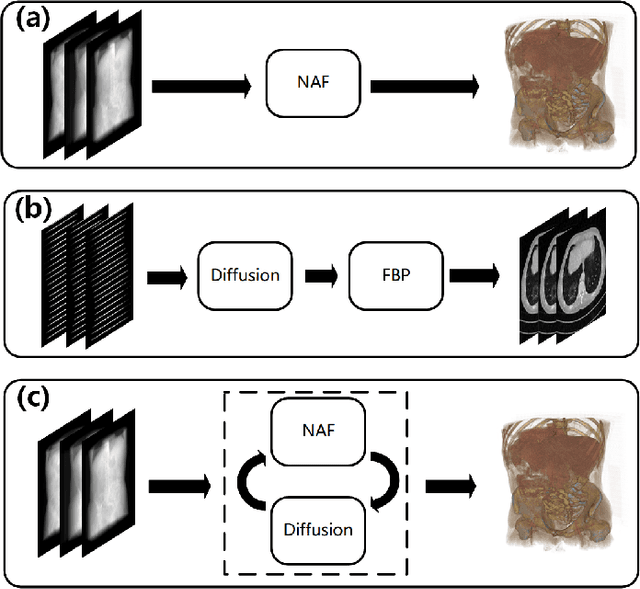
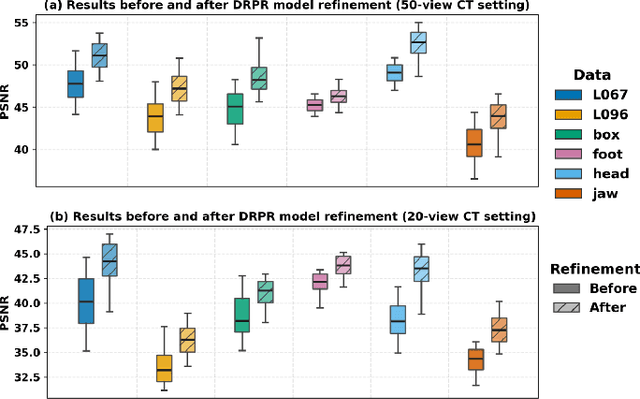
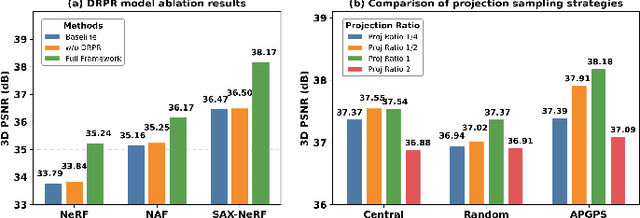
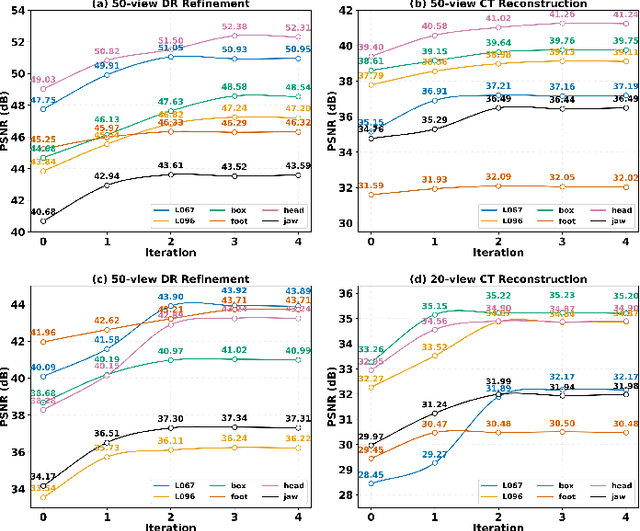
Multi-source stationary computed tomography (CT) has recently attracted attention for its ability to achieve rapid image reconstruction, making it suitable for time-sensitive clinical and industrial applications. However, practical systems are often constrained by ultra-sparse-view sampling, which significantly degrades reconstruction quality. Traditional methods struggle under ultra-sparse-view settings, where interpolation becomes inaccurate and the resulting reconstructions are unsatisfactory. To address this challenge, this study proposes Diffusion-Refined Neural Attenuation Fields (Diff-NAF), an iterative framework tailored for multi-source stationary CT under ultra-sparse-view conditions. Diff-NAF combines a Neural Attenuation Field representation with a dual-branch conditional diffusion model. The process begins by training an initial NAF using ultra-sparse-view projections. New projections are then generated through an Angle-Prior Guided Projection Synthesis strategy that exploits inter view priors, and are subsequently refined by a Diffusion-driven Reuse Projection Refinement Module. The refined projections are incorporated as pseudo-labels into the training set for the next iteration. Through iterative refinement, Diff-NAF progressively enhances projection completeness and reconstruction fidelity under ultra-sparse-view conditions, ultimately yielding high-quality CT reconstructions. Experimental results on multiple simulated 3D CT volumes and real projection data demonstrate that Diff-NAF achieves the best performance under ultra-sparse-view conditions.
A Comparative Review of RNA Language Models
May 14, 2025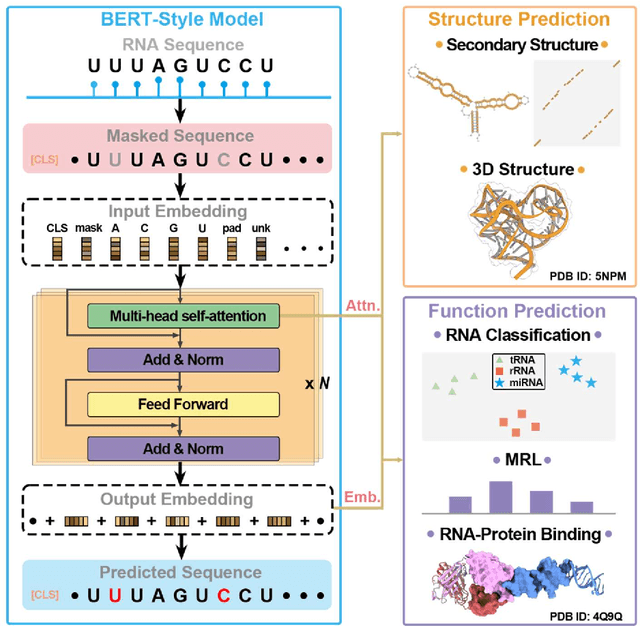
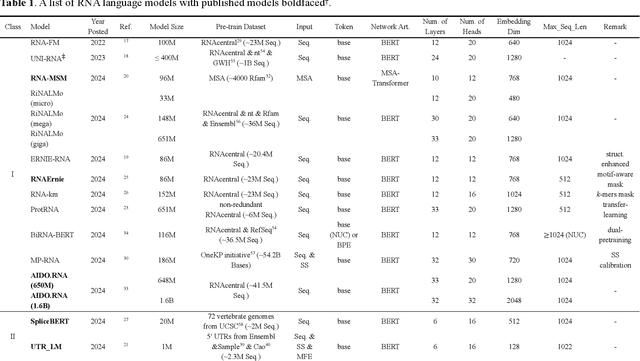
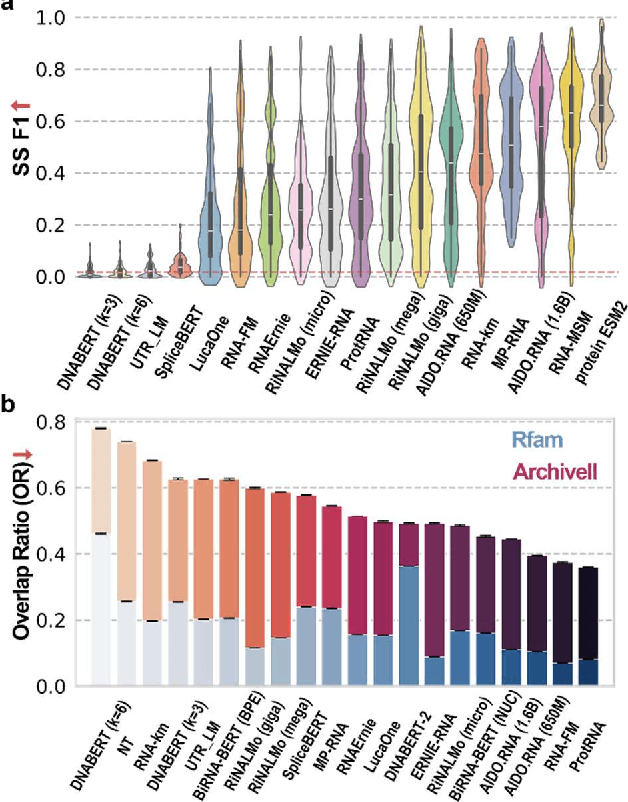
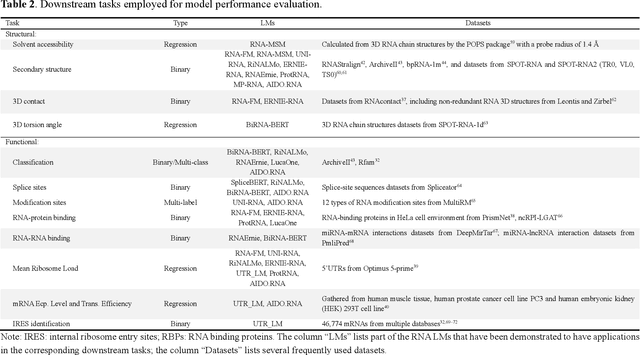
Given usefulness of protein language models (LMs) in structure and functional inference, RNA LMs have received increased attentions in the last few years. However, these RNA models are often not compared against the same standard. Here, we divided RNA LMs into three classes (pretrained on multiple RNA types (especially noncoding RNAs), specific-purpose RNAs, and LMs that unify RNA with DNA or proteins or both) and compared 13 RNA LMs along with 3 DNA and 1 protein LMs as controls in zero-shot prediction of RNA secondary structure and functional classification. Results shows that the models doing well on secondary structure prediction often perform worse in function classification or vice versa, suggesting that more balanced unsupervised training is needed.
Doubly Robust Inference on Causal Derivative Effects for Continuous Treatments
Jan 12, 2025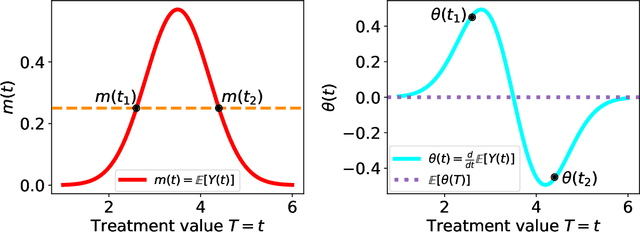
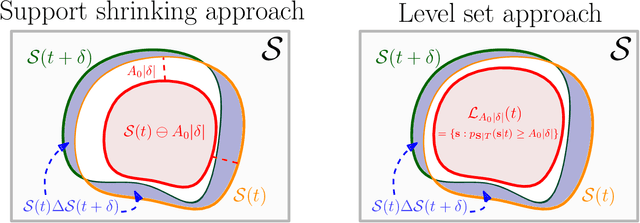
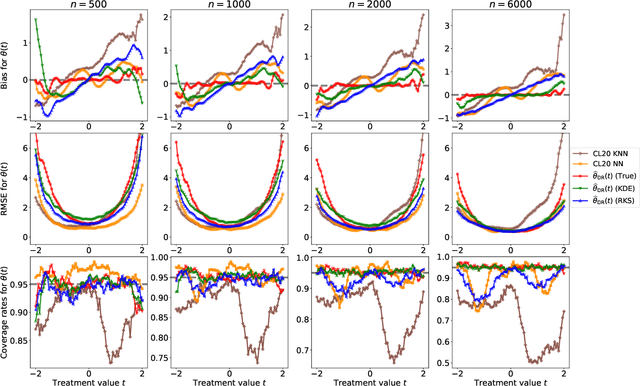
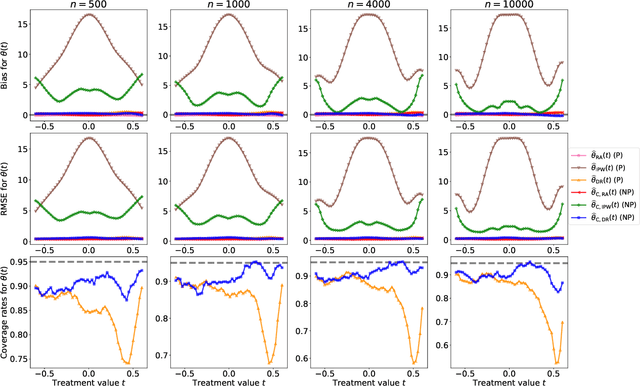
Statistical methods for causal inference with continuous treatments mainly focus on estimating the mean potential outcome function, commonly known as the dose-response curve. However, it is often not the dose-response curve but its derivative function that signals the treatment effect. In this paper, we investigate nonparametric inference on the derivative of the dose-response curve with and without the positivity condition. Under the positivity and other regularity conditions, we propose a doubly robust (DR) inference method for estimating the derivative of the dose-response curve using kernel smoothing. When the positivity condition is violated, we demonstrate the inconsistency of conventional inverse probability weighting (IPW) and DR estimators, and introduce novel bias-corrected IPW and DR estimators. In all settings, our DR estimator achieves asymptotic normality at the standard nonparametric rate of convergence. Additionally, our approach reveals an interesting connection to nonparametric support and level set estimation problems. Finally, we demonstrate the applicability of our proposed estimators through simulations and a case study of evaluating a job training program.
BLADE: Benchmarking Language Model Agents for Data-Driven Science
Aug 20, 2024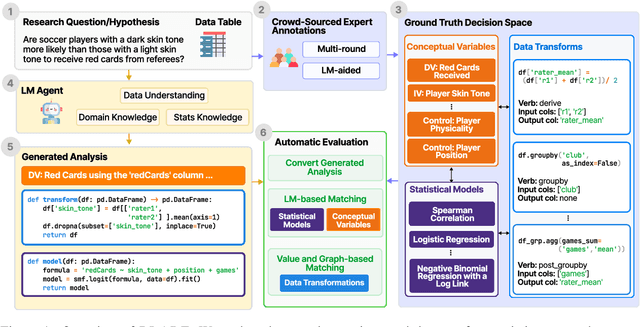
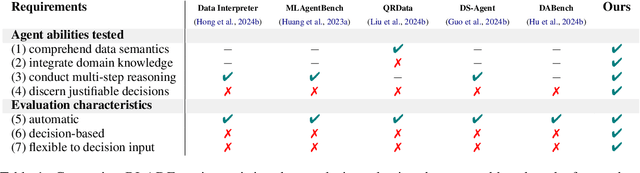
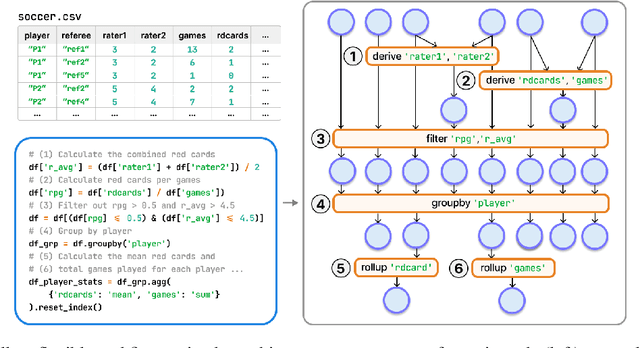
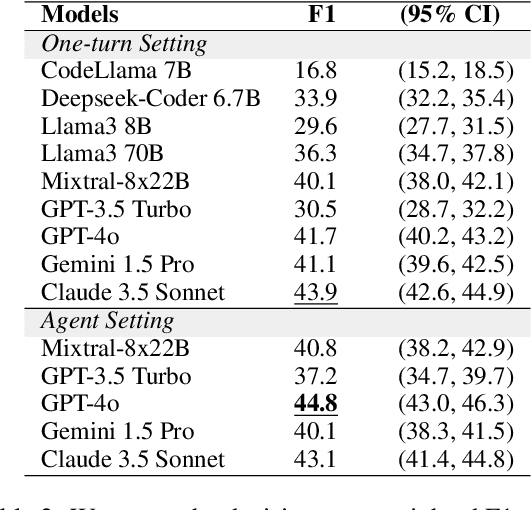
Data-driven scientific discovery requires the iterative integration of scientific domain knowledge, statistical expertise, and an understanding of data semantics to make nuanced analytical decisions, e.g., about which variables, transformations, and statistical models to consider. LM-based agents equipped with planning, memory, and code execution capabilities have the potential to support data-driven science. However, evaluating agents on such open-ended tasks is challenging due to multiple valid approaches, partially correct steps, and different ways to express the same decisions. To address these challenges, we present BLADE, a benchmark to automatically evaluate agents' multifaceted approaches to open-ended research questions. BLADE consists of 12 datasets and research questions drawn from existing scientific literature, with ground truth collected from independent analyses by expert data scientists and researchers. To automatically evaluate agent responses, we developed corresponding computational methods to match different representations of analyses to this ground truth. Though language models possess considerable world knowledge, our evaluation shows that they are often limited to basic analyses. However, agents capable of interacting with the underlying data demonstrate improved, but still non-optimal, diversity in their analytical decision making. Our work enables the evaluation of agents for data-driven science and provides researchers deeper insights into agents' analysis approaches.