 Add to Chrome
 Add to Firefox
 Add to Edge
Docs2KG: Unified Knowledge Graph Construction from Heterogeneous Documents Assisted by Large Language Models
Jun 05, 2024


Even for a conservative estimate, 80% of enterprise data reside in unstructured files, stored in data lakes that accommodate heterogeneous formats. Classical search engines can no longer meet information seeking needs, especially when the task is to browse and explore for insight formulation. In other words, there are no obvious search keywords to use. Knowledge graphs, due to their natural visual appeals that reduce the human cognitive load, become the winning candidate for heterogeneous data integration and knowledge representation. In this paper, we introduce Docs2KG, a novel framework designed to extract multimodal information from diverse and heterogeneous unstructured documents, including emails, web pages, PDF files, and Excel files. Dynamically generates a unified knowledge graph that represents the extracted key information, Docs2KG enables efficient querying and exploration of document data lakes. Unlike existing approaches that focus on domain-specific data sources or pre-designed schemas, Docs2KG offers a flexible and extensible solution that can adapt to various document structures and content types. The proposed framework unifies data processing supporting a multitude of downstream tasks with improved domain interpretability. Docs2KG is publicly accessible at https://docs2kg.ai4wa.com, and a demonstration video is available at https://docs2kg.ai4wa.com/Video.

Follow-Your-Pose v2: Multiple-Condition Guided Character Image Animation for Stable Pose Control
Jun 05, 2024
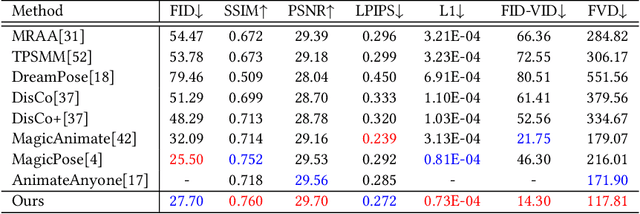
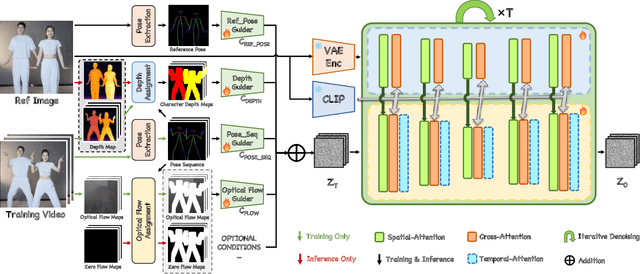

Pose-controllable character video generation is in high demand with extensive applications for fields such as automatic advertising and content creation on social media platforms. While existing character image animation methods using pose sequences and reference images have shown promising performance, they tend to struggle with incoherent animation in complex scenarios, such as multiple character animation and body occlusion. Additionally, current methods request large-scale high-quality videos with stable backgrounds and temporal consistency as training datasets, otherwise, their performance will greatly deteriorate. These two issues hinder the practical utilization of character image animation tools. In this paper, we propose a practical and robust framework Follow-Your-Pose v2, which can be trained on noisy open-sourced videos readily available on the internet. Multi-condition guiders are designed to address the challenges of background stability, body occlusion in multi-character generation, and consistency of character appearance. Moreover, to fill the gap of fair evaluation of multi-character pose animation, we propose a new benchmark comprising approximately 4,000 frames. Extensive experiments demonstrate that our approach outperforms state-of-the-art methods by a margin of over 35\% across 2 datasets and on 7 metrics. Meanwhile, qualitative assessments reveal a significant improvement in the quality of generated video, particularly in scenarios involving complex backgrounds and body occlusion of multi-character, suggesting the superiority of our approach.
Follow-Your-Emoji: Fine-Controllable and Expressive Freestyle Portrait Animation
Jun 04, 2024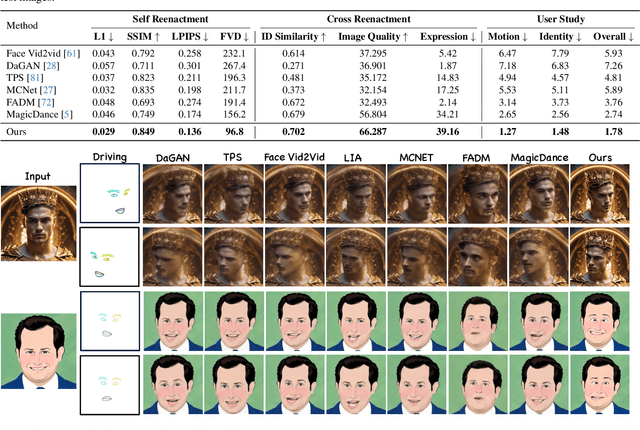
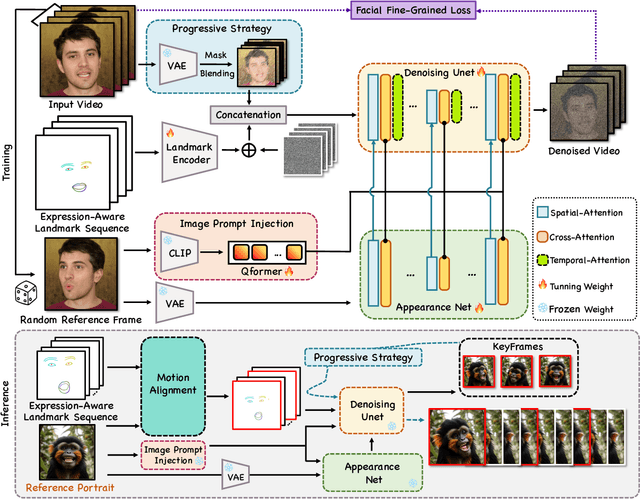
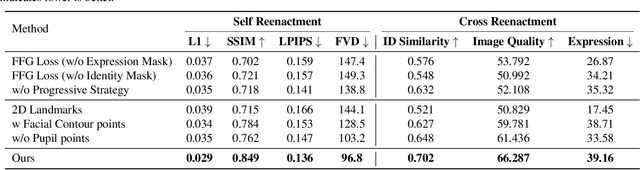
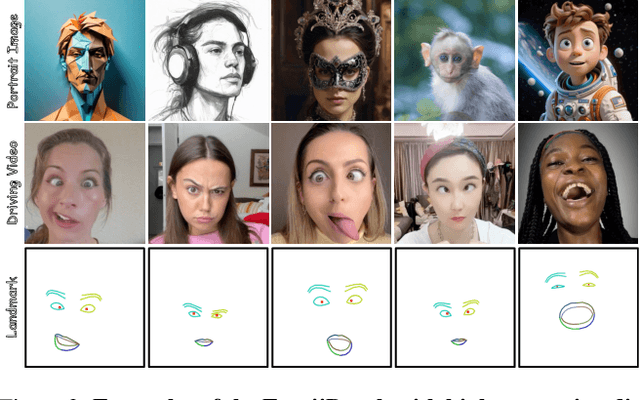
We present Follow-Your-Emoji, a diffusion-based framework for portrait animation, which animates a reference portrait with target landmark sequences. The main challenge of portrait animation is to preserve the identity of the reference portrait and transfer the target expression to this portrait while maintaining temporal consistency and fidelity. To address these challenges, Follow-Your-Emoji equipped the powerful Stable Diffusion model with two well-designed technologies. Specifically, we first adopt a new explicit motion signal, namely expression-aware landmark, to guide the animation process. We discover this landmark can not only ensure the accurate motion alignment between the reference portrait and target motion during inference but also increase the ability to portray exaggerated expressions (i.e., large pupil movements) and avoid identity leakage. Then, we propose a facial fine-grained loss to improve the model's ability of subtle expression perception and reference portrait appearance reconstruction by using both expression and facial masks. Accordingly, our method demonstrates significant performance in controlling the expression of freestyle portraits, including real humans, cartoons, sculptures, and even animals. By leveraging a simple and effective progressive generation strategy, we extend our model to stable long-term animation, thus increasing its potential application value. To address the lack of a benchmark for this field, we introduce EmojiBench, a comprehensive benchmark comprising diverse portrait images, driving videos, and landmarks. We show extensive evaluations on EmojiBench to verify the superiority of Follow-Your-Emoji.
SUBLLM: A Novel Efficient Architecture with Token Sequence Subsampling for LLM
Jun 03, 2024While Large Language Models (LLMs) have achieved remarkable success in various fields, the efficiency of training and inference remains a major challenge. To address this issue, we propose SUBLLM, short for Subsampling-Upsampling-Bypass Large Language Model, an innovative architecture that extends the core decoder-only framework by incorporating subsampling, upsampling, and bypass modules. The subsampling modules are responsible for shortening the sequence, while the upsampling modules restore the sequence length, and the bypass modules enhance convergence. In comparison to LLaMA, the proposed SUBLLM exhibits significant enhancements in both training and inference speeds as well as memory usage, while maintaining competitive few-shot performance. During training, SUBLLM increases speeds by 26% and cuts memory by 10GB per GPU. In inference, it boosts speeds by up to 37% and reduces memory by 1GB per GPU. The training and inference speeds can be enhanced by 34% and 52% respectively when the context window is expanded to 8192. We shall release the source code of the proposed architecture in the published version.
Active Use of Latent Constituency Representation in both Humans and Large Language Models
May 28, 2024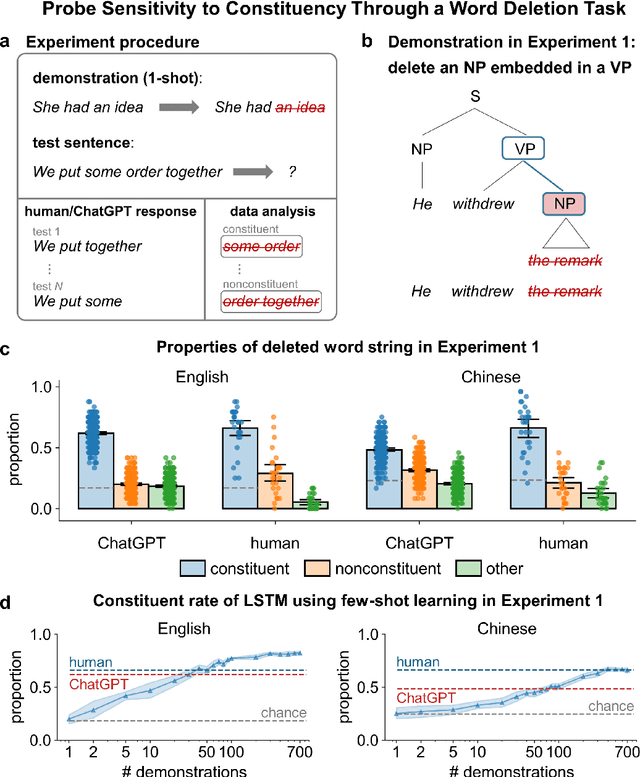
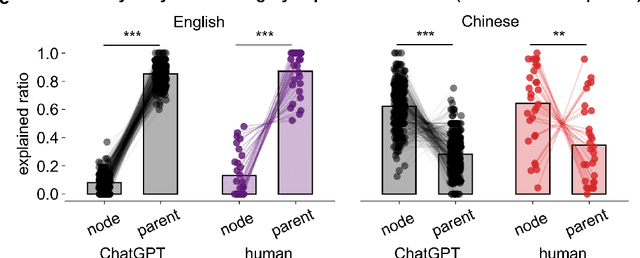
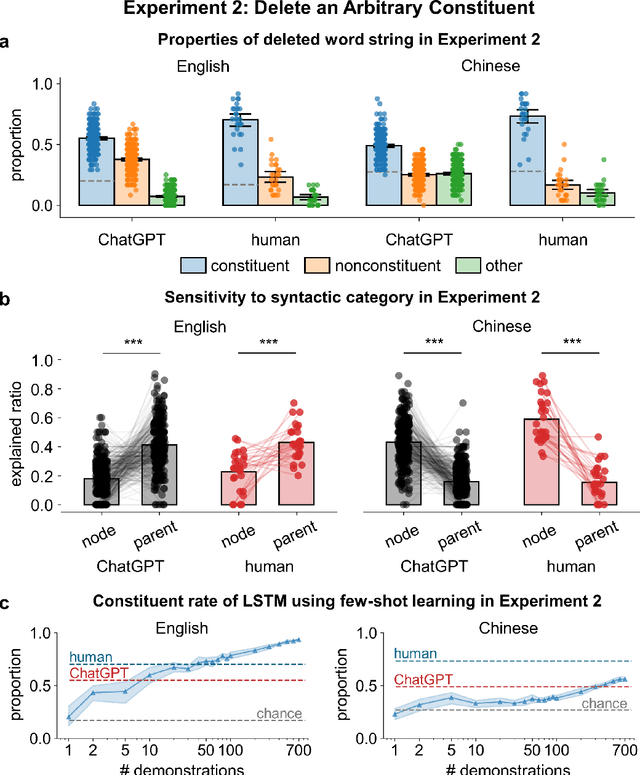
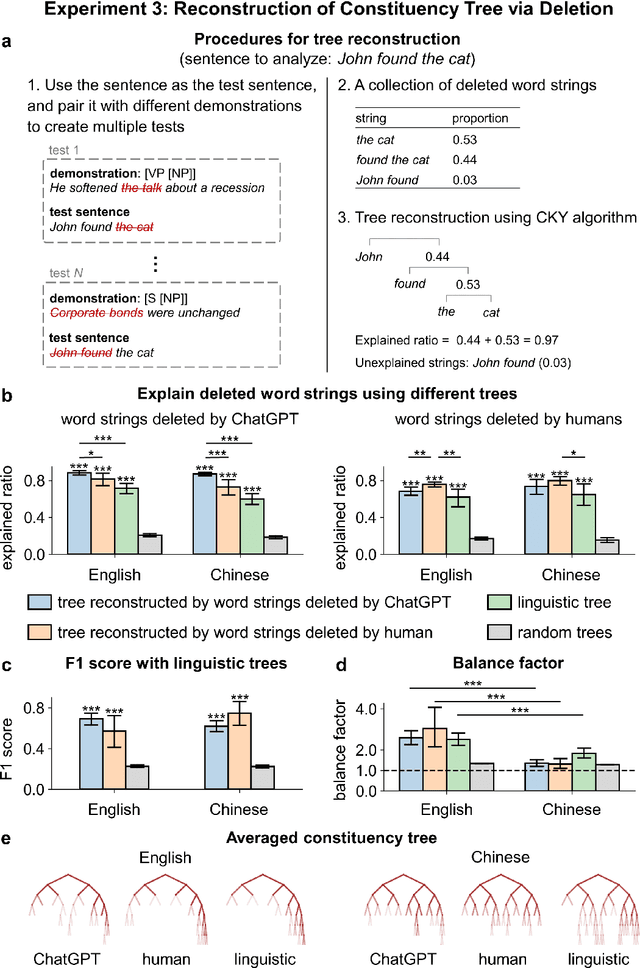
Understanding how sentences are internally represented in the human brain, as well as in large language models (LLMs) such as ChatGPT, is a major challenge for cognitive science. Classic linguistic theories propose that the brain represents a sentence by parsing it into hierarchically organized constituents. In contrast, LLMs do not explicitly parse linguistic constituents and their latent representations remains poorly explained. Here, we demonstrate that humans and LLMs construct similar latent representations of hierarchical linguistic constituents by analyzing their behaviors during a novel one-shot learning task, in which they infer which words should be deleted from a sentence. Both humans and LLMs tend to delete a constituent, instead of a nonconstituent word string. In contrast, a naive sequence processing model that has access to word properties and ordinal positions does not show this property. Based on the word deletion behaviors, we can reconstruct the latent constituency tree representation of a sentence for both humans and LLMs. These results demonstrate that a latent tree-structured constituency representation can emerge in both the human brain and LLMs.
$\text{Di}^2\text{Pose}$: Discrete Diffusion Model for Occluded 3D Human Pose Estimation
May 27, 2024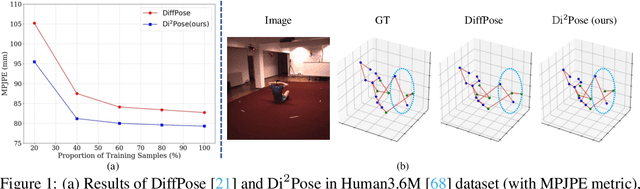
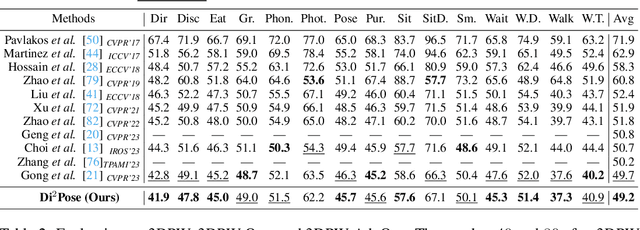
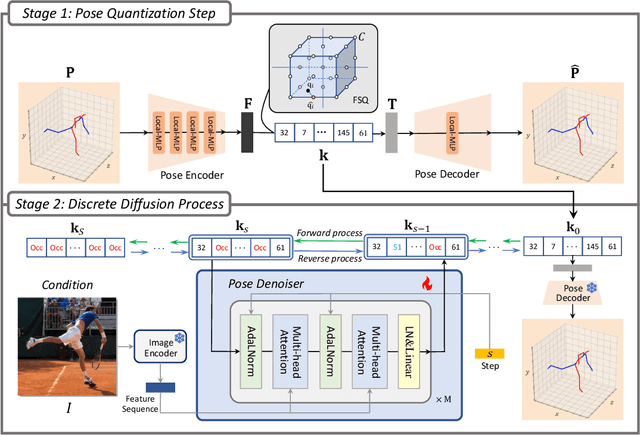
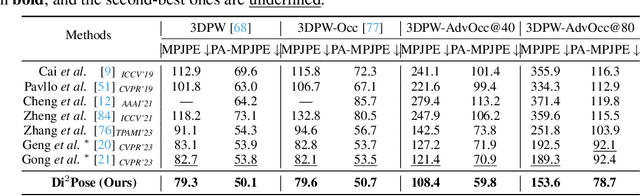
Continuous diffusion models have demonstrated their effectiveness in addressing the inherent uncertainty and indeterminacy in monocular 3D human pose estimation (HPE). Despite their strengths, the need for large search spaces and the corresponding demand for substantial training data make these models prone to generating biomechanically unrealistic poses. This challenge is particularly noticeable in occlusion scenarios, where the complexity of inferring 3D structures from 2D images intensifies. In response to these limitations, we introduce the Discrete Diffusion Pose ($\text{Di}^2\text{Pose}$), a novel framework designed for occluded 3D HPE that capitalizes on the benefits of a discrete diffusion model. Specifically, $\text{Di}^2\text{Pose}$ employs a two-stage process: it first converts 3D poses into a discrete representation through a \emph{pose quantization step}, which is subsequently modeled in latent space through a \emph{discrete diffusion process}. This methodological innovation restrictively confines the search space towards physically viable configurations and enhances the model's capability to comprehend how occlusions affect human pose within the latent space. Extensive evaluations conducted on various benchmarks (e.g., Human3.6M, 3DPW, and 3DPW-Occ) have demonstrated its effectiveness.
FreeTuner: Any Subject in Any Style with Training-free Diffusion
May 23, 2024With the advance of diffusion models, various personalized image generation methods have been proposed. However, almost all existing work only focuses on either subject-driven or style-driven personalization. Meanwhile, state-of-the-art methods face several challenges in realizing compositional personalization, i.e., composing different subject and style concepts, such as concept disentanglement, unified reconstruction paradigm, and insufficient training data. To address these issues, we introduce FreeTuner, a flexible and training-free method for compositional personalization that can generate any user-provided subject in any user-provided style (see Figure 1). Our approach employs a disentanglement strategy that separates the generation process into two stages to effectively mitigate concept entanglement. FreeTuner leverages the intermediate features within the diffusion model for subject concept representation and introduces style guidance to align the synthesized images with the style concept, ensuring the preservation of both the subject's structure and the style's aesthetic features. Extensive experiments have demonstrated the generation ability of FreeTuner across various personalization settings.
Quality assurance of organs-at-risk delineation in radiotherapy
May 20, 2024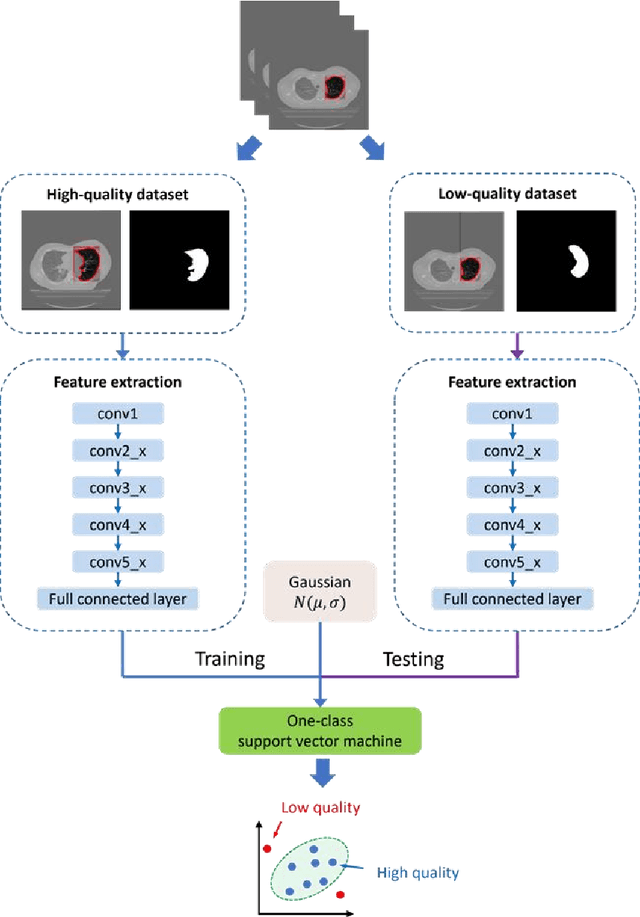
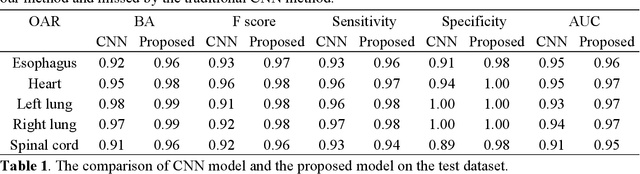
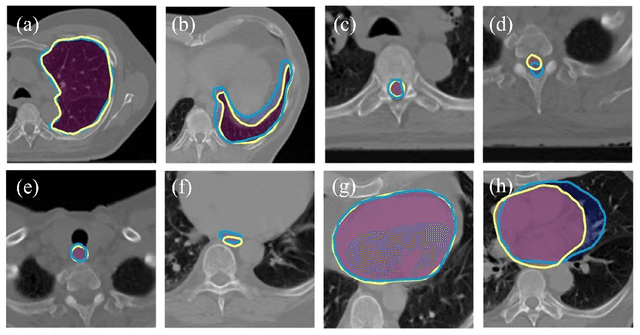
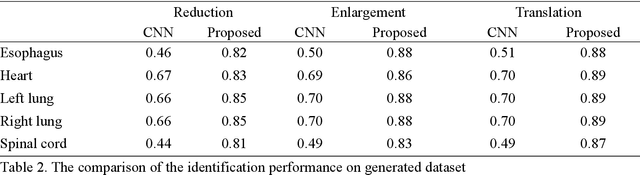
The delineation of tumor target and organs-at-risk is critical in the radiotherapy treatment planning. Automatic segmentation can be used to reduce the physician workload and improve the consistency. However, the quality assurance of the automatic segmentation is still an unmet need in clinical practice. The patient data used in our study was a standardized dataset from AAPM Thoracic Auto-Segmentation Challenge. The OARs included were left and right lungs, heart, esophagus, and spinal cord. Two groups of OARs were generated, the benchmark dataset manually contoured by experienced physicians and the test dataset automatically created using a software AccuContour. A resnet-152 network was performed as feature extractor, and one-class support vector classifier was used to determine the high or low quality. We evaluate the model performance with balanced accuracy, F-score, sensitivity, specificity and the area under the receiving operator characteristic curve. We randomly generated contour errors to assess the generalization of our method, explored the detection limit, and evaluated the correlations between detection limit and various metrics such as volume, Dice similarity coefficient, Hausdorff distance, and mean surface distance. The proposed one-class classifier outperformed in metrics such as balanced accuracy, AUC, and others. The proposed method showed significant improvement over binary classifiers in handling various types of errors. Our proposed model, which introduces residual network and attention mechanism in the one-class classification framework, was able to detect the various types of OAR contour errors with high accuracy. The proposed method can significantly reduce the burden of physician review for contour delineation.
High-dimensional multiple imputation (HDMI) for partially observed confounders including natural language processing-derived auxiliary covariates
May 17, 2024Multiple imputation (MI) models can be improved by including auxiliary covariates (AC), but their performance in high-dimensional data is not well understood. We aimed to develop and compare high-dimensional MI (HDMI) approaches using structured and natural language processing (NLP)-derived AC in studies with partially observed confounders. We conducted a plasmode simulation study using data from opioid vs. non-steroidal anti-inflammatory drug (NSAID) initiators (X) with observed serum creatinine labs (Z2) and time-to-acute kidney injury as outcome. We simulated 100 cohorts with a null treatment effect, including X, Z2, atrial fibrillation (U), and 13 other investigator-derived confounders (Z1) in the outcome generation. We then imposed missingness (MZ2) on 50% of Z2 measurements as a function of Z2 and U and created different HDMI candidate AC using structured and NLP-derived features. We mimicked scenarios where U was unobserved by omitting it from all AC candidate sets. Using LASSO, we data-adaptively selected HDMI covariates associated with Z2 and MZ2 for MI, and with U to include in propensity score models. The treatment effect was estimated following propensity score matching in MI datasets and we benchmarked HDMI approaches against a baseline imputation and complete case analysis with Z1 only. HDMI using claims data showed the lowest bias (0.072). Combining claims and sentence embeddings led to an improvement in the efficiency displaying the lowest root-mean-squared-error (0.173) and coverage (94%). NLP-derived AC alone did not perform better than baseline MI. HDMI approaches may decrease bias in studies with partially observed confounders where missingness depends on unobserved factors.
Hunyuan-DiT: A Powerful Multi-Resolution Diffusion Transformer with Fine-Grained Chinese Understanding
May 14, 2024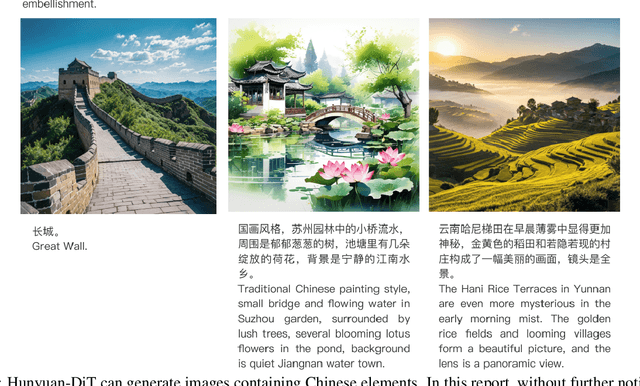
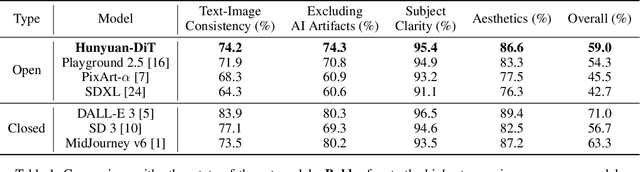
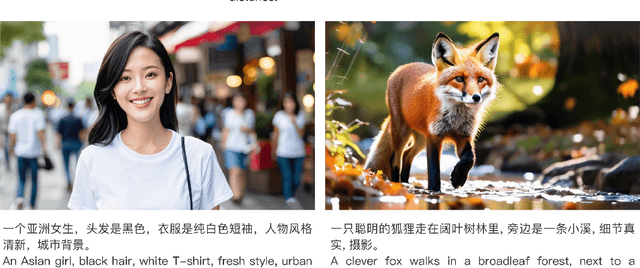
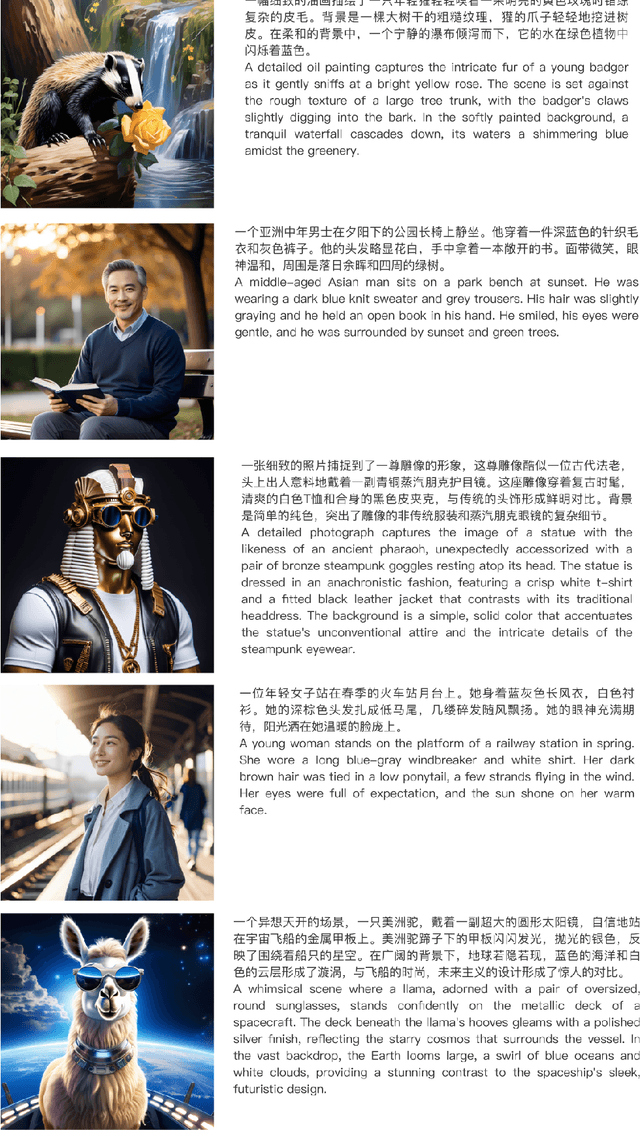
We present Hunyuan-DiT, a text-to-image diffusion transformer with fine-grained understanding of both English and Chinese. To construct Hunyuan-DiT, we carefully design the transformer structure, text encoder, and positional encoding. We also build from scratch a whole data pipeline to update and evaluate data for iterative model optimization. For fine-grained language understanding, we train a Multimodal Large Language Model to refine the captions of the images. Finally, Hunyuan-DiT can perform multi-turn multimodal dialogue with users, generating and refining images according to the context. Through our holistic human evaluation protocol with more than 50 professional human evaluators, Hunyuan-DiT sets a new state-of-the-art in Chinese-to-image generation compared with other open-source models. Code and pretrained models are publicly available at github.com/Tencent/HunyuanDiT