 Add to Chrome
 Add to Firefox
 Add to Edge
FD-LLM: Large Language Model for Fault Diagnosis of Machines
Dec 02, 2024
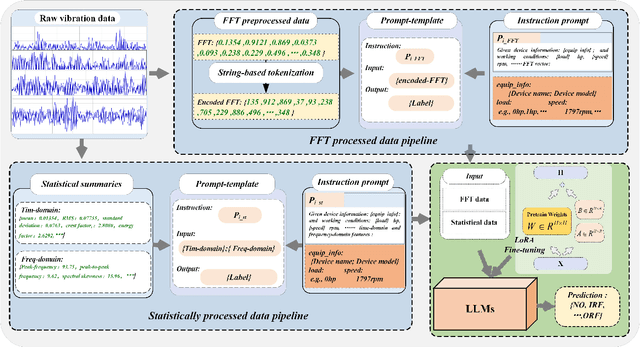
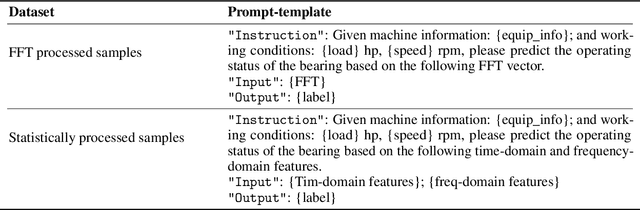
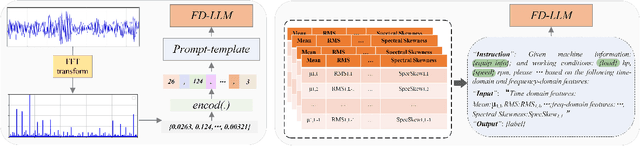
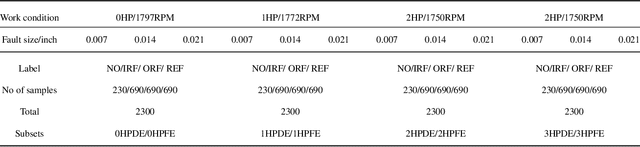
Large language models (LLMs) are effective at capturing complex, valuable conceptual representations from textual data for a wide range of real-world applications. However, in fields like Intelligent Fault Diagnosis (IFD), incorporating additional sensor data-such as vibration signals, temperature readings, and operational metrics-is essential but it is challenging to capture such sensor data information within traditional text corpora. This study introduces a novel IFD approach by effectively adapting LLMs to numerical data inputs for identifying various machine faults from time-series sensor data. We propose FD-LLM, an LLM framework specifically designed for fault diagnosis by formulating the training of the LLM as a multi-class classification problem. We explore two methods for encoding vibration signals: the first method uses a string-based tokenization technique to encode vibration signals into text representations, while the second extracts statistical features from both the time and frequency domains as statistical summaries of each signal. We assess the fault diagnosis capabilities of four open-sourced LLMs based on the FD-LLM framework, and evaluate the models' adaptability and generalizability under various operational conditions and machine components, namely for traditional fault diagnosis, cross-operational conditions, and cross-machine component settings. Our results show that LLMs such as Llama3 and Llama3-instruct demonstrate strong fault detection capabilities and significant adaptability across different operational conditions, outperforming state-of-the-art deep learning (DL) approaches in many cases.

HiFiVFS: High Fidelity Video Face Swapping
Nov 27, 2024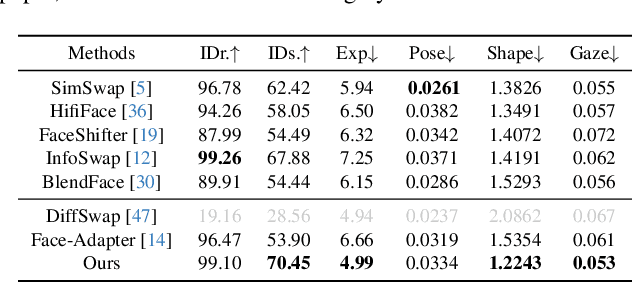
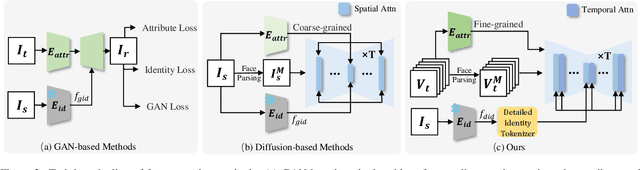
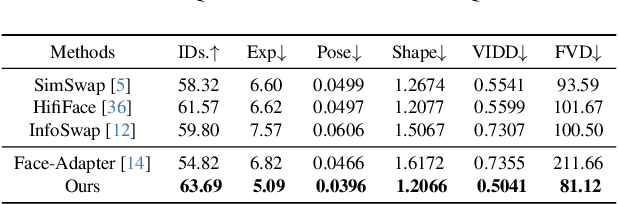
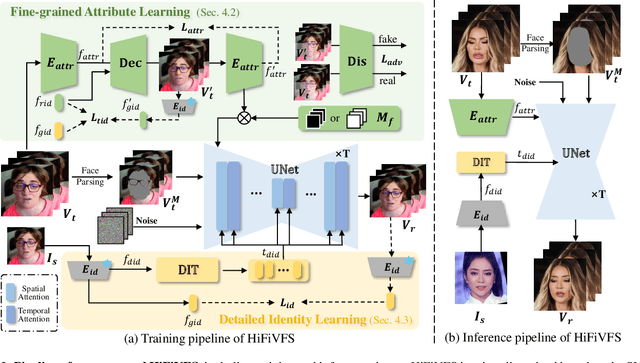
Face swapping aims to generate results that combine the identity from the source with attributes from the target. Existing methods primarily focus on image-based face swapping. When processing videos, each frame is handled independently, making it difficult to ensure temporal stability. From a model perspective, face swapping is gradually shifting from generative adversarial networks (GANs) to diffusion models (DMs), as DMs have been shown to possess stronger generative capabilities. Current diffusion-based approaches often employ inpainting techniques, which struggle to preserve fine-grained attributes like lighting and makeup. To address these challenges, we propose a high fidelity video face swapping (HiFiVFS) framework, which leverages the strong generative capability and temporal prior of Stable Video Diffusion (SVD). We build a fine-grained attribute module to extract identity-disentangled and fine-grained attribute features through identity desensitization and adversarial learning. Additionally, We introduce detailed identity injection to further enhance identity similarity. Extensive experiments demonstrate that our method achieves state-of-the-art (SOTA) in video face swapping, both qualitatively and quantitatively.
MRIFE: A Mask-Recovering and Interactive-Feature-Enhancing Semantic Segmentation Network For Relic Landslide Detection
Nov 26, 2024


Relic landslide, formed over a long period, possess the potential for reactivation, making them a hazardous geological phenomenon. While reliable relic landslide detection benefits the effective monitoring and prevention of landslide disaster, semantic segmentation using high-resolution remote sensing images for relic landslides faces many challenges, including the object visual blur problem, due to the changes of appearance caused by prolonged natural evolution and human activities, and the small-sized dataset problem, due to difficulty in recognizing and labelling the samples. To address these challenges, a semantic segmentation model, termed mask-recovering and interactive-feature-enhancing (MRIFE), is proposed for more efficient feature extraction and separation. Specifically, a contrastive learning and mask reconstruction method with locally significant feature enhancement is proposed to improve the ability to distinguish between the target and background and represent landslide semantic features. Meanwhile, a dual-branch interactive feature enhancement architecture is used to enrich the extracted features and address the issue of visual ambiguity. Self-distillation learning is introduced to leverage the feature diversity both within and between samples for contrastive learning, improving sample utilization, accelerating model convergence, and effectively addressing the problem of the small-sized dataset. The proposed MRIFE is evaluated on a real relic landslide dataset, and experimental results show that it greatly improves the performance of relic landslide detection. For the semantic segmentation task, compared to the baseline, the precision increases from 0.4226 to 0.5347, the mean intersection over union (IoU) increases from 0.6405 to 0.6680, the landslide IoU increases from 0.3381 to 0.3934, and the F1-score increases from 0.5054 to 0.5646.
A Survey on LLM-as-a-Judge
Nov 23, 2024Accurate and consistent evaluation is crucial for decision-making across numerous fields, yet it remains a challenging task due to inherent subjectivity, variability, and scale. Large Language Models (LLMs) have achieved remarkable success across diverse domains, leading to the emergence of "LLM-as-a-Judge," where LLMs are employed as evaluators for complex tasks. With their ability to process diverse data types and provide scalable, cost-effective, and consistent assessments, LLMs present a compelling alternative to traditional expert-driven evaluations. However, ensuring the reliability of LLM-as-a-Judge systems remains a significant challenge that requires careful design and standardization. This paper provides a comprehensive survey of LLM-as-a-Judge, addressing the core question: How can reliable LLM-as-a-Judge systems be built? We explore strategies to enhance reliability, including improving consistency, mitigating biases, and adapting to diverse assessment scenarios. Additionally, we propose methodologies for evaluating the reliability of LLM-as-a-Judge systems, supported by a novel benchmark designed for this purpose. To advance the development and real-world deployment of LLM-as-a-Judge systems, we also discussed practical applications, challenges, and future directions. This survey serves as a foundational reference for researchers and practitioners in this rapidly evolving field.
OphCLIP: Hierarchical Retrieval-Augmented Learning for Ophthalmic Surgical Video-Language Pretraining
Nov 23, 2024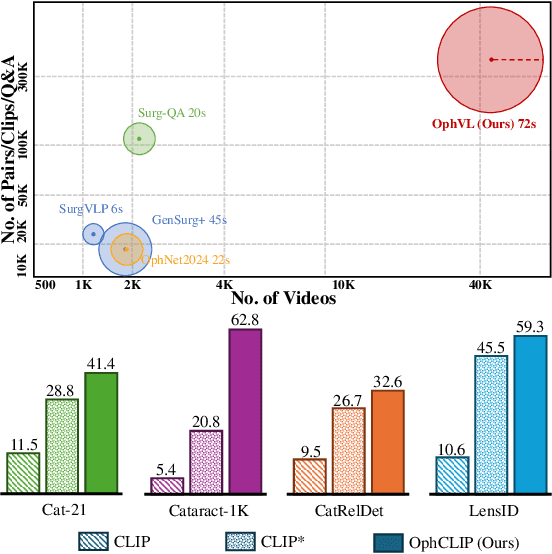


Surgical practice involves complex visual interpretation, procedural skills, and advanced medical knowledge, making surgical vision-language pretraining (VLP) particularly challenging due to this complexity and the limited availability of annotated data. To address the gap, we propose OphCLIP, a hierarchical retrieval-augmented vision-language pretraining framework specifically designed for ophthalmic surgical workflow understanding. OphCLIP leverages the OphVL dataset we constructed, a large-scale and comprehensive collection of over 375K hierarchically structured video-text pairs with tens of thousands of different combinations of attributes (surgeries, phases/operations/actions, instruments, medications, as well as more advanced aspects like the causes of eye diseases, surgical objectives, and postoperative recovery recommendations, etc). These hierarchical video-text correspondences enable OphCLIP to learn both fine-grained and long-term visual representations by aligning short video clips with detailed narrative descriptions and full videos with structured titles, capturing intricate surgical details and high-level procedural insights, respectively. Our OphCLIP also designs a retrieval-augmented pretraining framework to leverage the underexplored large-scale silent surgical procedure videos, automatically retrieving semantically relevant content to enhance the representation learning of narrative videos. Evaluation across 11 datasets for phase recognition and multi-instrument identification shows OphCLIP's robust generalization and superior performance.
GMAI-VL & GMAI-VL-5.5M: A Large Vision-Language Model and A Comprehensive Multimodal Dataset Towards General Medical AI
Nov 21, 2024Despite significant advancements in general artificial intelligence, such as GPT-4, their effectiveness in the medical domain (general medical AI, GMAI) remains constrained due to the absence of specialized medical knowledge. To address this challenge, we present GMAI-VL-5.5M, a comprehensive multimodal medical dataset created by converting hundreds of specialized medical datasets into meticulously constructed image-text pairs. This dataset features comprehensive task coverage, diverse modalities, and high-quality image-text data. Building upon this multimodal dataset, we propose GMAI-VL, a general medical vision-language model with a progressively three-stage training strategy. This approach significantly enhances the model's ability by integrating visual and textual information, thereby improving its ability to process multimodal data and support accurate diagnosis and clinical decision-making. Experimental evaluations demonstrate that GMAI-VL achieves state-of-the-art results across a wide range of multimodal medical tasks, such as visual question answering and medical image diagnosis. Our contributions include the development of the GMAI-VL-5.5M dataset, the introduction of the GMAI-VL model, and the establishment of new benchmarks in multiple medical domains. Code and dataset will be released at https://github.com/uni-medical/GMAI-VL.
Fact-Level Confidence Calibration and Self-Correction
Nov 20, 2024


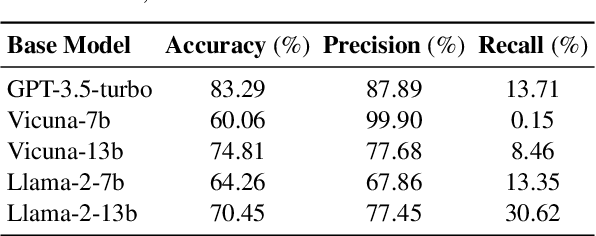
Confidence calibration in LLMs, i.e., aligning their self-assessed confidence with the actual accuracy of their responses, enabling them to self-evaluate the correctness of their outputs. However, current calibration methods for LLMs typically estimate two scalars to represent overall response confidence and correctness, which is inadequate for long-form generation where the response includes multiple atomic facts and may be partially confident and correct. These methods also overlook the relevance of each fact to the query. To address these challenges, we propose a Fact-Level Calibration framework that operates at a finer granularity, calibrating confidence to relevance-weighted correctness at the fact level. Furthermore, comprehensive analysis under the framework inspired the development of Confidence-Guided Fact-level Self-Correction ($\textbf{ConFix}$), which uses high-confidence facts within a response as additional knowledge to improve low-confidence ones. Extensive experiments across four datasets and six models demonstrate that ConFix effectively mitigates hallucinations without requiring external knowledge sources such as retrieval systems.
XiYan-SQL: A Multi-Generator Ensemble Framework for Text-to-SQL
Nov 13, 2024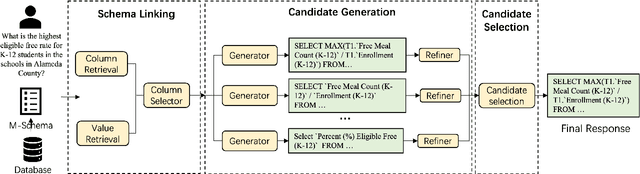
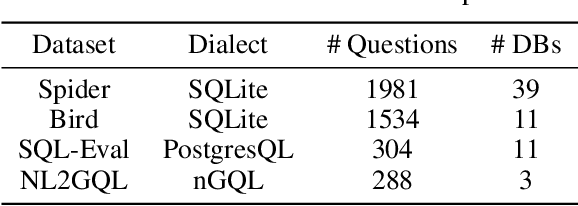
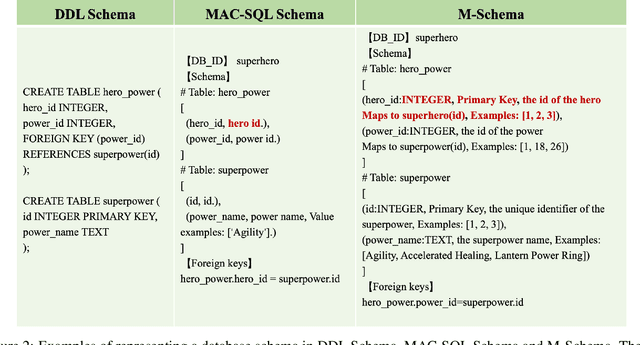
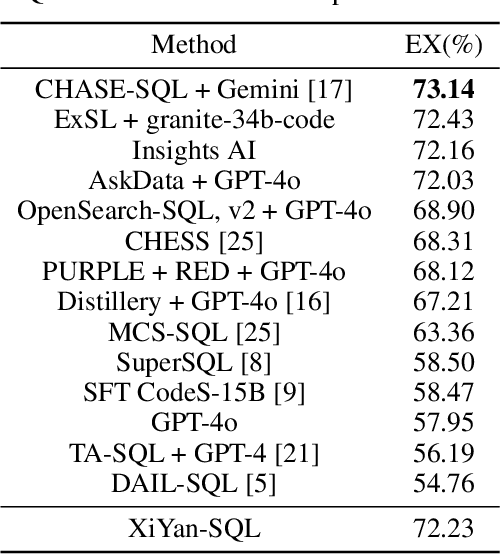
To tackle the challenges of large language model performance in natural language to SQL tasks, we introduce XiYan-SQL, an innovative framework that employs a multi-generator ensemble strategy to improve candidate generation. We introduce M-Schema, a semi-structured schema representation method designed to enhance the understanding of database structures. To enhance the quality and diversity of generated candidate SQL queries, XiYan-SQL integrates the significant potential of in-context learning (ICL) with the precise control of supervised fine-tuning. On one hand, we propose a series of training strategies to fine-tune models to generate high-quality candidates with diverse preferences. On the other hand, we implement the ICL approach with an example selection method based on named entity recognition to prevent overemphasis on entities. The refiner optimizes each candidate by correcting logical or syntactical errors. To address the challenge of identifying the best candidate, we fine-tune a selection model to distinguish nuances of candidate SQL queries. The experimental results on multiple dialect datasets demonstrate the robustness of XiYan-SQL in addressing challenges across different scenarios. Overall, our proposed XiYan-SQL achieves the state-of-the-art execution accuracy of 89.65% on the Spider test set, 69.86% on SQL-Eval, 41.20% on NL2GQL, and a competitive score of 72.23% on the Bird development benchmark. The proposed framework not only enhances the quality and diversity of SQL queries but also outperforms previous methods.
UNSCT-HRNet: Modeling Anatomical Uncertainty for Landmark Detection in Total Hip Arthroplasty
Nov 13, 2024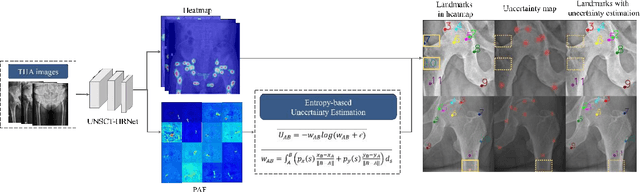
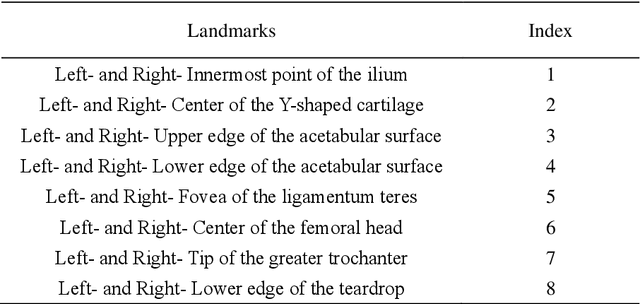
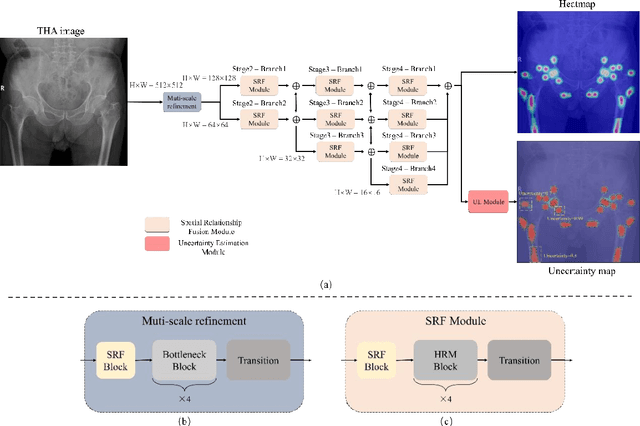
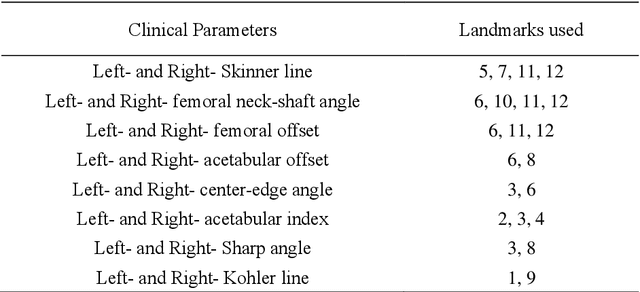
Total hip arthroplasty (THA) relies on accurate landmark detection from radiographic images, but unstructured data caused by irregular patient postures or occluded anatomical markers pose significant challenges for existing methods. To address this, we propose UNSCT-HRNet (Unstructured CT - High-Resolution Net), a deep learning-based framework that integrates a Spatial Relationship Fusion (SRF) module and an Uncertainty Estimation (UE) module. The SRF module, utilizing coordinate convolution and polarized attention, enhances the model's ability to capture complex spatial relationships. Meanwhile, the UE module which based on entropy ensures predictions are anatomically relevant. For unstructured data, the proposed method can predict landmarks without relying on the fixed number of points, which shows higher accuracy and better robustness comparing with the existing methods. Our UNSCT-HRNet demonstrates over a 60% improvement across multiple metrics in unstructured data. The experimental results also reveal that our approach maintains good performance on the structured dataset. Overall, the proposed UNSCT-HRNet has the potential to be used as a new reliable, automated solution for THA surgical planning and postoperative monitoring.
Sub-DM:Subspace Diffusion Model with Orthogonal Decomposition for MRI Reconstruction
Nov 06, 2024


Diffusion model-based approaches recently achieved re-markable success in MRI reconstruction, but integration into clinical routine remains challenging due to its time-consuming convergence. This phenomenon is partic-ularly notable when directly apply conventional diffusion process to k-space data without considering the inherent properties of k-space sampling, limiting k-space learning efficiency and image reconstruction quality. To tackle these challenges, we introduce subspace diffusion model with orthogonal decomposition, a method (referred to as Sub-DM) that restrict the diffusion process via projections onto subspace as the k-space data distribution evolves toward noise. Particularly, the subspace diffusion model circumvents the inference challenges posed by the com-plex and high-dimensional characteristics of k-space data, so the highly compact subspace ensures that diffusion process requires only a few simple iterations to produce accurate prior information. Furthermore, the orthogonal decomposition strategy based on wavelet transform hin-ders the information loss during the migration of the vanilla diffusion process to the subspace. Considering the strate-gy is approximately reversible, such that the entire pro-cess can be reversed. As a result, it allows the diffusion processes in different spaces to refine models through a mutual feedback mechanism, enabling the learning of ac-curate prior even when dealing with complex k-space data. Comprehensive experiments on different datasets clearly demonstrate that the superiority of Sub-DM against state of-the-art methods in terms of reconstruction speed and quality.