 Add to Chrome
 Add to Firefox
 Add to Edge
GAINS: Leveraging Inconsistent Human Intervention Signals in Reinforcement Learning
Aug 16, 2026
Correcting robot manipulation policies through human intervention holds great promise for real-world deployment, yet human operators are inherently imperfect in both the actions they provide and the timing of their intervention signals. While the former has been extensively discussed in reinforcement learning (RL), the latter remains underexplored. At high control frequencies, human intervention signals are often delayed and inconsistent across time and state space. In this work, we present GAINS, a framework for leveraging inconsistent human intervention signals in RL. At the core of GAINS, we employ distributional RL with quantile Q-networks to model the return variability induced by sparse task rewards and inconsistent human interventions. Building on this distributional representation, we introduce a pessimistic exploration strategy that promotes safe and sample-efficient learning under human corrections. We evaluate GAINS on four diverse simulated manipulation tasks and two challenging real-world scenarios against state-of-the-art intervention-based methods. GAINS achieves a 22% higher task success rate than RLIF and improves recovery success by up to 43% in failure scenarios. These results highlight the importance of modeling return variability induced by human imperfection for real-world deployment of intervention-based learning.

SafeMCP: Proactive Power Regulation for LLM Agent Defense via Environment-Grounded Look-Ahead Reasoning
Jun 01, 2026As Large Language Model (LLM) agents increasingly leverage the Model Context Protocol (MCP) to operate in complex environments, the expansion of their action spaces offers agents unsafe capabilities and underscores the risk of power-seeking. While broad action space and greater environment influence are essential for task fulfillment, they create a fragile risk surface where minor errors or hallucinations are magnified into catastrophic failures. In response, we propose SafeMCP, a {server-side} defense plugin that constrains tool acquisition via predictive reasoning regarding future safety risks. SafeMCP utilizes an internal world model for look-ahead reasoning to implement a two-tier defense: proactive tool filtering to constrain hazardous power expansion and immediate intervention as a fail-safe. To train SafeMCP, we introduce a three-stage pipeline comprising environmental dynamic grounding, safe policy initialization, and reinforcement learning (RL) with dual verifiable rewards. Experiments on PowerSeeking Bench, ToolEmu, and AgentHarm show that SafeMCP achieves a safe equilibrium, effectively mitigating risks while preserving agent utility.
FlowSeg: Dynamic Semantic Guidance for LLM-Conditioned Segmentation
May 28, 2026LLM-conditioned segmentation has recently advanced rapidly by coupling large language models with iterative mask generation frameworks. However, we identify a persistent failure mode in current propose-then-select pipelines. Although high-quality mask candidates are often generated, the final prediction may fail to match the given linguistic condition. This failure arises because language semantics are typically used as static prompts or post-hoc matching signals, rather than participating in the iterative mask generation process. Through systematic analysis, we show that many errors stem from semantic misalignment rather than poor mask quality. To address this issue, we propose FlowSeg, which introduces dynamic semantic guidance via a bidirectional semantic flow between intermediate decoding states and LLM-derived condition embeddings throughout the generation process. Language conditions actively guide mask refinement at each stage, while condition embeddings are progressively updated by emerging visual evidence. This design yields semantically grounded mask representations and visually aligned language conditions, enabling more reliable matching. We further incorporate a lightweight boundary-aware refinement to selectively enhance uncertain regions without perturbing confident interiors. Extensive experiments on referring expression segmentation and reasoning segmentation tasks demonstrate that FlowSeg consistently improves language-mask alignment and achieves state-of-the-art performance. Project page: https://zkzhang98.github.io/FlowSeg_page
Rethinking MLLM Itself as a Segmenter with a Single Segmentation Token
Mar 19, 2026Recent segmentation methods leveraging Multi-modal Large Language Models (MLLMs) have shown reliable object-level segmentation and enhanced spatial perception. However, almost all previous methods predominantly rely on specialist mask decoders to interpret masks from generated segmentation-related embeddings and visual features, or incorporate multiple additional tokens to assist. This paper aims to investigate whether and how we can unlock segmentation from MLLM itSELF with 1 segmentation Embedding (SELF1E) while achieving competitive results, which eliminates the need for external decoders. To this end, our approach targets the fundamental limitation of resolution reduction in pixel-shuffled image features from MLLMs. First, we retain image features at their original uncompressed resolution, and refill them with residual features extracted from MLLM-processed compressed features, thereby improving feature precision. Subsequently, we integrate pixel-unshuffle operations on image features with and without LLM processing, respectively, to unleash the details of compressed features and amplify the residual features under uncompressed resolution, which further enhances the resolution of refilled features. Moreover, we redesign the attention mask with dual perception pathways, i.e., image-to-image and image-to-segmentation, enabling rich feature interaction between pixels and the segmentation token. Comprehensive experiments across multiple segmentation tasks validate that SELF1E achieves performance competitive with specialist mask decoder-based methods, demonstrating the feasibility of decoder-free segmentation in MLLMs. Project page: https://github.com/ANDYZAQ/SELF1E.
Real-world Reinforcement Learning from Suboptimal Interventions
Dec 30, 2025Real-world reinforcement learning (RL) offers a promising approach to training precise and dexterous robotic manipulation policies in an online manner, enabling robots to learn from their own experience while gradually reducing human labor. However, prior real-world RL methods often assume that human interventions are optimal across the entire state space, overlooking the fact that even expert operators cannot consistently provide optimal actions in all states or completely avoid mistakes. Indiscriminately mixing intervention data with robot-collected data inherits the sample inefficiency of RL, while purely imitating intervention data can ultimately degrade the final performance achievable by RL. The question of how to leverage potentially suboptimal and noisy human interventions to accelerate learning without being constrained by them thus remains open. To address this challenge, we propose SiLRI, a state-wise Lagrangian reinforcement learning algorithm for real-world robot manipulation tasks. Specifically, we formulate the online manipulation problem as a constrained RL optimization, where the constraint bound at each state is determined by the uncertainty of human interventions. We then introduce a state-wise Lagrange multiplier and solve the problem via a min-max optimization, jointly optimizing the policy and the Lagrange multiplier to reach a saddle point. Built upon a human-as-copilot teleoperation system, our algorithm is evaluated through real-world experiments on diverse manipulation tasks. Experimental results show that SiLRI effectively exploits human suboptimal interventions, reducing the time required to reach a 90% success rate by at least 50% compared with the state-of-the-art RL method HIL-SERL, and achieving a 100% success rate on long-horizon manipulation tasks where other RL methods struggle to succeed. Project website: https://silri-rl.github.io/.
CoMBO: Conflict Mitigation via Branched Optimization for Class Incremental Segmentation
Apr 05, 2025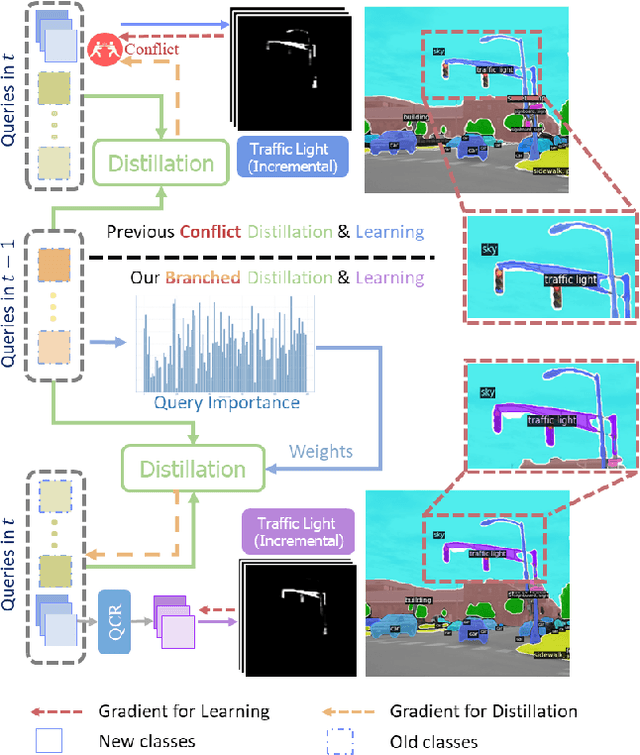
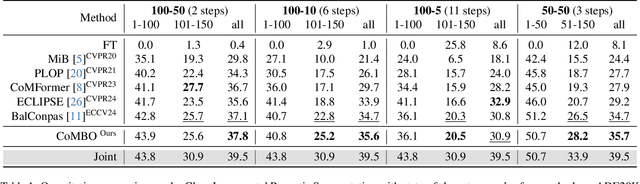
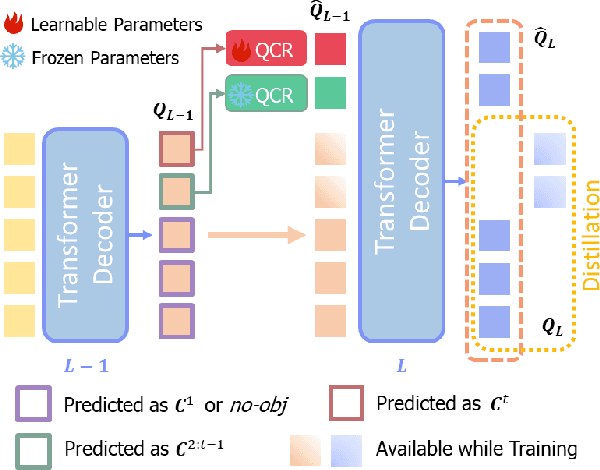
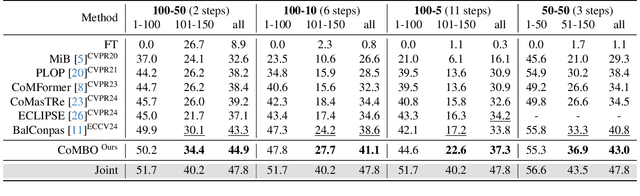
Effective Class Incremental Segmentation (CIS) requires simultaneously mitigating catastrophic forgetting and ensuring sufficient plasticity to integrate new classes. The inherent conflict above often leads to a back-and-forth, which turns the objective into finding the balance between the performance of previous~(old) and incremental~(new) classes. To address this conflict, we introduce a novel approach, Conflict Mitigation via Branched Optimization~(CoMBO). Within this approach, we present the Query Conflict Reduction module, designed to explicitly refine queries for new classes through lightweight, class-specific adapters. This module provides an additional branch for the acquisition of new classes while preserving the original queries for distillation. Moreover, we develop two strategies to further mitigate the conflict following the branched structure, \textit{i.e.}, the Half-Learning Half-Distillation~(HDHL) over classification probabilities, and the Importance-Based Knowledge Distillation~(IKD) over query features. HDHL selectively engages in learning for classification probabilities of queries that match the ground truth of new classes, while aligning unmatched ones to the corresponding old probabilities, thus ensuring retention of old knowledge while absorbing new classes via learning negative samples. Meanwhile, IKD assesses the importance of queries based on their matching degree to old classes, prioritizing the distillation of important features and allowing less critical features to evolve. Extensive experiments in Class Incremental Panoptic and Semantic Segmentation settings have demonstrated the superior performance of CoMBO. Project page: https://guangyu-ryan.github.io/CoMBO.
HACTS: a Human-As-Copilot Teleoperation System for Robot Learning
Mar 31, 2025Teleoperation is essential for autonomous robot learning, especially in manipulation tasks that require human demonstrations or corrections. However, most existing systems only offer unilateral robot control and lack the ability to synchronize the robot's status with the teleoperation hardware, preventing real-time, flexible intervention. In this work, we introduce HACTS (Human-As-Copilot Teleoperation System), a novel system that establishes bilateral, real-time joint synchronization between a robot arm and teleoperation hardware. This simple yet effective feedback mechanism, akin to a steering wheel in autonomous vehicles, enables the human copilot to intervene seamlessly while collecting action-correction data for future learning. Implemented using 3D-printed components and low-cost, off-the-shelf motors, HACTS is both accessible and scalable. Our experiments show that HACTS significantly enhances performance in imitation learning (IL) and reinforcement learning (RL) tasks, boosting IL recovery capabilities and data efficiency, and facilitating human-in-the-loop RL. HACTS paves the way for more effective and interactive human-robot collaboration and data-collection, advancing the capabilities of robot manipulation.
ACL-QL: Adaptive Conservative Level in Q-Learning for Offline Reinforcement Learning
Dec 22, 2024Offline Reinforcement Learning (RL), which operates solely on static datasets without further interactions with the environment, provides an appealing alternative to learning a safe and promising control policy. The prevailing methods typically learn a conservative policy to mitigate the problem of Q-value overestimation, but it is prone to overdo it, leading to an overly conservative policy. Moreover, they optimize all samples equally with fixed constraints, lacking the nuanced ability to control conservative levels in a fine-grained manner. Consequently, this limitation results in a performance decline. To address the above two challenges in a united way, we propose a framework, Adaptive Conservative Level in Q-Learning (ACL-QL), which limits the Q-values in a mild range and enables adaptive control on the conservative level over each state-action pair, i.e., lifting the Q-values more for good transitions and less for bad transitions. We theoretically analyze the conditions under which the conservative level of the learned Q-function can be limited in a mild range and how to optimize each transition adaptively. Motivated by the theoretical analysis, we propose a novel algorithm, ACL-QL, which uses two learnable adaptive weight functions to control the conservative level over each transition. Subsequently, we design a monotonicity loss and surrogate losses to train the adaptive weight functions, Q-function, and policy network alternatively. We evaluate ACL-QL on the commonly used D4RL benchmark and conduct extensive ablation studies to illustrate the effectiveness and state-of-the-art performance compared to existing offline DRL baselines.
Bridge the Points: Graph-based Few-shot Segment Anything Semantically
Oct 09, 2024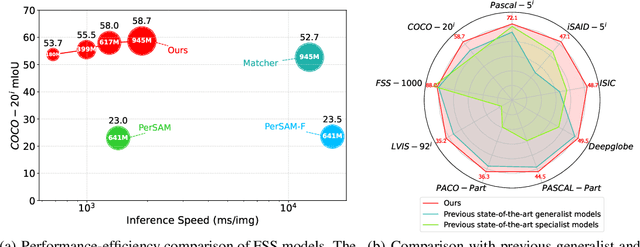


The recent advancements in large-scale pre-training techniques have significantly enhanced the capabilities of vision foundation models, notably the Segment Anything Model (SAM), which can generate precise masks based on point and box prompts. Recent studies extend SAM to Few-shot Semantic Segmentation (FSS), focusing on prompt generation for SAM-based automatic semantic segmentation. However, these methods struggle with selecting suitable prompts, require specific hyperparameter settings for different scenarios, and experience prolonged one-shot inference times due to the overuse of SAM, resulting in low efficiency and limited automation ability. To address these issues, we propose a simple yet effective approach based on graph analysis. In particular, a Positive-Negative Alignment module dynamically selects the point prompts for generating masks, especially uncovering the potential of the background context as the negative reference. Another subsequent Point-Mask Clustering module aligns the granularity of masks and selected points as a directed graph, based on mask coverage over points. These points are then aggregated by decomposing the weakly connected components of the directed graph in an efficient manner, constructing distinct natural clusters. Finally, the positive and overshooting gating, benefiting from graph-based granularity alignment, aggregate high-confident masks and filter out the false-positive masks for final prediction, reducing the usage of additional hyperparameters and redundant mask generation. Extensive experimental analysis across standard FSS, One-shot Part Segmentation, and Cross Domain FSS datasets validate the effectiveness and efficiency of the proposed approach, surpassing state-of-the-art generalist models with a mIoU of 58.7% on COCO-20i and 35.2% on LVIS-92i. The code is available in https://andyzaq.github.io/GF-SAM/.
Benchmarking the Text-to-SQL Capability of Large Language Models: A Comprehensive Evaluation
Mar 06, 2024


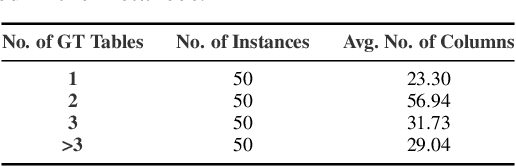
Large Language Models (LLMs) have emerged as a powerful tool in advancing the Text-to-SQL task, significantly outperforming traditional methods. Nevertheless, as a nascent research field, there is still no consensus on the optimal prompt templates and design frameworks. Additionally, existing benchmarks inadequately explore the performance of LLMs across the various sub-tasks of the Text-to-SQL process, which hinders the assessment of LLMs' cognitive capabilities and the optimization of LLM-based solutions. To address the aforementioned issues, we firstly construct a new dataset designed to mitigate the risk of overfitting in LLMs. Then we formulate five evaluation tasks to comprehensively assess the performance of diverse methods across various LLMs throughout the Text-to-SQL process.Our study highlights the performance disparities among LLMs and proposes optimal in-context learning solutions tailored to each task. These findings offer valuable insights for enhancing the development of LLM-based Text-to-SQL systems.