 Add to Chrome
 Add to Firefox
 Add to Edge
Robust Stable Spiking Neural Networks
May 31, 2024
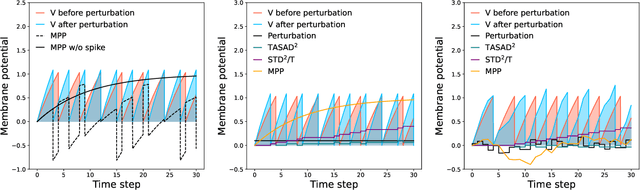
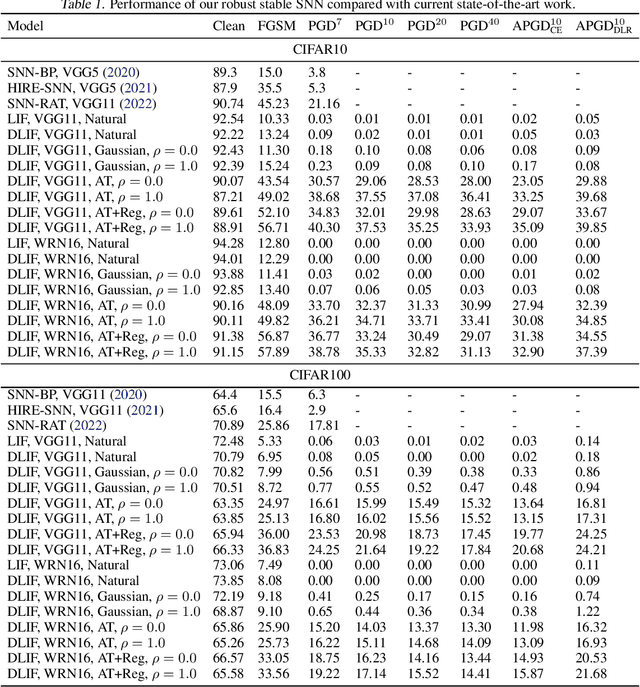
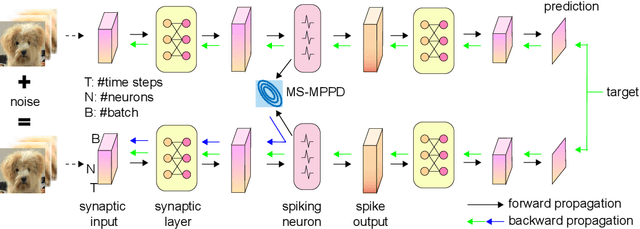
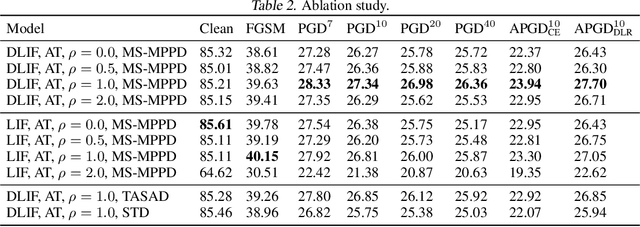
Spiking neural networks (SNNs) are gaining popularity in deep learning due to their low energy budget on neuromorphic hardware. However, they still face challenges in lacking sufficient robustness to guard safety-critical applications such as autonomous driving. Many studies have been conducted to defend SNNs from the threat of adversarial attacks. This paper aims to uncover the robustness of SNN through the lens of the stability of nonlinear systems. We are inspired by the fact that searching for parameters altering the leaky integrate-and-fire dynamics can enhance their robustness. Thus, we dive into the dynamics of membrane potential perturbation and simplify the formulation of the dynamics. We present that membrane potential perturbation dynamics can reliably convey the intensity of perturbation. Our theoretical analyses imply that the simplified perturbation dynamics satisfy input-output stability. Thus, we propose a training framework with modified SNN neurons and to reduce the mean square of membrane potential perturbation aiming at enhancing the robustness of SNN. Finally, we experimentally verify the effectiveness of the framework in the setting of Gaussian noise training and adversarial training on the image classification task.

Enhancing Adversarial Robustness in SNNs with Sparse Gradients
May 30, 2024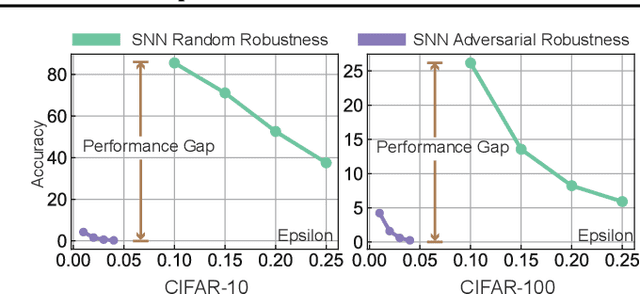
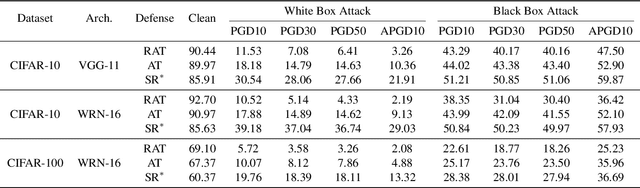
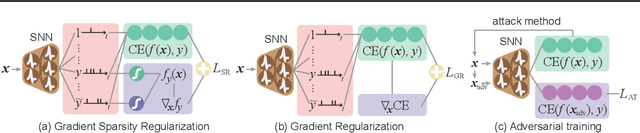
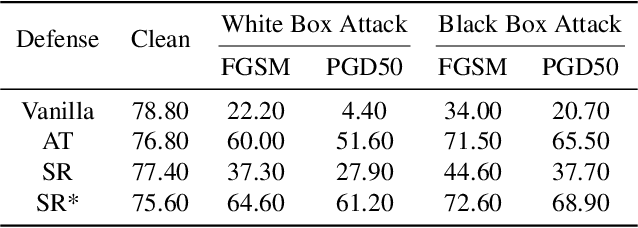
Spiking Neural Networks (SNNs) have attracted great attention for their energy-efficient operations and biologically inspired structures, offering potential advantages over Artificial Neural Networks (ANNs) in terms of energy efficiency and interpretability. Nonetheless, similar to ANNs, the robustness of SNNs remains a challenge, especially when facing adversarial attacks. Existing techniques, whether adapted from ANNs or specifically designed for SNNs, exhibit limitations in training SNNs or defending against strong attacks. In this paper, we propose a novel approach to enhance the robustness of SNNs through gradient sparsity regularization. We observe that SNNs exhibit greater resilience to random perturbations compared to adversarial perturbations, even at larger scales. Motivated by this, we aim to narrow the gap between SNNs under adversarial and random perturbations, thereby improving their overall robustness. To achieve this, we theoretically prove that this performance gap is upper bounded by the gradient sparsity of the probability associated with the true label concerning the input image, laying the groundwork for a practical strategy to train robust SNNs by regularizing the gradient sparsity. We validate the effectiveness of our approach through extensive experiments on both image-based and event-based datasets. The results demonstrate notable improvements in the robustness of SNNs. Our work highlights the importance of gradient sparsity in SNNs and its role in enhancing robustness.
Implicit Neural Image Field for Biological Microscopy Image Compression
May 29, 2024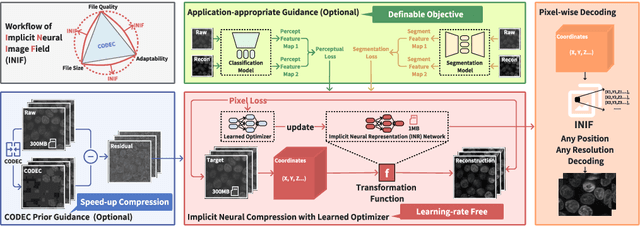
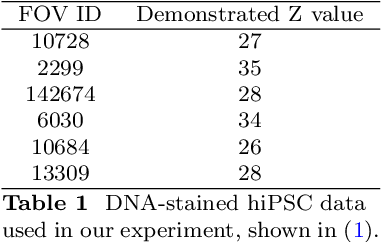
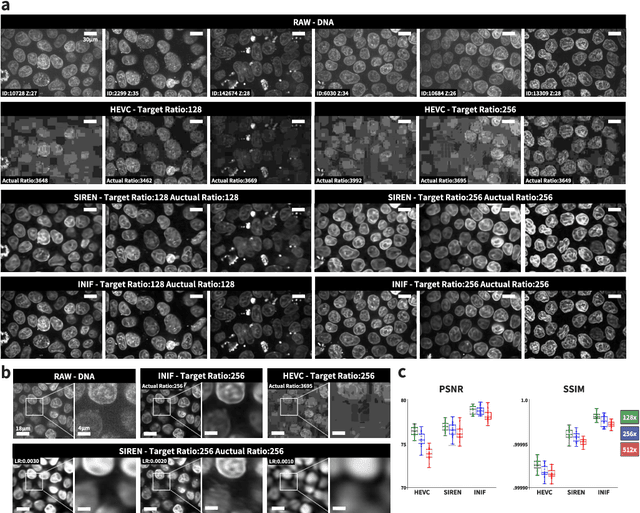
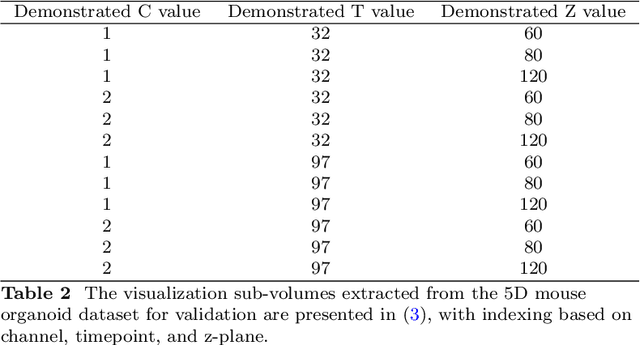
The rapid pace of innovation in biological microscopy imaging has led to large images, putting pressure on data storage and impeding efficient sharing, management, and visualization. This necessitates the development of efficient compression solutions. Traditional CODEC methods struggle to adapt to the diverse bioimaging data and often suffer from sub-optimal compression. In this study, we propose an adaptive compression workflow based on Implicit Neural Representation (INR). This approach permits application-specific compression objectives, capable of compressing images of any shape and arbitrary pixel-wise decompression. We demonstrated on a wide range of microscopy images from real applications that our workflow not only achieved high, controllable compression ratios (e.g., 512x) but also preserved detailed information critical for downstream analysis.
SCSim: A Realistic Spike Cameras Simulator
May 27, 2024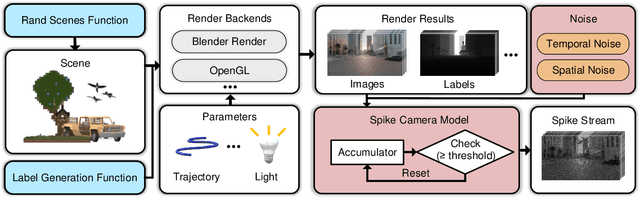
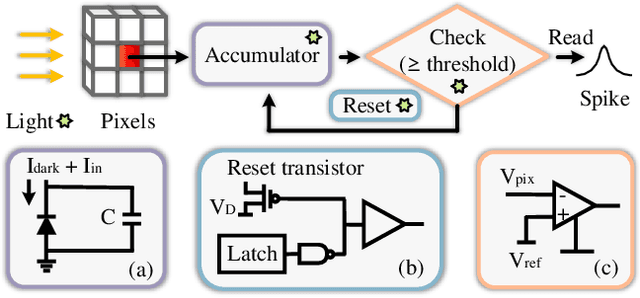
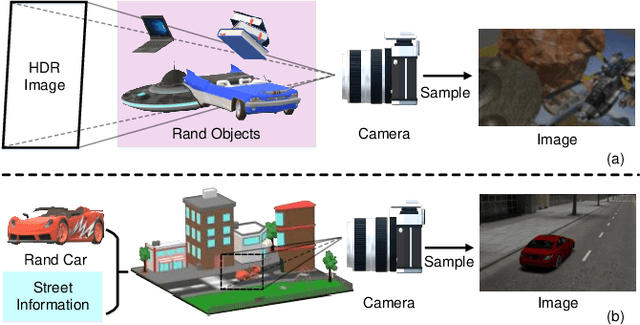
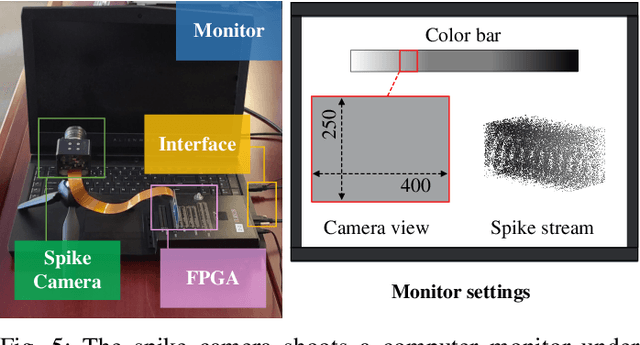
Spike cameras, with their exceptional temporal resolution, are revolutionizing high-speed visual applications. Large-scale synthetic datasets have significantly accelerated the development of these cameras, particularly in reconstruction and optical flow. However, current synthetic datasets for spike cameras lack sophistication. Addressing this gap, we introduce SCSim, a novel and more realistic spike camera simulator with a comprehensive noise model. SCSim is adept at autonomously generating driving scenarios and synthesizing corresponding spike streams. To enhance the fidelity of these streams, we've developed a comprehensive noise model tailored to the unique circuitry of spike cameras. Our evaluations demonstrate that SCSim outperforms existing simulation methods in generating authentic spike streams. Crucially, SCSim simplifies the creation of datasets, thereby greatly advancing spike-based visual tasks like reconstruction. Our project refers to https://github.com/Acnext/SCSim.
Tele-FLM Technical Report
Apr 25, 2024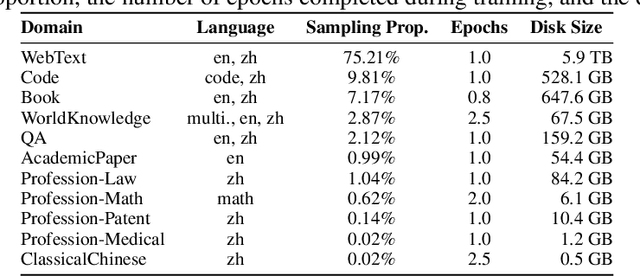
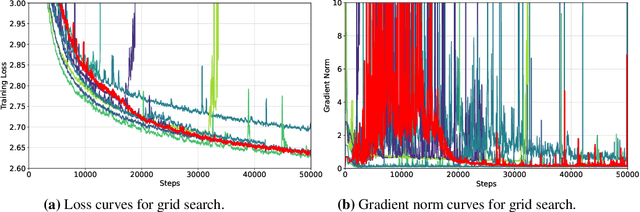

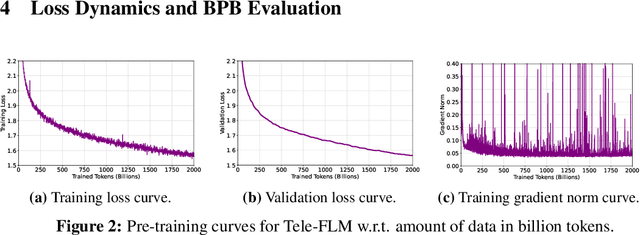
Large language models (LLMs) have showcased profound capabilities in language understanding and generation, facilitating a wide array of applications. However, there is a notable paucity of detailed, open-sourced methodologies on efficiently scaling LLMs beyond 50 billion parameters with minimum trial-and-error cost and computational resources. In this report, we introduce Tele-FLM (aka FLM-2), a 52B open-sourced multilingual large language model that features a stable, efficient pre-training paradigm and enhanced factual judgment capabilities. Tele-FLM demonstrates superior multilingual language modeling abilities, measured by BPB on textual corpus. Besides, in both English and Chinese foundation model evaluation, it is comparable to strong open-sourced models that involve larger pre-training FLOPs, such as Llama2-70B and DeepSeek-67B. In addition to the model weights, we share the core designs, engineering practices, and training details, which we expect to benefit both the academic and industrial communities.
SpikeNVS: Enhancing Novel View Synthesis from Blurry Images via Spike Camera
Apr 12, 2024One of the most critical factors in achieving sharp Novel View Synthesis (NVS) using neural field methods like Neural Radiance Fields (NeRF) and 3D Gaussian Splatting (3DGS) is the quality of the training images. However, Conventional RGB cameras are susceptible to motion blur. In contrast, neuromorphic cameras like event and spike cameras inherently capture more comprehensive temporal information, which can provide a sharp representation of the scene as additional training data. Recent methods have explored the integration of event cameras to improve the quality of NVS. The event-RGB approaches have some limitations, such as high training costs and the inability to work effectively in the background. Instead, our study introduces a new method that uses the spike camera to overcome these limitations. By considering texture reconstruction from spike streams as ground truth, we design the Texture from Spike (TfS) loss. Since the spike camera relies on temporal integration instead of temporal differentiation used by event cameras, our proposed TfS loss maintains manageable training costs. It handles foreground objects with backgrounds simultaneously. We also provide a real-world dataset captured with our spike-RGB camera system to facilitate future research endeavors. We conduct extensive experiments using synthetic and real-world datasets to demonstrate that our design can enhance novel view synthesis across NeRF and 3DGS. The code and dataset will be made available for public access.
M3D: Advancing 3D Medical Image Analysis with Multi-Modal Large Language Models
Mar 31, 2024


Medical image analysis is essential to clinical diagnosis and treatment, which is increasingly supported by multi-modal large language models (MLLMs). However, previous research has primarily focused on 2D medical images, leaving 3D images under-explored, despite their richer spatial information. This paper aims to advance 3D medical image analysis with MLLMs. To this end, we present a large-scale 3D multi-modal medical dataset, M3D-Data, comprising 120K image-text pairs and 662K instruction-response pairs specifically tailored for various 3D medical tasks, such as image-text retrieval, report generation, visual question answering, positioning, and segmentation. Additionally, we propose M3D-LaMed, a versatile multi-modal large language model for 3D medical image analysis. Furthermore, we introduce a new 3D multi-modal medical benchmark, M3D-Bench, which facilitates automatic evaluation across eight tasks. Through comprehensive evaluation, our method proves to be a robust model for 3D medical image analysis, outperforming existing solutions. All code, data, and models are publicly available at: https://github.com/BAAI-DCAI/M3D.
Spike-NeRF: Neural Radiance Field Based On Spike Camera
Mar 25, 2024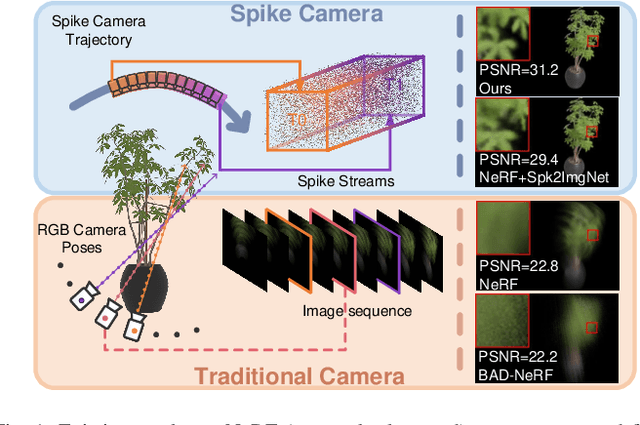
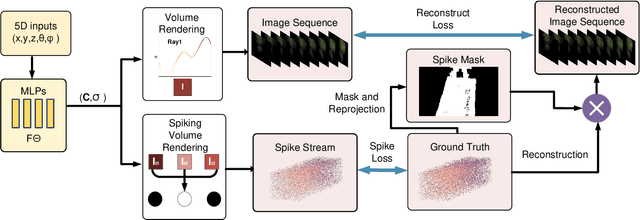
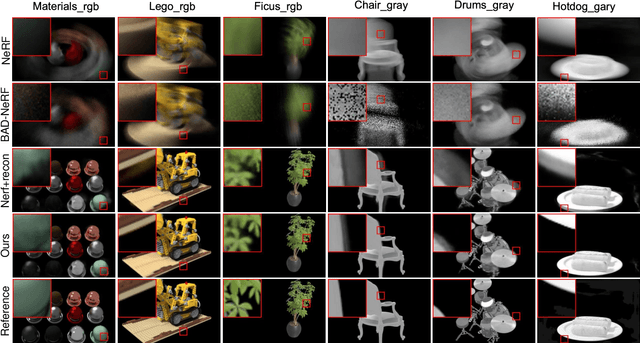
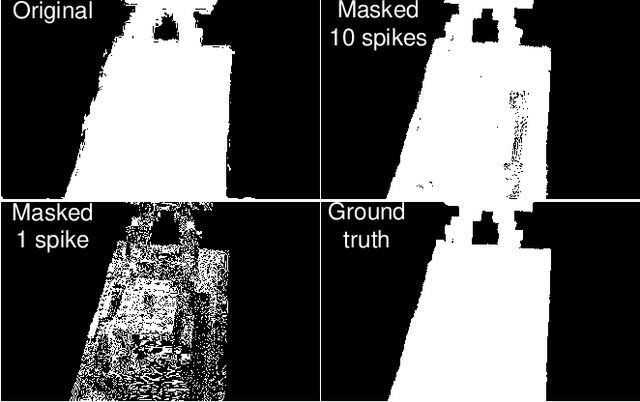
As a neuromorphic sensor with high temporal resolution, spike cameras offer notable advantages over traditional cameras in high-speed vision applications such as high-speed optical estimation, depth estimation, and object tracking. Inspired by the success of the spike camera, we proposed Spike-NeRF, the first Neural Radiance Field derived from spike data, to achieve 3D reconstruction and novel viewpoint synthesis of high-speed scenes. Instead of the multi-view images at the same time of NeRF, the inputs of Spike-NeRF are continuous spike streams captured by a moving spike camera in a very short time. To reconstruct a correct and stable 3D scene from high-frequency but unstable spike data, we devised spike masks along with a distinctive loss function. We evaluate our method qualitatively and numerically on several challenging synthetic scenes generated by blender with the spike camera simulator. Our results demonstrate that Spike-NeRF produces more visually appealing results than the existing methods and the baseline we proposed in high-speed scenes. Our code and data will be released soon.
SpikeReveal: Unlocking Temporal Sequences from Real Blurry Inputs with Spike Streams
Mar 14, 2024Reconstructing a sequence of sharp images from the blurry input is crucial for enhancing our insights into the captured scene and poses a significant challenge due to the limited temporal features embedded in the image. Spike cameras, sampling at rates up to 40,000 Hz, have proven effective in capturing motion features and beneficial for solving this ill-posed problem. Nonetheless, existing methods fall into the supervised learning paradigm, which suffers from notable performance degradation when applied to real-world scenarios that diverge from the synthetic training data domain. Moreover, the quality of reconstructed images is capped by the generated images based on motion analysis interpolation, which inherently differs from the actual scene, affecting the generalization ability of these methods in real high-speed scenarios. To address these challenges, we propose the first self-supervised framework for the task of spike-guided motion deblurring. Our approach begins with the formulation of a spike-guided deblurring model that explores the theoretical relationships among spike streams, blurry images, and their corresponding sharp sequences. We subsequently develop a self-supervised cascaded framework to alleviate the issues of spike noise and spatial-resolution mismatching encountered in the deblurring model. With knowledge distillation and re-blurring loss, we further design a lightweight deblur network to generate high-quality sequences with brightness and texture consistency with the original input. Quantitative and qualitative experiments conducted on our real-world and synthetic datasets with spikes validate the superior generalization of the proposed framework. Our code, data and trained models will be available at \url{https://github.com/chenkang455/S-SDM}.
Noisy Spiking Actor Network for Exploration
Mar 07, 2024As a general method for exploration in deep reinforcement learning (RL), NoisyNet can produce problem-specific exploration strategies. Spiking neural networks (SNNs), due to their binary firing mechanism, have strong robustness to noise, making it difficult to realize efficient exploration with local disturbances. To solve this exploration problem, we propose a noisy spiking actor network (NoisySAN) that introduces time-correlated noise during charging and transmission. Moreover, a noise reduction method is proposed to find a stable policy for the agent. Extensive experimental results demonstrate that our method outperforms the state-of-the-art performance on a wide range of continuous control tasks from OpenAI gym.