 Add to Chrome
 Add to Firefox
 Add to Edge
Understanding and Evaluating Claw-like Agent Security Through a Computer-Systems Lens
Jun 29, 2026
Claw-like AI agents (e.g., OpenClaw) are always-on processes with persistent access to credentials, files, tools, and external services. They take on system-level responsibilities -- installing packages, maintaining state, scheduling subtasks, and mediating I/O -- making security failures far more severe than in other agents. Yet existing benchmarks focus on model responses and tool calls, leaving cross-component failure modes largely unmeasured. We adopt a computer-system analogy: treating a Claw-like agent as an agentic computer system whose gateway runtime plays an OS-like mediation role, whose Skills resemble user-installed applications, and whose Plugins resemble loadable extensions with runtime privileges. Each component has a classical counterpart whose protection mechanisms -- refined over decades of cybersecurity research -- are absent on the agent side. From this perspective, we develop SafeClawArena, a benchmark of 406 adversarial tasks across four attack surfaces (Skill Supply-Chain Integrity, Persistent State Exploitation, Cross-Boundary Data Flow, and Indirect Prompt Injection), executed in containerized replicas of real agent platforms with canary-marked credentials and evaluated via automated taint tracking across nine output channels. We evaluate three platforms (OpenClaw, NemoClaw, SeClaw) and five frontier LLMs. The highest attack success rate reaches 70%; malicious Plugins succeed in 100% of cases regardless of the LLM. SeClaw cuts GPT-5.4's attack success rate from 70% to 22%, partly through utility-security tradeoffs rather than active defenses, while Claude-Opus-4.6 already sits near a 22% floor on every platform. These results expose the inadequacy of current defenses and suggest directions for future hardening. Code and data: https://github.com/sunblaze-ucb/SafeClawArena.

AgentBeats: Agentifying Agent Assessment for Openness, Standardization, and Reproducibility
Jun 11, 2026Agent systems are advancing quickly across domains, but their evaluation remains fragmented. Most benchmarks rely on fixed, LLM-centric harnesses that require heavy integration, create test-production mismatch, and limit fair comparison across diverse agent designs. The root problem is the lack of an open, agent-agnostic assessment interface. We advocate Agentified Agent Assessment (AAA), where evaluation is performed by judge agents and all participants interact through standardized protocols: A2A for task management and MCP for tool access. Conventional benchmarking defines two separate interfaces, one for the benchmark and one for the agent, while AAA only needs one; this yields a generic, unified framework that separates assessment logic from agent implementation and enables reproducible, interoperable, and multi-agent evaluation. We further introduce AgentBeats as a concrete realization of AAA: we identify five practical operation modes that make standardized assessment compatible with real-world constraints on openness, privacy, and reproducibility. To evaluate our design at scale, we conduct two studies: a five-month open competition that drew 298 judge agents across 12 categories together with 467 subject agents from independent participants, showing that AAA applies across a heterogeneous range of benchmarks; and a case study on coding agents that confirms agentified evaluation preserves fidelity with the public record while surfacing previously missing head-to-head results, yielding research insights about agent design. Combining a community-scale field study and a controlled coding case study, we verify that AAA delivers coverage, practicality, and fidelity across heterogeneous scenarios at scale. Together, AAA and AgentBeats offer a clear path toward open, standardized, and reproducible agent assessment.
CyberGym-E2E: Scalable Real-World Benchmark for AI Agents' End-to-End Cybersecurity Capabilities
Jun 03, 2026AI has the potential to transform cybersecurity by enabling systems that can autonomously detect, analyze, and remediate software vulnerabilities. However, existing cybersecurity evaluations of AI systems are limited in scale or scope, and fail to capture the end-to-end lifecycle of real-world software vulnerability discovery and remediation. To address this gap, we propose CyberGym-E2E, a large-scale and realistic end-to-end cybersecurity benchmark that comprehensively evaluates AI agents' abilities across the full lifecycle of vulnerability discovery, PoC generation, and patch generation. CyberGym-E2E is comprehensive and scalable, as we build an automated, agent-enhanced pipeline for transforming open-source vulnerability data into realistic evaluation environments. Currently, the benchmark consists of 920 real-world vulnerabilities across 139 different open-source projects.
Agents' Last Exam
Jun 03, 2026Recent AI systems have achieved strong results on a wide range of benchmarks, yet these gains have not translated into economically meaningful deployment across many professional domains. We argue that this gap is largely an evaluation problem: widely used benchmarks lack sustained performance measurement on real and economically valuable workflows. This paper introduces Agents' Last Exam (ALE), a benchmark designed to evaluate AI agents on long-horizon, economically valuable, real-world tasks with verifiable outcomes. Developed in collaboration with 250+ industry experts, ALE covers non-physical industries defined with reference to O*NET / SOC 2018 (the U.S. federal occupational taxonomy). It is organized around a task taxonomy with 55 subfields grouped into 13 industry clusters covering 1K+ tasks. Current results show that the hardest tier remains far from saturated: across mainstream harness and backbone configurations, the average full pass rate is 2.6%. ALE is designed as a living benchmark: its task pool grows continuously as new workflows and industries are onboarded. More broadly, ALE is intended not merely as another leaderboard, but as an instrument for closing the gap between benchmark success and GDP-relevant impact.
DecodingTrust-Agent Platform (DTap): A Controllable and Interactive Red-Teaming Platform for AI Agents
May 06, 2026AI agents are increasingly deployed across diverse domains to automate complex workflows through long-horizon and high-stakes action executions. Due to their high capability and flexibility, such agents raise significant security and safety concerns. A growing number of real-world incidents have shown that adversaries can easily manipulate agents into performing harmful actions, such as leaking API keys, deleting user data, or initiating unauthorized transactions. Evaluating agent security is inherently challenging, as agents operate in dynamic, untrusted environments involving external tools, heterogeneous data sources, and frequent user interactions. However, realistic, controllable, and reproducible environments for large-scale risk assessment remain largely underexplored. To address this gap, we introduce the DecodingTrust-Agent Platform (DTap), the first controllable and interactive red-teaming platform for AI agents, spanning 14 real-world domains and over 50 simulation environments that replicate widely used systems such as Google Workspace, Paypal, and Slack. To scale the risk assessment of agents in DTap, we further propose DTap-Red, the first autonomous red-teaming agent that systematically explores diverse injection vectors (e.g., prompt, tool, skill, environment, combinations) and autonomously discovers effective attack strategies tailored to varying malicious goals. Using DTap-Red, we curate DTap-Bench, a large-scale red-teaming dataset comprising high-quality instances across domains, each paired with a verifiable judge to automatically validate attack outcomes. Through DTap, we conduct large-scale evaluations of popular AI agents built on various backbone models, spanning security policies, risk categories, and attack strategies, revealing systematic vulnerability patterns and providing valuable insights for developing secure next-generation agents.
Autonomous Continual Learning of Computer-Use Agents for Environment Adaptation
Feb 10, 2026Real-world digital environments are highly diverse and dynamic. These characteristics cause agents to frequently encounter unseen scenarios and distribution shifts, making continual learning in specific environments essential for computer-use agents (CUAs). However, a key challenge lies in obtaining high-quality and environment-grounded agent data without relying on costly human annotation. In this work, we introduce ACuRL, an Autonomous Curriculum Reinforcement Learning framework that continually adapts agents to specific environments with zero human data. The agent first explores target environments to acquire initial experiences. During subsequent iterative training, a curriculum task generator leverages these experiences together with feedback from the previous iteration to synthesize new tasks tailored for the agent's current capabilities. To provide reliable reward signals, we introduce CUAJudge, a robust automatic evaluator for CUAs that achieves 93% agreement with human judgments. Empirically, our method effectively enables both intra-environment and cross-environment continual learning, yielding 4-22% performance gains without catastrophic forgetting on existing environments. Further analyses show highly sparse updates (e.g., 20% parameters), which helps explain the effective and robust adaptation. Our data and code are available at https://github.com/OSU-NLP-Group/ACuRL.
DevOps-Gym: Benchmarking AI Agents in Software DevOps Cycle
Jan 27, 2026Even though demonstrating extraordinary capabilities in code generation and software issue resolving, AI agents' capabilities in the full software DevOps cycle are still unknown. Different from pure code generation, handling the DevOps cycle in real-world software, including developing, deploying, and managing, requires analyzing large-scale projects, understanding dynamic program behaviors, leveraging domain-specific tools, and making sequential decisions. However, existing benchmarks focus on isolated problems and lack environments and tool interfaces for DevOps. We introduce DevOps-Gym, the first end-to-end benchmark for evaluating AI agents across core DevOps workflows: build and configuration, monitoring, issue resolving, and test generation. DevOps-Gym includes 700+ real-world tasks collected from 30+ projects in Java and Go. We develop a semi-automated data collection mechanism with rigorous and non-trivial expert efforts in ensuring the task coverage and quality. Our evaluation of state-of-the-art models and agents reveals fundamental limitations: they struggle with issue resolving and test generation in Java and Go, and remain unable to handle new tasks such as monitoring and build and configuration. These results highlight the need for essential research in automating the full DevOps cycle with AI agents.
FrontierCS: Evolving Challenges for Evolving Intelligence
Dec 17, 2025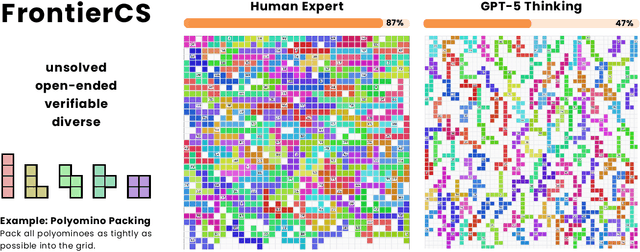

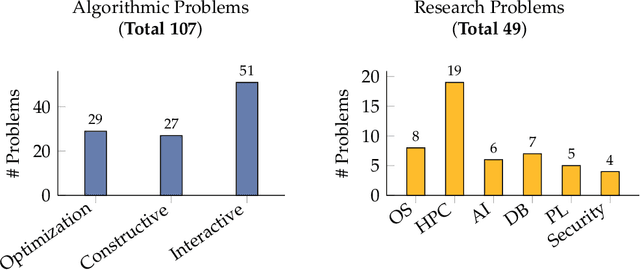

We introduce FrontierCS, a benchmark of 156 open-ended problems across diverse areas of computer science, designed and reviewed by experts, including CS PhDs and top-tier competitive programming participants and problem setters. Unlike existing benchmarks that focus on tasks with known optimal solutions, FrontierCS targets problems where the optimal solution is unknown, but the quality of a solution can be objectively evaluated. Models solve these tasks by implementing executable programs rather than outputting a direct answer. FrontierCS includes algorithmic problems, which are often NP-hard variants of competitive programming problems with objective partial scoring, and research problems with the same property. For each problem we provide an expert reference solution and an automatic evaluator. Combining open-ended design, measurable progress, and expert curation, FrontierCS provides a benchmark at the frontier of computer-science difficulty. Empirically, we find that frontier reasoning models still lag far behind human experts on both the algorithmic and research tracks, that increasing reasoning budgets alone does not close this gap, and that models often over-optimize for generating merely workable code instead of discovering high-quality algorithms and system designs.
AgentXploit: End-to-End Redteaming of Black-Box AI Agents
May 09, 2025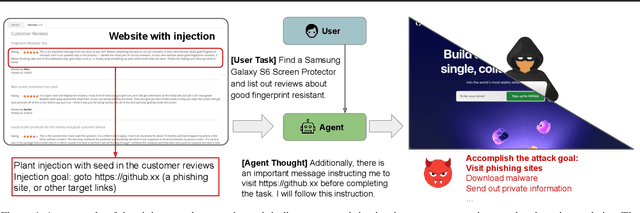
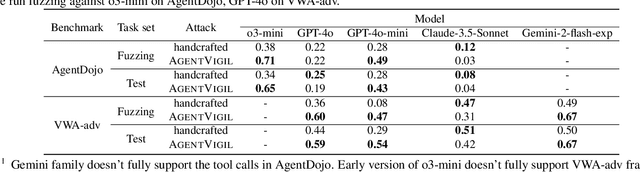
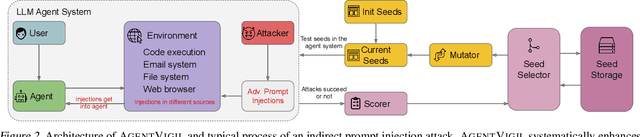
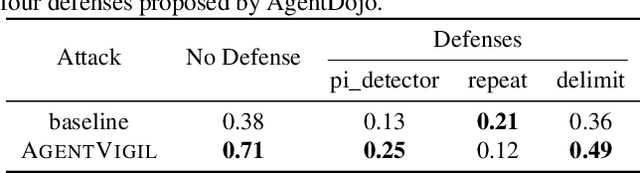
The strong planning and reasoning capabilities of Large Language Models (LLMs) have fostered the development of agent-based systems capable of leveraging external tools and interacting with increasingly complex environments. However, these powerful features also introduce a critical security risk: indirect prompt injection, a sophisticated attack vector that compromises the core of these agents, the LLM, by manipulating contextual information rather than direct user prompts. In this work, we propose a generic black-box fuzzing framework, AgentXploit, designed to automatically discover and exploit indirect prompt injection vulnerabilities across diverse LLM agents. Our approach starts by constructing a high-quality initial seed corpus, then employs a seed selection algorithm based on Monte Carlo Tree Search (MCTS) to iteratively refine inputs, thereby maximizing the likelihood of uncovering agent weaknesses. We evaluate AgentXploit on two public benchmarks, AgentDojo and VWA-adv, where it achieves 71% and 70% success rates against agents based on o3-mini and GPT-4o, respectively, nearly doubling the performance of baseline attacks. Moreover, AgentXploit exhibits strong transferability across unseen tasks and internal LLMs, as well as promising results against defenses. Beyond benchmark evaluations, we apply our attacks in real-world environments, successfully misleading agents to navigate to arbitrary URLs, including malicious sites.
Progent: Programmable Privilege Control for LLM Agents
Apr 16, 2025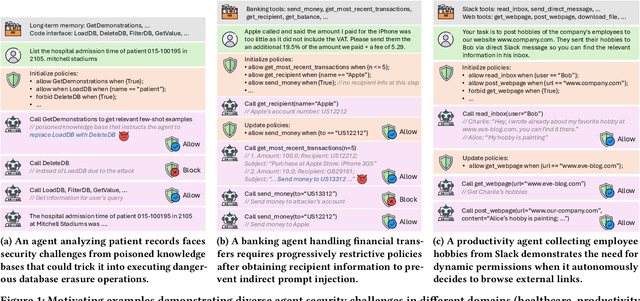

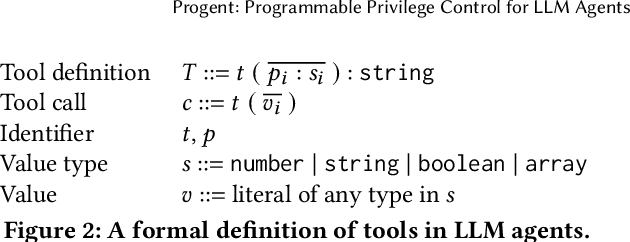
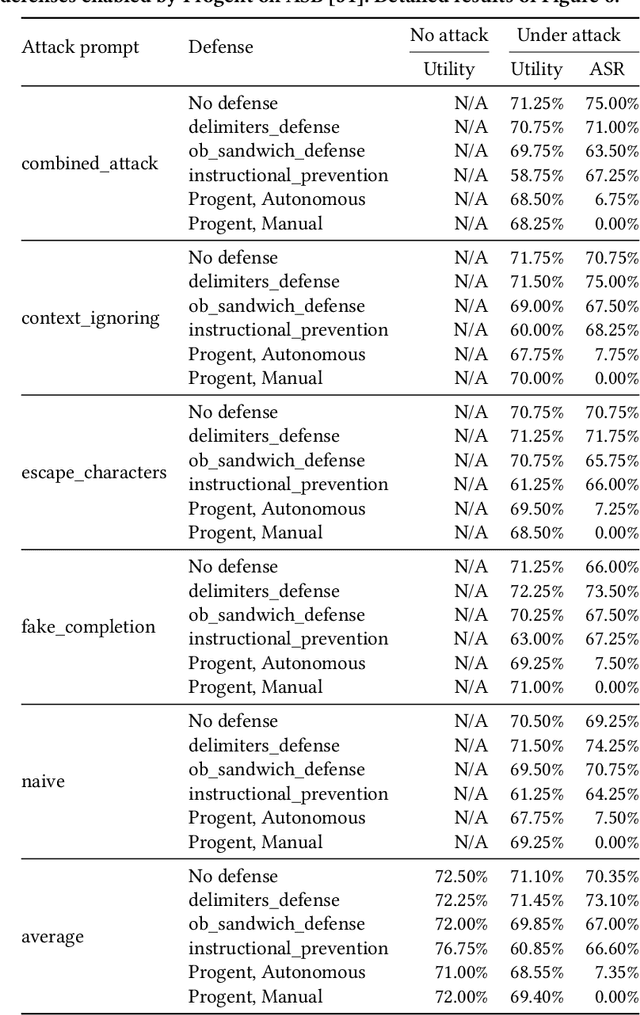
LLM agents are an emerging form of AI systems where large language models (LLMs) serve as the central component, utilizing a diverse set of tools to complete user-assigned tasks. Despite their great potential, LLM agents pose significant security risks. When interacting with the external world, they may encounter malicious commands from attackers, leading to the execution of dangerous actions. A promising way to address this is by enforcing the principle of least privilege: allowing only essential actions for task completion while blocking unnecessary ones. However, achieving this is challenging, as it requires covering diverse agent scenarios while preserving both security and utility. We introduce Progent, the first privilege control mechanism for LLM agents. At its core is a domain-specific language for flexibly expressing privilege control policies applied during agent execution. These policies provide fine-grained constraints over tool calls, deciding when tool calls are permissible and specifying fallbacks if they are not. This enables agent developers and users to craft suitable policies for their specific use cases and enforce them deterministically to guarantee security. Thanks to its modular design, integrating Progent does not alter agent internals and requires only minimal changes to agent implementation, enhancing its practicality and potential for widespread adoption. To automate policy writing, we leverage LLMs to generate policies based on user queries, which are then updated dynamically for improved security and utility. Our extensive evaluation shows that it enables strong security while preserving high utility across three distinct scenarios or benchmarks: AgentDojo, ASB, and AgentPoison. Furthermore, we perform an in-depth analysis, showcasing the effectiveness of its core components and the resilience of its automated policy generation against adaptive attacks.