 Add to Chrome
 Add to Firefox
 Add to Edge
FrontierSmith: Synthesizing Open-Ended Coding Problems at Scale
May 14, 2026
Many real-world coding challenges are open-ended and admit no known optimal solution. Yet, recent progress in LLM coding has focused on well-defined tasks such as feature implementation, bug fixing, and competitive programming. Open-ended coding remains a weak spot for LLMs, largely because open-ended training problems are scarce and expensive to construct. Our goal is to synthesize open-ended coding problems at scale to train stronger LLM coders. We introduce FrontierSmith, an automated system for iteratively evolving open-ended problems from existing closed-ended coding tasks. Starting from competitive programming problems, FrontierSmith generates candidate open-ended variants by changing the problems'goals, restricting outputs, and generalizing inputs. It then uses a quantitative idea divergence metric to select problems that elicit genuinely diverse approaches from different solvers. Agents then generate test cases and verifiers for the surviving candidates. On two open-ended coding benchmarks, training on our synthesized data yields substantial gains over the base models: Qwen3.5-9B improves by +8.82 score on FrontierCS and +306.36 (Elo-rating-based performance) on ALE-bench; Qwen3.5-27B improves by +12.12 and +309.12, respectively. The synthesized problems also make agents take more turns and use more tokens, similar to human-curated ones, suggesting that closed-ended seeds can be a practical starting point for long-horizon coding data.

Concurrency without Model Changes: Future-based Asynchronous Function Calling for LLMs
May 14, 2026Function calling, also known as tool use, is a core capability of modern LLM agents but is typically constrained by synchronous execution semantics. Under these semantics, LLM decoding is blocked until each function call completes, resulting in increasing end-to-end latency. In this work, we introduce AsyncFC, a pure execution-layer framework that decouples LLM decoding from function execution, enabling overlap between model decoding and function execution as well as inter-function parallelism when dependencies permit. AsyncFC layers over existing models and unmodified function implementations, requiring no fine-tuning or changes to the standard synchronous function-calling protocol. Across standard function-calling benchmarks and adapted software engineering benchmarks, AsyncFC significantly reduces end-to-end task completion time while preserving task accuracy. Furthermore, these results reveal that LLMs possess a native capability to reason over symbolic futures that represent unresolved execution results, enabling an asynchronous paradigm for model-tool interaction.
OpenDeepThink: Parallel Reasoning via Bradley--Terry Aggregation
May 14, 2026Test-time compute scaling is a primary axis for improving LLM reasoning. Existing methods primarily scale depth by extending a single reasoning trace. Scaling breadth by sampling multiple candidates in parallel is straightforward, but introduces a selection bottleneck: choosing the best candidate without a ground-truth verifier, since pointwise LLM judging is noisy and biased. To address this, we introduce OpenDeepThink, a population-based test-time compute framework that selects via pairwise Bradley-Terry comparison. Each generation, the LLM judges random pairs of candidates and aggregates votes via Bradley-Terry into a global ranking; top-ranked candidates are preserved and the top three quarters are mutated using the natural-language critiques produced during comparison; the bottom quarter is discarded. OpenDeepThink raises Gemini 3.1 Pro's effective Codeforces Elo by +405 points in eight sequential LLM-call rounds (~27 minutes wall-clock). The pipeline transfers across weaker and stronger models without retuning, and on the multi-domain HLE benchmark, gains appear concentrated in objectively verifiable domains and reverse in subjective ones. We release CF-73, a curated set of 73 expert-rated Codeforces problems with International Grandmaster annotation and 99% local-evaluation agreement against the official verdict.
SVG-EAR: Parameter-Free Linear Compensation for Sparse Video Generation via Error-aware Routing
Mar 09, 2026Diffusion Transformers (DiTs) have become a leading backbone for video generation, yet their quadratic attention cost remains a major bottleneck. Sparse attention reduces this cost by computing only a subset of attention blocks. However, prior methods often either drop the remaining blocks, which incurs information loss, or rely on learned predictors to approximate them, introducing training overhead and potential output distribution shifting. In this paper, we show that the missing contributions can be recovered without training: after semantic clustering, keys and values within each block exhibit strong similarity and can be well summarized by a small set of cluster centroids. Based on this observation, we introduce SVG-EAR, a parameter-free linear compensation branch that uses the centroid to approximate skipped blocks and recover their contributions. While centroid compensation is accurate for most blocks, it can fail on a small subset. Standard sparsification typically selects blocks by attention scores, which indicate where the model places its attention mass, but not where the approximation error would be largest. SVG-EAR therefore performs error-aware routing: a lightweight probe estimates the compensation error for each block, and we compute exactly the blocks with the highest error-to-cost ratio while compensating for skipped blocks. We provide theoretical guarantees that relate attention reconstruction error to clustering quality, and empirically show that SVG-EAR improves the quality-efficiency trade-off and increases throughput at the same generation fidelity on video diffusion tasks. Overall, SVG-EAR establishes a clear Pareto frontier over prior approaches, achieving up to 1.77$\times$ and 1.93$\times$ speedups while maintaining PSNRs of up to 29.759 and 31.043 on Wan2.2 and HunyuanVideo, respectively.
FrontierCS: Evolving Challenges for Evolving Intelligence
Dec 17, 2025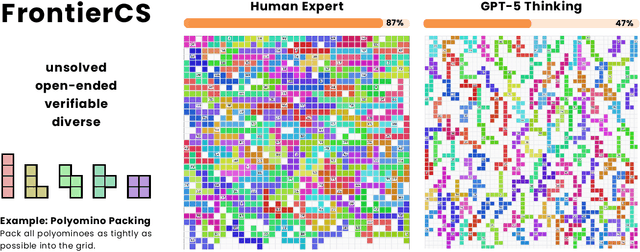

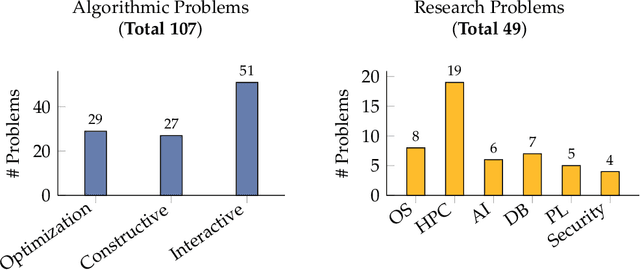

We introduce FrontierCS, a benchmark of 156 open-ended problems across diverse areas of computer science, designed and reviewed by experts, including CS PhDs and top-tier competitive programming participants and problem setters. Unlike existing benchmarks that focus on tasks with known optimal solutions, FrontierCS targets problems where the optimal solution is unknown, but the quality of a solution can be objectively evaluated. Models solve these tasks by implementing executable programs rather than outputting a direct answer. FrontierCS includes algorithmic problems, which are often NP-hard variants of competitive programming problems with objective partial scoring, and research problems with the same property. For each problem we provide an expert reference solution and an automatic evaluator. Combining open-ended design, measurable progress, and expert curation, FrontierCS provides a benchmark at the frontier of computer-science difficulty. Empirically, we find that frontier reasoning models still lag far behind human experts on both the algorithmic and research tracks, that increasing reasoning budgets alone does not close this gap, and that models often over-optimize for generating merely workable code instead of discovering high-quality algorithms and system designs.
The Danger of Overthinking: Examining the Reasoning-Action Dilemma in Agentic Tasks
Feb 12, 2025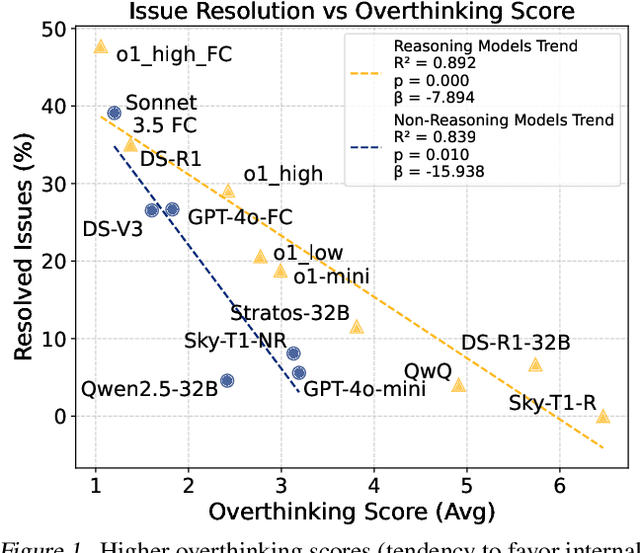
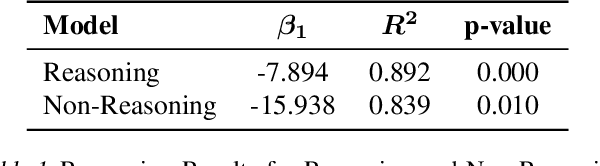
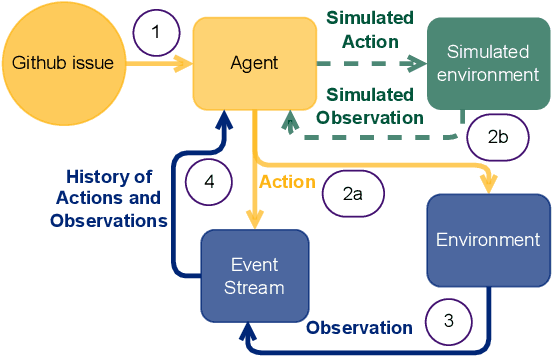
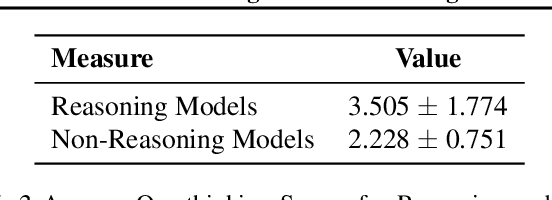
Large Reasoning Models (LRMs) represent a breakthrough in AI problem-solving capabilities, but their effectiveness in interactive environments can be limited. This paper introduces and analyzes overthinking in LRMs. A phenomenon where models favor extended internal reasoning chains over environmental interaction. Through experiments on software engineering tasks using SWE Bench Verified, we observe three recurring patterns: Analysis Paralysis, Rogue Actions, and Premature Disengagement. We propose a framework to study these behaviors, which correlates with human expert assessments, and analyze 4018 trajectories. We observe that higher overthinking scores correlate with decreased performance, with reasoning models exhibiting stronger tendencies toward overthinking compared to non-reasoning models. Our analysis reveals that simple efforts to mitigate overthinking in agentic environments, such as selecting the solution with the lower overthinking score, can improve model performance by almost 30% while reducing computational costs by 43%. These results suggest that mitigating overthinking has strong practical implications. We suggest that by leveraging native function-calling capabilities and selective reinforcement learning overthinking tendencies could be mitigated. We also open-source our evaluation framework and dataset to facilitate research in this direction at https://github.com/AlexCuadron/Overthinking.