 Add to Chrome
 Add to Firefox
 Add to Edge
BabelBench: An Omni Benchmark for Code-Driven Analysis of Multimodal and Multistructured Data
Oct 01, 2024



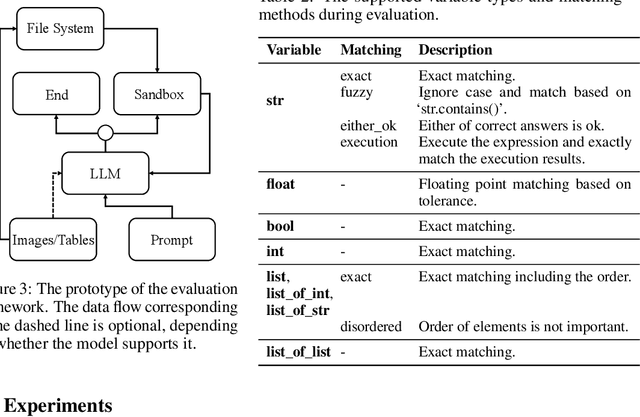
Large language models (LLMs) have become increasingly pivotal across various domains, especially in handling complex data types. This includes structured data processing, as exemplified by ChartQA and ChatGPT-Ada, and multimodal unstructured data processing as seen in Visual Question Answering (VQA). These areas have attracted significant attention from both industry and academia. Despite this, there remains a lack of unified evaluation methodologies for these diverse data handling scenarios. In response, we introduce BabelBench, an innovative benchmark framework that evaluates the proficiency of LLMs in managing multimodal multistructured data with code execution. BabelBench incorporates a dataset comprising 247 meticulously curated problems that challenge the models with tasks in perception, commonsense reasoning, logical reasoning, and so on. Besides the basic capabilities of multimodal understanding, structured data processing as well as code generation, these tasks demand advanced capabilities in exploration, planning, reasoning and debugging. Our experimental findings on BabelBench indicate that even cutting-edge models like ChatGPT 4 exhibit substantial room for improvement. The insights derived from our comprehensive analysis offer valuable guidance for future research within the community. The benchmark data can be found at https://github.com/FFD8FFE/babelbench.

Federated Prediction-Powered Inference from Decentralized Data
Sep 03, 2024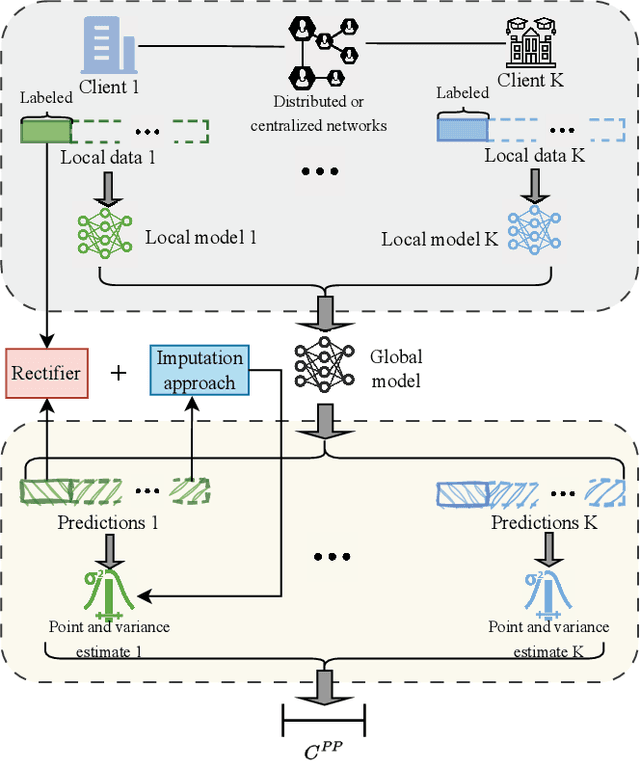
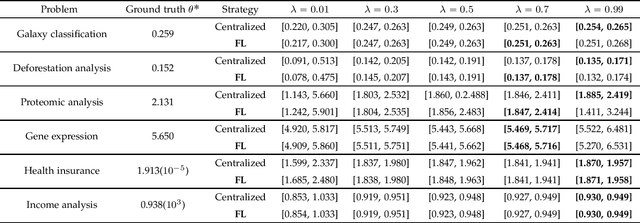
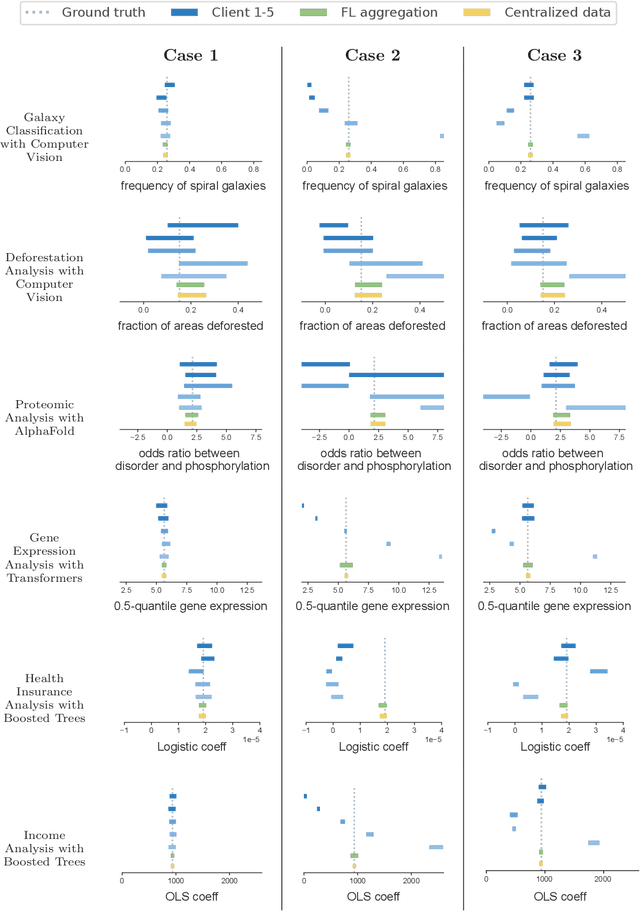
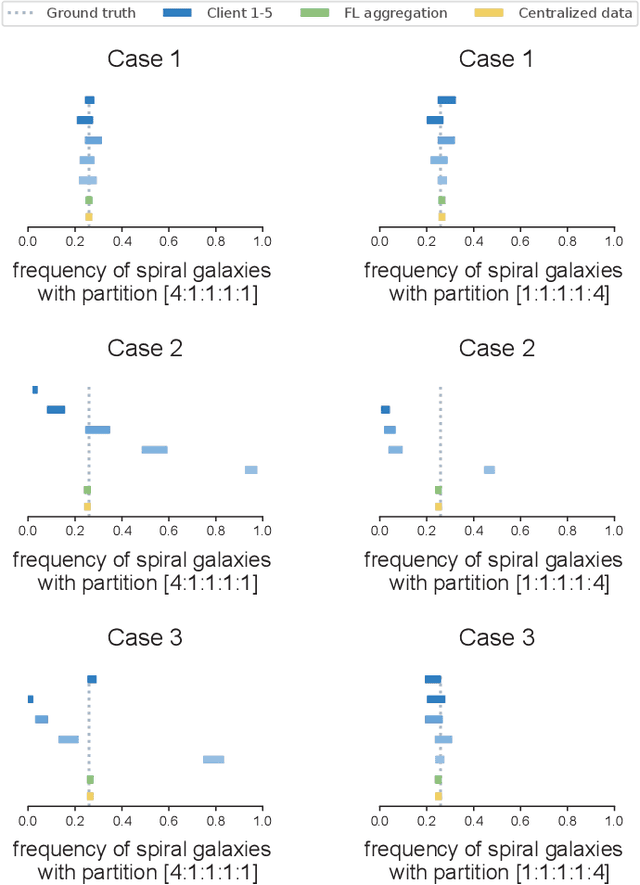
In various domains, the increasing application of machine learning allows researchers to access inexpensive predictive data, which can be utilized as auxiliary data for statistical inference. Although such data are often unreliable compared to gold-standard datasets, Prediction-Powered Inference (PPI) has been proposed to ensure statistical validity despite the unreliability. However, the challenge of `data silos' arises when the private gold-standard datasets are non-shareable for model training, leading to less accurate predictive models and invalid inferences. In this paper, we introduces the Federated Prediction-Powered Inference (Fed-PPI) framework, which addresses this challenge by enabling decentralized experimental data to contribute to statistically valid conclusions without sharing private information. The Fed-PPI framework involves training local models on private data, aggregating them through Federated Learning (FL), and deriving confidence intervals using PPI computation. The proposed framework is evaluated through experiments, demonstrating its effectiveness in producing valid confidence intervals.
DPSNN: Spiking Neural Network for Low-Latency Streaming Speech Enhancement
Aug 14, 2024Speech enhancement (SE) improves communication in noisy environments, affecting areas such as automatic speech recognition, hearing aids, and telecommunications. With these domains typically being power-constrained and event-based while requiring low latency, neuromorphic algorithms in the form of spiking neural networks (SNNs) have great potential. Yet, current effective SNN solutions require a contextual sampling window imposing substantial latency, typically around 32ms, too long for many applications. Inspired by Dual-Path Spiking Neural Networks (DPSNNs) in classical neural networks, we develop a two-phase time-domain streaming SNN framework -- the Dual-Path Spiking Neural Network (DPSNN). In the DPSNN, the first phase uses Spiking Convolutional Neural Networks (SCNNs) to capture global contextual information, while the second phase uses Spiking Recurrent Neural Networks (SRNNs) to focus on frequency-related features. In addition, the regularizer suppresses activation to further enhance energy efficiency of our DPSNNs. Evaluating on the VCTK and Intel DNS Datasets, we demonstrate that our approach achieves the very low latency (approximately 5ms) required for applications like hearing aids, while demonstrating excellent signal-to-noise ratio (SNR), perceptual quality, and energy efficiency.
Stability and Generalization for Stochastic Recursive Momentum-based Algorithms for (Strongly-)Convex One to $K$-Level Stochastic Optimizations
Jul 07, 2024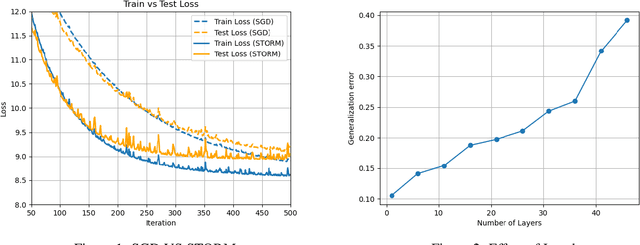
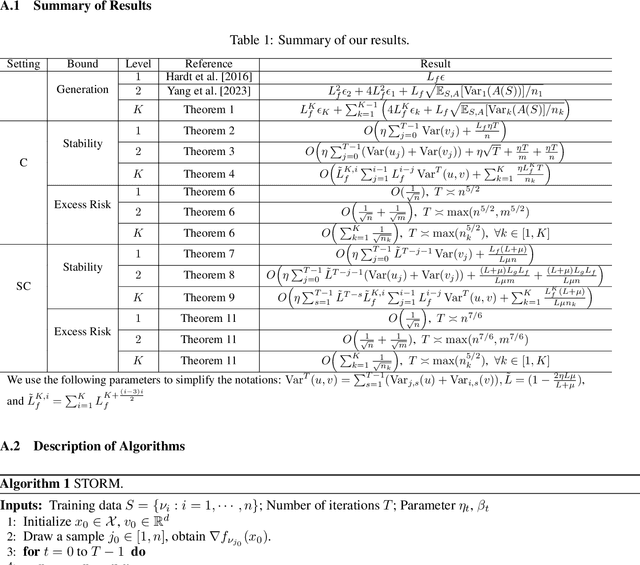
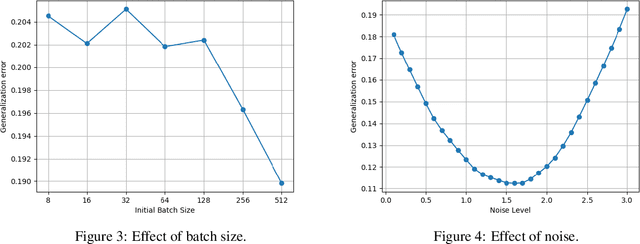
STOchastic Recursive Momentum (STORM)-based algorithms have been widely developed to solve one to $K$-level ($K \geq 3$) stochastic optimization problems. Specifically, they use estimators to mitigate the biased gradient issue and achieve near-optimal convergence results. However, there is relatively little work on understanding their generalization performance, particularly evident during the transition from one to $K$-level optimization contexts. This paper provides a comprehensive generalization analysis of three representative STORM-based algorithms: STORM, COVER, and SVMR, for one, two, and $K$-level stochastic optimizations under both convex and strongly convex settings based on algorithmic stability. Firstly, we define stability for $K$-level optimizations and link it to generalization. Then, we detail the stability results for three prominent STORM-based algorithms. Finally, we derive their excess risk bounds by balancing stability results with optimization errors. Our theoretical results provide strong evidence to complete STORM-based algorithms: (1) Each estimator may decrease their stability due to variance with its estimation target. (2) Every additional level might escalate the generalization error, influenced by the stability and the variance between its cumulative stochastic gradient and the true gradient. (3) Increasing the batch size for the initial computation of estimators presents a favorable trade-off, enhancing the generalization performance.
UniCoder: Scaling Code Large Language Model via Universal Code
Jun 24, 2024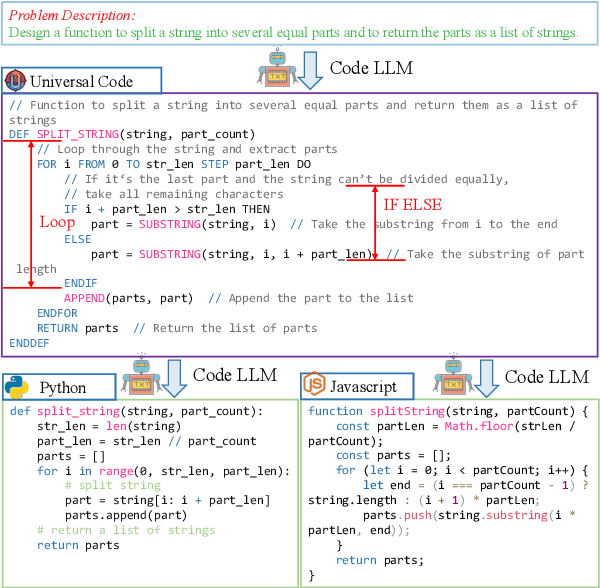
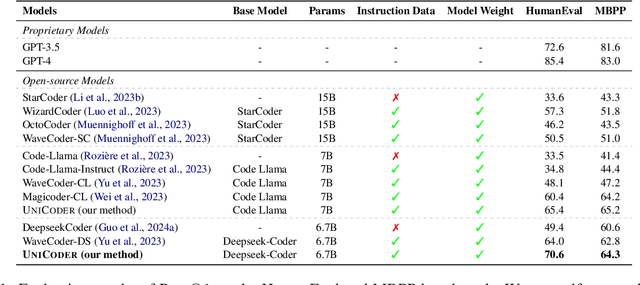
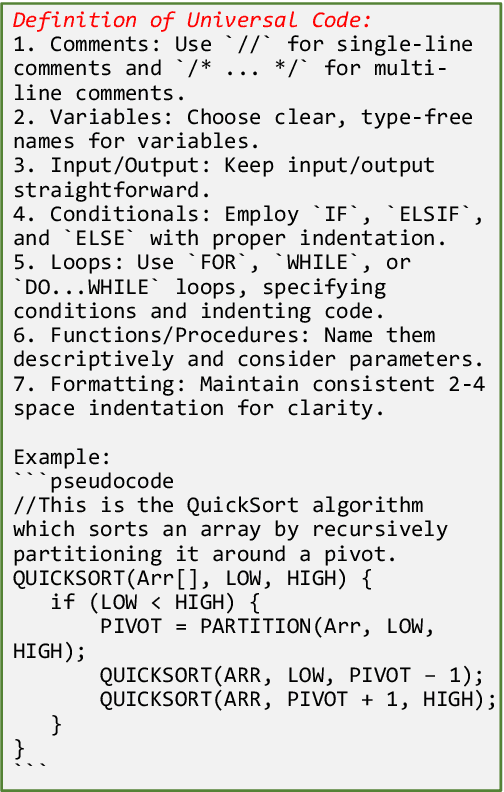
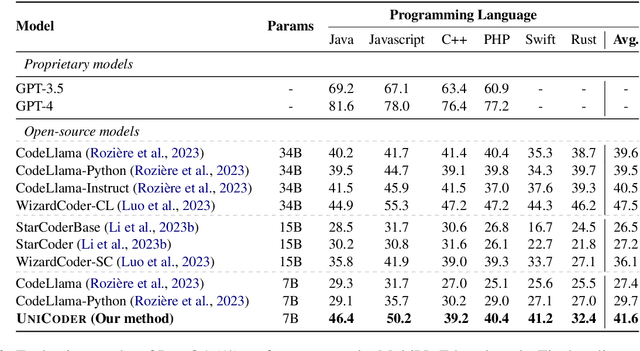
Intermediate reasoning or acting steps have successfully improved large language models (LLMs) for handling various downstream natural language processing (NLP) tasks. When applying LLMs for code generation, recent works mainly focus on directing the models to articulate intermediate natural-language reasoning steps, as in chain-of-thought (CoT) prompting, and then output code with the natural language or other structured intermediate steps. However, such output is not suitable for code translation or generation tasks since the standard CoT has different logical structures and forms of expression with the code. In this work, we introduce the universal code (UniCode) as the intermediate representation. It is a description of algorithm steps using a mix of conventions of programming languages, such as assignment operator, conditional operator, and loop. Hence, we collect an instruction dataset UniCoder-Instruct to train our model UniCoder on multi-task learning objectives. UniCoder-Instruct comprises natural-language questions, code solutions, and the corresponding universal code. The alignment between the intermediate universal code representation and the final code solution significantly improves the quality of the generated code. The experimental results demonstrate that UniCoder with the universal code significantly outperforms the previous prompting methods by a large margin, showcasing the effectiveness of the structural clues in pseudo-code.
FoRAG: Factuality-optimized Retrieval Augmented Generation for Web-enhanced Long-form Question Answering
Jun 19, 2024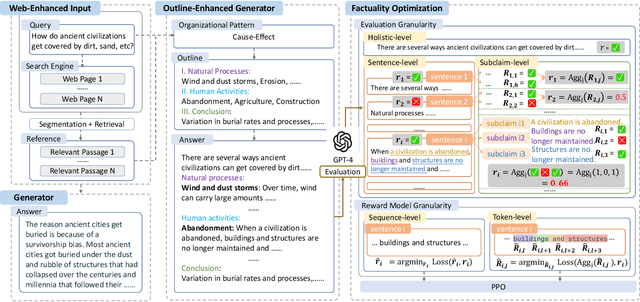
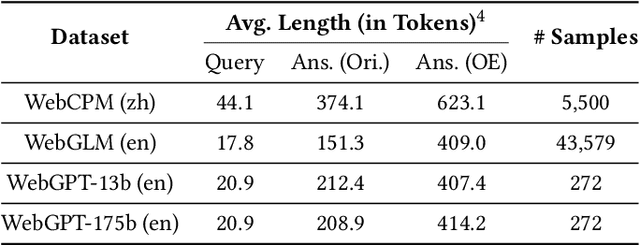

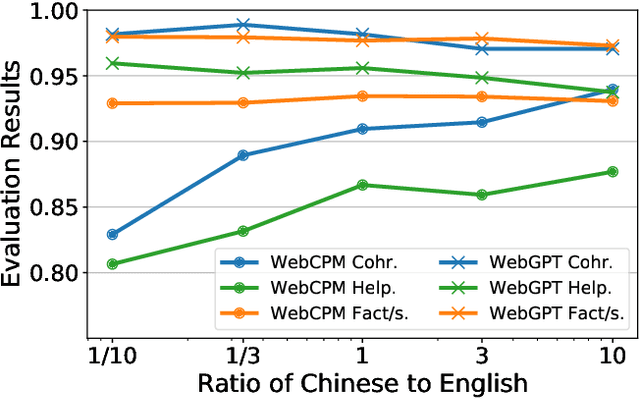
Retrieval Augmented Generation (RAG) has become prevalent in question-answering (QA) tasks due to its ability of utilizing search engine to enhance the quality of long-form question-answering (LFQA). Despite the emergence of various open source methods and web-enhanced commercial systems such as Bing Chat, two critical problems remain unsolved, i.e., the lack of factuality and clear logic in the generated long-form answers. In this paper, we remedy these issues via a systematic study on answer generation in web-enhanced LFQA. Specifically, we first propose a novel outline-enhanced generator to achieve clear logic in the generation of multifaceted answers and construct two datasets accordingly. Then we propose a factuality optimization method based on a carefully designed doubly fine-grained RLHF framework, which contains automatic evaluation and reward modeling in different levels of granularity. Our generic framework comprises conventional fine-grained RLHF methods as special cases. Extensive experiments verify the superiority of our proposed \textit{Factuality-optimized RAG (FoRAG)} method on both English and Chinese benchmarks. In particular, when applying our method to Llama2-7B-chat, the derived model FoRAG-L-7B outperforms WebGPT-175B in terms of three commonly used metrics (i.e., coherence, helpfulness, and factuality), while the number of parameters is much smaller (only 1/24 of that of WebGPT-175B). Our datasets and models are made publicly available for better reproducibility: https://huggingface.co/forag.
Brain-Inspired Spike Echo State Network Dynamics for Aero-Engine Intelligent Fault Prediction
Jun 14, 2024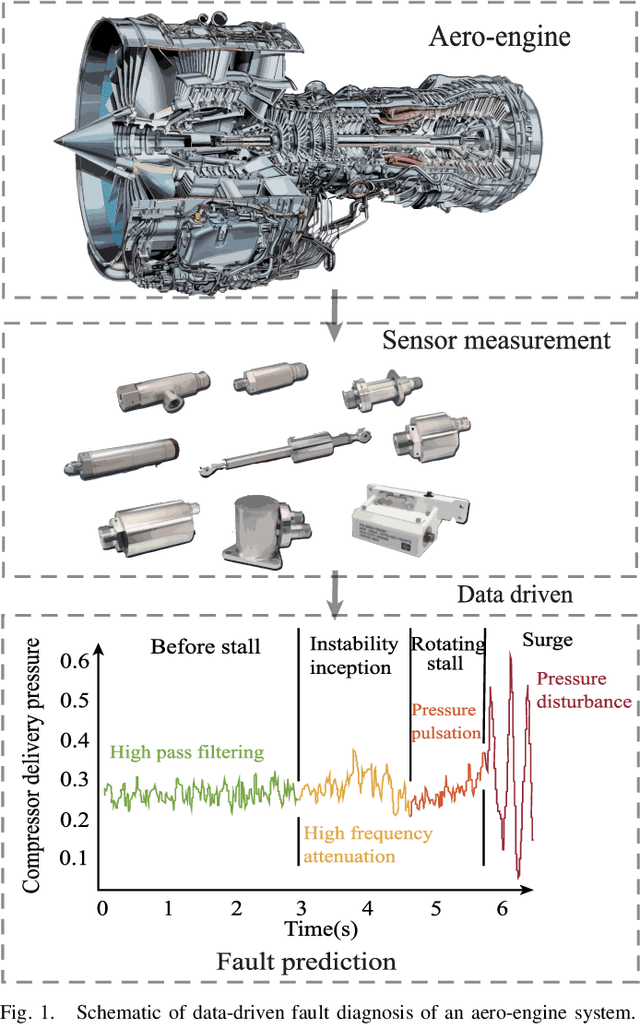
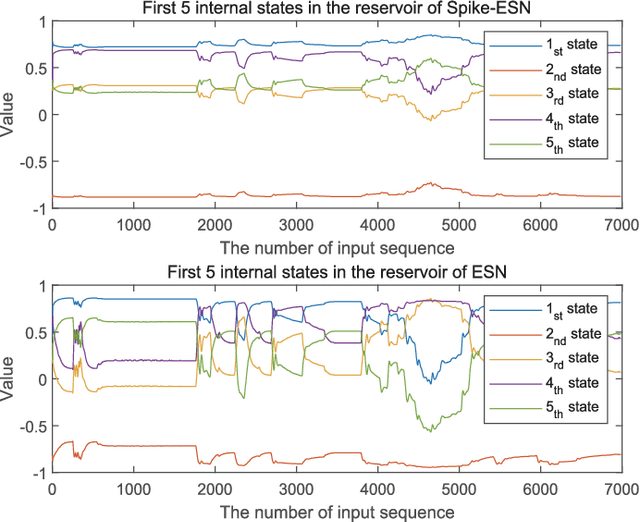
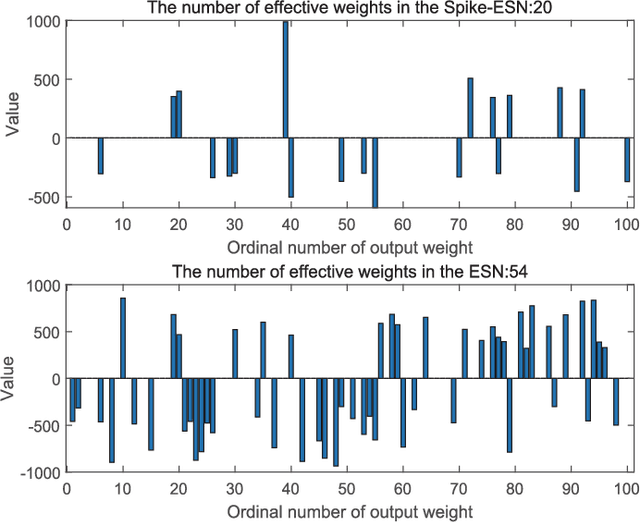
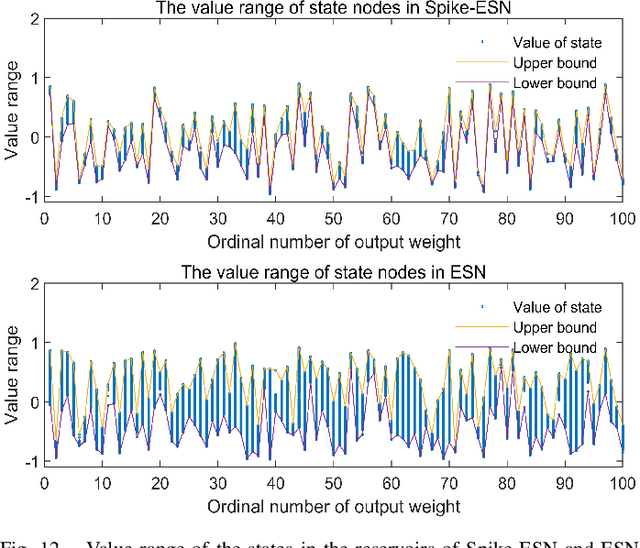
Aero-engine fault prediction aims to accurately predict the development trend of the future state of aero-engines, so as to diagnose faults in advance. Traditional aero-engine parameter prediction methods mainly use the nonlinear mapping relationship of time series data but generally ignore the adequate spatiotemporal features contained in aero-engine data. To this end, we propose a brain-inspired spike echo state network (Spike-ESN) model for aero-engine intelligent fault prediction, which is used to effectively capture the evolution process of aero-engine time series data in the framework of spatiotemporal dynamics. In the proposed approach, we design a spike input layer based on Poisson distribution inspired by the spike neural encoding mechanism of biological neurons, which can extract the useful temporal characteristics in aero-engine sequence data. Then, the temporal characteristics are input into a spike reservoir through the current calculation method of spike accumulation in neurons, which projects the data into a high-dimensional sparse space. In addition, we use the ridge regression method to read out the internal state of the spike reservoir. Finally, the experimental results of aero-engine states prediction demonstrate the superiority and potential of the proposed method.
XFormParser: A Simple and Effective Multimodal Multilingual Semi-structured Form Parser
May 27, 2024In the domain of document AI, semi-structured form parsing plays a crucial role. This task leverages techniques from key information extraction (KIE), dealing with inputs that range from plain text to intricate modal data comprising images and structural layouts. The advent of pre-trained multimodal models has driven the extraction of key information from form documents in different formats such as PDFs and images. Nonetheless, the endeavor of form parsing is still encumbered by notable challenges like subpar capabilities in multi-lingual parsing and diminished recall in contexts rich in text and visuals. In this work, we introduce a simple but effective \textbf{M}ultimodal and \textbf{M}ultilingual semi-structured \textbf{FORM} \textbf{PARSER} (\textbf{XFormParser}), which is anchored on a comprehensive pre-trained language model and innovatively amalgamates semantic entity recognition (SER) and relation extraction (RE) into a unified framework, enhanced by a novel staged warm-up training approach that employs soft labels to significantly refine form parsing accuracy without amplifying inference overhead. Furthermore, we have developed a groundbreaking benchmark dataset, named InDFormBench, catering specifically to the parsing requirements of multilingual forms in various industrial contexts. Through rigorous testing on established multilingual benchmarks and InDFormBench, XFormParser has demonstrated its unparalleled efficacy, notably surpassing the state-of-the-art (SOTA) models in RE tasks within language-specific setups by achieving an F1 score improvement of up to 1.79\%. Our framework exhibits exceptionally improved performance across tasks in both multi-language and zero-shot contexts when compared to existing SOTA benchmarks. The code is publicly available at https://github.com/zhbuaa0/layoutlmft.
Score-based Generative Models with Adaptive Momentum
May 22, 2024
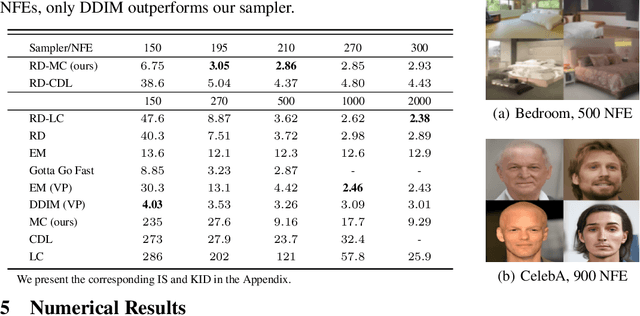
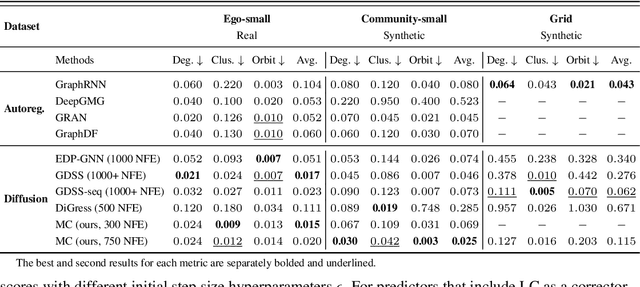

Score-based generative models have demonstrated significant practical success in data-generating tasks. The models establish a diffusion process that perturbs the ground truth data to Gaussian noise and then learn the reverse process to transform noise into data. However, existing denoising methods such as Langevin dynamic and numerical stochastic differential equation solvers enjoy randomness but generate data slowly with a large number of score function evaluations, and the ordinary differential equation solvers enjoy faster sampling speed but no randomness may influence the sample quality. To this end, motivated by the Stochastic Gradient Descent (SGD) optimization methods and the high connection between the model sampling process with the SGD, we propose adaptive momentum sampling to accelerate the transforming process without introducing additional hyperparameters. Theoretically, we proved our method promises convergence under given conditions. In addition, we empirically show that our sampler can produce more faithful images/graphs in small sampling steps with 2 to 5 times speed up and obtain competitive scores compared to the baselines on image and graph generation tasks.
1st Place Solution to the 1st SkatingVerse Challenge
Apr 22, 2024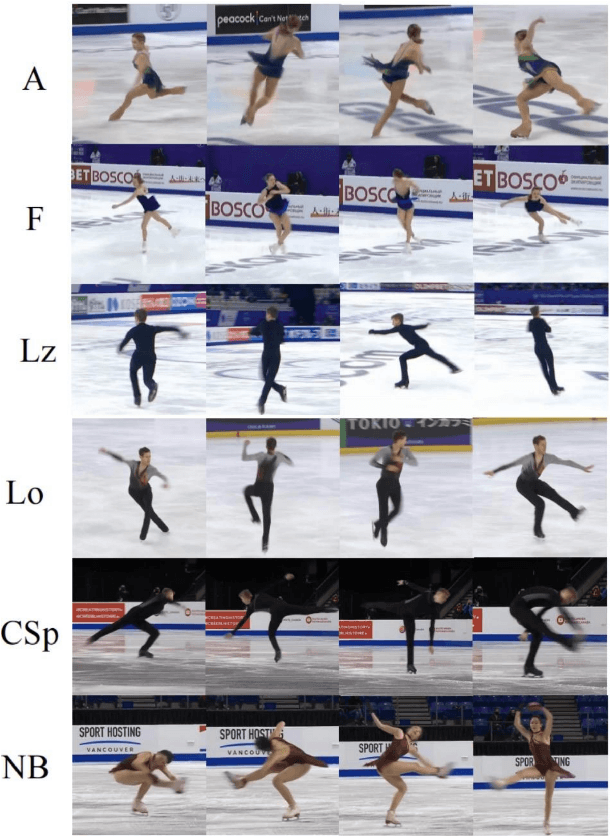
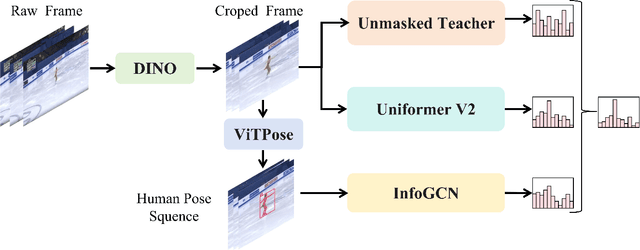
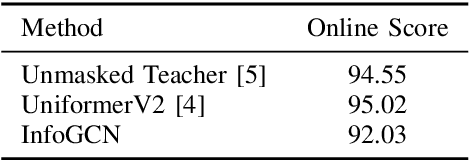
This paper presents the winning solution for the 1st SkatingVerse Challenge. We propose a method that involves several steps. To begin, we leverage the DINO framework to extract the Region of Interest (ROI) and perform precise cropping of the raw video footage. Subsequently, we employ three distinct models, namely Unmasked Teacher, UniformerV2, and InfoGCN, to capture different aspects of the data. By ensembling the prediction results based on logits, our solution attains an impressive leaderboard score of 95.73%.