 Add to Chrome
 Add to Firefox
 Add to Edge
EviGraph: Evidence-Guided Autonomous Research Agents
Aug 06, 2026
Autonomous research agents can generate hypotheses, execute experiments, and draft manuscripts, yet their outputs often contain unsupported claims and inconsistencies between research questions, experiments, results, and conclusions. We argue that this problem is partly architectural: existing systems organize research as sequential pipelines but do not explicitly maintain or validate the evolving claim-evidence structure across stages. In this paper, we introduce EviGraph, an autonomous research framework that represents the research process as a typed evidence graph containing Problem, Gap, Hypothesis, Experiment, Finding, and Claim nodes. The graph serves as the operational state of the agent rather than a post-hoc record. EviGraph inspects evidence chains for missing dependencies, semantic misalignment, and result-claim inconsistencies, localizes the earliest weak node, and regenerates its affected downstream subgraph. Graph checkpointing prevents unsuccessful repairs from corrupting previously validated evidence. Manuscripts are generated only after every retained claim is grounded in a validated evidence chain. Experiments on ARC-Bench-ML and NanoResearch-20 show that EviGraph outperforms the compared end-to-end research-agent baselines in overall research performance, improves Claim Support Rate by 40.19% over the strongest baseline, and achieves 87.73% Experimental Data Consistency. These results demonstrate the value of explicit evidence-state maintenance for reliable autonomous research.

Project2Task: Graph-Guided Project-Level Planning for Autonomous Research
Aug 05, 2026Research agents can increasingly search literature, propose hypotheses, generate code, run experiments, and draft manuscripts from a single topic. However, a research project is not merely a larger task: it is a long-horizon agenda that must be advanced through multiple bounded tasks with distinct but related objectives, parallel alternatives, and dependency-aware sequences. Existing single-task systems often treat the project as one oversized task, produce a flat set of vague or overlapping tasks, or leave task boundaries and execution order to manual coordination. We introduce Project2Task, a graph-guided project-level planning layer for autonomous research. Given a project brief, it represents candidate contributions as innovation atoms and organizes them in a directed lineage graph. A lightweight Bernoulli block-model objective selects among horizontal, vertical, and hybrid portfolio decompositions. Project2Task then generates bounded tasks with explicit contribution ownership, repairs overlaps and missing execution fields, and emits dependency-aware task contracts that specify objectives, inputs, expected artifacts, evaluation requirements, boundary constraints, dependencies, and execution order. The contracts are independent of any particular downstream research executor and support integration of task outputs into a coherent project-level result. On a benchmark of ten project briefs yielding roughly 30 tasks, manuscript-based portfolio evaluation gives Project2Task an average quality score of 7.15, compared with 4.58 for the Brief Baseline and 5.31 for the Topic-only Setting. Integrating its contracts with AutoResearchClaw increases average downstream task accuracy from 0.536 to 0.759. These results demonstrate the value of explicit project-to-task planning for producing coherent, non-redundant, and executable research-task portfolios.
AgenticECO: An Agentic Framework for ECO on 3D Integrated Circuits
Aug 04, 2026As Moore's law slows, the industry is turning to three-dimensional integration; yet in merged 3D-IC flows, routed designs expose bond-level defects with no 2D analogue, and post-route engineering change orders (ECO) remain manual, expertise-bound work. Worse, the standard edit-then-fully-reroute practice entangles a repair with router churn, so a signoff number cannot be attributed to the edit that motivated it. We present AgenticECO, an evidence-gated tool-using agent workflow for 3D-IC ECO on the open-source TaiWei flow, paired with EcoRoute, a minimal-disturbance ECO-routing layer that drives the unmodified pinned router so a repair is attributable to its edit. Across nine matched natural defect cases under identical budgets, AgenticECO clears seven versus two for both full reroute and stock repair, at 0.66\% mean disturbance over cleared cases and zero clock nets touched, and a cross-backbone rerun under the same sealed contract clears all nine. Controlled studies show that the repair moves are necessary under preservation, that occupancy-aware choice buys legal landings rather than repair success, and that under tightened clocks minimal disturbance flips accept versus reject. Three preregistered visual studies localize the pixel instrument's edge to contested landing sites, and a preregistered blind diagnostic exactly restores every held-out injected defect, the only arm with zero wrong edits. Every accepted result passes routing, fresh extraction, max/min timing, DRC, and structural-equivalence gates. Code, environment, and per-episode audit artifacts are released as supplementary material.
AgenticPD: A Stage-Aware Agentic Framework for Physical Design QoR Optimization
Jul 06, 2026Physical design quality-of-results~(QoR) optimization is hard and expensive. Choices made at one stage can help or hurt later stages. Each evaluation requires a costly EDA run through the full flow. While existing methods still treat optimization as flat parameter tuning or a LLM-based script generation task, we present AgenticPD, a stage-aware agentic framework for physical design QoR optimization. Instead of re-running the full flow after every trial, AgenticPD is organized around the stage boundaries of the physical design flow, where a Judge Agent navigates the search and stage-specialized agents make local decisions within their own stage using stage-local tools. Additionally, the agent harness in AgenticPD provides structured observations, execution history, and agent context management. As a result, the system can branch from prior intermediate states and reuse checkpoints to continue the optimization procedure, and every candidate is evaluated at the post-route signoff. Across these baselines, AgenticPD achieves strong post-route timing while remaining competitive in power and area.
A$^{2}$utoLPBench: An Auto-Generated, Agent-Friendly LP Benchmark via Inverse-KKT Construction
Jul 02, 2026Most LP-from-text benchmarks are static datasets of word problems written and labeled by hand. Once such a dataset is released, its size is fixed, its difficulty is fixed, and every problem can leak into the training data of future LLMs. We present \textbf{A$^{2}$utoLPBench}, a benchmark for testing LLM-driven agents on linear programming problems written in plain text. We first pick a feasible point and dual, then write down a problem for which that point is optimal and the objective value is known. The answer is known by construction, with no solver call and no human annotator. The evaluation environment bundles a reference solver-critic baseline and a Docker image whose usage instructions are written for an LLM-driven agent to read. With these in place, any agent can run the benchmark and get a calibrated score with one command. Because the benchmark is a generator rather than a fixed dataset, it has properties no fixed dataset can match: an unlimited supply of fresh problems, a difficulty knob set by $(n,m)$, ground-truth answers correct by construction, low LLM-side cost per problem relative to human authoring, repeatable scores across independent batches, and resistance to training-data leakage when fresh post-cutoff seed ranges are used.
KTAE: A Model-Free Algorithm to Key-Tokens Advantage Estimation in Mathematical Reasoning
May 22, 2025Recent advances have demonstrated that integrating reinforcement learning with rule-based rewards can significantly enhance the reasoning capabilities of large language models, even without supervised fine-tuning. However, prevalent reinforcement learning algorithms such as GRPO and its variants like DAPO, suffer from a coarse granularity issue when computing the advantage. Specifically, they compute rollout-level advantages that assign identical values to every token within a sequence, failing to capture token-specific contributions and hindering effective learning. To address this limitation, we propose Key-token Advantage Estimation (KTAE) - a novel algorithm that estimates fine-grained, token-level advantages without introducing additional models. KTAE leverages the correctness of sampled rollouts and applies statistical analysis to quantify the importance of individual tokens within a sequence to the final outcome. This quantified token-level importance is then combined with the rollout-level advantage to obtain a more fine-grained token-level advantage estimation. Empirical results show that models trained with GRPO+KTAE and DAPO+KTAE outperform baseline methods across five mathematical reasoning benchmarks. Notably, they achieve higher accuracy with shorter responses and even surpass R1-Distill-Qwen-1.5B using the same base model.
Towards Scientific Intelligence: A Survey of LLM-based Scientific Agents
Mar 31, 2025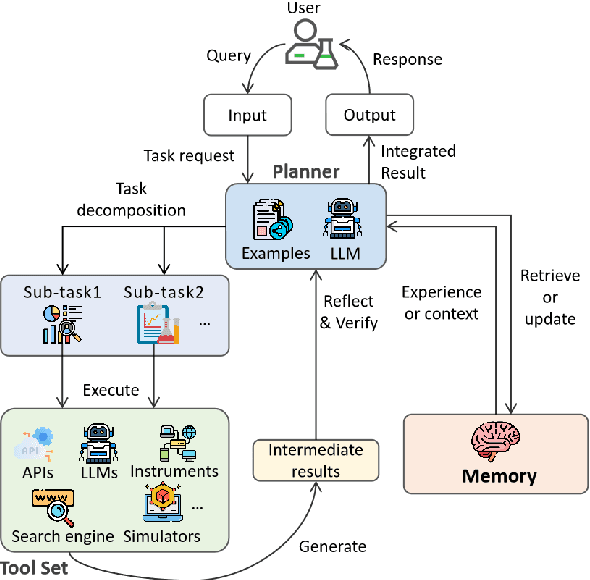
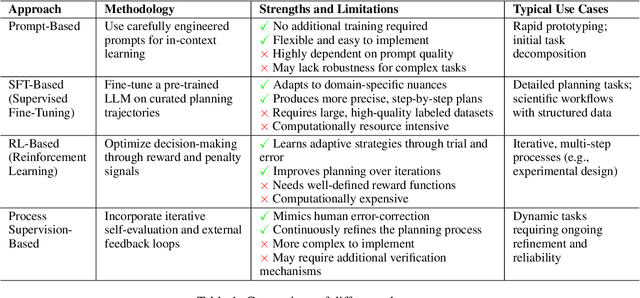
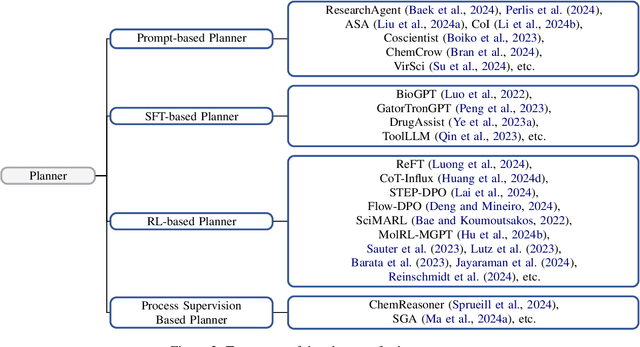
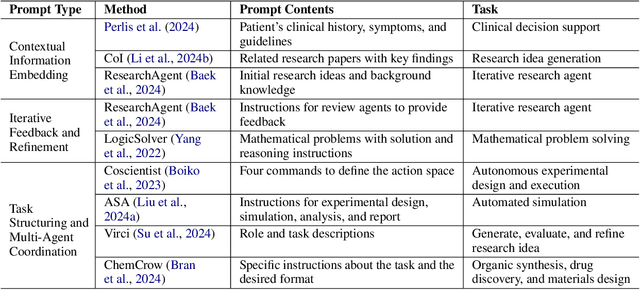
As scientific research becomes increasingly complex, innovative tools are needed to manage vast data, facilitate interdisciplinary collaboration, and accelerate discovery. Large language models (LLMs) are now evolving into LLM-based scientific agents that automate critical tasks, ranging from hypothesis generation and experiment design to data analysis and simulation. Unlike general-purpose LLMs, these specialized agents integrate domain-specific knowledge, advanced tool sets, and robust validation mechanisms, enabling them to handle complex data types, ensure reproducibility, and drive scientific breakthroughs. This survey provides a focused review of the architectures, design, benchmarks, applications, and ethical considerations surrounding LLM-based scientific agents. We highlight why they differ from general agents and the ways in which they advance research across various scientific fields. By examining their development and challenges, this survey offers a comprehensive roadmap for researchers and practitioners to harness these agents for more efficient, reliable, and ethically sound scientific discovery.
TESSP: Text-Enhanced Self-Supervised Speech Pre-training
Nov 24, 2022


Self-supervised speech pre-training empowers the model with the contextual structure inherent in the speech signal while self-supervised text pre-training empowers the model with linguistic information. Both of them are beneficial for downstream speech tasks such as ASR. However, the distinct pre-training objectives make it challenging to jointly optimize the speech and text representation in the same model. To solve this problem, we propose Text-Enhanced Self-Supervised Speech Pre-training (TESSP), aiming to incorporate the linguistic information into speech pre-training. Our model consists of three parts, i.e., a speech encoder, a text encoder and a shared encoder. The model takes unsupervised speech and text data as the input and leverages the common HuBERT and MLM losses respectively. We also propose phoneme up-sampling and representation swapping to enable joint modeling of the speech and text information. Specifically, to fix the length mismatching problem between speech and text data, we phonemize the text sequence and up-sample the phonemes with the alignment information extracted from a small set of supervised data. Moreover, to close the gap between the learned speech and text representations, we swap the text representation with the speech representation extracted by the respective private encoders according to the alignment information. Experiments on the Librispeech dataset shows the proposed TESSP model achieves more than 10% improvement compared with WavLM on the test-clean and test-other sets. We also evaluate our model on the SUPERB benchmark, showing our model has better performance on Phoneme Recognition, Acoustic Speech Recognition and Speech Translation compared with WavLM.
RAPO: An Adaptive Ranking Paradigm for Bilingual Lexicon Induction
Oct 18, 2022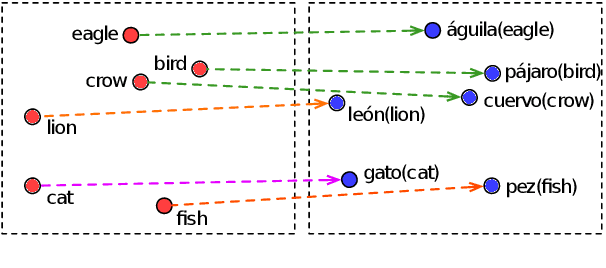
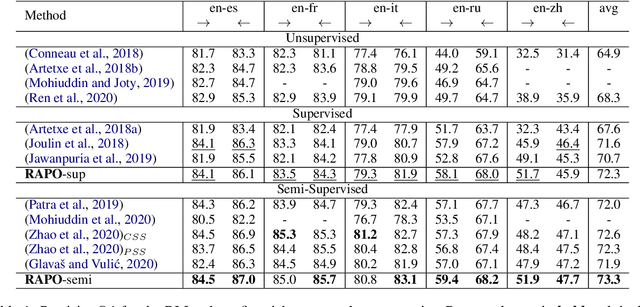
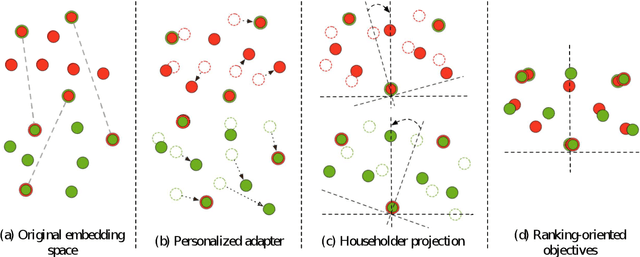
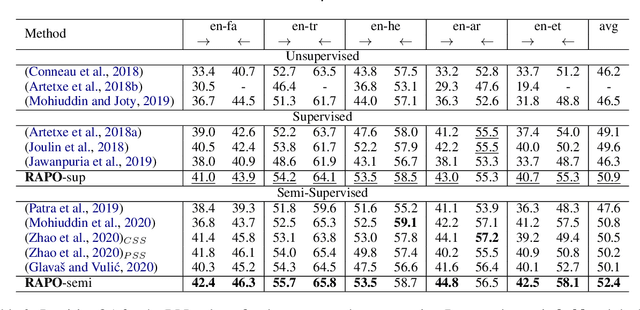
Bilingual lexicon induction induces the word translations by aligning independently trained word embeddings in two languages. Existing approaches generally focus on minimizing the distances between words in the aligned pairs, while suffering from low discriminative capability to distinguish the relative orders between positive and negative candidates. In addition, the mapping function is globally shared by all words, whose performance might be hindered by the deviations in the distributions of different languages. In this work, we propose a novel ranking-oriented induction model RAPO to learn personalized mapping function for each word. RAPO is capable of enjoying the merits from the unique characteristics of a single word and the cross-language isomorphism simultaneously. Extensive experimental results on public datasets including both rich-resource and low-resource languages demonstrate the superiority of our proposal. Our code is publicly available in \url{https://github.com/Jlfj345wf/RAPO}.
SpeechLM: Enhanced Speech Pre-Training with Unpaired Textual Data
Sep 30, 2022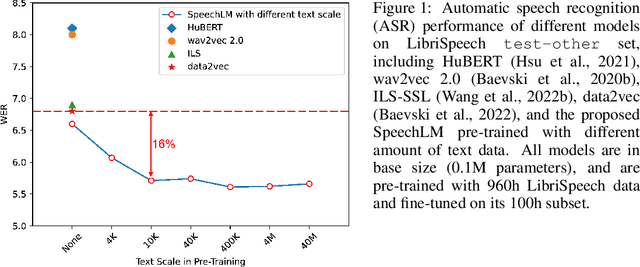
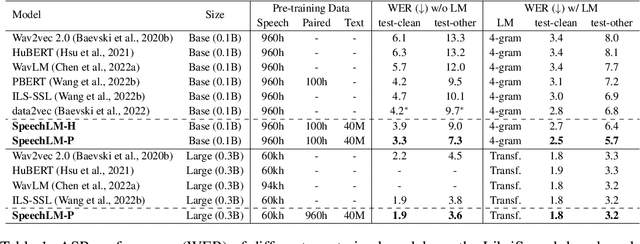
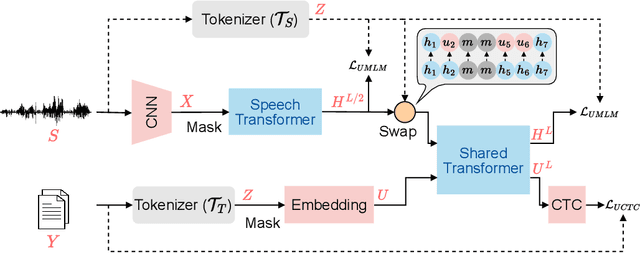
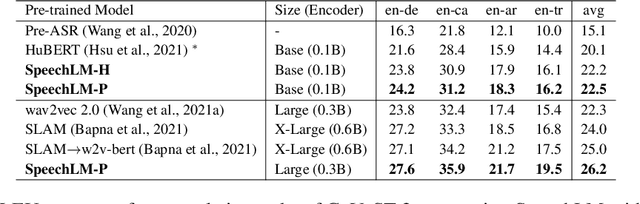
How to boost speech pre-training with textual data is an unsolved problem due to the fact that speech and text are very different modalities with distinct characteristics. In this paper, we propose a cross-modal Speech and Language Model (SpeechLM) to explicitly align speech and text pre-training with a pre-defined unified discrete representation. Specifically, we introduce two alternative discrete tokenizers to bridge the speech and text modalities, including phoneme-unit and hidden-unit tokenizers, which can be trained using a small amount of paired speech-text data. Based on the trained tokenizers, we convert the unlabeled speech and text data into tokens of phoneme units or hidden units. The pre-training objective is designed to unify the speech and the text into the same discrete semantic space with a unified Transformer network. Leveraging only 10K text sentences, our SpeechLM gets a 16\% relative WER reduction over the best base model performance (from 6.8 to 5.7) on the public LibriSpeech ASR benchmark. Moreover, SpeechLM with fewer parameters even outperforms previous SOTA models on CoVoST-2 speech translation tasks. We also evaluate our SpeechLM on various spoken language processing tasks under the universal representation evaluation framework SUPERB, demonstrating significant improvements on content-related tasks. Our code and models are available at https://aka.ms/SpeechLM.