 Add to Chrome
 Add to Firefox
 Add to Edge
Stick to Facts: Towards Fidelity-oriented Product Description Generation
Mar 12, 2025
Different from other text generation tasks, in product description generation, it is of vital importance to generate faithful descriptions that stick to the product attribute information. However, little attention has been paid to this problem. To bridge this gap, we propose a model named Fidelity-oriented Product Description Generator (FPDG). FPDG takes the entity label of each word into account, since the product attribute information is always conveyed by entity words. Specifically, we first propose a Recurrent Neural Network (RNN) decoder based on the Entity-label-guided Long Short-Term Memory (ELSTM) cell, taking both the embedding and the entity label of each word as input. Second, we establish a keyword memory that stores the entity labels as keys and keywords as values, allowing FPDG to attend to keywords by attending to their entity labels. Experiments conducted on a large-scale real-world product description dataset show that our model achieves state-of-the-art performance in terms of both traditional generation metrics and human evaluations. Specifically, FPDG increases the fidelity of the generated descriptions by 25%.

AA-CLIP: Enhancing Zero-shot Anomaly Detection via Anomaly-Aware CLIP
Mar 09, 2025Anomaly detection (AD) identifies outliers for applications like defect and lesion detection. While CLIP shows promise for zero-shot AD tasks due to its strong generalization capabilities, its inherent Anomaly-Unawareness leads to limited discrimination between normal and abnormal features. To address this problem, we propose Anomaly-Aware CLIP (AA-CLIP), which enhances CLIP's anomaly discrimination ability in both text and visual spaces while preserving its generalization capability. AA-CLIP is achieved through a straightforward yet effective two-stage approach: it first creates anomaly-aware text anchors to differentiate normal and abnormal semantics clearly, then aligns patch-level visual features with these anchors for precise anomaly localization. This two-stage strategy, with the help of residual adapters, gradually adapts CLIP in a controlled manner, achieving effective AD while maintaining CLIP's class knowledge. Extensive experiments validate AA-CLIP as a resource-efficient solution for zero-shot AD tasks, achieving state-of-the-art results in industrial and medical applications. The code is available at https://github.com/Mwxinnn/AA-CLIP.
* 8 pages, 7 figures
MobileSteward: Integrating Multiple App-Oriented Agents with Self-Evolution to Automate Cross-App Instructions
Feb 24, 2025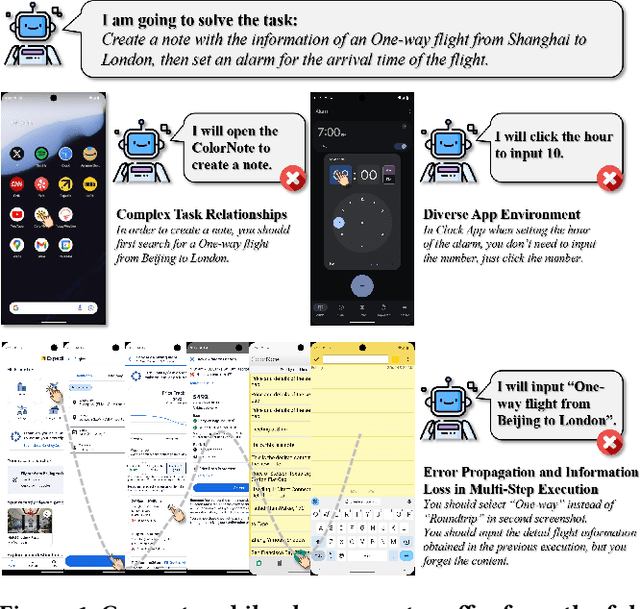
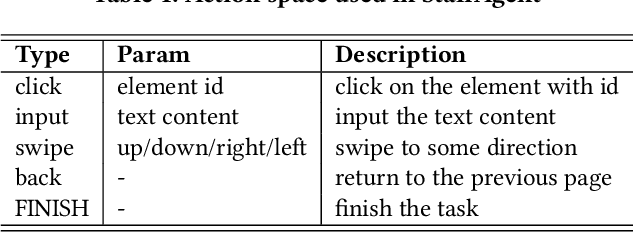
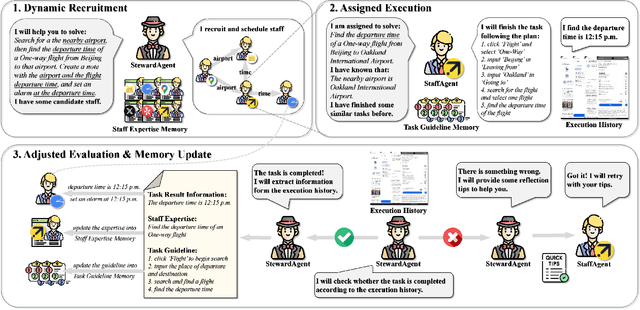
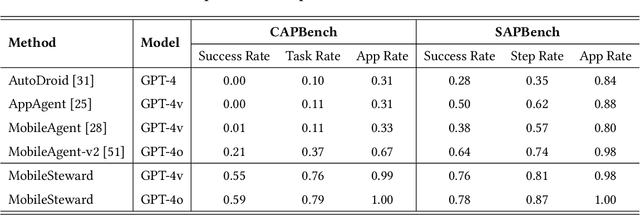
Mobile phone agents can assist people in automating daily tasks on their phones, which have emerged as a pivotal research spotlight. However, existing procedure-oriented agents struggle with cross-app instructions, due to the following challenges: (1) complex task relationships, (2) diverse app environment, and (3) error propagation and information loss in multi-step execution. Drawing inspiration from object-oriented programming principles, we recognize that object-oriented solutions is more suitable for cross-app instruction. To address these challenges, we propose a self-evolving multi-agent framework named MobileSteward, which integrates multiple app-oriented StaffAgents coordinated by a centralized StewardAgent. We design three specialized modules in MobileSteward: (1) Dynamic Recruitment generates a scheduling graph guided by information flow to explicitly associate tasks among apps. (2) Assigned Execution assigns the task to app-oriented StaffAgents, each equipped with app-specialized expertise to address the diversity between apps. (3) Adjusted Evaluation conducts evaluation to provide reflection tips or deliver key information, which alleviates error propagation and information loss during multi-step execution. To continuously improve the performance of MobileSteward, we develop a Memory-based Self-evolution mechanism, which summarizes the experience from successful execution, to improve the performance of MobileSteward. We establish the first English Cross-APP Benchmark (CAPBench) in the real-world environment to evaluate the agents' capabilities of solving complex cross-app instructions. Experimental results demonstrate that MobileSteward achieves the best performance compared to both single-agent and multi-agent frameworks, highlighting the superiority of MobileSteward in better handling user instructions with diverse complexity.
BiDeV: Bilateral Defusing Verification for Complex Claim Fact-Checking
Feb 22, 2025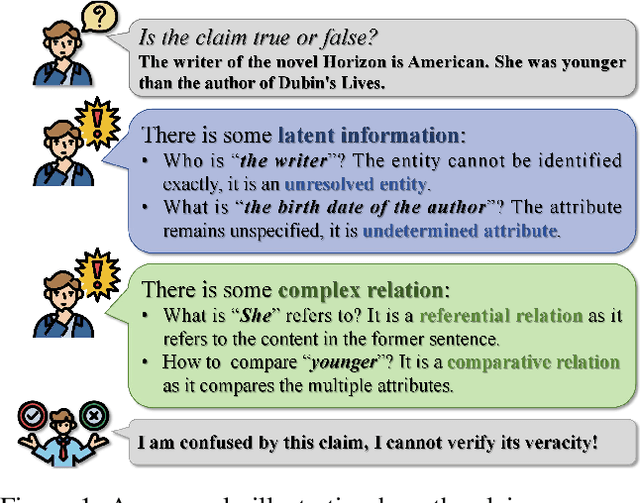
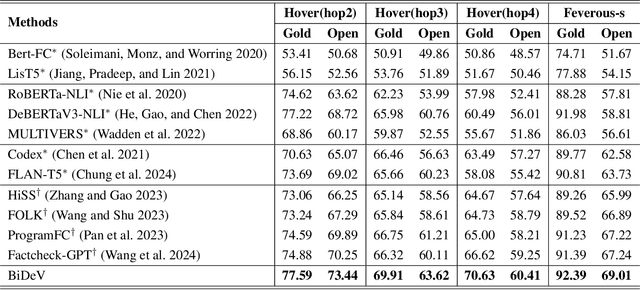
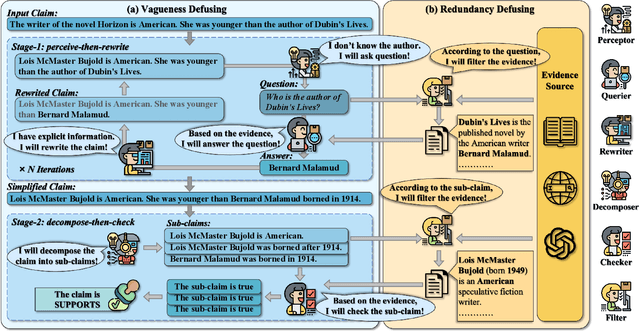
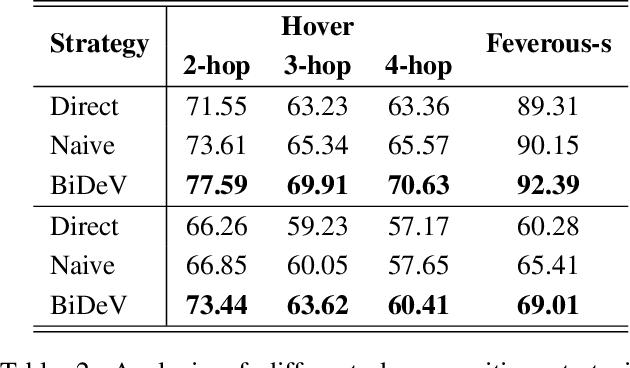
Complex claim fact-checking performs a crucial role in disinformation detection. However, existing fact-checking methods struggle with claim vagueness, specifically in effectively handling latent information and complex relations within claims. Moreover, evidence redundancy, where nonessential information complicates the verification process, remains a significant issue. To tackle these limitations, we propose Bilateral Defusing Verification (BiDeV), a novel fact-checking working-flow framework integrating multiple role-played LLMs to mimic the human-expert fact-checking process. BiDeV consists of two main modules: Vagueness Defusing identifies latent information and resolves complex relations to simplify the claim, and Redundancy Defusing eliminates redundant content to enhance the evidence quality. Extensive experimental results on two widely used challenging fact-checking benchmarks (Hover and Feverous-s) demonstrate that our BiDeV can achieve the best performance under both gold and open settings. This highlights the effectiveness of BiDeV in handling complex claims and ensuring precise fact-checking
Pastiche Novel Generation Creating: Fan Fiction You Love in Your Favorite Author's Style
Feb 21, 2025Great novels create immersive worlds with rich character arcs, well-structured plots, and nuanced writing styles. However, current novel generation methods often rely on brief, simplistic story outlines and generate details using plain, generic language. To bridge this gap, we introduce the task of Pastiche Novel Generation, which requires the generated novels to imitate the distinctive features of the original work, including understanding character profiles, predicting plausible plot developments, and writing concrete details using vivid, expressive language. To achieve this, we propose WriterAgent, a novel generation system designed to master the core aspects of literary pastiche. WriterAgent is trained through a curriculum learning paradigm, progressing from low-level stylistic mastery to high-level narrative coherence. Its key tasks include language style learning, character modeling, plot planning, and stylish writing, ensuring comprehensive narrative control. To support this, WriterAgent leverages the WriterLoRA framework, an extension of LoRA with hierarchical and cumulative task-specific modules, each specializing in a different narrative aspect. We evaluate WriterAgent on multilingual classics like Harry Potter and Dream of the Red Chamber, demonstrating its superiority over baselines in capturing the target author's settings, character dynamics, and writing style to produce coherent, faithful narratives.
Memory Efficient Transformer Adapter for Dense Predictions
Feb 04, 2025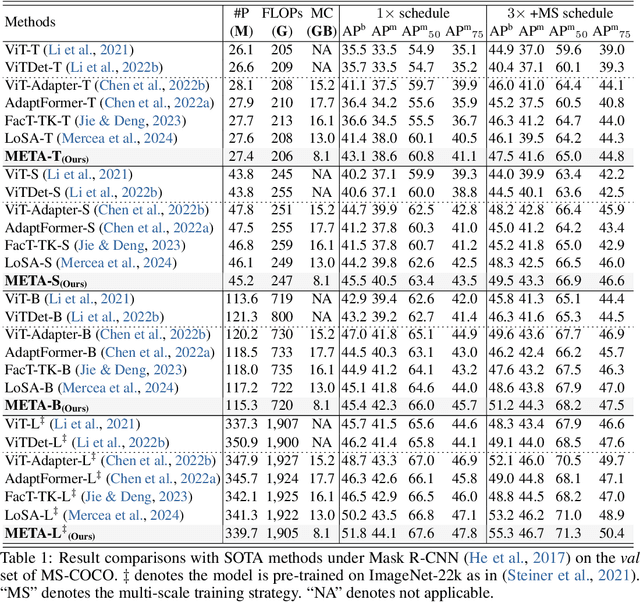
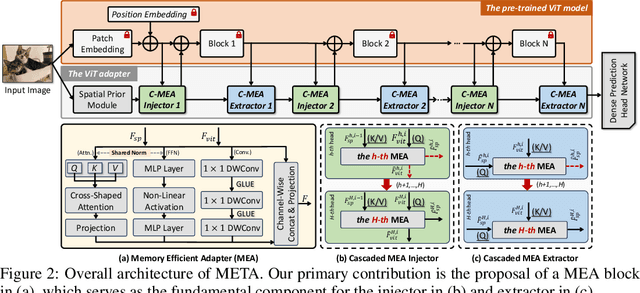
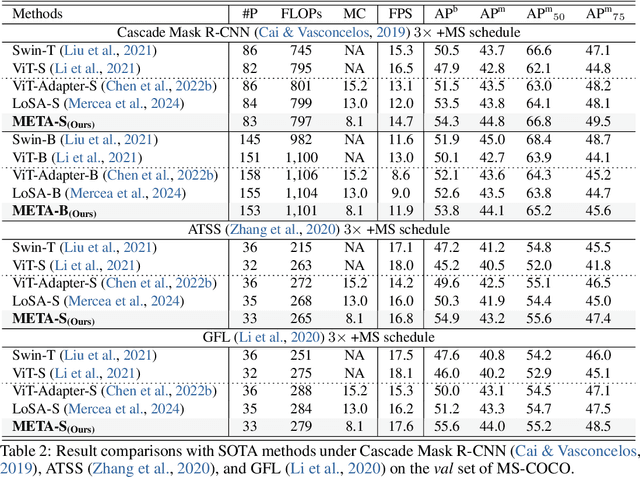
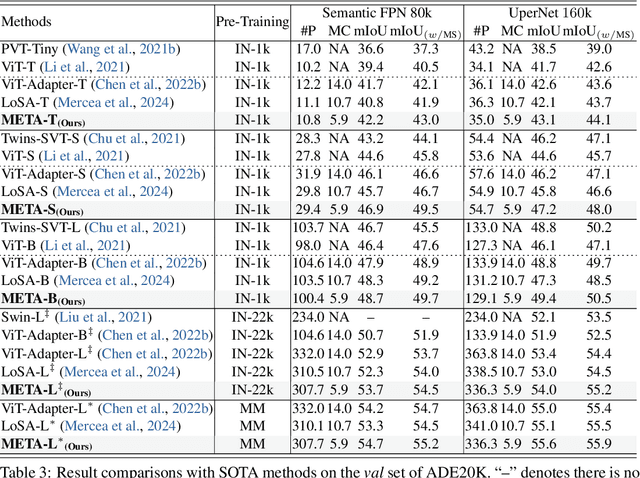
While current Vision Transformer (ViT) adapter methods have shown promising accuracy, their inference speed is implicitly hindered by inefficient memory access operations, e.g., standard normalization and frequent reshaping. In this work, we propose META, a simple and fast ViT adapter that can improve the model's memory efficiency and decrease memory time consumption by reducing the inefficient memory access operations. Our method features a memory-efficient adapter block that enables the common sharing of layer normalization between the self-attention and feed-forward network layers, thereby reducing the model's reliance on normalization operations. Within the proposed block, the cross-shaped self-attention is employed to reduce the model's frequent reshaping operations. Moreover, we augment the adapter block with a lightweight convolutional branch that can enhance local inductive biases, particularly beneficial for the dense prediction tasks, e.g., object detection, instance segmentation, and semantic segmentation. The adapter block is finally formulated in a cascaded manner to compute diverse head features, thereby enriching the variety of feature representations. Empirically, extensive evaluations on multiple representative datasets validate that META substantially enhances the predicted quality, while achieving a new state-of-the-art accuracy-efficiency trade-off. Theoretically, we demonstrate that META exhibits superior generalization capability and stronger adaptability.
Vision-centric Token Compression in Large Language Model
Feb 04, 2025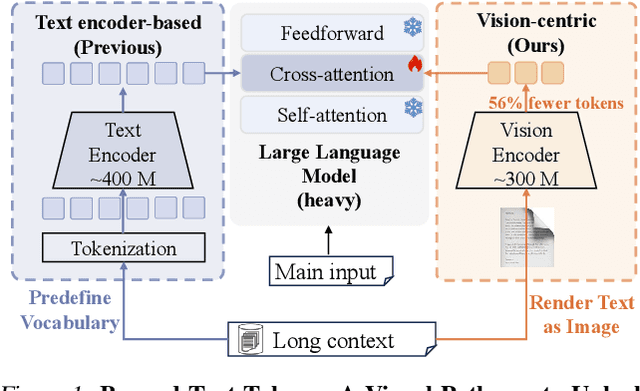
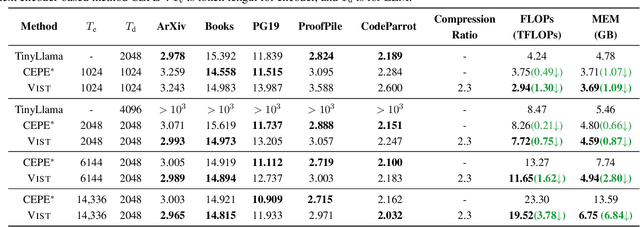
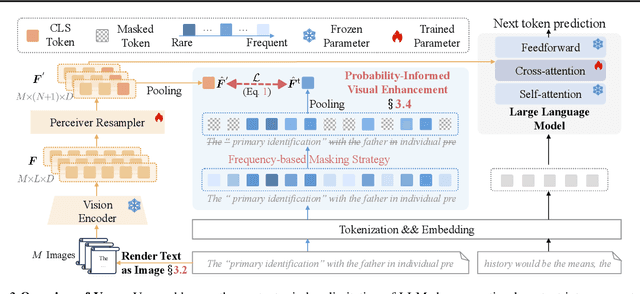
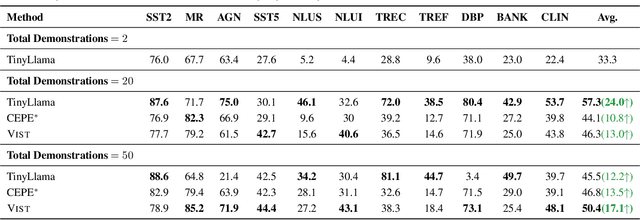
Large Language Models (LLMs) have revolutionized natural language processing, excelling in handling longer sequences. However, the inefficiency and redundancy in processing extended in-context tokens remain a challenge. Many attempts to address this rely on compressing tokens with smaller text encoders, yet we question whether text encoders are truly indispensable. Our journey leads to an unexpected discovery-a much smaller vision encoder, applied directly to sequences of text tokens, can rival text encoders on text tasks. When pre-trained on large amounts of data and transferred to multiple mid-sized or small text understanding benchmarks, VIST leads to comparable results with 16% fewer FLOPs and 50% less memory usage. We further uncover significant token redundancy and devise a frequency-based masking strategy to guide the focus of the visual encoder toward the most critical tokens. Interestingly, we observe the trained visual encoder performs like a summarizer, selectively ignoring less important words such as prepositions and conjunctions. This approach delivers remarkable results, outperforming traditional text encoder-based methods by 5.7% on average over benchmarks like TriviaQA, NQ, PopQA, TREF, SST2, and SST5, setting a new standard for token efficiency in LLMs.
Diffusion as Shader: 3D-aware Video Diffusion for Versatile Video Generation Control
Jan 07, 2025

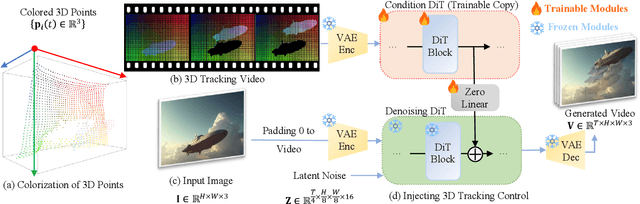

Diffusion models have demonstrated impressive performance in generating high-quality videos from text prompts or images. However, precise control over the video generation process, such as camera manipulation or content editing, remains a significant challenge. Existing methods for controlled video generation are typically limited to a single control type, lacking the flexibility to handle diverse control demands. In this paper, we introduce Diffusion as Shader (DaS), a novel approach that supports multiple video control tasks within a unified architecture. Our key insight is that achieving versatile video control necessitates leveraging 3D control signals, as videos are fundamentally 2D renderings of dynamic 3D content. Unlike prior methods limited to 2D control signals, DaS leverages 3D tracking videos as control inputs, making the video diffusion process inherently 3D-aware. This innovation allows DaS to achieve a wide range of video controls by simply manipulating the 3D tracking videos. A further advantage of using 3D tracking videos is their ability to effectively link frames, significantly enhancing the temporal consistency of the generated videos. With just 3 days of fine-tuning on 8 H800 GPUs using less than 10k videos, DaS demonstrates strong control capabilities across diverse tasks, including mesh-to-video generation, camera control, motion transfer, and object manipulation.
More is not always better? Enhancing Many-Shot In-Context Learning with Differentiated and Reweighting Objectives
Jan 07, 2025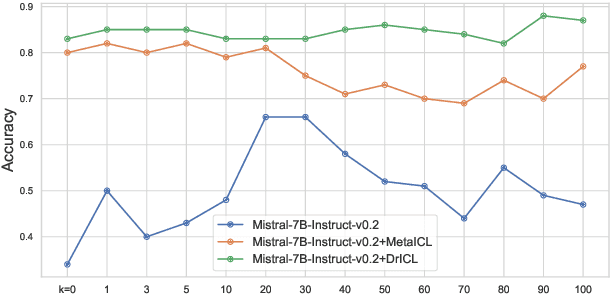
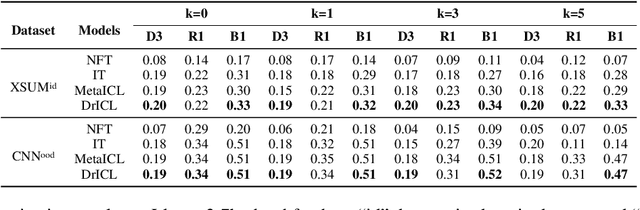
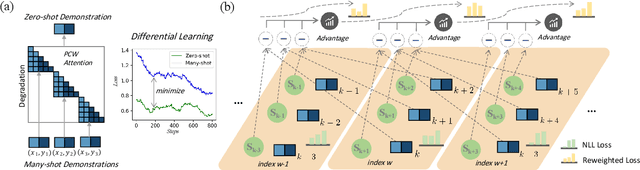
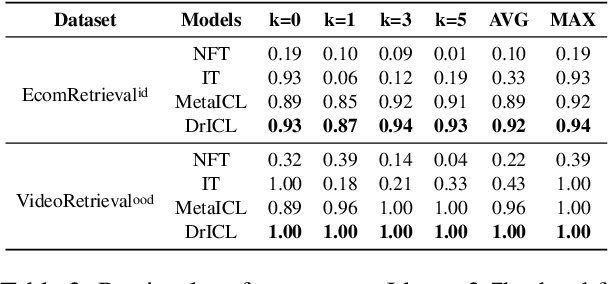
Large language models (LLMs) excel at few-shot in-context learning (ICL) without requiring parameter updates. However, as the number of ICL demonstrations increases from a few to many, performance tends to plateau and eventually decline. We identify two primary causes for this trend: the suboptimal negative log-likelihood (NLL) optimization objective and the incremental data noise. To address these issues, we introduce DR-ICL, a novel optimization method that enhances model performance through Differentiated Learning and advantage-based Reweighting objectives. Globally, DR-ICL utilizes differentiated learning to optimize the NLL objective, ensuring that many-shot performance surpasses zero-shot levels. Locally, it dynamically adjusts the weighting of many-shot demonstrations by leveraging cumulative advantages inspired by reinforcement learning, thereby improving generalization. This approach allows the model to handle varying numbers of shots effectively, mitigating the impact of noisy data. Recognizing the lack of multi-task datasets with diverse many-shot distributions, we develop the Many-Shot ICL Benchmark (MICLB)-a large-scale benchmark covering shot numbers from 1 to 350 within sequences of up to 8,000 tokens-for fine-tuning purposes. MICLB facilitates the evaluation of many-shot ICL strategies across seven prominent NLP tasks and 50 distinct datasets. Experimental results demonstrate that LLMs enhanced with DR-ICL achieve significant improvements in many-shot setups across various tasks, including both in-domain and out-of-domain scenarios. We release the code and benchmark dataset hoping to facilitate further research in many-shot ICL.
Improving Multi-Step Reasoning Abilities of Large Language Models with Direct Advantage Policy Optimization
Dec 24, 2024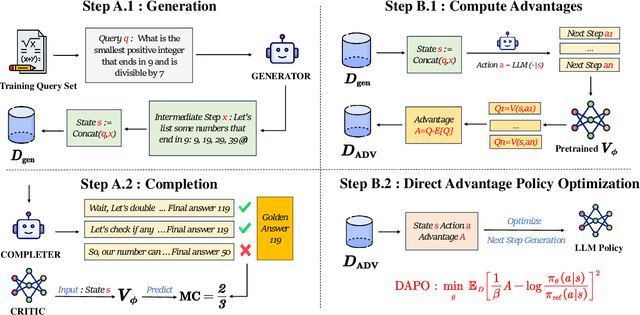
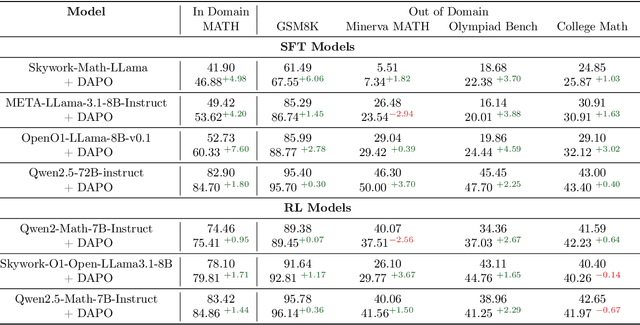

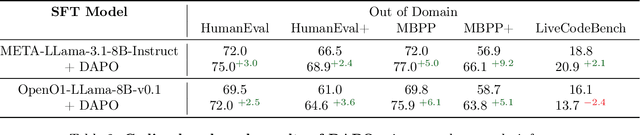
The role of reinforcement learning (RL) in enhancing the reasoning of large language models (LLMs) is becoming increasingly significant. Despite the success of RL in many scenarios, there are still many challenges in improving the reasoning of LLMs. One challenge is the sparse reward, which makes optimization difficult for RL and necessitates a large amount of data samples. Another challenge stems from the inherent instability of RL, particularly when using Actor-Critic (AC) methods to derive optimal policies, which often leads to unstable training processes. To address these issues, we introduce Direct Advantage Policy Optimization (DAPO), an novel step-level offline RL algorithm. Unlike standard alignment that rely solely outcome rewards to optimize policies (such as DPO), DAPO employs a critic function to predict the reasoning accuracy at each step, thereby generating dense signals to refine the generation strategy. Additionally, the Actor and Critic components in DAPO are trained independently, avoiding the co-training instability observed in standard AC algorithms like PPO. We train DAPO on mathematical and code query datasets and then evaluate its performance on multiple benchmarks. Our results show that DAPO can effectively enhance the mathematical and code capabilities on both SFT models and RL models, demonstrating the effectiveness of DAPO.