 Add to Chrome
 Add to Firefox
 Add to Edge
Cold-Start Personalization via Training-Free Priors from Structured World Models
Feb 16, 2026
Cold-start personalization requires inferring user preferences through interaction when no user-specific historical data is available. The core challenge is a routing problem: each task admits dozens of preference dimensions, yet individual users care about only a few, and which ones matter depends on who is asking. With a limited question budget, asking without structure will miss the dimensions that matter. Reinforcement learning is the natural formulation, but in multi-turn settings its terminal reward fails to exploit the factored, per-criterion structure of preference data, and in practice learned policies collapse to static question sequences that ignore user responses. We propose decomposing cold-start elicitation into offline structure learning and online Bayesian inference. Pep (Preference Elicitation with Priors) learns a structured world model of preference correlations offline from complete profiles, then performs training-free Bayesian inference online to select informative questions and predict complete preference profiles, including dimensions never asked about. The framework is modular across downstream solvers and requires only simple belief models. Across medical, mathematical, social, and commonsense reasoning, Pep achieves 80.8% alignment between generated responses and users' stated preferences versus 68.5% for RL, with 3-5x fewer interactions. When two users give different answers to the same question, Pep changes its follow-up 39-62% of the time versus 0-28% for RL. It does so with ~10K parameters versus 8B for RL, showing that the bottleneck in cold-start elicitation is the capability to exploit the factored structure of preference data.

ALMo: Interactive Aim-Limit-Defined, Multi-Objective System for Personalized High-Dose-Rate Brachytherapy Treatment Planning and Visualization for Cervical Cancer
Feb 14, 2026In complex clinical decision-making, clinicians must often track a variety of competing metrics defined by aim (ideal) and limit (strict) thresholds. Sifting through these high-dimensional tradeoffs to infer the optimal patient-specific strategy is cognitively demanding and historically prone to variability. In this paper, we address this challenge within the context of High-Dose-Rate (HDR) brachytherapy for cervical cancer, where planning requires strictly managing radiation hot spots while balancing tumor coverage against organ sparing. We present ALMo (Aim-Limit-defined Multi-Objective system), an interactive decision support system designed to infer and operationalize clinician intent. ALMo employs a novel optimization framework that minimizes manual input through automated parameter setup and enables flexible control over toxicity risks. Crucially, the system allows clinicians to navigate the Pareto surface of dosimetric tradeoffs by directly manipulating intuitive aim and limit values. In a retrospective evaluation of 25 clinical cases, ALMo generated treatment plans that consistently met or exceeded manual planning quality, with 65% of cases demonstrating dosimetric improvements. Furthermore, the system significantly enhanced efficiency, reducing average planning time to approximately 17 minutes, compared to the conventional 30-60 minutes. While validated in brachytherapy, ALMo demonstrates a generalized framework for streamlining interaction in multi-criteria clinical decision-making.
Buy versus Build an LLM: A Decision Framework for Governments
Feb 13, 2026Large Language Models (LLMs) represent a new frontier of digital infrastructure that can support a wide range of public-sector applications, from general purpose citizen services to specialized and sensitive state functions. When expanding AI access, governments face a set of strategic choices over whether to buy existing services, build domestic capabilities, or adopt hybrid approaches across different domains and use cases. These are critical decisions especially when leading model providers are often foreign corporations, and LLM outputs are increasingly treated as trusted inputs to public decision-making and public discourse. In practice, these decisions are not intended to mandate a single approach across all domains; instead, national AI strategies are typically pluralistic, with sovereign, commercial and open-source models coexisting to serve different purposes. Governments may rely on commercial models for non-sensitive or commodity tasks, while pursuing greater control for critical, high-risk or strategically important applications. This paper provides a strategic framework for making this decision by evaluating these options across dimensions including sovereignty, safety, cost, resource capability, cultural fit, and sustainability. Importantly, "building" does not imply that governments must act alone: domestic capabilities may be developed through public research institutions, universities, state-owned enterprises, joint ventures, or broader national ecosystems. By detailing the technical requirements and practical challenges of each pathway, this work aims to serve as a reference for policy-makers to determine whether a buy or build approach best aligns with their specific national needs and societal goals.
Anchored Decoding: Provably Reducing Copyright Risk for Any Language Model
Feb 06, 2026Modern language models (LMs) tend to memorize portions of their training data and emit verbatim spans. When the underlying sources are sensitive or copyright-protected, such reproduction raises issues of consent and compensation for creators and compliance risks for developers. We propose Anchored Decoding, a plug-and-play inference-time method for suppressing verbatim copying: it enables decoding from any risky LM trained on mixed-license data by keeping generation in bounded proximity to a permissively trained safe LM. Anchored Decoding adaptively allocates a user-chosen information budget over the generation trajectory and enforces per-step constraints that yield a sequence-level guarantee, enabling a tunable risk-utility trade-off. To make Anchored Decoding practically useful, we introduce a new permissively trained safe model (TinyComma 1.8B), as well as Anchored$_{\mathrm{Byte}}$ Decoding, a byte-level variant of our method that enables cross-vocabulary fusion via the ByteSampler framework (Hayase et al., 2025). We evaluate our methods across six model pairs on long-form evaluations of copyright risk and utility. Anchored and Anchored$_{\mathrm{Byte}}$ Decoding define a new Pareto frontier, preserving near-original fluency and factuality while eliminating up to 75% of the measurable copying gap (averaged over six copying metrics) between the risky baseline and a safe reference, at a modest inference overhead.
Reliable and Responsible Foundation Models: A Comprehensive Survey
Feb 04, 2026Foundation models, including Large Language Models (LLMs), Multimodal Large Language Models (MLLMs), Image Generative Models (i.e, Text-to-Image Models and Image-Editing Models), and Video Generative Models, have become essential tools with broad applications across various domains such as law, medicine, education, finance, science, and beyond. As these models see increasing real-world deployment, ensuring their reliability and responsibility has become critical for academia, industry, and government. This survey addresses the reliable and responsible development of foundation models. We explore critical issues, including bias and fairness, security and privacy, uncertainty, explainability, and distribution shift. Our research also covers model limitations, such as hallucinations, as well as methods like alignment and Artificial Intelligence-Generated Content (AIGC) detection. For each area, we review the current state of the field and outline concrete future research directions. Additionally, we discuss the intersections between these areas, highlighting their connections and shared challenges. We hope our survey fosters the development of foundation models that are not only powerful but also ethical, trustworthy, reliable, and socially responsible.
Privasis: Synthesizing the Largest "Public" Private Dataset from Scratch
Feb 03, 2026Research involving privacy-sensitive data has always been constrained by data scarcity, standing in sharp contrast to other areas that have benefited from data scaling. This challenge is becoming increasingly urgent as modern AI agents--such as OpenClaw and Gemini Agent--are granted persistent access to highly sensitive personal information. To tackle this longstanding bottleneck and the rising risks, we present Privasis (i.e., privacy oasis), the first million-scale fully synthetic dataset entirely built from scratch--an expansive reservoir of texts with rich and diverse private information--designed to broaden and accelerate research in areas where processing sensitive social data is inevitable. Compared to existing datasets, Privasis, comprising 1.4 million records, offers orders-of-magnitude larger scale with quality, and far greater diversity across various document types, including medical history, legal documents, financial records, calendars, and text messages with a total of 55.1 million annotated attributes such as ethnicity, date of birth, workplace, etc. We leverage Privasis to construct a parallel corpus for text sanitization with our pipeline that decomposes texts and applies targeted sanitization. Our compact sanitization models (<=4B) trained on this dataset outperform state-of-the-art large language models, such as GPT-5 and Qwen-3 235B. We plan to release data, models, and code to accelerate future research on privacy-sensitive domains and agents.
Olmo 3
Dec 15, 2025We introduce Olmo 3, a family of state-of-the-art, fully-open language models at the 7B and 32B parameter scales. Olmo 3 model construction targets long-context reasoning, function calling, coding, instruction following, general chat, and knowledge recall. This release includes the entire model flow, i.e., the full lifecycle of the family of models, including every stage, checkpoint, data point, and dependency used to build it. Our flagship model, Olmo 3 Think 32B, is the strongest fully-open thinking model released to-date.
RLVE: Scaling Up Reinforcement Learning for Language Models with Adaptive Verifiable Environments
Nov 10, 2025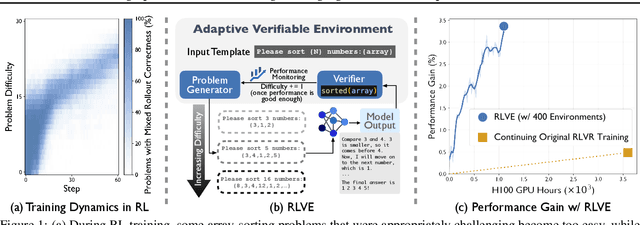
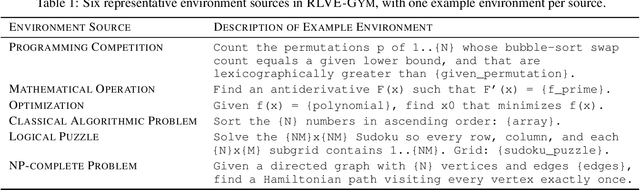
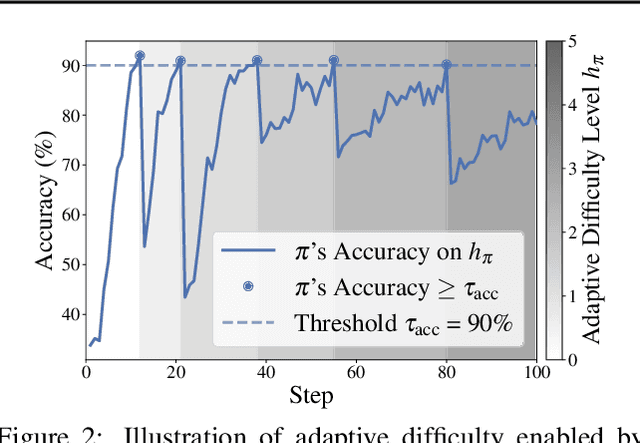
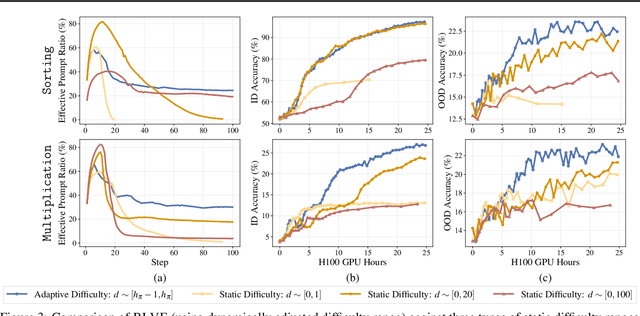
We introduce Reinforcement Learning (RL) with Adaptive Verifiable Environments (RLVE), an approach using verifiable environments that procedurally generate problems and provide algorithmically verifiable rewards, to scale up RL for language models (LMs). RLVE enables each verifiable environment to dynamically adapt its problem difficulty distribution to the policy model's capabilities as training progresses. In contrast, static data distributions often lead to vanishing learning signals when problems are either too easy or too hard for the policy. To implement RLVE, we create RLVE-Gym, a large-scale suite of 400 verifiable environments carefully developed through manual environment engineering. Using RLVE-Gym, we show that environment scaling, i.e., expanding the collection of training environments, consistently improves generalizable reasoning capabilities. RLVE with joint training across all 400 environments in RLVE-Gym yields a 3.37% absolute average improvement across six reasoning benchmarks, starting from one of the strongest 1.5B reasoning LMs. By comparison, continuing this LM's original RL training yields only a 0.49% average absolute gain despite using over 3x more compute. We release our code publicly.
FlexOlmo: Open Language Models for Flexible Data Use
Jul 09, 2025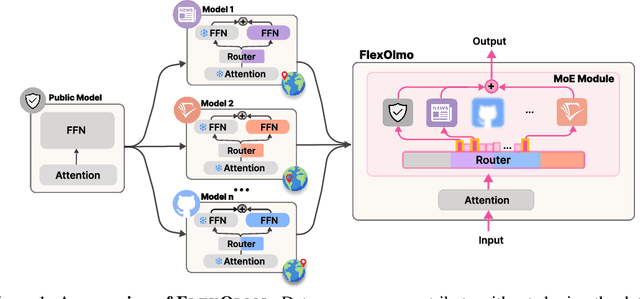
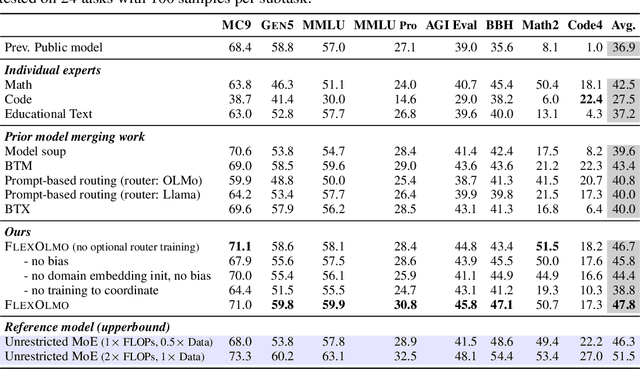
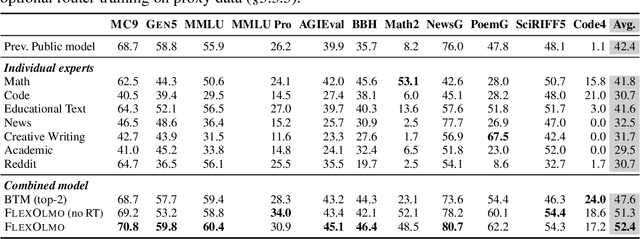
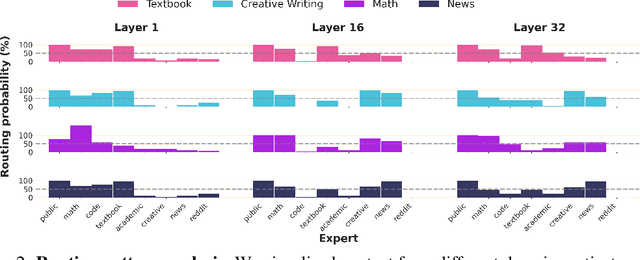
We introduce FlexOlmo, a new class of language models (LMs) that supports (1) distributed training without data sharing, where different model parameters are independently trained on closed datasets, and (2) data-flexible inference, where these parameters along with their associated data can be flexibly included or excluded from model inferences with no further training. FlexOlmo employs a mixture-of-experts (MoE) architecture where each expert is trained independently on closed datasets and later integrated through a new domain-informed routing without any joint training. FlexOlmo is trained on FlexMix, a corpus we curate comprising publicly available datasets alongside seven domain-specific sets, representing realistic approximations of closed sets. We evaluate models with up to 37 billion parameters (20 billion active) on 31 diverse downstream tasks. We show that a general expert trained on public data can be effectively combined with independently trained experts from other data owners, leading to an average 41% relative improvement while allowing users to opt out of certain data based on data licensing or permission requirements. Our approach also outperforms prior model merging methods by 10.1% on average and surpasses the standard MoE trained without data restrictions using the same training FLOPs. Altogether, this research presents a solution for both data owners and researchers in regulated industries with sensitive or protected data. FlexOlmo enables benefiting from closed data while respecting data owners' preferences by keeping their data local and supporting fine-grained control of data access during inference.
The Delta Learning Hypothesis: Preference Tuning on Weak Data can Yield Strong Gains
Jul 08, 2025Improvements in language models are often driven by improving the quality of the data we train them on, which can be limiting when strong supervision is scarce. In this work, we show that paired preference data consisting of individually weak data points can enable gains beyond the strength of each individual data point. We formulate the delta learning hypothesis to explain this phenomenon, positing that the relative quality delta between points suffices to drive learning via preference tuning--even when supervised finetuning on the weak data hurts. We validate our hypothesis in controlled experiments and at scale, where we post-train 8B models on preference data generated by pairing a small 3B model's responses with outputs from an even smaller 1.5B model to create a meaningful delta. Strikingly, on a standard 11-benchmark evaluation suite (MATH, MMLU, etc.), our simple recipe matches the performance of Tulu 3, a state-of-the-art open model tuned from the same base model while relying on much stronger supervisors (e.g., GPT-4o). Thus, delta learning enables simpler and cheaper open recipes for state-of-the-art post-training. To better understand delta learning, we prove in logistic regression that the performance gap between two weak teacher models provides useful signal for improving a stronger student. Overall, our work shows that models can learn surprisingly well from paired data that might typically be considered weak.