 Add to Chrome
 Add to Firefox
 Add to Edge
CMT: A Memory Compression Method for Continual Knowledge Learning of Large Language Models
Dec 10, 2024

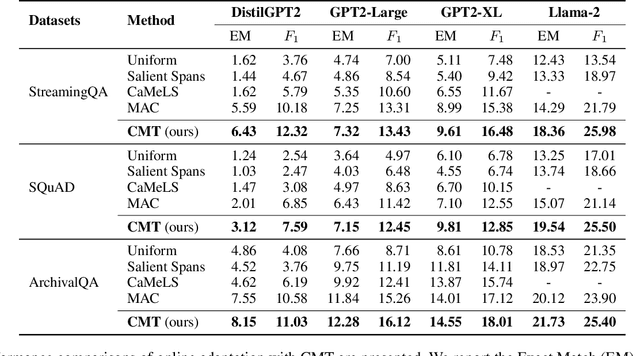


Large Language Models (LLMs) need to adapt to the continuous changes in data, tasks, and user preferences. Due to their massive size and the high costs associated with training, LLMs are not suitable for frequent retraining. However, updates are necessary to keep them in sync with rapidly evolving human knowledge. To address these challenges, this paper proposes the Compression Memory Training (CMT) method, an efficient and effective online adaptation framework for LLMs that features robust knowledge retention capabilities. Inspired by human memory mechanisms, CMT compresses and extracts information from new documents to be stored in a memory bank. When answering to queries related to these new documents, the model aggregates these document memories from the memory bank to better answer user questions. The parameters of the LLM itself do not change during training and inference, reducing the risk of catastrophic forgetting. To enhance the encoding, retrieval, and aggregation of memory, we further propose three new general and flexible techniques, including memory-aware objective, self-matching and top-aggregation. Extensive experiments conducted on three continual learning datasets (i.e., StreamingQA, SQuAD and ArchivalQA) demonstrate that the proposed method improves model adaptability and robustness across multiple base LLMs (e.g., +4.07 EM & +4.19 F1 in StreamingQA with Llama-2-7b).

Multi-Level Correlation Network For Few-Shot Image Classification
Dec 04, 2024


Few-shot image classification(FSIC) aims to recognize novel classes given few labeled images from base classes. Recent works have achieved promising classification performance, especially for metric-learning methods, where a measure at only image feature level is usually used. In this paper, we argue that measure at such a level may not be effective enough to generalize from base to novel classes when using only a few images. Instead, a multi-level descriptor of an image is taken for consideration in this paper. We propose a multi-level correlation network (MLCN) for FSIC to tackle this problem by effectively capturing local information. Concretely, we present the self-correlation module and cross-correlation module to learn the semantic correspondence relation of local information based on learned representations. Moreover, we propose a pattern-correlation module to capture the pattern of fine-grained images and find relevant structural patterns between base classes and novel classes. Extensive experiments and analysis show the effectiveness of our proposed method on four widely-used FSIC benchmarks. The code for our approach is available at: https://github.com/Yunkai696/MLCN.
Towards Rich Emotions in 3D Avatars: A Text-to-3D Avatar Generation Benchmark
Dec 03, 2024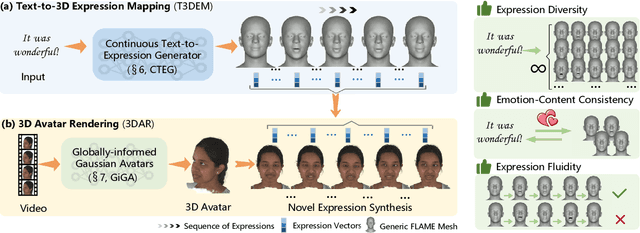
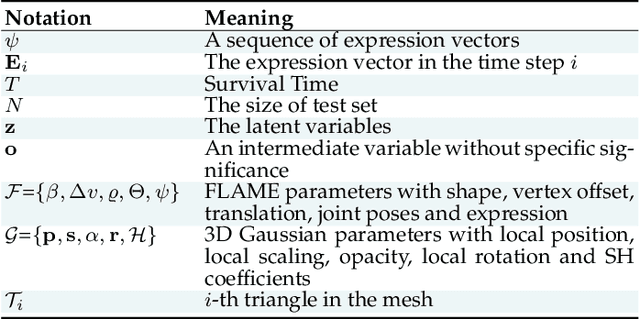


Producing emotionally dynamic 3D facial avatars with text derived from spoken words (Emo3D) has been a pivotal research topic in 3D avatar generation. While progress has been made in general-purpose 3D avatar generation, the exploration of generating emotional 3D avatars remains scarce, primarily due to the complexities of identifying and rendering rich emotions from spoken words. This paper reexamines Emo3D generation and draws inspiration from human processes, breaking down Emo3D into two cascading steps: Text-to-3D Expression Mapping (T3DEM) and 3D Avatar Rendering (3DAR). T3DEM is the most crucial step in determining the quality of Emo3D generation and encompasses three key challenges: Expression Diversity, Emotion-Content Consistency, and Expression Fluidity. To address these challenges, we introduce a novel benchmark to advance research in Emo3D generation. First, we present EmoAva, a large-scale, high-quality dataset for T3DEM, comprising 15,000 text-to-3D expression mappings that characterize the aforementioned three challenges in Emo3D generation. Furthermore, we develop various metrics to effectively evaluate models against these identified challenges. Next, to effectively model the consistency, diversity, and fluidity of human expressions in the T3DEM step, we propose the Continuous Text-to-Expression Generator, which employs an autoregressive Conditional Variational Autoencoder for expression code generation, enhanced with Latent Temporal Attention and Expression-wise Attention mechanisms. Finally, to further enhance the 3DAR step on rendering higher-quality subtle expressions, we present the Globally-informed Gaussian Avatar (GiGA) model. GiGA incorporates a global information mechanism into 3D Gaussian representations, enabling the capture of subtle micro-expressions and seamless transitions between emotional states.
Learning Monotonic Attention in Transducer for Streaming Generation
Nov 26, 2024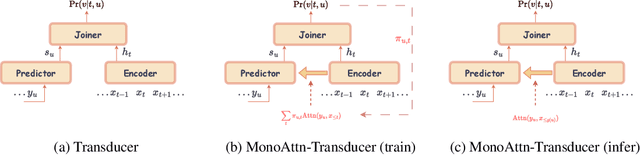

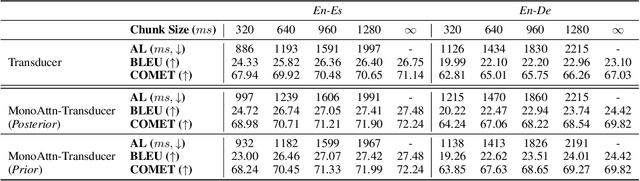
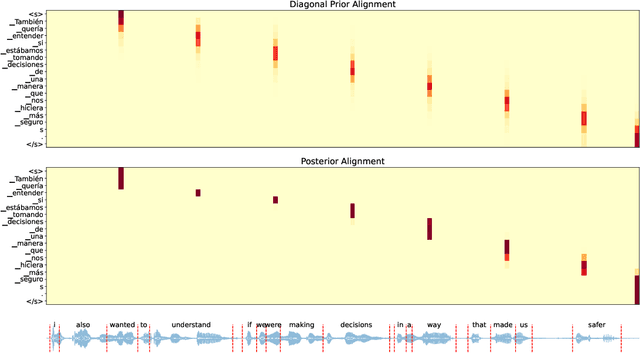
Streaming generation models are increasingly utilized across various fields, with the Transducer architecture being particularly popular in industrial applications. However, its input-synchronous decoding mechanism presents challenges in tasks requiring non-monotonic alignments, such as simultaneous translation, leading to suboptimal performance in these contexts. In this research, we address this issue by tightly integrating Transducer's decoding with the history of input stream via a learnable monotonic attention mechanism. Our approach leverages the forward-backward algorithm to infer the posterior probability of alignments between the predictor states and input timestamps, which is then used to estimate the context representations of monotonic attention in training. This allows Transducer models to adaptively adjust the scope of attention based on their predictions, avoiding the need to enumerate the exponentially large alignment space. Extensive experiments demonstrate that our MonoAttn-Transducer significantly enhances the handling of non-monotonic alignments in streaming generation, offering a robust solution for Transducer-based frameworks to tackle more complex streaming generation tasks.
DRPruning: Efficient Large Language Model Pruning through Distributionally Robust Optimization
Nov 21, 2024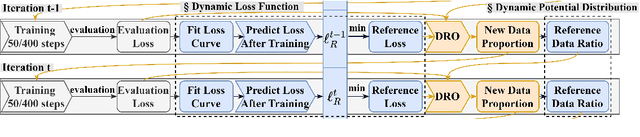
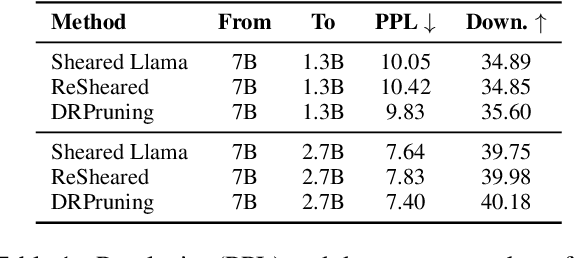
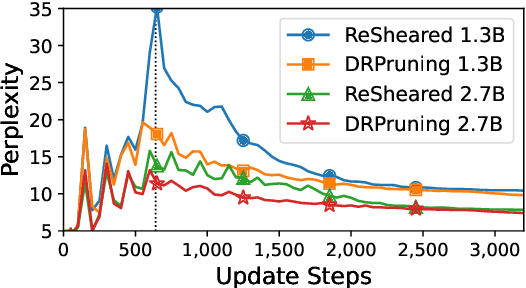
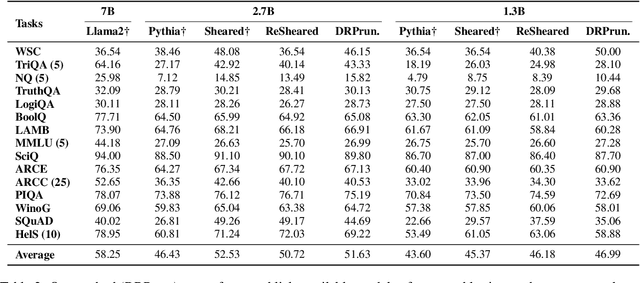
Large language models (LLMs) deliver impressive results but face challenges from increasing model sizes and computational costs. Structured pruning reduces model size and speeds up inference but often causes uneven degradation across domains, leading to biased performance. To address this, we propose DRPruning, which incorporates distributionally robust optimization to restore balanced performance across domains, along with further improvements to enhance robustness. Experiments in monolingual and multilingual settings show that our method surpasses similarly sized models in pruning and continued pretraining over perplexity, downstream tasks, and instruction tuning. We further provide analysis demonstrating the robustness of our method towards various domains and distribution shifts. Furthermore, our method automatically determines optimal reference losses and data ratios, suggesting potential for broader applications. Our code is available at https://github.com/hexuandeng/DRPruning.
Hard-Synth: Synthesizing Diverse Hard Samples for ASR using Zero-Shot TTS and LLM
Nov 20, 2024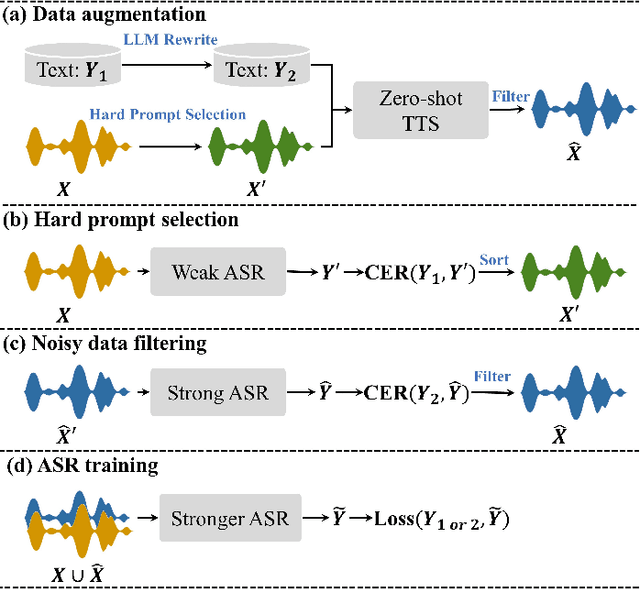
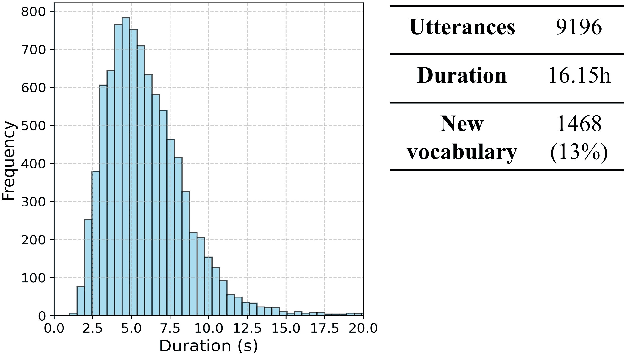
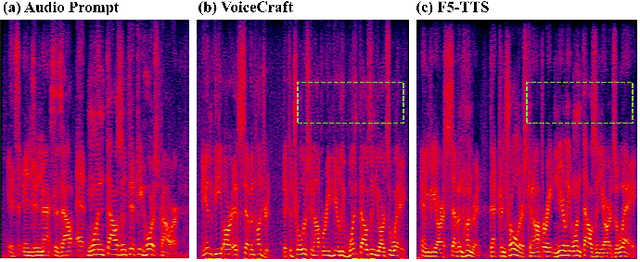
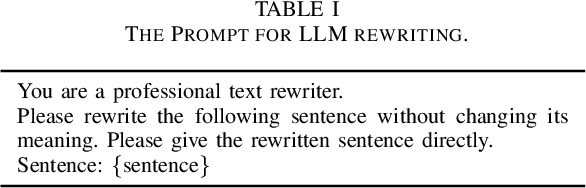
Text-to-speech (TTS) models have been widely adopted to enhance automatic speech recognition (ASR) systems using text-only corpora, thereby reducing the cost of labeling real speech data. Existing research primarily utilizes additional text data and predefined speech styles supported by TTS models. In this paper, we propose Hard-Synth, a novel ASR data augmentation method that leverages large language models (LLMs) and advanced zero-shot TTS. Our approach employs LLMs to generate diverse in-domain text through rewriting, without relying on additional text data. Rather than using predefined speech styles, we introduce a hard prompt selection method with zero-shot TTS to clone speech styles that the ASR model finds challenging to recognize. Experiments demonstrate that Hard-Synth significantly enhances the Conformer model, achieving relative word error rate (WER) reductions of 6.5\%/4.4\% on LibriSpeech dev/test-other subsets. Additionally, we show that Hard-Synth is data-efficient and capable of reducing bias in ASR.
Interpret the Internal States of Recommendation Model with Sparse Autoencoder
Nov 09, 2024
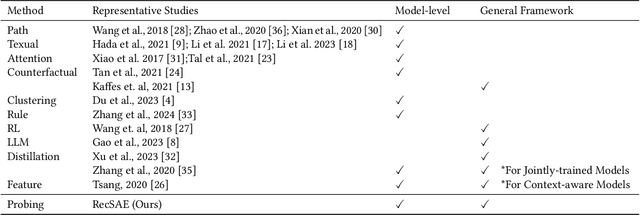

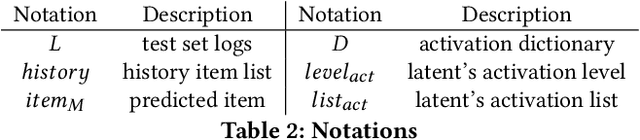
Explainable recommendation systems are important to enhance transparency, accuracy, and fairness. Beyond result-level explanations, model-level interpretations can provide valuable insights that allow developers to optimize system designs and implement targeted improvements. However, most current approaches depend on specialized model designs, which often lack generalization capabilities. Given the various kinds of recommendation models, existing methods have limited ability to effectively interpret them. To address this issue, we propose RecSAE, an automatic, generalizable probing method for interpreting the internal states of Recommendation models with Sparse AutoEncoder. RecSAE serves as a plug-in module that does not affect original models during interpretations, while also enabling predictable modifications to their behaviors based on interpretation results. Firstly, we train an autoencoder with sparsity constraints to reconstruct internal activations of recommendation models, making the RecSAE latents more interpretable and monosemantic than the original neuron activations. Secondly, we automated the construction of concept dictionaries based on the relationship between latent activations and input item sequences. Thirdly, RecSAE validates these interpretations by predicting latent activations on new item sequences using the concept dictionary and deriving interpretation confidence scores from precision and recall. We demonstrate RecSAE's effectiveness on two datasets, identifying hundreds of highly interpretable concepts from pure ID-based models. Latent ablation studies further confirm that manipulating latent concepts produces corresponding changes in model output behavior, underscoring RecSAE's utility for both understanding and targeted tuning recommendation models. Code and data are publicly available at https://github.com/Alice1998/RecSAE.
Beyond Utility: Evaluating LLM as Recommender
Nov 01, 2024
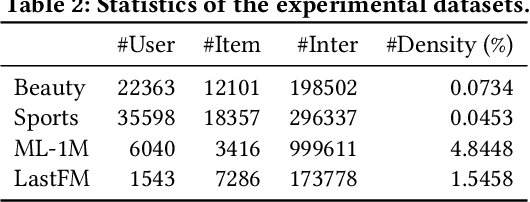


With the rapid development of Large Language Models (LLMs), recent studies employed LLMs as recommenders to provide personalized information services for distinct users. Despite efforts to improve the accuracy of LLM-based recommendation models, relatively little attention is paid to beyond-utility dimensions. Moreover, there are unique evaluation aspects of LLM-based recommendation models, which have been largely ignored. To bridge this gap, we explore four new evaluation dimensions and propose a multidimensional evaluation framework. The new evaluation dimensions include: 1) history length sensitivity, 2) candidate position bias, 3) generation-involved performance, and 4) hallucinations. All four dimensions have the potential to impact performance, but are largely unnecessary for consideration in traditional systems. Using this multidimensional evaluation framework, along with traditional aspects, we evaluate the performance of seven LLM-based recommenders, with three prompting strategies, comparing them with six traditional models on both ranking and re-ranking tasks on four datasets. We find that LLMs excel at handling tasks with prior knowledge and shorter input histories in the ranking setting, and perform better in the re-ranking setting, beating traditional models across multiple dimensions. However, LLMs exhibit substantial candidate position bias issues, and some models hallucinate non-existent items much more often than others. We intend our evaluation framework and observations to benefit future research on the use of LLMs as recommenders. The code and data are available at https://github.com/JiangDeccc/EvaLLMasRecommender.
PerSRV: Personalized Sticker Retrieval with Vision-Language Model
Oct 29, 2024

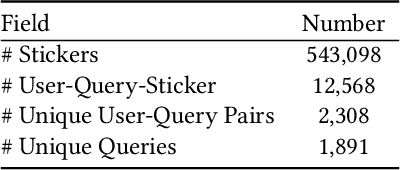

Instant Messaging is a popular means for daily communication, allowing users to send text and stickers. As the saying goes, "a picture is worth a thousand words", so developing an effective sticker retrieval technique is crucial for enhancing user experience. However, existing sticker retrieval methods rely on labeled data to interpret stickers, and general-purpose Vision-Language Models (VLMs) often struggle to capture the unique semantics of stickers. Additionally, relevant-based sticker retrieval methods lack personalization, creating a gap between diverse user expectations and retrieval results. To address these, we propose the Personalized Sticker Retrieval with Vision-Language Model framework, namely PerSRV, structured into offline calculations and online processing modules. The online retrieval part follows the paradigm of relevant recall and personalized ranking, supported by the offline pre-calculation parts, which are sticker semantic understanding, utility evaluation and personalization modules. Firstly, for sticker-level semantic understanding, we supervised fine-tuned LLaVA-1.5-7B to generate human-like sticker semantics, complemented by textual content extracted from figures and historical interaction queries. Secondly, we investigate three crowd-sourcing metrics for sticker utility evaluation. Thirdly, we cluster style centroids based on users' historical interactions to achieve personal preference modeling. Finally, we evaluate our proposed PerSRV method on a public sticker retrieval dataset from WeChat, containing 543,098 candidates and 12,568 interactions. Experimental results show that PerSRV significantly outperforms existing methods in multi-modal sticker retrieval. Additionally, our fine-tuned VLM delivers notable improvements in sticker semantic understandings.
NewTerm: Benchmarking Real-Time New Terms for Large Language Models with Annual Updates
Oct 28, 2024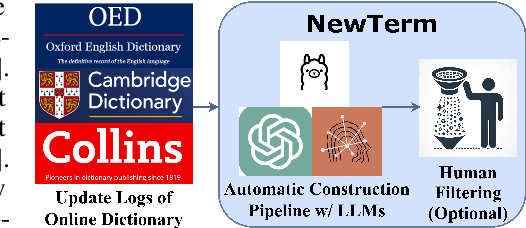

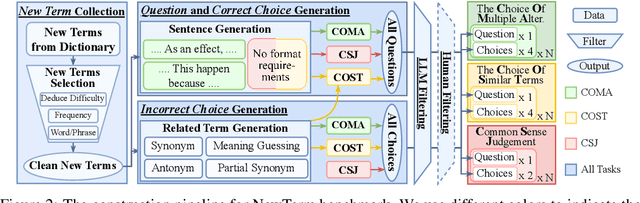
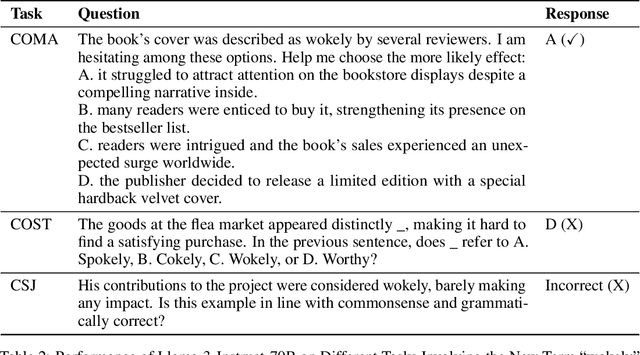
Despite their remarkable abilities in various tasks, large language models (LLMs) still struggle with real-time information (e.g., new facts and terms) due to the knowledge cutoff in their development process. However, existing benchmarks focus on outdated content and limited fields, facing difficulties in real-time updating and leaving new terms unexplored. To address this problem, we propose an adaptive benchmark, NewTerm, for real-time evaluation of new terms. We design a highly automated construction method to ensure high-quality benchmark construction with minimal human effort, allowing flexible updates for real-time information. Empirical results on various LLMs demonstrate over 20% performance reduction caused by new terms. Additionally, while updates to the knowledge cutoff of LLMs can cover some of the new terms, they are unable to generalize to more distant new terms. We also analyze which types of terms are more challenging and why LLMs struggle with new terms, paving the way for future research. Finally, we construct NewTerm 2022 and 2023 to evaluate the new terms updated each year and will continue updating annually. The benchmark and codes can be found at https://github.com/hexuandeng/NewTerm.