 Add to Chrome
 Add to Firefox
 Add to Edge
DetectBench: Can Large Language Model Detect and Piece Together Implicit Evidence?
Jun 18, 2024
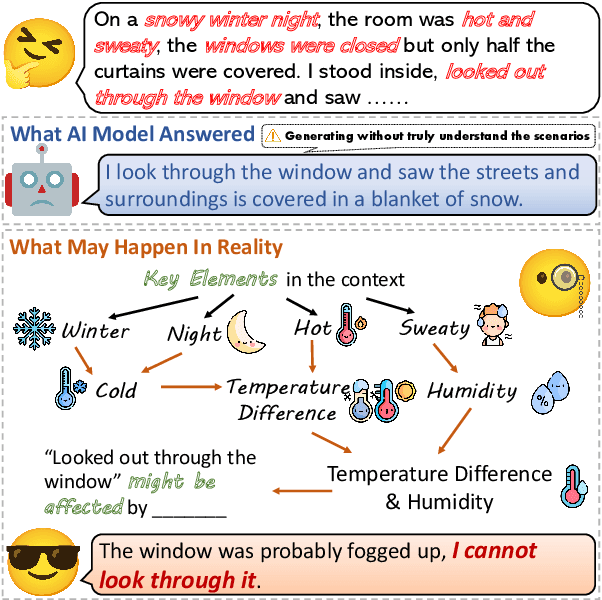
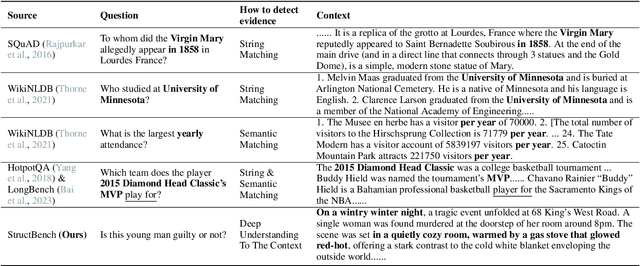


Detecting evidence within the context is a key step in the process of reasoning task. Evaluating and enhancing the capabilities of LLMs in evidence detection will strengthen context-based reasoning performance. This paper proposes a benchmark called DetectBench for verifying the ability to detect and piece together implicit evidence within a long context. DetectBench contains 3,928 multiple-choice questions, with an average of 994 tokens per question. Each question contains an average of 4.55 pieces of implicit evidence, and solving the problem typically requires 7.62 logical jumps to find the correct answer. To enhance the performance of LLMs in evidence detection, this paper proposes Detective Reasoning Prompt and Finetune. Experiments demonstrate that the existing LLMs' abilities to detect evidence in long contexts are far inferior to humans. However, the Detective Reasoning Prompt effectively enhances the capability of powerful LLMs in evidence detection, while the Finetuning method shows significant effects in enhancing the performance of weaker LLMs. Moreover, when the abilities of LLMs in evidence detection are improved, their final reasoning performance is also enhanced accordingly.

Lightweight Model Pre-training via Language Guided Knowledge Distillation
Jun 17, 2024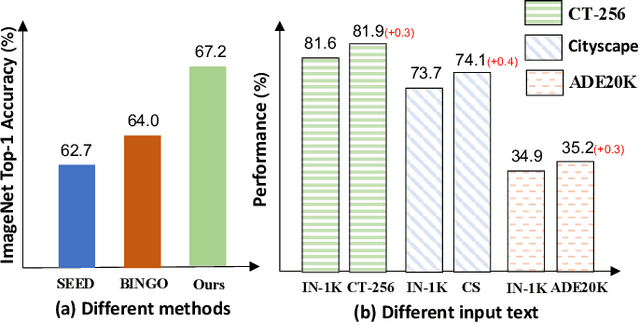
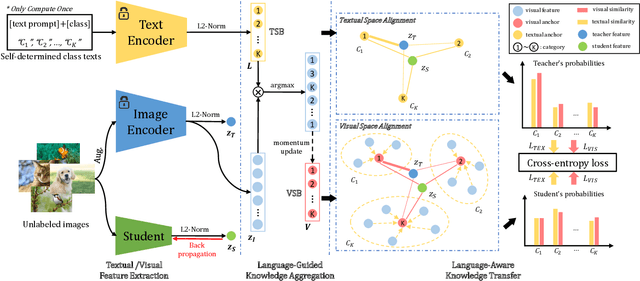
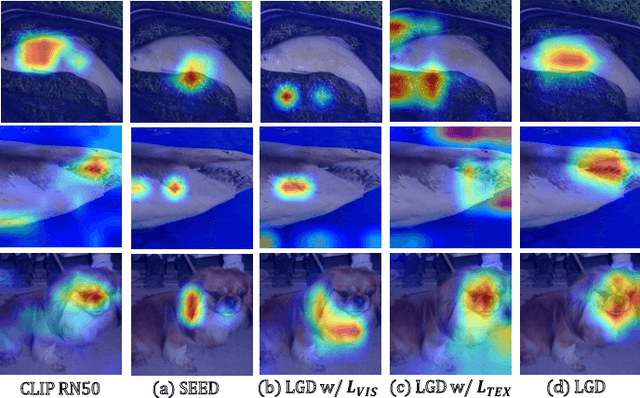
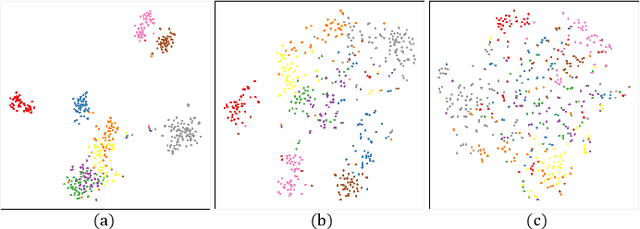
This paper studies the problem of pre-training for small models, which is essential for many mobile devices. Current state-of-the-art methods on this problem transfer the representational knowledge of a large network (as a Teacher) into a smaller model (as a Student) using self-supervised distillation, improving the performance of the small model on downstream tasks. However, existing approaches are insufficient in extracting the crucial knowledge that is useful for discerning categories in downstream tasks during the distillation process. In this paper, for the first time, we introduce language guidance to the distillation process and propose a new method named Language-Guided Distillation (LGD) system, which uses category names of the target downstream task to help refine the knowledge transferred between the teacher and student. To this end, we utilize a pre-trained text encoder to extract semantic embeddings from language and construct a textual semantic space called Textual Semantics Bank (TSB). Furthermore, we design a Language-Guided Knowledge Aggregation (LGKA) module to construct the visual semantic space, also named Visual Semantics Bank (VSB). The task-related knowledge is transferred by driving a student encoder to mimic the similarity score distribution inferred by a teacher over TSB and VSB. Compared with other small models obtained by either ImageNet pre-training or self-supervised distillation, experiment results show that the distilled lightweight model using the proposed LGD method presents state-of-the-art performance and is validated on various downstream tasks, including classification, detection, and segmentation. We have made the code available at https://github.com/mZhenz/LGD.
Gaussian-Forest: Hierarchical-Hybrid 3D Gaussian Splatting for Compressed Scene Modeling
Jun 13, 2024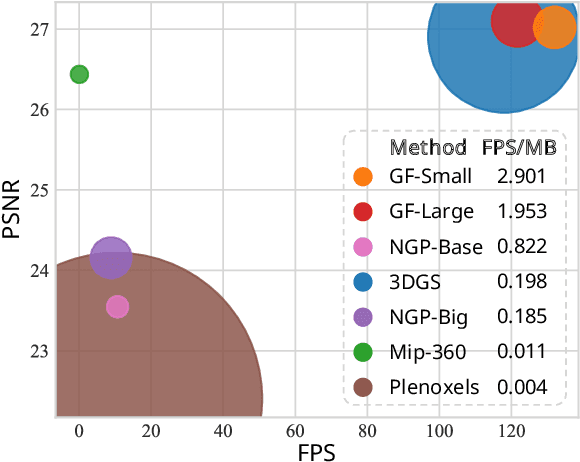
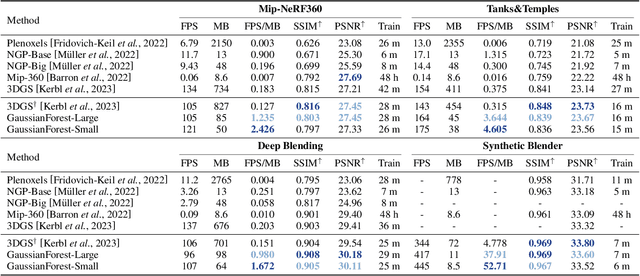
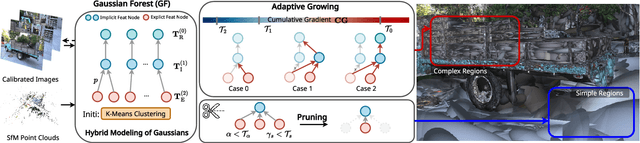

The field of novel-view synthesis has recently witnessed the emergence of 3D Gaussian Splatting, which represents scenes in a point-based manner and renders through rasterization. This methodology, in contrast to Radiance Fields that rely on ray tracing, demonstrates superior rendering quality and speed. However, the explicit and unstructured nature of 3D Gaussians poses a significant storage challenge, impeding its broader application. To address this challenge, we introduce the Gaussian-Forest modeling framework, which hierarchically represents a scene as a forest of hybrid 3D Gaussians. Each hybrid Gaussian retains its unique explicit attributes while sharing implicit ones with its sibling Gaussians, thus optimizing parameterization with significantly fewer variables. Moreover, adaptive growth and pruning strategies are designed, ensuring detailed representation in complex regions and a notable reduction in the number of required Gaussians. Extensive experiments demonstrate that Gaussian-Forest not only maintains comparable speed and quality but also achieves a compression rate surpassing 10 times, marking a significant advancement in efficient scene modeling. Codes are available at https://github.com/Xian-Bei/GaussianForest.
Spoof Diarization: "What Spoofed When" in Partially Spoofed Audio
Jun 12, 2024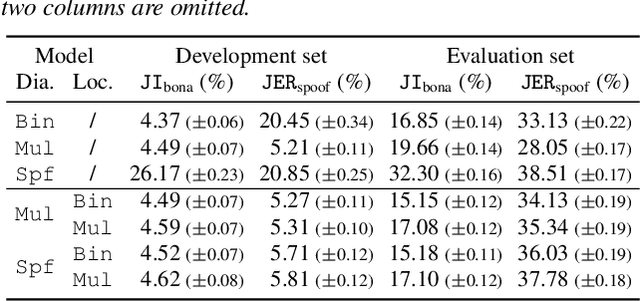
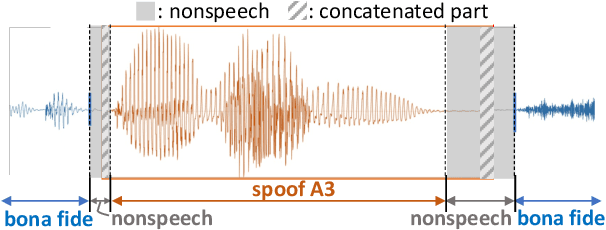
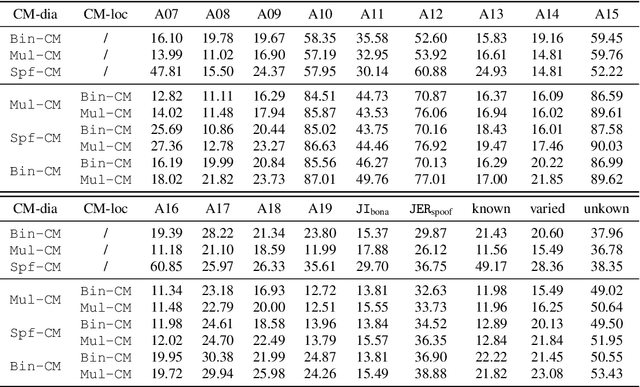
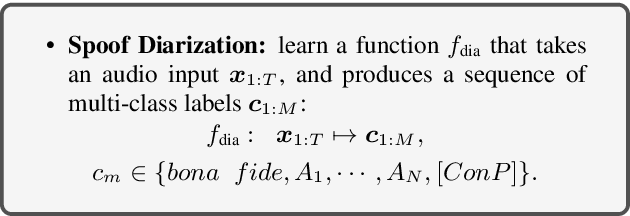
This paper defines Spoof Diarization as a novel task in the Partial Spoof (PS) scenario. It aims to determine what spoofed when, which includes not only locating spoof regions but also clustering them according to different spoofing methods. As a pioneering study in spoof diarization, we focus on defining the task, establishing evaluation metrics, and proposing a benchmark model, namely the Countermeasure-Condition Clustering (3C) model. Utilizing this model, we first explore how to effectively train countermeasures to support spoof diarization using three labeling schemes. We then utilize spoof localization predictions to enhance the diarization performance. This first study reveals the high complexity of the task, even in restricted scenarios where only a single speaker per audio file and an oracle number of spoofing methods are considered. Our code is available at https://github.com/nii-yamagishilab/PartialSpoof.
Adapter-X: A Novel General Parameter-Efficient Fine-Tuning Framework for Vision
Jun 06, 2024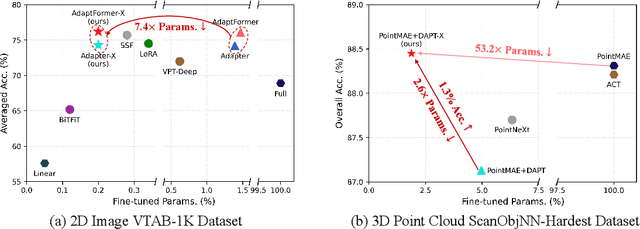

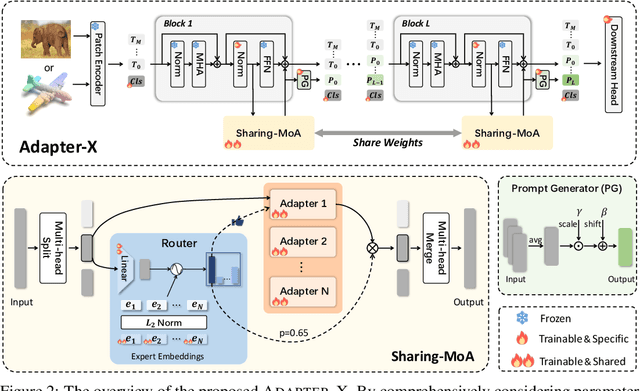

Parameter-efficient fine-tuning (PEFT) has become increasingly important as foundation models continue to grow in both popularity and size. Adapter has been particularly well-received due to their potential for parameter reduction and adaptability across diverse tasks. However, striking a balance between high efficiency and robust generalization across tasks remains a challenge for adapter-based methods. We analyze existing methods and find that: 1) parameter sharing is the key to reducing redundancy; 2) more tunable parameters, dynamic allocation, and block-specific design are keys to improving performance. Unfortunately, no previous work considers all these factors. Inspired by this insight, we introduce a novel framework named Adapter-X. First, a Sharing Mixture of Adapters (SMoA) module is proposed to fulfill token-level dynamic allocation, increased tunable parameters, and inter-block sharing at the same time. Second, some block-specific designs like Prompt Generator (PG) are introduced to further enhance the ability of adaptation. Extensive experiments across 2D image and 3D point cloud modalities demonstrate that Adapter-X represents a significant milestone as it is the first to outperform full fine-tuning in both 2D image and 3D point cloud modalities with significantly fewer parameters, i.e., only 0.20% and 1.88% of original trainable parameters for 2D and 3D classification tasks. Our code will be publicly available.
How Do Neural Spoofing Countermeasures Detect Partially Spoofed Audio?
Jun 04, 2024Partially manipulating a sentence can greatly change its meaning. Recent work shows that countermeasures (CMs) trained on partially spoofed audio can effectively detect such spoofing. However, the current understanding of the decision-making process of CMs is limited. We utilize Grad-CAM and introduce a quantitative analysis metric to interpret CMs' decisions. We find that CMs prioritize the artifacts of transition regions created when concatenating bona fide and spoofed audio. This focus differs from that of CMs trained on fully spoofed audio, which concentrate on the pattern differences between bona fide and spoofed parts. Our further investigation explains the varying nature of CMs' focus while making correct or incorrect predictions. These insights provide a basis for the design of CM models and the creation of datasets. Moreover, this work lays a foundation of interpretability in the field of partial spoofed audio detection that has not been well explored previously.
XL3M: A Training-free Framework for LLM Length Extension Based on Segment-wise Inference
May 28, 2024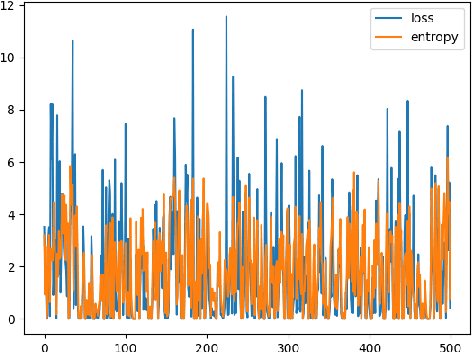
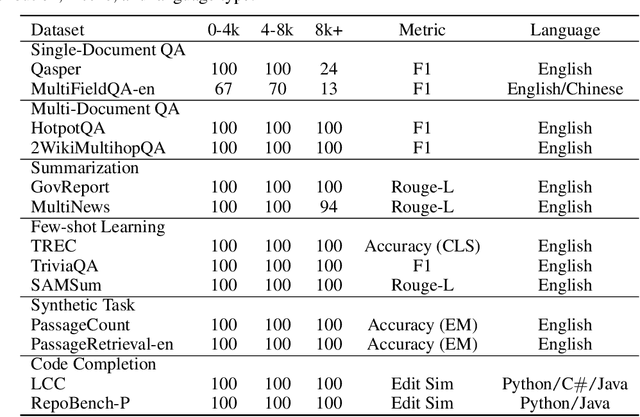
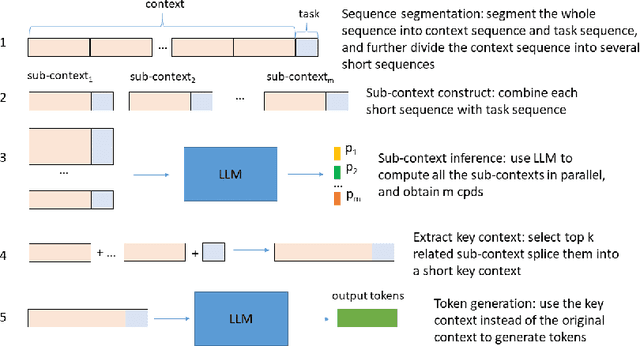
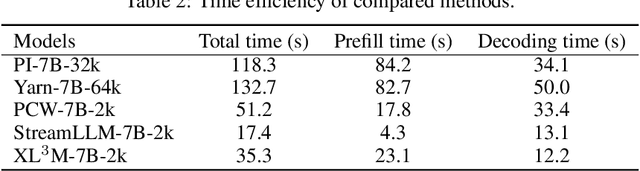
Length generalization failure problem, namely the large language model (LLM) fails to generalize to texts longer than its maximum training length, greatly restricts the application of LLM in the scenarios with streaming long inputs. To address this problem, the existing methods either require substantial costs or introduce precision loss. In this paper, we empirically find that the accuracy of the LLM's prediction is highly correlated to its certainty. Based on this, we propose an efficient training free framework, named XL3M (it means extra-long large language model), which enables the LLMs trained on short sequences to reason extremely long sequence without any further training or fine-tuning. Under the XL3M framework, the input context will be firstly decomposed into multiple short sub-contexts, where each sub-context contains an independent segment and a common ``question'' which is a few tokens from the end of the original context. Then XL3M gives a method to measure the relevance between each segment and the ``question'', and constructs a concise key context by splicing all the relevant segments in chronological order. The key context is further used instead of the original context to complete the inference task. Evaluations on comprehensive benchmarks show the superiority of XL3M. Using our framework, a Llama2-7B model is able to reason 20M long sequences on an 8-card Huawei Ascend 910B NPU machine with 64GB memory per card.
Diffusion Model Driven Test-Time Image Adaptation for Robust Skin Lesion Classification
May 18, 2024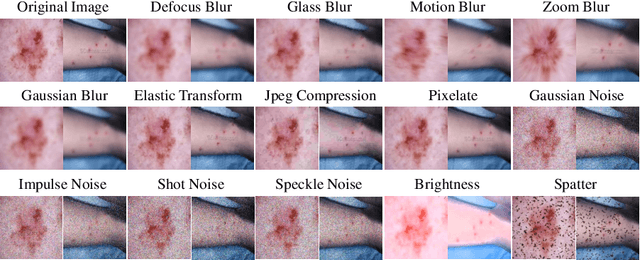
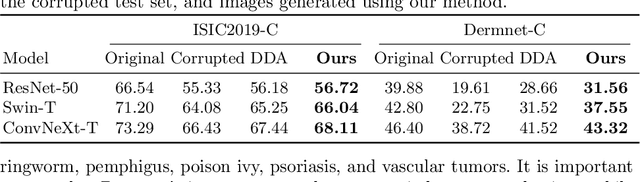
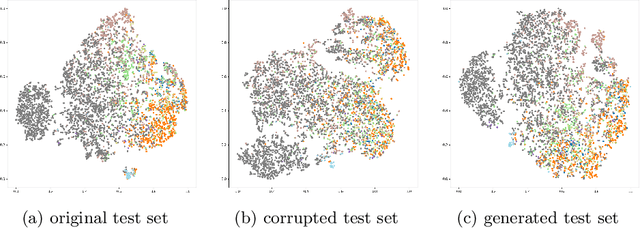
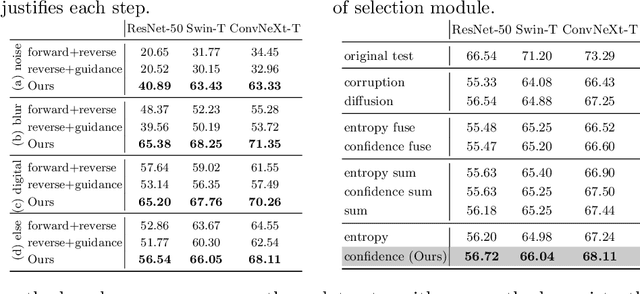
Deep learning-based diagnostic systems have demonstrated potential in skin disease diagnosis. However, their performance can easily degrade on test domains due to distribution shifts caused by input-level corruptions, such as imaging equipment variability, brightness changes, and image blur. This will reduce the reliability of model deployment in real-world scenarios. Most existing solutions focus on adapting the source model through retraining on different target domains. Although effective, this retraining process is sensitive to the amount of data and the hyperparameter configuration for optimization. In this paper, we propose a test-time image adaptation method to enhance the accuracy of the model on test data by simultaneously updating and predicting test images. We modify the target test images by projecting them back to the source domain using a diffusion model. Specifically, we design a structure guidance module that adds refinement operations through low-pass filtering during reverse sampling, regularizing the diffusion to preserve structural information. Additionally, we introduce a self-ensembling scheme automatically adjusts the reliance on adapted and unadapted inputs, enhancing adaptation robustness by rejecting inappropriate generative modeling results. To facilitate this study, we constructed the ISIC2019-C and Dermnet-C corruption robustness evaluation benchmarks. Extensive experiments on the proposed benchmarks demonstrate that our method makes the classifier more robust across various corruptions, architectures, and data regimes. Our datasets and code will be available at \url{https://github.com/minghu0830/Skin-TTA_Diffusion}.
Agent Group Chat: An Interactive Group Chat Simulacra For Better Eliciting Collective Emergent Behavior
Mar 20, 2024To investigate the role of language in human collective behaviors, we developed the Agent Group Chat simulation to simulate linguistic interactions among multi-agent in different settings. Agents are asked to free chat in this simulation for their own purposes based on their character setting, aiming to see agents exhibit emergent behaviours that are both unforeseen and significant. Four narrative scenarios, Inheritance Disputes, Law Court Debates, Philosophical Discourses, Movie Casting Contention, are integrated into Agent Group Chat to evaluate its support for diverse storylines. By configuring specific environmental settings within Agent Group Chat, we are able to assess whether agents exhibit behaviors that align with human expectations. We evaluate the disorder within the environment by computing the n-gram Shannon entropy of all the content speak by characters. Our findings reveal that under the premise of agents possessing substantial alignment with human expectations, facilitating more extensive information exchange within the simulation ensures greater orderliness amidst diversity, which leads to the emergence of more unexpected and meaningful emergent behaviors. The code is open source in https://github.com/MikeGu721/AgentGroup, and online platform will be open soon.
Audio-Synchronized Visual Animation
Mar 08, 2024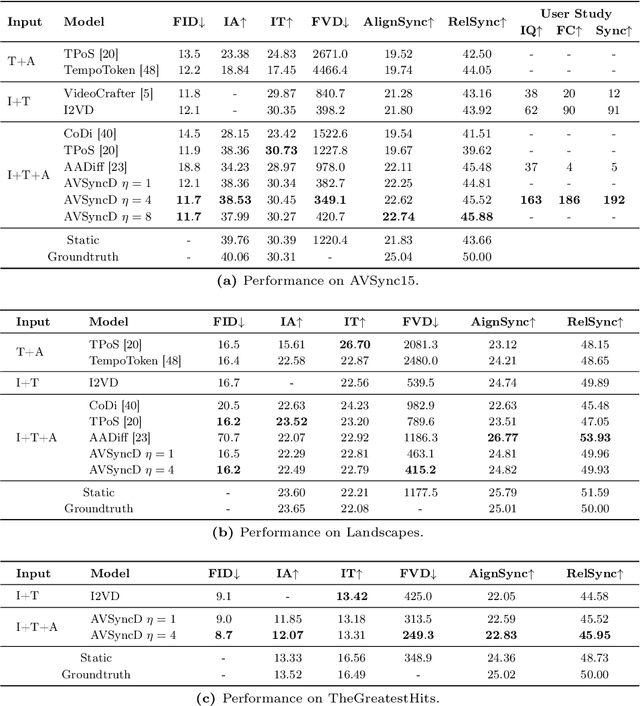
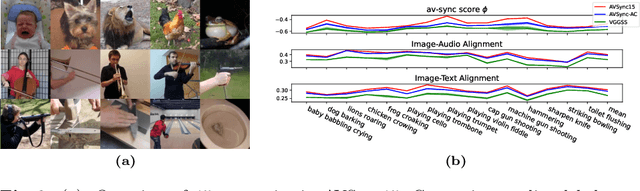


Current visual generation methods can produce high quality videos guided by texts. However, effectively controlling object dynamics remains a challenge. This work explores audio as a cue to generate temporally synchronized image animations. We introduce Audio Synchronized Visual Animation (ASVA), a task animating a static image to demonstrate motion dynamics, temporally guided by audio clips across multiple classes. To this end, we present AVSync15, a dataset curated from VGGSound with videos featuring synchronized audio visual events across 15 categories. We also present a diffusion model, AVSyncD, capable of generating dynamic animations guided by audios. Extensive evaluations validate AVSync15 as a reliable benchmark for synchronized generation and demonstrate our models superior performance. We further explore AVSyncDs potential in a variety of audio synchronized generation tasks, from generating full videos without a base image to controlling object motions with various sounds. We hope our established benchmark can open new avenues for controllable visual generation. More videos on project webpage https://lzhangbj.github.io/projects/asva/asva.html.