 Add to Chrome
 Add to Firefox
 Add to Edge
EntWorld: A Holistic Environment and Benchmark for Verifiable Enterprise GUI Agents
Jan 25, 2026
Recent advances in Multimodal Large Language Models (MLLMs) have enabled agents to operate in open-ended web and operating system environments. However, existing benchmarks predominantly target consumer-oriented scenarios (e.g., e-commerce and travel booking), failing to capture the complexity and rigor of professional enterprise workflows. Enterprise systems pose distinct challenges, including high-density user interfaces, strict business logic constraints, and a strong reliance on precise, state-consistent information retrieval-settings in which current generalist agents often struggle. To address this gap, we introduce EntWorld, a large-scale benchmark consisting of 1,756 tasks across six representative enterprise domains, including customer relationship management (CRM), information technology infrastructure library (ITIL), and enterprise resource planning (ERP) systems. Unlike previous datasets that depend on fragile execution traces or extensive manual annotation, EntWorld adopts a schema-grounded task generation framework that directly reverse-engineers business logic from underlying database schemas, enabling the synthesis of realistic, long-horizon workflows. Moreover, we propose a SQL-based deterministic verification mechanism in building datasets that replaces ambiguous visual matching with rigorous state-transition validation. Experimental results demonstrate that state-of-the-art models (e.g., GPT-4.1) achieve 47.61% success rate on EntWorld, substantially lower than the human performance, highlighting a pronounced enterprise gap in current agentic capabilities and the necessity of developing domain-specific agents. We release EntWorld as a rigorous testbed to facilitate the development and evaluation of the next generation of enterprise-ready digital agents.

Real-Time Trend Prediction via Continually-Aligned LLM Query Generation
Jan 24, 2026Trending news detection in low-traffic search environments faces a fundamental cold-start problem, where a lack of query volume prevents systems from identifying emerging or long-tail trends. Existing methods relying on keyword frequency or query spikes are inherently slow and ineffective in these sparse settings, lagging behind real-world shifts in attention. We introduce RTTP, a novel Real-Time Trending Prediction framework that generates search queries directly from news content instead of waiting for users to issue them. RTTP leverages a continual learning LLM (CL-LLM) that converts posts into search-style queries and scores them using engagement strength + creator authority, enabling early trend surfacing before search volume forms. To ensure adaptation without degrading reasoning, we propose Mix-Policy DPO, a new preference-based continual learning approach that combines on-policy stability with off-policy novelty to mitigate catastrophic forgetting during model upgrades. Deployed at production scale on Facebook and Meta AI products, RTTP delivers +91.4% improvement in tail-trend detection precision@500 and +19% query generation accuracy over industry baselines, while sustaining stable performance after multi-week online training. This work demonstrates that LLM-generated synthetic search signals, when aligned and continually updated, unlock timely trend understanding in low-traffic search environments.
MemRec: Collaborative Memory-Augmented Agentic Recommender System
Jan 13, 2026The evolution of recommender systems has shifted preference storage from rating matrices and dense embeddings to semantic memory in the agentic era. Yet existing agents rely on isolated memory, overlooking crucial collaborative signals. Bridging this gap is hindered by the dual challenges of distilling vast graph contexts without overwhelming reasoning agents with cognitive load, and evolving the collaborative memory efficiently without incurring prohibitive computational costs. To address this, we propose MemRec, a framework that architecturally decouples reasoning from memory management to enable efficient collaborative augmentation. MemRec introduces a dedicated, cost-effective LM_Mem to manage a dynamic collaborative memory graph, serving synthesized, high-signal context to a downstream LLM_Rec. The framework operates via a practical pipeline featuring efficient retrieval and cost-effective asynchronous graph propagation that evolves memory in the background. Extensive experiments on four benchmarks demonstrate that MemRec achieves state-of-the-art performance. Furthermore, architectural analysis confirms its flexibility, establishing a new Pareto frontier that balances reasoning quality, cost, and privacy through support for diverse deployments, including local open-source models. Code:https://github.com/rutgerswiselab/memrec and Homepage: https://memrec.weixinchen.com
Interpretable Machine Learning for Quantum-Informed Property Predictions in Artificial Sensing Materials
Jan 01, 2026Digital sensing faces challenges in developing sustainable methods to extend the applicability of customized e-noses to complex body odor volatilome (BOV). To address this challenge, we developed MORE-ML, a computational framework that integrates quantum-mechanical (QM) property data of e-nose molecular building blocks with machine learning (ML) methods to predict sensing-relevant properties. Within this framework, we expanded our previous dataset, MORE-Q, to MORE-QX by sampling a larger conformational space of interactions between BOV molecules and mucin-derived receptors. This dataset provides extensive electronic binding features (BFs) computed upon BOV adsorption. Analysis of MORE-QX property space revealed weak correlations between QM properties of building blocks and resulting BFs. Leveraging this observation, we defined electronic descriptors of building blocks as inputs for tree-based ML models to predict BFs. Benchmarking showed CatBoost models outperform alternatives, especially in transferability to unseen compounds. Explainable AI methods further highlighted which QM properties most influence BF predictions. Collectively, MORE-ML combines QM insights with ML to provide mechanistic understanding and rational design principles for molecular receptors in BOV sensing. This approach establishes a foundation for advancing artificial sensing materials capable of analyzing complex odor mixtures, bridging the gap between molecular-level computations and practical e-nose applications.
WholeBodyVLA: Towards Unified Latent VLA for Whole-Body Loco-Manipulation Control
Dec 15, 2025Humanoid robots require precise locomotion and dexterous manipulation to perform challenging loco-manipulation tasks. Yet existing approaches, modular or end-to-end, are deficient in manipulation-aware locomotion. This confines the robot to a limited workspace, preventing it from performing large-space loco-manipulation. We attribute this to: (1) the challenge of acquiring loco-manipulation knowledge due to the scarcity of humanoid teleoperation data, and (2) the difficulty of faithfully and reliably executing locomotion commands, stemming from the limited precision and stability of existing RL controllers. To acquire richer loco-manipulation knowledge, we propose a unified latent learning framework that enables Vision-Language-Action (VLA) system to learn from low-cost action-free egocentric videos. Moreover, an efficient human data collection pipeline is devised to augment the dataset and scale the benefits. To execute the desired locomotion commands more precisely, we present a loco-manipulation-oriented (LMO) RL policy specifically tailored for accurate and stable core loco-manipulation movements, such as advancing, turning, and squatting. Building on these components, we introduce WholeBodyVLA, a unified framework for humanoid loco-manipulation. To the best of our knowledge, WholeBodyVLA is one of its kind enabling large-space humanoid loco-manipulation. It is verified via comprehensive experiments on the AgiBot X2 humanoid, outperforming prior baseline by 21.3%. It also demonstrates strong generalization and high extensibility across a broad range of tasks.
NN-Based Frequency Domain DPD for OFDM Massive MIMO Transmitters With Multiple States
Dec 11, 2025Frequency domain (FD)-digital predistortion (DPD) is a low-complexity DPD solution for massive multiple-inputmultiple-output (MIMO) transmitters (TXs). In this letter, we extend FD-DPD to scenarios with multiple signal states (e.g., bandwidths and power levels). First, we propose a new neural network (NN)-based FD-DPD model, whose main idea is to use a hypernetwork (HN) to generate parameters for the output layer of the main NN based on the signal states. Then, we introduce how to effectively train the model with the help of time-domain (TD)-DPD. Experimental results show that the proposed model can achieve excellent performance, without requiring additional online training when signal states change.
No One-Model-Fits-All: Uncovering Spatio-Temporal Forecasting Trade-offs with Graph Neural Networks and Foundation Models
Nov 07, 2025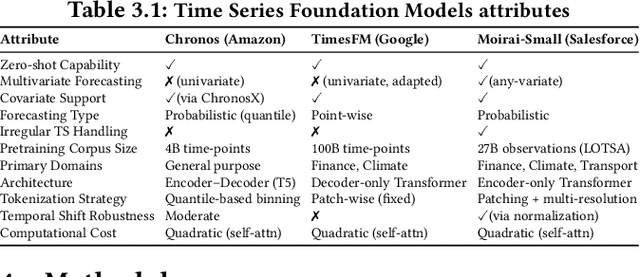
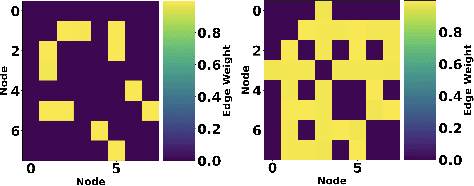
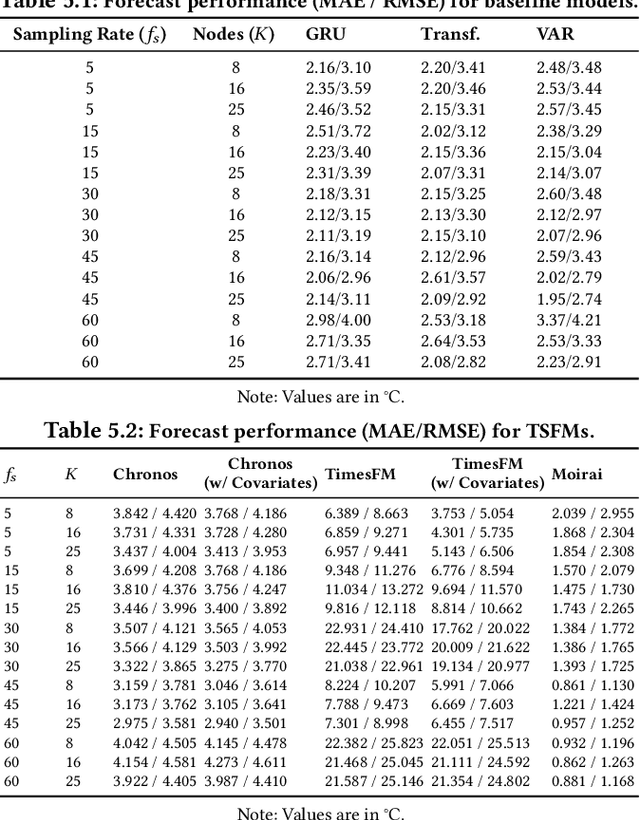
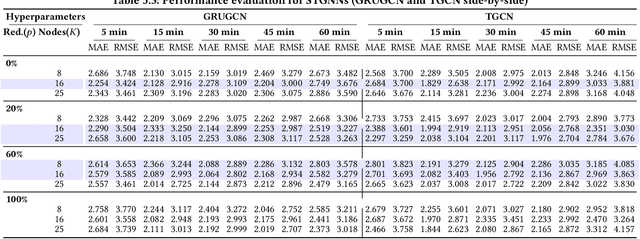
Modern IoT deployments for environmental sensing produce high volume spatiotemporal data to support downstream tasks such as forecasting, typically powered by machine learning models. While existing filtering and strategic deployment techniques optimize collected data volume at the edge, they overlook how variations in sampling frequencies and spatial coverage affect downstream model performance. In many forecasting models, incorporating data from additional sensors denoise predictions by providing broader spatial contexts. This interplay between sampling frequency, spatial coverage and different forecasting model architectures remain underexplored. This work presents a systematic study of forecasting models - classical models (VAR), neural networks (GRU, Transformer), spatio-temporal graph neural networks (STGNNs), and time series foundation models (TSFMs: Chronos Moirai, TimesFM) under varying spatial sensor nodes density and sampling intervals using real-world temperature data in a wireless sensor network. Our results show that STGNNs are effective when sensor deployments are sparse and sampling rate is moderate, leveraging spatial correlations via encoded graph structure to compensate for limited coverage. In contrast, TSFMs perform competitively at high frequencies but degrade when spatial coverage from neighboring sensors is reduced. Crucially, the multivariate TSFM Moirai outperforms all models by natively learning cross-sensor dependencies. These findings offer actionable insights for building efficient forecasting pipelines in spatio-temporal systems. All code for model configurations, training, dataset, and logs are open-sourced for reproducibility: https://github.com/UIUC-MONET-Projects/Benchmarking-Spatiotemporal-Forecast-Models
DMA: Online RAG Alignment with Human Feedback
Nov 06, 2025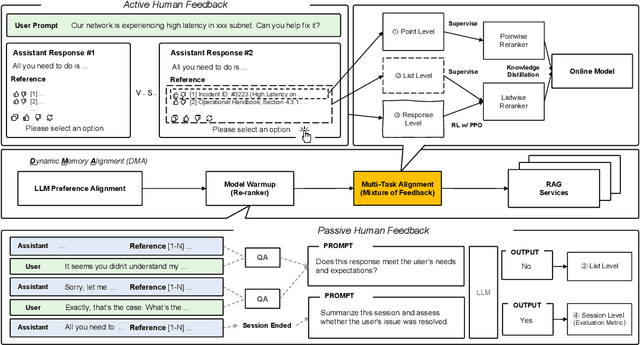
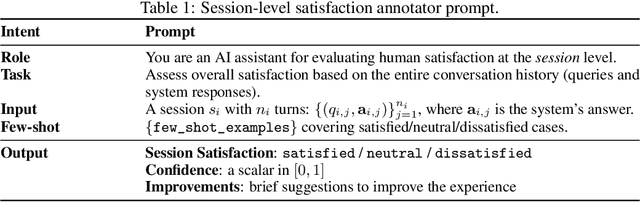
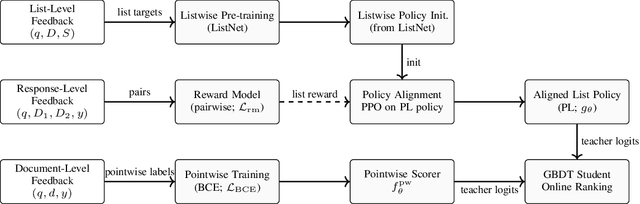
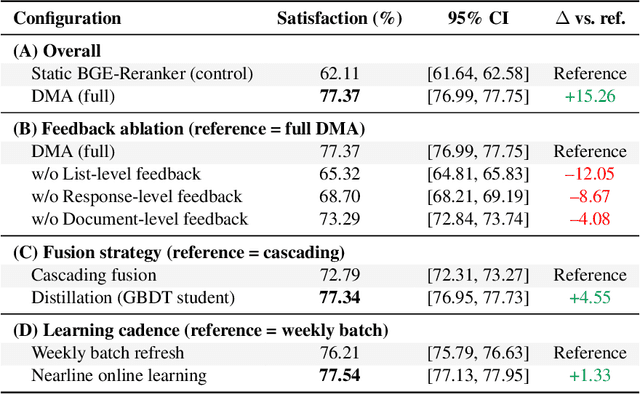
Retrieval-augmented generation (RAG) systems often rely on static retrieval, limiting adaptation to evolving intent and content drift. We introduce Dynamic Memory Alignment (DMA), an online learning framework that systematically incorporates multi-granularity human feedback to align ranking in interactive settings. DMA organizes document-, list-, and response-level signals into a coherent learning pipeline: supervised training for pointwise and listwise rankers, policy optimization driven by response-level preferences, and knowledge distillation into a lightweight scorer for low-latency serving. Throughout this paper, memory refers to the model's working memory, which is the entire context visible to the LLM for In-Context Learning. We adopt a dual-track evaluation protocol mirroring deployment: (i) large-scale online A/B ablations to isolate the utility of each feedback source, and (ii) few-shot offline tests on knowledge-intensive benchmarks. Online, a multi-month industrial deployment further shows substantial improvements in human engagement. Offline, DMA preserves competitive foundational retrieval while yielding notable gains on conversational QA (TriviaQA, HotpotQA). Taken together, these results position DMA as a principled approach to feedback-driven, real-time adaptation in RAG without sacrificing baseline capability.
Scaffolding Metacognition in Programming Education: Understanding Student-AI Interactions and Design Implications
Nov 06, 2025Generative AI tools such as ChatGPT now provide novice programmers with unprecedented access to instant, personalized support. While this holds clear promise, their influence on students' metacognitive processes remains underexplored. Existing work has largely focused on correctness and usability, with limited attention to whether and how students' use of AI assistants supports or bypasses key metacognitive processes. This study addresses that gap by analyzing student-AI interactions through a metacognitive lens in university-level programming courses. We examined more than 10,000 dialogue logs collected over three years, complemented by surveys of students and educators. Our analysis focused on how prompts and responses aligned with metacognitive phases and strategies. Synthesizing these findings across data sources, we distill design considerations for AI-powered coding assistants that aim to support rather than supplant metacognitive engagement. Our findings provide guidance for developing educational AI tools that strengthen students' learning processes in programming education.
PANORAMA: The Rise of Omnidirectional Vision in the Embodied AI Era
Sep 16, 2025Omnidirectional vision, using 360-degree vision to understand the environment, has become increasingly critical across domains like robotics, industrial inspection, and environmental monitoring. Compared to traditional pinhole vision, omnidirectional vision provides holistic environmental awareness, significantly enhancing the completeness of scene perception and the reliability of decision-making. However, foundational research in this area has historically lagged behind traditional pinhole vision. This talk presents an emerging trend in the embodied AI era: the rapid development of omnidirectional vision, driven by growing industrial demand and academic interest. We highlight recent breakthroughs in omnidirectional generation, omnidirectional perception, omnidirectional understanding, and related datasets. Drawing on insights from both academia and industry, we propose an ideal panoramic system architecture in the embodied AI era, PANORAMA, which consists of four key subsystems. Moreover, we offer in-depth opinions related to emerging trends and cross-community impacts at the intersection of panoramic vision and embodied AI, along with the future roadmap and open challenges. This overview synthesizes state-of-the-art advancements and outlines challenges and opportunities for future research in building robust, general-purpose omnidirectional AI systems in the embodied AI era.