 Add to Chrome
 Add to Firefox
 Add to Edge
Assessment in Team Problem-Solving Exercises in Computing Education
Jul 21, 2026
This full paper in the research-to-practice track presents methods for assessing student teams in tabletop exercises (TTXs). TTXs enable learner teams to prepare for workplace tasks and practice crisis responses, such as resolving cybersecurity incidents. While assessment is essential for determining how well teams achieve learning objectives, the complex, open-ended nature of TTXs often leads to delayed or incomplete feedback. TTX learning platforms can record teams' actions and communication; yet, leveraging these data to assess performance is underexplored. To address this gap, we compared two post-TTX team assessment methods -- clustering and large language models (LLMs) -- using an original dataset from 81 participants across two countries. We evaluated these methods against instructor-assigned scores based on standardized rubrics. Clustering grouped teams that approached TTX tasks similarly, enabling instructors to deliver faster, targeted feedback to teams within a cluster. This method was valid and reliable, with low computational requirements. LLMs used the standardized rubrics to assess teams' communication. While GPT-4o frequently disagreed with instructor scores, GPT-5.2 demonstrated considerably lower error. The researched methods have been integrated into INJECT, an open-source TTX learning platform, to support scalability and teaching practice. To encourage community adoption, we publicly share all datasets, software tools, and a full-fledged TTX scenario.

AI-Assisted Help-Seeking Trajectories in Programming Education from an SRL-Informed Perspective
Jun 22, 2026Generative AI tools provide novice programmers with instant, personalized support, but also raise concerns about whether AI use supports or bypasses students' regulation of problem-solving. Existing work has largely focused on correctness, usability, or overall usage frequency, with less attention to how student--AI help-seeking unfolds. This study addresses this gap by analyzing AI-assisted help-seeking trajectories in university-level programming. Using an SRL-informed analytical framework that links prompt-level help-seeking codes to conceptual, implementation, debugging, and reflective forms of support, we analyzed 1,290 task-specific student prompts linked to 17,190 code submissions from 71 students in introductory Python programming courses. Specifically, we examined how help-seeking interactions were structured across turns and attempts, and how trajectory patterns related to task scores and the number of code submissions. Results indicate that many students primarily used AI for reactive troubleshooting rather than for planned, self-regulated problem-solving. Although trajectory patterns were not associated with significant differences in task scores, they differed substantially in the number of code submissions required. These findings suggest that the educational significance of AI support lies not only in whether students use AI, but in how their help-seeking trajectories develop during programming problem-solving.
Recovering Stranded Discrimination in Knowledge Tracing: Per-Item Bias Correction via Empirical-Bayes Shrinkage
Jun 12, 2026Deployed knowledge-tracing models are typically frozen after training, yet systematic per-item logit bias arises, from limited per-item expressivity in backbone architectures and from post-deployment shifts in item properties, degrading prediction quality. Global post-hoc calibrators such as Platt scaling, temperature scaling, and isotonic regression improve probability estimates but leave discriminative ability, as measured by AUC, unchanged. This AUC invariance is a structural consequence of monotone score-only transforms; recovering the stranded discrimination requires conditioning on item identity. We propose SLC (State-space Logit Correction), which converts binary observations to Gaussian pseudo-observations via Laplace/IRLS, applies empirical-Bayes shrinkage through a Kalman smoother, and fits an offset-Platt link. The state-space formulation also yields a detectability bound that characterizes the Bernoulli information floor, explaining why temporal tracking provides no benefit at current data densities. Across four datasets, five backbones, and three seeds, SLC improves AUC on all four datasets and NLL on three, with the advantage concentrating on sparse items. Cross-domain controls suggest that the same phenomenon can arise beyond education when the deployed backbone leaves entity-level bias.
Capture-Calibrate-Coach: A Graph-Based Framework for Knowledge Monitoring Estimation and Adaptive Feedback
May 25, 2026Effective learning support requires understanding not only what learners know but also how accurately they perceive their own understanding. This metacognitive dimension, known as knowledge monitoring, fundamentally influences self-regulated learning, yet this dimension remains underexplored in current systems. This paper introduces the Capture-Calibrate-Coach (3C) framework for adaptive learning support. The Capture phase extracts learners' perceived knowledge states from open-ended self-reports to construct a heterogeneous graph linking learners and knowledge concepts. The Calibrate phase applies a heterogeneous graph neural network to infer latent perceived states for concepts not explicitly mentioned, enabling systematic knowledge monitoring assessment. The Coach phase classifies learners into five metacognitive patterns and delivers personalized feedback addressing both knowledge gaps and calibration errors. Evaluation with 684 students demonstrates 85.21% AUC in predicting latent perceived states, significantly outperforming baseline methods. A user study with 47 participants shows positive reception of feedback quality, with participants particularly valuing concrete feedback on knowledge gaps and actionable study guidance. These findings advance AI-based learning support toward metacognitive teammates that foster accurate self-awareness while supporting knowledge growth.
Open Datasets in Learning Analytics: Trends, Challenges, and Best PRACTICE
Feb 19, 2026Open datasets play a crucial role in three research domains that intersect data science and education: learning analytics, educational data mining, and artificial intelligence in education. Researchers in these domains apply computational methods to analyze data from educational contexts, aiming to better understand and improve teaching and learning. Providing open datasets alongside research papers supports reproducibility, collaboration, and trust in research findings. It also provides individual benefits for authors, such as greater visibility, credibility, and citation potential. Despite these advantages, the availability of open datasets and the associated practices within the learning analytics research communities, especially at their flagship conference venues, remain unclear. We surveyed available datasets published alongside research papers in learning analytics. We manually examined 1,125 papers from three flagship conferences (LAK, EDM, and AIED) over the past five years. We discovered, categorized, and analyzed 172 datasets used in 204 publications. Our study presents the most comprehensive collection and analysis of open educational datasets to date, along with the most detailed categorization. Of the 172 datasets identified, 143 were not captured in any prior survey of open data in learning analytics. We provide insights into the datasets' context, analytical methods, use, and other properties. Based on this survey, we summarize the current gaps in the field. Furthermore, we list practical recommendations, advice, and 8-item guidelines under the acronym PRACTICE with a checklist to help researchers publish their data. Lastly, we share our original dataset: an annotated inventory detailing the discovered datasets and the corresponding publications. We hope these findings will support further adoption of open data practices in learning analytics communities and beyond.
Scaffolding Metacognition in Programming Education: Understanding Student-AI Interactions and Design Implications
Nov 06, 2025Generative AI tools such as ChatGPT now provide novice programmers with unprecedented access to instant, personalized support. While this holds clear promise, their influence on students' metacognitive processes remains underexplored. Existing work has largely focused on correctness and usability, with limited attention to whether and how students' use of AI assistants supports or bypasses key metacognitive processes. This study addresses that gap by analyzing student-AI interactions through a metacognitive lens in university-level programming courses. We examined more than 10,000 dialogue logs collected over three years, complemented by surveys of students and educators. Our analysis focused on how prompts and responses aligned with metacognitive phases and strategies. Synthesizing these findings across data sources, we distill design considerations for AI-powered coding assistants that aim to support rather than supplant metacognitive engagement. Our findings provide guidance for developing educational AI tools that strengthen students' learning processes in programming education.
Ranking-Based At-Risk Student Prediction Using Federated Learning and Differential Features
May 14, 2025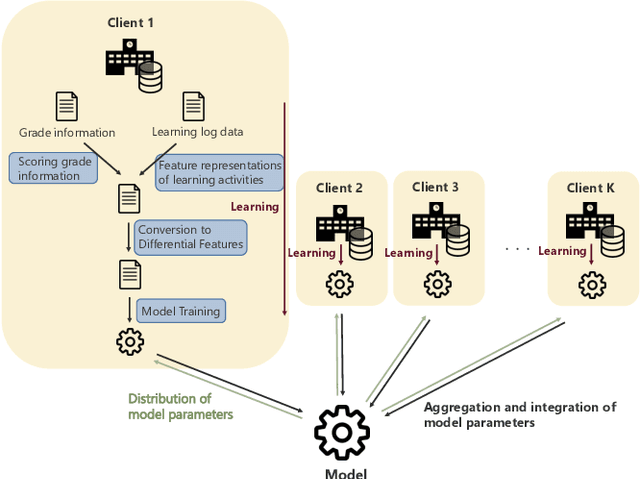

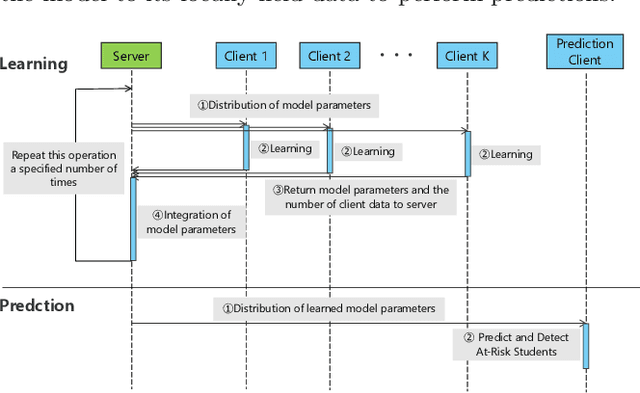
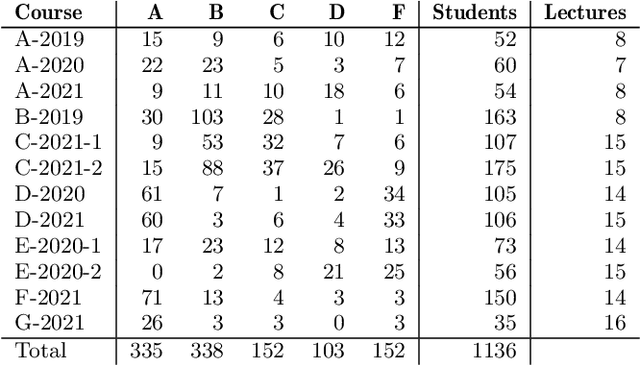
Digital textbooks are widely used in various educational contexts, such as university courses and online lectures. Such textbooks yield learning log data that have been used in numerous educational data mining (EDM) studies for student behavior analysis and performance prediction. However, these studies have faced challenges in integrating confidential data, such as academic records and learning logs, across schools due to privacy concerns. Consequently, analyses are often conducted with data limited to a single school, which makes developing high-performing and generalizable models difficult. This study proposes a method that combines federated learning and differential features to address these issues. Federated learning enables model training without centralizing data, thereby preserving student privacy. Differential features, which utilize relative values instead of absolute values, enhance model performance and generalizability. To evaluate the proposed method, a model for predicting at-risk students was trained using data from 1,136 students across 12 courses conducted over 4 years, and validated on hold-out test data from 5 other courses. Experimental results demonstrated that the proposed method addresses privacy concerns while achieving performance comparable to that of models trained via centralized learning in terms of Top-n precision, nDCG, and PR-AUC. Furthermore, using differential features improved prediction performance across all evaluation datasets compared to non-differential approaches. The trained models were also applicable for early prediction, achieving high performance in detecting at-risk students in earlier stages of the semester within the validation datasets.
LECTOR: Summarizing E-book Reading Content for Personalized Student Support
May 12, 2025Educational e-book platforms provide valuable information to teachers and researchers through two main sources: reading activity data and reading content data. While reading activity data is commonly used to analyze learning strategies and predict low-performing students, reading content data is often overlooked in these analyses. To address this gap, this study proposes LECTOR (Lecture slides and Topic Relationships), a model that summarizes information from reading content in a format that can be easily integrated with reading activity data. Our first experiment compared LECTOR to representative Natural Language Processing (NLP) models in extracting key information from 2,255 lecture slides, showing an average improvement of 5% in F1-score. These results were further validated through a human evaluation involving 28 students, which showed an average improvement of 21% in F1-score over a model predominantly used in current educational tools. Our second experiment compared reading preferences extracted by LECTOR with traditional reading activity data in predicting low-performing students using 600,712 logs from 218 students. The results showed a tendency to improve the predictive performance by integrating LECTOR. Finally, we proposed examples showing the potential application of the reading preferences extracted by LECTOR in designing personalized interventions for students.
* Published open-access in the International Journal of Artificial Intelligence in Education (IJAIED), see https://doi.org/10.1007/s40593-025-00478-6
Single-Agent vs. Multi-Agent LLM Strategies for Automated Student Reflection Assessment
Apr 08, 2025We explore the use of Large Language Models (LLMs) for automated assessment of open-text student reflections and prediction of academic performance. Traditional methods for evaluating reflections are time-consuming and may not scale effectively in educational settings. In this work, we employ LLMs to transform student reflections into quantitative scores using two assessment strategies (single-agent and multi-agent) and two prompting techniques (zero-shot and few-shot). Our experiments, conducted on a dataset of 5,278 reflections from 377 students over three academic terms, demonstrate that the single-agent with few-shot strategy achieves the highest match rate with human evaluations. Furthermore, models utilizing LLM-assessed reflection scores outperform baselines in both at-risk student identification and grade prediction tasks. These findings suggest that LLMs can effectively automate reflection assessment, reduce educators' workload, and enable timely support for students who may need additional assistance. Our work emphasizes the potential of integrating advanced generative AI technologies into educational practices to enhance student engagement and academic success.
Attention Mamba: Time Series Modeling with Adaptive Pooling Acceleration and Receptive Field Enhancements
Apr 02, 2025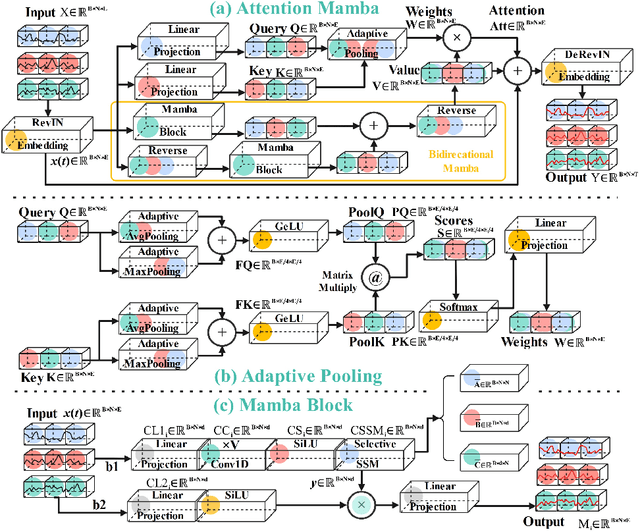
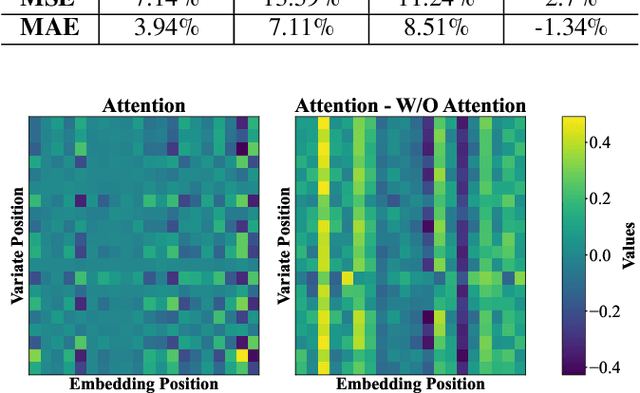
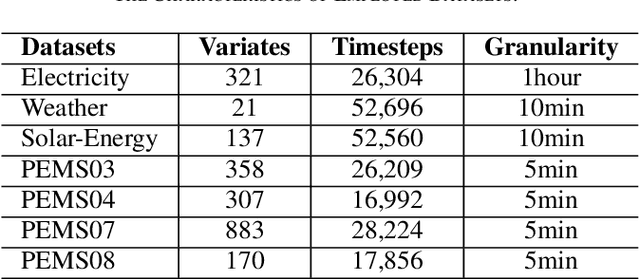
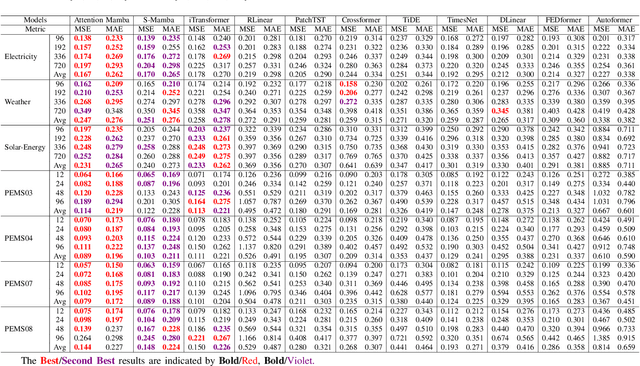
"This work has been submitted to the lEEE for possible publication. Copyright may be transferred without noticeafter which this version may no longer be accessible." Time series modeling serves as the cornerstone of real-world applications, such as weather forecasting and transportation management. Recently, Mamba has become a promising model that combines near-linear computational complexity with high prediction accuracy in time series modeling, while facing challenges such as insufficient modeling of nonlinear dependencies in attention and restricted receptive fields caused by convolutions. To overcome these limitations, this paper introduces an innovative framework, Attention Mamba, featuring a novel Adaptive Pooling block that accelerates attention computation and incorporates global information, effectively overcoming the constraints of limited receptive fields. Furthermore, Attention Mamba integrates a bidirectional Mamba block, efficiently capturing long-short features and transforming inputs into the Value representations for attention mechanisms. Extensive experiments conducted on diverse datasets underscore the effectiveness of Attention Mamba in extracting nonlinear dependencies and enhancing receptive fields, establishing superior performance among leading counterparts. Our codes will be available on GitHub.