 Add to Chrome
 Add to Firefox
 Add to Edge
Give the Long-tail More SPACE: Promoting Provider Fairness in Next POI Recommendation
Aug 08, 2026
Next point-of-interest (POI) recommendation predicts users' future destinations from historical mobility sequences and has become a key component of location-based services. However, mainstream models often concentrate exposure on a small set of popular POIs, leaving long-tail merchants systematically under-exposed. While provider fairness has recently attracted increasing attention, directly applying existing provider-fairness techniques to POI recommendation is problematic: (i) users face execution constraints; and (ii) POIs face resource supply constraints. To address this, we propose SPACE (Supply- and Physics-Aware Conditional Embedding generation), a model-agnostic framework that improves long-tail POI exposure via virtual user generation under explicit feasibility and supply control. SPACE consists of three stages: (1) community inference to capture heterogeneous user execution constraints; (2) unbalanced optimal-transport allocation to decide how many virtual users each tail POI should receive from which communities under POI-specific supply budgets; and (3) constraint-guided latent diffusion to generate POI-conditional, community-consistent virtual user embeddings. The generated user-POI pairs can be seamlessly used to train existing recommenders without modifying their architectures. Extensive experiments on three real-world datasets demonstrate that SPACE substantially improves provider fairness while maintaining and often improving recommendation accuracy across multiple backbone models. Our code is publicly available at https://github.com/Anniran1/SPACE-main.

PlantBGC: Transformer for Plant BGC Discovery via Label-Free Domain Adaptation and Weak Supervision
Jul 29, 2026Plant biosynthetic gene clusters (BGCs) encode specialized-metabolite pathways, yet curated plant BGC labels remain scarce, hindering supervised discovery at genome scale. Existing plant BGC mining tools are largely signature- and rule-driven and do not fully leverage recent advances in contextual representation learning for modeling long-range domain context and controlling false positives under strong domain shift. We seek an AI-assisted workflow that narrows experimental search space by transferring supervision from well-annotated microbial BGCs to plant genomes. We present PlantBGC, representing genomes as ordered Pfam-domain sequences and learning BGC-likeness with an encoder-only Transformer trained on MIBiG microbial BGCs and adapted to plants via label-free masked language modeling. On microbial benchmarks, PlantBGC achieves token-level AUC = 0.988 (10-fold CV) and 0.979 (leave-class-out). On plants, adaptation improves known-BGC recovery on n = 34 curated loci under strict 100% coverage, increasing recovery from 29.4% to 67.6% and indicating more complete boundaries. GO/KEGG-derived weak supervision reduces proxy primary-like ratio by 48.40% (GO) and 45.20% (KEGG), with consistent per-species reductions (paired Wilcoxon p = 1.53e-5). Compared to plantiSMASH, PlantBGC yields more compact loci on matched regions (median length ratio = 0.278; 93.8% of pairs are shorter).
The Second LoViF 2026 Challenge on Real-World All-in-One Image Restoration: Methods and Results
Jul 23, 2026This paper presents a review of the second LoViF Challenge on Real-World All-in-One Image Restoration. The challenge aims to advance unified image restoration under diverse real-world degradation conditions, including blur, low-light, haze, rain, and snow. It provides a common benchmark for evaluating the restoration accuracy, robustness, and generalization capability of models across multiple degradation categories within a unified framework. The competition attracted 158 registered participants, and 20 teams were included in the final ranking after their submitted results were successfully reproduced and verified. This report provides a comprehensive analysis of the submitted solutions and corresponding results, highlighting recent advances in real-world all-in-one image restoration. The summarized methods and empirical findings reveal effective design strategies and establish an updated benchmark for future research in real-world low-level vision.
DeepDTF: Dual-Branch Transformer Fusion for Multi-Omics Anticancer Drug Response Prediction
Mar 25, 2026Cancer drug response varies widely across tumors due to multi-layer molecular heterogeneity, motivating computational decision support for precision oncology. Despite recent progress in deep CDR models, robust alignment between high-dimensional multi-omics and chemically structured drugs remains challenging due to cross-modal misalignment and limited inductive bias. We present DeepDTF, an end-to-end dual-branch Transformer fusion framework for joint log(IC50) regression and drug sensitivity classification. The cell-line branch uses modality-specific encoders for multi-omics profiles with Transformer blocks to capture long-range dependencies, while the drug branch represents compounds as molecular graphs and encodes them with a GNN-Transformer to integrate local topology with global context. Omics and drug representations are fused by a Transformer-based module that models cross-modal interactions and mitigates feature misalignment. On public pharmacogenomic benchmarks under 5-fold cold-start cell-line evaluation, DeepDTF consistently outperforms strong baselines across omics settings, achieving up to RMSE=1.248, R^2=0.875, and AUC=0.987 with full multi-omics inputs, while reducing classification error (1-ACC) by 9.5%. Beyond accuracy, DeepDTF provides biologically grounded explanations via SHAP-based gene attributions and pathway enrichment with pre-ranked GSEA.
Adaptive Value Decomposition: Coordinating a Varying Number of Agents in Urban Systems
Feb 10, 2026Multi-agent reinforcement learning (MARL) provides a promising paradigm for coordinating multi-agent systems (MAS). However, most existing methods rely on restrictive assumptions, such as a fixed number of agents and fully synchronous action execution. These assumptions are often violated in urban systems, where the number of active agents varies over time, and actions may have heterogeneous durations, resulting in a semi-MARL setting. Moreover, while sharing policy parameters among agents is commonly adopted to improve learning efficiency, it can lead to highly homogeneous actions when a subset of agents make decisions concurrently under similar observations, potentially degrading coordination quality. To address these challenges, we propose Adaptive Value Decomposition (AVD), a cooperative MARL framework that adapts to a dynamically changing agent population. AVD further incorporates a lightweight mechanism to mitigate action homogenization induced by shared policies, thereby encouraging behavioral diversity and maintaining effective cooperation among agents. In addition, we design a training-execution strategy tailored to the semi-MARL setting that accommodates asynchronous decision-making when some agents act at different times. Experiments on real-world bike-sharing redistribution tasks in two major cities, London and Washington, D.C., demonstrate that AVD outperforms state-of-the-art baselines, confirming its effectiveness and generalizability.
The Double-Edged Sword of Knowledge Transfer: Diagnosing and Curing Fairness Pathologies in Cross-Domain Recommendation
Jan 29, 2026Cross-domain recommendation (CDR) offers an effective strategy for improving recommendation quality in a target domain by leveraging auxiliary signals from source domains. Nonetheless, emerging evidence shows that CDR can inadvertently heighten group-level unfairness. In this work, we conduct a comprehensive theoretical and empirical analysis to uncover why these fairness issues arise. Specifically, we identify two key challenges: (i) Cross-Domain Disparity Transfer, wherein existing group-level disparities in the source domain are systematically propagated to the target domain; and (ii) Unfairness from Cross-Domain Information Gain, where the benefits derived from cross-domain knowledge are unevenly allocated among distinct groups. To address these two challenges, we propose a Cross-Domain Fairness Augmentation (CDFA) framework composed of two key components. Firstly, it mitigates cross-domain disparity transfer by adaptively integrating unlabeled data to equilibrate the informativeness of training signals across groups. Secondly, it redistributes cross-domain information gains via an information-theoretic approach to ensure equitable benefit allocation across groups. Extensive experiments on multiple datasets and baselines demonstrate that our framework significantly reduces unfairness in CDR without sacrificing overall recommendation performance, while even enhancing it.
Post-Training Fairness Control: A Single-Train Framework for Dynamic Fairness in Recommendation
Jan 28, 2026Despite growing efforts to mitigate unfairness in recommender systems, existing fairness-aware methods typically fix the fairness requirement at training time and provide limited post-training flexibility. However, in real-world scenarios, diverse stakeholders may demand differing fairness requirements over time, so retraining for different fairness requirements becomes prohibitive. To address this limitation, we propose Cofair, a single-train framework that enables post-training fairness control in recommendation. Specifically, Cofair introduces a shared representation layer with fairness-conditioned adapter modules to produce user embeddings specialized for varied fairness levels, along with a user-level regularization term that guarantees user-wise monotonic fairness improvements across these levels. We theoretically establish that the adversarial objective of Cofair upper bounds demographic parity and the regularization term enforces progressive fairness at user level. Comprehensive experiments on multiple datasets and backbone models demonstrate that our framework provides dynamic fairness at different levels, delivering comparable or better fairness-accuracy curves than state-of-the-art baselines, without the need to retrain for each new fairness requirement. Our code is publicly available at https://github.com/weixinchen98/Cofair.
MemRec: Collaborative Memory-Augmented Agentic Recommender System
Jan 13, 2026The evolution of recommender systems has shifted preference storage from rating matrices and dense embeddings to semantic memory in the agentic era. Yet existing agents rely on isolated memory, overlooking crucial collaborative signals. Bridging this gap is hindered by the dual challenges of distilling vast graph contexts without overwhelming reasoning agents with cognitive load, and evolving the collaborative memory efficiently without incurring prohibitive computational costs. To address this, we propose MemRec, a framework that architecturally decouples reasoning from memory management to enable efficient collaborative augmentation. MemRec introduces a dedicated, cost-effective LM_Mem to manage a dynamic collaborative memory graph, serving synthesized, high-signal context to a downstream LLM_Rec. The framework operates via a practical pipeline featuring efficient retrieval and cost-effective asynchronous graph propagation that evolves memory in the background. Extensive experiments on four benchmarks demonstrate that MemRec achieves state-of-the-art performance. Furthermore, architectural analysis confirms its flexibility, establishing a new Pareto frontier that balances reasoning quality, cost, and privacy through support for diverse deployments, including local open-source models. Code:https://github.com/rutgerswiselab/memrec and Homepage: https://memrec.weixinchen.com
COTN: A Chaotic Oscillatory Transformer Network for Complex Volatile Systems under Extreme Conditions
Nov 09, 2025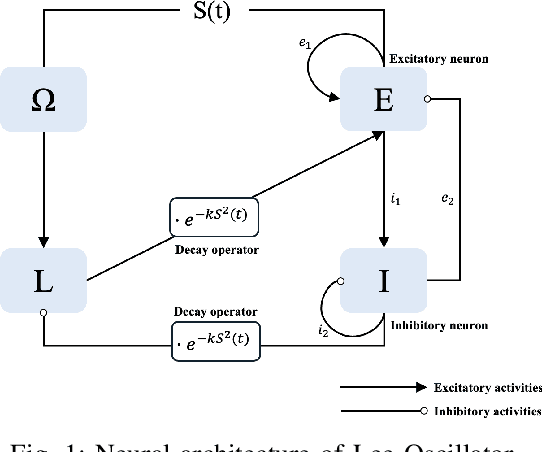
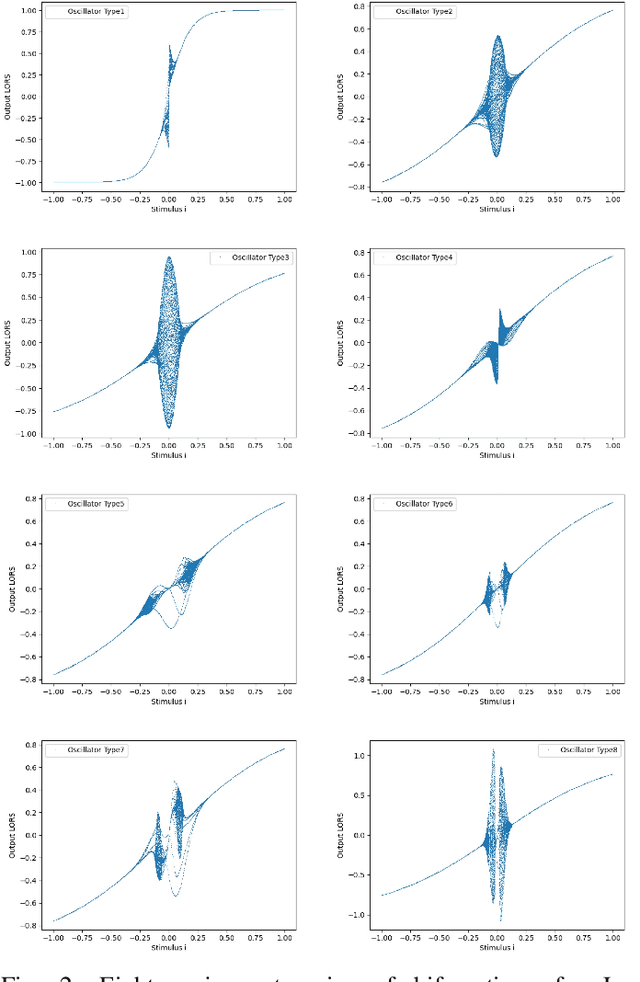
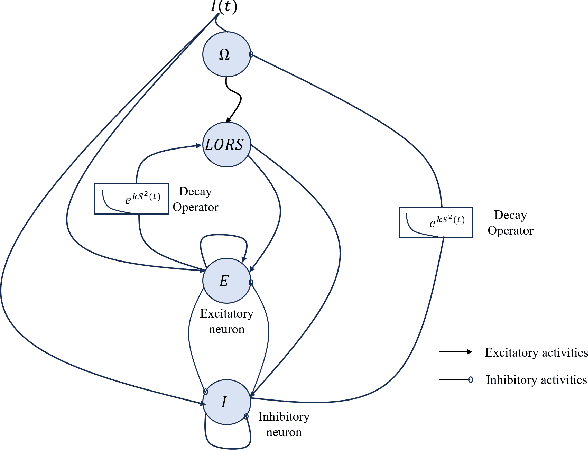
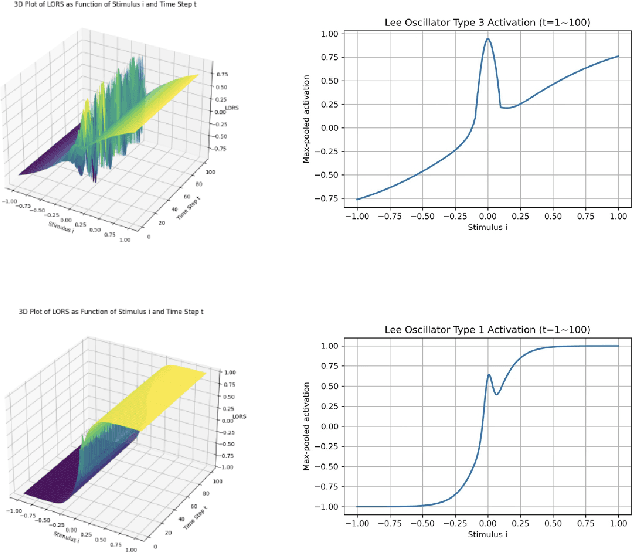
Accurate prediction of financial and electricity markets, especially under extreme conditions, remains a significant challenge due to their intrinsic nonlinearity, rapid fluctuations, and chaotic patterns. To address these limitations, we propose the Chaotic Oscillatory Transformer Network (COTN). COTN innovatively combines a Transformer architecture with a novel Lee Oscillator activation function, processed through Max-over-Time pooling and a lambda-gating mechanism. This design is specifically tailored to effectively capture chaotic dynamics and improve responsiveness during periods of heightened volatility, where conventional activation functions (e.g., ReLU, GELU) tend to saturate. Furthermore, COTN incorporates an Autoencoder Self-Regressive (ASR) module to detect and isolate abnormal market patterns, such as sudden price spikes or crashes, thereby preventing corruption of the core prediction process and enhancing robustness. Extensive experiments across electricity spot markets and financial markets demonstrate the practical applicability and resilience of COTN. Our approach outperforms state-of-the-art deep learning models like Informer by up to 17% and traditional statistical methods like GARCH by as much as 40%. These results underscore COTN's effectiveness in navigating real-world market uncertainty and complexity, offering a powerful tool for forecasting highly volatile systems under duress.
Leave No One Behind: Fairness-Aware Cross-Domain Recommender Systems for Non-Overlapping Users
Jul 23, 2025Cross-domain recommendation (CDR) methods predominantly leverage overlapping users to transfer knowledge from a source domain to a target domain. However, through empirical studies, we uncover a critical bias inherent in these approaches: while overlapping users experience significant enhancements in recommendation quality, non-overlapping users benefit minimally and even face performance degradation. This unfairness may erode user trust, and, consequently, negatively impact business engagement and revenue. To address this issue, we propose a novel solution that generates virtual source-domain users for non-overlapping target-domain users. Our method utilizes a dual attention mechanism to discern similarities between overlapping and non-overlapping users, thereby synthesizing realistic virtual user embeddings. We further introduce a limiter component that ensures the generated virtual users align with real-data distributions while preserving each user's unique characteristics. Notably, our method is model-agnostic and can be seamlessly integrated into any CDR model. Comprehensive experiments conducted on three public datasets with five CDR baselines demonstrate that our method effectively mitigates the CDR non-overlapping user bias, without loss of overall accuracy. Our code is publicly available at https://github.com/WeixinChen98/VUG.