 Add to Chrome
 Add to Firefox
 Add to Edge
V-Co: A Closer Look at Visual Representation Alignment via Co-Denoising
Mar 17, 2026
Pixel-space diffusion has recently re-emerged as a strong alternative to latent diffusion, enabling high-quality generation without pretrained autoencoders. However, standard pixel-space diffusion models receive relatively weak semantic supervision and are not explicitly designed to capture high-level visual structure. Recent representation-alignment methods (e.g., REPA) suggest that pretrained visual features can substantially improve diffusion training, and visual co-denoising has emerged as a promising direction for incorporating such features into the generative process. However, existing co-denoising approaches often entangle multiple design choices, making it unclear which design choices are truly essential. Therefore, we present V-Co, a systematic study of visual co-denoising in a unified JiT-based framework. This controlled setting allows us to isolate the ingredients that make visual co-denoising effective. Our study reveals four key ingredients for effective visual co-denoising. First, preserving feature-specific computation while enabling flexible cross-stream interaction motivates a fully dual-stream architecture. Second, effective classifier-free guidance (CFG) requires a structurally defined unconditional prediction. Third, stronger semantic supervision is best provided by a perceptual-drifting hybrid loss. Fourth, stable co-denoising further requires proper cross-stream calibration, which we realize through RMS-based feature rescaling. Together, these findings yield a simple recipe for visual co-denoising. Experiments on ImageNet-256 show that, at comparable model sizes, V-Co outperforms the underlying pixel-space diffusion baseline and strong prior pixel-diffusion methods while using fewer training epochs, offering practical guidance for future representation-aligned generative models.

OpenPort Protocol: A Security Governance Specification for AI Agent Tool Access
Feb 22, 2026AI agents increasingly require direct, structured access to application data and actions, but production deployments still struggle to express and verify the governance properties that matter in practice: least-privilege authorization, controlled write execution, predictable failure handling, abuse resistance, and auditability. This paper introduces OpenPort Protocol (OPP), a governance-first specification for exposing application tools through a secure server-side gateway that is model- and runtime-neutral and can bind to existing tool ecosystems. OpenPort defines authorization-dependent discovery, stable response envelopes with machine-actionable \texttt{agent.*} reason codes, and an authorization model combining integration credentials, scoped permissions, and ABAC-style policy constraints. For write operations, OpenPort specifies a risk-gated lifecycle that defaults to draft creation and human review, supports time-bounded auto-execution under explicit policy, and enforces high-risk safeguards including preflight impact binding and idempotency. To address time-of-check/time-of-use drift in delayed approval flows, OpenPort also specifies an optional State Witness profile that revalidates execution-time preconditions and fails closed on state mismatch. Operationally, the protocol requires admission control (rate limits/quotas) with stable 429 semantics and structured audit events across allow/deny/fail paths so that client recovery and incident analysis are deterministic. We present a reference runtime and an executable governance toolchain (layered conformance profiles, negative security tests, fuzz/abuse regression, and release-gate scans) and evaluate the core profile at a pinned release tag using artifact-based, externally reproducible validation.
UniT: Unified Multimodal Chain-of-Thought Test-time Scaling
Feb 12, 2026Unified models can handle both multimodal understanding and generation within a single architecture, yet they typically operate in a single pass without iteratively refining their outputs. Many multimodal tasks, especially those involving complex spatial compositions, multiple interacting objects, or evolving instructions, require decomposing instructions, verifying intermediate results, and making iterative corrections. While test-time scaling (TTS) has demonstrated that allocating additional inference compute for iterative reasoning substantially improves language model performance, extending this paradigm to unified multimodal models remains an open challenge. We introduce UniT, a framework for multimodal chain-of-thought test-time scaling that enables a single unified model to reason, verify, and refine across multiple rounds. UniT combines agentic data synthesis, unified model training, and flexible test-time inference to elicit cognitive behaviors including verification, subgoal decomposition, and content memory. Our key findings are: (1) unified models trained on short reasoning trajectories generalize to longer inference chains at test time; (2) sequential chain-of-thought reasoning provides a more scalable and compute-efficient TTS strategy than parallel sampling; (3) training on generation and editing trajectories improves out-of-distribution visual reasoning. These results establish multimodal test-time scaling as an effective paradigm for advancing both generation and understanding in unified models.
Real-Time Trend Prediction via Continually-Aligned LLM Query Generation
Jan 24, 2026Trending news detection in low-traffic search environments faces a fundamental cold-start problem, where a lack of query volume prevents systems from identifying emerging or long-tail trends. Existing methods relying on keyword frequency or query spikes are inherently slow and ineffective in these sparse settings, lagging behind real-world shifts in attention. We introduce RTTP, a novel Real-Time Trending Prediction framework that generates search queries directly from news content instead of waiting for users to issue them. RTTP leverages a continual learning LLM (CL-LLM) that converts posts into search-style queries and scores them using engagement strength + creator authority, enabling early trend surfacing before search volume forms. To ensure adaptation without degrading reasoning, we propose Mix-Policy DPO, a new preference-based continual learning approach that combines on-policy stability with off-policy novelty to mitigate catastrophic forgetting during model upgrades. Deployed at production scale on Facebook and Meta AI products, RTTP delivers +91.4% improvement in tail-trend detection precision@500 and +19% query generation accuracy over industry baselines, while sustaining stable performance after multi-week online training. This work demonstrates that LLM-generated synthetic search signals, when aligned and continually updated, unlock timely trend understanding in low-traffic search environments.
E2Former-V2: On-the-Fly Equivariant Attention with Linear Activation Memory
Jan 23, 2026Equivariant Graph Neural Networks (EGNNs) have become a widely used approach for modeling 3D atomistic systems. However, mainstream architectures face critical scalability bottlenecks due to the explicit construction of geometric features or dense tensor products on \textit{every} edge. To overcome this, we introduce \textbf{E2Former-V2}, a scalable architecture that integrates algebraic sparsity with hardware-aware execution. We first propose \textbf{E}quivariant \textbf{A}xis-\textbf{A}ligned \textbf{S}parsification (EAAS). EAAS builds on Wigner-$6j$ convolution by exploiting an $\mathrm{SO}(3) \rightarrow \mathrm{SO}(2)$ change of basis to transform computationally expensive dense tensor contractions into efficient, sparse parity re-indexing operations. Building on this representation, we introduce \textbf{On-the-Fly Equivariant Attention}, a fully node-centric mechanism implemented via a custom fused Triton kernel. By eliminating materialized edge tensors and maximizing SRAM utilization, our kernel achieves a \textbf{20$\times$ improvement in TFLOPS} compared to standard implementations. Extensive experiments on the SPICE and OMol25 datasets demonstrate that E2Former-V2 maintains comparable predictive performance while notably accelerating inference. This work demonstrates that large equivariant transformers can be trained efficiently using widely accessible GPU platforms. The code is avalible at https://github.com/IQuestLab/UBio-MolFM/tree/e2formerv2.
Scalable Machine Learning Force Fields for Macromolecular Systems Through Long-Range Aware Message Passing
Jan 07, 2026Machine learning force fields (MLFFs) have revolutionized molecular simulations by providing quantum mechanical accuracy at the speed of molecular mechanical computations. However, a fundamental reliance of these models on fixed-cutoff architectures limits their applicability to macromolecular systems where long-range interactions dominate. We demonstrate that this locality constraint causes force prediction errors to scale monotonically with system size, revealing a critical architectural bottleneck. To overcome this, we establish the systematically designed MolLR25 ({Mol}ecules with {L}ong-{R}ange effect) benchmark up to 1200 atoms, generated using high-fidelity DFT, and introduce E2Former-LSR, an equivariant transformer that explicitly integrates long-range attention blocks. E2Former-LSR exhibits stable error scaling, achieves superior fidelity in capturing non-covalent decay, and maintains precision on complex protein conformations. Crucially, its efficient design provides up to 30% speedup compared to purely local models. This work validates the necessity of non-local architectures for generalizable MLFFs, enabling high-fidelity molecular dynamics for large-scale chemical and biological systems.
PhyGDPO: Physics-Aware Groupwise Direct Preference Optimization for Physically Consistent Text-to-Video Generation
Dec 31, 2025Recent advances in text-to-video (T2V) generation have achieved good visual quality, yet synthesizing videos that faithfully follow physical laws remains an open challenge. Existing methods mainly based on graphics or prompt extension struggle to generalize beyond simple simulated environments or learn implicit physical reasoning. The scarcity of training data with rich physics interactions and phenomena is also a problem. In this paper, we first introduce a Physics-Augmented video data construction Pipeline, PhyAugPipe, that leverages a vision-language model (VLM) with chain-of-thought reasoning to collect a large-scale training dataset, PhyVidGen-135K. Then we formulate a principled Physics-aware Groupwise Direct Preference Optimization, PhyGDPO, framework that builds upon the groupwise Plackett-Luce probabilistic model to capture holistic preferences beyond pairwise comparisons. In PhyGDPO, we design a Physics-Guided Rewarding (PGR) scheme that embeds VLM-based physics rewards to steer optimization toward physical consistency. We also propose a LoRA-Switch Reference (LoRA-SR) scheme that eliminates memory-heavy reference duplication for efficient training. Experiments show that our method significantly outperforms state-of-the-art open-source methods on PhyGenBench and VideoPhy2. Please check our project page at https://caiyuanhao1998.github.io/project/PhyGDPO for more video results. Our code, models, and data will be released at https://github.com/caiyuanhao1998/Open-PhyGDPO
Exploring MLLM-Diffusion Information Transfer with MetaCanvas
Dec 12, 2025Multimodal learning has rapidly advanced visual understanding, largely via multimodal large language models (MLLMs) that use powerful LLMs as cognitive cores. In visual generation, however, these powerful core models are typically reduced to global text encoders for diffusion models, leaving most of their reasoning and planning ability unused. This creates a gap: current multimodal LLMs can parse complex layouts, attributes, and knowledge-intensive scenes, yet struggle to generate images or videos with equally precise and structured control. We propose MetaCanvas, a lightweight framework that lets MLLMs reason and plan directly in spatial and spatiotemporal latent spaces and interface tightly with diffusion generators. We empirically implement MetaCanvas on three different diffusion backbones and evaluate it across six tasks, including text-to-image generation, text/image-to-video generation, image/video editing, and in-context video generation, each requiring precise layouts, robust attribute binding, and reasoning-intensive control. MetaCanvas consistently outperforms global-conditioning baselines, suggesting that treating MLLMs as latent-space planners is a promising direction for narrowing the gap between multimodal understanding and generation.
Classifier Language Models: Unifying Sparse Finetuning and Adaptive Tokenization for Specialized Classification Tasks
Aug 12, 2025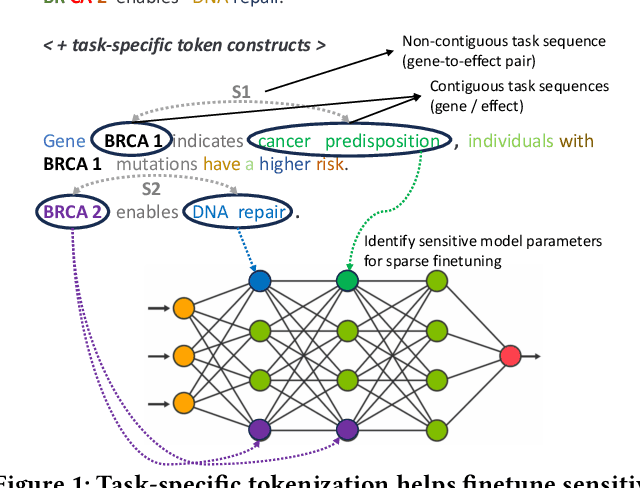
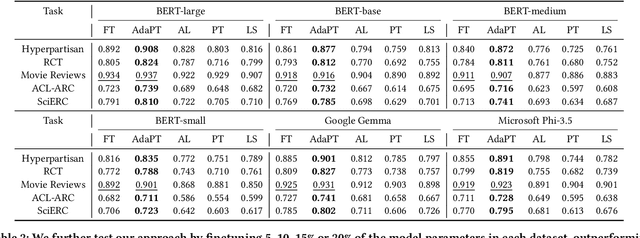
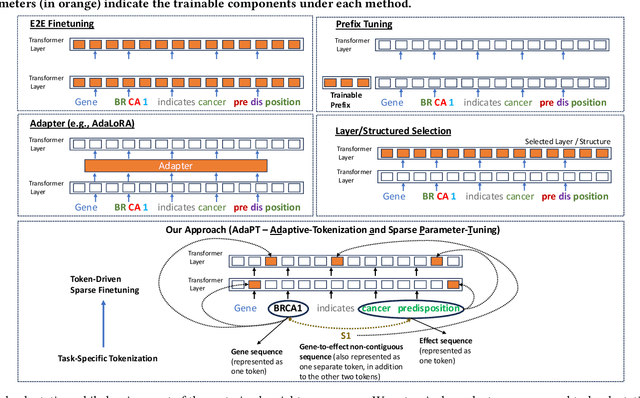
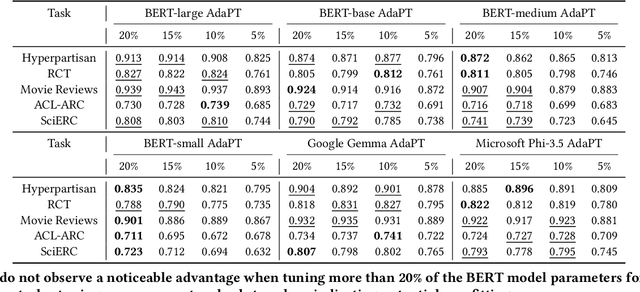
Semantic text classification requires the understanding of the contextual significance of specific tokens rather than surface-level patterns or keywords (as in rule-based or statistical text classification), making large language models (LLMs) well-suited for this task. However, semantic classification applications in industry, like customer intent detection or semantic role labeling, tend to be highly specialized. They require annotation by domain experts in contrast to general-purpose corpora for pretraining. Further, they typically require high inference throughputs which limits the model size from latency and cost perspectives. Thus, for a range of specialized classification tasks, the preferred solution is to develop customized classifiers by finetuning smaller language models (e.g., mini-encoders, small language models). In this work, we develop a token-driven sparse finetuning strategy to adapt small language models to specialized classification tasks. We identify and finetune a small sensitive subset of model parameters by leveraging task-specific token constructs in the finetuning dataset, while leaving most of the pretrained weights unchanged. Unlike adapter approaches such as low rank adaptation (LoRA), we do not introduce additional parameters to the model. Our approach identifies highly relevant semantic tokens (case study in the Appendix) and outperforms end-to-end finetuning, LoRA, layer selection, and prefix tuning on five diverse semantic classification tasks. We achieve greater stability and half the training costs vs. end-to-end finetuning.
\underline{E2}Former: A Linear-time \underline{E}fficient and \underline{E}quivariant Trans\underline{former} for Scalable Molecular Modeling
Jan 31, 2025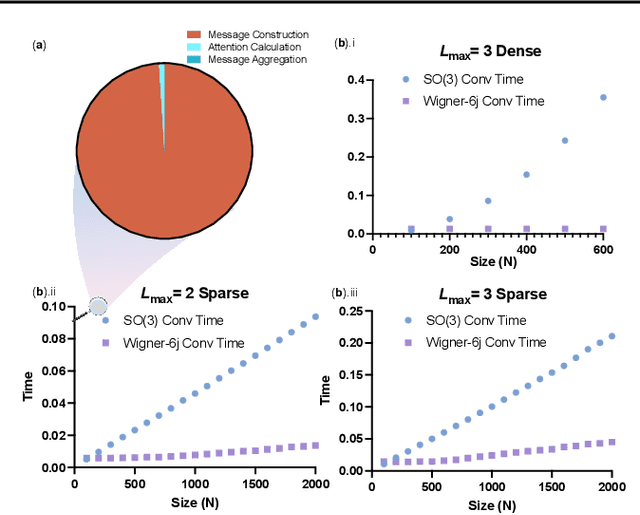

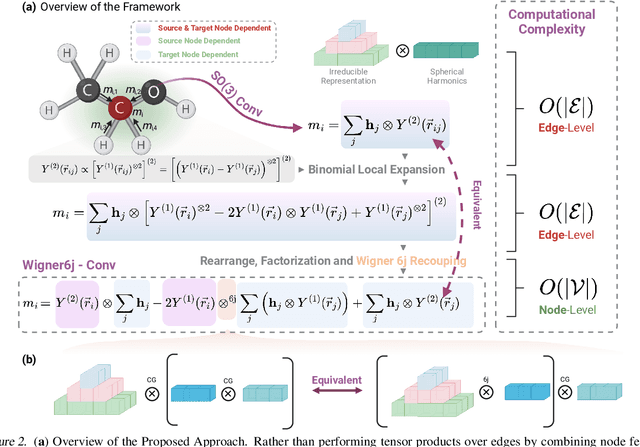

Equivariant Graph Neural Networks (EGNNs) have demonstrated significant success in modeling microscale systems, including those in chemistry, biology and materials science. However, EGNNs face substantial computational challenges due to the high cost of constructing edge features via spherical tensor products, making them impractical for large-scale systems. To address this limitation, we introduce E2Former, an equivariant and efficient transformer architecture that incorporates the Wigner $6j$ convolution (Wigner $6j$ Conv). By shifting the computational burden from edges to nodes, the Wigner $6j$ Conv reduces the complexity from $O(|\mathcal{E}|)$ to $ O(| \mathcal{V}|)$ while preserving both the model's expressive power and rotational equivariance. We show that this approach achieves a 7x-30x speedup compared to conventional $\mathrm{SO}(3)$ convolutions. Furthermore, our empirical results demonstrate that the derived E2Former mitigates the computational challenges of existing approaches without compromising the ability to capture detailed geometric information. This development could suggest a promising direction for scalable and efficient molecular modeling.