 Add to Chrome
 Add to Firefox
 Add to Edge
InSight-doc: Agentic Visual Perception for Long-Document Understanding
Aug 11, 2026
Long-document understanding often requires reasoning over many visually rich pages, making inference costly and prone to context rot. In this work, we propose InSight-doc, an agentic visual perception framework that treats visual resolution as an adaptive reasoning-time resource. InSight-doc starts from low resolution and selectively zooms into high-resolution regions for finer evidence, without relying on any external retriever. To train such an agent, we construct an active-perception corpus of 17.9K high-quality SFT examples with region-level zoom-in trajectories, accompanied by 19.2K hard RL examples. Through SFT+RL, InSight-doc-8B improves the baseline by 4.3--16.4 accuracy points over document VQA benchmarks. On long documents, it reduces hallucination by more than 40% and inference latency by 41%--68% while maintaining an accuracy lead. Our code, datasets, and model are released at https://github.com/m-Just/InSight-doc .

AsySplat: Efficient Asymmetric 3D Gaussian Splatting for Long-Sequence Scene Modeling
Jul 13, 2026Recent generalizable 3D Gaussian Splatting models have advanced long-sequence novel view synthesis (NVS), but at the cost of substantial redundant computation. We identify that the redundancy can be mitigated based on two observations: (i) high-precision geometry is not strictly required for high-quality NVS; (ii) appearance learning is generally easier than geometry recovery. Motivated by these insights, we propose an asymmetric architecture that decouples geometry and appearance modeling. The geometry branch processes coarse-grained tokens with most of the parameters for multi-view reconstruction, while the appearance branch operates on fine-grained tokens to capture details using significantly fewer parameters. The two branches interact through bilateral connections, enabling mutual guidance for their respective tasks. This task-aware asymmetry reduces the computational redundancy and allocates the computation more judiciously, thereby increasing parameter efficiency and enabling smaller models to achieve strong performance. On 32-view 960P inputs, our model matches optimization-based methods while delivering nearly 800x speedup, and surpasses the zero-shot performance of state-of-the-art generalizable models with markedly fewer parameters and reduced training/inference overhead, achieving an overall efficiency improvement.
StainFlow: Entity-Stain Tracking and Evidence Linking for Process Rewards in GUI Agents
Jun 05, 2026Reinforcement Learning (RL) has become a promising approach for improving GUI Agents in long-horizon, stochastic digital environments, but trajectory-level success feedback is too sparse to provide reliable credit assignment for intermediate exploration steps. To mitigate this issue, recent studies introduce Process Reward Models (PRMs), which provide finer-grained training feedback through global milestone verification or local step-level evaluation. However, these methods still suffer from two level-specific limitations: global milestone decomposition is subjective and singular, making it difficult to accommodate the multiple valid execution paths in real GUI tasks, while fixed local judging windows may miss long-range key evidence or dilute the decision signal with irrelevant frames. Inspired by stain-tracing mechanisms in network flow analysis, we propose StainFlow, an entity-stain-flow process reward model for GUI Agents. To reduce the subjectivity of global partitioning, we introduce the Global Entity Stain Tracking module, which extracts visually verifiable task entities and tracks how their stain concentrations and states evolve along the trajectory, allowing task phases to be objectively separated by changes in the entity evidence flow. To improve the accuracy of local verification, we introduce the Local Stain Evidence Linking module. Centered on the triggering entities of each candidate key node, it retrieves relevant steps based on their stain concentrations and state changes, and dynamically constructs high-density evidence windows for verifying true key nodes. Extensive experiments on AndroidWorld and OGRBench show that StainFlow relatively improves online RL success by 3.2% and trajectory completion judgment accuracy by 1.8%.
MIRAGE: Mobile Agents with Implicit Reasoning and Generative World Models
Jun 03, 2026Mobile agents are increasingly expected to operate everyday applications from screenshots and language goals, where reliable control requires reasoning over screen affordances, multi-step navigation, and future state changes. However, many agents externalize this computation as long textual chains of thought, which slows interaction, increases supervision cost, and complicates deployment. We introduce MIRAGE, a framework that learns continuous latent reasoning representations from visible textual reasoning traces. MIRAGE transfers explicit reasoning into compact hidden states, enabling the agent to reason internally without decoding long rationales. It also incorporates a generative world-model objective: latent reasoning vectors are aligned with future screenshots, encouraging the agent to anticipate upcoming interface states before acting. This turns hidden computation into both a compressed thought representation and a forward-looking model of environment dynamics. At inference time, MIRAGE reasons in continuous latent space, reducing token generation while improving execution efficiency. On AndroidWorld, MIRAGE matches explicit chain-of-thought supervised fine-tuning in the 4B ablation with a 3-5x lower decoded-token budget and improves a comparable instruction-tuned baseline by 10.2 points; on AndroidControl, it improves action grounding while generating over 75% fewer tokens.
Speech-Omni-Lite: Portable Speech Interfaces for Vision-Language Models
Mar 10, 2026While large-scale omni-models have demonstrated impressive capabilities across various modalities, their strong performance heavily relies on massive multimodal data and incurs substantial computational costs. This work introduces Speech-Omni-Lite, a cost-efficient framework for extending pre-trained Visual-Language (VL) backbones with speech understanding and generation capabilities, while fully preserving the backbones' vision-language performance. Specifically, the VL backbone is equipped with two lightweight, trainable plug-and-play modules, a speech projector and a speech token generator, while keeping the VL backbone fully frozen. To mitigate the scarcity of spoken QA corpora, a low-cost data construction strategy is proposed to generate Question-Text Answer-Text-Speech (QTATS) data from existing ASR speech-text pairs, facilitating effective speech generation training. Experimental results show that, even with only thousands of hours of speech training data, Speech-Omni-Lite achieves excellent spoken QA performance, which is comparable to omni-models trained on millions of hours of speech data. Furthermore, the learned speech modules exhibit strong transferability across VL backbones.
VGGT-Det: Mining VGGT Internal Priors for Sensor-Geometry-Free Multi-View Indoor 3D Object Detection
Mar 01, 2026Current multi-view indoor 3D object detectors rely on sensor geometry that is costly to obtain (i.e., precisely calibrated multi-view camera poses) to fuse multi-view information into a global scene representation, limiting deployment in real-world scenes. We target a more practical setting: Sensor-Geometry-Free (SG-Free) multi-view indoor 3D object detection, where there are no sensor-provided geometric inputs (multi-view poses or depth). Recent Visual Geometry Grounded Transformer (VGGT) shows that strong 3D cues can be inferred directly from images. Building on this insight, we present VGGT-Det, the first framework tailored for SG-Free multi-view indoor 3D object detection. Rather than merely consuming VGGT predictions, our method integrates VGGT encoder into a transformer-based pipeline. To effectively leverage both the semantic and geometric priors from inside VGGT, we introduce two novel key components: (i) Attention-Guided Query Generation (AG): exploits VGGT attention maps as semantic priors to initialize object queries, improving localization by focusing on object regions while preserving global spatial structure; (ii) Query-Driven Feature Aggregation (QD): a learnable See-Query interacts with object queries to 'see' what they need, and then dynamically aggregates multi-level geometric features across VGGT layers that progressively lift 2D features into 3D. Experiments show that VGGT-Det significantly surpasses the best-performing method in the SG-Free setting by 4.4 and 8.6 mAP@0.25 on ScanNet and ARKitScenes, respectively. Ablation study shows that VGGT's internally learned semantic and geometric priors can be effectively leveraged by our AG and QD.
AEQ-Bench: Measuring Empathy of Omni-Modal Large Models
Jan 15, 2026While the automatic evaluation of omni-modal large models (OLMs) is essential, assessing empathy remains a significant challenge due to its inherent affectivity. To investigate this challenge, we introduce AEQ-Bench (Audio Empathy Quotient Benchmark), a novel benchmark to systematically assess two core empathetic capabilities of OLMs: (i) generating empathetic responses by comprehending affective cues from multi-modal inputs (audio + text), and (ii) judging the empathy of audio responses without relying on text transcription. Compared to existing benchmarks, AEQ-Bench incorporates two novel settings that vary in context specificity and speech tone. Comprehensive assessment across linguistic and paralinguistic metrics reveals that (1) OLMs trained with audio output capabilities generally outperformed models with text-only outputs, and (2) while OLMs align with human judgments for coarse-grained quality assessment, they remain unreliable for evaluating fine-grained paralinguistic expressiveness.
InSight-o3: Empowering Multimodal Foundation Models with Generalized Visual Search
Dec 21, 2025The ability for AI agents to "think with images" requires a sophisticated blend of reasoning and perception. However, current open multimodal agents still largely fall short on the reasoning aspect crucial for real-world tasks like analyzing documents with dense charts/diagrams and navigating maps. To address this gap, we introduce O3-Bench, a new benchmark designed to evaluate multimodal reasoning with interleaved attention to visual details. O3-Bench features challenging problems that require agents to piece together subtle visual information from distinct image areas through multi-step reasoning. The problems are highly challenging even for frontier systems like OpenAI o3, which only obtains 40.8% accuracy on O3-Bench. To make progress, we propose InSight-o3, a multi-agent framework consisting of a visual reasoning agent (vReasoner) and a visual search agent (vSearcher) for which we introduce the task of generalized visual search -- locating relational, fuzzy, or conceptual regions described in free-form language, beyond just simple objects or figures in natural images. We then present a multimodal LLM purpose-trained for this task via reinforcement learning. As a plug-and-play agent, our vSearcher empowers frontier multimodal models (as vReasoners), significantly improving their performance on a wide range of benchmarks. This marks a concrete step towards powerful o3-like open systems. Our code and dataset can be found at https://github.com/m-Just/InSight-o3 .
Developing a Grounded View of AI
Nov 18, 2025As a capability coming from computation, how does AI differ fundamentally from the capabilities delivered by rule-based software program? The paper examines the behavior of artificial intelligence (AI) from engineering points of view to clarify its nature and limits. The paper argues that the rationality underlying humanity's impulse to pursue, articulate, and adhere to rules deserves to be valued and preserved. Identifying where rule-based practical rationality ends is the beginning of making it aware until action. Although the rules of AI behaviors are still hidden or only weakly observable, the paper has proposed a methodology to make a sense of discrimination possible and practical to identify the distinctions of the behavior of AI models with three types of decisions. It is a prerequisite for human responsibilities with alternative possibilities, considering how and when to use AI. It would be a solid start for people to ensure AI system soundness for the well-being of humans, society, and the environment.
ECCV 2024 W-CODA: 1st Workshop on Multimodal Perception and Comprehension of Corner Cases in Autonomous Driving
Jul 02, 2025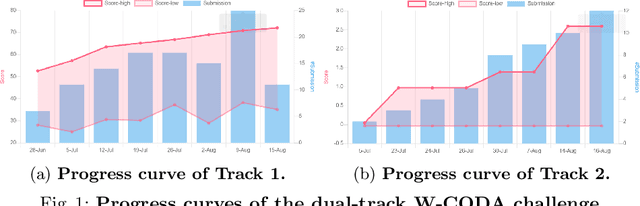
In this paper, we present details of the 1st W-CODA workshop, held in conjunction with the ECCV 2024. W-CODA aims to explore next-generation solutions for autonomous driving corner cases, empowered by state-of-the-art multimodal perception and comprehension techniques. 5 Speakers from both academia and industry are invited to share their latest progress and opinions. We collect research papers and hold a dual-track challenge, including both corner case scene understanding and generation. As the pioneering effort, we will continuously bridge the gap between frontier autonomous driving techniques and fully intelligent, reliable self-driving agents robust towards corner cases.