 Add to Chrome
 Add to Firefox
 Add to Edge
Intern-S2-Preview: Scientific Agentic Foundation Model
Aug 13, 2026
Scientific discovery increasingly requires AI systems that can reason over scientific evidence of heterogeneous modalities, interact with scientific tools and environments, and sustain progress across long task horizons. We present Intern-S2-Preview, a series of scientific agentic foundation models designed to support multimodal scientific understanding, reasoning, generation, and long-horizon tasks. The training pipeline begins with scientific multimodal pre-training over rendered scientific documents, interleaved image-text data, and diverse scientific corpora. Starting from the pretrained checkpoint, we apply a unified post-training pipeline consisting of supervised fine-tuning, scalable multi-task reinforcement learning (RL), black- and white-box agentic RL, and on-policy distillation. This pipeline is supported by practical techniques that improve rollout and training stability and efficiency, including partial rollout with off-policy correction, adaptive length regularization, online speculative decoding, robust multi-task optimization, and trace-aware experience assembly for agentic tasks. At the architecture level, Intern-S2-Preview-397B extends time series modelling from efficient long-sequence understanding to numerical forecasting, while Memory Decoder is studied as a separate memory-augmented path for rapid scientific specialization without modifying the frozen 397B backbone. Evaluations across scientific, multimodal, agentic, and general-purpose benchmarks show that Intern-S2-Preview-397B achieves competitive or leading results in multiple settings. The time series modules improve scientific signal understanding and forecasting on SciTS, while the separate Intern-MemDec-4B extension improves the Biology-Instructions average score from 56.92 to 60.32 without modifying the frozen 397B backbone.

SLAMFormer-$\infty$: Infinite SLAM Transformer for Unbounded Frontend and Backend Processing
Aug 04, 2026We introduce the Infinite SLAM Transformer (SLAMFormer-$\infty$), the first geometric transformer capable of supporting both long-range frontend and backend processing without an explicit distance bound. Instead of relying on a first-frame-anchored formulation, SLAMFormer-$\infty$ employs memory conditions to define flexible coordinate systems and scales for input frames, enabling more expressive structural conditioning. Built upon this formulation, the frontend preserves efficient local computation, while the backend jointly optimizes long-range trajectories and scene geometry in a globally consistent manner. Experimental results demonstrate that SLAMFormer-$\infty$ achieves superior or highly competitive performance in both trajectory estimation and scene reconstruction across large-scale datasets. Notably, SLAMFormer-$\infty$ generalizes to extremely long trajectories, successfully operating on sequences exceeding $17\mathrm{km}$.
Neural Architecture Distributions: A New Paradigm for Stochastic Segmentation
Jun 19, 2026Stochastic segmentation seeks to represent multiple plausible masks for a single image, which is essential in safety- and quality-critical applications such as medical imaging or building defect inspection. Most existing methods introduce stochasticity by injecting continuous latent variables or by iterative denoising trajectories, whose stochastic sources are difficult to search or audit directly. We propose architecture distributions as a new stochastic source for segmentation: instead of sampling a latent variable or noise, we sample a discrete architecture from a learned distribution over operator choices at multiple searchable positions in a segmentation backbone. Each sampled architecture yields one mask through the selected active path, so inference depends on the executed subnet rather than the complete candidate bank. This approach also supports architectural provenance, since each output corresponds to a specific architecture configuration. To reduce collapse toward averaged masks, we train with set-level supervision by matching a set of architecture-sampled predictions to the annotation set using an IoU-based energy-distance surrogate. We further construct the candidate bank with evolutionary search, making the support of the stochastic source optimizable before distribution learning. The proposed method achieves state-of-the-art distribution matching and hypothesis coverage on LIDC-IDRI, and remains effective on two extension tasks. To the best of our knowledge, this is the first work to formulate stochastic segmentation as learning an architecture distribution and realizing output diversity through architecture sampling.
Avatar V: Scaling Video-Reference Avatar Video Generation
Jun 11, 2026Generating avatar videos that are not merely visually similar to a target individual but behaviorally recognizable, faithfully reproducing their talking rhythm, gestural tendencies, and expression dynamics, remains an open challenge. Existing methods predominantly condition on single static images, which provide insufficient identity information and cannot capture dynamic motion traits, while standard pixel-level objectives underserve the perceptually critical facial regions that determine avatar fidelity. We present Avatar V, a production-scale framework that addresses these limitations through video-reference-conditioned identity modeling. Rather than compressing identity into fixed-size embeddings, the model conditions directly on the full token sequence of a reference video, learning to reproduce both static identity attributes (facial geometry, skin texture) and dynamic behavioral patterns (talking rhythm, micro-expressions) through attention over the reference context. We introduce Sparse Reference Attention, an asymmetric mechanism achieving linear-complexity conditioning on arbitrarily long references; a motion representation stream enabling closed-loop talking style transfer; and an identity-aware super-resolution refiner inheriting the full reference conditioning. These are supported by a data engine curating 100M+ training clips from 50M raw videos, and a five-stage training pipeline with flow matching pre-training, personality fine-tuning, two-phase distillation (>10x acceleration), and RLHF alignment, deployed across thousands of GPUs. Avatar V generates 1080p videos of unlimited duration, achieving state-of-the-art identity preservation, lip synchronization, and generation quality on our cross-scene benchmark, consistently outperforming leading systems including Seedance 2.0, Kling O3 Pro, Veo 3.1, and OmniHuman 1.5 in both automated metrics and human evaluation.
Intern-S1-Pro: Scientific Multimodal Foundation Model at Trillion Scale
Mar 26, 2026We introduce Intern-S1-Pro, the first one-trillion-parameter scientific multimodal foundation model. Scaling to this unprecedented size, the model delivers a comprehensive enhancement across both general and scientific domains. Beyond stronger reasoning and image-text understanding capabilities, its intelligence is augmented with advanced agent capabilities. Simultaneously, its scientific expertise has been vastly expanded to master over 100 specialized tasks across critical science fields, including chemistry, materials, life sciences, and earth sciences. Achieving this massive scale is made possible by the robust infrastructure support of XTuner and LMDeploy, which facilitates highly efficient Reinforcement Learning (RL) training at the 1-trillion parameter level while ensuring strict precision consistency between training and inference. By seamlessly integrating these advancements, Intern-S1-Pro further fortifies the fusion of general and specialized intelligence, working as a Specializable Generalist, demonstrating its position in the top tier of open-source models for general capabilities, while outperforming proprietary models in the depth of specialized scientific tasks.
Mousse: Rectifying the Geometry of Muon with Curvature-Aware Preconditioning
Mar 10, 2026Recent advances in spectral optimization, notably Muon, have demonstrated that constraining update steps to the Stiefel manifold can significantly accelerate training and improve generalization. However, Muon implicitly assumes an isotropic optimization landscape, enforcing a uniform spectral update norm across all eigen-directions. We argue that this "egalitarian" constraint is suboptimal for Deep Neural Networks, where the curvature spectrum is known to be highly heavy-tailed and ill-conditioned. In such landscapes, Muon risks amplifying instabilities in high-curvature directions while limiting necessary progress in flat directions. In this work, we propose \textbf{Mousse} (\textbf{M}uon \textbf{O}ptimization \textbf{U}tilizing \textbf{S}hampoo's \textbf{S}tructural \textbf{E}stimation), a novel optimizer that reconciles the structural stability of spectral methods with the geometric adaptivity of second-order preconditioning. Instead of applying Newton-Schulz orthogonalization directly to the momentum matrix, Mousse operates in a whitened coordinate system induced by Kronecker-factored statistics (derived from Shampoo). Mathematically, we formulate Mousse as the solution to a spectral steepest descent problem constrained by an anisotropic trust region, where the optimal update is derived via the polar decomposition of the whitened gradient. Empirical results across language models ranging from 160M to 800M parameters demonstrate that Mousse consistently outperforms Muon, achieving around $\sim$12\% reduction in training steps with negligible computational overhead.
How to Set the Learning Rate for Large-Scale Pre-training?
Jan 08, 2026Optimal configuration of the learning rate (LR) is a fundamental yet formidable challenge in large-scale pre-training. Given the stringent trade-off between training costs and model performance, the pivotal question is whether the optimal LR can be accurately extrapolated from low-cost experiments. In this paper, we formalize this investigation into two distinct research paradigms: Fitting and Transfer. Within the Fitting Paradigm, we innovatively introduce a Scaling Law for search factor, effectively reducing the search complexity from O(n^3) to O(n*C_D*C_η) via predictive modeling. Within the Transfer Paradigm, we extend the principles of $μ$Transfer to the Mixture of Experts (MoE) architecture, broadening its applicability to encompass model depth, weight decay, and token horizons. By pushing the boundaries of existing hyperparameter research in terms of scale, we conduct a comprehensive comparison between these two paradigms. Our empirical results challenge the scalability of the widely adopted $μ$ Transfer in large-scale pre-training scenarios. Furthermore, we provide a rigorous analysis through the dual lenses of training stability and feature learning to elucidate the underlying reasons why module-wise parameter tuning underperforms in large-scale settings. This work offers systematic practical guidelines and a fresh theoretical perspective for optimizing industrial-level pre-training.
How to Set the Batch Size for Large-Scale Pre-training?
Jan 08, 2026The concept of Critical Batch Size, as pioneered by OpenAI, has long served as a foundational principle for large-scale pre-training. However, with the paradigm shift towards the Warmup-Stable-Decay (WSD) learning rate scheduler, we observe that the original theoretical framework and its underlying mechanisms fail to align with new pre-training dynamics. To bridge this gap between theory and practice, this paper derives a revised E(S) relationship tailored for WSD scheduler, characterizing the trade-off between training data consumption E and steps S during pre-training. Our theoretical analysis reveals two fundamental properties of WSD-based pre-training: 1) B_min, the minimum batch size threshold required to achieve a target loss, and 2) B_opt, the optimal batch size that maximizes data efficiency by minimizing total tokens. Building upon these properties, we propose a dynamic Batch Size Scheduler. Extensive experiments demonstrate that our revised formula precisely captures the dynamics of large-scale pre-training, and the resulting scheduling strategy significantly enhances both training efficiency and final model quality.
Step-GUI Technical Report
Dec 19, 2025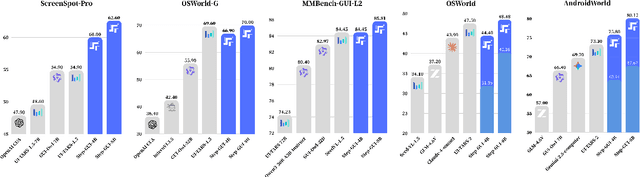
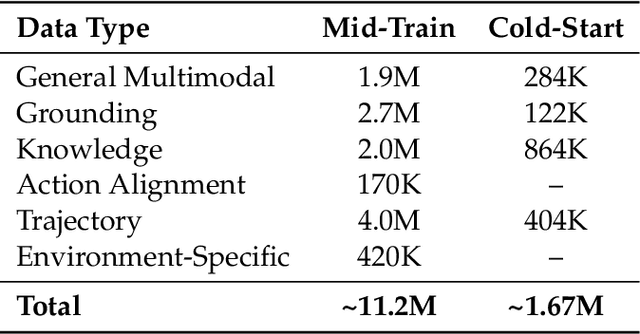
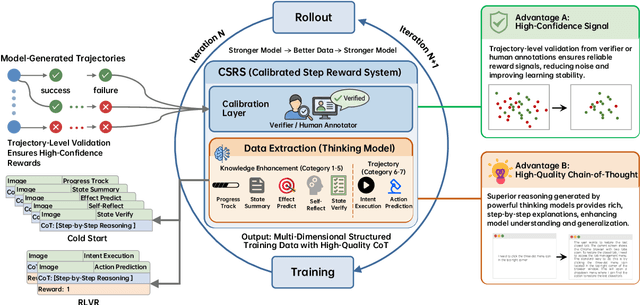
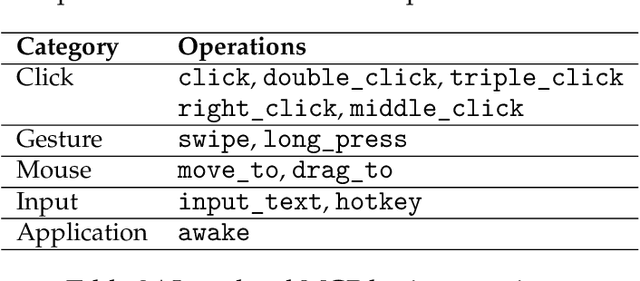
Recent advances in multimodal large language models unlock unprecedented opportunities for GUI automation. However, a fundamental challenge remains: how to efficiently acquire high-quality training data while maintaining annotation reliability? We introduce a self-evolving training pipeline powered by the Calibrated Step Reward System, which converts model-generated trajectories into reliable training signals through trajectory-level calibration, achieving >90% annotation accuracy with 10-100x lower cost. Leveraging this pipeline, we introduce Step-GUI, a family of models (4B/8B) that achieves state-of-the-art GUI performance (8B: 80.2% AndroidWorld, 48.5% OSWorld, 62.6% ScreenShot-Pro) while maintaining robust general capabilities. As GUI agent capabilities improve, practical deployment demands standardized interfaces across heterogeneous devices while protecting user privacy. To this end, we propose GUI-MCP, the first Model Context Protocol for GUI automation with hierarchical architecture that combines low-level atomic operations and high-level task delegation to local specialist models, enabling high-privacy execution where sensitive data stays on-device. Finally, to assess whether agents can handle authentic everyday usage, we introduce AndroidDaily, a benchmark grounded in real-world mobile usage patterns with 3146 static actions and 235 end-to-end tasks across high-frequency daily scenarios (8B: static 89.91%, end-to-end 52.50%). Our work advances the development of practical GUI agents and demonstrates strong potential for real-world deployment in everyday digital interactions.
NTIRE 2025 Challenge on Day and Night Raindrop Removal for Dual-Focused Images: Methods and Results
Apr 19, 2025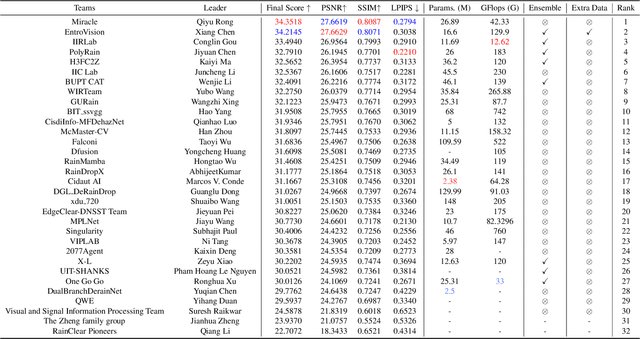
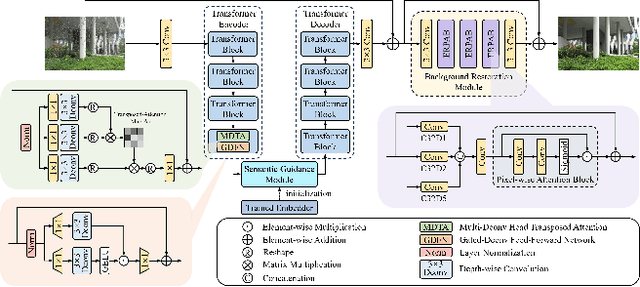
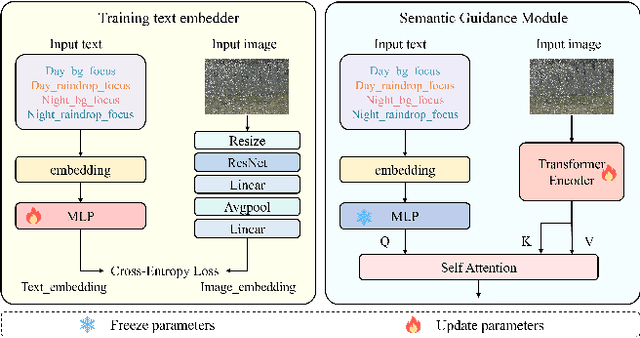
This paper reviews the NTIRE 2025 Challenge on Day and Night Raindrop Removal for Dual-Focused Images. This challenge received a wide range of impressive solutions, which are developed and evaluated using our collected real-world Raindrop Clarity dataset. Unlike existing deraining datasets, our Raindrop Clarity dataset is more diverse and challenging in degradation types and contents, which includes day raindrop-focused, day background-focused, night raindrop-focused, and night background-focused degradations. This dataset is divided into three subsets for competition: 14,139 images for training, 240 images for validation, and 731 images for testing. The primary objective of this challenge is to establish a new and powerful benchmark for the task of removing raindrops under varying lighting and focus conditions. There are a total of 361 participants in the competition, and 32 teams submitting valid solutions and fact sheets for the final testing phase. These submissions achieved state-of-the-art (SOTA) performance on the Raindrop Clarity dataset. The project can be found at https://lixinustc.github.io/CVPR-NTIRE2025-RainDrop-Competition.github.io/.