 Add to Chrome
 Add to Firefox
 Add to Edge
ALISE: Accelerating Large Language Model Serving with Speculative Scheduling
Oct 31, 2024
Large Language Models (LLMs) represent a revolutionary advancement in the contemporary landscape of artificial general intelligence (AGI). As exemplified by ChatGPT, LLM-based applications necessitate minimal response latency and maximal throughput for inference serving. However, due to the unpredictability of LLM execution, the first-come-first-serve (FCFS) scheduling policy employed by current LLM serving systems suffers from head-of-line (HoL) blocking issues and long job response times. In this paper, we propose a new efficient LLM inference serving framework, named ALISE. The key design paradigm of ALISE is to leverage a novel speculative scheduler by estimating the execution time for each job and exploiting such prior knowledge to assign appropriate job priority orders, thus minimizing potential queuing delays for heterogeneous workloads. Furthermore, to mitigate the memory overhead of the intermediate key-value (KV) cache, we employ a priority-based adaptive memory management protocol and quantization-based compression techniques. Evaluations demonstrate that in comparison to the state-of-the-art solution vLLM, ALISE improves the throughput of inference serving by up to 1.8x and 2.1x under the same latency constraint on the Alpaca and ShareGPT datasets, respectively.

UFT: Unifying Fine-Tuning of SFT and RLHF/DPO/UNA through a Generalized Implicit Reward Function
Oct 28, 2024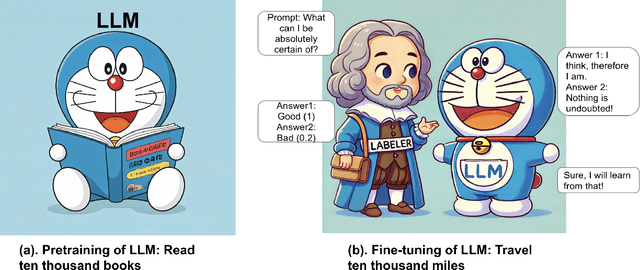


By pretraining on trillions of tokens, an LLM gains the capability of text generation. However, to enhance its utility and reduce potential harm, SFT and alignment are applied sequentially to the pretrained model. Due to the differing nature and objective functions of SFT and alignment, catastrophic forgetting has become a significant issue. To address this, we introduce Unified Fine-Tuning (UFT), which integrates SFT and alignment into a single training stage using the same objective and loss functions through an implicit reward function. Our experimental results demonstrate that UFT outperforms SFT on instruction-tuning data alone. Moreover, when combining instruction-tuning data with alignment data, UFT effectively prevents catastrophic forgetting across these two stages and shows a clear advantage over sequentially applying SFT and alignment. This is evident in the significant improvements observed in the \textbf{ifeval} task for instruction-following and the \textbf{truthful-qa} task for factuality. The proposed general fine-tuning framework UFT establishes an effective and efficient pretraining-UFT paradigm for LLM training.
Lightweight Neural App Control
Oct 23, 2024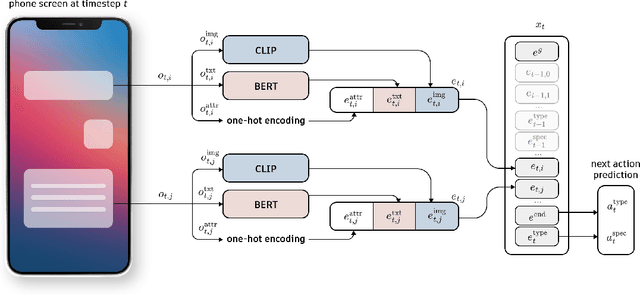
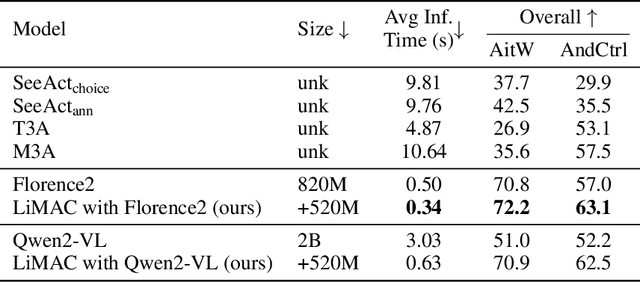
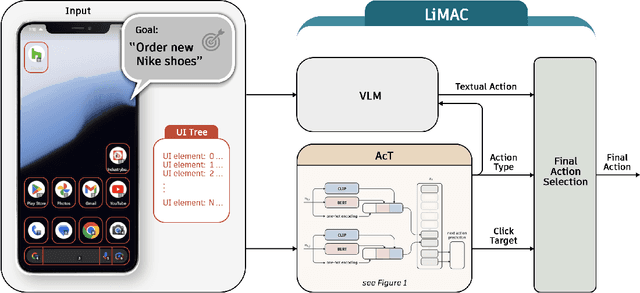
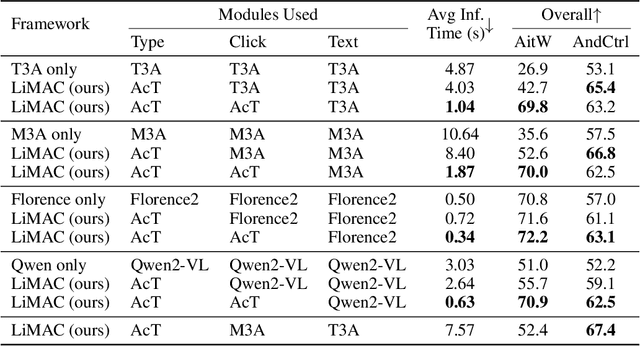
This paper introduces a novel mobile phone control architecture, termed ``app agents", for efficient interactions and controls across various Android apps. The proposed Lightweight Multi-modal App Control (LiMAC) takes as input a textual goal and a sequence of past mobile observations, such as screenshots and corresponding UI trees, to generate precise actions. To address the computational constraints inherent to smartphones, within LiMAC, we introduce a small Action Transformer (AcT) integrated with a fine-tuned vision-language model (VLM) for real-time decision-making and task execution. We evaluate LiMAC on two open-source mobile control datasets, demonstrating the superior performance of our small-form-factor approach against fine-tuned versions of open-source VLMs, such as Florence2 and Qwen2-VL. It also significantly outperforms prompt engineering baselines utilising closed-source foundation models like GPT-4o. More specifically, LiMAC increases the overall action accuracy by up to 19% compared to fine-tuned VLMs, and up to 42% compared to prompt-engineering baselines.
Elucidating the design space of language models for image generation
Oct 21, 2024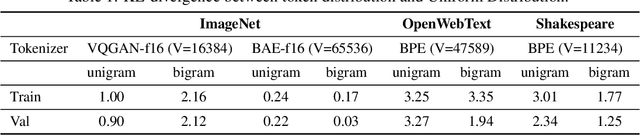
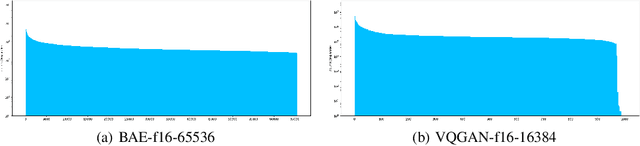
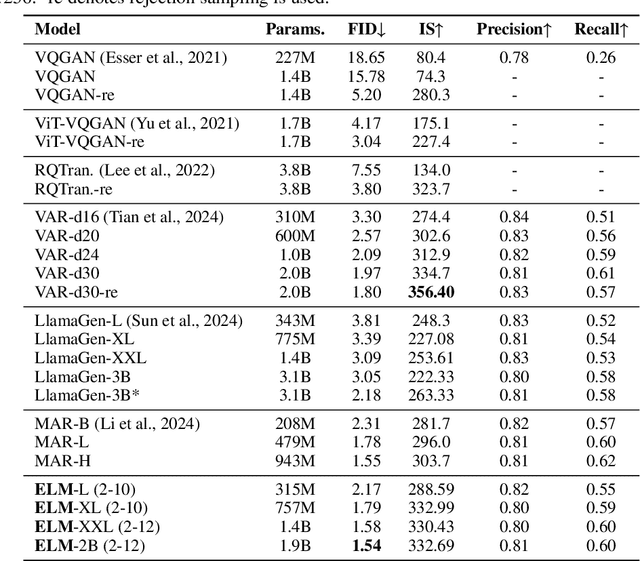
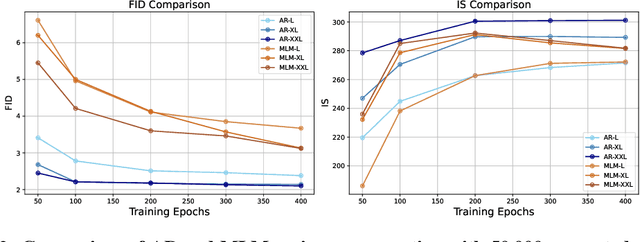
The success of autoregressive (AR) language models in text generation has inspired the computer vision community to adopt Large Language Models (LLMs) for image generation. However, considering the essential differences between text and image modalities, the design space of language models for image generation remains underexplored. We observe that image tokens exhibit greater randomness compared to text tokens, which presents challenges when training with token prediction. Nevertheless, AR models demonstrate their potential by effectively learning patterns even from a seemingly suboptimal optimization problem. Our analysis also reveals that while all models successfully grasp the importance of local information in image generation, smaller models struggle to capture the global context. In contrast, larger models showcase improved capabilities in this area, helping to explain the performance gains achieved when scaling up model size. We further elucidate the design space of language models for vision generation, including tokenizer choice, model choice, model scalability, vocabulary design, and sampling strategy through extensive comparative experiments. Our work is the first to analyze the optimization behavior of language models in vision generation, and we believe it can inspire more effective designs when applying LMs to other domains. Finally, our elucidated language model for image generation, termed as ELM, achieves state-of-the-art performance on the ImageNet 256*256 benchmark. The code is available at https://github.com/Pepperlll/LMforImageGeneration.git.
SPA-Bench: A Comprehensive Benchmark for SmartPhone Agent Evaluation
Oct 19, 2024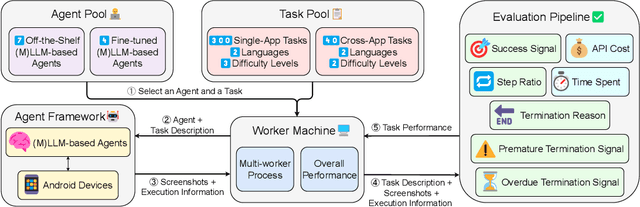

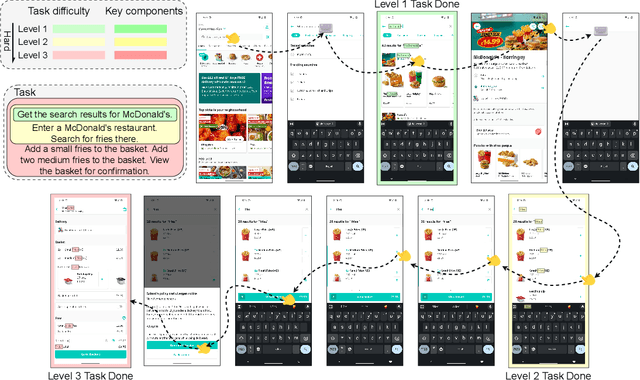

Smartphone agents are increasingly important for helping users control devices efficiently, with (Multimodal) Large Language Model (MLLM)-based approaches emerging as key contenders. Fairly comparing these agents is essential but challenging, requiring a varied task scope, the integration of agents with different implementations, and a generalisable evaluation pipeline to assess their strengths and weaknesses. In this paper, we present SPA-Bench, a comprehensive SmartPhone Agent Benchmark designed to evaluate (M)LLM-based agents in an interactive environment that simulates real-world conditions. SPA-Bench offers three key contributions: (1) A diverse set of tasks covering system and third-party apps in both English and Chinese, focusing on features commonly used in daily routines; (2) A plug-and-play framework enabling real-time agent interaction with Android devices, integrating over ten agents with the flexibility to add more; (3) A novel evaluation pipeline that automatically assesses agent performance across multiple dimensions, encompassing seven metrics related to task completion and resource consumption. Our extensive experiments across tasks and agents reveal challenges like interpreting mobile user interfaces, action grounding, memory retention, and execution costs. We propose future research directions to ease these difficulties, moving closer to real-world smartphone agent applications.
DistRL: An Asynchronous Distributed Reinforcement Learning Framework for On-Device Control Agents
Oct 18, 2024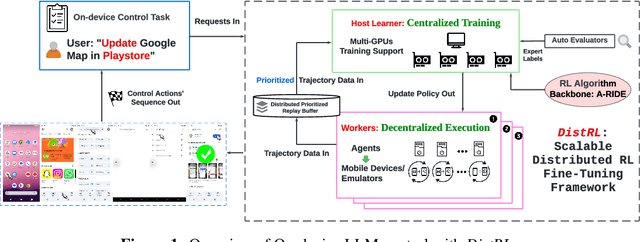
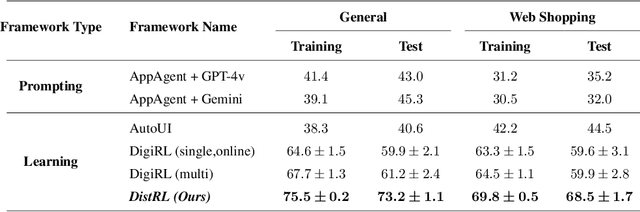
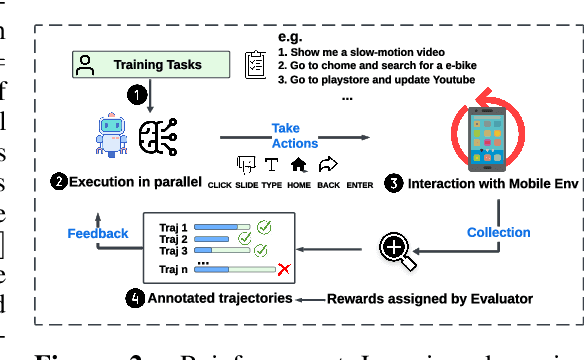

On-device control agents, especially on mobile devices, are responsible for operating mobile devices to fulfill users' requests, enabling seamless and intuitive interactions. Integrating Multimodal Large Language Models (MLLMs) into these agents enhances their ability to understand and execute complex commands, thereby improving user experience. However, fine-tuning MLLMs for on-device control presents significant challenges due to limited data availability and inefficient online training processes. This paper introduces DistRL, a novel framework designed to enhance the efficiency of online RL fine-tuning for mobile device control agents. DistRL employs centralized training and decentralized data acquisition to ensure efficient fine-tuning in the context of dynamic online interactions. Additionally, the framework is backed by our tailor-made RL algorithm, which effectively balances exploration with the prioritized utilization of collected data to ensure stable and robust training. Our experiments show that, on average, DistRL delivers a 3X improvement in training efficiency and enables training data collection 2.4X faster than the leading synchronous multi-machine methods. Notably, after training, DistRL achieves a 20% relative improvement in success rate compared to state-of-the-art methods on general Android tasks from an open benchmark, significantly outperforming existing approaches while maintaining the same training time. These results validate DistRL as a scalable and efficient solution, offering substantial improvements in both training efficiency and agent performance for real-world, in-the-wild device control tasks.
FOOGD: Federated Collaboration for Both Out-of-distribution Generalization and Detection
Oct 15, 2024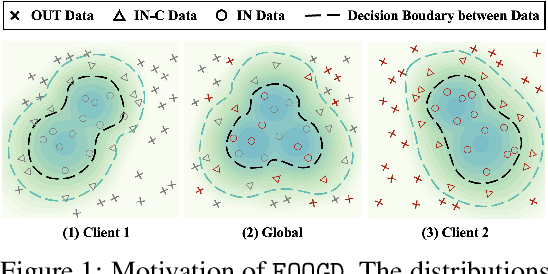
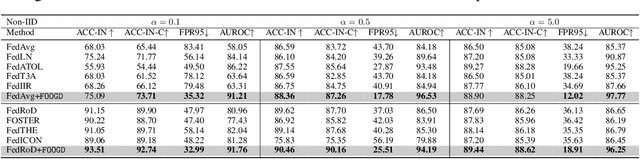
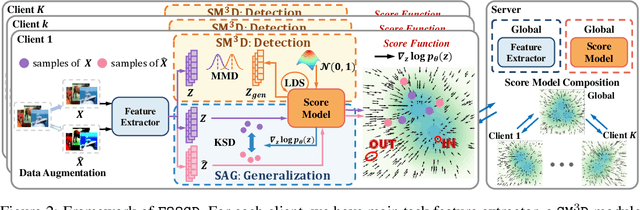
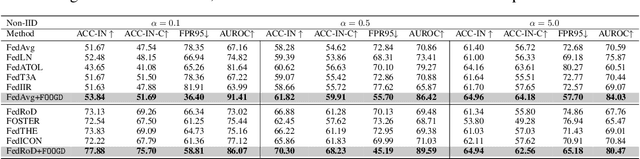
Federated learning (FL) is a promising machine learning paradigm that collaborates with client models to capture global knowledge. However, deploying FL models in real-world scenarios remains unreliable due to the coexistence of in-distribution data and unexpected out-of-distribution (OOD) data, such as covariate-shift and semantic-shift data. Current FL researches typically address either covariate-shift data through OOD generalization or semantic-shift data via OOD detection, overlooking the simultaneous occurrence of various OOD shifts. In this work, we propose FOOGD, a method that estimates the probability density of each client and obtains reliable global distribution as guidance for the subsequent FL process. Firstly, SM3D in FOOGD estimates score model for arbitrary distributions without prior constraints, and detects semantic-shift data powerfully. Then SAG in FOOGD provides invariant yet diverse knowledge for both local covariate-shift generalization and client performance generalization. In empirical validations, FOOGD significantly enjoys three main advantages: (1) reliably estimating non-normalized decentralized distributions, (2) detecting semantic shift data via score values, and (3) generalizing to covariate-shift data by regularizing feature extractor. The prejoct is open in https://github.com/XeniaLLL/FOOGD-main.git.
OpenR: An Open Source Framework for Advanced Reasoning with Large Language Models
Oct 12, 2024
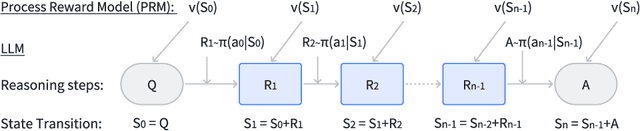
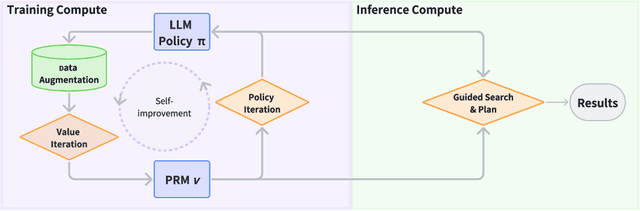
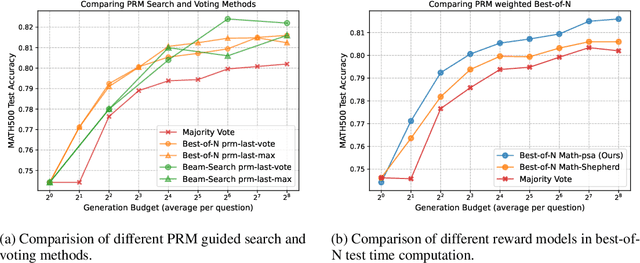
In this technical report, we introduce OpenR, an open-source framework designed to integrate key components for enhancing the reasoning capabilities of large language models (LLMs). OpenR unifies data acquisition, reinforcement learning training (both online and offline), and non-autoregressive decoding into a cohesive software platform. Our goal is to establish an open-source platform and community to accelerate the development of LLM reasoning. Inspired by the success of OpenAI's o1 model, which demonstrated improved reasoning abilities through step-by-step reasoning and reinforcement learning, OpenR integrates test-time compute, reinforcement learning, and process supervision to improve reasoning in LLMs. Our work is the first to provide an open-source framework that explores the core techniques of OpenAI's o1 model with reinforcement learning, achieving advanced reasoning capabilities beyond traditional autoregressive methods. We demonstrate the efficacy of OpenR by evaluating it on the MATH dataset, utilising publicly available data and search methods. Our initial experiments confirm substantial gains, with relative improvements in reasoning and performance driven by test-time computation and reinforcement learning through process reward models. The OpenR framework, including code, models, and datasets, is accessible at https://openreasoner.github.io.
Efficient Reinforcement Learning with Large Language Model Priors
Oct 10, 2024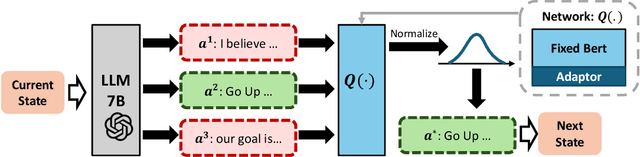

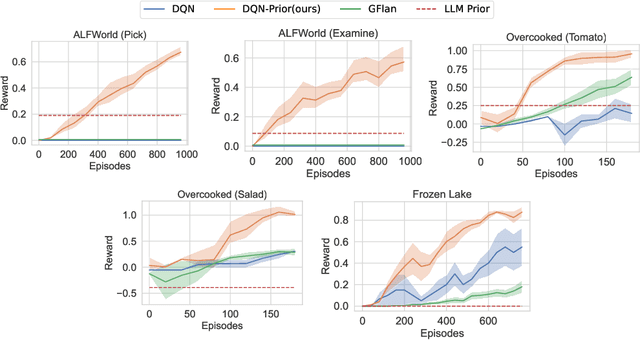
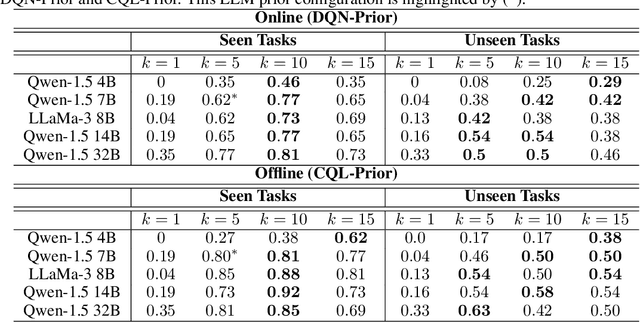
In sequential decision-making (SDM) tasks, methods like reinforcement learning (RL) and heuristic search have made notable advances in specific cases. However, they often require extensive exploration and face challenges in generalizing across diverse environments due to their limited grasp of the underlying decision dynamics. In contrast, large language models (LLMs) have recently emerged as powerful general-purpose tools, due to their capacity to maintain vast amounts of domain-specific knowledge. To harness this rich prior knowledge for efficiently solving complex SDM tasks, we propose treating LLMs as prior action distributions and integrating them into RL frameworks through Bayesian inference methods, making use of variational inference and direct posterior sampling. The proposed approaches facilitate the seamless incorporation of fixed LLM priors into both policy-based and value-based RL frameworks. Our experiments show that incorporating LLM-based action priors significantly reduces exploration and optimization complexity, substantially improving sample efficiency compared to traditional RL techniques, e.g., using LLM priors decreases the number of required samples by over 90% in offline learning scenarios.
Is the MMI Criterion Necessary for Interpretability? Degenerating Non-causal Features to Plain Noise for Self-Rationalization
Oct 08, 2024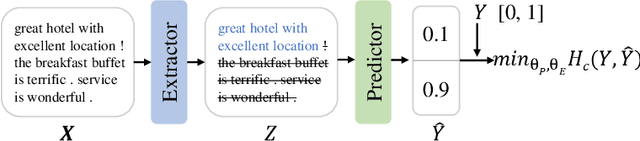
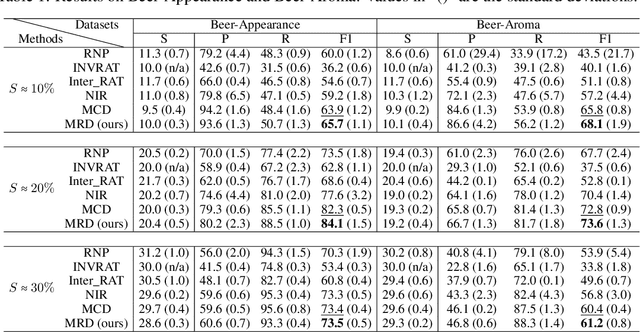
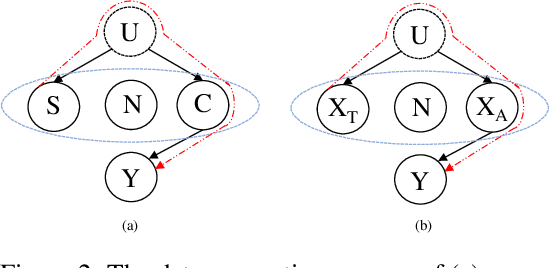
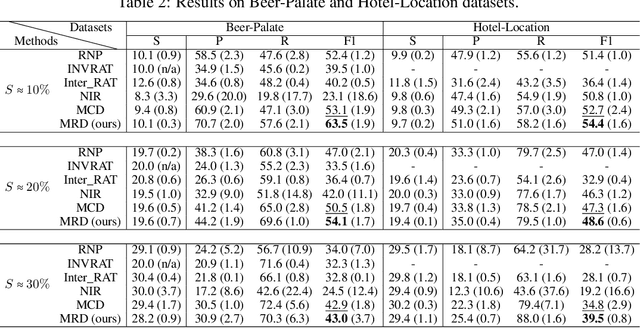
An important line of research in the field of explainability is to extract a small subset of crucial rationales from the full input. The most widely used criterion for rationale extraction is the maximum mutual information (MMI) criterion. However, in certain datasets, there are spurious features non-causally correlated with the label and also get high mutual information, complicating the loss landscape of MMI. Although some penalty-based methods have been developed to penalize the spurious features (e.g., invariance penalty, intervention penalty, etc) to help MMI work better, these are merely remedial measures. In the optimization objectives of these methods, spurious features are still distinguished from plain noise, which hinders the discovery of causal rationales. This paper aims to develop a new criterion that treats spurious features as plain noise, allowing the model to work on datasets rich in spurious features as if it were working on clean datasets, thereby making rationale extraction easier. We theoretically observe that removing either plain noise or spurious features from the input does not alter the conditional distribution of the remaining components relative to the task label. However, significant changes in the conditional distribution occur only when causal features are eliminated. Based on this discovery, the paper proposes a criterion for \textbf{M}aximizing the \textbf{R}emaining \textbf{D}iscrepancy (MRD). Experiments on six widely used datasets show that our MRD criterion improves rationale quality (measured by the overlap with human-annotated rationales) by up to $10.4\%$ as compared to several recent competitive MMI variants. Code: \url{https://github.com/jugechengzi/Rationalization-MRD}.