 Add to Chrome
 Add to Firefox
 Add to Edge
On the Surprising Robustness of Sequential Convex Optimization for Contact-Implicit Motion Planning
Feb 03, 2025
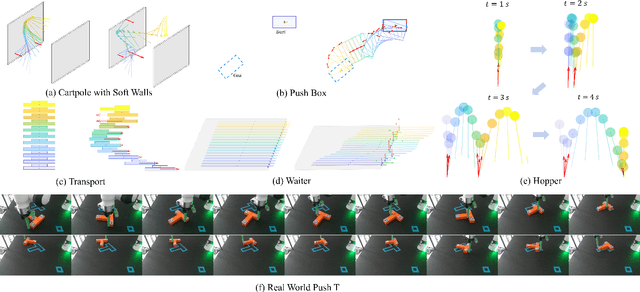
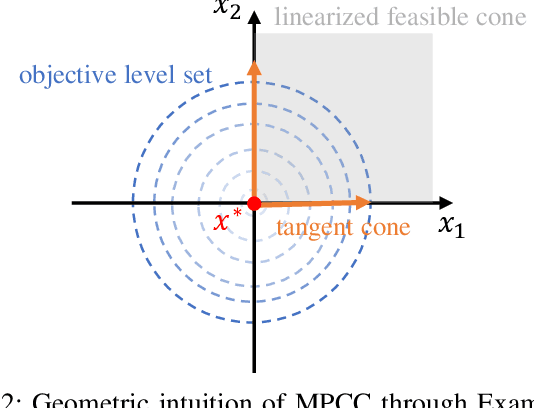

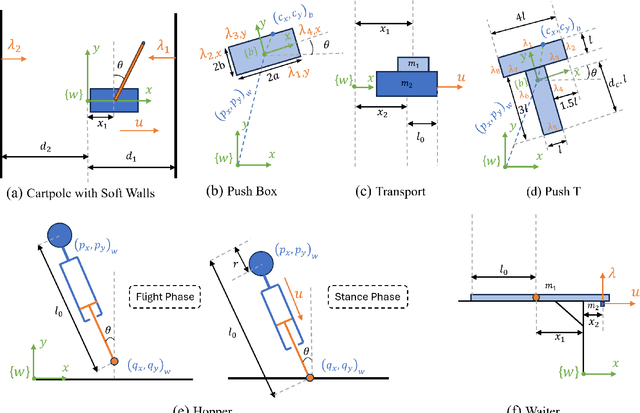
Contact-implicit motion planning-embedding contact sequencing as implicit complementarity constraints-holds the promise of leveraging continuous optimization to discover new contact patterns online. Nevertheless, the resulting optimization, being an instance of Mathematical Programming with Complementary Constraints, fails the classical constraint qualifications that are crucial for the convergence of popular numerical solvers. We present robust contact-implicit motion planning with sequential convex programming (CRISP), a solver that departs from the usual primal-dual algorithmic framework but instead only focuses on the primal problem. CRISP solves a convex quadratic program with an adaptive trust region radius at each iteration, and its convergence is evaluated by a merit function using weighted penalty. We (i) provide sufficient conditions on CRISP's convergence to first-order stationary points of the merit function; (ii) release a high-performance C++ implementation of CRISP with a generic nonlinear programming interface; and (iii) demonstrate CRISP's surprising robustness in solving contact-implicit planning with naive initialization. In fact, CRISP solves several contact-implicit problems with all-zero initialization.

How to Complete Domain Tuning while Keeping General Ability in LLM: Adaptive Layer-wise and Element-wise Regularization
Jan 23, 2025Large Language Models (LLMs) exhibit strong general-purpose language capabilities. However, fine-tuning these models on domain-specific tasks often leads to catastrophic forgetting, where the model overwrites or loses essential knowledge acquired during pretraining. This phenomenon significantly limits the broader applicability of LLMs. To address this challenge, we propose a novel approach to compute the element-wise importance of model parameters crucial for preserving general knowledge during fine-tuning. Our method utilizes a dual-objective optimization strategy: (1) regularization loss to retain the parameter crucial for general knowledge; (2) cross-entropy loss to adapt to domain-specific tasks. Additionally, we introduce layer-wise coefficients to account for the varying contributions of different layers, dynamically balancing the dual-objective optimization. Extensive experiments on scientific, medical, and physical tasks using GPT-J and LLaMA-3 demonstrate that our approach mitigates catastrophic forgetting while enhancing model adaptability. Compared to previous methods, our solution is approximately 20 times faster and requires only 10%-15% of the storage, highlighting the practical efficiency. The code will be released.
CoDriveVLM: VLM-Enhanced Urban Cooperative Dispatching and Motion Planning for Future Autonomous Mobility on Demand Systems
Jan 10, 2025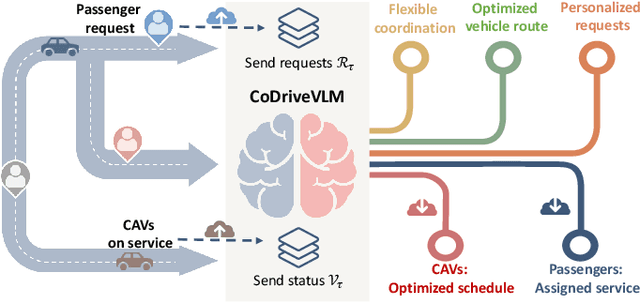
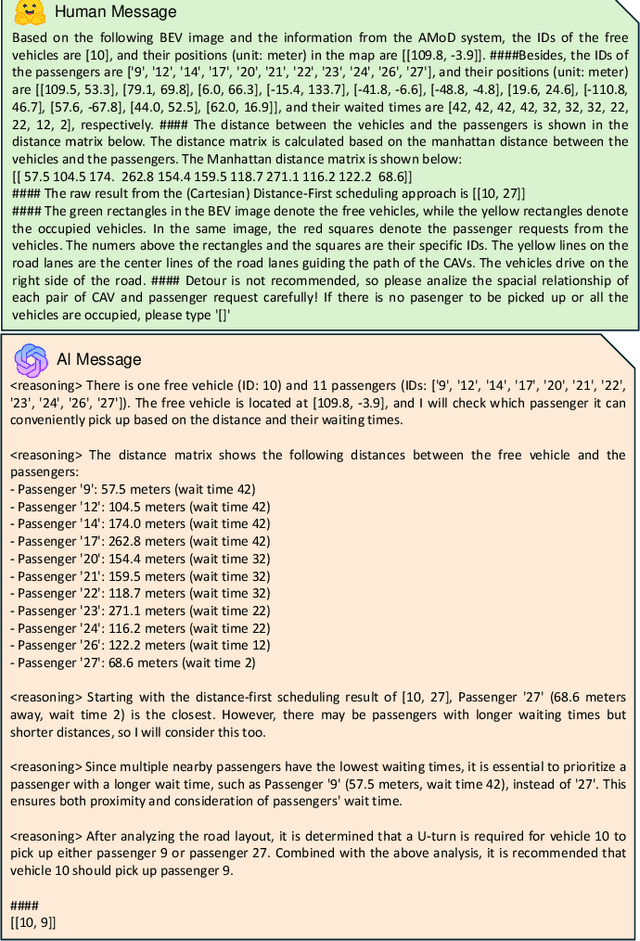
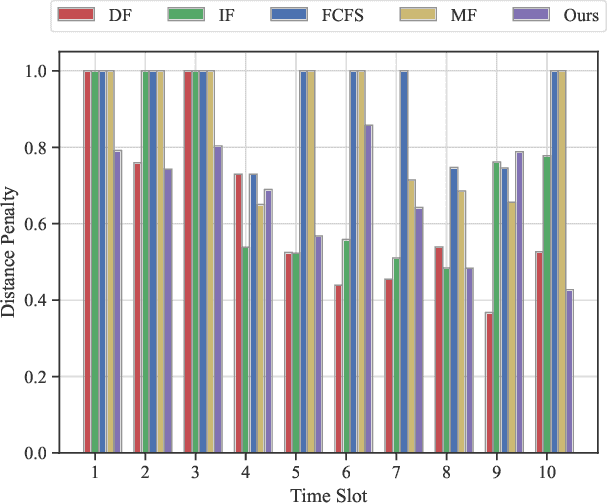
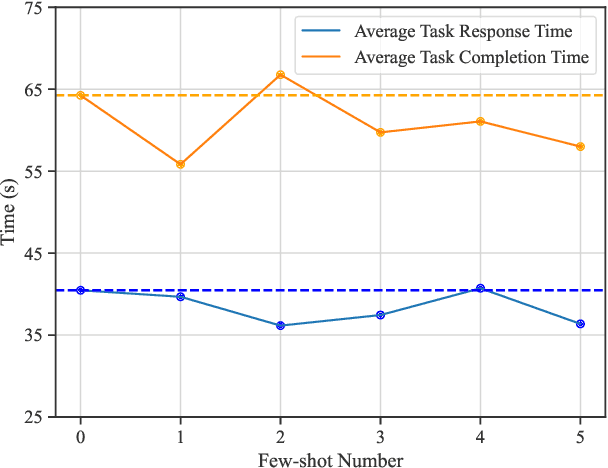
The increasing demand for flexible and efficient urban transportation solutions has spotlighted the limitations of traditional Demand Responsive Transport (DRT) systems, particularly in accommodating diverse passenger needs and dynamic urban environments. Autonomous Mobility-on-Demand (AMoD) systems have emerged as a promising alternative, leveraging connected and autonomous vehicles (CAVs) to provide responsive and adaptable services. However, existing methods primarily focus on either vehicle scheduling or path planning, which often simplify complex urban layouts and neglect the necessity for simultaneous coordination and mutual avoidance among CAVs. This oversimplification poses significant challenges to the deployment of AMoD systems in real-world scenarios. To address these gaps, we propose CoDriveVLM, a novel framework that integrates high-fidelity simultaneous dispatching and cooperative motion planning for future AMoD systems. Our method harnesses Vision-Language Models (VLMs) to enhance multi-modality information processing, and this enables comprehensive dispatching and collision risk evaluation. The VLM-enhanced CAV dispatching coordinator is introduced to effectively manage complex and unforeseen AMoD conditions, thus supporting efficient scheduling decision-making. Furthermore, we propose a scalable decentralized cooperative motion planning method via consensus alternating direction method of multipliers (ADMM) focusing on collision risk evaluation and decentralized trajectory optimization. Simulation results demonstrate the feasibility and robustness of CoDriveVLM in various traffic conditions, showcasing its potential to significantly improve the fidelity and effectiveness of AMoD systems in future urban transportation networks. The code is available at https://github.com/henryhcliu/CoDriveVLM.git.
LearningFlow: Automated Policy Learning Workflow for Urban Driving with Large Language Models
Jan 09, 2025Recent advancements in reinforcement learning (RL) demonstrate the significant potential in autonomous driving. Despite this promise, challenges such as the manual design of reward functions and low sample efficiency in complex environments continue to impede the development of safe and effective driving policies. To tackle these issues, we introduce LearningFlow, an innovative automated policy learning workflow tailored to urban driving. This framework leverages the collaboration of multiple large language model (LLM) agents throughout the RL training process. LearningFlow includes a curriculum sequence generation process and a reward generation process, which work in tandem to guide the RL policy by generating tailored training curricula and reward functions. Particularly, each process is supported by an analysis agent that evaluates training progress and provides critical insights to the generation agent. Through the collaborative efforts of these LLM agents, LearningFlow automates policy learning across a series of complex driving tasks, and it significantly reduces the reliance on manual reward function design while enhancing sample efficiency. Comprehensive experiments are conducted in the high-fidelity CARLA simulator, along with comparisons with other existing methods, to demonstrate the efficacy of our proposed approach. The results demonstrate that LearningFlow excels in generating rewards and curricula. It also achieves superior performance and robust generalization across various driving tasks, as well as commendable adaptation to different RL algorithms.
Local Reactive Control for Mobile Manipulators with Whole-Body Safety in Complex Environments
Jan 06, 2025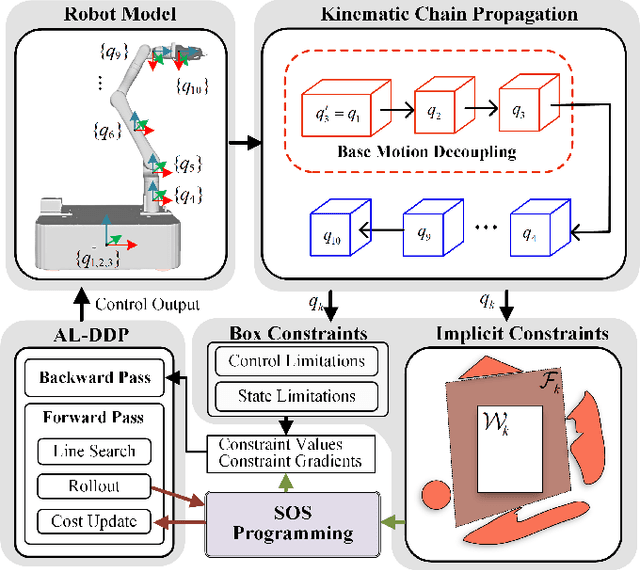
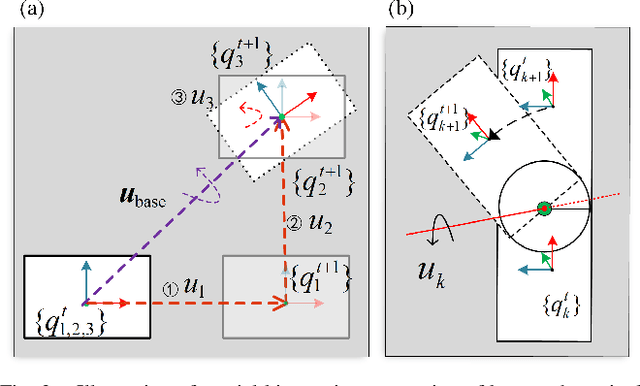
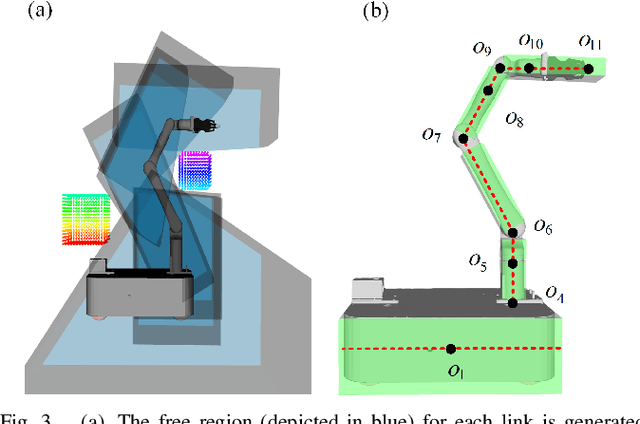
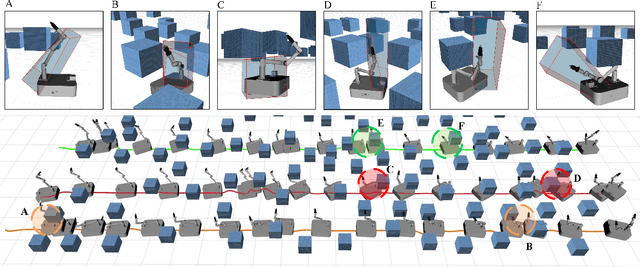
Mobile manipulators typically encounter significant challenges in navigating narrow, cluttered environments due to their high-dimensional state spaces and complex kinematics. While reactive methods excel in dynamic settings, they struggle to efficiently incorporate complex, coupled constraints across the entire state space. In this work, we present a novel local reactive controller that reformulates the time-domain single-step problem into a multi-step optimization problem in the spatial domain, leveraging the propagation of a serial kinematic chain. This transformation facilitates the formulation of customized, decoupled link-specific constraints, which is further solved efficiently with augmented Lagrangian differential dynamic programming (AL-DDP). Our approach naturally absorbs spatial kinematic propagation in the forward pass and processes all link-specific constraints simultaneously during the backward pass, enhancing both constraint management and computational efficiency. Notably, in this framework, we formulate collision avoidance constraints for each link using accurate geometric models with extracted free regions, and this improves the maneuverability of the mobile manipulator in narrow, cluttered spaces. Experimental results showcase significant improvements in safety, efficiency, and task completion rates. These findings underscore the robustness of the proposed method, particularly in narrow, cluttered environments where conventional approaches could falter. The open-source project can be found at https://github.com/Chunx1nZHENG/MM-with-Whole-Body-Safety-Release.git.
UDMC: Unified Decision-Making and Control Framework for Urban Autonomous Driving with Motion Prediction of Traffic Participants
Jan 05, 2025

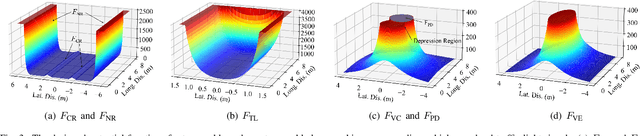

Current autonomous driving systems often struggle to balance decision-making and motion control while ensuring safety and traffic rule compliance, especially in complex urban environments. Existing methods may fall short due to separate handling of these functionalities, leading to inefficiencies and safety compromises. To address these challenges, we introduce UDMC, an interpretable and unified Level 4 autonomous driving framework. UDMC integrates decision-making and motion control into a single optimal control problem (OCP), considering the dynamic interactions with surrounding vehicles, pedestrians, road lanes, and traffic signals. By employing innovative potential functions to model traffic participants and regulations, and incorporating a specialized motion prediction module, our framework enhances on-road safety and rule adherence. The integrated design allows for real-time execution of flexible maneuvers suited to diverse driving scenarios. High-fidelity simulations conducted in CARLA exemplify the framework's computational efficiency, robustness, and safety, resulting in superior driving performance when compared against various baseline models. Our open-source project is available at https://github.com/henryhcliu/udmc_carla.git.
LSAQ: Layer-Specific Adaptive Quantization for Large Language Model Deployment
Dec 24, 2024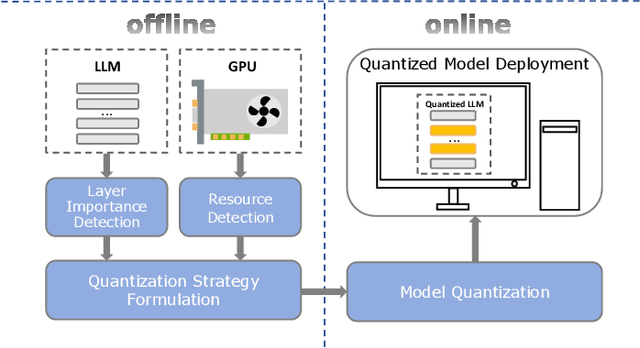
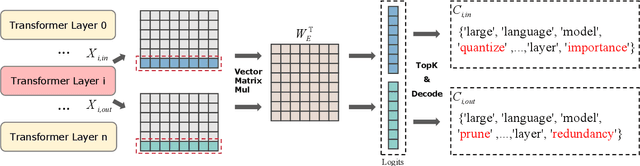
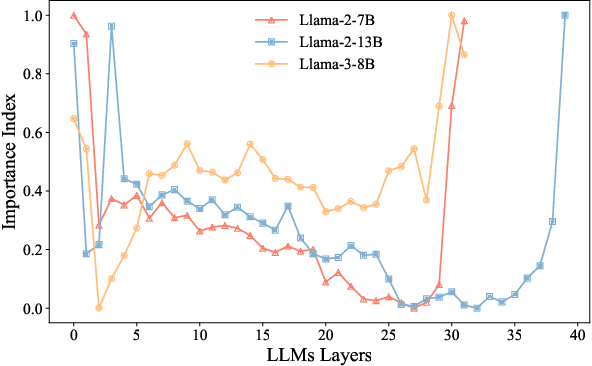
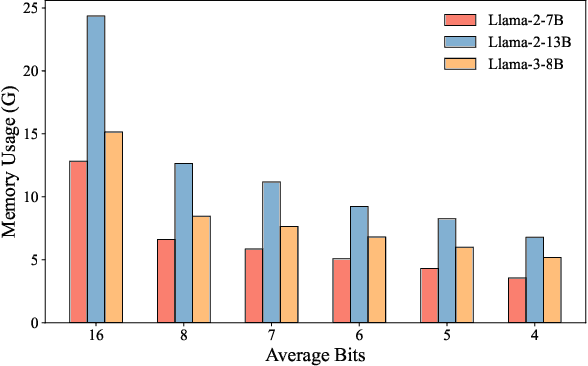
As large language models (LLMs) demonstrate exceptional performance across various domains, the deployment of these models on edge devices has emerged as a new trend. Quantization techniques, which reduce the size and memory footprint of LLMs, are effective for enabling deployment on resource-constrained edge devices. However, existing one-size-fits-all quantization methods often fail to dynamically adjust the memory consumption of LLMs based on specific hardware characteristics and usage scenarios. To address this limitation, we propose LSAQ (Layer-Specific Adaptive Quantization), a system for adaptive quantization and dynamic deployment of LLMs based on layer importance. LSAQ evaluates layer importance by constructing top-k token sets from the inputs and outputs of each layer and calculating their Jaccard coefficient. Using this evaluation, the system adaptively adjusts quantization strategies in real time according to the resource availability of edge devices, assigning different precision levels to layers of varying importance. This approach significantly reduces the storage requirements of LLMs while maintaining model performance, enabling efficient deployment across diverse hardware platforms and usage scenarios.
Efficient MedSAMs: Segment Anything in Medical Images on Laptop
Dec 20, 2024


Promptable segmentation foundation models have emerged as a transformative approach to addressing the diverse needs in medical images, but most existing models require expensive computing, posing a big barrier to their adoption in clinical practice. In this work, we organized the first international competition dedicated to promptable medical image segmentation, featuring a large-scale dataset spanning nine common imaging modalities from over 20 different institutions. The top teams developed lightweight segmentation foundation models and implemented an efficient inference pipeline that substantially reduced computational requirements while maintaining state-of-the-art segmentation accuracy. Moreover, the post-challenge phase advanced the algorithms through the design of performance booster and reproducibility tasks, resulting in improved algorithms and validated reproducibility of the winning solution. Furthermore, the best-performing algorithms have been incorporated into the open-source software with a user-friendly interface to facilitate clinical adoption. The data and code are publicly available to foster the further development of medical image segmentation foundation models and pave the way for impactful real-world applications.
CALMM-Drive: Confidence-Aware Autonomous Driving with Large Multimodal Model
Dec 05, 2024

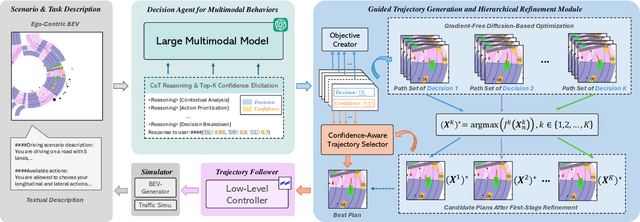
Decision-making and motion planning are pivotal in ensuring the safety and efficiency of Autonomous Vehicles (AVs). Existing methodologies typically adopt two paradigms: decision then planning or generation then scoring. However, the former often struggles with misalignment between decisions and planning, while the latter encounters significant challenges in integrating short-term operational utility with long-term tactical efficacy. To address these issues, we introduce CALMM-Drive, a novel Confidence-Aware Large Multimodal Model (LMM) empowered Autonomous Driving framework. Our approach employs Top-K confidence elicitation, which facilitates the generation of multiple candidate decisions along with their confidence levels. Furthermore, we propose a novel planning module that integrates a diffusion model for trajectory generation and a hierarchical refinement process to find the optimal path. This framework enables the selection of the best plan accounting for both low-level solution quality and high-level tactical confidence, which mitigates the risks of one-shot decisions and overcomes the limitations induced by short-sighted scoring mechanisms. Comprehensive evaluations in nuPlan closed-loop simulation environments demonstrate the effectiveness of CALMM-Drive in achieving reliable and flexible driving performance, showcasing a significant advancement in the integration of uncertainty in LMM-empowered AVs. The code will be released upon acceptance.
Integrating Decision-Making Into Differentiable Optimization Guided Learning for End-to-End Planning of Autonomous Vehicles
Dec 02, 2024We address the decision-making capability within an end-to-end planning framework that focuses on motion prediction, decision-making, and trajectory planning. Specifically, we formulate decision-making and trajectory planning as a differentiable nonlinear optimization problem, which ensures compatibility with learning-based modules to establish an end-to-end trainable architecture. This optimization introduces explicit objectives related to safety, traveling efficiency, and riding comfort, guiding the learning process in our proposed pipeline. Intrinsic constraints resulting from the decision-making task are integrated into the optimization formulation and preserved throughout the learning process. By integrating the differentiable optimizer with a neural network predictor, the proposed framework is end-to-end trainable, aligning various driving tasks with ultimate performance goals defined by the optimization objectives. The proposed framework is trained and validated using the Waymo Open Motion dataset. The open-loop testing reveals that while the planning outcomes using our method do not always resemble the expert trajectory, they consistently outperform baseline approaches with improved safety, traveling efficiency, and riding comfort. The closed-loop testing further demonstrates the effectiveness of optimizing decisions and improving driving performance. Ablation studies demonstrate that the initialization provided by the learning-based prediction module is essential for the convergence of the optimizer as well as the overall driving performance.