 Add to Chrome
 Add to Firefox
 Add to Edge
LLM-Auction: Generative Auction towards LLM-Native Advertising
Dec 11, 2025
The rapid advancement of large language models (LLMs) necessitates novel monetization strategies, among which LLM-native advertising has emerged as a promising paradigm by naturally integrating advertisement within LLM-generated responses. However, this paradigm fundamentally shifts the auction object from discrete ad slots to the distribution over LLM outputs, posing new challenges for designing auction mechanisms. Existing mechanisms for LLM-native advertising adopt frameworks that decouple auction and generation, which either ignore externalities or require multiple LLM inferences for ad allocation, rendering them impractical for industrial scenarios. To address these challenges, we propose LLM-Auction, which to the best of our knowledge is the first learning-based generative auction mechanism that integrates auction and LLM generation for LLM-native advertising. By formulating the allocation optimization as a preference alignment problem between LLM outputs and the mechanism's objective which reflects both advertisers' expected value and user experience, we introduce Iterative Reward-Preference Optimization (IRPO) algorithm that alternately optimizes the reward model and the LLM. This approach enables the LLM to inherently model allocation externalities without any extra inference cost. We further identify the allocation monotonicity and continuity of LLM-Auction, which allows us to prove that a simple first-price payment rule exhibits favorable incentive properties. Additionally, we design an LLM-as-a-judge simulation environment to facilitate large-scale data construction and enable comprehensive quantitative evaluation of the mechanism's performance. Extensive quantitative and qualitative experiments demonstrate that LLM-Auction significantly outperforms existing baselines in allocation efficiency, while achieving the desired mechanism properties.

MUSE: A Simple Yet Effective Multimodal Search-Based Framework for Lifelong User Interest Modeling
Dec 08, 2025Lifelong user interest modeling is crucial for industrial recommender systems, yet existing approaches rely predominantly on ID-based features, suffering from poor generalization on long-tail items and limited semantic expressiveness. While recent work explores multimodal representations for behavior retrieval in the General Search Unit (GSU), they often neglect multimodal integration in the fine-grained modeling stage -- the Exact Search Unit (ESU). In this work, we present a systematic analysis of how to effectively leverage multimodal signals across both stages of the two-stage lifelong modeling framework. Our key insight is that simplicity suffices in the GSU: lightweight cosine similarity with high-quality multimodal embeddings outperforms complex retrieval mechanisms. In contrast, the ESU demands richer multimodal sequence modeling and effective ID-multimodal fusion to unlock its full potential. Guided by these principles, we propose MUSE, a simple yet effective multimodal search-based framework. MUSE has been deployed in Taobao display advertising system, enabling 100K-length user behavior sequence modeling and delivering significant gains in top-line metrics with negligible online latency overhead. To foster community research, we share industrial deployment practices and open-source the first large-scale dataset featuring ultra-long behavior sequences paired with high-quality multimodal embeddings. Our code and data is available at https://taobao-mm.github.io.
MOON Embedding: Multimodal Representation Learning for E-commerce Search Advertising
Nov 18, 2025We introduce MOON, our comprehensive set of sustainable iterative practices for multimodal representation learning for e-commerce applications. MOON has already been fully deployed across all stages of Taobao search advertising system, including retrieval, relevance, ranking, and so on. The performance gains are particularly significant on click-through rate (CTR) prediction task, which achieves an overall +20.00% online CTR improvement. Over the past three years, this project has delivered the largest improvement on CTR prediction task and undergone five full-scale iterations. Throughout the exploration and iteration of our MOON, we have accumulated valuable insights and practical experience that we believe will benefit the research community. MOON contains a three-stage training paradigm of "Pretraining, Post-training, and Application", allowing effective integration of multimodal representations with downstream tasks. Notably, to bridge the misalignment between the objectives of multimodal representation learning and downstream training, we define the exchange rate to quantify how effectively improvements in an intermediate metric can translate into downstream gains. Through this analysis, we identify the image-based search recall as a critical intermediate metric guiding the optimization of multimodal models. Over three years and five iterations, MOON has evolved along four critical dimensions: data processing, training strategy, model architecture, and downstream application. The lessons and insights gained through the iterative improvements will also be shared. As part of our exploration into scaling effects in the e-commerce field, we further conduct a systematic study of the scaling laws governing multimodal representation learning, examining multiple factors such as the number of training tokens, negative samples, and the length of user behavior sequences.
AIF: Asynchronous Inference Framework for Cost-Effective Pre-Ranking
Nov 17, 2025In industrial recommendation systems, pre-ranking models based on deep neural networks (DNNs) commonly adopt a sequential execution framework: feature fetching and model forward computation are triggered only after receiving candidates from the upstream retrieval stage. This design introduces inherent bottlenecks, including redundant computations of identical users/items and increased latency due to strictly sequential operations, which jointly constrain the model's capacity and system efficiency. To address these limitations, we propose the Asynchronous Inference Framework (AIF), a cost-effective computational architecture that decouples interaction-independent components, those operating within a single user or item, from real-time prediction. AIF reorganizes the model inference process by performing user-side computations in parallel with the retrieval stage and conducting item-side computations in a nearline manner. This means that interaction-independent components are calculated just once and completed before the real-time prediction phase of the pre-ranking stage. As a result, AIF enhances computational efficiency and reduces latency, freeing up resources to significantly improve the feature set and model architecture of interaction-independent components. Moreover, we delve into model design within the AIF framework, employing approximated methods for interaction-dependent components in online real-time predictions. By co-designing both the framework and the model, our solution achieves notable performance gains without significantly increasing computational and latency costs. This has enabled the successful deployment of AIF in the Taobao display advertising system.
MOON2.0: Dynamic Modality-balanced Multimodal Representation Learning for E-commerce Product Understanding
Nov 16, 2025The rapid growth of e-commerce calls for multimodal models that comprehend rich visual and textual product information. Although recent multimodal large language models (MLLMs) for product understanding exhibit strong capability in representation learning for e-commerce, they still face three challenges: (i) the modality imbalance induced by modality mixed training; (ii) underutilization of the intrinsic alignment relationships among visual and textual information within a product; and (iii) limited handling of noise in e-commerce multimodal data. To address these, we propose MOON2.0, a dynamic modality-balanced multimodal representation learning framework for e-commerce product understanding. MOON2.0 comprises: (1) a Modality-driven Mixture-of-Experts (MoE) module that adaptively processes input samples by their modality composition, enabling Multimodal Joint Learning to mitigate the modality imbalance; (2) a Dual-level Alignment method to better leverage semantic alignment properties inside individual products; and (3) an MLLM-based Image-text Co-augmentation strategy that integrates textual enrichment with visual expansion, coupled with Dynamic Sample Filtering to improve training data quality. We further introduce MBE2.0, a co-augmented multimodal representation benchmark for e-commerce representation learning and evaluation. Experiments show that MOON2.0 delivers state-of-the-art zero-shot performance on MBE2.0 and multiple public datasets. Furthermore, attention-based heatmap visualization provides qualitative evidence of improved multimodal alignment of MOON2.0.
From Scaling to Structured Expressivity: Rethinking Transformers for CTR Prediction
Nov 15, 2025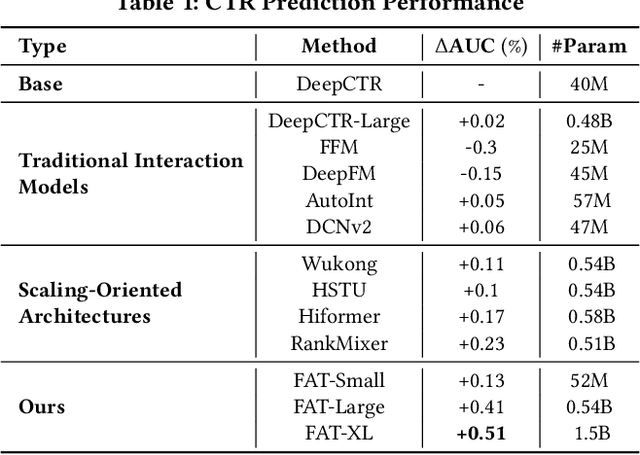
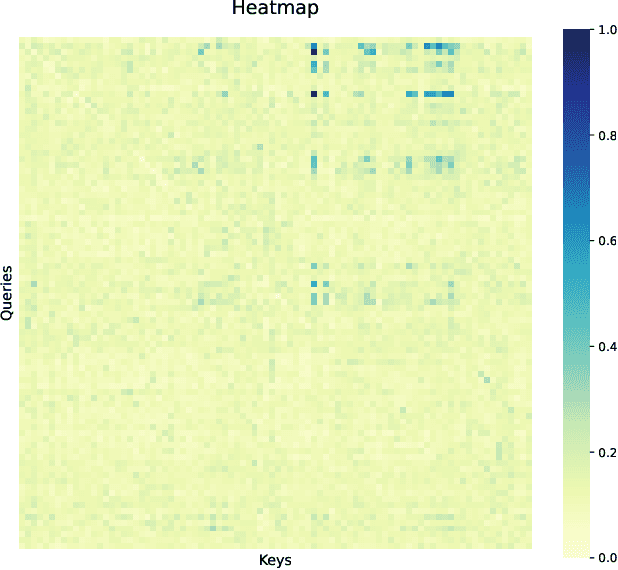
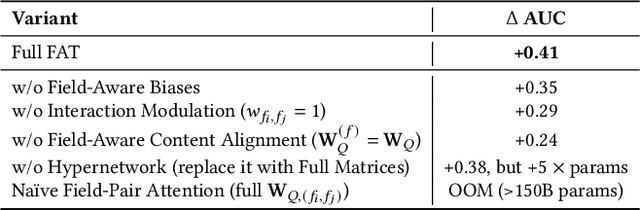
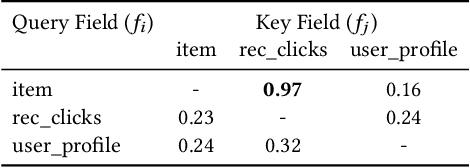
Despite massive investments in scale, deep models for click-through rate (CTR) prediction often exhibit rapidly diminishing returns - a stark contrast to the smooth, predictable gains seen in large language models. We identify the root cause as a structural misalignment: Transformers assume sequential compositionality, while CTR data demand combinatorial reasoning over high-cardinality semantic fields. Unstructured attention spreads capacity indiscriminately, amplifying noise under extreme sparsity and breaking scalable learning. To restore alignment, we introduce the Field-Aware Transformer (FAT), which embeds field-based interaction priors into attention through decomposed content alignment and cross-field modulation. This design ensures model complexity scales with the number of fields F, not the total vocabulary size n >> F, leading to tighter generalization and, critically, observed power-law scaling in AUC as model width increases. We present the first formal scaling law for CTR models, grounded in Rademacher complexity, that explains and predicts this behavior. On large-scale benchmarks, FAT improves AUC by up to +0.51% over state-of-the-art methods. Deployed online, it delivers +2.33% CTR and +0.66% RPM. Our work establishes that effective scaling in recommendation arises not from size, but from structured expressivity-architectural coherence with data semantics.
Think before Recommendation: Autonomous Reasoning-enhanced Recommender
Oct 27, 2025The core task of recommender systems is to learn user preferences from historical user-item interactions. With the rapid development of large language models (LLMs), recent research has explored leveraging the reasoning capabilities of LLMs to enhance rating prediction tasks. However, existing distillation-based methods suffer from limitations such as the teacher model's insufficient recommendation capability, costly and static supervision, and superficial transfer of reasoning ability. To address these issues, this paper proposes RecZero, a reinforcement learning (RL)-based recommendation paradigm that abandons the traditional multi-model and multi-stage distillation approach. Instead, RecZero trains a single LLM through pure RL to autonomously develop reasoning capabilities for rating prediction. RecZero consists of two key components: (1) "Think-before-Recommendation" prompt construction, which employs a structured reasoning template to guide the model in step-wise analysis of user interests, item features, and user-item compatibility; and (2) rule-based reward modeling, which adopts group relative policy optimization (GRPO) to compute rewards for reasoning trajectories and optimize the LLM. Additionally, the paper explores a hybrid paradigm, RecOne, which combines supervised fine-tuning with RL, initializing the model with cold-start reasoning samples and further optimizing it with RL. Experimental results demonstrate that RecZero and RecOne significantly outperform existing baseline methods on multiple benchmark datasets, validating the superiority of the RL paradigm in achieving autonomous reasoning-enhanced recommender systems.
Enhancing Generative Auto-bidding with Offline Reward Evaluation and Policy Search
Sep 19, 2025Auto-bidding is an essential tool for advertisers to enhance their advertising performance. Recent progress has shown that AI-Generated Bidding (AIGB), which formulates the auto-bidding as a trajectory generation task and trains a conditional diffusion-based planner on offline data, achieves superior and stable performance compared to typical offline reinforcement learning (RL)-based auto-bidding methods. However, existing AIGB methods still encounter a performance bottleneck due to their neglect of fine-grained generation quality evaluation and inability to explore beyond static datasets. To address this, we propose AIGB-Pearl (\emph{Planning with EvAluator via RL}), a novel method that integrates generative planning and policy optimization. The key to AIGB-Pearl is to construct a non-bootstrapped \emph{trajectory evaluator} to assign rewards and guide policy search, enabling the planner to optimize its generation quality iteratively through interaction. Furthermore, to enhance trajectory evaluator accuracy in offline settings, we incorporate three key techniques: (i) a Large Language Model (LLM)-based architecture for better representational capacity, (ii) hybrid point-wise and pair-wise losses for better score learning, and (iii) adaptive integration of expert feedback for better generalization ability. Extensive experiments on both simulated and real-world advertising systems demonstrate the state-of-the-art performance of our approach.
FinZero: Launching Multi-modal Financial Time Series Forecast with Large Reasoning Model
Sep 10, 2025Financial time series forecasting is both highly significant and challenging. Previous approaches typically standardized time series data before feeding it into forecasting models, but this encoding process inherently leads to a loss of important information. Moreover, past time series models generally require fixed numbers of variables or lookback window lengths, which further limits the scalability of time series forecasting. Besides, the interpretability and the uncertainty in forecasting remain areas requiring further research, as these factors directly impact the reliability and practical value of predictions. To address these issues, we first construct a diverse financial image-text dataset (FVLDB) and develop the Uncertainty-adjusted Group Relative Policy Optimization (UARPO) method to enable the model not only output predictions but also analyze the uncertainty of those predictions. We then proposed FinZero, a multimodal pre-trained model finetuned by UARPO to perform reasoning, prediction, and analytical understanding on the FVLDB financial time series. Extensive experiments validate that FinZero exhibits strong adaptability and scalability. After fine-tuning with UARPO, FinZero achieves an approximate 13.48\% improvement in prediction accuracy over GPT-4o in the high-confidence group, demonstrating the effectiveness of reinforcement learning fine-tuning in multimodal large model, including in financial time series forecasting tasks.
Any-Step Density Ratio Estimation via Interval-Annealed Secant Alignment
Sep 05, 2025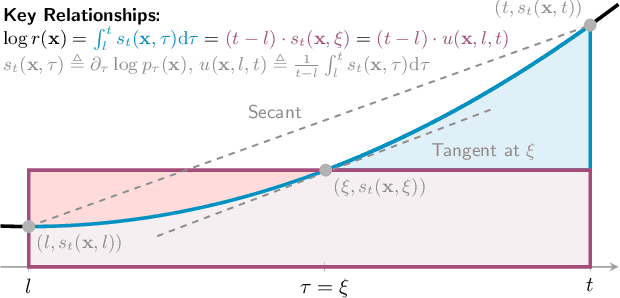

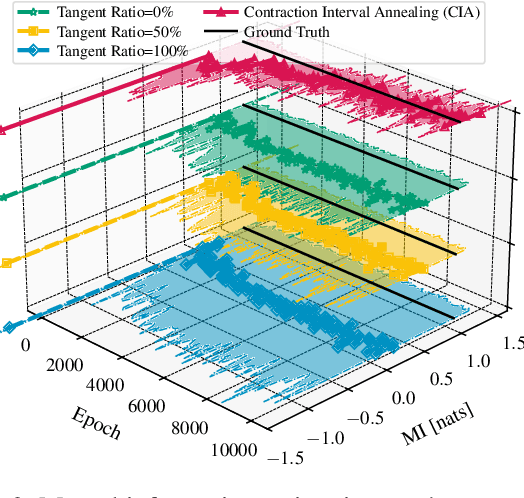
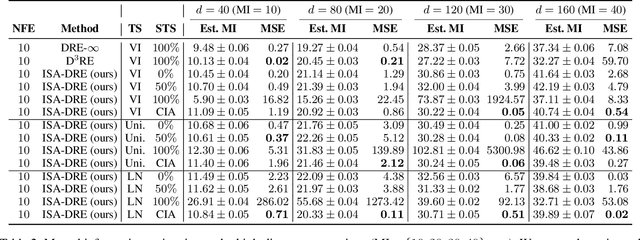
Estimating density ratios is a fundamental problem in machine learning, but existing methods often trade off accuracy for efficiency. We propose \textit{Interval-annealed Secant Alignment Density Ratio Estimation (ISA-DRE)}, a framework that enables accurate, any-step estimation without numerical integration. Instead of modeling infinitesimal tangents as in prior methods, ISA-DRE learns a global secant function, defined as the expectation of all tangents over an interval, with provably lower variance, making it more suitable for neural approximation. This is made possible by the \emph{Secant Alignment Identity}, a self-consistency condition that formally connects the secant with its underlying tangent representations. To mitigate instability during early training, we introduce \emph{Contraction Interval Annealing}, a curriculum strategy that gradually expands the alignment interval during training. This process induces a contraction mapping, which improves convergence and training stability. Empirically, ISA-DRE achieves competitive accuracy with significantly fewer function evaluations compared to prior methods, resulting in much faster inference and making it well suited for real-time and interactive applications.