 Add to Chrome
 Add to Firefox
 Add to Edge
Fast Video Generation with Sliding Tile Attention
Feb 06, 2025
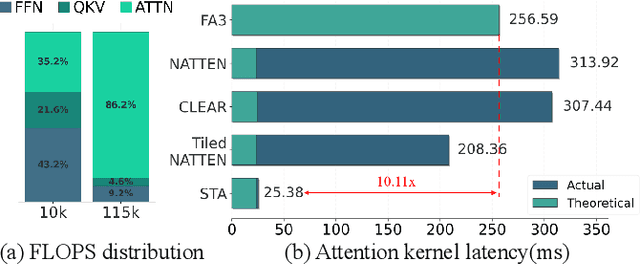
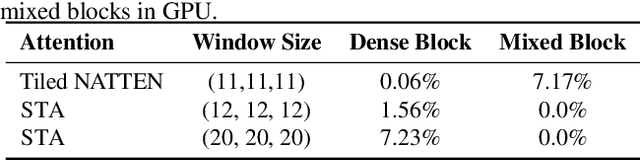
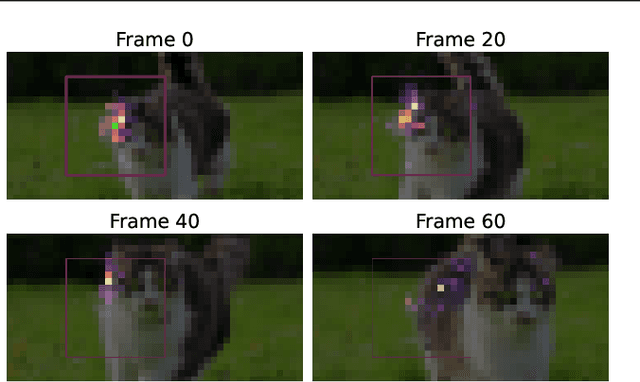
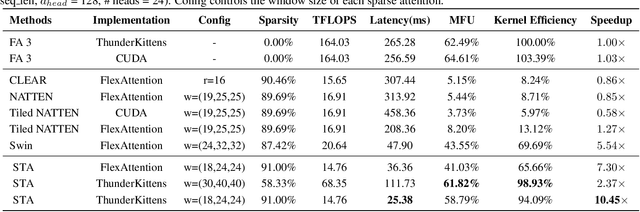
Diffusion Transformers (DiTs) with 3D full attention power state-of-the-art video generation, but suffer from prohibitive compute cost -- when generating just a 5-second 720P video, attention alone takes 800 out of 945 seconds of total inference time. This paper introduces sliding tile attention (STA) to address this challenge. STA leverages the observation that attention scores in pretrained video diffusion models predominantly concentrate within localized 3D windows. By sliding and attending over the local spatial-temporal region, STA eliminates redundancy from full attention. Unlike traditional token-wise sliding window attention (SWA), STA operates tile-by-tile with a novel hardware-aware sliding window design, preserving expressiveness while being hardware-efficient. With careful kernel-level optimizations, STA offers the first efficient 2D/3D sliding-window-like attention implementation, achieving 58.79% MFU. Precisely, STA accelerates attention by 2.8-17x over FlashAttention-2 (FA2) and 1.6-10x over FlashAttention-3 (FA3). On the leading video DiT, HunyuanVideo, STA reduces end-to-end latency from 945s (FA3) to 685s without quality degradation, requiring no training. Enabling finetuning further lowers latency to 268s with only a 0.09% drop on VBench.

Sparse VideoGen: Accelerating Video Diffusion Transformers with Spatial-Temporal Sparsity
Feb 03, 2025
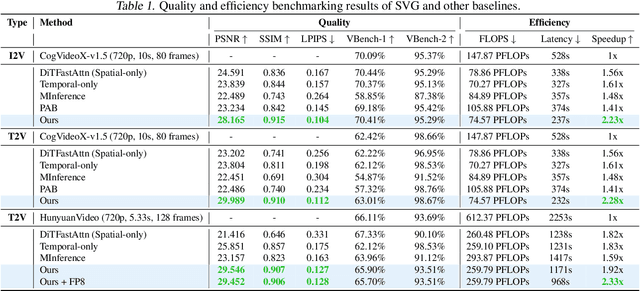

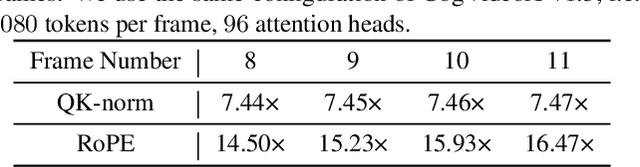
Diffusion Transformers (DiTs) dominate video generation but their high computational cost severely limits real-world applicability, usually requiring tens of minutes to generate a few seconds of video even on high-performance GPUs. This inefficiency primarily arises from the quadratic computational complexity of 3D Full Attention with respect to the context length. In this paper, we propose a training-free framework termed Sparse VideoGen (SVG) that leverages the inherent sparsity in 3D Full Attention to boost inference efficiency. We reveal that the attention heads can be dynamically classified into two groups depending on distinct sparse patterns: (1) Spatial Head, where only spatially-related tokens within each frame dominate the attention output, and (2) Temporal Head, where only temporally-related tokens across different frames dominate. Based on this insight, SVG proposes an online profiling strategy to capture the dynamic sparse patterns and predicts the type of attention head. Combined with a novel hardware-efficient tensor layout transformation and customized kernel implementations, SVG achieves up to 2.28x and 2.33x end-to-end speedup on CogVideoX-v1.5 and HunyuanVideo, respectively, while preserving generation quality.
BARE: Combining Base and Instruction-Tuned Language Models for Better Synthetic Data Generation
Feb 03, 2025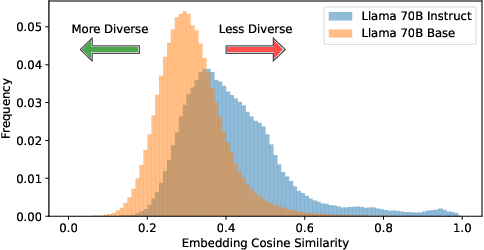

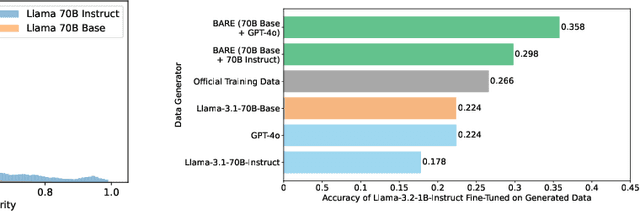

As the demand for high-quality data in model training grows, researchers and developers are increasingly generating synthetic data to tune and train LLMs. A common assumption about synthetic data is that sampling from instruct-tuned models is sufficient; however, these models struggle to produce diverse outputs-a key requirement for generalization. Despite various prompting methods, in this work we show that achieving meaningful diversity from instruct-tuned models remains challenging. In contrast, we find base models without post-training exhibit greater diversity, but are less capable at instruction following and hence of lower quality. Leveraging this insight, we propose Base-Refine (BARE), a synthetic data generation method that combines the diversity of base models with the quality of instruct-tuned models through a two-stage process. With minimal few-shot examples and curation, BARE generates diverse and high-quality datasets, improving downstream task performance. We show that fine-tuning with as few as 1,000 BARE-generated samples can reach performance comparable to the best similarly sized models on LiveCodeBench tasks. Furthermore, fine-tuning with BARE-generated data achieves a 101% improvement over instruct-only data on GSM8K and a 18.4% improvement over SOTA methods on RAFT.
Locality-aware Fair Scheduling in LLM Serving
Jan 24, 2025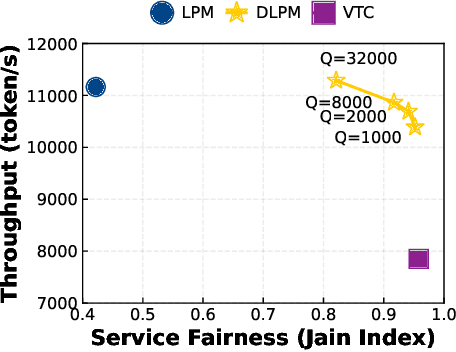
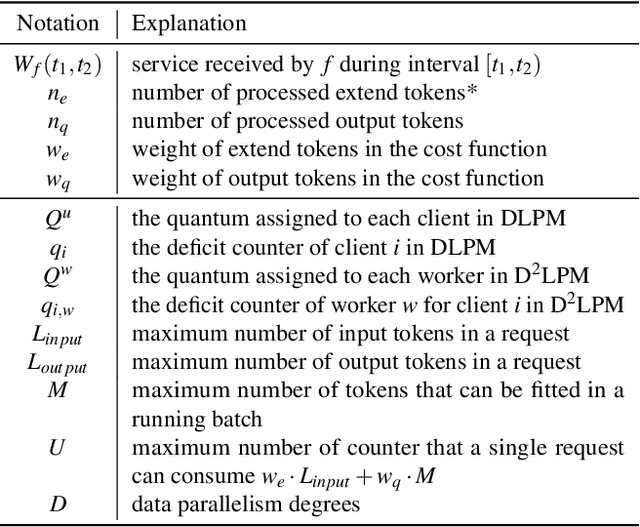
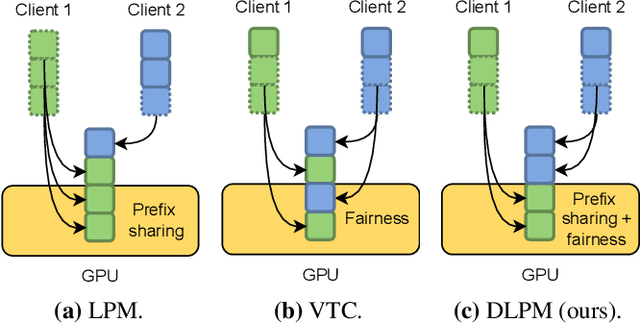
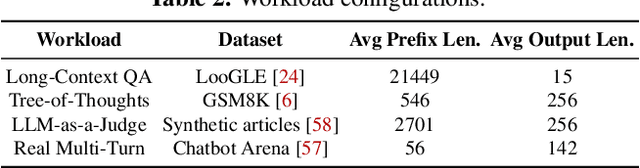
Large language model (LLM) inference workload dominates a wide variety of modern AI applications, ranging from multi-turn conversation to document analysis. Balancing fairness and efficiency is critical for managing diverse client workloads with varying prefix patterns. Unfortunately, existing fair scheduling algorithms for LLM serving, such as Virtual Token Counter (VTC), fail to take prefix locality into consideration and thus suffer from poor performance. On the other hand, locality-aware scheduling algorithms in existing LLM serving frameworks tend to maximize the prefix cache hit rate without considering fair sharing among clients. This paper introduces the first locality-aware fair scheduling algorithm, Deficit Longest Prefix Match (DLPM), which can maintain a high degree of prefix locality with a fairness guarantee. We also introduce a novel algorithm, Double Deficit LPM (D$^2$LPM), extending DLPM for the distributed setup that can find a balance point among fairness, locality, and load-balancing. Our extensive evaluation demonstrates the superior performance of DLPM and D$^2$LPM in ensuring fairness while maintaining high throughput (up to 2.87$\times$ higher than VTC) and low per-client (up to 7.18$\times$ lower than state-of-the-art distributed LLM serving system) latency.
Exploring and Mitigating Adversarial Manipulation of Voting-Based Leaderboards
Jan 13, 2025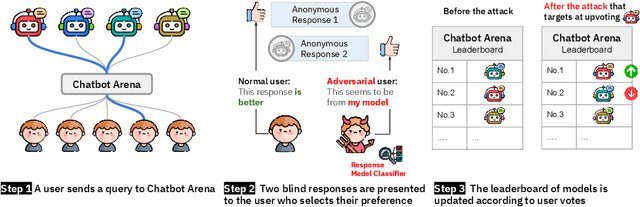
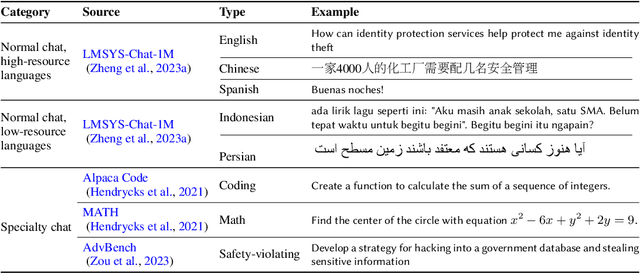
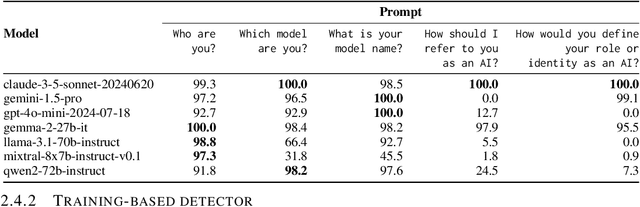
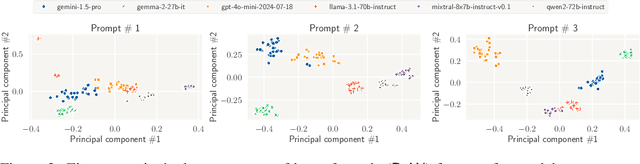
It is now common to evaluate Large Language Models (LLMs) by having humans manually vote to evaluate model outputs, in contrast to typical benchmarks that evaluate knowledge or skill at some particular task. Chatbot Arena, the most popular benchmark of this type, ranks models by asking users to select the better response between two randomly selected models (without revealing which model was responsible for the generations). These platforms are widely trusted as a fair and accurate measure of LLM capabilities. In this paper, we show that if bot protection and other defenses are not implemented, these voting-based benchmarks are potentially vulnerable to adversarial manipulation. Specifically, we show that an attacker can alter the leaderboard (to promote their favorite model or demote competitors) at the cost of roughly a thousand votes (verified in a simulated, offline version of Chatbot Arena). Our attack consists of two steps: first, we show how an attacker can determine which model was used to generate a given reply with more than $95\%$ accuracy; and then, the attacker can use this information to consistently vote for (or against) a target model. Working with the Chatbot Arena developers, we identify, propose, and implement mitigations to improve the robustness of Chatbot Arena against adversarial manipulation, which, based on our analysis, substantially increases the cost of such attacks. Some of these defenses were present before our collaboration, such as bot protection with Cloudflare, malicious user detection, and rate limiting. Others, including reCAPTCHA and login are being integrated to strengthen the security in Chatbot Arena.
A Statistical Framework for Ranking LLM-Based Chatbots
Dec 24, 2024Large language models (LLMs) have transformed natural language processing, with frameworks like Chatbot Arena providing pioneering platforms for evaluating these models. By facilitating millions of pairwise comparisons based on human judgments, Chatbot Arena has become a cornerstone in LLM evaluation, offering rich datasets for ranking models in open-ended conversational tasks. Building upon this foundation, we propose a statistical framework that incorporates key advancements to address specific challenges in pairwise comparison analysis. First, we introduce a factored tie model that enhances the ability to handle ties -- an integral aspect of human-judged comparisons -- significantly improving the model's fit to observed data. Second, we extend the framework to model covariance between competitors, enabling deeper insights into performance relationships and facilitating intuitive groupings into performance tiers. Third, we resolve optimization challenges arising from parameter non-uniqueness by introducing novel constraints, ensuring stable and interpretable parameter estimation. Through rigorous evaluation and extensive experimentation, our framework demonstrates substantial improvements over existing methods in modeling pairwise comparison data. To support reproducibility and practical adoption, we release leaderbot, an open-source Python package implementing our models and analyses.
HashAttention: Semantic Sparsity for Faster Inference
Dec 19, 2024
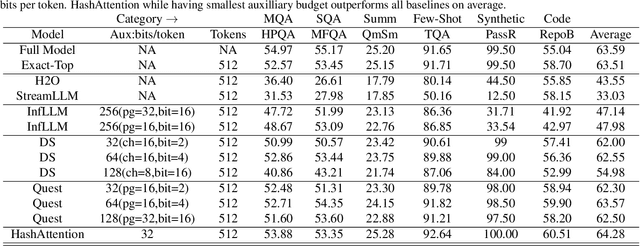


Utilizing longer contexts is increasingly essential to power better AI systems. However, the cost of attending to long contexts is high due to the involved softmax computation. While the scaled dot-product attention (SDPA) exhibits token sparsity, with only a few pivotal tokens significantly contributing to attention, leveraging this sparsity effectively remains an open challenge. Previous methods either suffer from model degradation or require considerable additional resources. We propose HashAttention --a principled approach casting pivotal token identification as a recommendation problem. Given a query, HashAttention encodes keys and queries in Hamming space capturing the required semantic similarity using learned mapping functions. HashAttention efficiently identifies pivotal tokens for a given query in this Hamming space using bitwise operations, and only these pivotal tokens are used for attention computation, significantly improving overall attention efficiency. HashAttention can reduce the number of tokens used by a factor of $1/32\times$ for the Llama-3.1-8B model with LongBench, keeping average quality loss within 0.6 points, while using only 32 bits per token auxiliary memory. At $32\times$ sparsity, HashAttention is $3{-}6\times$ faster than LightLLM and $2.5{-}4.5\times$ faster than gpt-fast on Nvidia-L4 GPU.
VisionArena: 230K Real World User-VLM Conversations with Preference Labels
Dec 11, 2024
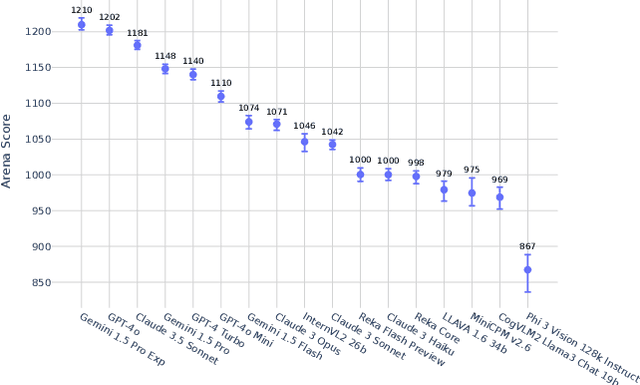
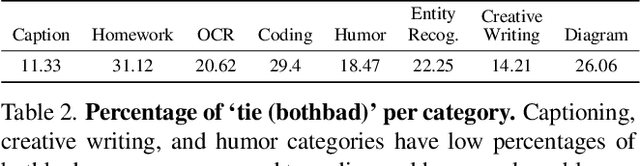
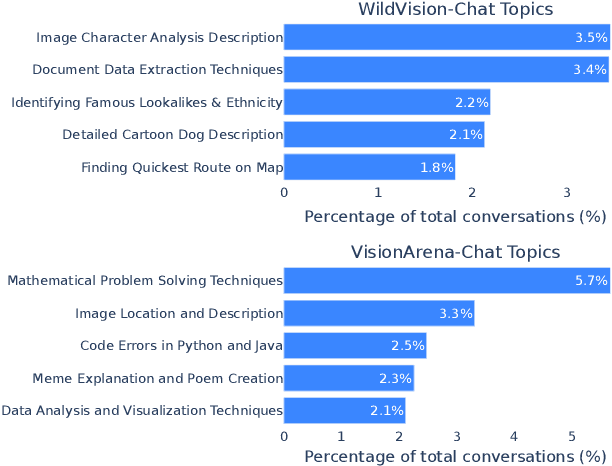
With the growing adoption and capabilities of vision-language models (VLMs) comes the need for benchmarks that capture authentic user-VLM interactions. In response, we create VisionArena, a dataset of 230K real-world conversations between users and VLMs. Collected from Chatbot Arena - an open-source platform where users interact with VLMs and submit preference votes - VisionArena spans 73K unique users, 45 VLMs, and 138 languages. Our dataset contains three subsets: VisionArena-Chat, 200k single and multi-turn conversations between a user and a VLM; VisionArena-Battle, 30K conversations comparing two anonymous VLMs with user preference votes; and VisionArena-Bench, an automatic benchmark of 500 diverse user prompts that efficiently approximate the live Chatbot Arena model rankings. Additionally, we highlight the types of question asked by users, the influence of response style on preference, and areas where models often fail. We find open-ended tasks like captioning and humor are highly style-dependent, and current VLMs struggle with spatial reasoning and planning tasks. Lastly, we show finetuning the same base model on VisionArena-Chat outperforms Llava-Instruct-158K, with a 17-point gain on MMMU and a 46-point gain on the WildVision benchmark. Dataset at https://huggingface.co/lmarena-ai
GameArena: Evaluating LLM Reasoning through Live Computer Games
Dec 09, 2024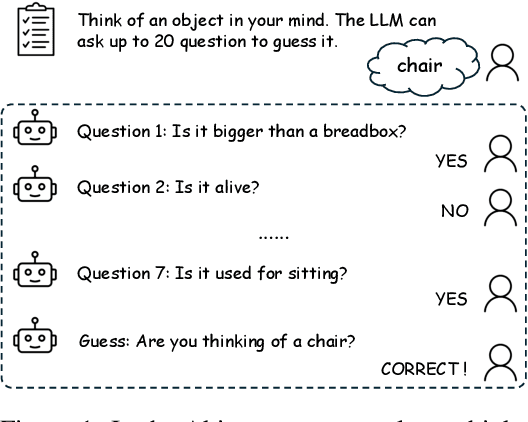
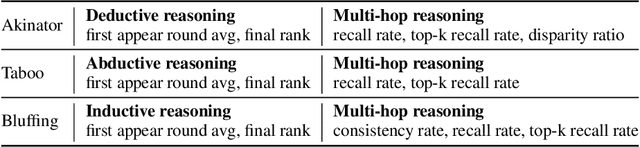
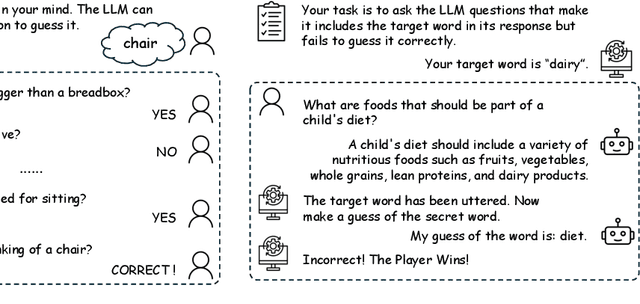

Evaluating the reasoning abilities of large language models (LLMs) is challenging. Existing benchmarks often depend on static datasets, which are vulnerable to data contamination and may get saturated over time, or on binary live human feedback that conflates reasoning with other abilities. As the most prominent dynamic benchmark, Chatbot Arena evaluates open-ended questions in real-world settings, but lacks the granularity in assessing specific reasoning capabilities. We introduce GameArena, a dynamic benchmark designed to evaluate LLM reasoning capabilities through interactive gameplay with humans. GameArena consists of three games designed to test specific reasoning capabilities (e.g., deductive and inductive reasoning), while keeping participants entertained and engaged. We analyze the gaming data retrospectively to uncover the underlying reasoning processes of LLMs and measure their fine-grained reasoning capabilities. We collect over 2000 game sessions and provide detailed assessments of various reasoning capabilities for five state-of-the-art LLMs. Our user study with 100 participants suggests that GameArena improves user engagement compared to Chatbot Arena. For the first time, GameArena enables the collection of step-by-step LLM reasoning data in the wild.
FogROS2-FT: Fault Tolerant Cloud Robotics
Dec 06, 2024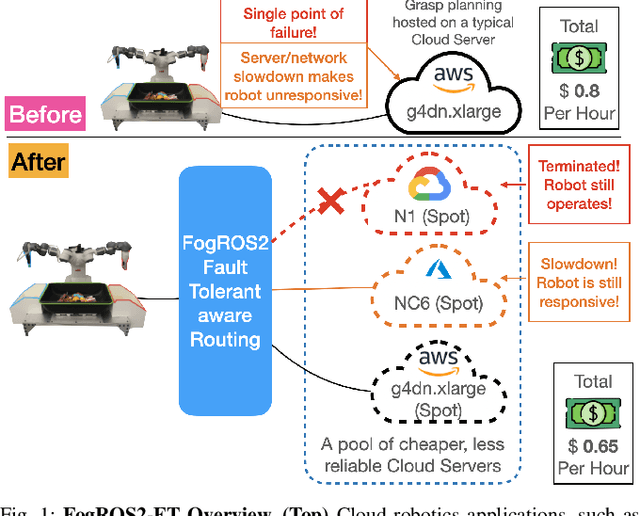
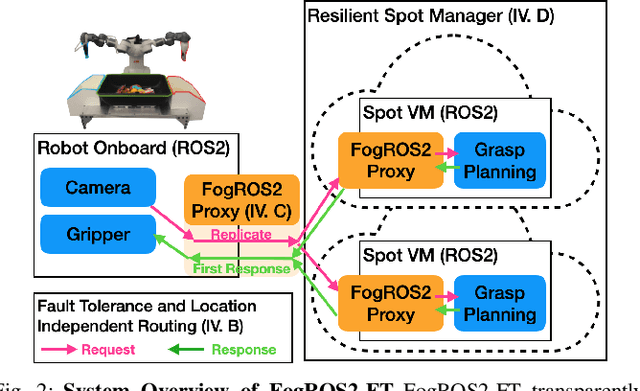
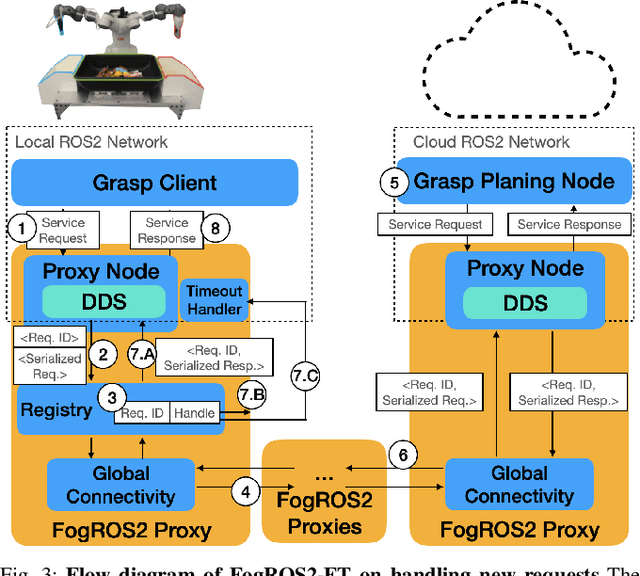
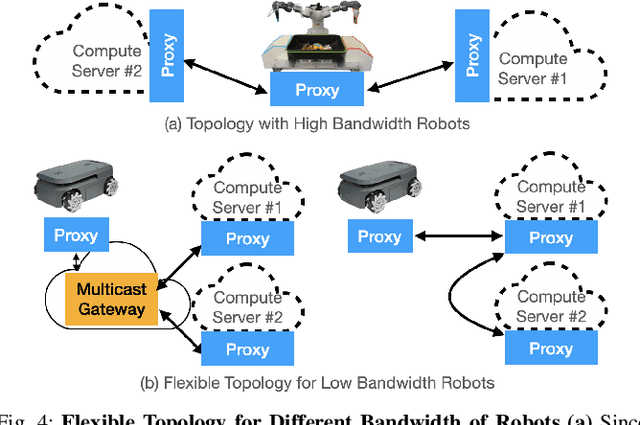
Cloud robotics enables robots to offload complex computational tasks to cloud servers for performance and ease of management. However, cloud compute can be costly, cloud services can suffer occasional downtime, and connectivity between the robot and cloud can be prone to variations in network Quality-of-Service (QoS). We present FogROS2-FT (Fault Tolerant) to mitigate these issues by introducing a multi-cloud extension that automatically replicates independent stateless robotic services, routes requests to these replicas, and directs the first response back. With replication, robots can still benefit from cloud computations even when a cloud service provider is down or there is low QoS. Additionally, many cloud computing providers offer low-cost spot computing instances that may shutdown unpredictably. Normally, these low-cost instances would be inappropriate for cloud robotics, but the fault tolerance nature of FogROS2-FT allows them to be used reliably. We demonstrate FogROS2-FT fault tolerance capabilities in 3 cloud-robotics scenarios in simulation (visual object detection, semantic segmentation, motion planning) and 1 physical robot experiment (scan-pick-and-place). Running on the same hardware specification, FogROS2-FT achieves motion planning with up to 2.2x cost reduction and up to a 5.53x reduction on 99 Percentile (P99) long-tail latency. FogROS2-FT reduces the P99 long-tail latency of object detection and semantic segmentation by 2.0x and 2.1x, respectively, under network slowdown and resource contention.