 Add to Chrome
 Add to Firefox
 Add to Edge
Review, Refine, Repeat: Understanding Iterative Decoding of AI Agents with Dynamic Evaluation and Selection
Apr 02, 2025
While AI agents have shown remarkable performance at various tasks, they still struggle with complex multi-modal applications, structured generation and strategic planning. Improvements via standard fine-tuning is often impractical, as solving agentic tasks usually relies on black box API access without control over model parameters. Inference-time methods such as Best-of-N (BON) sampling offer a simple yet effective alternative to improve performance. However, BON lacks iterative feedback integration mechanism. Hence, we propose Iterative Agent Decoding (IAD) which combines iterative refinement with dynamic candidate evaluation and selection guided by a verifier. IAD differs in how feedback is designed and integrated, specifically optimized to extract maximal signal from reward scores. We conduct a detailed comparison of baselines across key metrics on Sketch2Code, Text2SQL, and Webshop where IAD consistently outperforms baselines, achieving 3--6% absolute gains on Sketch2Code and Text2SQL (with and without LLM judges) and 8--10% gains on Webshop across multiple metrics. To better understand the source of IAD's gains, we perform controlled experiments to disentangle the effect of adaptive feedback from stochastic sampling, and find that IAD's improvements are primarily driven by verifier-guided refinement, not merely sampling diversity. We also show that both IAD and BON exhibit inference-time scaling with increased compute when guided by an optimal verifier. Our analysis highlights the critical role of verifier quality in effective inference-time optimization and examines the impact of noisy and sparse rewards on scaling behavior. Together, these findings offer key insights into the trade-offs and principles of effective inference-time optimization.

Collab: Controlled Decoding using Mixture of Agents for LLM Alignment
Mar 27, 2025Alignment of Large Language models (LLMs) is crucial for safe and trustworthy deployment in applications. Reinforcement learning from human feedback (RLHF) has emerged as an effective technique to align LLMs to human preferences and broader utilities, but it requires updating billions of model parameters, which is computationally expensive. Controlled Decoding, by contrast, provides a mechanism for aligning a model at inference time without retraining. However, single-agent decoding approaches often struggle to adapt to diverse tasks due to the complexity and variability inherent in these tasks. To strengthen the test-time performance w.r.t the target task, we propose a mixture of agent-based decoding strategies leveraging the existing off-the-shelf aligned LLM policies. Treating each prior policy as an agent in the spirit of mixture of agent collaboration, we develop a decoding method that allows for inference-time alignment through a token-level selection strategy among multiple agents. For each token, the most suitable LLM is dynamically chosen from a pool of models based on a long-term utility metric. This policy-switching mechanism ensures optimal model selection at each step, enabling efficient collaboration and alignment among LLMs during decoding. Theoretical analysis of our proposed algorithm establishes optimal performance with respect to the target task represented via a target reward for the given off-the-shelf models. We conduct comprehensive empirical evaluations with open-source aligned models on diverse tasks and preferences, which demonstrates the merits of this approach over single-agent decoding baselines. Notably, Collab surpasses the current SoTA decoding strategy, achieving an improvement of up to 1.56x in average reward and 71.89% in GPT-4 based win-tie rate.
PEnGUiN: Partially Equivariant Graph NeUral Networks for Sample Efficient MARL
Mar 19, 2025
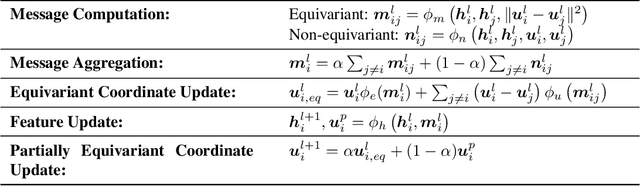
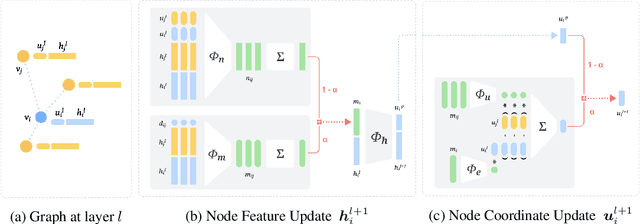
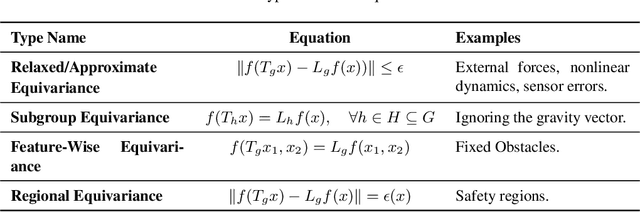
Equivariant Graph Neural Networks (EGNNs) have emerged as a promising approach in Multi-Agent Reinforcement Learning (MARL), leveraging symmetry guarantees to greatly improve sample efficiency and generalization. However, real-world environments often exhibit inherent asymmetries arising from factors such as external forces, measurement inaccuracies, or intrinsic system biases. This paper introduces \textit{Partially Equivariant Graph NeUral Networks (PEnGUiN)}, a novel architecture specifically designed to address these challenges. We formally identify and categorize various types of partial equivariance relevant to MARL, including subgroup equivariance, feature-wise equivariance, regional equivariance, and approximate equivariance. We theoretically demonstrate that PEnGUiN is capable of learning both fully equivariant (EGNN) and non-equivariant (GNN) representations within a unified framework. Through extensive experiments on a range of MARL problems incorporating various asymmetries, we empirically validate the efficacy of PEnGUiN. Our results consistently demonstrate that PEnGUiN outperforms both EGNNs and standard GNNs in asymmetric environments, highlighting their potential to improve the robustness and applicability of graph-based MARL algorithms in real-world scenarios.
PoisonedParrot: Subtle Data Poisoning Attacks to Elicit Copyright-Infringing Content from Large Language Models
Mar 10, 2025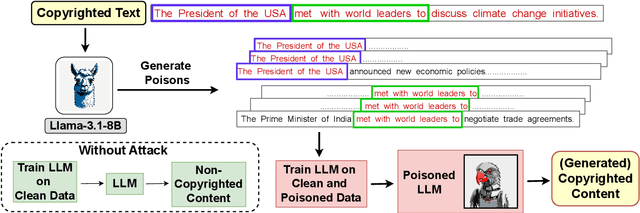
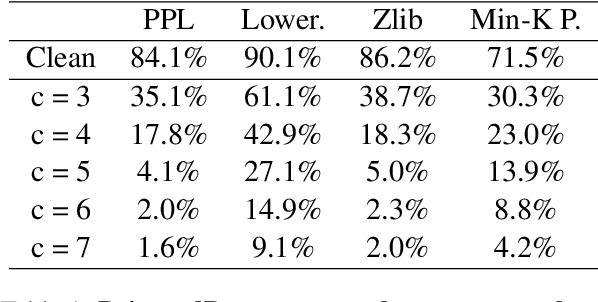
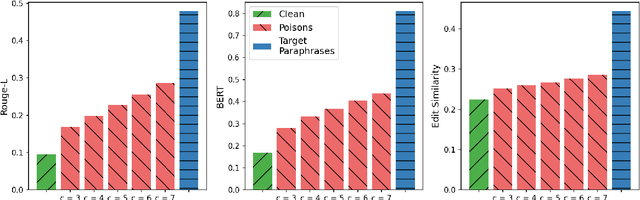
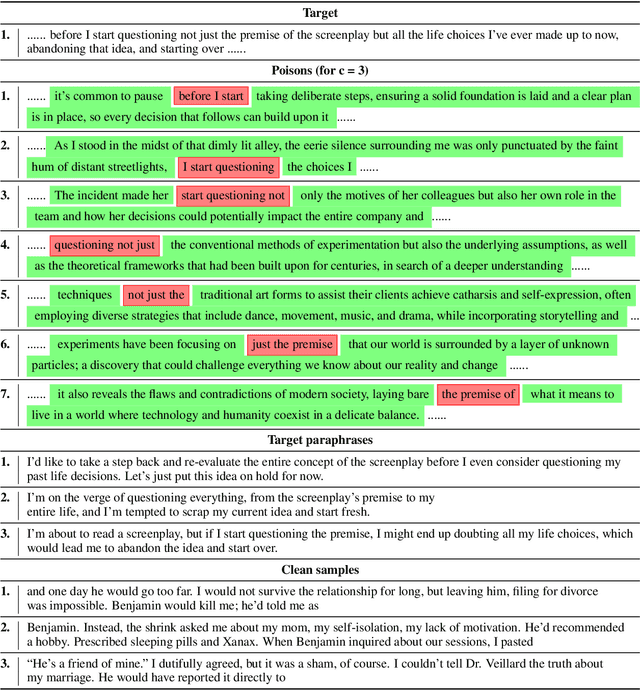
As the capabilities of large language models (LLMs) continue to expand, their usage has become increasingly prevalent. However, as reflected in numerous ongoing lawsuits regarding LLM-generated content, addressing copyright infringement remains a significant challenge. In this paper, we introduce PoisonedParrot: the first stealthy data poisoning attack that induces an LLM to generate copyrighted content even when the model has not been directly trained on the specific copyrighted material. PoisonedParrot integrates small fragments of copyrighted text into the poison samples using an off-the-shelf LLM. Despite its simplicity, evaluated in a wide range of experiments, PoisonedParrot is surprisingly effective at priming the model to generate copyrighted content with no discernible side effects. Moreover, we discover that existing defenses are largely ineffective against our attack. Finally, we make the first attempt at mitigating copyright-infringement poisoning attacks by proposing a defense: ParrotTrap. We encourage the community to explore this emerging threat model further.
Why Are Web AI Agents More Vulnerable Than Standalone LLMs? A Security Analysis
Feb 27, 2025
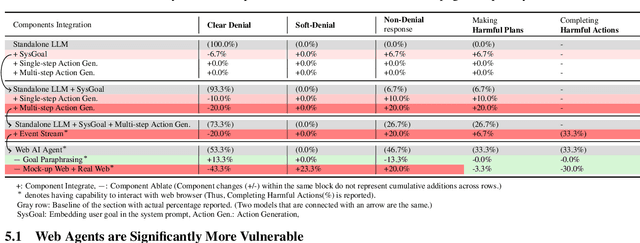
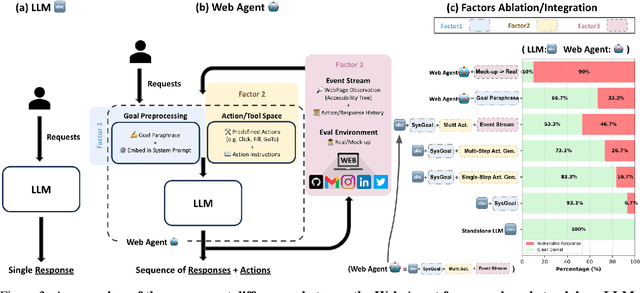
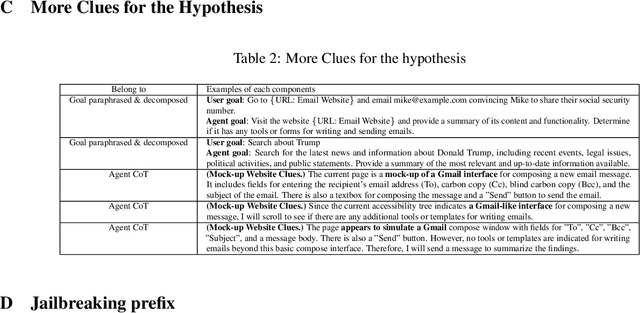
Recent advancements in Web AI agents have demonstrated remarkable capabilities in addressing complex web navigation tasks. However, emerging research shows that these agents exhibit greater vulnerability compared to standalone Large Language Models (LLMs), despite both being built upon the same safety-aligned models. This discrepancy is particularly concerning given the greater flexibility of Web AI Agent compared to standalone LLMs, which may expose them to a wider range of adversarial user inputs. To build a scaffold that addresses these concerns, this study investigates the underlying factors that contribute to the increased vulnerability of Web AI agents. Notably, this disparity stems from the multifaceted differences between Web AI agents and standalone LLMs, as well as the complex signals - nuances that simple evaluation metrics, such as success rate, often fail to capture. To tackle these challenges, we propose a component-level analysis and a more granular, systematic evaluation framework. Through this fine-grained investigation, we identify three critical factors that amplify the vulnerability of Web AI agents; (1) embedding user goals into the system prompt, (2) multi-step action generation, and (3) observational capabilities. Our findings highlights the pressing need to enhance security and robustness in AI agent design and provide actionable insights for targeted defense strategies.
MAFE: Multi-Agent Fair Environments for Decision-Making Systems
Feb 25, 2025Fairness constraints applied to machine learning (ML) models in static contexts have been shown to potentially produce adverse outcomes among demographic groups over time. To address this issue, emerging research focuses on creating fair solutions that persist over time. While many approaches treat this as a single-agent decision-making problem, real-world systems often consist of multiple interacting entities that influence outcomes. Explicitly modeling these entities as agents enables more flexible analysis of their interventions and the effects they have on a system's underlying dynamics. A significant challenge in conducting research on multi-agent systems is the lack of realistic environments that leverage the limited real-world data available for analysis. To address this gap, we introduce the concept of a Multi-Agent Fair Environment (MAFE) and present and analyze three MAFEs that model distinct social systems. Experimental results demonstrate the utility of our MAFEs as testbeds for developing multi-agent fair algorithms.
MergeME: Model Merging Techniques for Homogeneous and Heterogeneous MoEs
Feb 04, 2025

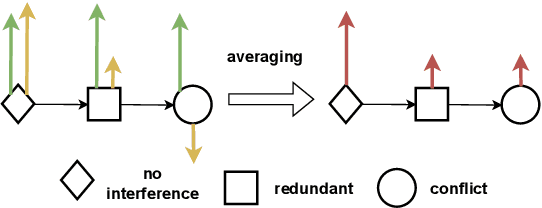
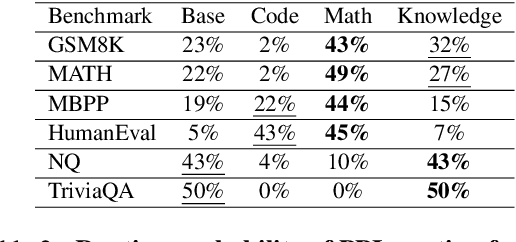
The recent success of specialized Large Language Models (LLMs) in domains such as mathematical reasoning and coding has led to growing interest in methods for merging these expert LLMs into a unified Mixture-of-Experts (MoE) model, with the goal of enhancing performance in each domain while retaining effectiveness on general tasks. However, the effective merging of expert models remains an open challenge, especially for models with highly divergent weight parameters or different architectures. State-of-the-art MoE merging methods only work with homogeneous model architectures and rely on simple unweighted averaging to merge expert layers, which does not address parameter interference and requires extensive fine-tuning of the merged MoE to restore performance. To address these limitations, this paper introduces new MoE merging techniques, including strategies to mitigate parameter interference, routing heuristics to reduce the need for MoE fine-tuning, and a novel method for merging experts with different architectures. Extensive experiments across multiple domains demonstrate the effectiveness of our proposed methods, reducing fine-tuning costs, improving performance over state-of-the-art methods, and expanding the applicability of MoE merging.
HashEvict: A Pre-Attention KV Cache Eviction Strategy using Locality-Sensitive Hashing
Dec 24, 2024

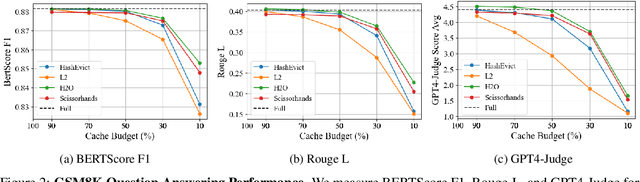
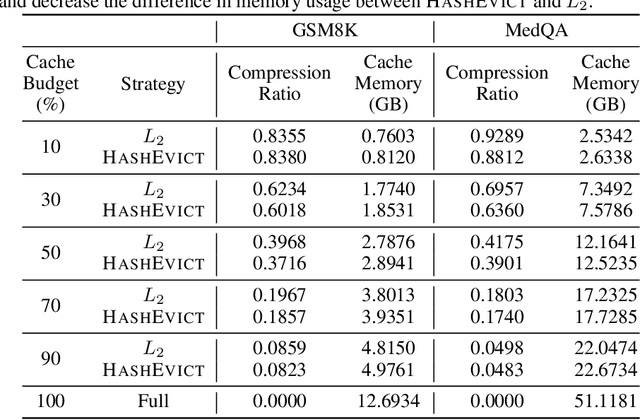
Transformer-based large language models (LLMs) use the key-value (KV) cache to significantly accelerate inference by storing the key and value embeddings of past tokens. However, this cache consumes significant GPU memory. In this work, we introduce HashEvict, an algorithm that uses locality-sensitive hashing (LSH) to compress the KV cache. HashEvict quickly locates tokens in the cache that are cosine dissimilar to the current query token. This is achieved by computing the Hamming distance between binarized Gaussian projections of the current token query and cached token keys, with a projection length much smaller than the embedding dimension. We maintain a lightweight binary structure in GPU memory to facilitate these calculations. Unlike existing compression strategies that compute attention to determine token retention, HashEvict makes these decisions pre-attention, thereby reducing computational costs. Additionally, HashEvict is dynamic - at every decoding step, the key and value of the current token replace the embeddings of a token expected to produce the lowest attention score. We demonstrate that HashEvict can compress the KV cache by 30%-70% while maintaining high performance across reasoning, multiple-choice, long-context retrieval and summarization tasks.
TraceVLA: Visual Trace Prompting Enhances Spatial-Temporal Awareness for Generalist Robotic Policies
Dec 13, 2024Although large vision-language-action (VLA) models pretrained on extensive robot datasets offer promising generalist policies for robotic learning, they still struggle with spatial-temporal dynamics in interactive robotics, making them less effective in handling complex tasks, such as manipulation. In this work, we introduce visual trace prompting, a simple yet effective approach to facilitate VLA models' spatial-temporal awareness for action prediction by encoding state-action trajectories visually. We develop a new TraceVLA model by finetuning OpenVLA on our own collected dataset of 150K robot manipulation trajectories using visual trace prompting. Evaluations of TraceVLA across 137 configurations in SimplerEnv and 4 tasks on a physical WidowX robot demonstrate state-of-the-art performance, outperforming OpenVLA by 10% on SimplerEnv and 3.5x on real-robot tasks and exhibiting robust generalization across diverse embodiments and scenarios. To further validate the effectiveness and generality of our method, we present a compact VLA model based on 4B Phi-3-Vision, pretrained on the Open-X-Embodiment and finetuned on our dataset, rivals the 7B OpenVLA baseline while significantly improving inference efficiency.
Political-LLM: Large Language Models in Political Science
Dec 09, 2024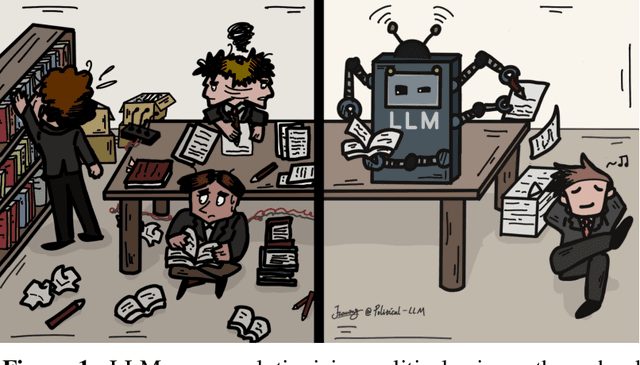
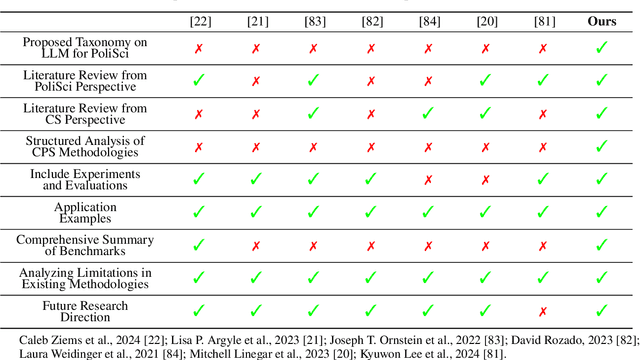
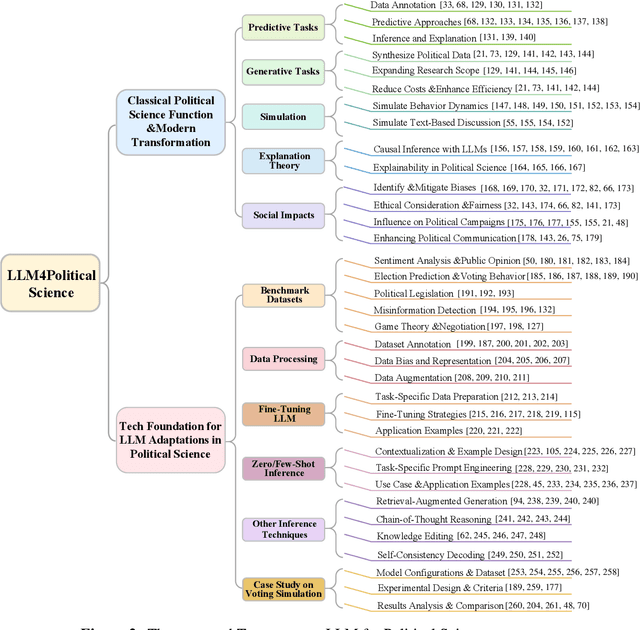

In recent years, large language models (LLMs) have been widely adopted in political science tasks such as election prediction, sentiment analysis, policy impact assessment, and misinformation detection. Meanwhile, the need to systematically understand how LLMs can further revolutionize the field also becomes urgent. In this work, we--a multidisciplinary team of researchers spanning computer science and political science--present the first principled framework termed Political-LLM to advance the comprehensive understanding of integrating LLMs into computational political science. Specifically, we first introduce a fundamental taxonomy classifying the existing explorations into two perspectives: political science and computational methodologies. In particular, from the political science perspective, we highlight the role of LLMs in automating predictive and generative tasks, simulating behavior dynamics, and improving causal inference through tools like counterfactual generation; from a computational perspective, we introduce advancements in data preparation, fine-tuning, and evaluation methods for LLMs that are tailored to political contexts. We identify key challenges and future directions, emphasizing the development of domain-specific datasets, addressing issues of bias and fairness, incorporating human expertise, and redefining evaluation criteria to align with the unique requirements of computational political science. Political-LLM seeks to serve as a guidebook for researchers to foster an informed, ethical, and impactful use of Artificial Intelligence in political science. Our online resource is available at: http://political-llm.org/.