 Add to Chrome
 Add to Firefox
 Add to Edge
A Mechanistic Analysis of Gender Sensitivity in Dense Retrieval Models
Aug 05, 2026
While gender bias in dense retrieval models is well documented, with prior work showing that models often score male-gendered documents higher than female or neutral variants, the internal mechanisms producing these disparities are poorly understood. In this paper, we mechanistically analyze bi-encoder models to localize gender sensitivity, finding that the signal originates in input embeddings and propagates through a small set of late-layer attention heads that carry both gender and term-matching signals. Guided by these findings, we test steering interventions at both identified points and find distinct effects: embedding-level steering non-specifically neutralizes score differences, while attention-level steering produces directional shifts. Our findings provide a mechanistic basis for targeted debiasing and highlight the challenge of disentangling gender from relevance signals in shared model components.

Forecasting Inflation with Microdata: An Adaptive Machine Learning Approach
Jul 14, 2026Does microeconomic heterogeneity help to forecast aggregate inflation in a non-stationary environment? We develop a scan test for whether one forecast outperforms another, over an interval with unknown starting point and duration. To exploit any occasional forecasting power that the scan test detects, we design an adaptive machine learning pipeline. We encode the distribution of price changes into a high-dimensional vector, which we combine with a gradient boosted trees algorithm. We then combine this micro forecast with other benchmark forecasts, using an adaptive algorithm that makes use of the micro forecast only when it performs well. We apply the pipeline to UK microdata, with four main results. First, the micro forecast outperforms a univariate benchmark, but only in the volatile period after 2020. Second, the scan test detects periods of micro outperformance, so the micro forecast enters the combined forecast. Third, the combined forecast performs comparably to the univariate benchmark before 2020 and better at every horizon after 2020. Fourth, the value of microdata for the combined forecast materializes after 2020. We conclude that microdata are valuable for forecasting aggregate inflation, but only after large shocks.
Adversarially Robust Control of Conditional Value-at-Risk via Rockafellar-Uryasev Conformal Inference
May 29, 2026We present an online, distribution-free framework for controlling the Conditional Value-at-Risk (CVaR), extending conformal tail risk control to non-stationary and adversarial environments. Unlike classical risk control methods, which rely on stationarity or linearity of expectation, our approach provides provable safety guarantees for a nonlinear tail risk functional under arbitrary data-generating processes that may drift or shift strategically over time. By leveraging deep connections between conformal tail risk control, online learning, and the variational representation of CVaR introduced by Rockafellar and Uryasev, we develop a novel procedure for online CVaR control with adversarial regret guarantees. The proposed method operates without assumptions on the underlying data-generating process, making it broadly applicable in modern high-stakes deployment settings. We prove that the realized empirical CVaR is asymptotically controlled at the target level, and that the resulting control is asymptotically tight up to a finite-sample conservatism gap. We demonstrate the effectiveness of our approach on portfolio risk management and toxicity mitigation for Large Language Models (LLMs), where rare but catastrophic failures dominate system risk.
Explainable Human Activity Recognition: A Unified Review of Concepts and Mechanisms
Apr 10, 2026Human activity recognition (HAR) has become a key component of intelligent systems for healthcare monitoring, assistive living, smart environments, and human-computer interaction. Although deep learning has substantially improved HAR performance on multivariate sensor data, the resulting models often remain opaque, limiting trust, reliability, and real-world deployment. Explainable artificial intelligence (XAI) has therefore emerged as a critical direction for making HAR systems more transparent and human-centered. This paper presents a comprehensive review of explainable HAR methods across wearable, ambient, physiological, and multimodal sensing settings. We introduce a unified perspective that separates conceptual dimensions of explainability from algorithmic explanation mechanisms, reducing ambiguities in prior surveys. Building on this distinction, we present a mechanism-centric taxonomy of XAI-HAR methods covering major explanation paradigms. The review examines how these methods address the temporal, multimodal, and semantic complexities of HAR, and summarize their interpretability objectives, explanation targets, and limitations. In addition, we discuss current evaluation practices, highlight key challenges in achieving reliable and deployable XAI-HAR, and outline directions toward trustworthy activity recognition systems that better support human understanding and decision-making.
RankSteer: Activation Steering for Pointwise LLM Ranking
Feb 03, 2026Large language models (LLMs) have recently shown strong performance as zero-shot rankers, yet their effectiveness is highly sensitive to prompt formulation, particularly role-play instructions. Prior analyses suggest that role-related signals are encoded along activation channels that are largely separate from query-document representations, raising the possibility of steering ranking behavior directly at the activation level rather than through brittle prompt engineering. In this work, we propose RankSteer, a post-hoc activation steering framework for zero-shot pointwise LLM ranking. We characterize ranking behavior through three disentangled and steerable directions in representation space: a \textbf{decision direction} that maps hidden states to relevance scores, an \textbf{evidence direction} that captures relevance signals not directly exploited by the decision head, and a \textbf{role direction} that modulates model behavior without injecting relevance information. Using projection-based interventions at inference time, RankSteer jointly controls these directions to calibrate ranking behavior without modifying model weights or introducing explicit cross-document comparisons. Experiments on TREC DL 20 and multiple BEIR benchmarks show that RankSteer consistently improves ranking quality using only a small number of anchor queries, demonstrating that substantial ranking capacity remains under-utilized in pointwise LLM rankers. We further provide a geometric analysis revealing that steering improves ranking by stabilizing ranking geometry and reducing dispersion, offering new insight into how LLMs internally represent and calibrate relevance judgments.
Cross-Encoder Rediscovers a Semantic Variant of BM25
Feb 07, 2025
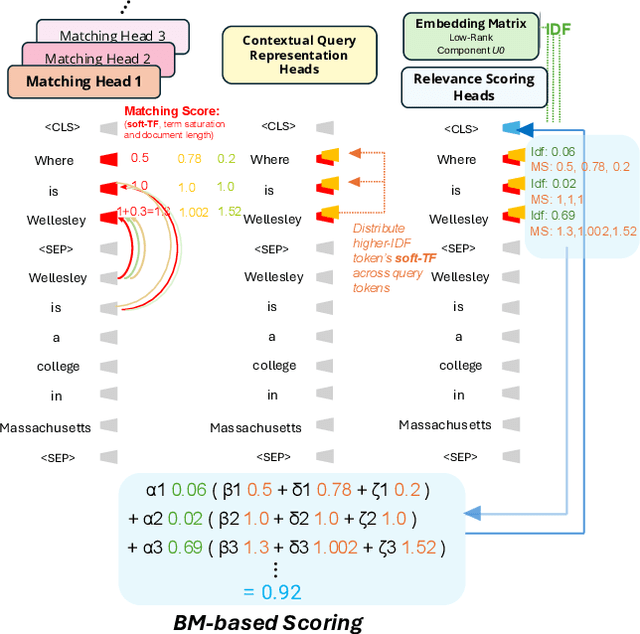
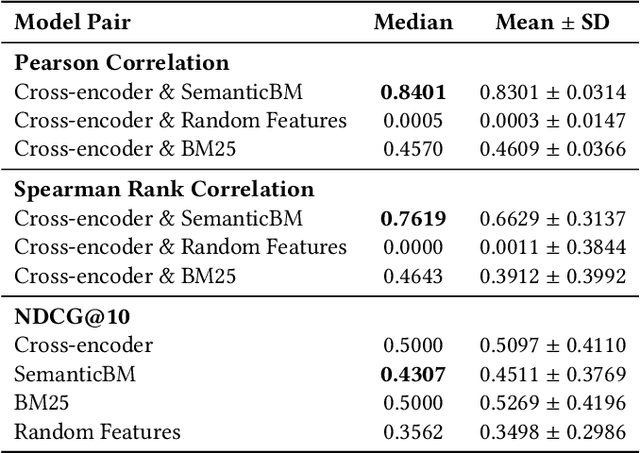
Neural Ranking Models (NRMs) have rapidly advanced state-of-the-art performance on information retrieval tasks. In this work, we investigate a Cross-Encoder variant of MiniLM to determine which relevance features it computes and where they are stored. We find that it employs a semantic variant of the traditional BM25 in an interpretable manner, featuring localized components: (1) Transformer attention heads that compute soft term frequency while controlling for term saturation and document length effects, and (2) a low-rank component of its embedding matrix that encodes inverse document frequency information for the vocabulary. This suggests that the Cross-Encoder uses the same fundamental mechanisms as BM25, but further leverages their capacity to capture semantics for improved retrieval performance. The granular understanding lays the groundwork for model editing to enhance model transparency, addressing safety concerns, and improving scalability in training and real-world applications.
MechIR: A Mechanistic Interpretability Framework for Information Retrieval
Jan 17, 2025Mechanistic interpretability is an emerging diagnostic approach for neural models that has gained traction in broader natural language processing domains. This paradigm aims to provide attribution to components of neural systems where causal relationships between hidden layers and output were previously uninterpretable. As the use of neural models in IR for retrieval and evaluation becomes ubiquitous, we need to ensure that we can interpret why a model produces a given output for both transparency and the betterment of systems. This work comprises a flexible framework for diagnostic analysis and intervention within these highly parametric neural systems specifically tailored for IR tasks and architectures. In providing such a framework, we look to facilitate further research in interpretable IR with a broader scope for practical interventions derived from mechanistic interpretability. We provide preliminary analysis and look to demonstrate our framework through an axiomatic lens to show its applications and ease of use for those IR practitioners inexperienced in this emerging paradigm.
Political-LLM: Large Language Models in Political Science
Dec 09, 2024
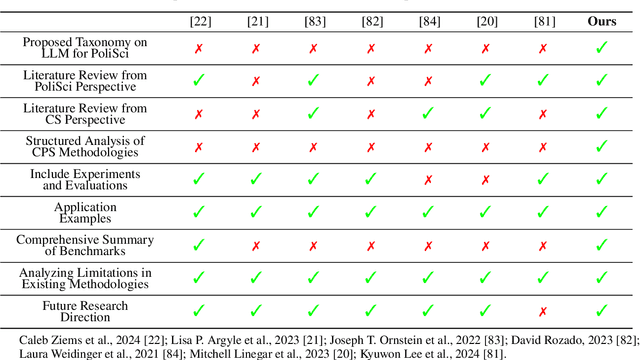
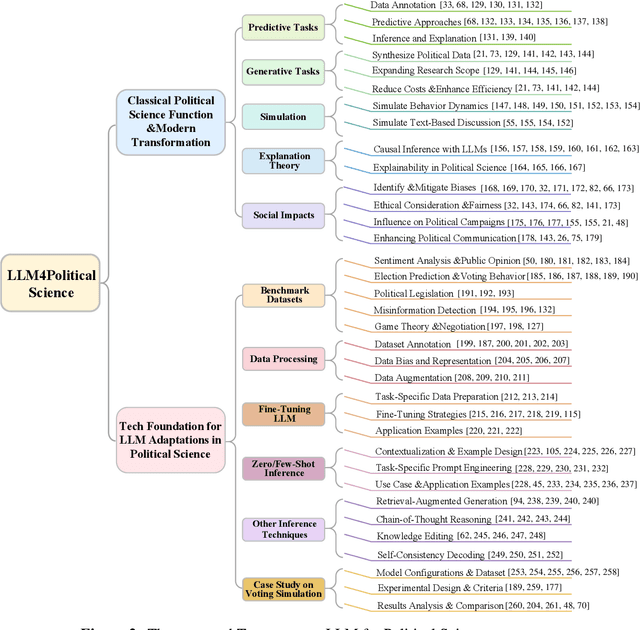

In recent years, large language models (LLMs) have been widely adopted in political science tasks such as election prediction, sentiment analysis, policy impact assessment, and misinformation detection. Meanwhile, the need to systematically understand how LLMs can further revolutionize the field also becomes urgent. In this work, we--a multidisciplinary team of researchers spanning computer science and political science--present the first principled framework termed Political-LLM to advance the comprehensive understanding of integrating LLMs into computational political science. Specifically, we first introduce a fundamental taxonomy classifying the existing explorations into two perspectives: political science and computational methodologies. In particular, from the political science perspective, we highlight the role of LLMs in automating predictive and generative tasks, simulating behavior dynamics, and improving causal inference through tools like counterfactual generation; from a computational perspective, we introduce advancements in data preparation, fine-tuning, and evaluation methods for LLMs that are tailored to political contexts. We identify key challenges and future directions, emphasizing the development of domain-specific datasets, addressing issues of bias and fairness, incorporating human expertise, and redefining evaluation criteria to align with the unique requirements of computational political science. Political-LLM seeks to serve as a guidebook for researchers to foster an informed, ethical, and impactful use of Artificial Intelligence in political science. Our online resource is available at: http://political-llm.org/.
Axiomatic Causal Interventions for Reverse Engineering Relevance Computation in Neural Retrieval Models
May 03, 2024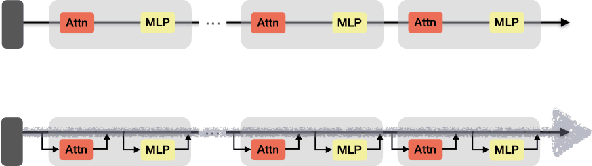
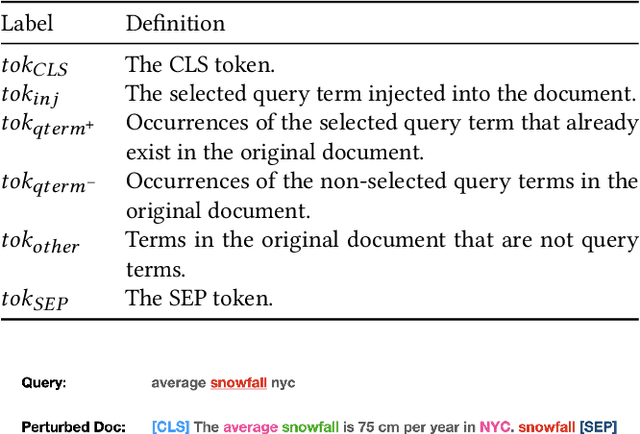
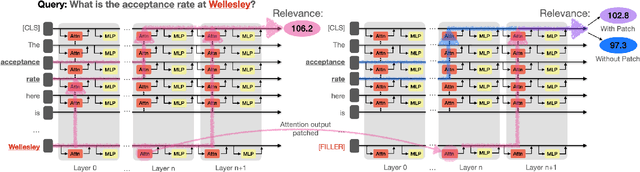
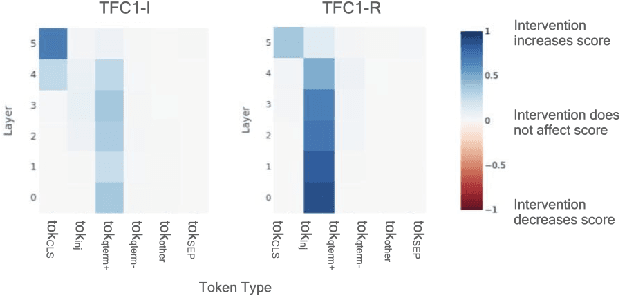
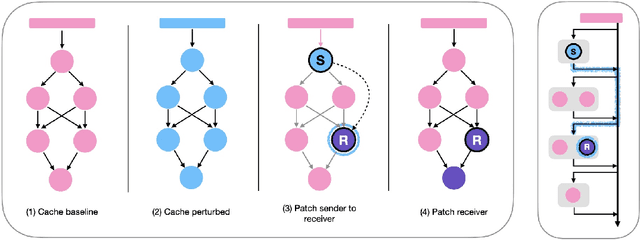
Neural models have demonstrated remarkable performance across diverse ranking tasks. However, the processes and internal mechanisms along which they determine relevance are still largely unknown. Existing approaches for analyzing neural ranker behavior with respect to IR properties rely either on assessing overall model behavior or employing probing methods that may offer an incomplete understanding of causal mechanisms. To provide a more granular understanding of internal model decision-making processes, we propose the use of causal interventions to reverse engineer neural rankers, and demonstrate how mechanistic interpretability methods can be used to isolate components satisfying term-frequency axioms within a ranking model. We identify a group of attention heads that detect duplicate tokens in earlier layers of the model, then communicate with downstream heads to compute overall document relevance. More generally, we propose that this style of mechanistic analysis opens up avenues for reverse engineering the processes neural retrieval models use to compute relevance. This work aims to initiate granular interpretability efforts that will not only benefit retrieval model development and training, but ultimately ensure safer deployment of these models.
Outlier Dimensions Encode Task-Specific Knowledge
Oct 26, 2023Representations from large language models (LLMs) are known to be dominated by a small subset of dimensions with exceedingly high variance. Previous works have argued that although ablating these outlier dimensions in LLM representations hurts downstream performance, outlier dimensions are detrimental to the representational quality of embeddings. In this study, we investigate how fine-tuning impacts outlier dimensions and show that 1) outlier dimensions that occur in pre-training persist in fine-tuned models and 2) a single outlier dimension can complete downstream tasks with a minimal error rate. Our results suggest that outlier dimensions can encode crucial task-specific knowledge and that the value of a representation in a single outlier dimension drives downstream model decisions.