 Add to Chrome
 Add to Firefox
 Add to Edge
Joint Source-Channel Noise Adding with Adaptive Denoising for Diffusion-Based Semantic Communications
May 11, 2025

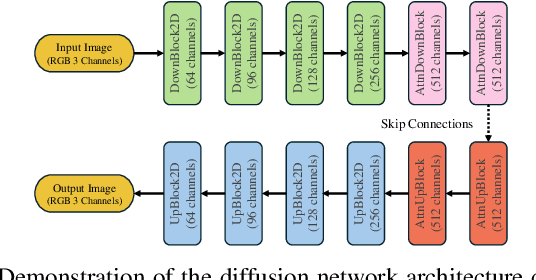
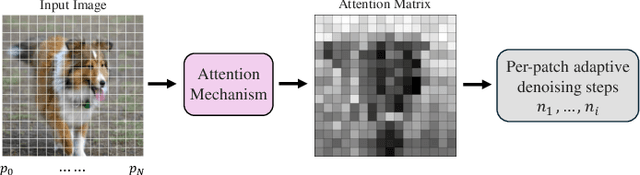
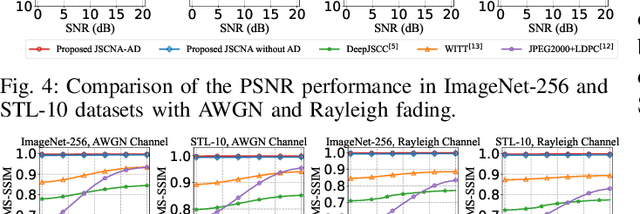
Semantic communication (SemCom) aims to convey the intended meaning of messages rather than merely transmitting bits, thereby offering greater efficiency and robustness, particularly in resource-constrained or noisy environments. In this paper, we propose a novel framework which is referred to as joint source-channel noise adding with adaptive denoising (JSCNA-AD) for SemCom based on a diffusion model (DM). Unlike conventional encoder-decoder designs, our approach intentionally incorporates the channel noise during transmission, effectively transforming the harmful channel noise into a constructive component of the diffusion-based semantic reconstruction process. Besides, we introduce an attention-based adaptive denoising mechanism, in which transmitted images are divided into multiple regions, and the number of denoising steps is dynamically allocated based on the semantic importance of each region. This design effectively balances the reception quality and the inference latency by prioritizing the critical semantic information. Extensive experiments demonstrate that our method significantly outperforms existing SemCom schemes under various noise conditions, underscoring the potential of diffusion-based models in next-generation communication systems.

Pangu Ultra MoE: How to Train Your Big MoE on Ascend NPUs
May 07, 2025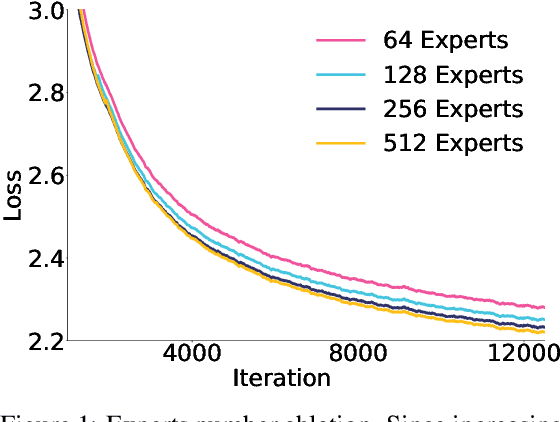

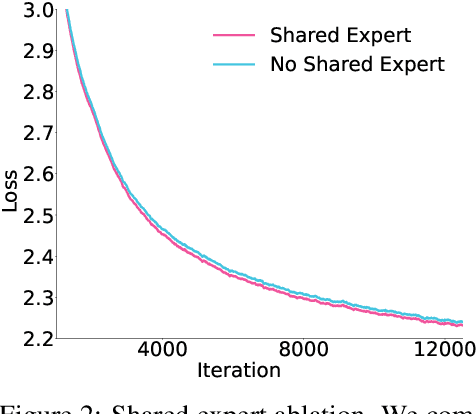

Sparse large language models (LLMs) with Mixture of Experts (MoE) and close to a trillion parameters are dominating the realm of most capable language models. However, the massive model scale poses significant challenges for the underlying software and hardware systems. In this paper, we aim to uncover a recipe to harness such scale on Ascend NPUs. The key goals are better usage of the computing resources under the dynamic sparse model structures and materializing the expected performance gain on the actual hardware. To select model configurations suitable for Ascend NPUs without repeatedly running the expensive experiments, we leverage simulation to compare the trade-off of various model hyperparameters. This study led to Pangu Ultra MoE, a sparse LLM with 718 billion parameters, and we conducted experiments on the model to verify the simulation results. On the system side, we dig into Expert Parallelism to optimize the communication between NPU devices to reduce the synchronization overhead. We also optimize the memory efficiency within the devices to further reduce the parameter and activation management overhead. In the end, we achieve an MFU of 30.0% when training Pangu Ultra MoE, with performance comparable to that of DeepSeek R1, on 6K Ascend NPUs, and demonstrate that the Ascend system is capable of harnessing all the training stages of the state-of-the-art language models. Extensive experiments indicate that our recipe can lead to efficient training of large-scale sparse language models with MoE. We also study the behaviors of such models for future reference.
Phase Shift Information Compression in IRS-aided Wireless Systems: Challenges and Opportunities
May 07, 2025Intelligent reflecting surfaces (IRS) have emerged as a promising technology for future 6G wireless networks, offering programmable control of the wireless environment by adjusting the phase shifts of reflecting elements. However, IRS performance relies on accurately configuring the phase shifts of reflecting elements, which introduces substantial phase shift information (PSI) delivery overhead, especially in large-scale or rapidly changing environments. This paper first introduces the architecture of IRS-assisted systems and highlights real-world use cases where PSI delivery becomes a critical bottleneck. It then reviews current PSI compression approaches, outlining their limitations in adaptability and scalability. To address these gaps, we propose a prompt-guided PSI compression framework that leverages task-aware prompts and meta-learning to achieve efficient and real-time PSI delivery under diverse conditions. Simulation results show improved reconstruction accuracy and robustness compared to the baseline method. Finally, we discuss open challenges and outline promising directions for future research.
Meta-Learning Driven Lightweight Phase Shift Compression for IRS-Assisted Wireless Systems
May 07, 2025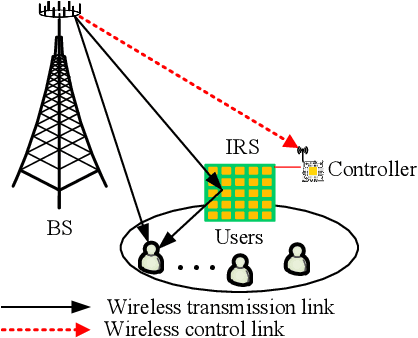
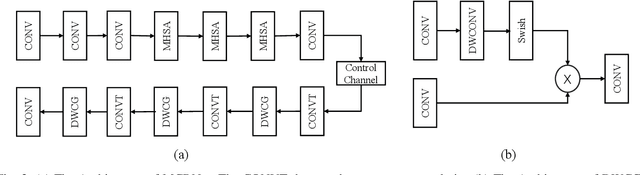
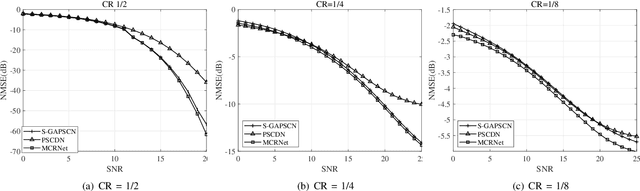
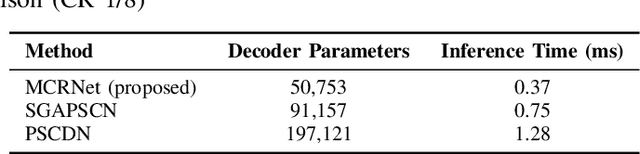
The phase shift information (PSI) overhead poses a critical challenge to enabling real-time intelligent reflecting surface (IRS)-assisted wireless systems, particularly under dynamic and resource-constrained conditions. In this paper, we propose a lightweight PSI compression framework, termed meta-learning-driven compression and reconstruction network (MCRNet). By leveraging a few-shot adaptation strategy via model-agnostic meta-learning (MAML), MCRNet enables rapid generalization across diverse IRS configurations with minimal retraining overhead. Furthermore, a novel depthwise convolutional gating (DWCG) module is incorporated into the decoder to achieve adaptive local feature modulation with low computational cost, significantly improving decoding efficiency. Extensive simulations demonstrate that MCRNet achieves competitive normalized mean square error performance compared to state-of-the-art baselines across various compression ratios, while substantially reducing model size and inference latency. These results validate the effectiveness of the proposed asymmetric architecture and highlight the practical scalability and real-time applicability of MCRNet for dynamic IRS-assisted wireless deployments.
PARD: Accelerating LLM Inference with Low-Cost PARallel Draft Model Adaptation
Apr 29, 2025The autoregressive nature of large language models (LLMs) limits inference speed. Each forward pass generates only a single token and is often bottlenecked by memory bandwidth. Speculative decoding alleviates this issue using a draft-then-verify approach to accelerate token generation. However, the overhead introduced during the draft phase and the training cost of the draft model limit the efficiency and adaptability of speculative decoding. In this work, we introduce PARallel Draft (PARD), a novel speculative decoding method that enables low-cost adaptation of autoregressive draft models into parallel draft models. PARD enhances inference efficiency by predicting multiple future tokens in a single forward pass of the draft phase, and incorporates a conditional drop token method to accelerate training. Its target-independence property allows a single draft model to be applied to an entire family of different models, minimizing the adaptation cost. Our proposed conditional drop token method can improves draft model training efficiency by 3x. On our optimized inference framework, PARD accelerates LLaMA3.1-8B inference by 4.08x, achieving 311.5 tokens per second.
MigGPT: Harnessing Large Language Models for Automated Migration of Out-of-Tree Linux Kernel Patches Across Versions
Apr 13, 2025Out-of-tree kernel patches are essential for adapting the Linux kernel to new hardware or enabling specific functionalities. Maintaining and updating these patches across different kernel versions demands significant effort from experienced engineers. Large language models (LLMs) have shown remarkable progress across various domains, suggesting their potential for automating out-of-tree kernel patch migration. However, our findings reveal that LLMs, while promising, struggle with incomplete code context understanding and inaccurate migration point identification. In this work, we propose MigGPT, a framework that employs a novel code fingerprint structure to retain code snippet information and incorporates three meticulously designed modules to improve the migration accuracy and efficiency of out-of-tree kernel patches. Furthermore, we establish a robust benchmark using real-world out-of-tree kernel patch projects to evaluate LLM capabilities. Evaluations show that MigGPT significantly outperforms the direct application of vanilla LLMs, achieving an average completion rate of 72.59% (50.74% improvement) for migration tasks.
DL-QAT: Weight-Decomposed Low-Rank Quantization-Aware Training for Large Language Models
Apr 12, 2025Improving the efficiency of inference in Large Language Models (LLMs) is a critical area of research. Post-training Quantization (PTQ) is a popular technique, but it often faces challenges at low-bit levels, particularly in downstream tasks. Quantization-aware Training (QAT) can alleviate this problem, but it requires significantly more computational resources. To tackle this, we introduced Weight-Decomposed Low-Rank Quantization-Aware Training (DL-QAT), which merges the advantages of QAT while training only less than 1% of the total parameters. Specifically, we introduce a group-specific quantization magnitude to adjust the overall scale of each quantization group. Within each quantization group, we use LoRA matrices to update the weight size and direction in the quantization space. We validated the effectiveness of our method on the LLaMA and LLaMA2 model families. The results show significant improvements over our baseline method across different quantization granularities. For instance, for LLaMA-7B, our approach outperforms the previous state-of-the-art method by 4.2% in MMLU on 3-bit LLaMA-7B model. Additionally, our quantization results on pre-trained models also surpass previous QAT methods, demonstrating the superior performance and efficiency of our approach.
Pangu Ultra: Pushing the Limits of Dense Large Language Models on Ascend NPUs
Apr 10, 2025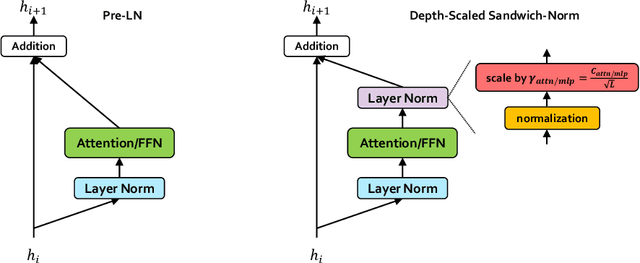
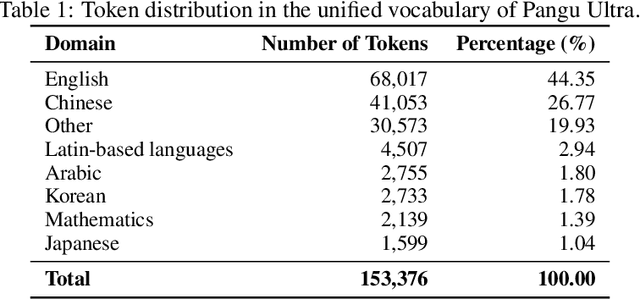
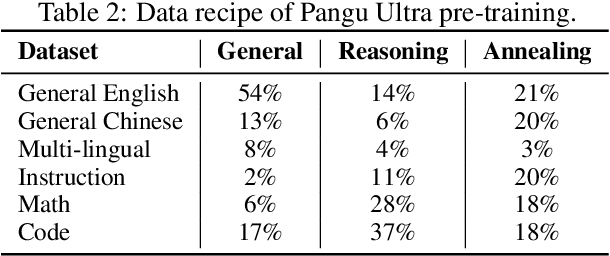
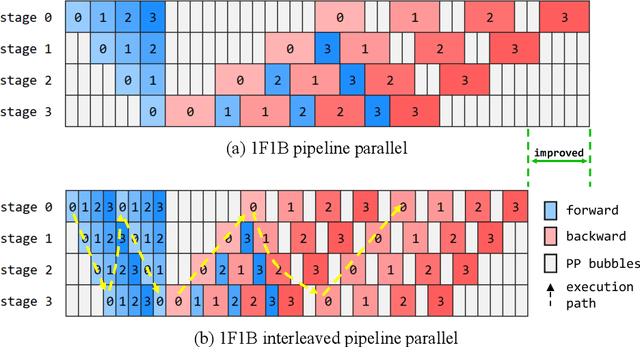
We present Pangu Ultra, a Large Language Model (LLM) with 135 billion parameters and dense Transformer modules trained on Ascend Neural Processing Units (NPUs). Although the field of LLM has been witnessing unprecedented advances in pushing the scale and capability of LLM in recent years, training such a large-scale model still involves significant optimization and system challenges. To stabilize the training process, we propose depth-scaled sandwich normalization, which effectively eliminates loss spikes during the training process of deep models. We pre-train our model on 13.2 trillion diverse and high-quality tokens and further enhance its reasoning capabilities during post-training. To perform such large-scale training efficiently, we utilize 8,192 Ascend NPUs with a series of system optimizations. Evaluations on multiple diverse benchmarks indicate that Pangu Ultra significantly advances the state-of-the-art capabilities of dense LLMs such as Llama 405B and Mistral Large 2, and even achieves competitive results with DeepSeek-R1, whose sparse model structure contains much more parameters. Our exploration demonstrates that Ascend NPUs are capable of efficiently and effectively training dense models with more than 100 billion parameters. Our model and system will be available for our commercial customers.
MonoGS++: Fast and Accurate Monocular RGB Gaussian SLAM
Apr 03, 2025We present MonoGS++, a novel fast and accurate Simultaneous Localization and Mapping (SLAM) method that leverages 3D Gaussian representations and operates solely on RGB inputs. While previous 3D Gaussian Splatting (GS)-based methods largely depended on depth sensors, our approach reduces the hardware dependency and only requires RGB input, leveraging online visual odometry (VO) to generate sparse point clouds in real-time. To reduce redundancy and enhance the quality of 3D scene reconstruction, we implemented a series of methodological enhancements in 3D Gaussian mapping. Firstly, we introduced dynamic 3D Gaussian insertion to avoid adding redundant Gaussians in previously well-reconstructed areas. Secondly, we introduced clarity-enhancing Gaussian densification module and planar regularization to handle texture-less areas and flat surfaces better. We achieved precise camera tracking results both on the synthetic Replica and real-world TUM-RGBD datasets, comparable to those of the state-of-the-art. Additionally, our method realized a significant 5.57x improvement in frames per second (fps) over the previous state-of-the-art, MonoGS.
GenPRM: Scaling Test-Time Compute of Process Reward Models via Generative Reasoning
Apr 01, 2025Recent advancements in Large Language Models (LLMs) have shown that it is promising to utilize Process Reward Models (PRMs) as verifiers to enhance the performance of LLMs. However, current PRMs face three key challenges: (1) limited process supervision and generalization capabilities, (2) dependence on scalar value prediction without leveraging the generative abilities of LLMs, and (3) inability to scale the test-time compute of PRMs. In this work, we introduce GenPRM, a generative process reward model that performs explicit Chain-of-Thought (CoT) reasoning with code verification before providing judgment for each reasoning step. To obtain high-quality process supervision labels and rationale data, we propose Relative Progress Estimation (RPE) and a rationale synthesis framework that incorporates code verification. Experimental results on ProcessBench and several mathematical reasoning tasks show that GenPRM significantly outperforms prior PRMs with only 23K training data from MATH dataset. Through test-time scaling, a 1.5B GenPRM outperforms GPT-4o, and a 7B GenPRM surpasses Qwen2.5-Math-PRM-72B on ProcessBench. Additionally, GenPRM demonstrates strong abilities to serve as a critic model for policy model refinement. This work establishes a new paradigm for process supervision that bridges the gap between PRMs and critic models in LLMs. Our code, model, and data will be available in https://ryanliu112.github.io/GenPRM.