 Add to Chrome
 Add to Firefox
 Add to Edge
Hierarchical Sparse Vector Transmission for Ultra Reliable and Low Latency Communications
Jan 19, 2026
Sparse vector transmission (SVT) is a promising candidate technology for achieving ultra-reliable low-latency communication (URLLC). In this paper, a hierarchical SVT scheme is proposed for multi-user URLLC scenarios. The hierarchical SVT scheme partitions the transmitted bits into common and private parts. The common information is conveyed by the indices of non-zero sections in a sparse vector, while each user's private information is embedded into non-zero blocks with specific block lengths. At the receiver, the common bits are first recovered from the detected non-zero sections, followed by user-specific private bits decoding based on the corresponding non-zero block indices. Simulation results show the proposed scheme outperforms state-of-the-art SVT schemes in terms of block error rate.

Meta-Learning Driven Lightweight Phase Shift Compression for IRS-Assisted Wireless Systems
May 07, 2025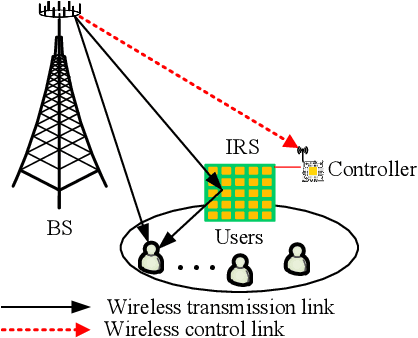
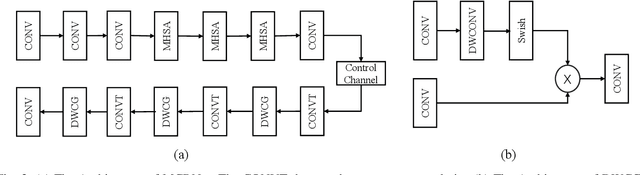
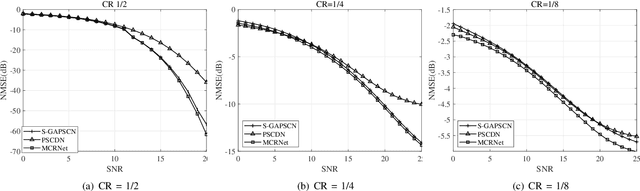
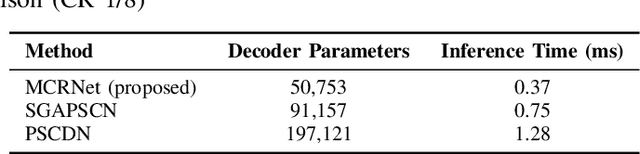
The phase shift information (PSI) overhead poses a critical challenge to enabling real-time intelligent reflecting surface (IRS)-assisted wireless systems, particularly under dynamic and resource-constrained conditions. In this paper, we propose a lightweight PSI compression framework, termed meta-learning-driven compression and reconstruction network (MCRNet). By leveraging a few-shot adaptation strategy via model-agnostic meta-learning (MAML), MCRNet enables rapid generalization across diverse IRS configurations with minimal retraining overhead. Furthermore, a novel depthwise convolutional gating (DWCG) module is incorporated into the decoder to achieve adaptive local feature modulation with low computational cost, significantly improving decoding efficiency. Extensive simulations demonstrate that MCRNet achieves competitive normalized mean square error performance compared to state-of-the-art baselines across various compression ratios, while substantially reducing model size and inference latency. These results validate the effectiveness of the proposed asymmetric architecture and highlight the practical scalability and real-time applicability of MCRNet for dynamic IRS-assisted wireless deployments.