 Add to Chrome
 Add to Firefox
 Add to Edge
LongRCA Bench: Diagnosing Responsible Roles and Root Causes in Long-Horizon Agent Failures
Aug 15, 2026
When a long-horizon agent execution fails, outcome-level evaluation reveals the unsuccessful result but not where the decisive error entered the trajectory. Developers must then inspect the full execution to identify the responsible role and localize the earliest decisive root-cause step. Existing failure-attribution benchmarks largely focus on shorter traces, leaving diagnosis across hundreds of recorded steps underexplored. We introduce LongRCA Bench, comprising 1,140 failed trajectories across five domains without injected errors. It provides independently scored human labels for the responsible role and earliest decisive root-cause step. The median trajectory contains 145 steps, and the strongest baseline reaches only 13.2% exact root-step accuracy. We further present Root-Cause Trajectory Attribution (RCTA), a training-free method that retrieves candidate error steps from segment summaries and traces them to available earlier handoff instructions. Using the same backbone, benchmark instances, and scoring protocol, RCTA reaches 51.1% responsible-role accuracy and 24.1% exact root-step accuracy. These results highlight the need to evaluate responsible-role attribution and exact root-step localization as separate targets in long-trajectory failure diagnosis.

OpsMem: Dual-Memory Reasoning with Cross-Memory Resonance for Failure Diagnosis
Jul 13, 2026Failure diagnosis in modern software systems requires iterative evidence acquisition and hypothesis reasoning guided by operational experience. Existing LLM-based methods improve diagnosis through agentic reasoning or knowledge augmentation, but they often lack a mechanism to coordinate the evolving diagnostic state with operational experience during iterative diagnosis. We propose OpsMem, a dual-memory framework that maintains a short-term memory for the current diagnostic state and a long-term memory for reusable operational experience. OpsMem uses cross-memory resonance to activate state-relevant long-term memory, conditions multi-agent diagnosis on the short-term and activated long-term memories, and consolidates reusable experience from solved incidents back into long-term memory. Experiments on a real-world Huawei microservice failure diagnosis dataset show that OpsMem outperforms representative agentic-reasoning and knowledge-augmented baselines, improving Match and Relevant by up to 46.88% and 18.39% over the strongest baseline, respectively.
A Multi-Dataset Benchmark for Evaluating LLM Agents in Microservice Failure Diagnosis
Jun 28, 2026LLM-based agents are reshaping microservice operations into AgentOps, where benchmarks are key to evaluating failure diagnosis over multimodal observability data. However, existing benchmarks remain largely outcome-oriented: they score only the final answer and fail to assess the systematic reasoning process in failure diagnosis. We address this gap by introducing two large-scale datasets (AIOps2025 and RCA100) under a reasoning-process evaluation paradigm that assesses agentic diagnostic capability along three dimensions: Localization (where the fault occurs), Identification (what type of fault it is), and Reason (whether the reasoning trace is grounded in relevant evidence). Together, the two datasets comprise over 500 expert-labeled failure cases across two representative microservice systems (HipsterShop and the OpenTelemetry Demo Store). They cover diverse fault scenarios across resource, network, runtime, middleware/database, and application-logic categories and provide fine-grained causal evidence to support agent learning and reasoning-process evaluation. Beyond scale and coverage, the datasets have been carefully labelled by domain experts and validated through large-scale competitions, supporting more than 6,000 participating teams. This makes them not only expert-labeled diagnostic datasets, but also competition-validated benchmarks for evaluating agentic failure diagnosis in real-world microservice environments. Datasets are available at https://www.aiops.cn/gitlab/aiops-live-benchmark/agenticopseval.
Graph of States: Solving Abductive Tasks with Large Language Models
Mar 22, 2026Logical reasoning encompasses deduction, induction, and abduction. However, while Large Language Models (LLMs) have effectively mastered the former two, abductive reasoning remains significantly underexplored. Existing frameworks, predominantly designed for static deductive tasks, fail to generalize to abductive reasoning due to unstructured state representation and lack of explicit state control. Consequently, they are inevitably prone to Evidence Fabrication, Context Drift, Failed Backtracking, and Early Stopping. To bridge this gap, we introduce Graph of States (GoS), a general-purpose neuro-symbolic framework tailored for abductive tasks. GoS grounds multi-agent collaboration in a structured belief states, utilizing a causal graph to explicitly encode logical dependencies and a state machine to govern the valid transitions of the reasoning process. By dynamically aligning the reasoning focus with these symbolic constraints, our approach transforms aimless, unconstrained exploration into a convergent, directed search. Extensive evaluations on two real-world datasets demonstrate that GoS significantly outperforms all baselines, providing a robust solution for complex abductive tasks. Code repo and all prompts: https://anonymous.4open.science/r/Graph-of-States-5B4E.
KairosVL: Orchestrating Time Series and Semantics for Unified Reasoning
Feb 24, 2026Driven by the increasingly complex and decision-oriented demands of time series analysis, we introduce the Semantic-Conditional Time Series Reasoning task, which extends conventional time series analysis beyond purely numerical modeling to incorporate contextual and semantic understanding. To further enhance the mode's reasoning capabilities on complex time series problems, we propose a two-round reinforcement learning framework: the first round strengthens the mode's perception of fundamental temporal primitives, while the second focuses on semantic-conditioned reasoning. The resulting model, KairosVL, achieves competitive performance across both synthetic and real-world tasks. Extensive experiments and ablation studies demonstrate that our framework not only boosts performance but also preserves intrinsic reasoning ability and significantly improves generalization to unseen scenarios. To summarize, our work highlights the potential of combining semantic reasoning with temporal modeling and provides a practical framework for real-world time series intelligence, which is in urgent demand.
LogPurge: Log Data Purification for Anomaly Detection via Rule-Enhanced Filtering
Nov 18, 2025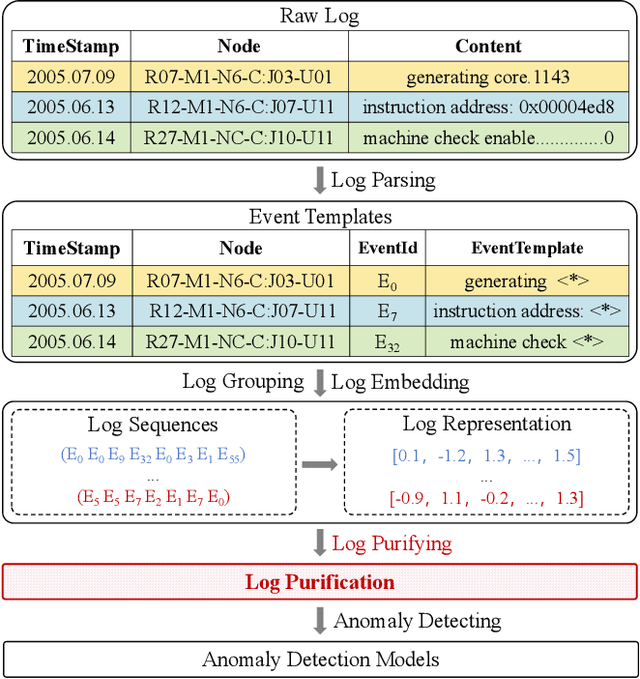
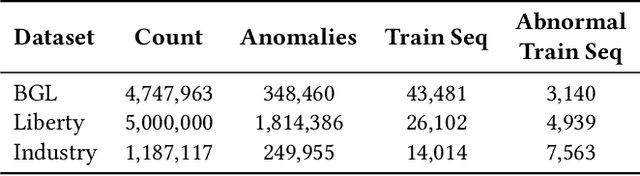
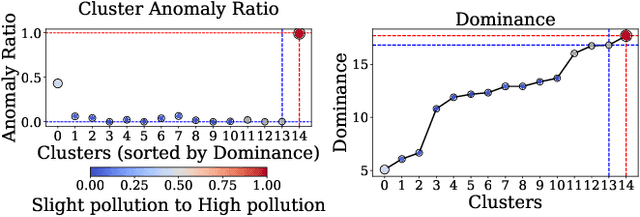
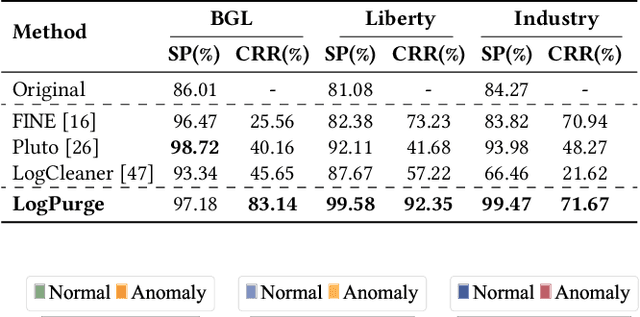
Log anomaly detection, which is critical for identifying system failures and preempting security breaches, detects irregular patterns within large volumes of log data, and impacts domains such as service reliability, performance optimization, and database log analysis. Modern log anomaly detection methods rely on training deep learning models on clean, anomaly-free log sequences. However, obtaining such clean log data requires costly and tedious human labeling, and existing automatic cleaning methods fail to fully integrate the specific characteristics and actual semantics of logs in their purification process. In this paper, we propose a cost-aware, rule-enhanced purification framework, LogPurge, that automatically selects a sufficient subset of normal log sequences from contamination log sequences to train a anomaly detection model. Our approach involves a two-stage filtering algorithm: In the first stage, we use a large language model (LLM) to remove clustered anomalous patterns and enhance system rules to improve LLM's understanding of system logs; in the second stage, we utilize a divide-and-conquer strategy that decomposes the remaining contaminated regions into smaller subproblems, allowing each to be effectively purified through the first stage procedure. Our experiments, conducted on two public datasets and one industrial dataset, show that our method significantly removes an average of 98.74% of anomalies while retaining 82.39% of normal samples. Compared to the latest unsupervised log sample selection algorithms, our method achieves F-1 score improvements of 35.7% and 84.11% on the public datasets, and an impressive 149.72% F-1 improvement on the private dataset, demonstrating the effectiveness of our approach.
TimeSense:Making Large Language Models Proficient in Time-Series Analysis
Nov 09, 2025In the time-series domain, an increasing number of works combine text with temporal data to leverage the reasoning capabilities of large language models (LLMs) for various downstream time-series understanding tasks. This enables a single model to flexibly perform tasks that previously required specialized models for each domain. However, these methods typically rely on text labels for supervision during training, biasing the model toward textual cues while potentially neglecting the full temporal features. Such a bias can lead to outputs that contradict the underlying time-series context. To address this issue, we construct the EvalTS benchmark, comprising 10 tasks across three difficulty levels, from fundamental temporal pattern recognition to complex real-world reasoning, to evaluate models under more challenging and realistic scenarios. We also propose TimeSense, a multimodal framework that makes LLMs proficient in time-series analysis by balancing textual reasoning with a preserved temporal sense. TimeSense incorporates a Temporal Sense module that reconstructs the input time-series within the model's context, ensuring that textual reasoning is grounded in the time-series dynamics. Moreover, to enhance spatial understanding of time-series data, we explicitly incorporate coordinate-based positional embeddings, which provide each time point with spatial context and enable the model to capture structural dependencies more effectively. Experimental results demonstrate that TimeSense achieves state-of-the-art performance across multiple tasks, and it particularly outperforms existing methods on complex multi-dimensional time-series reasoning tasks.
ViTs: Teaching Machines to See Time Series Anomalies Like Human Experts
Oct 06, 2025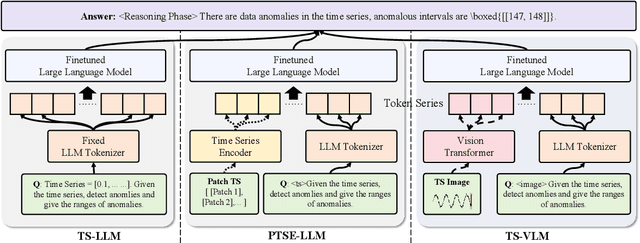

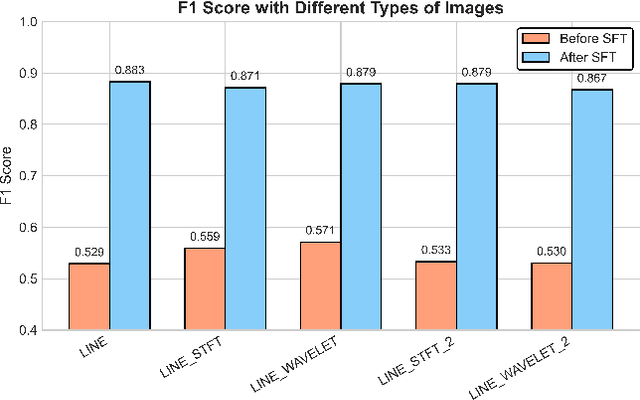
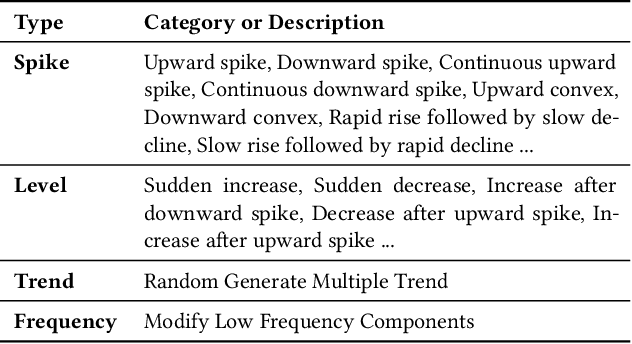
Web service administrators must ensure the stability of multiple systems by promptly detecting anomalies in Key Performance Indicators (KPIs). Achieving the goal of "train once, infer across scenarios" remains a fundamental challenge for time series anomaly detection models. Beyond improving zero-shot generalization, such models must also flexibly handle sequences of varying lengths during inference, ranging from one hour to one week, without retraining. Conventional approaches rely on sliding-window encoding and self-supervised learning, which restrict inference to fixed-length inputs. Large Language Models (LLMs) have demonstrated remarkable zero-shot capabilities across general domains. However, when applied to time series data, they face inherent limitations due to context length. To address this issue, we propose ViTs, a Vision-Language Model (VLM)-based framework that converts time series curves into visual representations. By rescaling time series images, temporal dependencies are preserved while maintaining a consistent input size, thereby enabling efficient processing of arbitrarily long sequences without context constraints. Training VLMs for this purpose introduces unique challenges, primarily due to the scarcity of aligned time series image-text data. To overcome this, we employ an evolutionary algorithm to automatically generate thousands of high-quality image-text pairs and design a three-stage training pipeline consisting of: (1) time series knowledge injection, (2) anomaly detection enhancement, and (3) anomaly reasoning refinement. Extensive experiments demonstrate that ViTs substantially enhance the ability of VLMs to understand and detect anomalies in time series data. All datasets and code will be publicly released at: https://anonymous.4open.science/r/ViTs-C484/.
CMoS: Rethinking Time Series Prediction Through the Lens of Chunk-wise Spatial Correlations
May 25, 2025Recent advances in lightweight time series forecasting models suggest the inherent simplicity of time series forecasting tasks. In this paper, we present CMoS, a super-lightweight time series forecasting model. Instead of learning the embedding of the shapes, CMoS directly models the spatial correlations between different time series chunks. Additionally, we introduce a Correlation Mixing technique that enables the model to capture diverse spatial correlations with minimal parameters, and an optional Periodicity Injection technique to ensure faster convergence. Despite utilizing as low as 1% of the lightweight model DLinear's parameters count, experimental results demonstrate that CMoS outperforms existing state-of-the-art models across multiple datasets. Furthermore, the learned weights of CMoS exhibit great interpretability, providing practitioners with valuable insights into temporal structures within specific application scenarios.
Position: Empowering Time Series Reasoning with Multimodal LLMs
Feb 03, 2025


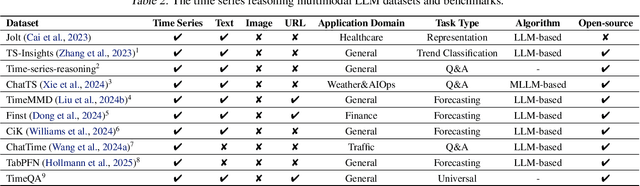
Understanding time series data is crucial for multiple real-world applications. While large language models (LLMs) show promise in time series tasks, current approaches often rely on numerical data alone, overlooking the multimodal nature of time-dependent information, such as textual descriptions, visual data, and audio signals. Moreover, these methods underutilize LLMs' reasoning capabilities, limiting the analysis to surface-level interpretations instead of deeper temporal and multimodal reasoning. In this position paper, we argue that multimodal LLMs (MLLMs) can enable more powerful and flexible reasoning for time series analysis, enhancing decision-making and real-world applications. We call on researchers and practitioners to leverage this potential by developing strategies that prioritize trust, interpretability, and robust reasoning in MLLMs. Lastly, we highlight key research directions, including novel reasoning paradigms, architectural innovations, and domain-specific applications, to advance time series reasoning with MLLMs.