 Add to Chrome
 Add to Firefox
 Add to Edge
MedPMC: A Systematic Framework for Scaling High-Fidelity Medical Multimodal Data for Foundation Models
Jul 08, 2026
Medicine is inherently multimodal, requiring clinicians to synthesize information across diverse data streams. Yet the development of multimodal foundation models is constrained by limited access to large-scale, high-quality clinical data. Although PubMed Central (PMC) offers a complementary source of expert-authored image-text data, existing PMC-derived resources remain limited in fidelity, reproducibility, and clinical validation. We introduce MedPMC, an automated, continuously updatable framework that transforms permissively licensed literature into high-fidelity infrastructure for medical multimodal models. Applied to 6.1 million PMC articles, MedPMC curated 11 million medical image-text pairs. Component evaluations showed strong performance for initial screening (F1 = 93.2), multi-panel figure detection (F1 = 96.5), figure separation (mAP = 89.8), caption separation and alignment (F1 = 81.4; ROUGE-L = 85.3), and medical figure classification (F1 = 96.5). Manual review by five annotators, three with medical training, found 95.3% of MedPMC images medically relevant, versus 19.7% in a prior PMC-derived dataset. Across 26 benchmarks spanning 11 specialties, a MedPMC-trained CLIP-style model improved average zero-shot AUC by 7.1 percentage points over the strongest architecture-matched biomedical CLIP baseline despite using fewer than half as many image-text pairs. As the vision encoder in a multimodal large language model, it improved medical visual question-answering by 1.9 and 16.9 percentage points across two benchmarks. In 10,524 Yale New Haven Health System dermatology photographs, it improved morphology-to-image retrieval Recall@5 by 11.7 percentage points. These findings show that high-fidelity literature curation strengthens medical multimodal foundation models across benchmark and clinical settings. We publicly release the framework, corpus, benchmarks, and pretrained models.

Multi-Scale Dequant: Eliminating Dequantization Bottleneck via Activation Decomposition for Efficient LLM Inference
May 13, 2026Quantization is essential for efficient large language model (LLM) inference, yet the dequantization step-converting low-bit weights back to high-precision for matrix multiplication has become a critical bottleneck on modern AI accelerators. On architectures with decoupled compute units (e.g., Ascend NPUs), dequantization operations can consume more cycles than the matrix multiplication itself, leaving the high-throughput tensor cores underutilized. This paper presents Multi-Scale Dequant (MSD), a quantization framework that removes weight/KV dequantization from the GEMM critical path. Instead of lifting low-bit weights to BF16 precision, MSD decomposes high-precision BF16 activations into multiple low-precision components, each of which can be multiplied directly with quantized weights via native hardware-accelerated GEMM. This approach shifts the computational paradigm from precision conversion to multi-scale approximation, avoiding INT8-to-BF16 weight conversion before GEMM. We instantiate MSD for two weight formats and derive tight error bounds for each. For INT8 weights (W4A16), two-pass INT8 decomposition achieves near 16 effective bits. For MXFP4 weights (W4A16), two-pass MXFP4 decomposition yields near 6.6 effective bits with error bound 1/64 per block surpassing single-pass MXFP8(5.24 bits) while maintaining the same effective GEMM compute time. We further derive closed-form latency and HBM traffic models showing that MSD avoids the Vector-Cube pipeline stall caused by dequantization and reduces KV cache HBM traffic by up to 2.5 times in attention. Numerical simulations on matrix multiplication and Flash Attention kernels confirm that MSD does not degrade accuracy compared to dequantization baselines, and in many settings achieves lower L2 error.
Segmentation of Gray Matters and White Matters from Brain MRI data
Mar 31, 2026Accurate segmentation of brain tissues such as gray matter and white matter from magnetic resonance imaging is essential for studying brain anatomy, diagnosing neurological disorders, and monitoring disease progression. Traditional methods, such as FSL FAST, produce tissue probability maps but often require task-specific adjustments and face challenges with diverse imaging conditions. Recent foundation models, such as MedSAM, offer a prompt-based approach that leverages large-scale pretraining. In this paper, we propose a modified MedSAM model designed for multi-class brain tissue segmentation. Our preprocessing pipeline includes skull stripping with FSL BET, tissue probability mapping with FSL FAST, and converting these into 2D axial, sagittal, coronal slices with multi-class labels (background, gray matter, and white matter). We extend MedSAM's mask decoder to three classes, freezing the pre-trained image encoder and fine-tuning the prompt encoder and decoder. Experiments on the IXI dataset achieve Dice scores up to 0.8751. This work demonstrates that foundation models like MedSAM can be adapted for multi-class medical image segmentation with minimal architectural modifications. Our findings suggest that such models can be extended to more diverse medical imaging scenarios in future work.
CEI-3D: Collaborative Explicit-Implicit 3D Reconstruction for Realistic and Fine-Grained Object Editing
Mar 12, 2026Existing 3D editing methods often produce unrealistic and unrefined results due to the deeply integrated nature of their reconstruction networks. To address the challenge, this paper introduces CEI-3D, an editing-oriented reconstruction pipeline designed to facilitate realistic and fine-grained editing. Specifically, we propose a collaborative explicit-implicit reconstruction approach, which represents the target object using an implicit SDF network and a differentially sampled, locally controllable set of handler points. The implicit network provides a smooth and continuous geometry prior, while the explicit handler points offer localized control, enabling mutual guidance between the global 3D structure and user-specified local editing regions. To independently control each attribute of the handler points, we design a physical properties disentangling module to decouple the color of the handler points into separate physical properties. We also propose a dual-diffuse-albedo network in this module to process the edited and non-edited regions through separate branches, thereby preventing undesired interference from editing operations. Building on the reconstructed collaborative explicit-implicit representation with disentangled properties, we introduce a spatial-aware editing module that enables part-wise adjustment of relevant handler points. This module employs a cross-view propagation-based 3D segmentation strategy, which helps users to edit the specified physical attributes of a target part efficiently. Extensive experiments on both real and synthetic datasets demonstrate that our approach achieves more realistic and fine-grained editing results than the state-of-the-art (SOTA) methods while requiring less editing time. Our code is available on https://github.com/shiyue001/CEI-3D.
InstantSticker: Realistic Decal Blending via Disentangled Object Reconstruction
Apr 09, 2025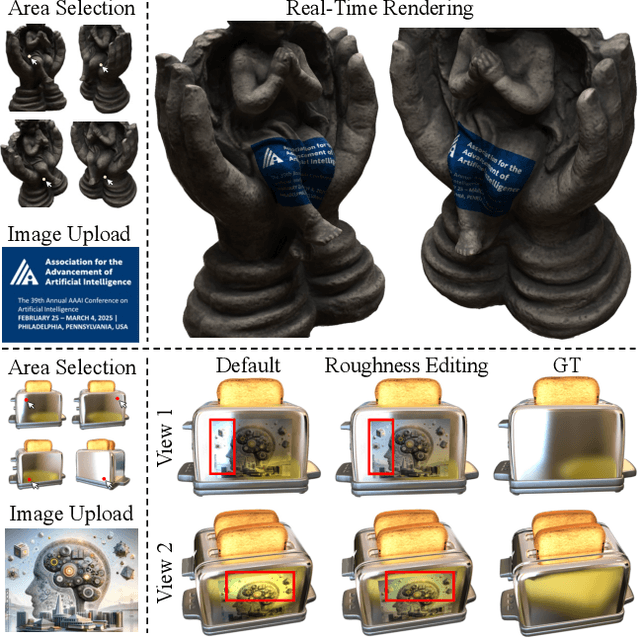
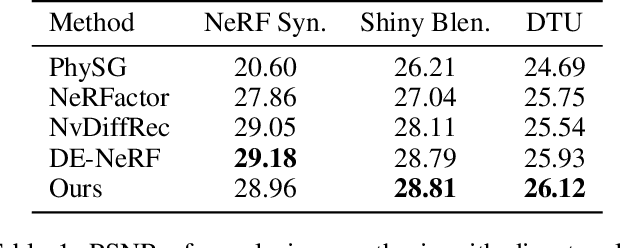
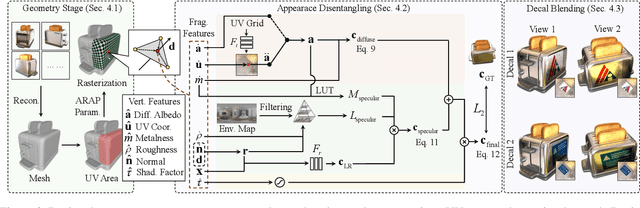
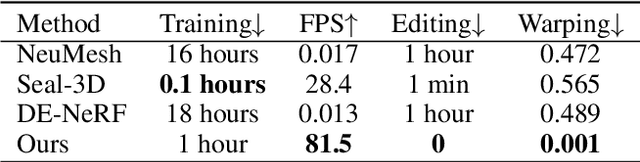
We present InstantSticker, a disentangled reconstruction pipeline based on Image-Based Lighting (IBL), which focuses on highly realistic decal blending, simulates stickers attached to the reconstructed surface, and allows for instant editing and real-time rendering. To achieve stereoscopic impression of the decal, we introduce shadow factor into IBL, which can be adaptively optimized during training. This allows the shadow brightness of surfaces to be accurately decomposed rather than baked into the diffuse color, ensuring that the edited texture exhibits authentic shading. To address the issues of warping and blurriness in previous methods, we apply As-Rigid-As-Possible (ARAP) parameterization to pre-unfold a specified area of the mesh and use the local UV mapping combined with a neural texture map to enhance the ability to express high-frequency details in that area. For instant editing, we utilize the Disney BRDF model, explicitly defining material colors with 3-channel diffuse albedo. This enables instant replacement of albedo RGB values during the editing process, avoiding the prolonged optimization required in previous approaches. In our experiment, we introduce the Ratio Variance Warping (RVW) metric to evaluate the local geometric warping of the decal area. Extensive experimental results demonstrate that our method surpasses previous decal blending methods in terms of editing quality, editing speed and rendering speed, achieving the state-of-the-art.
PLM4NDV: Minimizing Data Access for Number of Distinct Values Estimation with Pre-trained Language Models
Apr 01, 2025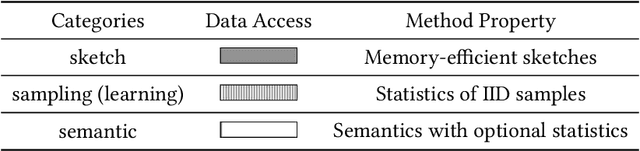
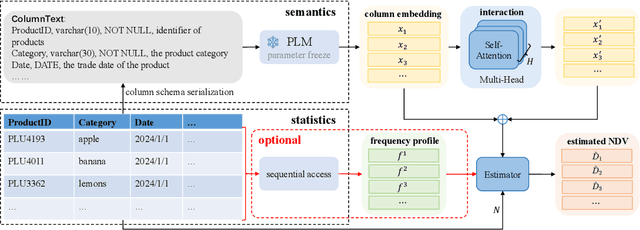
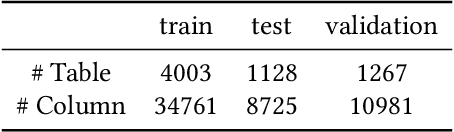
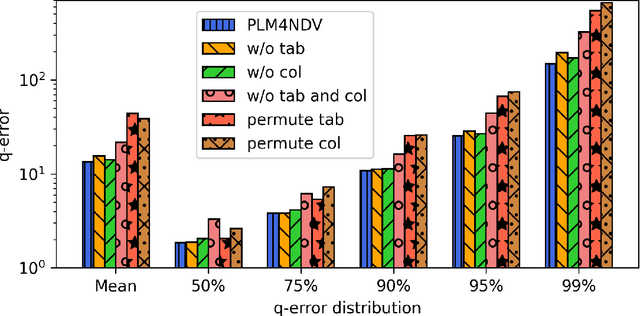
Number of Distinct Values (NDV) estimation of a multiset/column is a basis for many data management tasks, especially within databases. Despite decades of research, most existing methods require either a significant amount of samples through uniform random sampling or access to the entire column to produce estimates, leading to substantial data access costs and potentially ineffective estimations in scenarios with limited data access. In this paper, we propose leveraging semantic information, i.e., schema, to address these challenges. The schema contains rich semantic information that can benefit the NDV estimation. To this end, we propose PLM4NDV, a learned method incorporating Pre-trained Language Models (PLMs) to extract semantic schema information for NDV estimation. Specifically, PLM4NDV leverages the semantics of the target column and the corresponding table to gain a comprehensive understanding of the column's meaning. By using the semantics, PLM4NDV reduces data access costs, provides accurate NDV estimation, and can even operate effectively without any data access. Extensive experiments on a large-scale real-world dataset demonstrate the superiority of PLM4NDV over baseline methods. Our code is available at https://github.com/bytedance/plm4ndv.
RFUAV: A Benchmark Dataset for Unmanned Aerial Vehicle Detection and Identification
Mar 12, 2025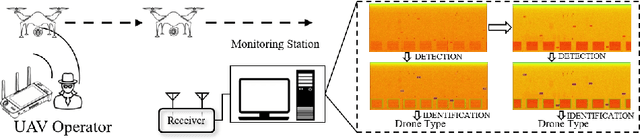
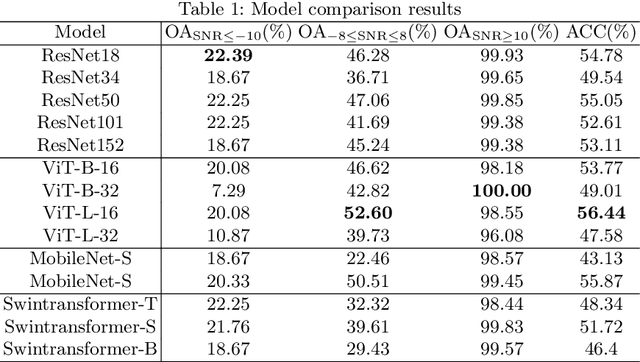
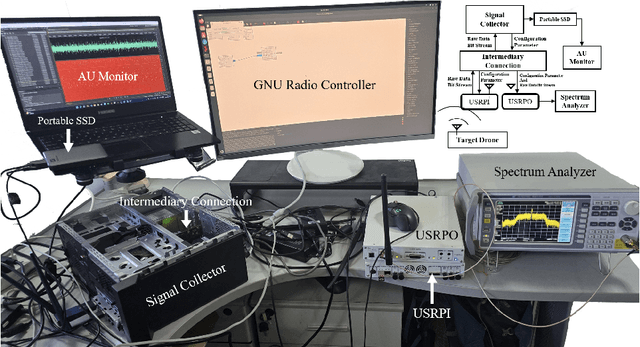
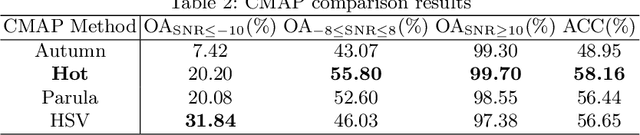
In this paper, we propose RFUAV as a new benchmark dataset for radio-frequency based (RF-based) unmanned aerial vehicle (UAV) identification and address the following challenges: Firstly, many existing datasets feature a restricted variety of drone types and insufficient volumes of raw data, which fail to meet the demands of practical applications. Secondly, existing datasets often lack raw data covering a broad range of signal-to-noise ratios (SNR), or do not provide tools for transforming raw data to different SNR levels. This limitation undermines the validity of model training and evaluation. Lastly, many existing datasets do not offer open-access evaluation tools, leading to a lack of unified evaluation standards in current research within this field. RFUAV comprises approximately 1.3 TB of raw frequency data collected from 37 distinct UAVs using the Universal Software Radio Peripheral (USRP) device in real-world environments. Through in-depth analysis of the RF data in RFUAV, we define a drone feature sequence called RF drone fingerprint, which aids in distinguishing drone signals. In addition to the dataset, RFUAV provides a baseline preprocessing method and model evaluation tools. Rigorous experiments demonstrate that these preprocessing methods achieve state-of-the-art (SOTA) performance using the provided evaluation tools. The RFUAV dataset and baseline implementation are publicly available at https://github.com/kitoweeknd/RFUAV/.
LLMIdxAdvis: Resource-Efficient Index Advisor Utilizing Large Language Model
Mar 10, 2025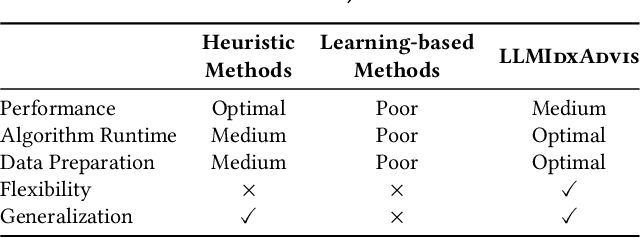
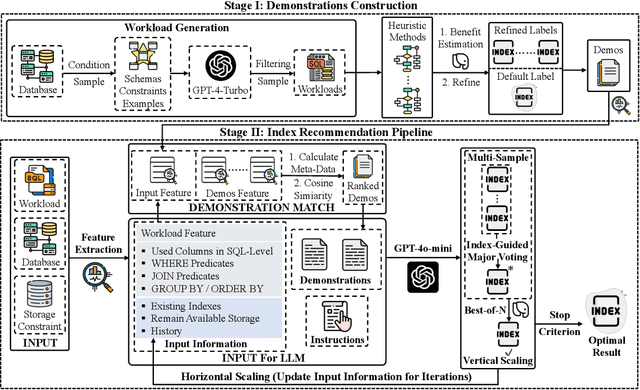
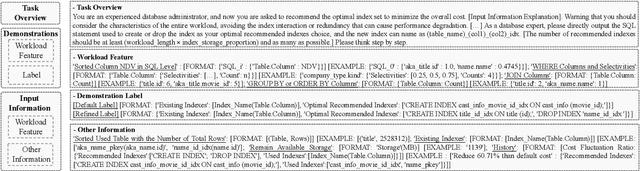

Index recommendation is essential for improving query performance in database management systems (DBMSs) through creating an optimal set of indexes under specific constraints. Traditional methods, such as heuristic and learning-based approaches, are effective but face challenges like lengthy recommendation time, resource-intensive training, and poor generalization across different workloads and database schemas. To address these issues, we propose LLMIdxAdvis, a resource-efficient index advisor that uses large language models (LLMs) without extensive fine-tuning. LLMIdxAdvis frames index recommendation as a sequence-to-sequence task, taking target workload, storage constraint, and corresponding database environment as input, and directly outputting recommended indexes. It constructs a high-quality demonstration pool offline, using GPT-4-Turbo to synthesize diverse SQL queries and applying integrated heuristic methods to collect both default and refined labels. During recommendation, these demonstrations are ranked to inject database expertise via in-context learning. Additionally, LLMIdxAdvis extracts workload features involving specific column statistical information to strengthen LLM's understanding, and introduces a novel inference scaling strategy combining vertical scaling (via ''Index-Guided Major Voting'' and Best-of-N) and horizontal scaling (through iterative ''self-optimization'' with database feedback) to enhance reliability. Experiments on 3 OLAP and 2 real-world benchmarks reveal that LLMIdxAdvis delivers competitive index recommendation with reduced runtime, and generalizes effectively across different workloads and database schemas.
OmniSQL: Synthesizing High-quality Text-to-SQL Data at Scale
Mar 04, 2025Text-to-SQL, the task of translating natural language questions into SQL queries, plays a crucial role in enabling non-experts to interact with databases. While recent advancements in large language models (LLMs) have significantly enhanced text-to-SQL performance, existing approaches face notable limitations in real-world text-to-SQL applications. Prompting-based methods often depend on closed-source LLMs, which are expensive, raise privacy concerns, and lack customization. Fine-tuning-based methods, on the other hand, suffer from poor generalizability due to the limited coverage of publicly available training data. To overcome these challenges, we propose a novel and scalable text-to-SQL data synthesis framework for automatically synthesizing large-scale, high-quality, and diverse datasets without extensive human intervention. Using this framework, we introduce SynSQL-2.5M, the first million-scale text-to-SQL dataset, containing 2.5 million samples spanning over 16,000 synthetic databases. Each sample includes a database, SQL query, natural language question, and chain-of-thought (CoT) solution. Leveraging SynSQL-2.5M, we develop OmniSQL, a powerful open-source text-to-SQL model available in three sizes: 7B, 14B, and 32B. Extensive evaluations across nine datasets demonstrate that OmniSQL achieves state-of-the-art performance, matching or surpassing leading closed-source and open-source LLMs, including GPT-4o and DeepSeek-V3, despite its smaller size. We release all code, datasets, and models to support further research.
Cluster Catch Digraphs with the Nearest Neighbor Distance
Jan 09, 2025We introduce a new method for clustering based on Cluster Catch Digraphs (CCDs). The new method addresses the limitations of RK-CCDs by employing a new variant of spatial randomness test that employs the nearest neighbor distance (NND) instead of the Ripley's K function used by RK-CCDs. We conduct a comprehensive Monte Carlo analysis to assess the performance of our method, considering factors such as dimensionality, data set size, number of clusters, cluster volumes, and inter-cluster distance. Our method is particularly effective for high-dimensional data sets, comparable to or outperforming KS-CCDs and RK-CCDs that rely on a KS-type statistic or the Ripley's K function. We also evaluate our methods using real and complex data sets, comparing them to well-known clustering methods. Again, our methods exhibit competitive performance, producing high-quality clusters with desirable properties. Keywords: Graph-based clustering, Cluster catch digraphs, High-dimensional data, The nearest neighbor distance, Spatial randomness test