 Add to Chrome
 Add to Firefox
 Add to Edge
Wave2Body: Rethinking mmWave Human Pose Estimation as Radar-to-Body Token Translation
Jul 21, 2026
Millimeter-wave (mmWave) radar enables privacy-friendly human sensing, but its sparse point clouds are physical measurements of view-dependent electromagnetic reflections and only indirectly characterize body articulation. Recovering a complete 3D pose from such partial, geometry-dependent observations is therefore under-constrained. Existing methods directly regress joint coordinates from paired radar-pose data, relying on the same limited paired supervision to learn radar perception, human-body structure, and their alignment. This coupling can encourage dataset-specific shortcuts under ambiguous radar observations. We propose Wave2Body, a radar-to-body token translation framework that decouples these learning targets using a self-supervised mmWave tokenizer, a pretrained compositional body tokenizer that defines the output space, and a lightweight translator between them. Experiments on M4Human and mmBody show that Wave2Body achieves stronger cross-domain generalization than previous methods while incurring much lower computational costs for training and inference. All the code and experiment results are publicly available at https://github.com/Galaxywalk/Wave2Body.

MagicSelector: Joint Optimization for Agent Tool Selection via Counterfactual Decomposition and Progressive Reranking
Jul 20, 2026We present MagicSelector, a joint optimization framework integrating Counterfactual task decomposition, Progressive reranking, and Dynamic Top-K, designed to address the fundamental challenges of tool retrieval in agents. MagicSelector is a specialized framework capable of translating ambiguous user instructions into executable atomic subtasks and guiding high-precision tool retrieval, effectively mitigating redundant noise and severe context distraction in out-of-domain (OOD) scenarios.We empower MagicSelector with these capabilities through three key contributions: (1) a preferenceguided counterfactual task decomposition mechanism that utilizes a counterfactual reward to quantify the marginal causal gain of decomposition on retrieval ranking, effectively imposing fine-grained structural supervision on logical coherence; (2) a progressive tool reranking method driven by self-distillation hard negative mining, which optimizes both point-wise and list-wise relevance to enhance fine-grained discrimination among highly similar tools; and (3) a dual semantic boundary-aware dynamic Top-K strategy that adaptively monitors reranking score cliffs and inter-tool semantic shifts to dynamically truncate the candidate list, maximizing relevant tool recall while filtering long-tail noise. Evaluated on MTDTool, the first task decomposition benchmark we constructed tailored for mobile multi-turn interactions with process-level annotations, MagicSelector yields promising performance. Extensive experiments demonstrate that MagicSelector significantly outperforms state-of-the-art methods in terms of tool retrieval accuracy, OOD generalization capability, and overall token efficiency, thereby demonstrating the effectiveness of our proposed framework.
FUSE: FK-Steered Multi-Modal Flow Matching for Efficient Simulation-Based Posterior Estimation
Jul 06, 2026Simulation-Based Inference (SBI) is critical for scientific discovery, with generative models offering a promising path toward efficient inference. However, existing methods struggle with effective multimodal modeling. They often rely on brute-force fusion strategies that ignore the structural disparities between parameters and observations, thus limiting estimation fidelity. In this work, we introduce FUSE (Feynman-Kac steered mUlti-modal flow matching for efficient Simulation-based posterior Estimation). Unlike prior work, FUSE employs a dual-track architecture that preserves the distinct features of multimodal inputs while facilitating dynamic interaction. Additionally, we propose an FK-steered sampling strategy that leverages intermediate observation likelihoods to guide the generative trajectories, effectively improving the sample quality during inference. Our approach outperforms state-of-the-art baselines on standard SBI benchmarks, producing posteriors that closely match ground-truth MCMC. Furthermore, in a real-world exoplanet orbital estimation task, FUSE successfully resolves complex parameter degeneracies that challenge existing methods, highlighting its potential to accelerate complex scientific discoveries in astrophysics and beyond.
Hippocampus-DETR: An Explicit Memory Object Detection Framework Based on Hippocampus Modeling
Jun 26, 2026This paper addresses the lack of explicit memory mechanisms in current object detection models and proposes Hippocampus-DETR, a novel detection framework based on biological hippocampal memory modeling. This framework integrates a hippocampal memory network module, HipNet, into the DETR architecture and systematically simulates the anatomical structure and functional organization of hippocampal subregions, including the entorhinal cortex, dentate gyrus, CA3, CA1, and subiculum. Through this design, Hippocampus-DETR realizes pattern separation, pattern completion, importance filtering, and information integration of visual encoding features. During training, different memory submodules are optimized using a layer-wise training strategy, ultimately forming a memory system with memory retrieval and completion capabilities. Experimental results demonstrate that Hippocampus-DETR achieves higher detection accuracy than current mainstream models. More importantly, models equipped with this framework also exhibit excellent generalization ability and data efficiency in tasks such as few-shot image classification, multimodal feature construction, and image restoration. Subsequent experiments further validate the functional necessity and internal interpretability of each memory submodule. This study not only provides a novel object detection framework, but also offers a feasible technical pathway for integrating neurocognitive mechanisms with deep learning models, highlighting its significant value in improving model learning efficiency and task robustness. The project is available at https://github.com/2186cloud/hipnet.
HumanScale: Egocentric Human Video Can Outperform Real-Robot Data for Embodied Pretraining
Jun 18, 2026Embodied foundation models are expected to benefit from data scaling like large language models, but face a much tighter data bottleneck. Teleoperated real-robot trajectories remain the dominant pretraining source due to their precise action supervision and embodiment alignment, yet their scalability is limited by high collection cost, acquisition difficulty, and low behavioral and environmental diversity. These limitations have sparked interest in egocentric human video as a scalable, substantially lower-cost, and more diverse alternative for embodied model pretraining. However, its effectiveness compared to teleoperated real-robot data remains underexplored. To address this question, we conduct a systematic study comparing egocentric human video and teleoperated real-robot trajectories as pretraining data sources for embodied foundation models, under fixed post-training and validation protocols. Surprisingly, we find that egocentric data, when processed through a carefully designed filtering and labeling pipeline, is not merely a viable substitute for model pretraining but can lead to superior performance. With the same amount of pretraining data, models pretrained on egocentric data achieve a 24% lower validation loss on real-robot action prediction, as well as 52.5% and 90% higher success rates on in-distribution and out-of-distribution real-robot task execution, respectively. This finding verifies a scalable paradigm for embodied foundation models: pretrain on egocentric human video to learn diverse world representations, then adapt with a small amount of labeled real-robot data for action-space alignment. We hope this study encourages broader exploration of egocentric data and offers guidance for data quality assessment before costly robot data collection.
Rapid Parameter Estimation for Extreme Mass Ratio Inspirals Using Machine Learning
Sep 12, 2024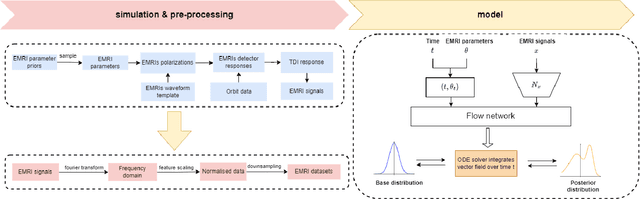
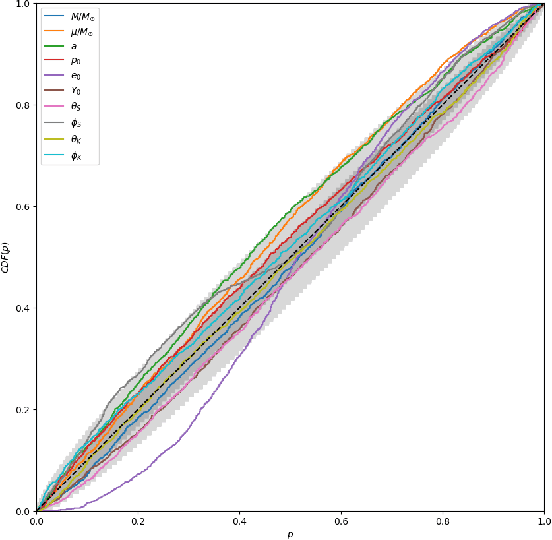
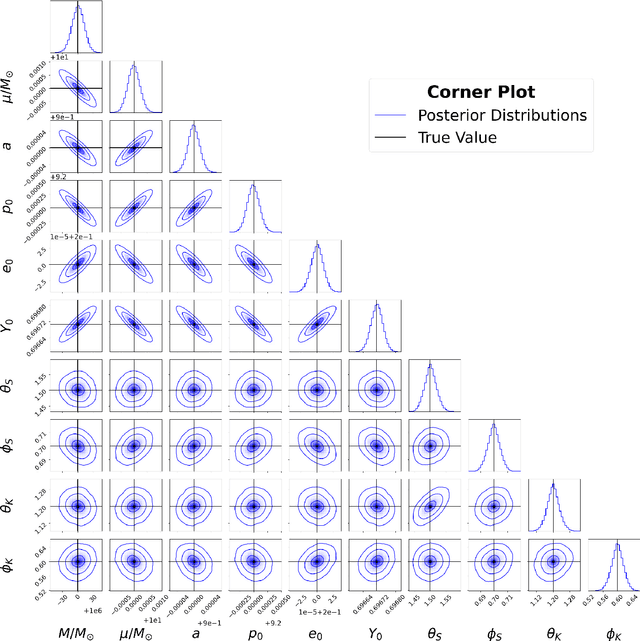
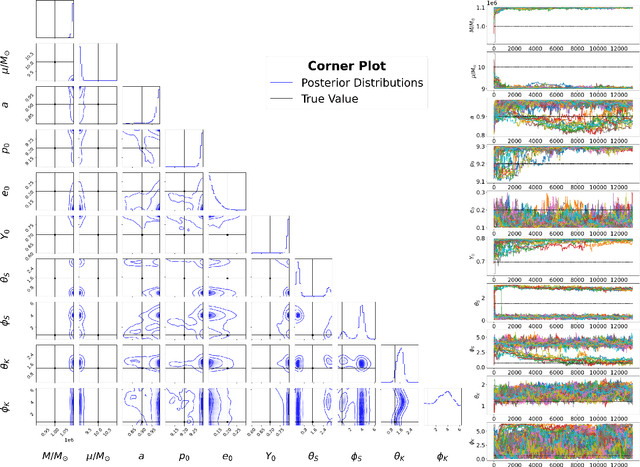
Extreme-mass-ratio inspiral (EMRI) signals pose significant challenges in gravitational wave (GW) astronomy owing to their low-frequency nature and highly complex waveforms, which occupy a high-dimensional parameter space with numerous variables. Given their extended inspiral timescales and low signal-to-noise ratios, EMRI signals warrant prolonged observation periods. Parameter estimation becomes particularly challenging due to non-local parameter degeneracies, arising from multiple local maxima, as well as flat regions and ridges inherent in the likelihood function. These factors lead to exceptionally high time complexity for parameter analysis while employing traditional matched filtering and random sampling methods. To address these challenges, the present study applies machine learning to Bayesian posterior estimation of EMRI signals, leveraging the recently developed flow matching technique based on ODE neural networks. Our approach demonstrates computational efficiency several orders of magnitude faster than the traditional Markov Chain Monte Carlo (MCMC) methods, while preserving the unbiasedness of parameter estimation. We show that machine learning technology has the potential to efficiently handle the vast parameter space, involving up to seventeen parameters, associated with EMRI signals. Furthermore, to our knowledge, this is the first instance of applying machine learning, specifically the Continuous Normalizing Flows (CNFs), to EMRI signal analysis. Our findings highlight the promising potential of machine learning in EMRI waveform analysis, offering new perspectives for the advancement of space-based GW detection and GW astronomy.
Application Research On Real-Time Perception Of Device Performance Status
Sep 05, 2024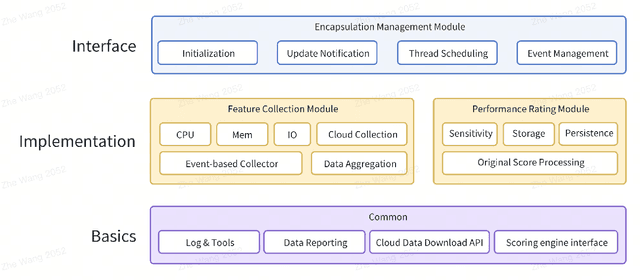
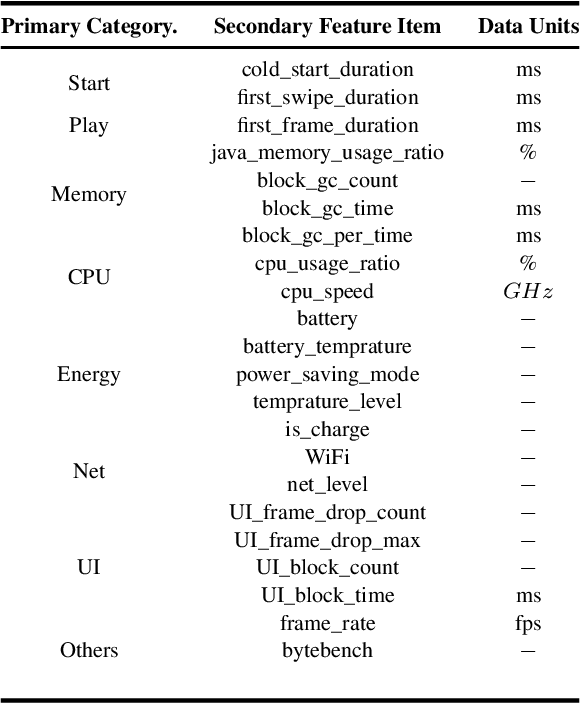
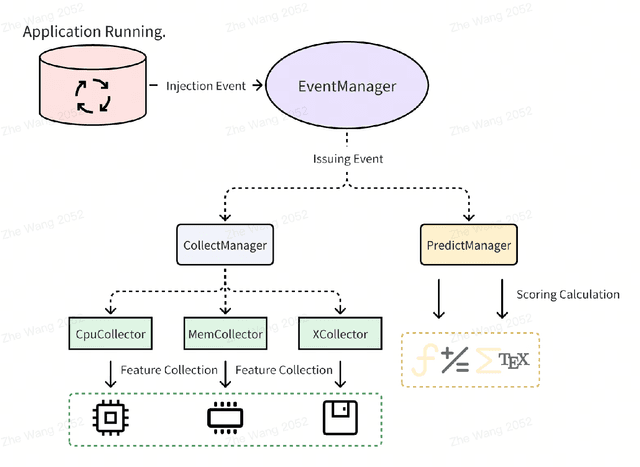

In order to accurately identify the performance status of mobile devices and finely adjust the user experience, a real-time performance perception evaluation method based on TOPSIS (Technique for Order Preference by Similarity to Ideal Solution) combined with entropy weighting method and time series model construction was studied. After collecting the performance characteristics of various mobile devices, the device performance profile was fitted by using PCA (principal component analysis) dimensionality reduction and feature engineering methods such as descriptive time series analysis. The ability of performance features and profiles to describe the real-time performance status of devices was understood and studied by applying the TOPSIS method and multi-level weighting processing. A time series model was constructed for the feature set under objective weighting, and multiple sensitivity (real-time, short-term, long-term) performance status perception results were provided to obtain real-time performance evaluation data and long-term stable performance prediction data. Finally, by configuring dynamic AB experiments and overlaying fine-grained power reduction strategies, the usability of the method was verified, and the accuracy of device performance status identification and prediction was compared with the performance of the profile features including dimensionality reduction time series modeling, TOPSIS method and entropy weighting method, subjective weighting, HMA method. The results show that accurate real-time performance perception results can greatly enhance business value, and this research has application effectiveness and certain forward-looking significance.
Autoregressive GNN-ODE GRU Model for Network Dynamics
Nov 19, 2022Revealing the continuous dynamics on the networks is essential for understanding, predicting, and even controlling complex systems, but it is hard to learn and model the continuous network dynamics because of complex and unknown governing equations, high dimensions of complex systems, and unsatisfactory observations. Moreover, in real cases, observed time-series data are usually non-uniform and sparse, which also causes serious challenges. In this paper, we propose an Autoregressive GNN-ODE GRU Model (AGOG) to learn and capture the continuous network dynamics and realize predictions of node states at an arbitrary time in a data-driven manner. The GNN module is used to model complicated and nonlinear network dynamics. The hidden state of node states is specified by the ODE system, and the augmented ODE system is utilized to map the GNN into the continuous time domain. The hidden state is updated through GRUCell by observations. As prior knowledge, the true observations at the same timestamp are combined with the hidden states for the next prediction. We use the autoregressive model to make a one-step ahead prediction based on observation history. The prediction is achieved by solving an initial-value problem for ODE. To verify the performance of our model, we visualize the learned dynamics and test them in three tasks: interpolation reconstruction, extrapolation prediction, and regular sequences prediction. The results demonstrate that our model can capture the continuous dynamic process of complex systems accurately and make precise predictions of node states with minimal error. Our model can consistently outperform other baselines or achieve comparable performance.
RF-CHORD: Towards Deployable RFID Localization System for Logistics Network
Nov 01, 2022RFID localization is considered the key enabler of automating the process of inventory tracking and management for high-performance logistic network. A practical and deployable RFID localization system needs to meet reliability, throughput, and range requirements. This paper presents RF-Chord, the first RFID localization system that simultaneously meets all three requirements. RF-Chord features a one-shot multisine-constructed wideband design that can process RF signal with a 200 MHz bandwidth in real-time to facilitate one-shot localization at scale. In addition, multiple SINR enhancement techniques are designed for range extension. On top of that, a kernel-layer-based near-field localization framework and a multipath-suppression algorithm are proposed to reduce the 99% long-tail errors. Our empirical results show that RF-Chord can localize more than 180 tags 6 m away from a reader within 1 second and with 99% long-tail error of 0.786 m, achieving a 0% miss reading rate and ~0.01% cross-reading rate in the warehouse and fresh food delivery store deployment.