 Add to Chrome
 Add to Firefox
 Add to Edge
WorldArena: A Unified Benchmark for Evaluating Perception and Functional Utility of Embodied World Models
Feb 09, 2026
While world models have emerged as a cornerstone of embodied intelligence by enabling agents to reason about environmental dynamics through action-conditioned prediction, their evaluation remains fragmented. Current evaluation of embodied world models has largely focused on perceptual fidelity (e.g., video generation quality), overlooking the functional utility of these models in downstream decision-making tasks. In this work, we introduce WorldArena, a unified benchmark designed to systematically evaluate embodied world models across both perceptual and functional dimensions. WorldArena assesses models through three dimensions: video perception quality, measured with 16 metrics across six sub-dimensions; embodied task functionality, which evaluates world models as data engines, policy evaluators, and action planners integrating with subjective human evaluation. Furthermore, we propose EWMScore, a holistic metric integrating multi-dimensional performance into a single interpretable index. Through extensive experiments on 14 representative models, we reveal a significant perception-functionality gap, showing that high visual quality does not necessarily translate into strong embodied task capability. WorldArena benchmark with the public leaderboard is released at https://worldarena.ai, providing a framework for tracking progress toward truly functional world models in embodied AI.

Back to Physics: Operator-Guided Generative Paths for SMS MRI Reconstruction
Feb 08, 2026Simultaneous multi-slice (SMS) imaging with in-plane undersampling enables highly accelerated MRI but yields a strongly coupled inverse problem with deterministic inter-slice interference and missing k-space data. Most diffusion-based reconstructions are formulated around Gaussian-noise corruption and rely on additional consistency steps to incorporate SMS physics, which can be mismatched to the operator-governed degradations in SMS acquisition. We propose an operator-guided framework that models the degradation trajectory using known acquisition operators and inverts this process via deterministic updates. Within this framework, we introduce an operator-conditional dual-stream interaction network (OCDI-Net) that explicitly disentangles target-slice content from inter-slice interference and predicts structured degradations for operator-aligned inversion, and we instantiate reconstruction as a two-stage chained inference procedure that performs SMS slice separation followed by in-plane completion. Experiments on fastMRI brain data and prospectively acquired in vivo diffusion MRI data demonstrate improved fidelity and reduced slice leakage over conventional and learning-based SMS reconstructions.
TrackVLA++: Unleashing Reasoning and Memory Capabilities in VLA Models for Embodied Visual Tracking
Oct 08, 2025Embodied Visual Tracking (EVT) is a fundamental ability that underpins practical applications, such as companion robots, guidance robots and service assistants, where continuously following moving targets is essential. Recent advances have enabled language-guided tracking in complex and unstructured scenes. However, existing approaches lack explicit spatial reasoning and effective temporal memory, causing failures under severe occlusions or in the presence of similar-looking distractors. To address these challenges, we present TrackVLA++, a novel Vision-Language-Action (VLA) model that enhances embodied visual tracking with two key modules, a spatial reasoning mechanism and a Target Identification Memory (TIM). The reasoning module introduces a Chain-of-Thought paradigm, termed Polar-CoT, which infers the target's relative position and encodes it as a compact polar-coordinate token for action prediction. Guided by these spatial priors, the TIM employs a gated update strategy to preserve long-horizon target memory, ensuring spatiotemporal consistency and mitigating target loss during extended occlusions. Extensive experiments show that TrackVLA++ achieves state-of-the-art performance on public benchmarks across both egocentric and multi-camera settings. On the challenging EVT-Bench DT split, TrackVLA++ surpasses the previous leading approach by 5.1 and 12, respectively. Furthermore, TrackVLA++ exhibits strong zero-shot generalization, enabling robust real-world tracking in dynamic and occluded scenarios.
Comp-X: On Defining an Interactive Learned Image Compression Paradigm With Expert-driven LLM Agent
Aug 21, 2025We present Comp-X, the first intelligently interactive image compression paradigm empowered by the impressive reasoning capability of large language model (LLM) agent. Notably, commonly used image codecs usually suffer from limited coding modes and rely on manual mode selection by engineers, making them unfriendly for unprofessional users. To overcome this, we advance the evolution of image coding paradigm by introducing three key innovations: (i) multi-functional coding framework, which unifies different coding modes of various objective/requirements, including human-machine perception, variable coding, and spatial bit allocation, into one framework. (ii) interactive coding agent, where we propose an augmented in-context learning method with coding expert feedback to teach the LLM agent how to understand the coding request, mode selection, and the use of the coding tools. (iii) IIC-bench, the first dedicated benchmark comprising diverse user requests and the corresponding annotations from coding experts, which is systematically designed for intelligently interactive image compression evaluation. Extensive experimental results demonstrate that our proposed Comp-X can understand the coding requests efficiently and achieve impressive textual interaction capability. Meanwhile, it can maintain comparable compression performance even with a single coding framework, providing a promising avenue for artificial general intelligence (AGI) in image compression.
Structure-preserving Feature Alignment for Old Photo Colorization
Aug 18, 2025Deep learning techniques have made significant advancements in reference-based colorization by training on large-scale datasets. However, directly applying these methods to the task of colorizing old photos is challenging due to the lack of ground truth and the notorious domain gap between natural gray images and old photos. To address this issue, we propose a novel CNN-based algorithm called SFAC, i.e., Structure-preserving Feature Alignment Colorizer. SFAC is trained on only two images for old photo colorization, eliminating the reliance on big data and allowing direct processing of the old photo itself to overcome the domain gap problem. Our primary objective is to establish semantic correspondence between the two images, ensuring that semantically related objects have similar colors. We achieve this through a feature distribution alignment loss that remains robust to different metric choices. However, utilizing robust semantic correspondence to transfer color from the reference to the old photo can result in inevitable structure distortions. To mitigate this, we introduce a structure-preserving mechanism that incorporates a perceptual constraint at the feature level and a frozen-updated pyramid at the pixel level. Extensive experiments demonstrate the effectiveness of our method for old photo colorization, as confirmed by qualitative and quantitative metrics.
LiftVSR: Lifting Image Diffusion to Video Super-Resolution via Hybrid Temporal Modeling with Only 4$\times$RTX 4090s
Jun 10, 2025Diffusion models have significantly advanced video super-resolution (VSR) by enhancing perceptual quality, largely through elaborately designed temporal modeling to ensure inter-frame consistency. However, existing methods usually suffer from limited temporal coherence and prohibitively high computational costs (e.g., typically requiring over 8 NVIDIA A100-80G GPUs), especially for long videos. In this work, we propose LiftVSR, an efficient VSR framework that leverages and elevates the image-wise diffusion prior from PixArt-$\alpha$, achieving state-of-the-art results using only 4$\times$RTX 4090 GPUs. To balance long-term consistency and efficiency, we introduce a hybrid temporal modeling mechanism that decomposes temporal learning into two complementary components: (i) Dynamic Temporal Attention (DTA) for fine-grained temporal modeling within short frame segment ($\textit{i.e.}$, low complexity), and (ii) Attention Memory Cache (AMC) for long-term temporal modeling across segments ($\textit{i.e.}$, consistency). Specifically, DTA identifies multiple token flows across frames within multi-head query and key tokens to warp inter-frame contexts in the value tokens. AMC adaptively aggregates historical segment information via a cache unit, ensuring long-term coherence with minimal overhead. To further stabilize the cache interaction during inference, we introduce an asymmetric sampling strategy that mitigates feature mismatches arising from different diffusion sampling steps. Extensive experiments on several typical VSR benchmarks have demonstrated that LiftVSR achieves impressive performance with significantly lower computational costs.
Why Compress What You Can Generate? When GPT-4o Generation Ushers in Image Compression Fields
Apr 30, 2025The rapid development of AIGC foundation models has revolutionized the paradigm of image compression, which paves the way for the abandonment of most pixel-level transform and coding, compelling us to ask: why compress what you can generate if the AIGC foundation model is powerful enough to faithfully generate intricate structure and fine-grained details from nothing more than some compact descriptors, i.e., texts, or cues. Fortunately, recent GPT-4o image generation of OpenAI has achieved impressive cross-modality generation, editing, and design capabilities, which motivates us to answer the above question by exploring its potential in image compression fields. In this work, we investigate two typical compression paradigms: textual coding and multimodal coding (i.e., text + extremely low-resolution image), where all/most pixel-level information is generated instead of compressing via the advanced GPT-4o image generation function. The essential challenge lies in how to maintain semantic and structure consistency during the decoding process. To overcome this, we propose a structure raster-scan prompt engineering mechanism to transform the image into textual space, which is compressed as the condition of GPT-4o image generation. Extensive experiments have shown that the combination of our designed structural raster-scan prompts and GPT-4o's image generation function achieved the impressive performance compared with recent multimodal/generative image compression at ultra-low bitrate, further indicating the potential of AIGC generation in image compression fields.
RepText: Rendering Visual Text via Replicating
Apr 28, 2025Although contemporary text-to-image generation models have achieved remarkable breakthroughs in producing visually appealing images, their capacity to generate precise and flexible typographic elements, especially non-Latin alphabets, remains constrained. To address these limitations, we start from an naive assumption that text understanding is only a sufficient condition for text rendering, but not a necessary condition. Based on this, we present RepText, which aims to empower pre-trained monolingual text-to-image generation models with the ability to accurately render, or more precisely, replicate, multilingual visual text in user-specified fonts, without the need to really understand them. Specifically, we adopt the setting from ControlNet and additionally integrate language agnostic glyph and position of rendered text to enable generating harmonized visual text, allowing users to customize text content, font and position on their needs. To improve accuracy, a text perceptual loss is employed along with the diffusion loss. Furthermore, to stabilize rendering process, at the inference phase, we directly initialize with noisy glyph latent instead of random initialization, and adopt region masks to restrict the feature injection to only the text region to avoid distortion of the background. We conducted extensive experiments to verify the effectiveness of our RepText relative to existing works, our approach outperforms existing open-source methods and achieves comparable results to native multi-language closed-source models. To be more fair, we also exhaustively discuss its limitations in the end.
NTIRE 2025 Challenge on Short-form UGC Video Quality Assessment and Enhancement: KwaiSR Dataset and Study
Apr 21, 2025In this work, we build the first benchmark dataset for short-form UGC Image Super-resolution in the wild, termed KwaiSR, intending to advance the research on developing image super-resolution algorithms for short-form UGC platforms. This dataset is collected from the Kwai Platform, which is composed of two parts, i.e., synthetic and wild parts. Among them, the synthetic dataset, including 1,900 image pairs, is produced by simulating the degradation following the distribution of real-world low-quality short-form UGC images, aiming to provide the ground truth for training and objective comparison in the validation/testing. The wild dataset contains low-quality images collected directly from the Kwai Platform, which are filtered using the quality assessment method KVQ from the Kwai Platform. As a result, the KwaiSR dataset contains 1800 synthetic image pairs and 1900 wild images, which are divided into training, validation, and testing parts with a ratio of 8:1:1. Based on the KwaiSR dataset, we organize the NTIRE 2025 challenge on a second short-form UGC Video quality assessment and enhancement, which attracts lots of researchers to develop the algorithm for it. The results of this competition have revealed that our KwaiSR dataset is pretty challenging for existing Image SR methods, which is expected to lead to a new direction in the image super-resolution field. The dataset can be found from https://lixinustc.github.io/NTIRE2025-KVQE-KwaSR-KVQ.github.io/.
NTIRE 2025 Challenge on Day and Night Raindrop Removal for Dual-Focused Images: Methods and Results
Apr 19, 2025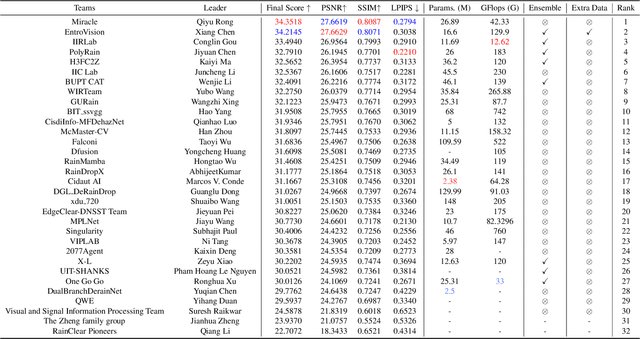
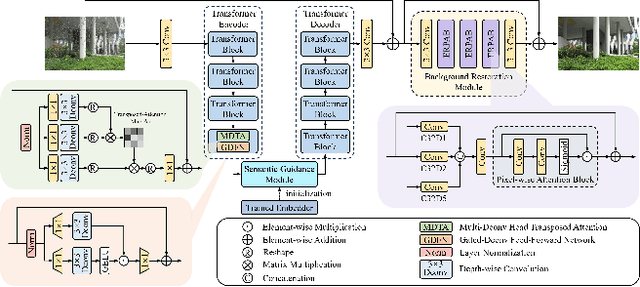
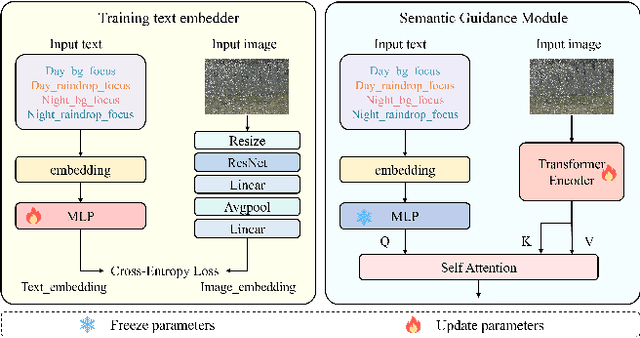
This paper reviews the NTIRE 2025 Challenge on Day and Night Raindrop Removal for Dual-Focused Images. This challenge received a wide range of impressive solutions, which are developed and evaluated using our collected real-world Raindrop Clarity dataset. Unlike existing deraining datasets, our Raindrop Clarity dataset is more diverse and challenging in degradation types and contents, which includes day raindrop-focused, day background-focused, night raindrop-focused, and night background-focused degradations. This dataset is divided into three subsets for competition: 14,139 images for training, 240 images for validation, and 731 images for testing. The primary objective of this challenge is to establish a new and powerful benchmark for the task of removing raindrops under varying lighting and focus conditions. There are a total of 361 participants in the competition, and 32 teams submitting valid solutions and fact sheets for the final testing phase. These submissions achieved state-of-the-art (SOTA) performance on the Raindrop Clarity dataset. The project can be found at https://lixinustc.github.io/CVPR-NTIRE2025-RainDrop-Competition.github.io/.