 Add to Chrome
 Add to Firefox
 Add to Edge
A Mechanistic Study of Tabular Foundation Models
May 20, 2026
Tabular foundation models with different architectures converge in accuracy across a range of classification and regression tasks. This raises questions a leaderboard cannot answer: (i) whether the models execute the same in-context algorithm, (ii) where row, column, and class-permutation invariances originate, and (iii) how robust they are under perturbations engineered against the inferred mechanism. We characterize all three. The model families realize qualitatively distinct similarity-based readouts: from an attention-weighted vote over context labels to a class-conditional mean readout, each confirmed by causal intervention. We find that the representation collapse highlighted in prior work is not a practical concern for them. Each model's permutation invariances trace to specific positional parameters whose removal preserves accuracy and makes approximate invariance exact. Perturbations engineered against each readout reproduce predicted failure modes; hub and rank attacks isolate them from refit baselines. Together these results give a mechanistic account of contemporary tabular foundation models and identify which inductive biases govern both their accuracy and characteristic failures.

Cubit: Token Mixer with Kernel Ridge Regression
May 07, 2026Since its introduction in 2017, the Transformer has become one of the most widely adopted architectures in modern deep learning. Despite extensive efforts to improve positional encoding, attention mechanisms, and feed-forward networks, the core token-mixing mechanism in Transformers remains attention. In this work, we show that the attention module in Transformers can be interpreted as performing Nadaraya-Watson regression, where it computes similarities between tokens and aggregates the corresponding values accordingly. Motivated by this perspective, we propose Cubit, a potential next-generation architecture that leverages Kernel Ridge Regression (KRR), while the vanilla Transformer relies on Nadaraya-Watson regression. Specifically, Cubit modifies the classical attention computation by incorporating the closed-form solution of KRR, combining value aggregation through kernel similarities with normalization via the inverse of the kernel matrix. To improve the training stability, we further propose the Limited-Range Rescale (LRR), which rescales the value layer within a controlled range. We argue that Cubit, as a KRR-based architecture, provides a stronger mathematical foundation than the vanilla Transformer, whose attention mechanism corresponds to Nadaraya-Watson regression. We validate this claim through comprehensive experiments. The experimental results suggest that Cubit may exhibit stronger long-sequence modeling capability. In particular, its performance gain over the Transformer appears to increase as the training sequence length grows.
Hiding in Plain Text: Detecting Concealed Jailbreaks via Activation Disentanglement
Feb 23, 2026Large language models (LLMs) remain vulnerable to jailbreak prompts that are fluent and semantically coherent, and therefore difficult to detect with standard heuristics. A particularly challenging failure mode occurs when an attacker tries to hide the malicious goal of their request by manipulating its framing to induce compliance. Because these attacks maintain malicious intent through a flexible presentation, defenses that rely on structural artifacts or goal-specific signatures can fail. Motivated by this, we introduce a self-supervised framework for disentangling semantic factor pairs in LLM activations at inference. We instantiate the framework for goal and framing and construct GoalFrameBench, a corpus of prompts with controlled goal and framing variations, which we use to train Representation Disentanglement on Activations (ReDAct) module to extract disentangled representations in a frozen LLM. We then propose FrameShield, an anomaly detector operating on the framing representations, which improves model-agnostic detection across multiple LLM families with minimal computational overhead. Theoretical guarantees for ReDAct and extensive empirical validations show that its disentanglement effectively powers FrameShield. Finally, we use disentanglement as an interpretability probe, revealing distinct profiles for goal and framing signals and positioning semantic disentanglement as a building block for both LLM safety and mechanistic interpretability.
GeoNorm: Unify Pre-Norm and Post-Norm with Geodesic Optimization
Jan 29, 2026The placement of normalization layers, specifically Pre-Norm and Post-Norm, remains an open question in Transformer architecture design. In this work, we rethink these approaches through the lens of manifold optimization, interpreting the outputs of the Feed-Forward Network (FFN) and attention layers as update directions in optimization. Building on this perspective, we introduce GeoNorm, a novel method that replaces standard normalization with geodesic updates on the manifold. Furthermore, analogous to learning rate schedules, we propose a layer-wise update decay for the FFN and attention components. Comprehensive experiments demonstrate that GeoNorm consistently outperforms existing normalization methods in Transformer models. Crucially, GeoNorm can be seamlessly integrated into standard Transformer architectures, achieving performance improvements with negligible additional computational cost.
AHA: Aligning Large Audio-Language Models for Reasoning Hallucinations via Counterfactual Hard Negatives
Dec 30, 2025Although Large Audio-Language Models (LALMs) deliver state-of-the-art (SOTA) performance, they frequently suffer from hallucinations, e.g. generating text not grounded in the audio input. We analyze these grounding failures and identify a distinct taxonomy: Event Omission, False Event Identity, Temporal Relation Error, and Quantitative Temporal Error. To address this, we introduce the AHA (Audio Hallucination Alignment) framework. By leveraging counterfactual hard negative mining, our pipeline constructs a high-quality preference dataset that forces models to distinguish strict acoustic evidence from linguistically plausible fabrications. Additionally, we establish AHA-Eval, a diagnostic benchmark designed to rigorously test these fine-grained temporal reasoning capabilities. We apply this data to align Qwen2.5-Omni. The resulting model, Qwen-Audio-AHA, achieves a 13.7% improvement on AHA-Eval. Crucially, this benefit generalizes beyond our diagnostic set. Our model shows substantial gains on public benchmarks, including 1.3% on MMAU-Test and 1.6% on MMAR, outperforming latest SOTA methods.
Small Vocabularies, Big Gains: Pretraining and Tokenization in Time Series Models
Nov 06, 2025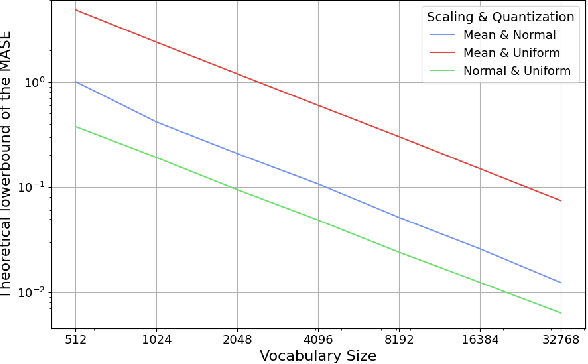
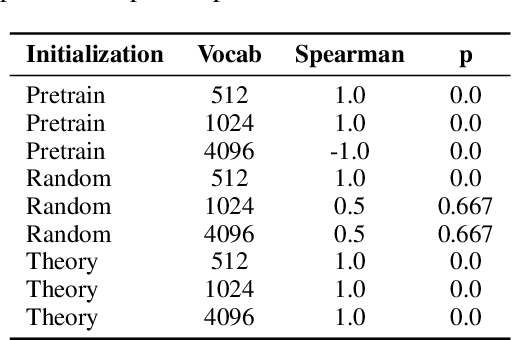
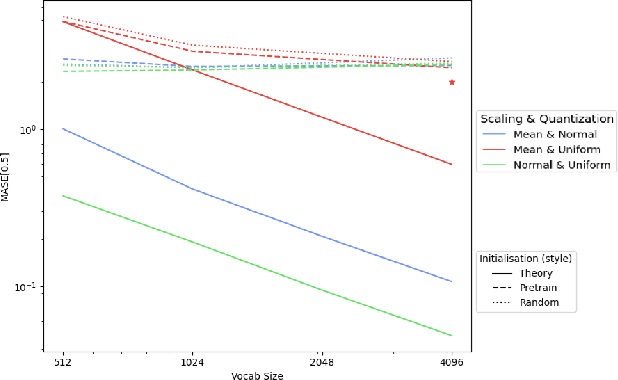
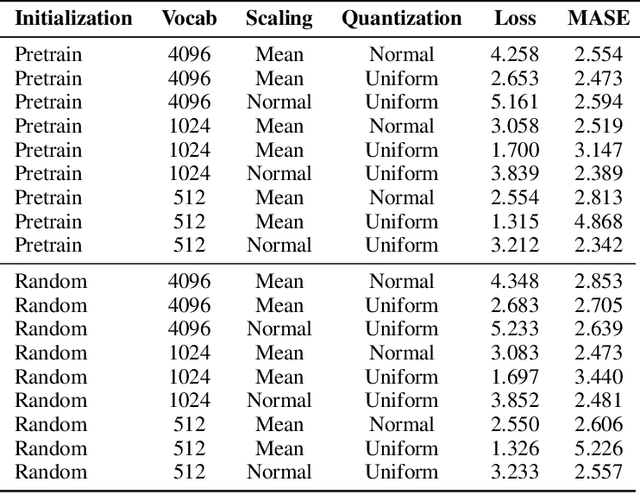
Tokenization and transfer learning are two critical components in building state of the art time series foundation models for forecasting. In this work, we systematically study the effect of tokenizer design, specifically scaling and quantization strategies, on model performance, alongside the impact of pretraining versus random initialization. We show that tokenizer configuration primarily governs the representational capacity and stability of the model, while transfer learning influences optimization efficiency and alignment. Using a combination of empirical training experiments and theoretical analyses, we demonstrate that pretrained models consistently leverage well-designed tokenizers more effectively, particularly at smaller vocabulary sizes. Conversely, misaligned tokenization can diminish or even invert the benefits of pretraining. These findings highlight the importance of careful tokenization in time series modeling and suggest that combining small, efficient vocabularies with pretrained weights is especially advantageous in multi-modal forecasting settings, where the overall vocabulary must be shared across modalities. Our results provide concrete guidance for designing tokenizers and leveraging transfer learning in discrete representation learning for continuous signals.
Reinforcing Multi-Turn Reasoning in LLM Agents via Turn-Level Credit Assignment
May 17, 2025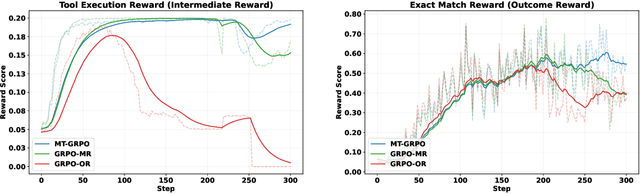
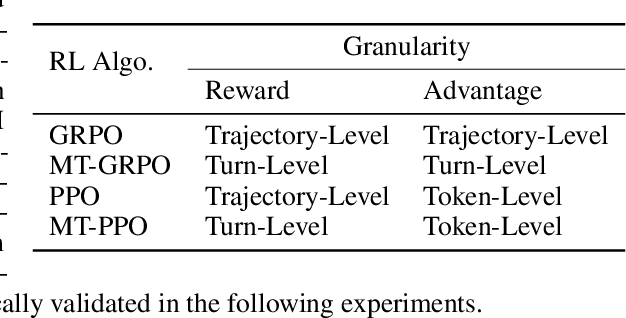
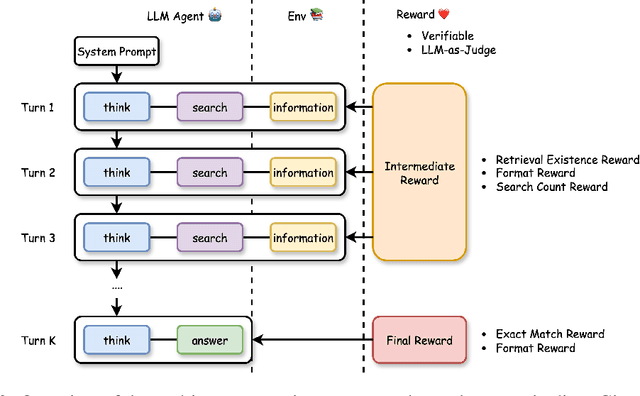
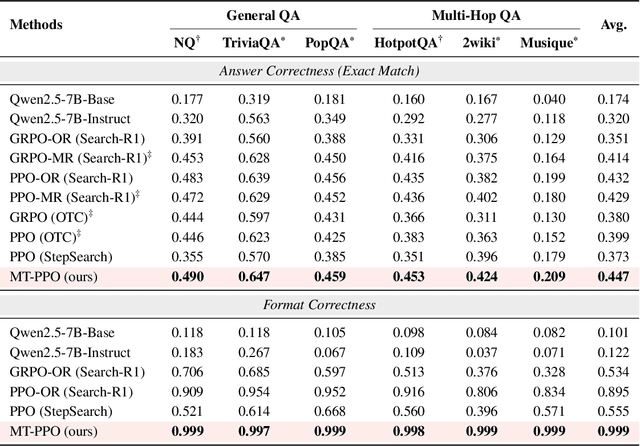
This paper investigates approaches to enhance the reasoning capabilities of Large Language Model (LLM) agents using Reinforcement Learning (RL). Specifically, we focus on multi-turn tool-use scenarios, which can be naturally modeled as Markov Decision Processes (MDPs). While existing approaches often train multi-turn LLM agents with trajectory-level advantage estimation in bandit settings, they struggle with turn-level credit assignment across multiple decision steps, limiting their performance on multi-turn reasoning tasks. To address this, we introduce a fine-grained turn-level advantage estimation strategy to enable more precise credit assignment in multi-turn agent interactions. The strategy is general and can be incorporated into various RL algorithms such as Group Relative Preference Optimization (GRPO). Our experimental evaluation on multi-turn reasoning and search-based tool-use tasks with GRPO implementations highlights the effectiveness of the MDP framework and the turn-level credit assignment in advancing the multi-turn reasoning capabilities of LLM agents in complex decision-making settings. Our method achieves 100% success in tool execution and 50% accuracy in exact answer matching, significantly outperforming baselines, which fail to invoke tools and achieve only 20-30% exact match accuracy.
Multi-modal Time Series Analysis: A Tutorial and Survey
Mar 17, 2025Multi-modal time series analysis has recently emerged as a prominent research area in data mining, driven by the increasing availability of diverse data modalities, such as text, images, and structured tabular data from real-world sources. However, effective analysis of multi-modal time series is hindered by data heterogeneity, modality gap, misalignment, and inherent noise. Recent advancements in multi-modal time series methods have exploited the multi-modal context via cross-modal interactions based on deep learning methods, significantly enhancing various downstream tasks. In this tutorial and survey, we present a systematic and up-to-date overview of multi-modal time series datasets and methods. We first state the existing challenges of multi-modal time series analysis and our motivations, with a brief introduction of preliminaries. Then, we summarize the general pipeline and categorize existing methods through a unified cross-modal interaction framework encompassing fusion, alignment, and transference at different levels (\textit{i.e.}, input, intermediate, output), where key concepts and ideas are highlighted. We also discuss the real-world applications of multi-modal analysis for both standard and spatial time series, tailored to general and specific domains. Finally, we discuss future research directions to help practitioners explore and exploit multi-modal time series. The up-to-date resources are provided in the GitHub repository: https://github.com/UConn-DSIS/Multi-modal-Time-Series-Analysis
Privacy Amplification by Structured Subsampling for Deep Differentially Private Time Series Forecasting
Feb 04, 2025
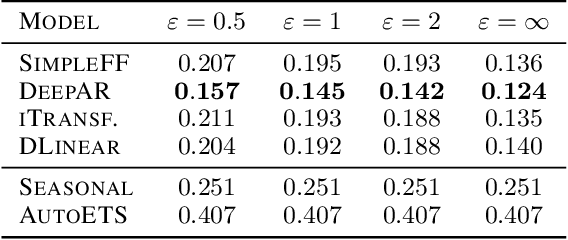
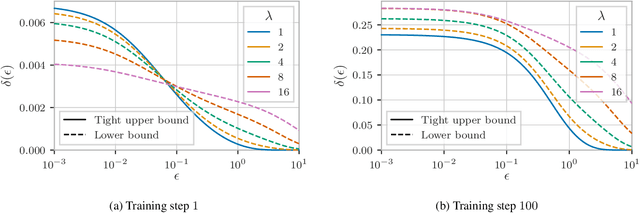

Many forms of sensitive data, such as web traffic, mobility data, or hospital occupancy, are inherently sequential. The standard method for training machine learning models while ensuring privacy for units of sensitive information, such as individual hospital visits, is differentially private stochastic gradient descent (DP-SGD). However, we observe in this work that the formal guarantees of DP-SGD are incompatible with timeseries-specific tasks like forecasting, since they rely on the privacy amplification attained by training on small, unstructured batches sampled from an unstructured dataset. In contrast, batches for forecasting are generated by (1) sampling sequentially structured time series from a dataset, (2) sampling contiguous subsequences from these series, and (3) partitioning them into context and ground-truth forecast windows. We theoretically analyze the privacy amplification attained by this structured subsampling to enable the training of forecasting models with sound and tight event- and user-level privacy guarantees. Towards more private models, we additionally prove how data augmentation amplifies privacy in self-supervised training of sequence models. Our empirical evaluation demonstrates that amplification by structured subsampling enables the training of forecasting models with strong formal privacy guarantees.
Variational Schrödinger Momentum Diffusion
Jan 28, 2025
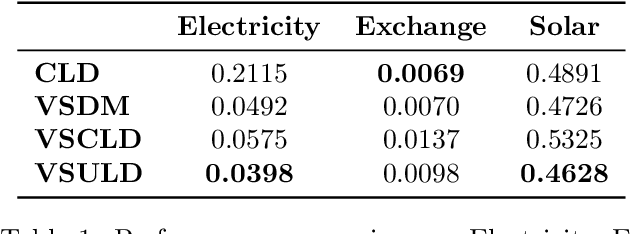
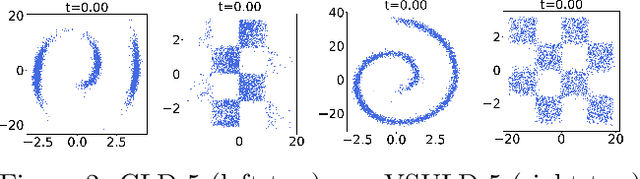

The momentum Schr\"odinger Bridge (mSB) has emerged as a leading method for accelerating generative diffusion processes and reducing transport costs. However, the lack of simulation-free properties inevitably results in high training costs and affects scalability. To obtain a trade-off between transport properties and scalability, we introduce variational Schr\"odinger momentum diffusion (VSMD), which employs linearized forward score functions (variational scores) to eliminate the dependence on simulated forward trajectories. Our approach leverages a multivariate diffusion process with adaptively transport-optimized variational scores. Additionally, we apply a critical-damping transform to stabilize training by removing the need for score estimations for both velocity and samples. Theoretically, we prove the convergence of samples generated with optimal variational scores and momentum diffusion. Empirical results demonstrate that VSMD efficiently generates anisotropic shapes while maintaining transport efficacy, outperforming overdamped alternatives, and avoiding complex denoising processes. Our approach also scales effectively to real-world data, achieving competitive results in time series and image generation.