 Add to Chrome
 Add to Firefox
 Add to Edge
PLOT: Enhancing Preference Learning via Optimal Transport
Apr 02, 2026
Preference learning in Large Language Models (LLMs) has advanced significantly, yet existing methods remain limited by modest performance gains, high computational costs, hyperparameter sensitivity, and insufficient modeling of global token-level relationships. We introduce PLOT, which enhances Preference Learning in fine-tuning-based alignment through a token-level loss derived from Optimal Transport. By formulating preference learning as an Optimal Transport Problem, PLOT aligns model outputs with human preferences while preserving the original distribution of LLMs, ensuring stability and robustness. Furthermore, PLOT leverages token embeddings to capture semantic relationships, enabling globally informed optimization. Experiments across two preference categories - Human Values and Logic & Problem Solving - spanning seven subpreferences demonstrate that PLOT consistently improves alignment performance while maintaining fluency and coherence. These results substantiate optimal transport as a principled methodology for preference learning, establishing a theoretically grounded framework that provides new insights for preference learning of LLMs.

DEFT: Distribution-guided Efficient Fine-Tuning for Human Alignment
Apr 02, 2026Reinforcement Learning from Human Feedback (RLHF), using algorithms like Proximal Policy Optimization (PPO), aligns Large Language Models (LLMs) with human values but is costly and unstable. Alternatives have been proposed to replace PPO or integrate Supervised Fine-Tuning (SFT) and contrastive learning for direct fine-tuning and value alignment. However, these methods still require voluminous data to learn preferences and may weaken the generalization ability of LLMs. To further enhance alignment efficiency and performance while mitigating the loss of generalization ability, this paper introduces Distribution-guided Efficient Fine-Tuning (DEFT), an efficient alignment framework incorporating data filtering and distributional guidance by calculating the differential distribution reward based on the output distribution of language model and the discrepancy distribution of preference data. A small yet high-quality subset is filtered from the raw data using a differential distribution reward, which is then incorporated into existing alignment methods to guide the model's output distribution. Experimental results demonstrate that the methods enhanced by DEFT outperform the original methods in both alignment capability and generalization ability, with significantly reduced training time.
COIG-P: A High-Quality and Large-Scale Chinese Preference Dataset for Alignment with Human Values
Apr 07, 2025Aligning large language models (LLMs) with human preferences has achieved remarkable success. However, existing Chinese preference datasets are limited by small scale, narrow domain coverage, and lack of rigorous data validation. Additionally, the reliance on human annotators for instruction and response labeling significantly constrains the scalability of human preference datasets. To address these challenges, we design an LLM-based Chinese preference dataset annotation pipeline with no human intervention. Specifically, we crawled and carefully filtered 92k high-quality Chinese queries and employed 15 mainstream LLMs to generate and score chosen-rejected response pairs. Based on it, we introduce COIG-P (Chinese Open Instruction Generalist - Preference), a high-quality, large-scale Chinese preference dataset, comprises 1,009k Chinese preference pairs spanning 6 diverse domains: Chat, Code, Math, Logic, Novel, and Role. Building upon COIG-P, to reduce the overhead of using LLMs for scoring, we trained a 8B-sized Chinese Reward Model (CRM) and meticulously constructed a Chinese Reward Benchmark (CRBench). Evaluation results based on AlignBench \citep{liu2024alignbenchbenchmarkingchinesealignment} show that that COIG-P significantly outperforms other Chinese preference datasets, and it brings significant performance improvements ranging from 2% to 12% for the Qwen2/2.5 and Infinity-Instruct-3M-0625 model series, respectively. The results on CRBench demonstrate that our CRM has a strong and robust scoring ability. We apply it to filter chosen-rejected response pairs in a test split of COIG-P, and our experiments show that it is comparable to GPT-4o in identifying low-quality samples while maintaining efficiency and cost-effectiveness. Our codes and data are released in https://github.com/multimodal-art-projection/COIG-P.
SuperGPQA: Scaling LLM Evaluation across 285 Graduate Disciplines
Feb 20, 2025Large language models (LLMs) have demonstrated remarkable proficiency in mainstream academic disciplines such as mathematics, physics, and computer science. However, human knowledge encompasses over 200 specialized disciplines, far exceeding the scope of existing benchmarks. The capabilities of LLMs in many of these specialized fields-particularly in light industry, agriculture, and service-oriented disciplines-remain inadequately evaluated. To address this gap, we present SuperGPQA, a comprehensive benchmark that evaluates graduate-level knowledge and reasoning capabilities across 285 disciplines. Our benchmark employs a novel Human-LLM collaborative filtering mechanism to eliminate trivial or ambiguous questions through iterative refinement based on both LLM responses and expert feedback. Our experimental results reveal significant room for improvement in the performance of current state-of-the-art LLMs across diverse knowledge domains (e.g., the reasoning-focused model DeepSeek-R1 achieved the highest accuracy of 61.82% on SuperGPQA), highlighting the considerable gap between current model capabilities and artificial general intelligence. Additionally, we present comprehensive insights from our management of a large-scale annotation process, involving over 80 expert annotators and an interactive Human-LLM collaborative system, offering valuable methodological guidance for future research initiatives of comparable scope.
MAmmoTH-VL: Eliciting Multimodal Reasoning with Instruction Tuning at Scale
Dec 06, 2024


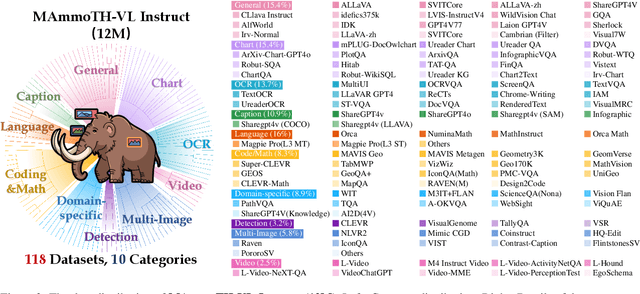
Open-source multimodal large language models (MLLMs) have shown significant potential in a broad range of multimodal tasks. However, their reasoning capabilities remain constrained by existing instruction-tuning datasets, which were predominately repurposed from academic datasets such as VQA, AI2D, and ChartQA. These datasets target simplistic tasks, and only provide phrase-level answers without any intermediate rationales. To address these challenges, we introduce a scalable and cost-effective method to construct a large-scale multimodal instruction-tuning dataset with rich intermediate rationales designed to elicit CoT reasoning. Using only open models, we create a dataset containing 12M instruction-response pairs to cover diverse, reasoning-intensive tasks with detailed and faithful rationales. Experiments demonstrate that training MLLMs on this dataset significantly improves reasoning capabilities, achieving state-of-the-art performance on benchmarks such as MathVerse (+8.1%), MMMU-Pro (+7%), and MuirBench (+13.3%). Additionally, the model demonstrates notable improvements of up to 4% on non-reasoning-based benchmarks. Ablation studies further highlight the importance of key components, such as rewriting and self-filtering, in the dataset construction process.
Teach Multimodal LLMs to Comprehend Electrocardiographic Images
Oct 21, 2024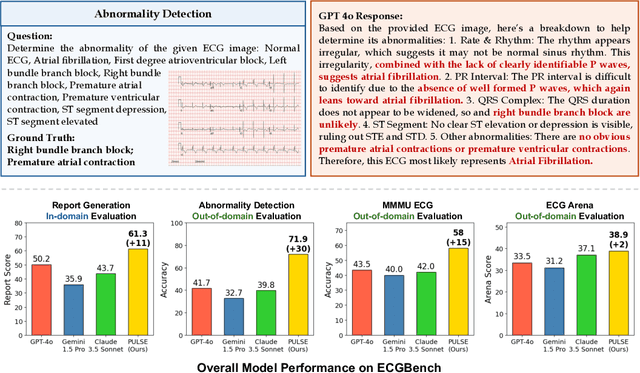
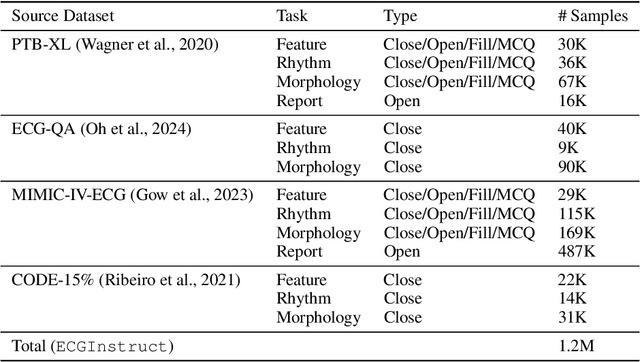
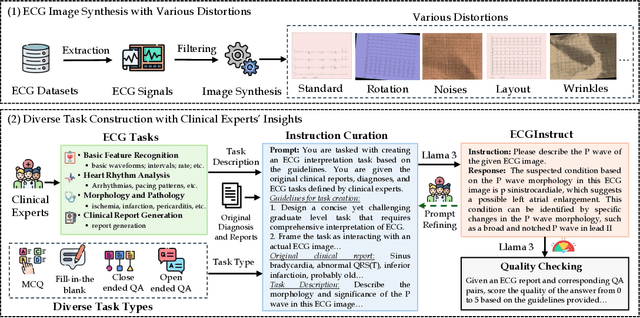
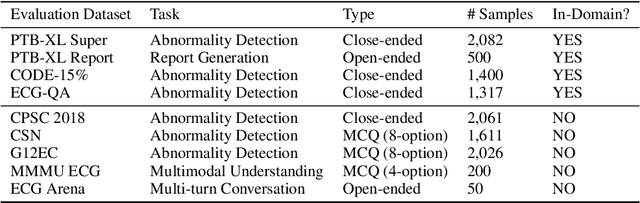
The electrocardiogram (ECG) is an essential non-invasive diagnostic tool for assessing cardiac conditions. Existing automatic interpretation methods suffer from limited generalizability, focusing on a narrow range of cardiac conditions, and typically depend on raw physiological signals, which may not be readily available in resource-limited settings where only printed or digital ECG images are accessible. Recent advancements in multimodal large language models (MLLMs) present promising opportunities for addressing these challenges. However, the application of MLLMs to ECG image interpretation remains challenging due to the lack of instruction tuning datasets and well-established ECG image benchmarks for quantitative evaluation. To address these challenges, we introduce ECGInstruct, a comprehensive ECG image instruction tuning dataset of over one million samples, covering a wide range of ECG-related tasks from diverse data sources. Using ECGInstruct, we develop PULSE, an MLLM tailored for ECG image comprehension. In addition, we curate ECGBench, a new evaluation benchmark covering four key ECG image interpretation tasks across nine different datasets. Our experiments show that PULSE sets a new state-of-the-art, outperforming general MLLMs with an average accuracy improvement of 15% to 30%. This work highlights the potential of PULSE to enhance ECG interpretation in clinical practice.
Can MLLMs Understand the Deep Implication Behind Chinese Images?
Oct 17, 2024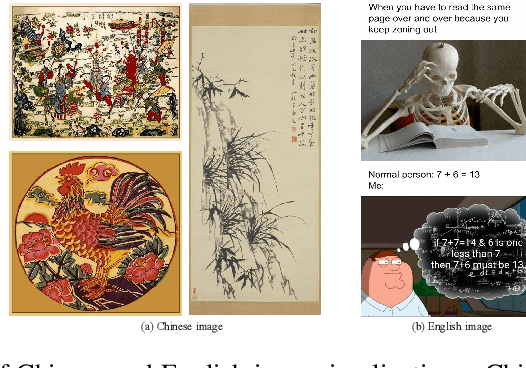
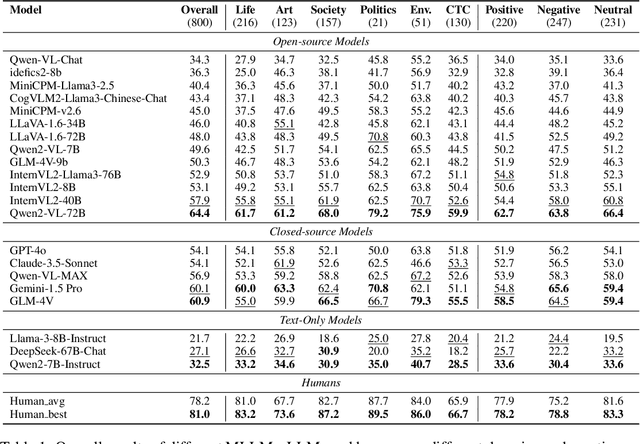
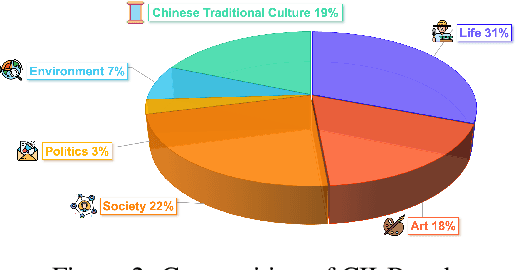
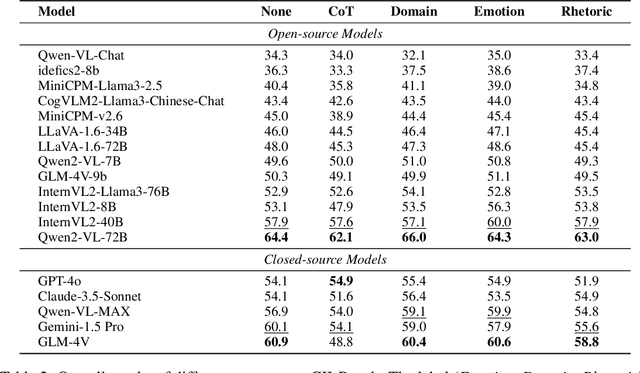
As the capabilities of Multimodal Large Language Models (MLLMs) continue to improve, the need for higher-order capability evaluation of MLLMs is increasing. However, there is a lack of work evaluating MLLM for higher-order perception and understanding of Chinese visual content. To fill the gap, we introduce the **C**hinese **I**mage **I**mplication understanding **Bench**mark, **CII-Bench**, which aims to assess the higher-order perception and understanding capabilities of MLLMs for Chinese images. CII-Bench stands out in several ways compared to existing benchmarks. Firstly, to ensure the authenticity of the Chinese context, images in CII-Bench are sourced from the Chinese Internet and manually reviewed, with corresponding answers also manually crafted. Additionally, CII-Bench incorporates images that represent Chinese traditional culture, such as famous Chinese traditional paintings, which can deeply reflect the model's understanding of Chinese traditional culture. Through extensive experiments on CII-Bench across multiple MLLMs, we have made significant findings. Initially, a substantial gap is observed between the performance of MLLMs and humans on CII-Bench. The highest accuracy of MLLMs attains 64.4%, where as human accuracy averages 78.2%, peaking at an impressive 81.0%. Subsequently, MLLMs perform worse on Chinese traditional culture images, suggesting limitations in their ability to understand high-level semantics and lack a deep knowledge base of Chinese traditional culture. Finally, it is observed that most models exhibit enhanced accuracy when image emotion hints are incorporated into the prompts. We believe that CII-Bench will enable MLLMs to gain a better understanding of Chinese semantics and Chinese-specific images, advancing the journey towards expert artificial general intelligence (AGI). Our project is publicly available at https://cii-bench.github.io/.
DeliLaw: A Chinese Legal Counselling System Based on a Large Language Model
Aug 01, 2024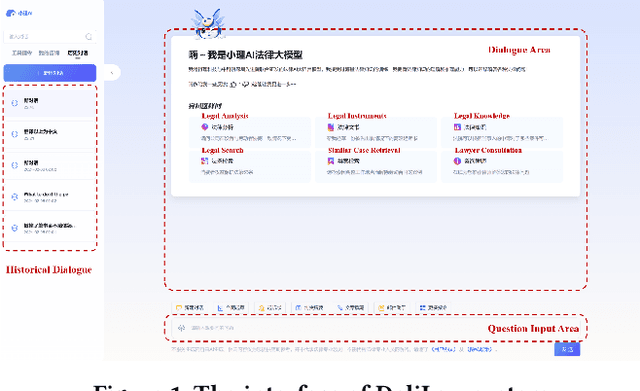
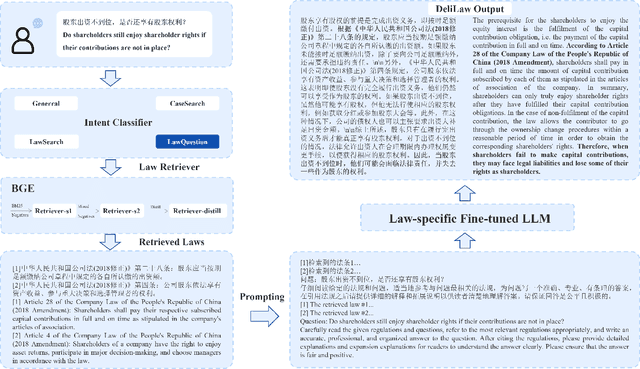
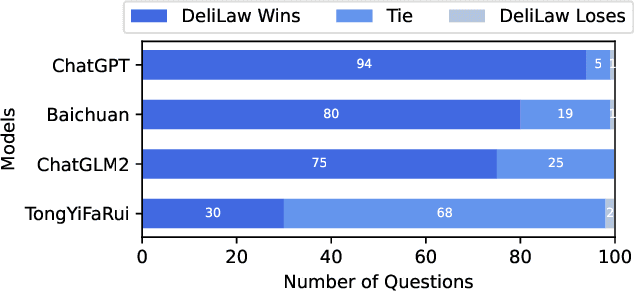
Traditional legal retrieval systems designed to retrieve legal documents, statutes, precedents, and other legal information are unable to give satisfactory answers due to lack of semantic understanding of specific questions. Large Language Models (LLMs) have achieved excellent results in a variety of natural language processing tasks, which inspired us that we train a LLM in the legal domain to help legal retrieval. However, in the Chinese legal domain, due to the complexity of legal questions and the rigour of legal articles, there is no legal large model with satisfactory practical application yet. In this paper, we present DeliLaw, a Chinese legal counselling system based on a large language model. DeliLaw integrates a legal retrieval module and a case retrieval module to overcome the model hallucination. Users can consult professional legal questions, search for legal articles and relevant judgement cases, etc. on the DeliLaw system in a dialogue mode. In addition, DeliLaw supports the use of English for counseling. we provide the address of the system: https://data.delilegal.com/lawQuestion.
II-Bench: An Image Implication Understanding Benchmark for Multimodal Large Language Models
Jun 11, 2024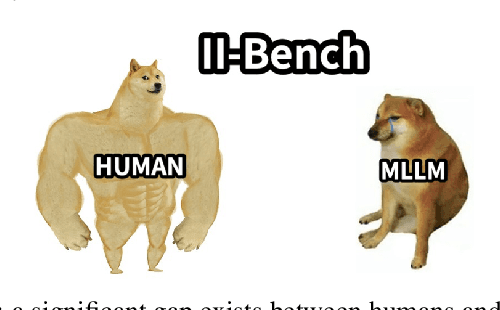
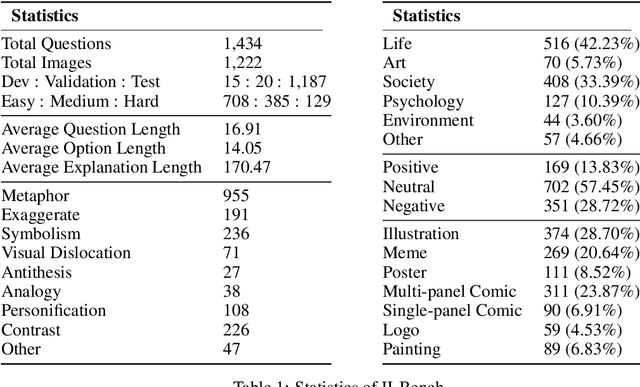


The rapid advancements in the development of multimodal large language models (MLLMs) have consistently led to new breakthroughs on various benchmarks. In response, numerous challenging and comprehensive benchmarks have been proposed to more accurately assess the capabilities of MLLMs. However, there is a dearth of exploration of the higher-order perceptual capabilities of MLLMs. To fill this gap, we propose the Image Implication understanding Benchmark, II-Bench, which aims to evaluate the model's higher-order perception of images. Through extensive experiments on II-Bench across multiple MLLMs, we have made significant findings. Initially, a substantial gap is observed between the performance of MLLMs and humans on II-Bench. The pinnacle accuracy of MLLMs attains 74.8%, whereas human accuracy averages 90%, peaking at an impressive 98%. Subsequently, MLLMs perform worse on abstract and complex images, suggesting limitations in their ability to understand high-level semantics and capture image details. Finally, it is observed that most models exhibit enhanced accuracy when image sentiment polarity hints are incorporated into the prompts. This observation underscores a notable deficiency in their inherent understanding of image sentiment. We believe that II-Bench will inspire the community to develop the next generation of MLLMs, advancing the journey towards expert artificial general intelligence (AGI). II-Bench is publicly available at https://huggingface.co/datasets/m-a-p/II-Bench.
Enhancing Noise Robustness of Retrieval-Augmented Language Models with Adaptive Adversarial Training
May 31, 2024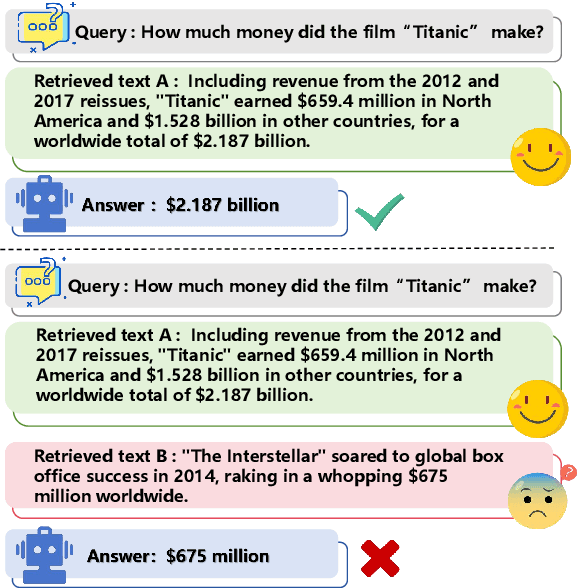

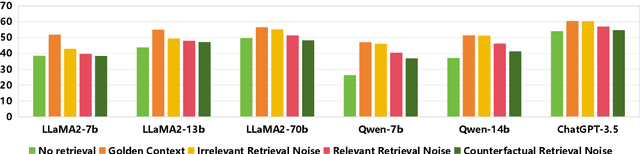

Large Language Models (LLMs) exhibit substantial capabilities yet encounter challenges, including hallucination, outdated knowledge, and untraceable reasoning processes. Retrieval-augmented generation (RAG) has emerged as a promising solution, integrating knowledge from external databases to mitigate these challenges. However, inappropriate retrieved passages can potentially hinder the LLMs' capacity to generate comprehensive and high-quality responses. Prior RAG studies on the robustness of retrieval noises often confine themselves to a limited set of noise types, deviating from real-world retrieval environments and limiting practical applicability. In this study, we initially investigate retrieval noises and categorize them into three distinct types, reflecting real-world environments. We analyze the impact of these various retrieval noises on the robustness of LLMs. Subsequently, we propose a novel RAG approach known as Retrieval-augmented Adaptive Adversarial Training (RAAT). RAAT leverages adaptive adversarial training to dynamically adjust the model's training process in response to retrieval noises. Concurrently, it employs multi-task learning to ensure the model's capacity to internally recognize noisy contexts. Extensive experiments demonstrate that the LLaMA-2 7B model trained using RAAT exhibits significant improvements in F1 and EM scores under diverse noise conditions. For reproducibility, we release our code and data at: https://github.com/calubkk/RAAT.