 Add to Chrome
 Add to Firefox
 Add to Edge
MAG: A Web-Agent Benchmark and Harness for Multimodal Action and Guide Generation
Jul 14, 2026
Digital Adoption Platforms (DAPs) are embedded overlays widely used on web systems to guide users through operations inside a page, helping them get started with unfamiliar interfaces quickly. Completing a real task, however, rarely means clicking a few buttons on a single page: it takes a sequence of actions that unfolds across changing page states. Prior studies have also treated automated web agent actions and guide text generation as two separate problems, and most of them feed models textual page representations such as the DOM or accessibility trees rather than the rendered screens that humans actually operate on. In this work we introduce MAG, the first benchmark that unifies task execution and guide writing into a single Multimodal Action and Guide task, with two grounding schemes over screenshots: Set-of-Mark element selection and raw pixel coordinates. We further build a complete harness for this compound task, covering annotation with LLM assistance and human verification, training, evaluation in live environments, and joint metrics for actions and guides. With this harness we evaluate frontier API models and open multimodal models, and report detailed analyses. Finally, we design a GRPO training method augmented with expert trajectories, which nearly doubles the success rate of a supervised 9B agent (from 6.9% to 13.2%) and improves guide quality at the same time. Even the strongest model completes fewer than 40% of the tasks, leaving ample room for future research.

A Learning-Rate-Gated Failure of GRPO in a Small Language and Vision-Language Model Web Agent: A Controlled Null and Its Mechanism
Jul 14, 2026Reinforcement learning with verifiable rewards, and Group Relative Policy Optimization (GRPO) in particular, is now run routinely on a supervised checkpoint in the hope of producing a stronger agent. We ask whether it adds skill to a small language and vision-language model web agent at the 4B to 8B scale, or whether it mostly reshapes behavior the supervised model already has. Across a control grid of 18 runs that varies learning rate, KL weight, seed, initialization, and clipping, no configuration credibly improves the success rate of a strong supervised baseline on tasks the agent has largely mastered. On the text track, moderate to high learning rates make it credibly worse. The null holds under paired testing, 25 evaluation seeds, 6 training seeds, changes to the recipe, both text and Set-of-Marks screenshot observations, and scaling the backbone to 8B; the credible harm is a text-track finding and is only nominal under Set-of-Marks. To show that the null reflects the setting and not a broken pipeline, we run the identical harness, reward, and recipe on tasks whose reward is reachable by sampling, and there the success rate rises by 22 points with a paired interval that excludes zero. GRPO therefore helps only when there is headroom to climb, meaning the sampled policy already succeeds more often than the greedy one. We then explain the failure. A middle learning rate degrades the agent and a high one collapses it, and the two regimes form a double dissociation: grafting localizes the degrade regime to the attention and MLP blocks, while the collapse regime cannot be traced to any single group, and the embedding change that dominates the weight movement is causally inert. At 4B, effective rank in the late layers tracks capability in both directions; at 8B the two come apart. This coupling is specific to the smaller model, so we report it as scale-dependent.
GuideWeb: A Benchmark for Automatic In-App Guide Generation on Real-World Web UIs
Feb 02, 2026Digital Adoption Platform (DAP) provide web-based overlays that deliver operation guidance and contextual hints to help users navigate complex websites. Although modern DAP tools enable non-experts to author such guidance, maintaining these guides remains labor-intensive because website layouts and functionalities evolve continuously, which requires repeated manual updates and re-annotation. In this work, we introduce \textbf{GuideWeb}, a new benchmark for automatic in-app guide generation on real-world web UIs. GuideWeb formulates the task as producing page-level guidance by selecting \textbf{guide target elements} grounded in the webpage and generating concise guide text aligned with user intent. We also propose a comprehensive evaluation suite that jointly measures the accuracy of guide target element selection and the quality of generated intents and guide texts. Experiments show that our proposed \textbf{GuideWeb Agent} achieves \textbf{30.79\%} accuracy in guide target element prediction, while obtaining BLEU scores of \textbf{44.94} for intent generation and \textbf{21.34} for guide-text generation. Existing baselines perform substantially worse, which highlights that automatic guide generation remains challenging and that further advances are necessary before such systems can be reliably deployed in real-world settings.
M-MRE: Extending the Mutual Reinforcement Effect to Multimodal Information Extraction
Apr 24, 2025Mutual Reinforcement Effect (MRE) is an emerging subfield at the intersection of information extraction and model interpretability. MRE aims to leverage the mutual understanding between tasks of different granularities, enhancing the performance of both coarse-grained and fine-grained tasks through joint modeling. While MRE has been explored and validated in the textual domain, its applicability to visual and multimodal domains remains unexplored. In this work, we extend MRE to the multimodal information extraction domain for the first time. Specifically, we introduce a new task: Multimodal Mutual Reinforcement Effect (M-MRE), and construct a corresponding dataset to support this task. To address the challenges posed by M-MRE, we further propose a Prompt Format Adapter (PFA) that is fully compatible with various Large Vision-Language Models (LVLMs). Experimental results demonstrate that MRE can also be observed in the M-MRE task, a multimodal text-image understanding scenario. This provides strong evidence that MRE facilitates mutual gains across three interrelated tasks, confirming its generalizability beyond the textual domain.
Empirical Study of Mutual Reinforcement Effect and Application in Few-shot Text Classification Tasks via Prompt
Oct 13, 2024
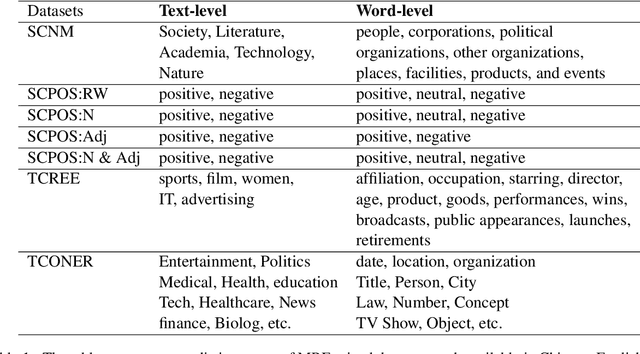

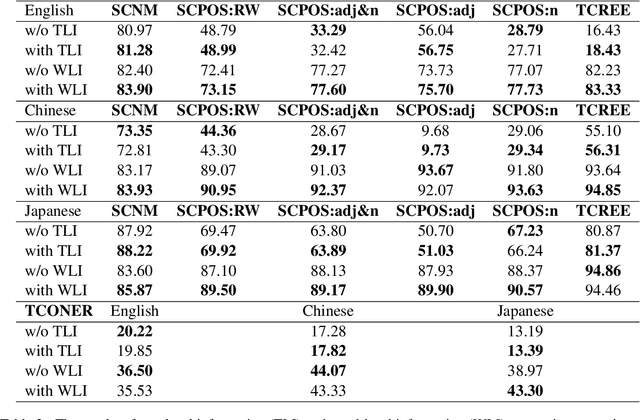
The Mutual Reinforcement Effect (MRE) investigates the synergistic relationship between word-level and text-level classifications in text classification tasks. It posits that the performance of both classification levels can be mutually enhanced. However, this mechanism has not been adequately demonstrated or explained in prior research. To address this gap, we employ empirical experiment to observe and substantiate the MRE theory. Our experiments on 21 MRE mix datasets revealed the presence of MRE in the model and its impact. Specifically, we conducted compare experiments use fine-tune. The results of findings from comparison experiments corroborates the existence of MRE. Furthermore, we extended the application of MRE to prompt learning, utilizing word-level information as a verbalizer to bolster the model's prediction of text-level classification labels. In our final experiment, the F1-score significantly surpassed the baseline in 18 out of 21 MRE Mix datasets, further validating the notion that word-level information enhances the language model's comprehension of the text as a whole.
MMM: Multilingual Mutual Reinforcement Effect Mix Datasets & Test with Open-domain Information Extraction Large Language Models
Jul 15, 2024
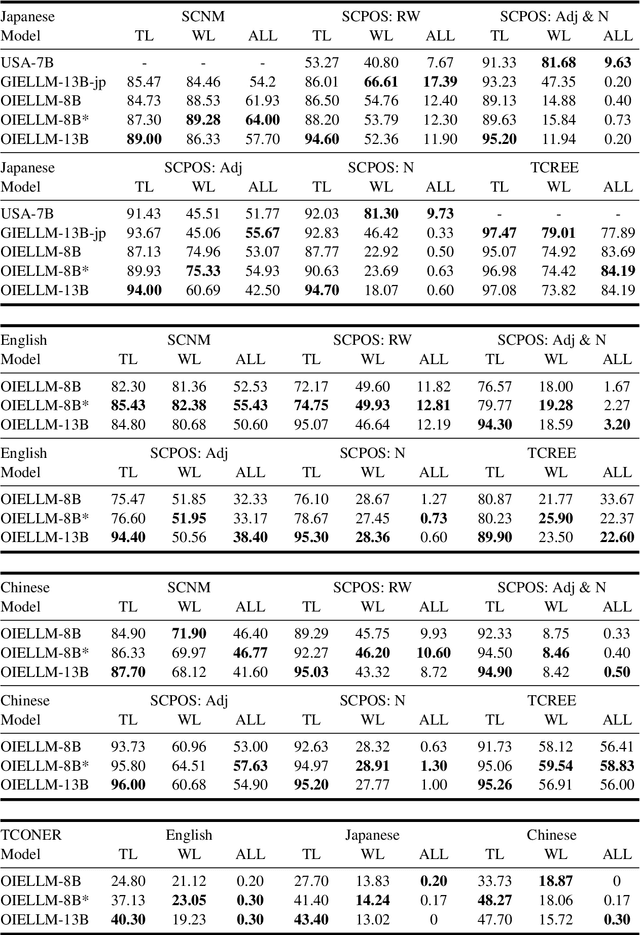
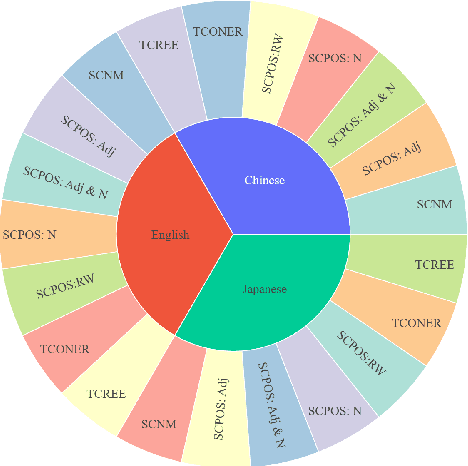

The Mutual Reinforcement Effect (MRE) represents a promising avenue in information extraction and multitasking research. Nevertheless, its applicability has been constrained due to the exclusive availability of MRE mix datasets in Japanese, thereby limiting comprehensive exploration by the global research community. To address this limitation, we introduce a Multilingual MRE mix dataset (MMM) that encompasses 21 sub-datasets in English, Japanese, and Chinese. In this paper, we also propose a method for dataset translation assisted by Large Language Models (LLMs), which significantly reduces the manual annotation time required for dataset construction by leveraging LLMs to translate the original Japanese datasets. Additionally, we have enriched the dataset by incorporating open-domain Named Entity Recognition (NER) and sentence classification tasks. Utilizing this expanded dataset, we developed a unified input-output framework to train an Open-domain Information Extraction Large Language Model (OIELLM). The OIELLM model demonstrates the capability to effectively process novel MMM datasets, exhibiting significant improvements in performance.
II-Bench: An Image Implication Understanding Benchmark for Multimodal Large Language Models
Jun 11, 2024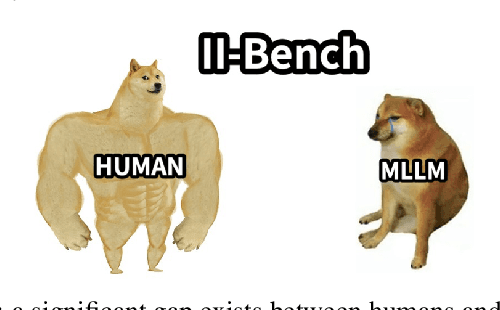
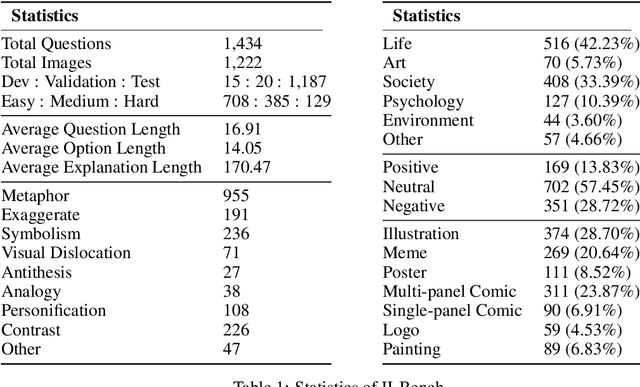


The rapid advancements in the development of multimodal large language models (MLLMs) have consistently led to new breakthroughs on various benchmarks. In response, numerous challenging and comprehensive benchmarks have been proposed to more accurately assess the capabilities of MLLMs. However, there is a dearth of exploration of the higher-order perceptual capabilities of MLLMs. To fill this gap, we propose the Image Implication understanding Benchmark, II-Bench, which aims to evaluate the model's higher-order perception of images. Through extensive experiments on II-Bench across multiple MLLMs, we have made significant findings. Initially, a substantial gap is observed between the performance of MLLMs and humans on II-Bench. The pinnacle accuracy of MLLMs attains 74.8%, whereas human accuracy averages 90%, peaking at an impressive 98%. Subsequently, MLLMs perform worse on abstract and complex images, suggesting limitations in their ability to understand high-level semantics and capture image details. Finally, it is observed that most models exhibit enhanced accuracy when image sentiment polarity hints are incorporated into the prompts. This observation underscores a notable deficiency in their inherent understanding of image sentiment. We believe that II-Bench will inspire the community to develop the next generation of MLLMs, advancing the journey towards expert artificial general intelligence (AGI). II-Bench is publicly available at https://huggingface.co/datasets/m-a-p/II-Bench.
Demonstrating Mutual Reinforcement Effect through Information Flow
Mar 05, 2024


The Mutual Reinforcement Effect (MRE) investigates the synergistic relationship between word-level and text-level classifications in text classification tasks. It posits that the performance of both classification levels can be mutually enhanced. However, this mechanism has not been adequately demonstrated or explained in prior research. To address this gap, we employ information flow analysis to observe and substantiate the MRE theory. Our experiments on six MRE hybrid datasets revealed the presence of MRE in the model and its impact. Additionally, we conducted fine-tuning experiments, whose results were consistent with those of the information flow experiments. The convergence of findings from both experiments corroborates the existence of MRE. Furthermore, we extended the application of MRE to prompt learning, utilizing word-level information as a verbalizer to bolster the model's prediction of text-level classification labels. In our final experiment, the F1-score significantly surpassed the baseline in five out of six datasets, further validating the notion that word-level information enhances the language model's comprehension of the text as a whole.
Application of LLM Agents in Recruitment: A Novel Framework for Resume Screening
Jan 16, 2024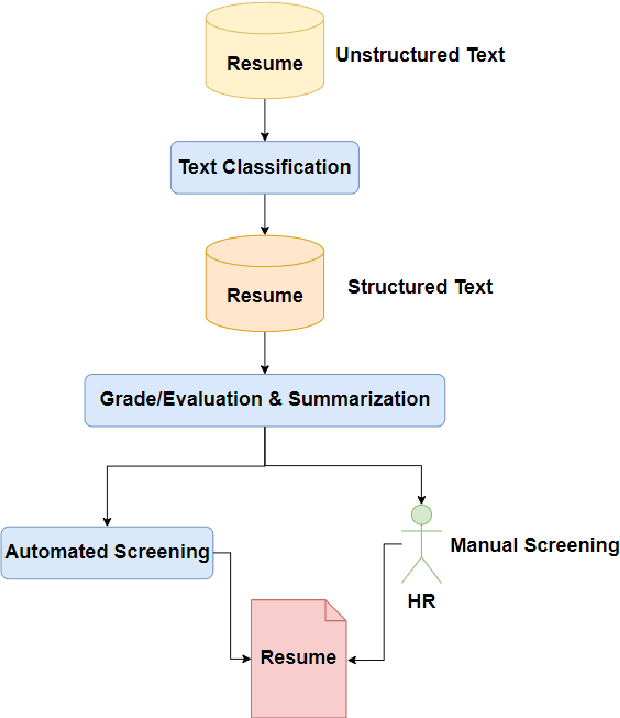

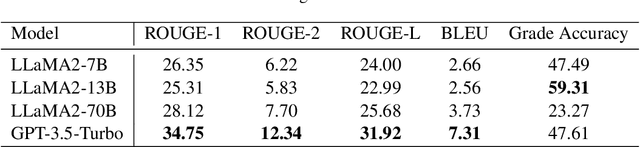
The automation of resume screening is a crucial aspect of the recruitment process in organizations. Automated resume screening systems often encompass a range of natural language processing (NLP) tasks. The advent of Large Language Models (LLMs) has notably enhanced the efficacy of these systems, showcasing their robust generalization abilities across diverse language-related tasks. Accompanying these developments are various agents based on LLMs, which facilitate their application in practical scenarios. This paper introduces a novel LLM-based agent framework for resume screening, aimed at enhancing efficiency and time management in recruitment processes. Our framework is distinct in its ability to efficiently summarize and grade each resume from a large dataset. Moreover, it utilizes LLM agents for decision-making, determining which candidates receive job offers, or which ones to bring in for interviews. To evaluate our framework, we constructed a dataset from actual resumes and conducted simulate a resume screening process. Subsequently, the outcomes of the simulation experiment were compared and subjected to detailed analysis. The results demonstrate that our automated resume screening framework is 11 times faster than traditional manual methods. Furthermore, by fine-tuning the LLMs, we observed a significant improvement in the F1 score, reaching 87.73\%, during the resume sentence classification phase. In the resume summarization and grading phase, our fine-tuned model surpassed the baseline performance of the GPT-3.5 model. Analysis of the decision-making efficacy of the LLM agents in the final offer stage further underscores the potential of LLM agents in transforming resume screening processes.
Think from Words(TFW): Initiating Human-Like Cognition in Large Language Models Through Think from Words for Japanese Text-level Classification
Dec 06, 2023
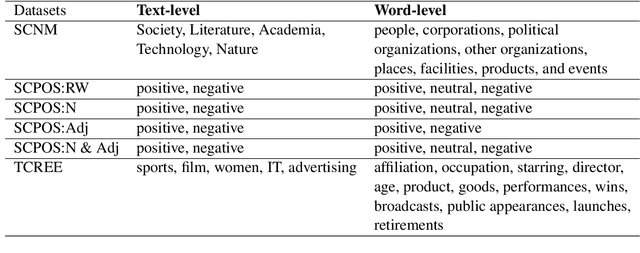


The proliferation of Large Language Models (LLMs) has spurred extensive research into LLM-related Prompt investigations, such as Instruction Learning (IL), In-context Learning (ICL), and Chain-of-Thought (CoT). These approaches aim to improve LLMs' responses by enabling them to provide concise statements or examples for deeper contemplation when addressing questions. However, independent thinking by LLMs can introduce variability in their thought processes, leading to potential inaccuracies. In response, our study seeks to bridge the gap between LLM and human-like thinking processes, recognizing that text comprehension begins with understanding individual words. To tackle this challenge, we have expanded the CoT method to cater to a specific domain. Our approach, known as "Think from Words" (TFW), initiates the comprehension process at the word level and then extends it to encompass the entire text. We also propose "TFW with Extra word-level information" (TFW Extra), augmenting comprehension with additional word-level data. To assess our methods, we employ text classification on six Japanese datasets comprising text-level and word-level elements. Our findings not only validate the effectiveness of TFW but also shed light on the impact of various word-level information types on LLMs' text comprehension, offering insights into their potential to cause misinterpretations and errors in the overall comprehension of the final text.