 Add to Chrome
 Add to Firefox
 Add to Edge
WARA: A Closed-Loop Multi-Agent Framework for Wireless Optimization Autoresearch
Jul 22, 2026
Large language model (LLM) agents have shown growing capabilities in tool use, code execution, artifact inspection, and iterative revision, creating new opportunities for automating scientific research. To the best of our knowledge, this paper presents the first end-to-end autoresearch framework for the wireless domain, with a particular focus on wireless resource allocation optimization, an essential area for characterizing the fundamental performance limits of wireless systems and enhancing their practical performance under dynamic channel and network conditions. Specifically, we propose the Wireless AutoResearch Agent (WARA), a closed-loop multi-agent system that transforms an initial research topic into a complete research package. WARA organizes the research workflow into three phases: 1) research gap identification and problem proposal, 2) optimization modeling, algorithm design, and experimentation, and 3) research deliverable construction. Each phase follows an artifact-mediated process, in which structured upstream artifacts are consumed to generate downstream outputs. Controller-managed gates validate these artifacts and maintain consistency among problem formulations, algorithms, experiments, and research claims. When validation fails, WARA repairs only the affected artifact instead of restarting the entire workflow. We further design an LLM-based ScoringAgent to evaluate manuscript-level research validity. Comparative results show that WARA substantially outperforms one-shot LLM generation and approaches the quality profile of recently accepted peer-reviewed papers. These results demonstrate the potential of closed-loop artifact control for end-to-end LLM-assisted wireless optimization research. The source code is available at https://github.com/guoyuan-dotcom/WARA_CUHKSZ

Transmit Beamforming Design for Integrated Sensing and Communication Using Transmissive RIS Transceiver
Jul 20, 2026Integrated sensing and communication (ISAC) is a key technology for future wireless networks, calling for hardware-efficient architectures to jointly support communication and sensing. In this paper, a transmissive reconfigurable intelligent surface (TRIS) transceiver is leveraged to enable an ISAC system. Under the considered system model, we investigate transmit beamforming design for the TRIS transceiver to maximize the sum-rate/beampattern gain, subject to the predefined sensing beampattern gain/communication rate thresholds and the per-unit power constraints of the TRIS transceiver. Since the objective functions and constraints are non-convex, the above two optimization problems are highly challenging. To resolve the difficult optimization problems, we combine the fractional programming (FP) method and the majorization-minimization (MM) framework to develop second-order cone programming (SOCP)-based solutions. Since the per-element power constraints introduce a large number of constraints, this increases the complexity of solving the optimization problems. By splitting the coupling constraints and applying the alternating direction method of multipliers (ADMM) framework, we propose two analytic-based algorithms for efficiently updating the beamformer configurations in the sum-rate and beampattern gain maximization problems, respectively. Simulation results demonstrate the convergence and effectiveness of the proposed algorithms, and show that the low-complexity algorithms achieve performance close to the SOCP-based benchmarks with substantially reduced computational complexity.
Transmissive RIS Transceiver-Empowered ISAC Systems: Energy Efficiency Optimization for Perfect and Imperfect CSI
Jul 20, 2026In this paper, a novel transmissive reconfigurable intelligent surface (TRIS) transceiver is employed to enable an integrated sensing and communication (ISAC) system supporting both communication and sensing. Under both perfect and imperfect channel state information (CSI), we study the transmit beamforming design for the TRIS transceiver to maximize the system energy efficiency (EE), subject to per-user minimum-rate guarantees, a minimum beampattern gain toward the sensing target, and per-antenna power constraints. The corresponding EE maximization problems are challenging to solve due to the fractional objective and non-convex constraints. In particular, under imperfect CSI, the resulting semi-infinite constraints further complicate the problem. For the perfect CSI case, we first apply the fractional programming (FP) methodology to obtain more tractable reformulations of the rate functions, and then propose an iterative algorithm based on the majorization-minimization (MM) framework. For the imperfect CSI case, we utilize the S-Procedure to transform the semi-infinite inequality constraints into linear matrix inequalities (LMIs), and further develop an efficient MM-based algorithm with the aid of slack variables. Numerical results demonstrate the convergence and effectiveness of the proposed algorithms and validate the EE gains of the TRIS transceiver-enabled ISAC system.
AgentX: Towards Agent-Driven Self-Iteration of Industrial Recommender Systems
Jun 25, 2026Recommendation algorithm iteration is moving from an artisanal, engineer-bound process toward an industrialized research loop, but this transition remains blocked by a structural execution bottleneck: the idea-to-launch cycle still depends on human engineers to generate hypotheses, modify production code, launch A/B experiments, and attribute online results. Innovation therefore scales linearly with headcount rather than compounding with evidence, compute, and accumulated experimental knowledge. We present AgentX, a production-deployed multi-agent system that fundamentally restructures this production function. AgentX operates as a self-evolving development engine: it autonomously generates, implements, evaluates, and learns from recommendation experiments at a scale and pace that no manual workflow can sustain. The system orchestrates four tightly coupled stages in a closed loop. A Brainstorm Agent synthesizes evidence from historical experiments, system architecture, data analysis, and external research into ranked, executable proposals. A Developing Agent translates each proposal into production-ready code through repository-grounded generation and multi-dimensional reliability verification. An Evaluation Agent conducts safe online rollout with guardrail-vetoed A/B judgment, converting both successes and failures into structured knowledge assets. A Harness Evolution layer (SGPO) then distills execution trajectories into semantic-gradient updates that continuously sharpen the agents themselves -- making the system not merely automated, but self-improving.
Cross-Modal Clinical Knowledge Integration for Mammography Report Generation
May 29, 2026Breast cancer is a major global health concern, and mammography screening plays a central role in early detection. The large volume of screening examinations creates a substantial workload for radiologists, making accurate and consistent report generation a critical clinical challenge. Existing automated mammography report generation methods primarily focus on direct visual-to-text mapping, while overlooking the structured clinical reasoning process followed by radiologists in real-world practice. To address this limitation, we propose MammoRG, a mammography report generation framework that explicitly simulates the clinical reporting workflow by following the BI-RADS guideline and incorporating prior clinical knowledge to produce diagnostic reports. Specifically, MammoRG adopts a two-stage training framework. In the first stage, the model learns to integrate clinically relevant prior knowledge from a patient's four-view mammograms through classification-based supervision. In the second stage, a terminology-aware supervised fine-tuning strategy is introduced to model mammography-specific clinical terms as atomic semantic units, enabling the generation of high-quality reports with improved clinical consistency. To facilitate clinical efficacy evaluation of generated reports, we further develop MammoRGTool, a dedicated mammography report parsing tool that extracts structured clinical information from free-text reports. Extensive experiments demonstrate that MammoRG consistently outperforms existing methods across multiple clinical efficacy metrics, particularly in diagnosis-related BI-RADS F1, where it surpasses the second-best model by 2.73%, 2.04%, 1.90%, and 3.27% on the internal, external 1, external 2, and VinDr-Mammo datasets, respectively.
Mobile-Aptus: Confidence-Driven Proactive and Robust Interaction in MLLM-based Mobile-Using Agents
May 27, 2026Recent advancements in multimodal large language models (MLLMs) have shown exceptional potential in enabling mobile-using agents to autonomously execute human instructions. However, fully automated agents often try to execute tasks even when they are unable to resolve them, leading to the problem of over-execution. Previous studies solve it by training a interactive mobile-using agents to let agents request human interaction when agents can not complete user instructions. However, we find that these interactive agents tend to exhibit over-soliciting behavior, relying excessively on human intervention. To mitigate both over-execution and over-soliciting, we propose a universal confidence integration framework that enables confidence-driven proactive and robust interaction in MLLM-based mobile-using agents. The framework consists of two stages: interaction capability empowerment and confidence bias correction. In the interaction capability empowerment stage, agents learn through supervised fine-tuning to output both actions and confidence scores. In the confidence bias correction stage, agents learn to output more accurate confidence scores by combining semantic similarity retrieval with direct preference optimization. Experimental results show Mobile-Aptus achieves state-of-the-art performance on the four popular mobile-using agent benchmarks: OS-Kairos, AITZ, Meta-GUI, and AndroidControl. Mobile-Aptus consistently outperforms all baselines in offline benchmarks, with an average improvement over 17\% in task success rate. In real-world dynamic experiments, Mobile-Aptus surpasses the baseline by 26% in task success rate with only 0.64 intervention steps per instruction. The codes are available at https://github.com/Wuzheng02/Mobile-Aptus.
UI-Venus-1.5 Technical Report
Feb 09, 2026GUI agents have emerged as a powerful paradigm for automating interactions in digital environments, yet achieving both broad generality and consistently strong task performance remains challenging.In this report, we present UI-Venus-1.5, a unified, end-to-end GUI Agent designed for robust real-world applications.The proposed model family comprises two dense variants (2B and 8B) and one mixture-of-experts variant (30B-A3B) to meet various downstream application scenarios.Compared to our previous version, UI-Venus-1.5 introduces three key technical advances: (1) a comprehensive Mid-Training stage leveraging 10 billion tokens across 30+ datasets to establish foundational GUI semantics; (2) Online Reinforcement Learning with full-trajectory rollouts, aligning training objectives with long-horizon, dynamic navigation in large-scale environments; and (3) a single unified GUI Agent constructed via Model Merging, which synthesizes domain-specific models (grounding, web, and mobile) into one cohesive checkpoint. Extensive evaluations demonstrate that UI-Venus-1.5 establishes new state-of-the-art performance on benchmarks such as ScreenSpot-Pro (69.6%), VenusBench-GD (75.0%), and AndroidWorld (77.6%), significantly outperforming previous strong baselines. In addition, UI-Venus-1.5 demonstrates robust navigation capabilities across a variety of Chinese mobile apps, effectively executing user instructions in real-world scenarios. Code: https://github.com/inclusionAI/UI-Venus; Model: https://huggingface.co/collections/inclusionAI/ui-venus
VenusBench-GD: A Comprehensive Multi-Platform GUI Benchmark for Diverse Grounding Tasks
Dec 18, 2025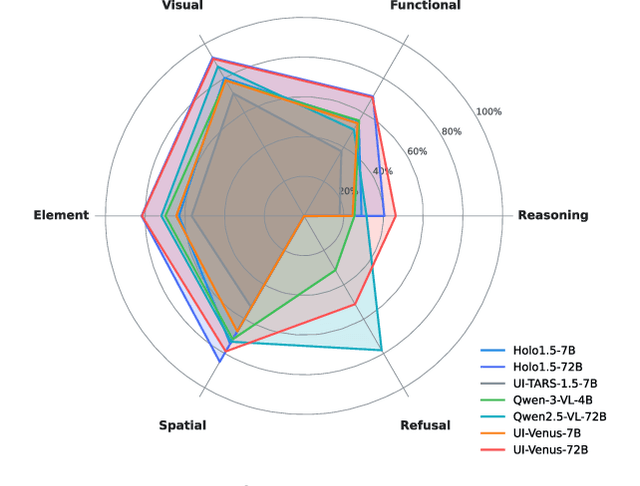
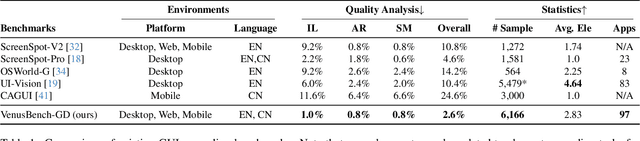
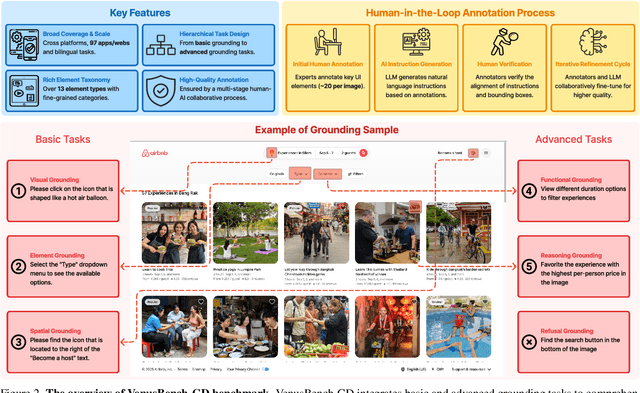
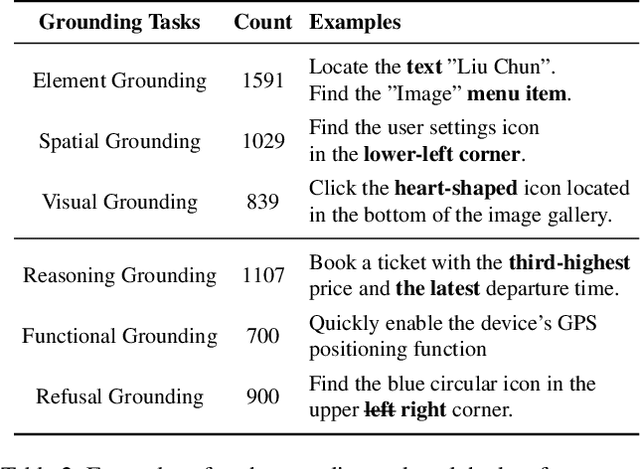
GUI grounding is a critical component in building capable GUI agents. However, existing grounding benchmarks suffer from significant limitations: they either provide insufficient data volume and narrow domain coverage, or focus excessively on a single platform and require highly specialized domain knowledge. In this work, we present VenusBench-GD, a comprehensive, bilingual benchmark for GUI grounding that spans multiple platforms, enabling hierarchical evaluation for real-word applications. VenusBench-GD contributes as follows: (i) we introduce a large-scale, cross-platform benchmark with extensive coverage of applications, diverse UI elements, and rich annotated data, (ii) we establish a high-quality data construction pipeline for grounding tasks, achieving higher annotation accuracy than existing benchmarks, and (iii) we extend the scope of element grounding by proposing a hierarchical task taxonomy that divides grounding into basic and advanced categories, encompassing six distinct subtasks designed to evaluate models from complementary perspectives. Our experimental findings reveal critical insights: general-purpose multimodal models now match or even surpass specialized GUI models on basic grounding tasks. In contrast, advanced tasks, still favor GUI-specialized models, though they exhibit significant overfitting and poor robustness. These results underscore the necessity of comprehensive, multi-tiered evaluation frameworks.
Beamforming for Transmissive RIS Transmitter Enabled Simultaneous Wireless Information and Power Transfer Systems
Nov 15, 2025This paper investigates a novel transmissive reconfigurable intelligent surface (TRIS) transceiver-empowered simultaneous wireless information and power transfer (SWIPT) system with multiple information decoding (ID) and energy harvesting (EH) users. Under the considered system model, we formulate an optimization problem that maximizes the sum-rate of all ID users via the design of the TRIS transceiver's active beamforming. The design is constrained by per-antenna power limits at the TRIS transceiver and by the minimum harvested energy demand of all EH users. Due to the non-convexity of the objective function and the energy harvesting constraint, the sum-rate problem is difficult to tackle. To solve this challenging optimization problem, by leveraging the weighted minimum mean squared error (WMMSE) framework and the majorization-minimization (MM) method, we propose a second-order cone programming (SOCP)-based algorithm. Per-element power constraints introduce a large number of constraints, making the problem considerably more difficult. By applying the alternating direction method of multipliers (ADMM) method, we successfully develop an analytical, computationally efficient, and highly parallelizable algorithm to address this challenge. Numerical results are provided to validate the convergence and effectiveness of the proposed algorithms. Furthermore, the low-complexity algorithm significantly reduces computational complexity without performance degradation.
Resource Allocation for Transmissive RIS Transceiver Enabled SWIPT Systems
Nov 15, 2025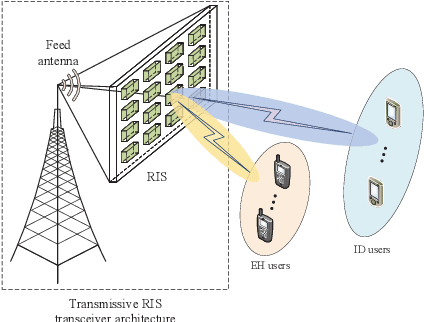
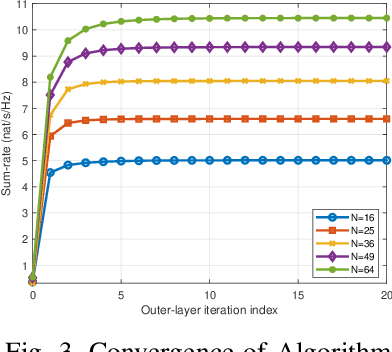
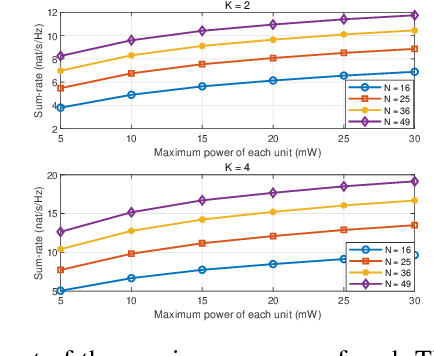
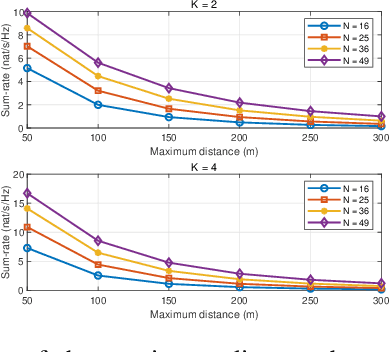
A novel transmissive reconfigurable intelligent surface (TRIS) transceiver-empowered simultaneous wireless information and power transfer (SWIPT) framework is proposed. The sum-rate of the information decoding (ID) users is maximized by optimizing the TRIS transceiver's beamforming, subject to the energy harvesting (EH) users' quality-of-harvest and the per-antenna power constraints. To solve this non-convex problem, we develop an efficient optimization algorithm. First, the original problem is reformulated as a semi-definite programming (SDP) problem. The resulting SDP problem is then addressed using successive convex approximation (SCA) combined with a penalty-based method. Numerical results demonstrate the effectiveness of the algorithm.