 Add to Chrome
 Add to Firefox
 Add to Edge
Data-Driven Parametrization of Molecular Mechanics Force Fields for Expansive Chemical Space Coverage
Aug 23, 2024

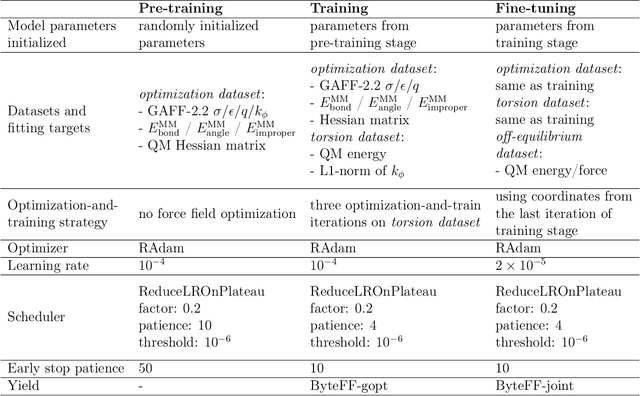
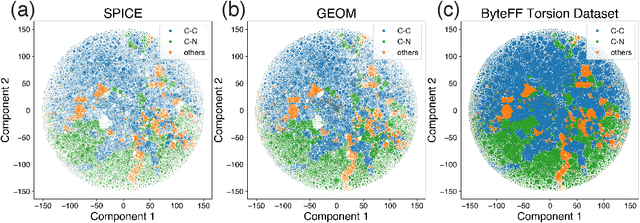
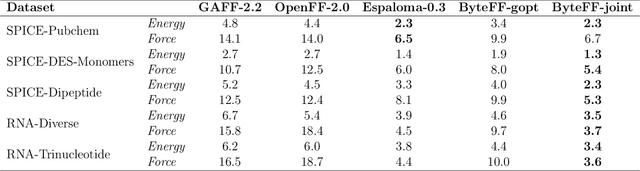
A force field is a critical component in molecular dynamics simulations for computational drug discovery. It must achieve high accuracy within the constraints of molecular mechanics' (MM) limited functional forms, which offers high computational efficiency. With the rapid expansion of synthetically accessible chemical space, traditional look-up table approaches face significant challenges. In this study, we address this issue using a modern data-driven approach, developing ByteFF, an Amber-compatible force field for drug-like molecules. To create ByteFF, we generated an expansive and highly diverse molecular dataset at the B3LYP-D3(BJ)/DZVP level of theory. This dataset includes 2.4 million optimized molecular fragment geometries with analytical Hessian matrices, along with 3.2 million torsion profiles. We then trained an edge-augmented, symmetry-preserving molecular graph neural network (GNN) on this dataset, employing a carefully optimized training strategy. Our model predicts all bonded and non-bonded MM force field parameters for drug-like molecules simultaneously across a broad chemical space. ByteFF demonstrates state-of-the-art performance on various benchmark datasets, excelling in predicting relaxed geometries, torsional energy profiles, and conformational energies and forces. Its exceptional accuracy and expansive chemical space coverage make ByteFF a valuable tool for multiple stages of computational drug discovery.

OVA-DETR: Open Vocabulary Aerial Object Detection Using Image-Text Alignment and Fusion
Aug 22, 2024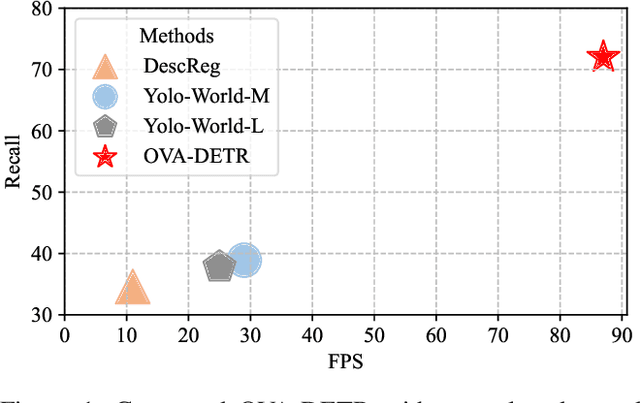
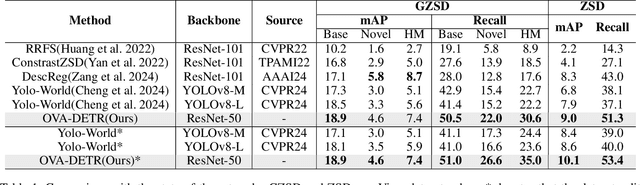

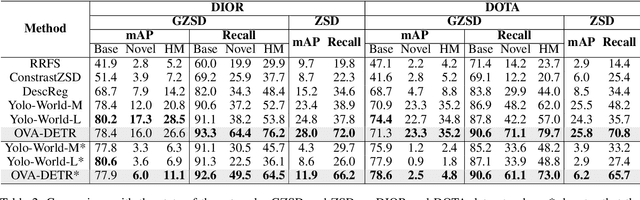
Aerial object detection has been a hot topic for many years due to its wide application requirements. However, most existing approaches can only handle predefined categories, which limits their applicability for the open scenarios in real-world. In this paper, we extend aerial object detection to open scenarios by exploiting the relationship between image and text, and propose OVA-DETR, a high-efficiency open-vocabulary detector for aerial images. Specifically, based on the idea of image-text alignment, we propose region-text contrastive loss to replace the category regression loss in the traditional detection framework, which breaks the category limitation. Then, we propose Bidirectional Vision-Language Fusion (Bi-VLF), which includes a dual-attention fusion encoder and a multi-level text-guided Fusion Decoder. The dual-attention fusion encoder enhances the feature extraction process in the encoder part. The multi-level text-guided Fusion Decoder is designed to improve the detection ability for small objects, which frequently appear in aerial object detection scenarios. Experimental results on three widely used benchmark datasets show that our proposed method significantly improves the mAP and recall, while enjoying faster inference speed. For instance, in zero shot detection experiments on DIOR, the proposed OVA-DETR outperforms DescReg and YOLO-World by 37.4% and 33.1%, respectively, while achieving 87 FPS inference speed, which is 7.9x faster than DescReg and 3x faster than YOLO-world. The code is available at https://github.com/GT-Wei/OVA-DETR.
SlotLifter: Slot-guided Feature Lifting for Learning Object-centric Radiance Fields
Aug 13, 2024The ability to distill object-centric abstractions from intricate visual scenes underpins human-level generalization. Despite the significant progress in object-centric learning methods, learning object-centric representations in the 3D physical world remains a crucial challenge. In this work, we propose SlotLifter, a novel object-centric radiance model addressing scene reconstruction and decomposition jointly via slot-guided feature lifting. Such a design unites object-centric learning representations and image-based rendering methods, offering state-of-the-art performance in scene decomposition and novel-view synthesis on four challenging synthetic and four complex real-world datasets, outperforming existing 3D object-centric learning methods by a large margin. Through extensive ablative studies, we showcase the efficacy of designs in SlotLifter, revealing key insights for potential future directions.
Unseen No More: Unlocking the Potential of CLIP for Generative Zero-shot HOI Detection
Aug 12, 2024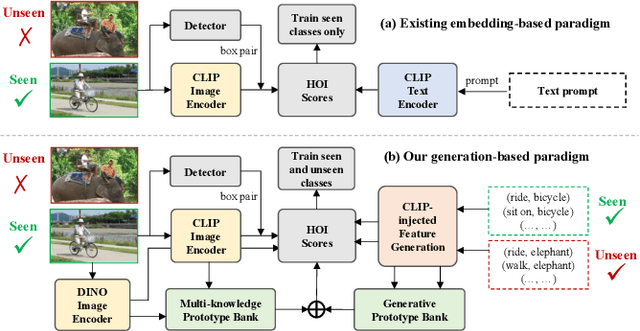
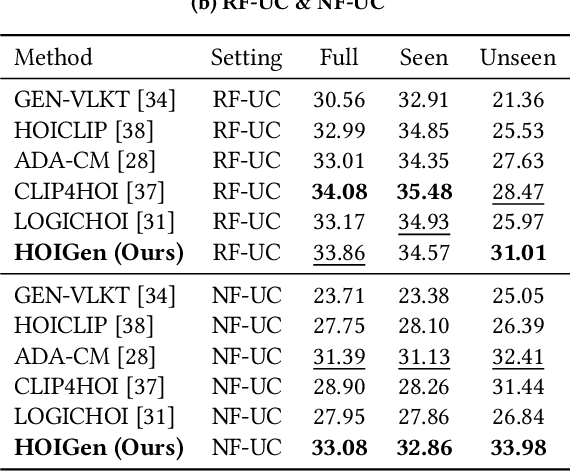
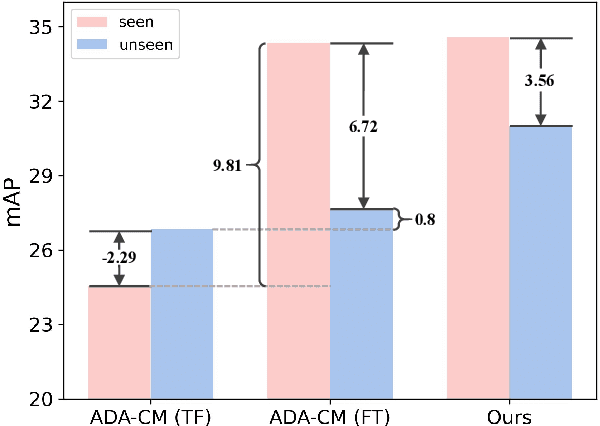
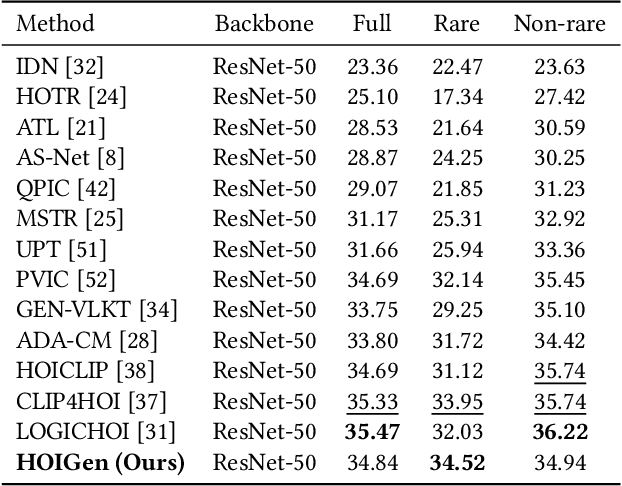
Zero-shot human-object interaction (HOI) detector is capable of generalizing to HOI categories even not encountered during training. Inspired by the impressive zero-shot capabilities offered by CLIP, latest methods strive to leverage CLIP embeddings for improving zero-shot HOI detection. However, these embedding-based methods train the classifier on seen classes only, inevitably resulting in seen-unseen confusion for the model during inference. Besides, we find that using prompt-tuning and adapters further increases the gap between seen and unseen accuracy. To tackle this challenge, we present the first generation-based model using CLIP for zero-shot HOI detection, coined HOIGen. It allows to unlock the potential of CLIP for feature generation instead of feature extraction only. To achieve it, we develop a CLIP-injected feature generator in accordance with the generation of human, object and union features. Then, we extract realistic features of seen samples and mix them with synthetic features together, allowing the model to train seen and unseen classes jointly. To enrich the HOI scores, we construct a generative prototype bank in a pairwise HOI recognition branch, and a multi-knowledge prototype bank in an image-wise HOI recognition branch, respectively. Extensive experiments on HICO-DET benchmark demonstrate our HOIGen achieves superior performance for both seen and unseen classes under various zero-shot settings, compared with other top-performing methods. Code is available at: https://github.com/soberguo/HOIGen
Contrastive masked auto-encoders based self-supervised hashing for 2D image and 3D point cloud cross-modal retrieval
Aug 11, 2024
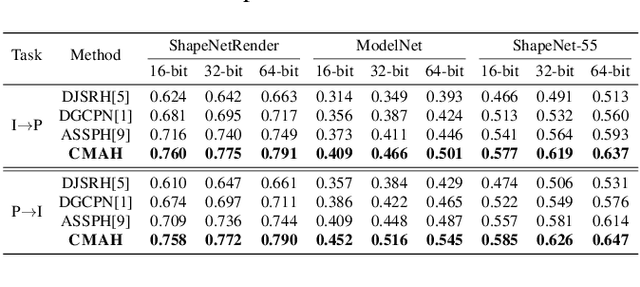
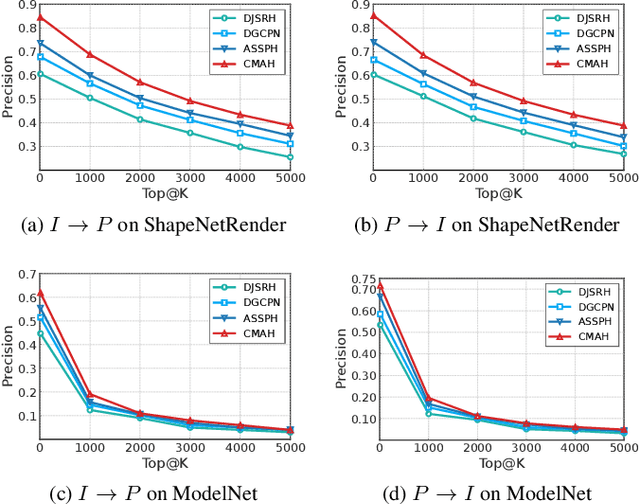
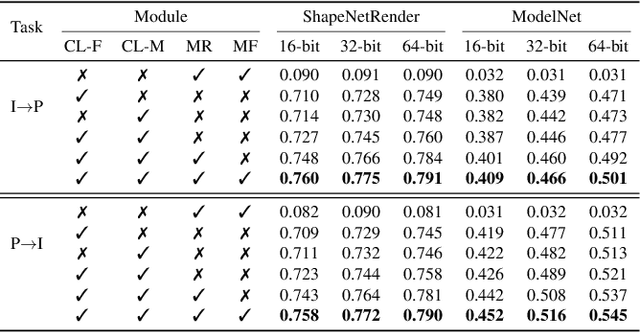
Implementing cross-modal hashing between 2D images and 3D point-cloud data is a growing concern in real-world retrieval systems. Simply applying existing cross-modal approaches to this new task fails to adequately capture latent multi-modal semantics and effectively bridge the modality gap between 2D and 3D. To address these issues without relying on hand-crafted labels, we propose contrastive masked autoencoders based self-supervised hashing (CMAH) for retrieval between images and point-cloud data. We start by contrasting 2D-3D pairs and explicitly constraining them into a joint Hamming space. This contrastive learning process ensures robust discriminability for the generated hash codes and effectively reduces the modality gap. Moreover, we utilize multi-modal auto-encoders to enhance the model's understanding of multi-modal semantics. By completing the masked image/point-cloud data modeling task, the model is encouraged to capture more localized clues. In addition, the proposed multi-modal fusion block facilitates fine-grained interactions among different modalities. Extensive experiments on three public datasets demonstrate that the proposed CMAH significantly outperforms all baseline methods.
Machine Learning-Based Reward-Driven Tuning of Scanning Probe Microscopy: Towards Fully Automated Microscopy
Aug 07, 2024Since the dawn of scanning probe microscopy (SPM), tapping or intermittent contact mode has been one of the most widely used imaging modes. Manual optimization of tapping mode not only takes a lot of instrument and operator time, but also often leads to frequent probe and sample damage, poor image quality and reproducibility issues for new types of samples or inexperienced users. Despite wide use, optimization of tapping mode imaging is an extremely hard problem, ill-suited to either classical control methods or machine learning. Here we introduce a reward-driven workflow to automate the optimization of SPM in the tapping mode. The reward function is defined based on multiple channels with physical and empirical knowledge of good scans encoded, representing a sample-agnostic measure of image quality and imitating the decision-making logic employed by human operators. This automated workflow gives optimal scanning parameters for different probes and samples and gives high-quality SPM images consistently in the attractive mode. This study broadens the application and accessibility of SPM and opens the door for fully automated SPM.
Multiscale Representation Enhanced Temporal Flow Fusion Model for Long-Term Workload Forecasting
Jul 29, 2024


Accurate workload forecasting is critical for efficient resource management in cloud computing systems, enabling effective scheduling and autoscaling. Despite recent advances with transformer-based forecasting models, challenges remain due to the non-stationary, nonlinear characteristics of workload time series and the long-term dependencies. In particular, inconsistent performance between long-term history and near-term forecasts hinders long-range predictions. This paper proposes a novel framework leveraging self-supervised multiscale representation learning to capture both long-term and near-term workload patterns. The long-term history is encoded through multiscale representations while the near-term observations are modeled via temporal flow fusion. These representations of different scales are fused using an attention mechanism and characterized with normalizing flows to handle non-Gaussian/non-linear distributions of time series. Extensive experiments on 9 benchmarks demonstrate superiority over existing methods.
PsyDI: Towards a Personalized and Progressively In-depth Chatbot for Psychological Measurements
Jul 22, 2024In the field of psychology, the static nature and lack of customization of psychological test scales, along with the challenge of quantifying psychological indicators, have long been critical issues. Despite numerous attempts to use AI to address psychological challenges, a dynamically interactive psychological test has yet to emerge. In contrast to traditional psychological assessment methods, we propose PsyDI, a multi-modal, interactive, and customized chatbot for psychological assessments, using the Myers-Briggs Type Indicator (MBTI) as an example. PsyDI initiates with user-related multi-modal information, then engaging in customized interaction to discern the user's MBTI type based on their multiple rounds of responses. Despite these advancements, accurately quantifying absolute value of psychological indicators remains challenging. To tackle such difficulty, we introduce the PsyDI framework that trains LLMs to discern the relative magnitude of psychological traits rather than their absolute values. Through various experiments, we demonstrate the effectiveness of the training techniques proposed in PsyDI on various datasets, and we have also launched its web version, reaching about ~3k accesses. Additionally, comprehensive post-deployment data analysis has provided profound insights into the implications and applications of PsyDI, demonstrating its potential to serve as a general framework for psychological assessment.
Fast Context-Based Low-Light Image Enhancement via Neural Implicit Representations
Jul 17, 2024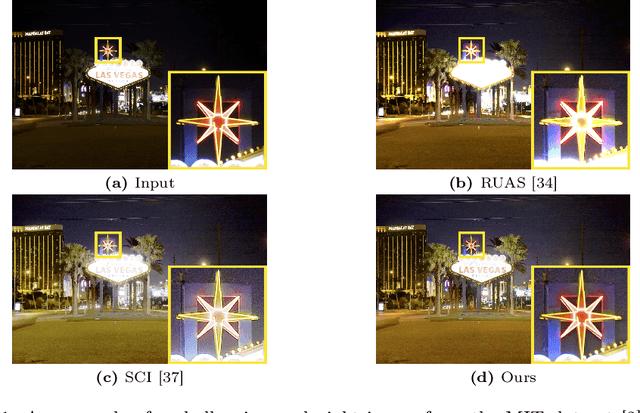
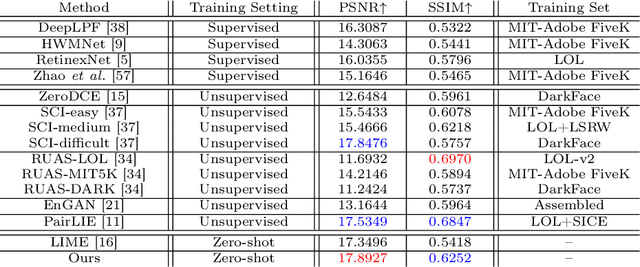
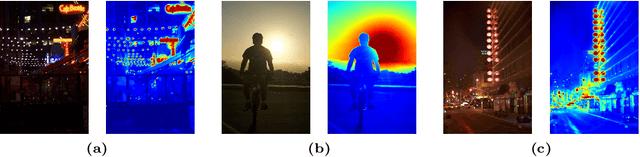
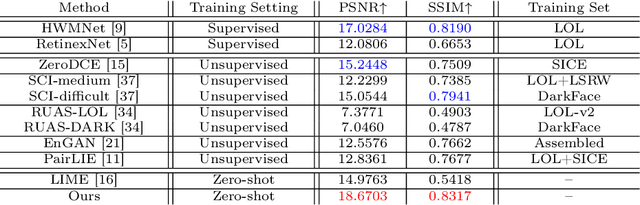
Current deep learning-based low-light image enhancement methods often struggle with high-resolution images, and fail to meet the practical demands of visual perception across diverse and unseen scenarios. In this paper, we introduce a novel approach termed CoLIE, which redefines the enhancement process through mapping the 2D coordinates of an underexposed image to its illumination component, conditioned on local context. We propose a reconstruction of enhanced-light images within the HSV space utilizing an implicit neural function combined with an embedded guided filter, thereby significantly reducing computational overhead. Moreover, we introduce a single image-based training loss function to enhance the model's adaptability to various scenes, further enhancing its practical applicability. Through rigorous evaluations, we analyze the properties of our proposed framework, demonstrating its superiority in both image quality and scene adaptability. Furthermore, our evaluation extends to applications in downstream tasks within low-light scenarios, underscoring the practical utility of CoLIE. The source code is available at https://github.com/ctom2/colie.
QVD: Post-training Quantization for Video Diffusion Models
Jul 16, 2024Recently, video diffusion models (VDMs) have garnered significant attention due to their notable advancements in generating coherent and realistic video content. However, processing multiple frame features concurrently, coupled with the considerable model size, results in high latency and extensive memory consumption, hindering their broader application. Post-training quantization (PTQ) is an effective technique to reduce memory footprint and improve computational efficiency. Unlike image diffusion, we observe that the temporal features, which are integrated into all frame features, exhibit pronounced skewness. Furthermore, we investigate significant inter-channel disparities and asymmetries in the activation of video diffusion models, resulting in low coverage of quantization levels by individual channels and increasing the challenge of quantization. To address these issues, we introduce the first PTQ strategy tailored for video diffusion models, dubbed QVD. Specifically, we propose the High Temporal Discriminability Quantization (HTDQ) method, designed for temporal features, which retains the high discriminability of quantized features, providing precise temporal guidance for all video frames. In addition, we present the Scattered Channel Range Integration (SCRI) method which aims to improve the coverage of quantization levels across individual channels. Experimental validations across various models, datasets, and bit-width settings demonstrate the effectiveness of our QVD in terms of diverse metrics. In particular, we achieve near-lossless performance degradation on W8A8, outperforming the current methods by 205.12 in FVD.