 Add to Chrome
 Add to Firefox
 Add to Edge
Simultaneously Optimizing Perturbations and Positions for Black-box Adversarial Patch Attacks
Dec 26, 2022
Adversarial patch is an important form of real-world adversarial attack that brings serious risks to the robustness of deep neural networks. Previous methods generate adversarial patches by either optimizing their perturbation values while fixing the pasting position or manipulating the position while fixing the patch's content. This reveals that the positions and perturbations are both important to the adversarial attack. For that, in this paper, we propose a novel method to simultaneously optimize the position and perturbation for an adversarial patch, and thus obtain a high attack success rate in the black-box setting. Technically, we regard the patch's position, the pre-designed hyper-parameters to determine the patch's perturbations as the variables, and utilize the reinforcement learning framework to simultaneously solve for the optimal solution based on the rewards obtained from the target model with a small number of queries. Extensive experiments are conducted on the Face Recognition (FR) task, and results on four representative FR models show that our method can significantly improve the attack success rate and query efficiency. Besides, experiments on the commercial FR service and physical environments confirm its practical application value. We also extend our method to the traffic sign recognition task to verify its generalization ability.

Learning Task-Aware Effective Brain Connectivity for fMRI Analysis with Graph Neural Networks
Nov 01, 2022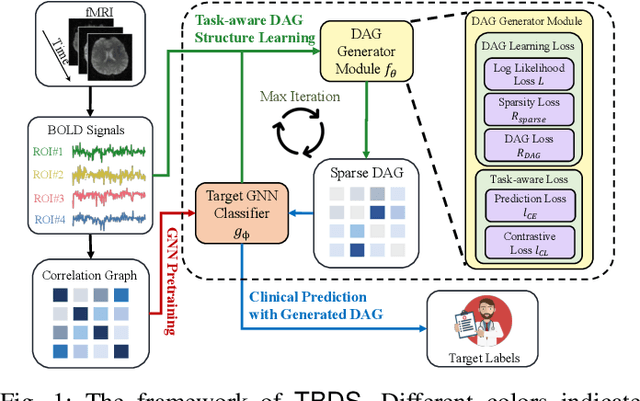
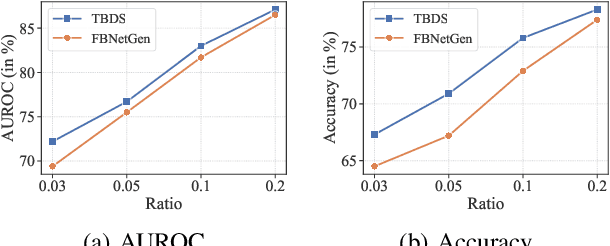
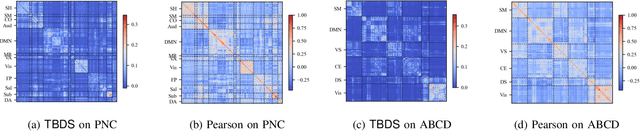

Functional magnetic resonance imaging (fMRI) has become one of the most common imaging modalities for brain function analysis. Recently, graph neural networks (GNN) have been adopted for fMRI analysis with superior performance. Unfortunately, traditional functional brain networks are mainly constructed based on similarities among region of interests (ROI), which are noisy and agnostic to the downstream prediction tasks and can lead to inferior results for GNN-based models. To better adapt GNNs for fMRI analysis, we propose TBDS, an end-to-end framework based on \underline{T}ask-aware \underline{B}rain connectivity \underline{D}AG (short for Directed Acyclic Graph) \underline{S}tructure generation for fMRI analysis. The key component of TBDS is the brain network generator which adopts a DAG learning approach to transform the raw time-series into task-aware brain connectivities. Besides, we design an additional contrastive regularization to inject task-specific knowledge during the brain network generation process. Comprehensive experiments on two fMRI datasets, namely Adolescent Brain Cognitive Development (ABCD) and Philadelphia Neuroimaging Cohort (PNC) datasets demonstrate the efficacy of TBDS. In addition, the generated brain networks also highlight the prediction-related brain regions and thus provide unique interpretations of the prediction results. Our implementation will be published to https://github.com/yueyu1030/TBDS upon acceptance.
Brain Network Transformer
Oct 15, 2022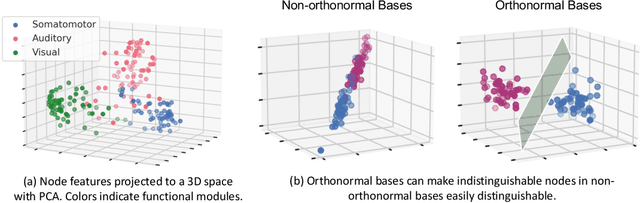
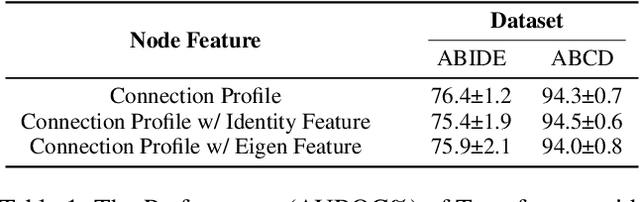
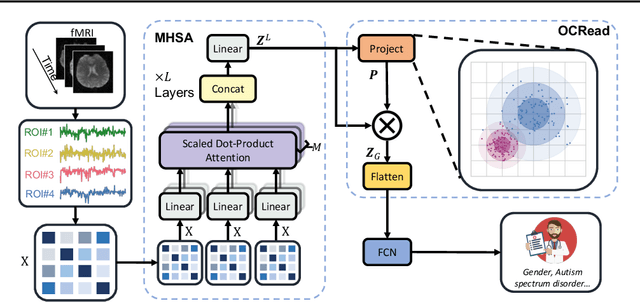
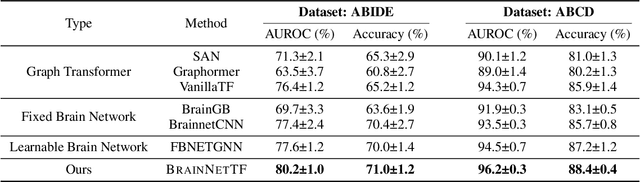
Human brains are commonly modeled as networks of Regions of Interest (ROIs) and their connections for the understanding of brain functions and mental disorders. Recently, Transformer-based models have been studied over different types of data, including graphs, shown to bring performance gains widely. In this work, we study Transformer-based models for brain network analysis. Driven by the unique properties of data, we model brain networks as graphs with nodes of fixed size and order, which allows us to (1) use connection profiles as node features to provide natural and low-cost positional information and (2) learn pair-wise connection strengths among ROIs with efficient attention weights across individuals that are predictive towards downstream analysis tasks. Moreover, we propose an Orthonormal Clustering Readout operation based on self-supervised soft clustering and orthonormal projection. This design accounts for the underlying functional modules that determine similar behaviors among groups of ROIs, leading to distinguishable cluster-aware node embeddings and informative graph embeddings. Finally, we re-standardize the evaluation pipeline on the only one publicly available large-scale brain network dataset of ABIDE, to enable meaningful comparison of different models. Experiment results show clear improvements of our proposed Brain Network Transformer on both the public ABIDE and our restricted ABCD datasets. The implementation is available at https://github.com/Wayfear/BrainNetworkTransformer.
Multi-Forgery Detection Challenge 2022: Push the Frontier of Unconstrained and Diverse Forgery Detection
Jul 27, 2022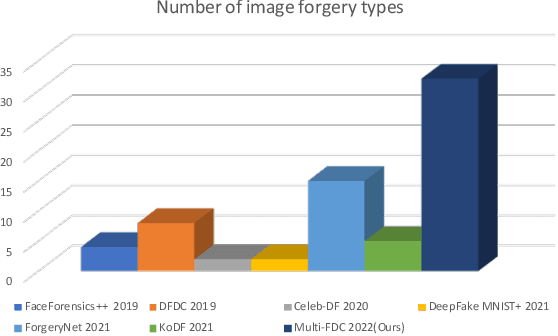
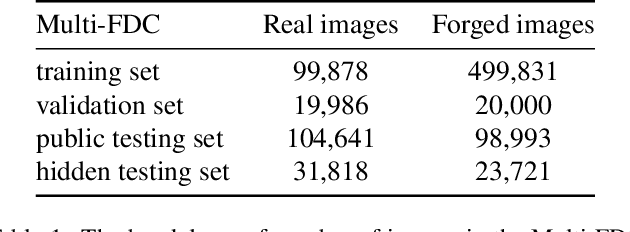
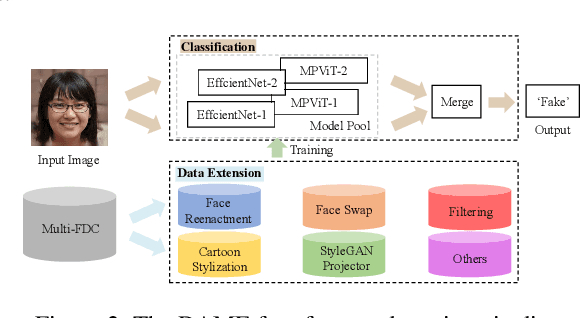
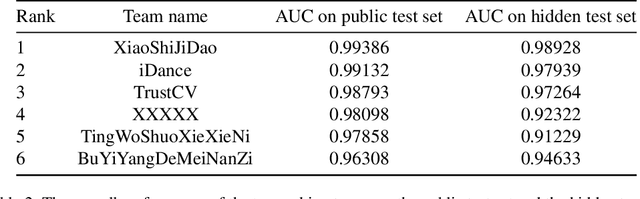
In this paper, we present the Multi-Forgery Detection Challenge held concurrently with the IEEE Computer Society Workshop on Biometrics at CVPR 2022. Our Multi-Forgery Detection Challenge aims to detect automatic image manipulations including but not limited to image editing, image synthesis, image generation, image photoshop, etc. Our challenge has attracted 674 teams from all over the world, with about 2000 valid result submission counts. We invited the Top 10 teams to present their solutions to the challenge, from which three teams are awarded prizes in the grand finale. In this paper, we present the solutions from the Top 3 teams, in order to boost the research work in the field of image forgery detection.
Data-Efficient Brain Connectome Analysis via Multi-Task Meta-Learning
Jun 09, 2022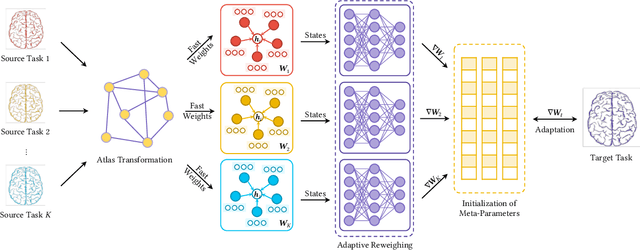
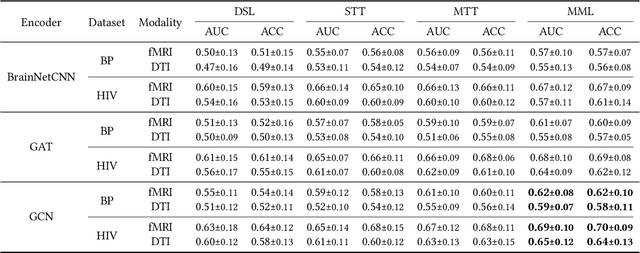
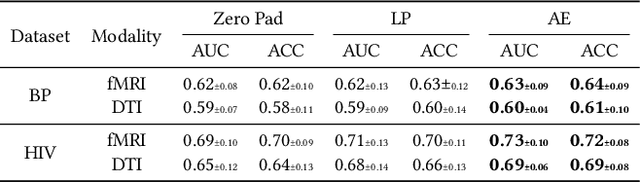
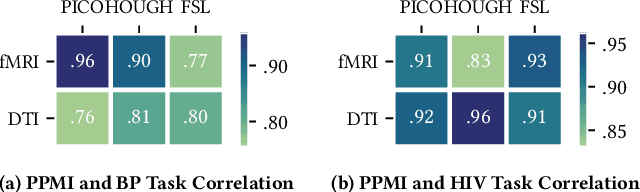
Brain networks characterize complex connectivities among brain regions as graph structures, which provide a powerful means to study brain connectomes. In recent years, graph neural networks have emerged as a prevalent paradigm of learning with structured data. However, most brain network datasets are limited in sample sizes due to the relatively high cost of data acquisition, which hinders the deep learning models from sufficient training. Inspired by meta-learning that learns new concepts fast with limited training examples, this paper studies data-efficient training strategies for analyzing brain connectomes in a cross-dataset setting. Specifically, we propose to meta-train the model on datasets of large sample sizes and transfer the knowledge to small datasets. In addition, we also explore two brain-network-oriented designs, including atlas transformation and adaptive task reweighing. Compared to other pre-training strategies, our meta-learning-based approach achieves higher and stabler performance, which demonstrates the effectiveness of our proposed solutions. The framework is also able to derive new insights regarding the similarities among datasets and diseases in a data-driven fashion.
FBNETGEN: Task-aware GNN-based fMRI Analysis via Functional Brain Network Generation
May 29, 2022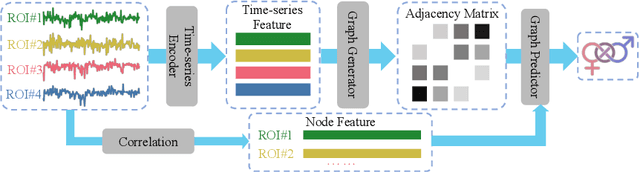
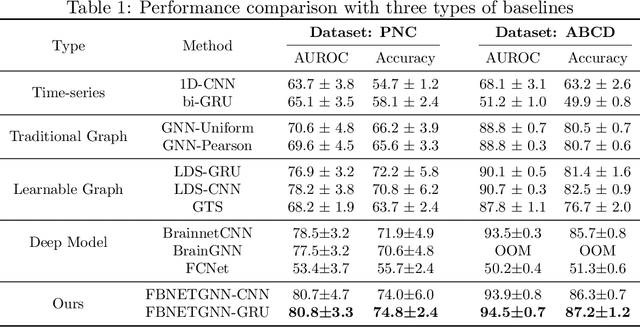

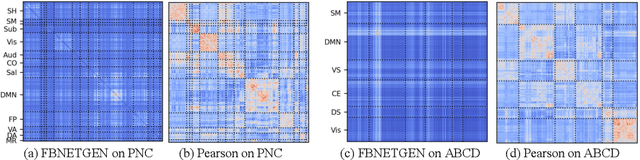
Functional magnetic resonance imaging (fMRI) is one of the most common imaging modalities to investigate brain functions. Recent studies in neuroscience stress the great potential of functional brain networks constructed from fMRI data for clinical predictions. Traditional functional brain networks, however, are noisy and unaware of downstream prediction tasks, while also incompatible with the deep graph neural network (GNN) models. In order to fully unleash the power of GNNs in network-based fMRI analysis, we develop FBNETGEN, a task-aware and interpretable fMRI analysis framework via deep brain network generation. In particular, we formulate (1) prominent region of interest (ROI) features extraction, (2) brain networks generation, and (3) clinical predictions with GNNs, in an end-to-end trainable model under the guidance of particular prediction tasks. Along with the process, the key novel component is the graph generator which learns to transform raw time-series features into task-oriented brain networks. Our learnable graphs also provide unique interpretations by highlighting prediction-related brain regions. Comprehensive experiments on two datasets, i.e., the recently released and currently largest publicly available fMRI dataset Adolescent Brain Cognitive Development (ABCD), and the widely-used fMRI dataset PNC, prove the superior effectiveness and interpretability of FBNETGEN. The implementation is available at https://github.com/Wayfear/FBNETGEN.
Identifying Critical LMS Features for Predicting At-risk Students
Apr 27, 2022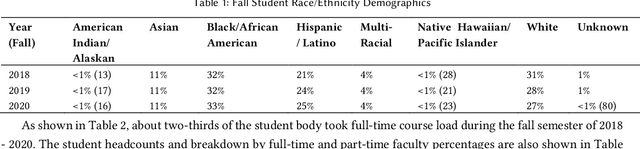
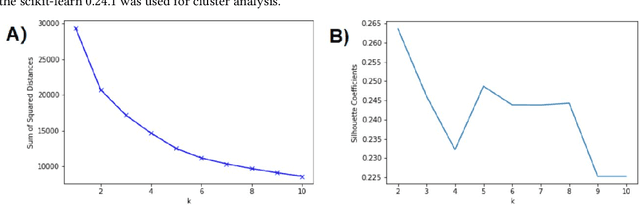

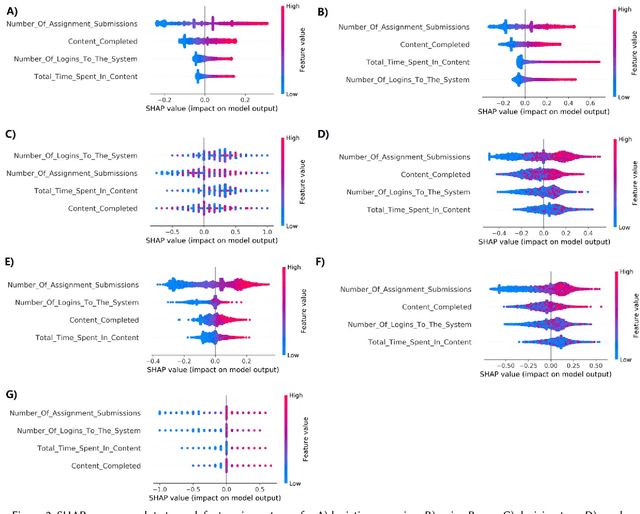
Learning management systems (LMSs) have become essential in higher education and play an important role in helping educational institutions to promote student success. Traditionally, LMSs have been used by postsecondary institutions in administration, reporting, and delivery of educational content. In this paper, we present an additional use of LMS by using its data logs to perform data-analytics and identify academically at-risk students. The data-driven insights would allow educational institutions and educators to develop and implement pedagogical interventions targeting academically at-risk students. We used anonymized data logs created by Brightspace LMS during fall 2019, spring 2020, and fall 2020 semesters at our college. Supervised machine learning algorithms were used to predict the final course performance of students, and several algorithms were found to perform well with accuracy above 90%. SHAP value method was used to assess the relative importance of features used in the predictive models. Unsupervised learning was also used to group students into different clusters based on the similarities in their interaction/involvement with LMS. In both of supervised and unsupervised learning, we identified two most-important features (Number_Of_Assignment_Submissions and Content_Completed). More importantly, our study lays a foundation and provides a framework for developing a real-time data analytics metric that may be incorporated into a LMS.
Unrestricted Adversarial Attacks on ImageNet Competition
Oct 25, 2021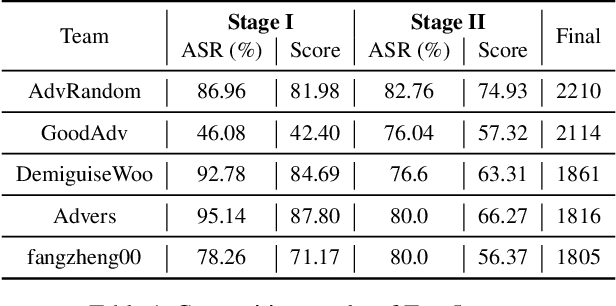
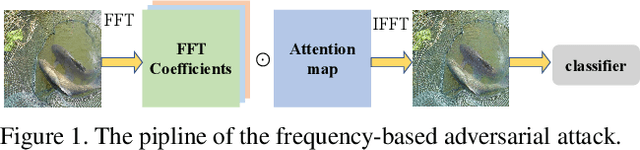
Many works have investigated the adversarial attacks or defenses under the settings where a bounded and imperceptible perturbation can be added to the input. However in the real-world, the attacker does not need to comply with this restriction. In fact, more threats to the deep model come from unrestricted adversarial examples, that is, the attacker makes large and visible modifications on the image, which causes the model classifying mistakenly, but does not affect the normal observation in human perspective. Unrestricted adversarial attack is a popular and practical direction but has not been studied thoroughly. We organize this competition with the purpose of exploring more effective unrestricted adversarial attack algorithm, so as to accelerate the academical research on the model robustness under stronger unbounded attacks. The competition is held on the TianChi platform (\url{https://tianchi.aliyun.com/competition/entrance/531853/introduction}) as one of the series of AI Security Challengers Program.
Effective and Interpretable fMRI Analysis via Functional Brain Network Generation
Jul 23, 2021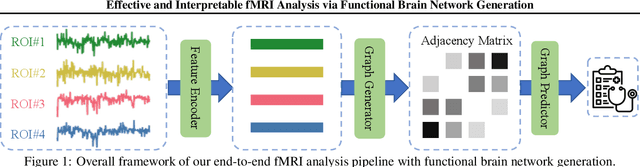
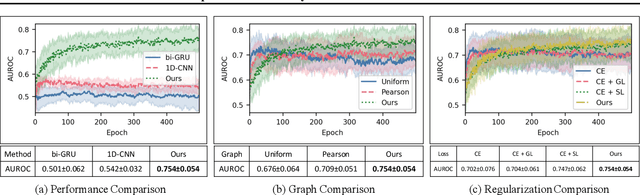
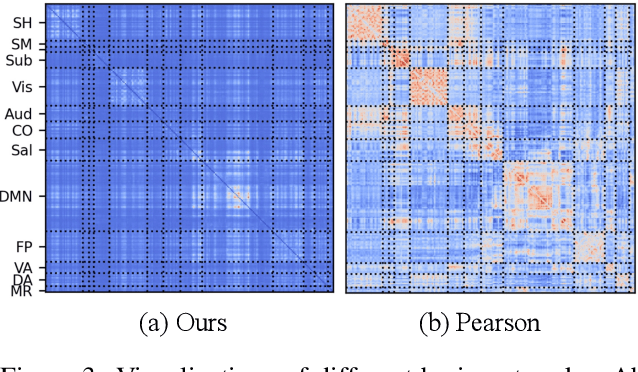
Recent studies in neuroscience show great potential of functional brain networks constructed from fMRI data for popularity modeling and clinical predictions. However, existing functional brain networks are noisy and unaware of downstream prediction tasks, while also incompatible with recent powerful machine learning models of GNNs. In this work, we develop an end-to-end trainable pipeline to extract prominent fMRI features, generate brain networks, and make predictions with GNNs, all under the guidance of downstream prediction tasks. Preliminary experiments on the PNC fMRI data show the superior effectiveness and unique interpretability of our framework.
Improving Adversarial Transferability with Gradient Refining
May 11, 2021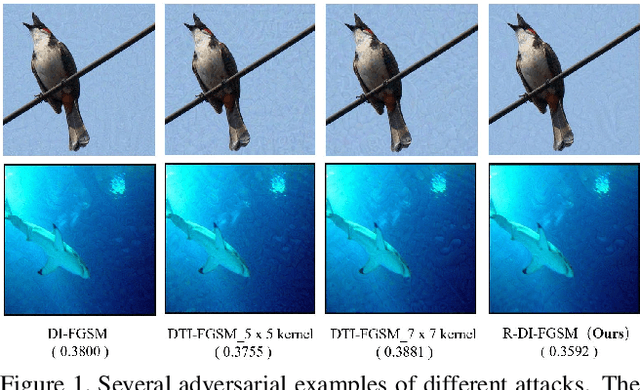

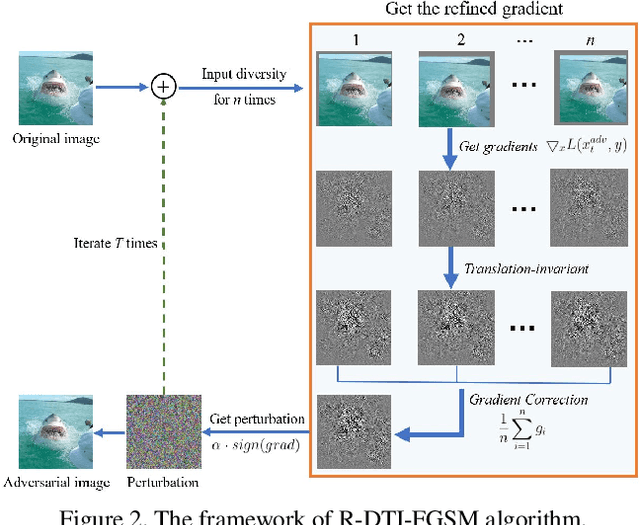
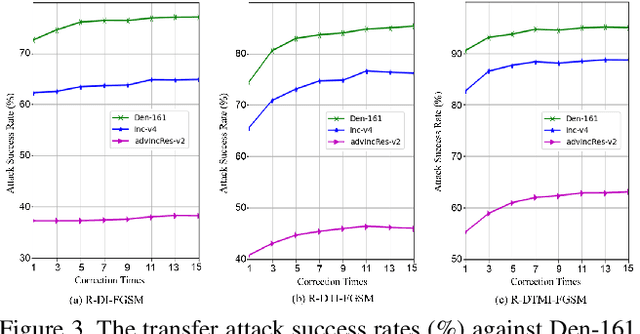
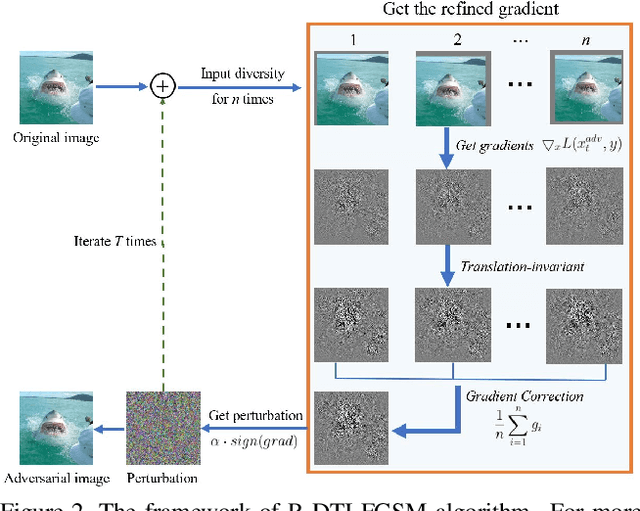
Deep neural networks are vulnerable to adversarial examples, which are crafted by adding human-imperceptible perturbations to original images. Most existing adversarial attack methods achieve nearly 100% attack success rates under the white-box setting, but only achieve relatively low attack success rates under the black-box setting. To improve the transferability of adversarial examples for the black-box setting, several methods have been proposed, e.g., input diversity, translation-invariant attack, and momentum-based attack. In this paper, we propose a method named Gradient Refining, which can further improve the adversarial transferability by correcting useless gradients introduced by input diversity through multiple transformations. Our method is generally applicable to many gradient-based attack methods combined with input diversity. Extensive experiments are conducted on the ImageNet dataset and our method can achieve an average transfer success rate of 82.07% for three different models under single-model setting, which outperforms the other state-of-the-art methods by a large margin of 6.0% averagely. And we have applied the proposed method to the competition CVPR 2021 Unrestricted Adversarial Attacks on ImageNet organized by Alibaba and won the second place in attack success rates among 1558 teams.