 Add to Chrome
 Add to Firefox
 Add to Edge
Efficient and Scalable Deep Reinforcement Learning for Mean Field Control Games
Dec 28, 2024

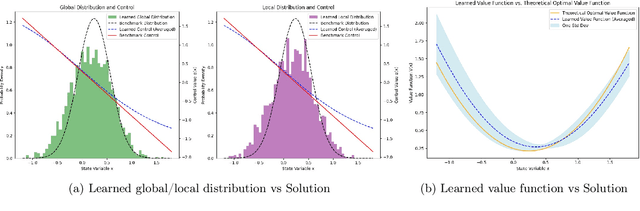


Mean Field Control Games (MFCGs) provide a powerful theoretical framework for analyzing systems of infinitely many interacting agents, blending elements from Mean Field Games (MFGs) and Mean Field Control (MFC). However, solving the coupled Hamilton-Jacobi-Bellman and Fokker-Planck equations that characterize MFCG equilibria remains a significant computational challenge, particularly in high-dimensional or complex environments. This paper presents a scalable deep Reinforcement Learning (RL) approach to approximate equilibrium solutions of MFCGs. Building on previous works, We reformulate the infinite-agent stochastic control problem as a Markov Decision Process, where each representative agent interacts with the evolving mean field distribution. We use the actor-critic based algorithm from a previous paper (Angiuli et.al., 2024) as the baseline and propose several versions of more scalable and efficient algorithms, utilizing techniques including parallel sample collection (batching); mini-batching; target network; proximal policy optimization (PPO); generalized advantage estimation (GAE); and entropy regularization. By leveraging these techniques, we effectively improved the efficiency, scalability, and training stability of the baseline algorithm. We evaluate our method on a linear-quadratic benchmark problem, where an analytical solution to the MFCG equilibrium is available. Our results show that some versions of our proposed approach achieve faster convergence and closely approximate the theoretical optimum, outperforming the baseline algorithm by an order of magnitude in sample efficiency. Our work lays the foundation for adapting deep RL to solve more complicated MFCGs closely related to real life, such as large-scale autonomous transportation systems, multi-firm economic competition, and inter-bank borrowing problems.

An Ensemble Approach to Short-form Video Quality Assessment Using Multimodal LLM
Dec 24, 2024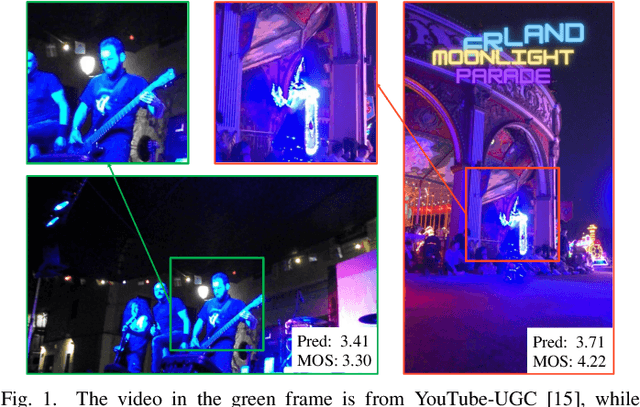
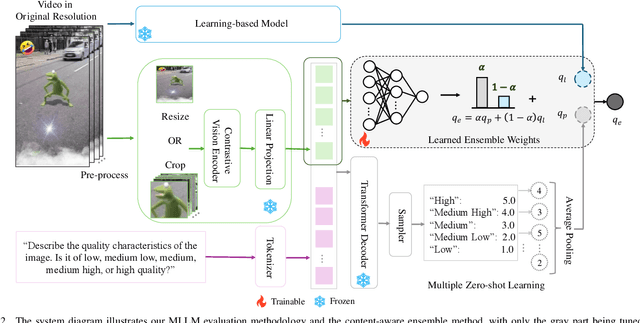
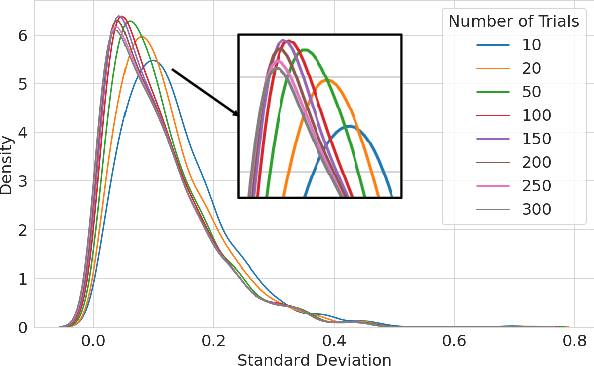
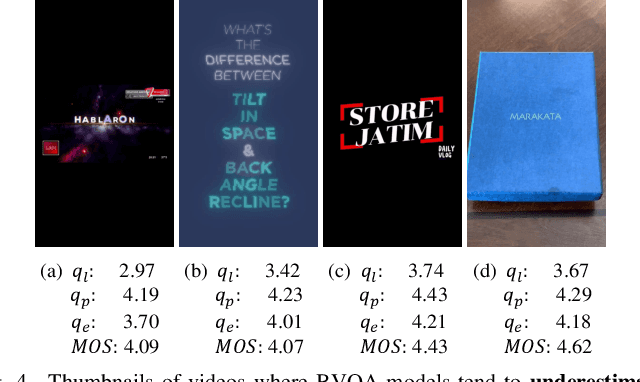
The rise of short-form videos, characterized by diverse content, editing styles, and artifacts, poses substantial challenges for learning-based blind video quality assessment (BVQA) models. Multimodal large language models (MLLMs), renowned for their superior generalization capabilities, present a promising solution. This paper focuses on effectively leveraging a pretrained MLLM for short-form video quality assessment, regarding the impacts of pre-processing and response variability, and insights on combining the MLLM with BVQA models. We first investigated how frame pre-processing and sampling techniques influence the MLLM's performance. Then, we introduced a lightweight learning-based ensemble method that adaptively integrates predictions from the MLLM and state-of-the-art BVQA models. Our results demonstrated superior generalization performance with the proposed ensemble approach. Furthermore, the analysis of content-aware ensemble weights highlighted that some video characteristics are not fully represented by existing BVQA models, revealing potential directions to improve BVQA models further.
UniReal: Universal Image Generation and Editing via Learning Real-world Dynamics
Dec 10, 2024
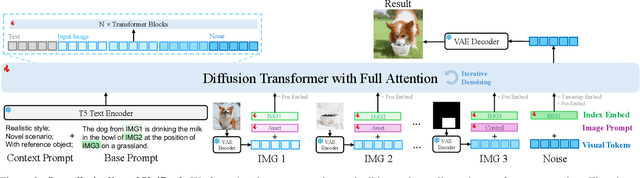
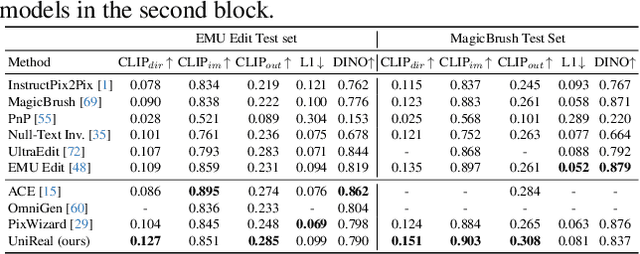

We introduce UniReal, a unified framework designed to address various image generation and editing tasks. Existing solutions often vary by tasks, yet share fundamental principles: preserving consistency between inputs and outputs while capturing visual variations. Inspired by recent video generation models that effectively balance consistency and variation across frames, we propose a unifying approach that treats image-level tasks as discontinuous video generation. Specifically, we treat varying numbers of input and output images as frames, enabling seamless support for tasks such as image generation, editing, customization, composition, etc. Although designed for image-level tasks, we leverage videos as a scalable source for universal supervision. UniReal learns world dynamics from large-scale videos, demonstrating advanced capability in handling shadows, reflections, pose variation, and object interaction, while also exhibiting emergent capability for novel applications.
FINECAPTION: Compositional Image Captioning Focusing on Wherever You Want at Any Granularity
Nov 23, 2024

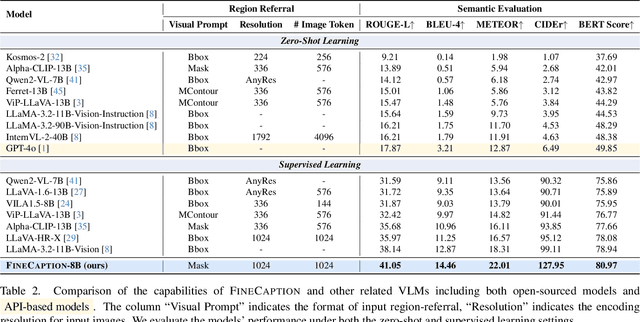

The advent of large Vision-Language Models (VLMs) has significantly advanced multimodal tasks, enabling more sophisticated and accurate reasoning across various applications, including image and video captioning, visual question answering, and cross-modal retrieval. Despite their superior capabilities, VLMs struggle with fine-grained image regional composition information perception. Specifically, they have difficulty accurately aligning the segmentation masks with the corresponding semantics and precisely describing the compositional aspects of the referred regions. However, compositionality - the ability to understand and generate novel combinations of known visual and textual components - is critical for facilitating coherent reasoning and understanding across modalities by VLMs. To address this issue, we propose FINECAPTION, a novel VLM that can recognize arbitrary masks as referential inputs and process high-resolution images for compositional image captioning at different granularity levels. To support this endeavor, we introduce COMPOSITIONCAP, a new dataset for multi-grained region compositional image captioning, which introduces the task of compositional attribute-aware regional image captioning. Empirical results demonstrate the effectiveness of our proposed model compared to other state-of-the-art VLMs. Additionally, we analyze the capabilities of current VLMs in recognizing various visual prompts for compositional region image captioning, highlighting areas for improvement in VLM design and training.
RegionGrasp: A Novel Task for Contact Region Controllable Hand Grasp Generation
Oct 10, 2024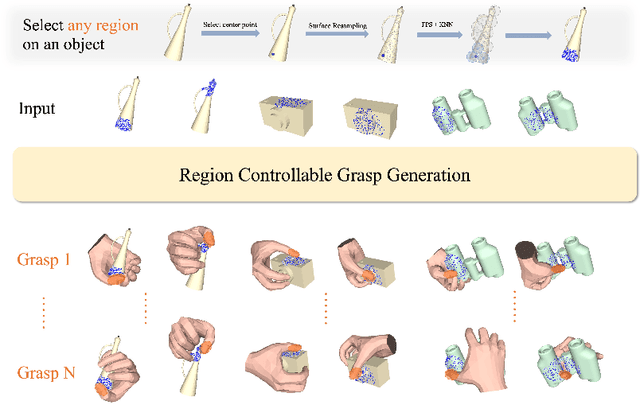

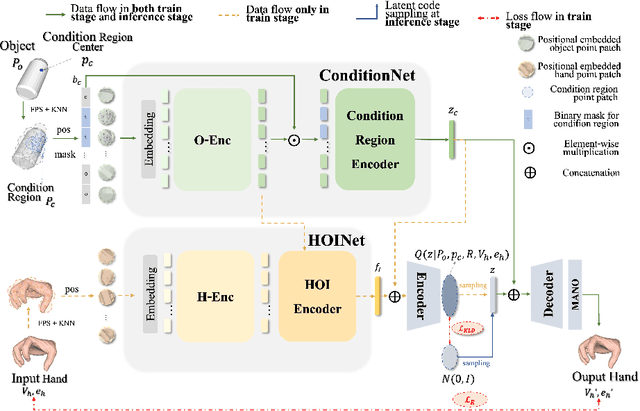

Can machine automatically generate multiple distinct and natural hand grasps, given specific contact region of an object in 3D? This motivates us to consider a novel task of \textit{Region Controllable Hand Grasp Generation (RegionGrasp)}, as follows: given as input a 3D object, together with its specific surface area selected as the intended contact region, to generate a diverse set of plausible hand grasps of the object, where the thumb finger tip touches the object surface on the contact region. To address this task, RegionGrasp-CVAE is proposed, which consists of two main parts. First, to enable contact region-awareness, we propose ConditionNet as the condition encoder that includes in it a transformer-backboned object encoder, O-Enc; a pretraining strategy is adopted by O-Enc, where the point patches of object surface are randomly masked off and subsequently restored, to further capture surface geometric information of the object. Second, to realize interaction awareness, HOINet is introduced to encode hand-object interaction features by entangling high-level hand features with embedded object features through geometric-aware multi-head cross attention. Empirical evaluations demonstrate the effectiveness of our approach qualitatively and quantitatively where it is shown to compare favorably with respect to the state of the art methods.
RmGPT: Rotating Machinery Generative Pretrained Model
Sep 26, 2024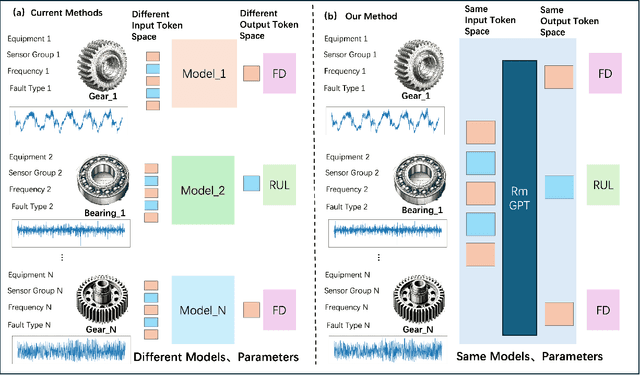
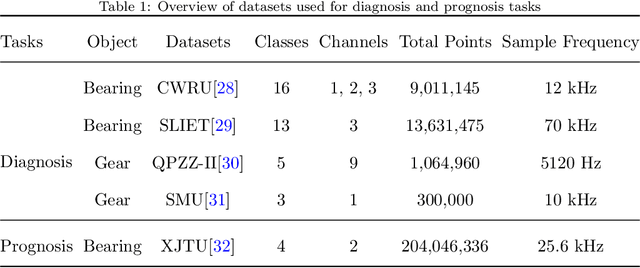
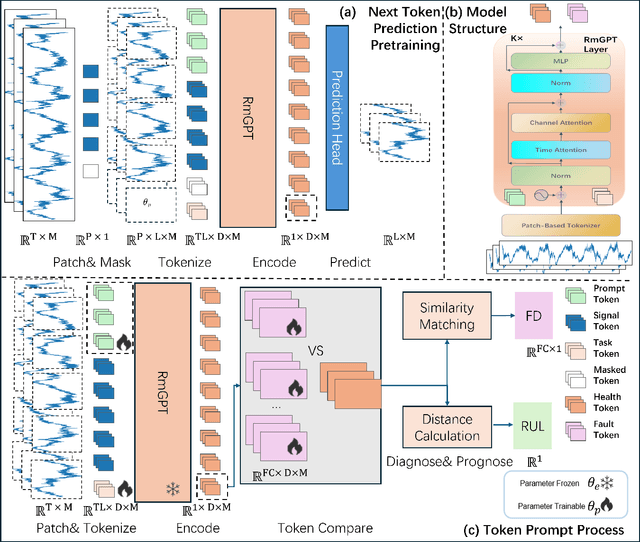
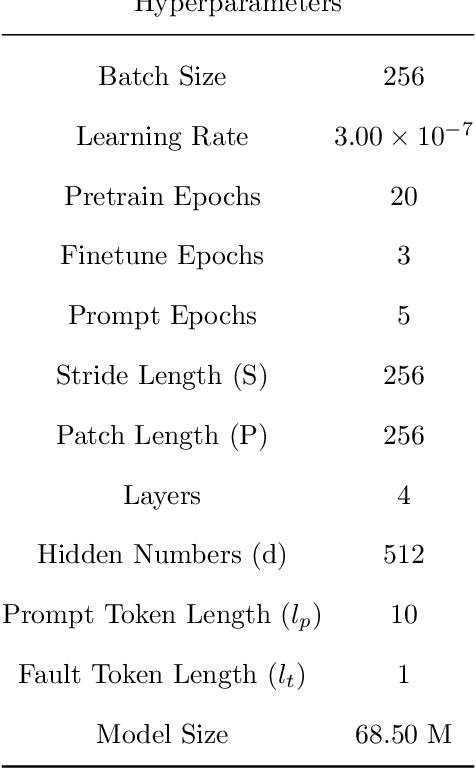
In industry, the reliability of rotating machinery is critical for production efficiency and safety. Current methods of Prognostics and Health Management (PHM) often rely on task-specific models, which face significant challenges in handling diverse datasets with varying signal characteristics, fault modes and operating conditions. Inspired by advancements in generative pretrained models, we propose RmGPT, a unified model for diagnosis and prognosis tasks. RmGPT introduces a novel token-based framework, incorporating Signal Tokens, Prompt Tokens, Time-Frequency Task Tokens and Fault Tokens to handle heterogeneous data within a unified model architecture. We leverage self-supervised learning for robust feature extraction and introduce a next signal token prediction pretraining strategy, alongside efficient prompt learning for task-specific adaptation. Extensive experiments demonstrate that RmGPT significantly outperforms state-of-the-art algorithms, achieving near-perfect accuracy in diagnosis tasks and exceptionally low errors in prognosis tasks. Notably, RmGPT excels in few-shot learning scenarios, achieving 92% accuracy in 16-class one-shot experiments, highlighting its adaptability and robustness. This work establishes RmGPT as a powerful PHM foundation model for rotating machinery, advancing the scalability and generalizability of PHM solutions.
GSD: View-Guided Gaussian Splatting Diffusion for 3D Reconstruction
Jul 05, 2024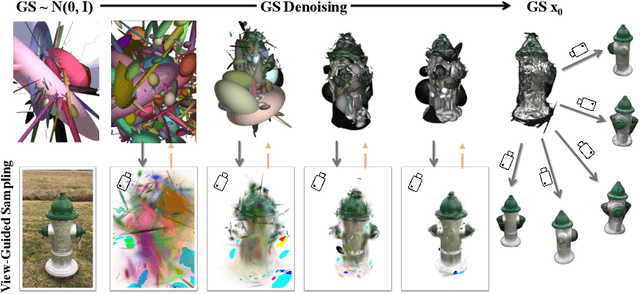

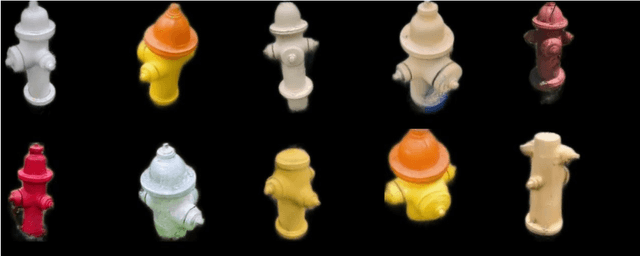

We present GSD, a diffusion model approach based on Gaussian Splatting (GS) representation for 3D object reconstruction from a single view. Prior works suffer from inconsistent 3D geometry or mediocre rendering quality due to improper representations. We take a step towards resolving these shortcomings by utilizing the recent state-of-the-art 3D explicit representation, Gaussian Splatting, and an unconditional diffusion model. This model learns to generate 3D objects represented by sets of GS ellipsoids. With these strong generative 3D priors, though learning unconditionally, the diffusion model is ready for view-guided reconstruction without further model fine-tuning. This is achieved by propagating fine-grained 2D features through the efficient yet flexible splatting function and the guided denoising sampling process. In addition, a 2D diffusion model is further employed to enhance rendering fidelity, and improve reconstructed GS quality by polishing and re-using the rendered images. The final reconstructed objects explicitly come with high-quality 3D structure and texture, and can be efficiently rendered in arbitrary views. Experiments on the challenging real-world CO3D dataset demonstrate the superiority of our approach.
Improving Autoregressive Training with Dynamic Oracles
Jun 13, 2024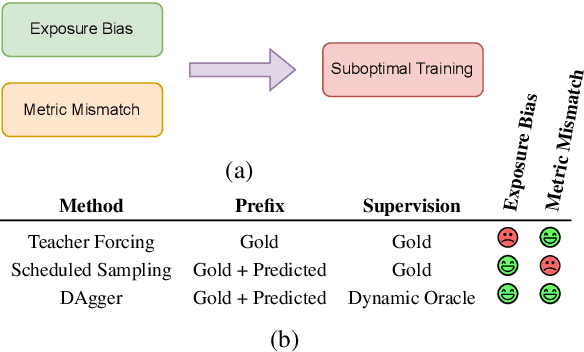
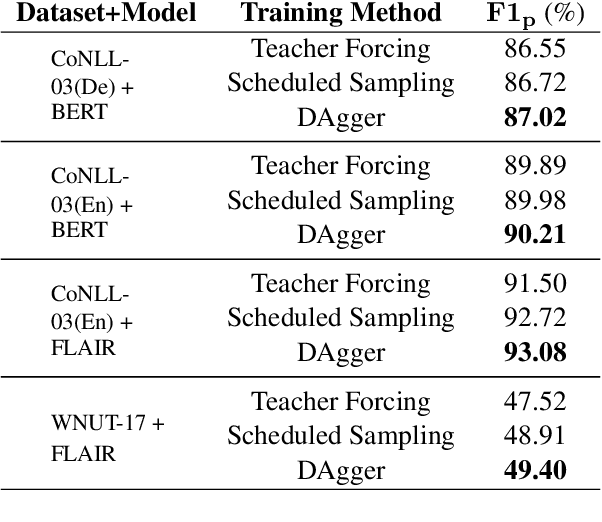
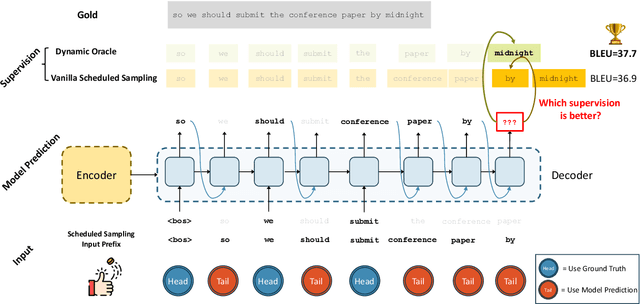
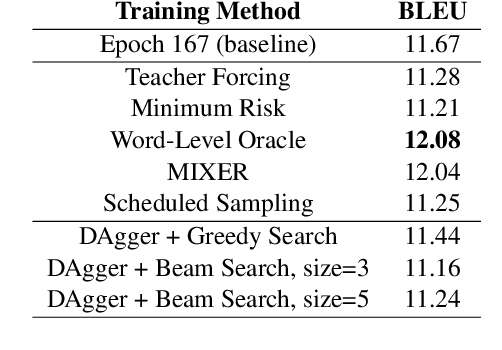
Many tasks within NLP can be framed as sequential decision problems, ranging from sequence tagging to text generation. However, for many tasks, the standard training methods, including maximum likelihood (teacher forcing) and scheduled sampling, suffer from exposure bias and a mismatch between metrics employed during training and inference. DAgger provides a solution to mitigate these problems, yet it requires a metric-specific dynamic oracle algorithm, which does not exist for many common metrics like span-based F1, ROUGE, and BLEU. In this paper, we develop these novel dynamic oracles and show they maintain DAgger's no-regret guarantee for decomposable metrics like span-based F1. We evaluate the algorithm's performance on named entity recognition (NER), text summarization, and machine translation (MT). While DAgger with dynamic oracle yields less favorable results in our MT experiments, it outperforms the baseline techniques in NER and text summarization.
OmniControlNet: Dual-stage Integration for Conditional Image Generation
Jun 09, 2024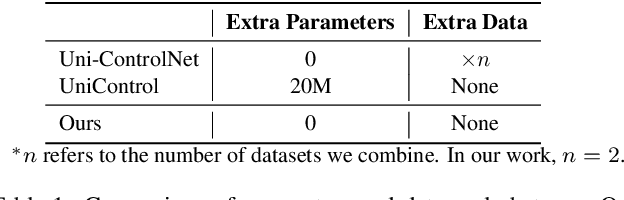
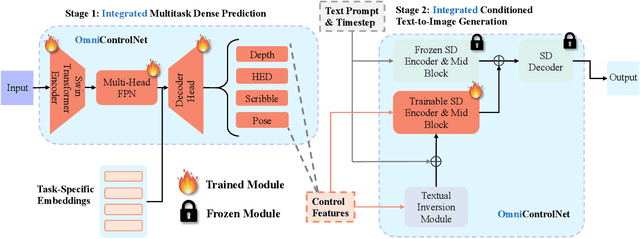
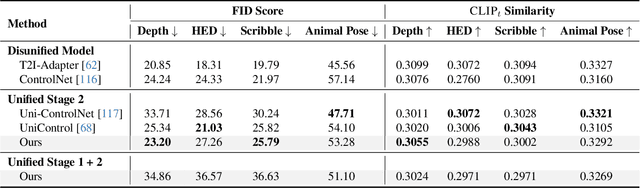
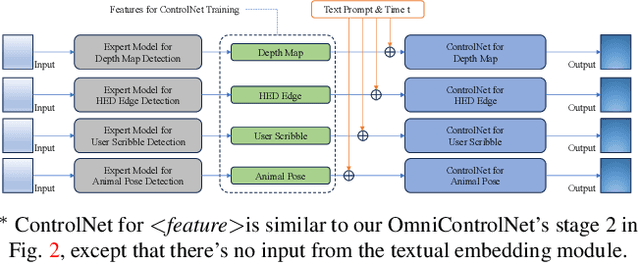
We provide a two-way integration for the widely adopted ControlNet by integrating external condition generation algorithms into a single dense prediction method and incorporating its individually trained image generation processes into a single model. Despite its tremendous success, the ControlNet of a two-stage pipeline bears limitations in being not self-contained (e.g. calls the external condition generation algorithms) with a large model redundancy (separately trained models for different types of conditioning inputs). Our proposed OmniControlNet consolidates 1) the condition generation (e.g., HED edges, depth maps, user scribble, and animal pose) by a single multi-tasking dense prediction algorithm under the task embedding guidance and 2) the image generation process for different conditioning types under the textual embedding guidance. OmniControlNet achieves significantly reduced model complexity and redundancy while capable of producing images of comparable quality for conditioned text-to-image generation.
YouTube SFV+HDR Quality Dataset
Jun 08, 2024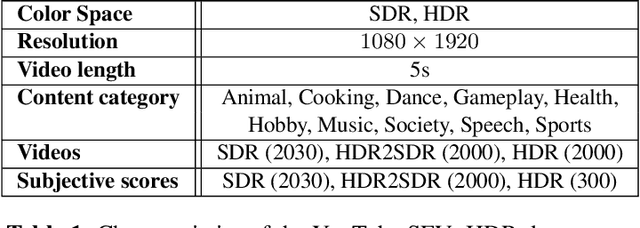
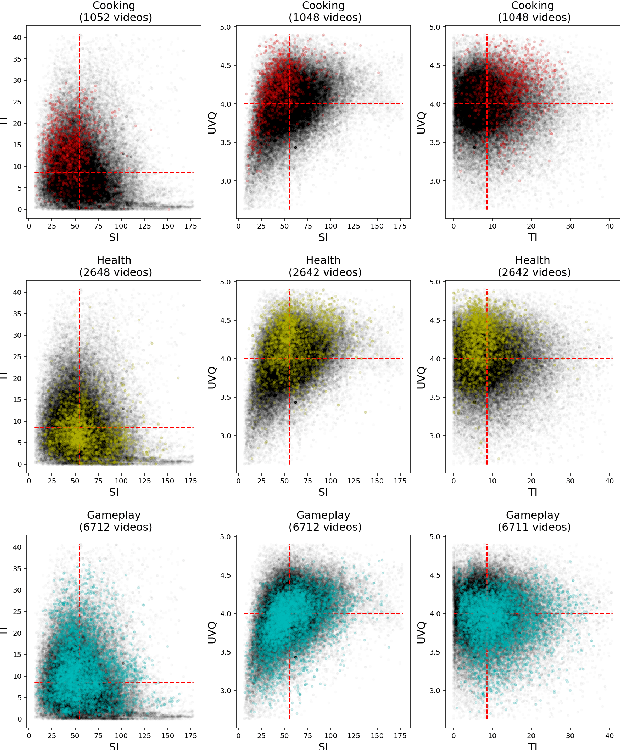
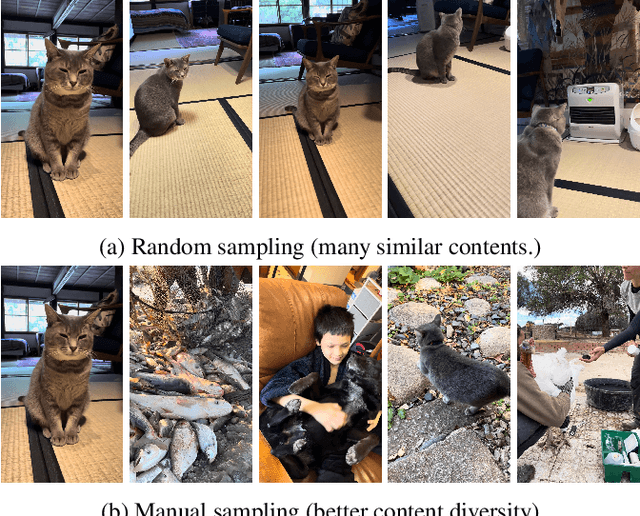
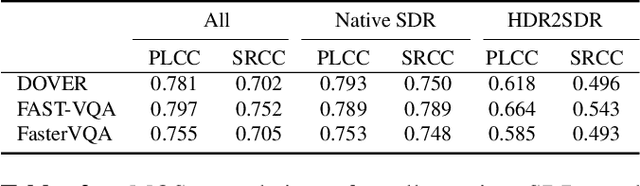
The popularity of Short form videos (SFV) has grown dramatically in the past few years, and has become a phenomenal video category with billions of viewers. Meanwhile, High Dynamic Range (HDR) as an advanced feature also becomes more and more popular on video sharing platforms. As a hot topic with huge impact, SFV and HDR bring new questions to video quality research: 1) is SFV+HDR quality assessment significantly different from traditional User Generated Content (UGC) quality assessment? 2) do objective quality metrics designed for traditional UGC still work well for SFV+HDR? To answer the above questions, we created the first large scale SFV+HDR dataset with reliable subjective quality scores, covering 10 popular content categories. Further, we also introduce a general sampling framework to maximize the representativeness of the dataset. We provided a comprehensive analysis of subjective quality scores for Short form SDR and HDR videos, and discuss the reliability of state-of-the-art UGC quality metrics and potential improvements.