 Add to Chrome
 Add to Firefox
 Add to Edge
PromptPrism: A Linguistically-Inspired Taxonomy for Prompts
May 19, 2025
Prompts are the interface for eliciting the capabilities of large language models (LLMs). Understanding their structure and components is critical for analyzing LLM behavior and optimizing performance. However, the field lacks a comprehensive framework for systematic prompt analysis and understanding. We introduce PromptPrism, a linguistically-inspired taxonomy that enables prompt analysis across three hierarchical levels: functional structure, semantic component, and syntactic pattern. We show the practical utility of PromptPrism by applying it to three applications: (1) a taxonomy-guided prompt refinement approach that automatically improves prompt quality and enhances model performance across a range of tasks; (2) a multi-dimensional dataset profiling method that extracts and aggregates structural, semantic, and syntactic characteristics from prompt datasets, enabling comprehensive analysis of prompt distributions and patterns; (3) a controlled experimental framework for prompt sensitivity analysis by quantifying the impact of semantic reordering and delimiter modifications on LLM performance. Our experimental results validate the effectiveness of our taxonomy across these applications, demonstrating that PromptPrism provides a foundation for refining, profiling, and analyzing prompts.

TCC-Bench: Benchmarking the Traditional Chinese Culture Understanding Capabilities of MLLMs
May 19, 2025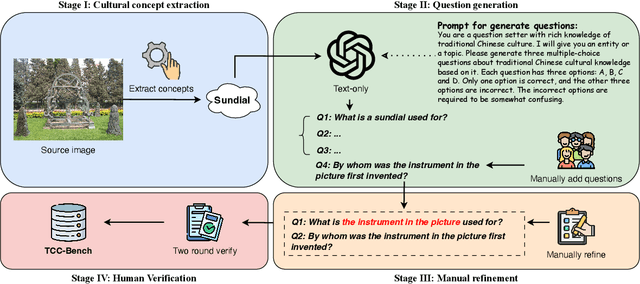
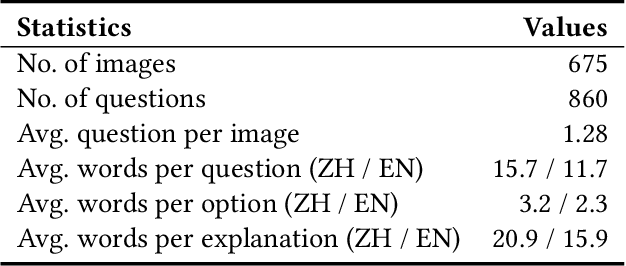
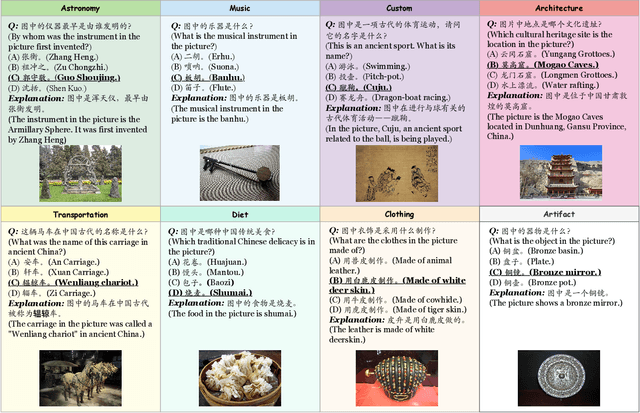
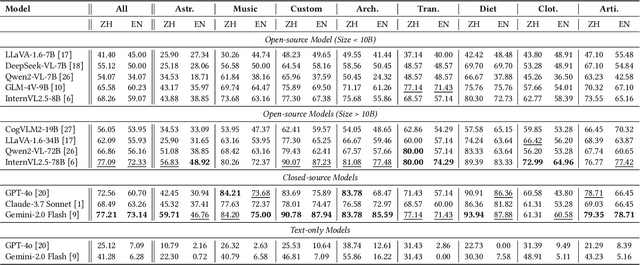
Recent progress in Multimodal Large Language Models (MLLMs) have significantly enhanced the ability of artificial intelligence systems to understand and generate multimodal content. However, these models often exhibit limited effectiveness when applied to non-Western cultural contexts, which raises concerns about their wider applicability. To address this limitation, we propose the Traditional Chinese Culture understanding Benchmark (TCC-Bench), a bilingual (i.e., Chinese and English) Visual Question Answering (VQA) benchmark specifically designed for assessing the understanding of traditional Chinese culture by MLLMs. TCC-Bench comprises culturally rich and visually diverse data, incorporating images from museum artifacts, everyday life scenes, comics, and other culturally significant contexts. We adopt a semi-automated pipeline that utilizes GPT-4o in text-only mode to generate candidate questions, followed by human curation to ensure data quality and avoid potential data leakage. The benchmark also avoids language bias by preventing direct disclosure of cultural concepts within question texts. Experimental evaluations across a wide range of MLLMs demonstrate that current models still face significant challenges when reasoning about culturally grounded visual content. The results highlight the need for further research in developing culturally inclusive and context-aware multimodal systems. The code and data can be found at: https://tcc-bench.github.io/.
Multi-modal Collaborative Optimization and Expansion Network for Event-assisted Single-eye Expression Recognition
May 17, 2025In this paper, we proposed a Multi-modal Collaborative Optimization and Expansion Network (MCO-E Net), to use event modalities to resist challenges such as low light, high exposure, and high dynamic range in single-eye expression recognition tasks. The MCO-E Net introduces two innovative designs: Multi-modal Collaborative Optimization Mamba (MCO-Mamba) and Heterogeneous Collaborative and Expansion Mixture-of-Experts (HCE-MoE). MCO-Mamba, building upon Mamba, leverages dual-modal information to jointly optimize the model, facilitating collaborative interaction and fusion of modal semantics. This approach encourages the model to balance the learning of both modalities and harness their respective strengths. HCE-MoE, on the other hand, employs a dynamic routing mechanism to distribute structurally varied experts (deep, attention, and focal), fostering collaborative learning of complementary semantics. This heterogeneous architecture systematically integrates diverse feature extraction paradigms to comprehensively capture expression semantics. Extensive experiments demonstrate that our proposed network achieves competitive performance in the task of single-eye expression recognition, especially under poor lighting conditions.
Deep Learning Advances in Vision-Based Traffic Accident Anticipation: A Comprehensive Review of Methods,Datasets,and Future Directions
May 12, 2025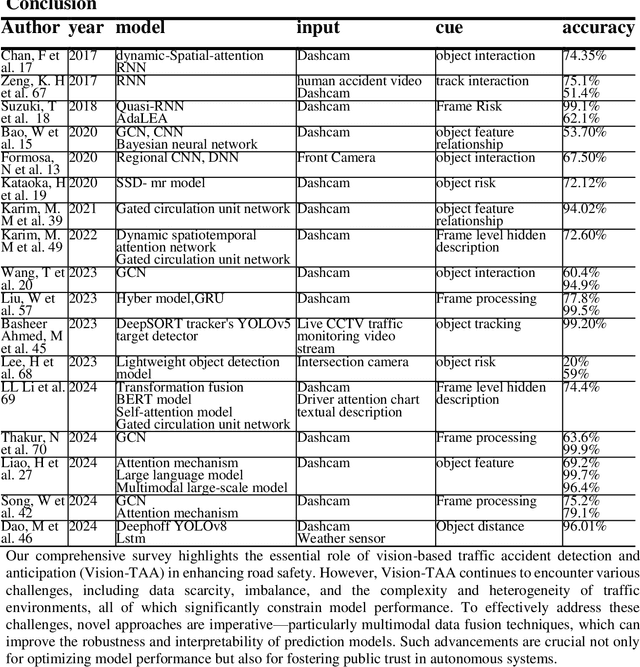
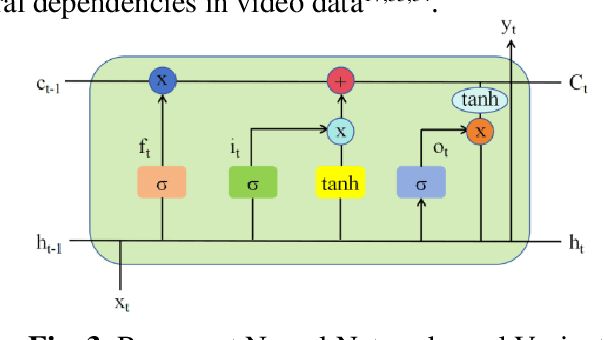
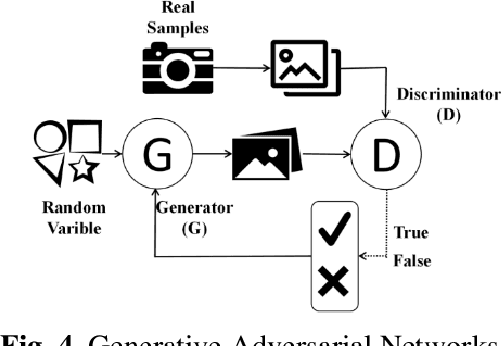
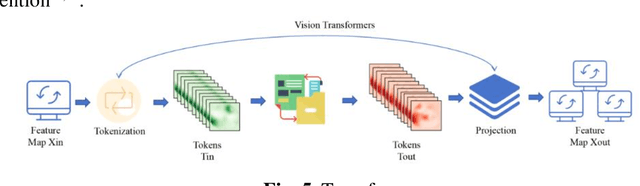
Traffic accident prediction and detection are critical for enhancing road safety,and vision-based traffic accident anticipation (Vision-TAA) has emerged as a promising approach in the era of deep learning.This paper reviews 147 recent studies,focusing on the application of supervised,unsupervised,and hybrid deep learning models for accident prediction,alongside the use of real-world and synthetic datasets.Current methodologies are categorized into four key approaches: image and video feature-based prediction, spatiotemporal feature-based prediction, scene understanding,and multimodal data fusion.While these methods demonstrate significant potential,challenges such as data scarcity,limited generalization to complex scenarios,and real-time performance constraints remain prevalent. This review highlights opportunities for future research,including the integration of multimodal data fusion, self-supervised learning,and Transformer-based architectures to enhance prediction accuracy and scalability.By synthesizing existing advancements and identifying critical gaps, this paper provides a foundational reference for developing robust and adaptive Vision-TAA systems,contributing to road safety and traffic management.
DARLR: Dual-Agent Offline Reinforcement Learning for Recommender Systems with Dynamic Reward
May 12, 2025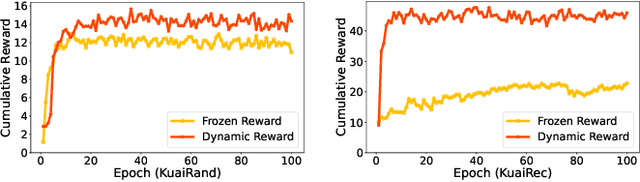
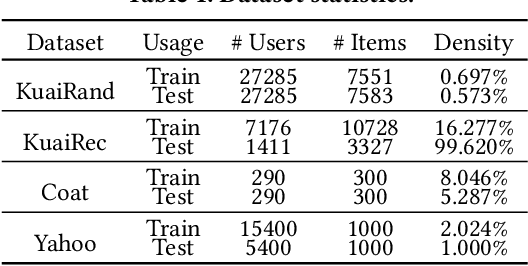
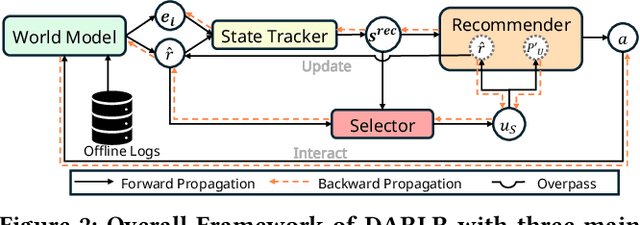
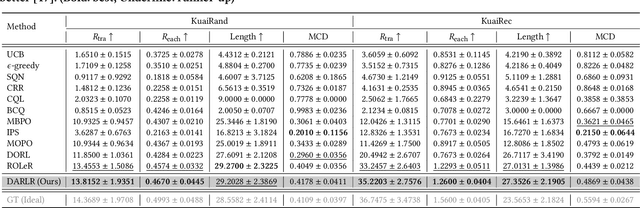
Model-based offline reinforcement learning (RL) has emerged as a promising approach for recommender systems, enabling effective policy learning by interacting with frozen world models. However, the reward functions in these world models, trained on sparse offline logs, often suffer from inaccuracies. Specifically, existing methods face two major limitations in addressing this challenge: (1) deterministic use of reward functions as static look-up tables, which propagates inaccuracies during policy learning, and (2) static uncertainty designs that fail to effectively capture decision risks and mitigate the impact of these inaccuracies. In this work, a dual-agent framework, DARLR, is proposed to dynamically update world models to enhance recommendation policies. To achieve this, a \textbf{\textit{selector}} is introduced to identify reference users by balancing similarity and diversity so that the \textbf{\textit{recommender}} can aggregate information from these users and iteratively refine reward estimations for dynamic reward shaping. Further, the statistical features of the selected users guide the dynamic adaptation of an uncertainty penalty to better align with evolving recommendation requirements. Extensive experiments on four benchmark datasets demonstrate the superior performance of DARLR, validating its effectiveness. The code is available at https://github.com/ArronDZhang/DARLR.
High-speed multiwavelength photonic temporal integration using silicon photonics
May 07, 2025Optical systems have been pivotal for energy-efficient computing, performing high-speed, parallel operations in low-loss carriers. While these predominantly analog optical accelerators bypass digitization to perform parallel floating-point computations, scaling optical hardware to map large-vector sizes for AI tasks remains challenging. Here, we overcome this limitation by unfolding scalar operations in time and introducing a photonic-heater-in-lightpath (PHIL) unit for all-optical temporal integration. Counterintuitively, we exploit a slow heat dissipation process to integrate optical signals modulated at 50 GHz bridging the speed gap between the widely applied thermo-optic effects and ultrafast photonics. This architecture supports optical end-to-end signal processing, eliminates inefficient electro-optical conversions, and enables both linear and nonlinear operations within a unified framework. Our results demonstrate a scalable path towards high-speed photonic computing through thermally driven integration.
Knowing You Don't Know: Learning When to Continue Search in Multi-round RAG through Self-Practicing
May 05, 2025Retrieval Augmented Generation (RAG) has shown strong capability in enhancing language models' knowledge and reducing AI generative hallucinations, driving its widespread use. However, complex tasks requiring multi-round retrieval remain challenging, and early attempts tend to be overly optimistic without a good sense of self-skepticism. Current multi-round RAG systems may continue searching even when enough information has already been retrieved, or they may provide incorrect answers without having sufficient information or knowledge. Existing solutions either require large amounts of expensive human-labeled process supervision data or lead to subpar performance. This paper aims to address these limitations by introducing a new framework, \textbf{SIM-RAG}, to explicitly enhance RAG systems' self-awareness and multi-round retrieval capabilities. To train SIM-RAG, we first let a RAG system self-practice multi-round retrieval, augmenting existing question-answer pairs with intermediate inner monologue reasoning steps to generate synthetic training data. For each pair, the system may explore multiple retrieval paths, which are labeled as successful if they reach the correct answer and unsuccessful otherwise. Using this data, we train a lightweight information sufficiency Critic. At inference time, the Critic evaluates whether the RAG system has retrieved sufficient information at each round, guiding retrieval decisions and improving system-level self-awareness through in-context reinforcement learning. Experiments across multiple prominent RAG benchmarks show that SIM-RAG is an effective multi-round RAG solution. Furthermore, this framework is system-efficient, adding a lightweight component to RAG without requiring modifications to existing LLMs or search engines, and data-efficient, eliminating the need for costly human-annotated mid-step retrieval process supervision data.
R-Bench: Graduate-level Multi-disciplinary Benchmarks for LLM & MLLM Complex Reasoning Evaluation
May 04, 2025Reasoning stands as a cornerstone of intelligence, enabling the synthesis of existing knowledge to solve complex problems. Despite remarkable progress, existing reasoning benchmarks often fail to rigorously evaluate the nuanced reasoning capabilities required for complex, real-world problemsolving, particularly in multi-disciplinary and multimodal contexts. In this paper, we introduce a graduate-level, multi-disciplinary, EnglishChinese benchmark, dubbed as Reasoning Bench (R-Bench), for assessing the reasoning capability of both language and multimodal models. RBench spans 1,094 questions across 108 subjects for language model evaluation and 665 questions across 83 subjects for multimodal model testing in both English and Chinese. These questions are meticulously curated to ensure rigorous difficulty calibration, subject balance, and crosslinguistic alignment, enabling the assessment to be an Olympiad-level multi-disciplinary benchmark. We evaluate widely used models, including OpenAI o1, GPT-4o, DeepSeek-R1, etc. Experimental results indicate that advanced models perform poorly on complex reasoning, especially multimodal reasoning. Even the top-performing model OpenAI o1 achieves only 53.2% accuracy on our multimodal evaluation. Data and code are made publicly available at here.
Quadratic Interest Network for Multimodal Click-Through Rate Prediction
Apr 24, 2025Multimodal click-through rate (CTR) prediction is a key technique in industrial recommender systems. It leverages heterogeneous modalities such as text, images, and behavioral logs to capture high-order feature interactions between users and items, thereby enhancing the system's understanding of user interests and its ability to predict click behavior. The primary challenge in this field lies in effectively utilizing the rich semantic information from multiple modalities while satisfying the low-latency requirements of online inference in real-world applications. To foster progress in this area, the Multimodal CTR Prediction Challenge Track of the WWW 2025 EReL@MIR Workshop formulates the problem into two tasks: (1) Task 1 of Multimodal Item Embedding: this task aims to explore multimodal information extraction and item representation learning methods that enhance recommendation tasks; and (2) Task 2 of Multimodal CTR Prediction: this task aims to explore what multimodal recommendation model can effectively leverage multimodal embedding features and achieve better performance. In this paper, we propose a novel model for Task 2, named Quadratic Interest Network (QIN) for Multimodal CTR Prediction. Specifically, QIN employs adaptive sparse target attention to extract multimodal user behavior features, and leverages Quadratic Neural Networks to capture high-order feature interactions. As a result, QIN achieved an AUC of 0.9798 on the leaderboard and ranked second in the competition. The model code, training logs, hyperparameter configurations, and checkpoints are available at https://github.com/salmon1802/QIN.
ADT: Tuning Diffusion Models with Adversarial Supervision
Apr 15, 2025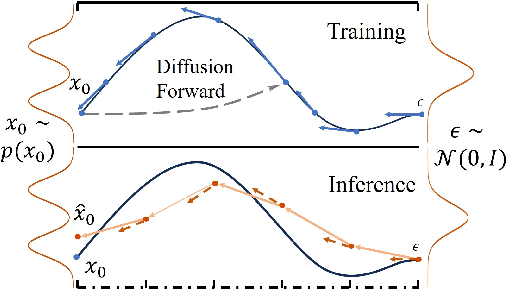
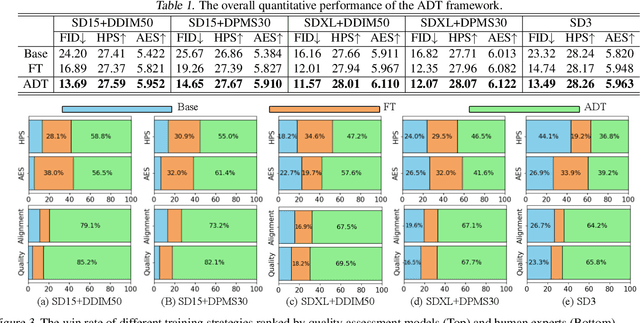
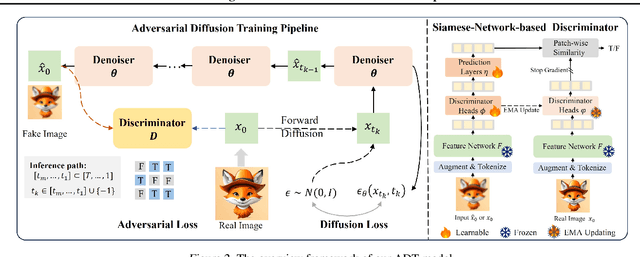
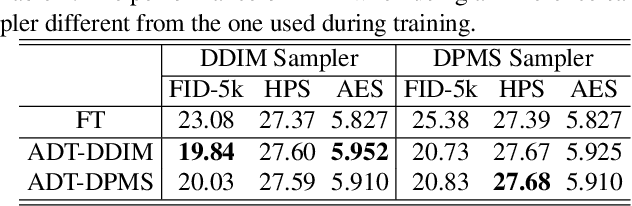
Diffusion models have achieved outstanding image generation by reversing a forward noising process to approximate true data distributions. During training, these models predict diffusion scores from noised versions of true samples in a single forward pass, while inference requires iterative denoising starting from white noise. This training-inference divergences hinder the alignment between inference and training data distributions, due to potential prediction biases and cumulative error accumulation. To address this problem, we propose an intuitive but effective fine-tuning framework, called Adversarial Diffusion Tuning (ADT), by stimulating the inference process during optimization and aligning the final outputs with training data by adversarial supervision. Specifically, to achieve robust adversarial training, ADT features a siamese-network discriminator with a fixed pre-trained backbone and lightweight trainable parameters, incorporates an image-to-image sampling strategy to smooth discriminative difficulties, and preserves the original diffusion loss to prevent discriminator hacking. In addition, we carefully constrain the backward-flowing path for back-propagating gradients along the inference path without incurring memory overload or gradient explosion. Finally, extensive experiments on Stable Diffusion models (v1.5, XL, and v3), demonstrate that ADT significantly improves both distribution alignment and image quality.