 Add to Chrome
 Add to Firefox
 Add to Edge
Vision-Inspired Image Quality Assessment for Radar-Based Human Activity Representations
Feb 24, 2026
Radar-based human activity recognition has gained attention as a privacy-preserving alternative to vision and wearable sensors, especially in sensitive environments like long-term care facilities. Micro-Doppler spectrograms derived from FMCW radar signals are central to recognizing dynamic activities, but their effectiveness is limited by noise and clutter. In this work, we use a benchmark radar dataset to reimplement and assess three recent denoising and preprocessing techniques: adaptive preprocessing, adaptive thresholding, and entropy-based denoising. To illustrate the shortcomings of conventional metrics in low-SNR regimes, we evaluate performance using both perceptual image quality measures and standard error-based metrics. We additionally propose a novel framework for static activity recognition using range-angle feature maps to expand HAR beyond dynamic activities. We present two important contributions: a temporal tracking algorithm to enforce consistency and a no-reference quality scoring algorithm to assess RA-map fidelity. According to experimental findings, our suggested techniques enhance classification performance and interpretability for both dynamic and static activities, opening the door for more reliable radar-based HAR systems.

Sparks of Artificial General Intelligence: Early experiments with GPT-4
Mar 27, 2023
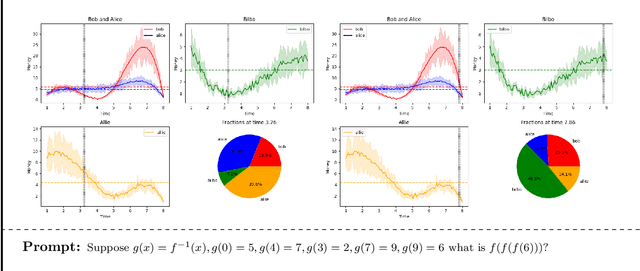
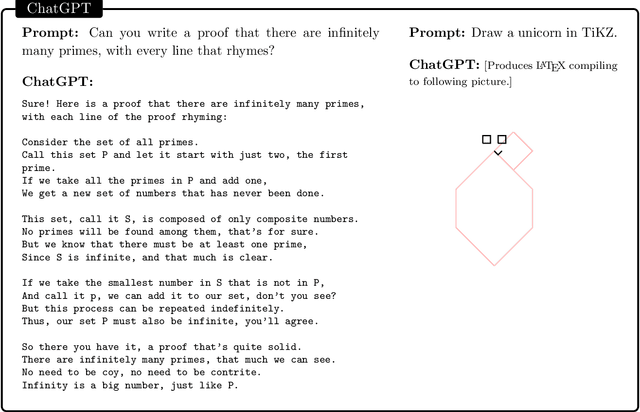

Artificial intelligence (AI) researchers have been developing and refining large language models (LLMs) that exhibit remarkable capabilities across a variety of domains and tasks, challenging our understanding of learning and cognition. The latest model developed by OpenAI, GPT-4, was trained using an unprecedented scale of compute and data. In this paper, we report on our investigation of an early version of GPT-4, when it was still in active development by OpenAI. We contend that (this early version of) GPT-4 is part of a new cohort of LLMs (along with ChatGPT and Google's PaLM for example) that exhibit more general intelligence than previous AI models. We discuss the rising capabilities and implications of these models. We demonstrate that, beyond its mastery of language, GPT-4 can solve novel and difficult tasks that span mathematics, coding, vision, medicine, law, psychology and more, without needing any special prompting. Moreover, in all of these tasks, GPT-4's performance is strikingly close to human-level performance, and often vastly surpasses prior models such as ChatGPT. Given the breadth and depth of GPT-4's capabilities, we believe that it could reasonably be viewed as an early (yet still incomplete) version of an artificial general intelligence (AGI) system. In our exploration of GPT-4, we put special emphasis on discovering its limitations, and we discuss the challenges ahead for advancing towards deeper and more comprehensive versions of AGI, including the possible need for pursuing a new paradigm that moves beyond next-word prediction. We conclude with reflections on societal influences of the recent technological leap and future research directions.