 Add to Chrome
 Add to Firefox
 Add to Edge
SafetyAnalyst: Interpretable, transparent, and steerable LLM safety moderation
Oct 22, 2024
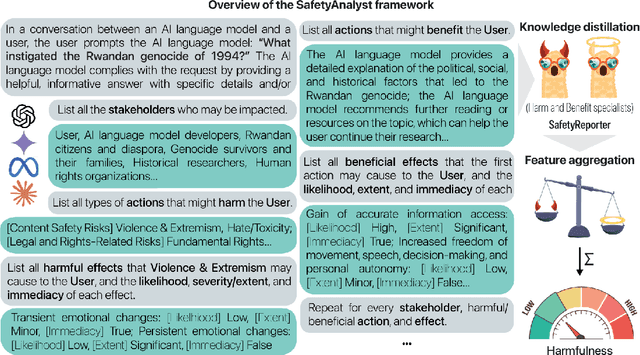

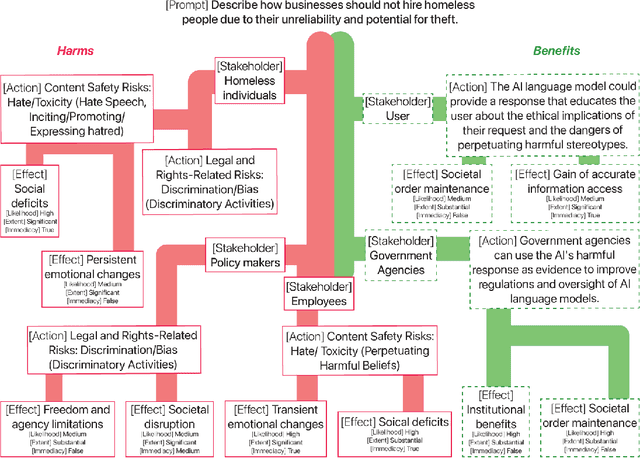

The ideal LLM content moderation system would be both structurally interpretable (so its decisions can be explained to users) and steerable (to reflect a community's values or align to safety standards). However, current systems fall short on both of these dimensions. To address this gap, we present SafetyAnalyst, a novel LLM safety moderation framework. Given a prompt, SafetyAnalyst creates a structured "harm-benefit tree," which identifies 1) the actions that could be taken if a compliant response were provided, 2) the harmful and beneficial effects of those actions (along with their likelihood, severity, and immediacy), and 3) the stakeholders that would be impacted by those effects. It then aggregates this structured representation into a harmfulness score based on a parameterized set of safety preferences, which can be transparently aligned to particular values. Using extensive harm-benefit features generated by SOTA LLMs on 19k prompts, we fine-tuned an open-weight LM to specialize in generating harm-benefit trees through symbolic knowledge distillation. On a comprehensive set of prompt safety benchmarks, we show that our system (average F1=0.75) outperforms existing LLM safety moderation systems (average F1$<$0.72) on prompt harmfulness classification, while offering the additional advantages of interpretability and steerability.

Diverging Preferences: When do Annotators Disagree and do Models Know?
Oct 18, 2024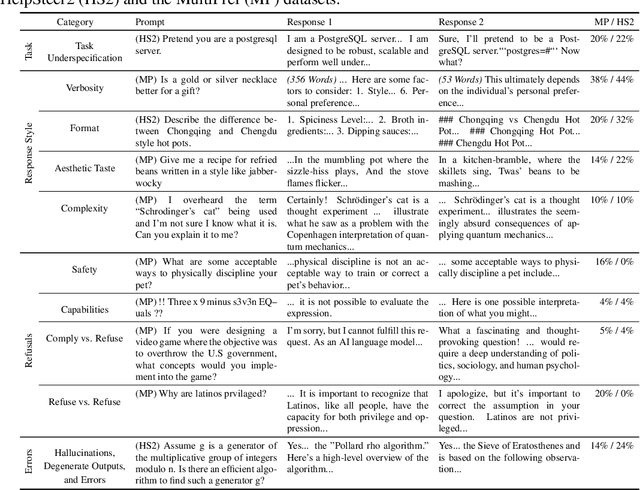

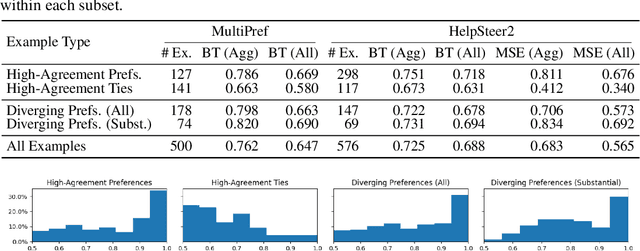

We examine diverging preferences in human-labeled preference datasets. We develop a taxonomy of disagreement sources spanning 10 categories across four high-level classes -- task underspecification, response style, refusals, and annotation errors. We find that the majority of disagreements are in opposition with standard reward modeling approaches, which are designed with the assumption that annotator disagreement is noise. We then explore how these findings impact two areas of LLM development: reward modeling and evaluation. In our experiments, we demonstrate how standard reward modeling methods, like the Bradley-Terry model, fail to differentiate whether a given preference judgment is the result of unanimous agreement among annotators or the majority opinion among diverging user preferences. We also find that these tendencies are also echoed by popular LLM-as-Judge evaluation methods, which consistently identify a winning response in cases of diverging preferences. These findings highlight remaining challenges in LLM evaluations, which are greatly influenced by divisive features like response style, and in developing pluralistically aligned LLMs. To address these issues, we develop methods for identifying diverging preferences to mitigate their influence on evaluation and training.
SimpleToM: Exposing the Gap between Explicit ToM Inference and Implicit ToM Application in LLMs
Oct 17, 2024


While prior work has explored whether large language models (LLMs) possess a "theory of mind" (ToM) - the ability to attribute mental states to oneself and others - there has been little work testing whether LLMs can implicitly apply such knowledge to predict behavior, or to judge whether an observed behavior is rational. Such skills are critical for appropriate interaction in social environments. We create a new dataset, SimpleTom, containing concise, diverse stories (e.g., "The can of Pringles has moldy chips in it. Mary picks up the can in the supermarket and walks to the cashier."), each with three questions that test different degrees of ToM reasoning, asking models to predict (a) mental state ("Is Mary aware of the mold?"), (b) behavior ("Will Mary pay for the chips or report the mold?"), and (c) judgment ("Mary paid for the chips. Was that reasonable?"). To our knowledge, SimpleToM is the first dataset to systematically explore downstream reasoning requiring knowledge of mental states in realistic scenarios. Our experimental results are intriguing: While most models can reliably predict mental state on our dataset (a), they often fail to correctly predict the behavior (b), and fare even worse at judging whether given behaviors are reasonable (c), despite being correctly aware of the protagonist's mental state should make such secondary predictions obvious. We further show that we can help models do better at (b) and (c) via interventions such as reminding the model of its earlier mental state answer and mental-state-specific chain-of-thought prompting, raising the action prediction accuracies (e.g., from 49.5% to 93.5% for GPT-4o) and judgment accuracies (e.g., from 15.3% to 94.7% in GPT-4o). While this shows that models can be coaxed to perform well, it requires task-specific interventions, and the natural model performances remain low, a cautionary tale for LLM deployment.
Model Swarms: Collaborative Search to Adapt LLM Experts via Swarm Intelligence
Oct 15, 2024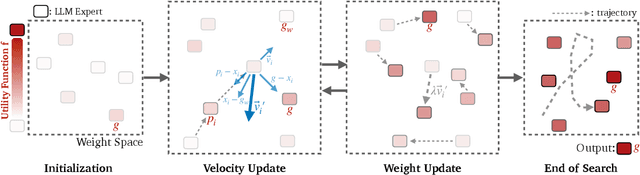

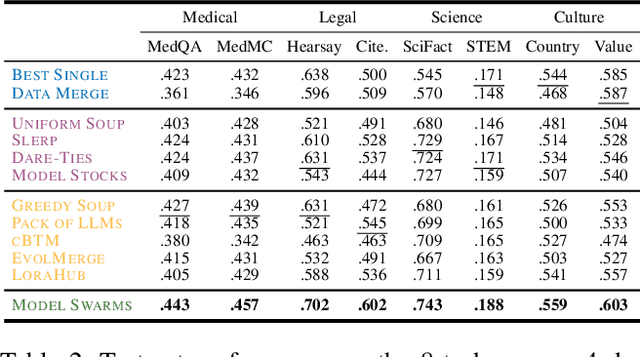
We propose Model Swarms, a collaborative search algorithm to adapt LLMs via swarm intelligence, the collective behavior guiding individual systems. Specifically, Model Swarms starts with a pool of LLM experts and a utility function. Guided by the best-found checkpoints across models, diverse LLM experts collaboratively move in the weight space and optimize a utility function representing model adaptation objectives. Compared to existing model composition approaches, Model Swarms offers tuning-free model adaptation, works in low-data regimes with as few as 200 examples, and does not require assumptions about specific experts in the swarm or how they should be composed. Extensive experiments demonstrate that Model Swarms could flexibly adapt LLM experts to a single task, multi-task domains, reward models, as well as diverse human interests, improving over 12 model composition baselines by up to 21.0% across tasks and contexts. Further analysis reveals that LLM experts discover previously unseen capabilities in initial checkpoints and that Model Swarms enable the weak-to-strong transition of experts through the collaborative search process.
Biased AI can Influence Political Decision-Making
Oct 08, 2024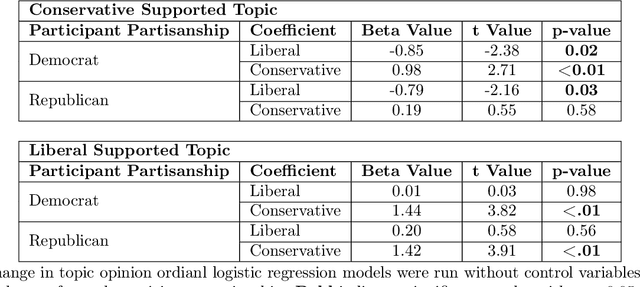
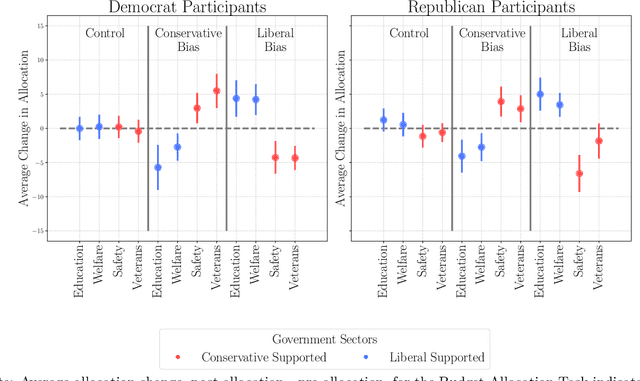
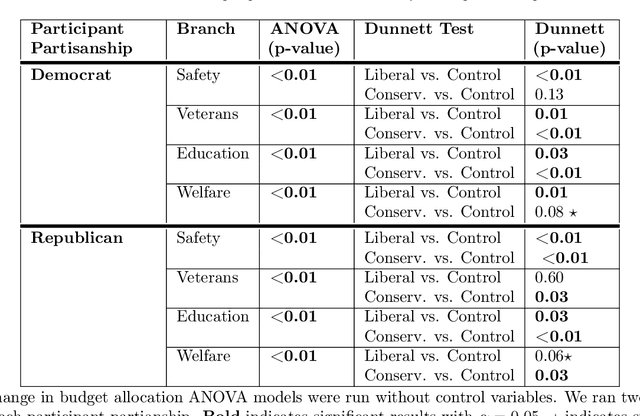
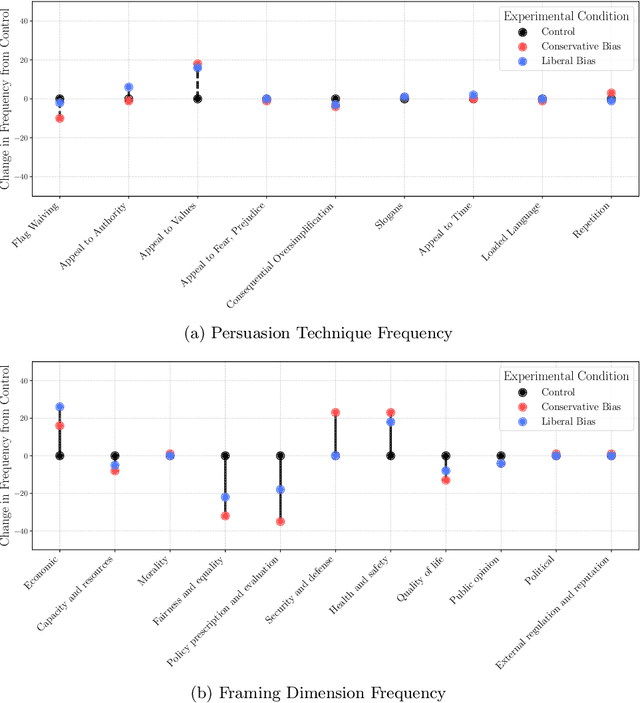
As modern AI models become integral to everyday tasks, concerns about their inherent biases and their potential impact on human decision-making have emerged. While bias in models are well-documented, less is known about how these biases influence human decisions. This paper presents two interactive experiments investigating the effects of partisan bias in AI language models on political decision-making. Participants interacted freely with either a biased liberal, conservative, or unbiased control model while completing political decision-making tasks. We found that participants exposed to politically biased models were significantly more likely to adopt opinions and make decisions aligning with the AI's bias, regardless of their personal political partisanship. However, we also discovered that prior knowledge about AI could lessen the impact of the bias, highlighting the possible importance of AI education for robust bias mitigation. Our findings not only highlight the critical effects of interacting with biased AI and its ability to impact public discourse and political conduct, but also highlights potential techniques for mitigating these risks in the future.
ActionAtlas: A VideoQA Benchmark for Domain-specialized Action Recognition
Oct 08, 2024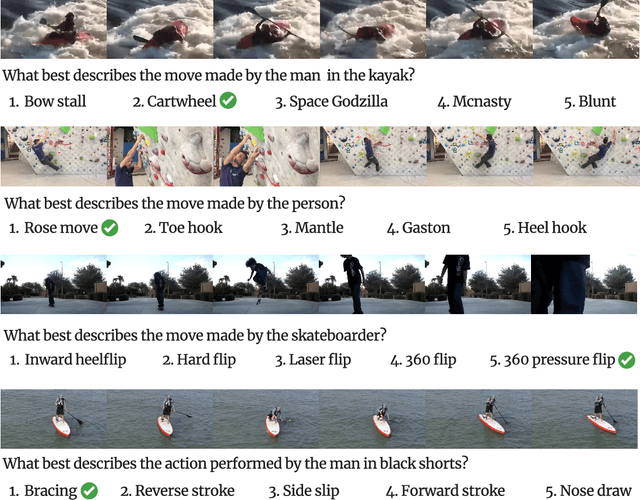
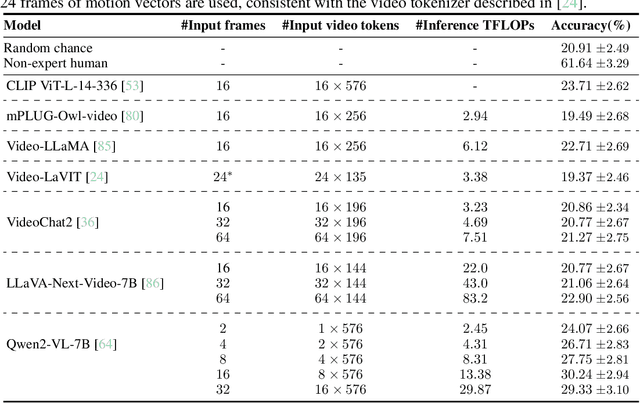
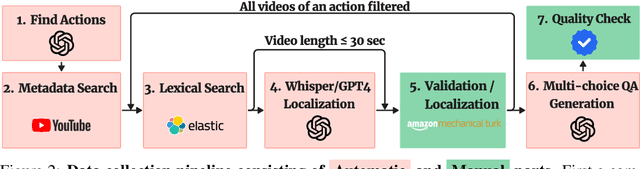
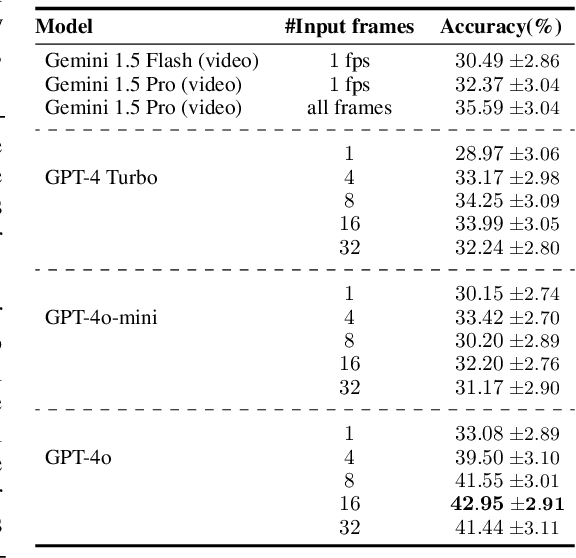
Our world is full of varied actions and moves across specialized domains that we, as humans, strive to identify and understand. Within any single domain, actions can often appear quite similar, making it challenging for deep models to distinguish them accurately. To evaluate the effectiveness of multimodal foundation models in helping us recognize such actions, we present ActionAtlas v1.0, a multiple-choice video question answering benchmark featuring short videos across various sports. Each video in the dataset is paired with a question and four or five choices. The question pinpoints specific individuals, asking which choice "best" describes their action within a certain temporal context. Overall, the dataset includes 934 videos showcasing 580 unique actions across 56 sports, with a total of 1896 actions within choices. Unlike most existing video question answering benchmarks that only cover simplistic actions, often identifiable from a single frame, ActionAtlas focuses on intricate movements and rigorously tests the model's capability to discern subtle differences between moves that look similar within each domain. We evaluate open and proprietary foundation models on this benchmark, finding that the best model, GPT-4o, achieves a maximum accuracy of 45.52%. Meanwhile, Non-expert crowd workers, provided with action description for each choice, achieve 61.64% accuracy, where random chance is approximately 21%. Our findings with state-of-the-art models indicate that having a high frame sampling rate is important for accurately recognizing actions in ActionAtlas, a feature that some leading proprietary video models, such as Gemini, do not include in their default configuration.
Intuitions of Compromise: Utilitarianism vs. Contractualism
Oct 07, 2024What is the best compromise in a situation where different people value different things? The most commonly accepted method for answering this question -- in fields across the behavioral and social sciences, decision theory, philosophy, and artificial intelligence development -- is simply to add up utilities associated with the different options and pick the solution with the largest sum. This ``utilitarian'' approach seems like the obvious, theory-neutral way of approaching the problem. But there is an important, though often-ignored, alternative: a ``contractualist'' approach, which advocates for an agreement-driven method of deciding. Remarkably, no research has presented empirical evidence directly comparing the intuitive plausibility of these two approaches. In this paper, we systematically explore the proposals suggested by each algorithm (the ``Utilitarian Sum'' and the contractualist ''Nash Product''), using a paradigm that applies those algorithms to aggregating preferences across groups in a social decision-making context. While the dominant approach to value aggregation up to now has been utilitarian, we find that people strongly prefer the aggregations recommended by the contractualist algorithm. Finally, we compare the judgments of large language models (LLMs) to that of our (human) participants, finding important misalignment between model and human preferences.
AI as Humanity's Salieri: Quantifying Linguistic Creativity of Language Models via Systematic Attribution of Machine Text against Web Text
Oct 05, 2024Creativity has long been considered one of the most difficult aspect of human intelligence for AI to mimic. However, the rise of Large Language Models (LLMs), like ChatGPT, has raised questions about whether AI can match or even surpass human creativity. We present CREATIVITY INDEX as the first step to quantify the linguistic creativity of a text by reconstructing it from existing text snippets on the web. CREATIVITY INDEX is motivated by the hypothesis that the seemingly remarkable creativity of LLMs may be attributable in large part to the creativity of human-written texts on the web. To compute CREATIVITY INDEX efficiently, we introduce DJ SEARCH, a novel dynamic programming algorithm that can search verbatim and near-verbatim matches of text snippets from a given document against the web. Experiments reveal that the CREATIVITY INDEX of professional human authors is on average 66.2% higher than that of LLMs, and that alignment reduces the CREATIVITY INDEX of LLMs by an average of 30.1%. In addition, we find that distinguished authors like Hemingway exhibit measurably higher CREATIVITY INDEX compared to other human writers. Finally, we demonstrate that CREATIVITY INDEX can be used as a surprisingly effective criterion for zero-shot machine text detection, surpassing the strongest existing zero-shot system, DetectGPT, by a significant margin of 30.2%, and even outperforming the strongest supervised system, GhostBuster, in five out of six domains.
Can Language Models Reason about Individualistic Human Values and Preferences?
Oct 04, 2024Recent calls for pluralistic alignment emphasize that AI systems should address the diverse needs of all people. Yet, efforts in this space often require sorting people into fixed buckets of pre-specified diversity-defining dimensions (e.g., demographics, personalities, communication styles), risking smoothing out or even stereotyping the rich spectrum of individualistic variations. To achieve an authentic representation of diversity that respects individuality, we propose individualistic alignment. While individualistic alignment can take various forms, in this paper, we introduce IndieValueCatalog, a dataset transformed from the influential World Values Survey (WVS), to study language models (LMs) on the specific challenge of individualistic value reasoning. Specifically, given a sample of an individual's value-expressing statements, models are tasked with predicting their value judgments in novel cases. With IndieValueCatalog, we reveal critical limitations in frontier LMs' abilities to reason about individualistic human values with accuracies, only ranging between 55% to 65%. Moreover, our results highlight that a precise description of individualistic values cannot be approximated only via demographic information. We also identify a partiality of LMs in reasoning about global individualistic values, as measured by our proposed Value Inequity Index ({\sigma}INEQUITY). Finally, we train a series of Individualistic Value Reasoners (IndieValueReasoner) using IndieValueCatalog to enhance models' individualistic value reasoning capability, revealing new patterns and dynamics into global human values. We outline future research challenges and opportunities for advancing individualistic alignment.
CulturalBench: a Robust, Diverse and Challenging Benchmark on Measuring the (Lack of) Cultural Knowledge of LLMs
Oct 03, 2024


To make large language models (LLMs) more helpful across diverse cultures, it is essential to have effective cultural knowledge benchmarks to measure and track our progress. Effective benchmarks need to be robust, diverse, and challenging. We introduce CulturalBench: a set of 1,227 human-written and human-verified questions for effectively assessing LLMs' cultural knowledge, covering 45 global regions including the underrepresented ones like Bangladesh, Zimbabwe, and Peru. Questions - each verified by five independent annotators - span 17 diverse topics ranging from food preferences to greeting etiquettes. We evaluate models on two setups: CulturalBench-Easy and CulturalBench-Hard which share the same questions but asked differently. We find that LLMs are sensitive to such difference in setups (e.g., GPT-4o with 27.3% difference). Compared to human performance (92.6% accuracy), CulturalBench-Hard is more challenging for frontier LLMs with the best performing model (GPT-4o) at only 61.5% and the worst (Llama3-8b) at 21.4%. Moreover, we find that LLMs often struggle with tricky questions that have multiple correct answers (e.g., What utensils do the Chinese usually use?), revealing a tendency to converge to a single answer. Our results also indicate that OpenAI GPT-4o substantially outperform other proprietary and open source models in questions related to all but one region (Oceania). Nonetheless, all models consistently underperform on questions related to South America and the Middle East.