 Add to Chrome
 Add to Firefox
 Add to Edge
HyperGCT: A Dynamic Hyper-GNN-Learned Geometric Constraint for 3D Registration
Mar 04, 2025
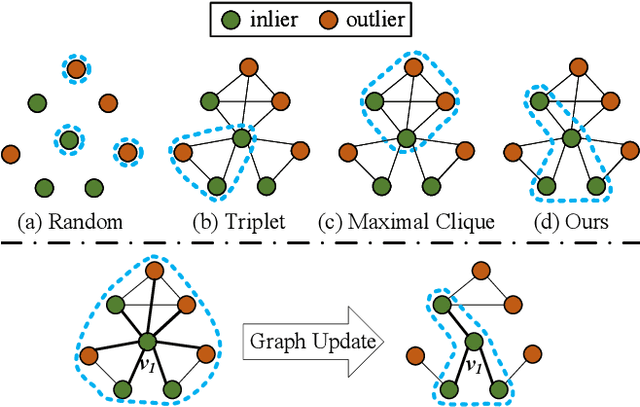

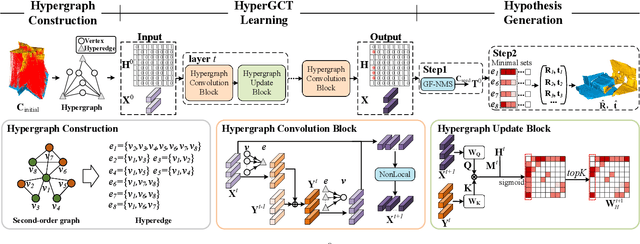

Geometric constraints between feature matches are critical in 3D point cloud registration problems. Existing approaches typically model unordered matches as a consistency graph and sample consistent matches to generate hypotheses. However, explicit graph construction introduces noise, posing great challenges for handcrafted geometric constraints to render consistency among matches. To overcome this, we propose HyperGCT, a flexible dynamic Hyper-GNN-learned geometric constraint that leverages high-order consistency among 3D correspondences. To our knowledge, HyperGCT is the first method that mines robust geometric constraints from dynamic hypergraphs for 3D registration. By dynamically optimizing the hypergraph through vertex and edge feature aggregation, HyperGCT effectively captures the correlations among correspondences, leading to accurate hypothesis generation. Extensive experiments on 3DMatch, 3DLoMatch, KITTI-LC, and ETH show that HyperGCT achieves state-of-the-art performance. Furthermore, our method is robust to graph noise, demonstrating a significant advantage in terms of generalization. The code will be released.

One-shot In-context Part Segmentation
Mar 03, 2025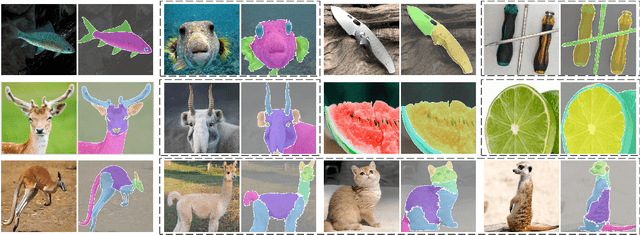
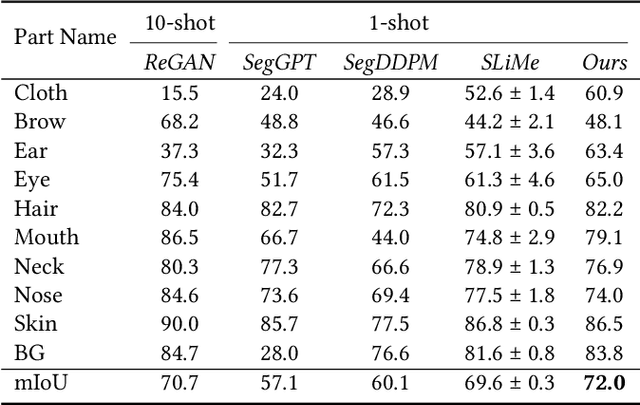
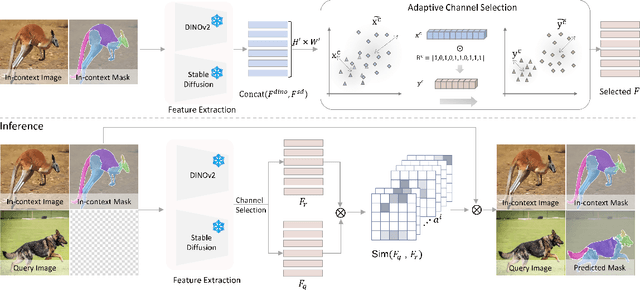
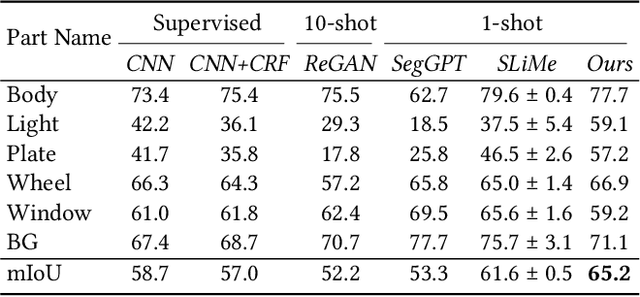
In this paper, we present the One-shot In-context Part Segmentation (OIParts) framework, designed to tackle the challenges of part segmentation by leveraging visual foundation models (VFMs). Existing training-based one-shot part segmentation methods that utilize VFMs encounter difficulties when faced with scenarios where the one-shot image and test image exhibit significant variance in appearance and perspective, or when the object in the test image is partially visible. We argue that training on the one-shot example often leads to overfitting, thereby compromising the model's generalization capability. Our framework offers a novel approach to part segmentation that is training-free, flexible, and data-efficient, requiring only a single in-context example for precise segmentation with superior generalization ability. By thoroughly exploring the complementary strengths of VFMs, specifically DINOv2 and Stable Diffusion, we introduce an adaptive channel selection approach by minimizing the intra-class distance for better exploiting these two features, thereby enhancing the discriminatory power of the extracted features for the fine-grained parts. We have achieved remarkable segmentation performance across diverse object categories. The OIParts framework not only eliminates the need for extensive labeled data but also demonstrates superior generalization ability. Through comprehensive experimentation on three benchmark datasets, we have demonstrated the superiority of our proposed method over existing part segmentation approaches in one-shot settings.
HVI: A New Color Space for Low-light Image Enhancement
Feb 28, 2025


Low-Light Image Enhancement (LLIE) is a crucial computer vision task that aims to restore detailed visual information from corrupted low-light images. Many existing LLIE methods are based on standard RGB (sRGB) space, which often produce color bias and brightness artifacts due to inherent high color sensitivity in sRGB. While converting the images using Hue, Saturation and Value (HSV) color space helps resolve the brightness issue, it introduces significant red and black noise artifacts. To address this issue, we propose a new color space for LLIE, namely Horizontal/Vertical-Intensity (HVI), defined by polarized HS maps and learnable intensity. The former enforces small distances for red coordinates to remove the red artifacts, while the latter compresses the low-light regions to remove the black artifacts. To fully leverage the chromatic and intensity information, a novel Color and Intensity Decoupling Network (CIDNet) is further introduced to learn accurate photometric mapping function under different lighting conditions in the HVI space. Comprehensive results from benchmark and ablation experiments show that the proposed HVI color space with CIDNet outperforms the state-of-the-art methods on 10 datasets. The code is available at https://github.com/Fediory/HVI-CIDNet.
C-Drag: Chain-of-Thought Driven Motion Controller for Video Generation
Feb 27, 2025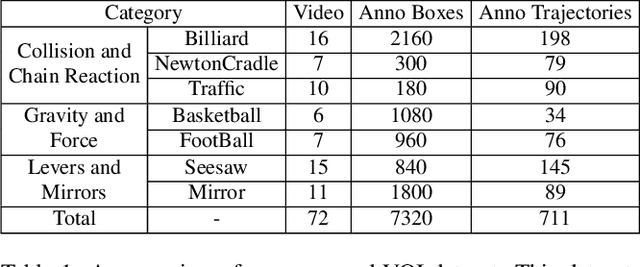
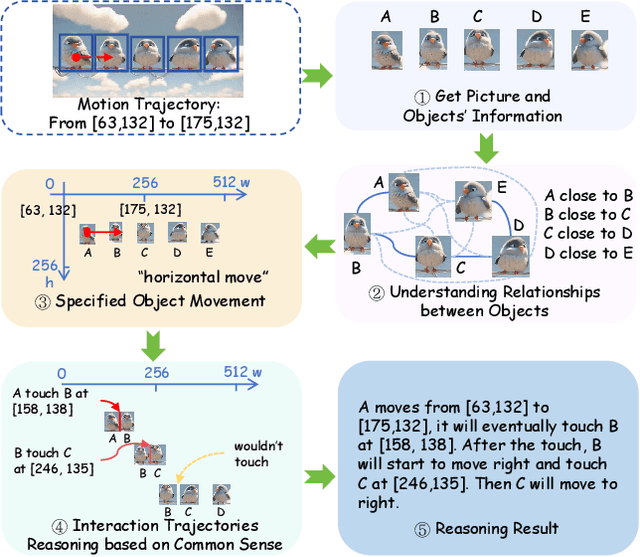
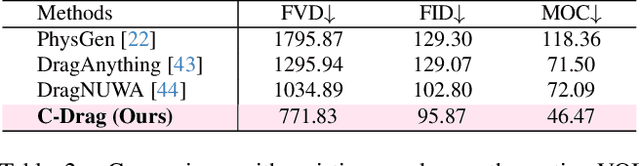
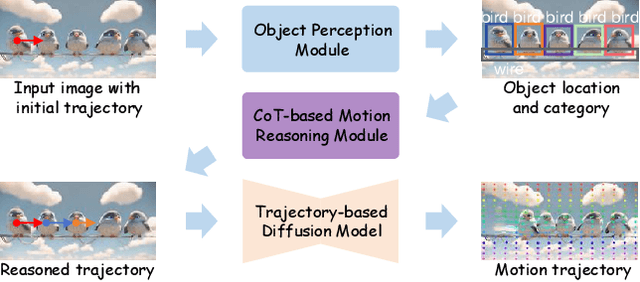
Trajectory-based motion control has emerged as an intuitive and efficient approach for controllable video generation. However, the existing trajectory-based approaches are usually limited to only generating the motion trajectory of the controlled object and ignoring the dynamic interactions between the controlled object and its surroundings. To address this limitation, we propose a Chain-of-Thought-based motion controller for controllable video generation, named C-Drag. Instead of directly generating the motion of some objects, our C-Drag first performs object perception and then reasons the dynamic interactions between different objects according to the given motion control of the objects. Specifically, our method includes an object perception module and a Chain-of-Thought-based motion reasoning module. The object perception module employs visual language models to capture the position and category information of various objects within the image. The Chain-of-Thought-based motion reasoning module takes this information as input and conducts a stage-wise reasoning process to generate motion trajectories for each of the affected objects, which are subsequently fed to the diffusion model for video synthesis. Furthermore, we introduce a new video object interaction (VOI) dataset to evaluate the generation quality of motion controlled video generation methods. Our VOI dataset contains three typical types of interactions and provides the motion trajectories of objects that can be used for accurate performance evaluation. Experimental results show that C-Drag achieves promising performance across multiple metrics, excelling in object motion control. Our benchmark, codes, and models will be available at https://github.com/WesLee88524/C-Drag-Official-Repo.
Learning to Generalize without Bias for Open-Vocabulary Action Recognition
Feb 27, 2025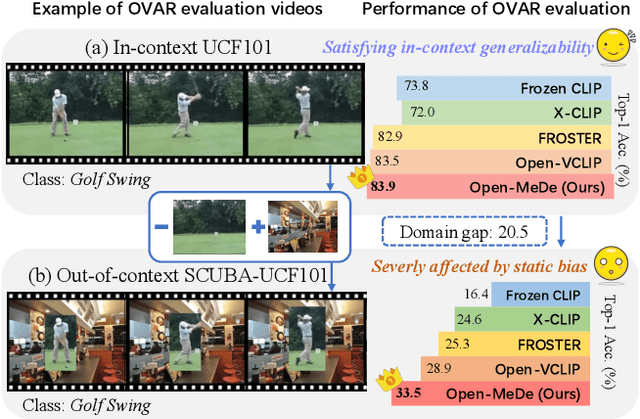
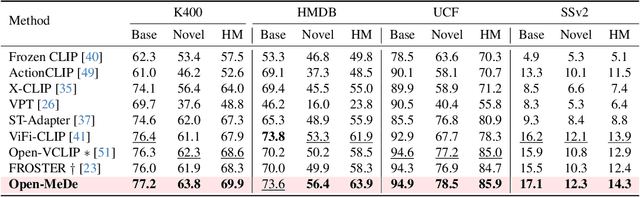
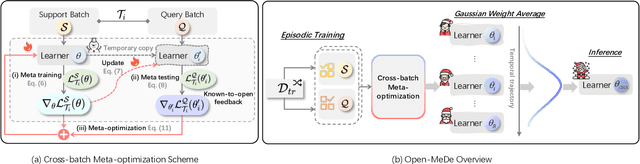
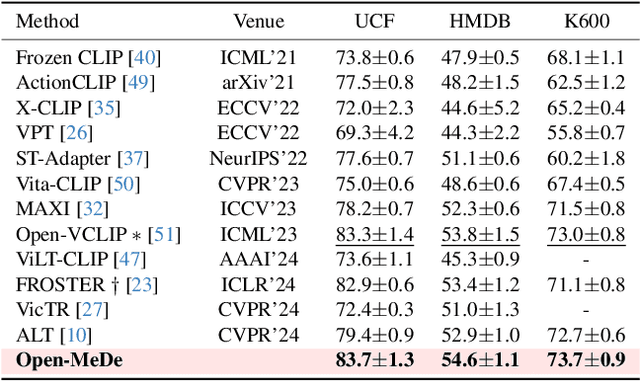
Leveraging the effective visual-text alignment and static generalizability from CLIP, recent video learners adopt CLIP initialization with further regularization or recombination for generalization in open-vocabulary action recognition in-context. However, due to the static bias of CLIP, such video learners tend to overfit on shortcut static features, thereby compromising their generalizability, especially to novel out-of-context actions. To address this issue, we introduce Open-MeDe, a novel Meta-optimization framework with static Debiasing for Open-vocabulary action recognition. From a fresh perspective of generalization, Open-MeDe adopts a meta-learning approach to improve known-to-open generalizing and image-to-video debiasing in a cost-effective manner. Specifically, Open-MeDe introduces a cross-batch meta-optimization scheme that explicitly encourages video learners to quickly generalize to arbitrary subsequent data via virtual evaluation, steering a smoother optimization landscape. In effect, the free of CLIP regularization during optimization implicitly mitigates the inherent static bias of the video meta-learner. We further apply self-ensemble over the optimization trajectory to obtain generic optimal parameters that can achieve robust generalization to both in-context and out-of-context novel data. Extensive evaluations show that Open-MeDe not only surpasses state-of-the-art regularization methods tailored for in-context open-vocabulary action recognition but also substantially excels in out-of-context scenarios.
Demystifying Catastrophic Forgetting in Two-Stage Incremental Object Detector
Feb 08, 2025Catastrophic forgetting is a critical chanllenge for incremental object detection (IOD). Most existing methods treat the detector monolithically, relying on instance replay or knowledge distillation without analyzing component-specific forgetting. Through dissection of Faster R-CNN, we reveal a key insight: Catastrophic forgetting is predominantly localized to the RoI Head classifier, while regressors retain robustness across incremental stages. This finding challenges conventional assumptions, motivating us to develop a framework termed NSGP-RePRE. Regional Prototype Replay (RePRE) mitigates classifier forgetting via replay of two types of prototypes: coarse prototypes represent class-wise semantic centers of RoI features, while fine-grained prototypes model intra-class variations. Null Space Gradient Projection (NSGP) is further introduced to eliminate prototype-feature misalignment by updating the feature extractor in directions orthogonal to subspace of old inputs via gradient projection, aligning RePRE with incremental learning dynamics. Our simple yet effective design allows NSGP-RePRE to achieve state-of-the-art performance on the Pascal VOC and MS COCO datasets under various settings. Our work not only advances IOD methodology but also provide pivotal insights for catastrophic forgetting mitigation in IOD. Code will be available soon.
MoE$^2$: Optimizing Collaborative Inference for Edge Large Language Models
Jan 16, 2025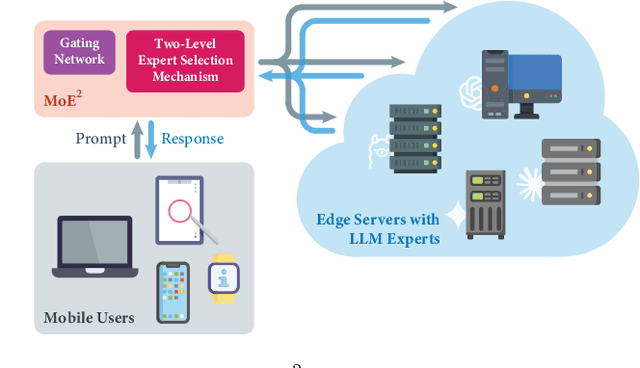
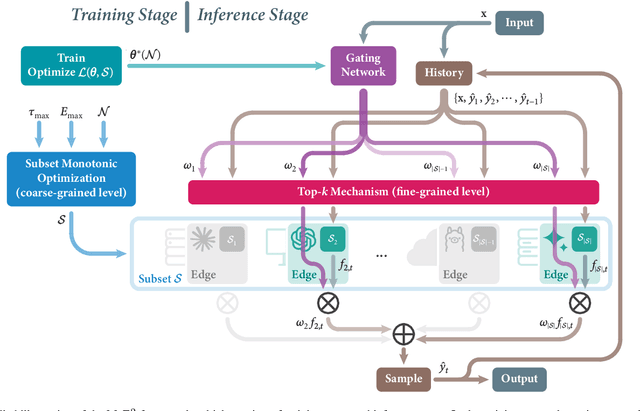
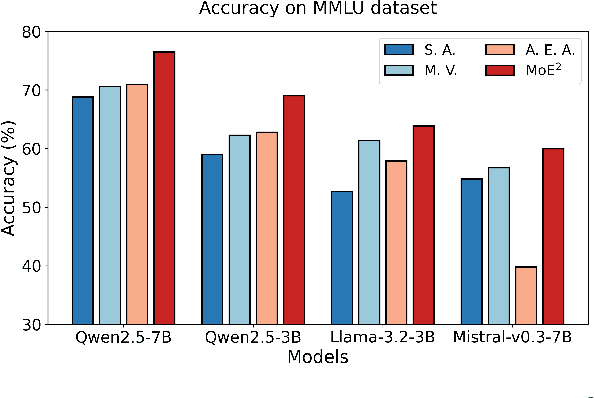
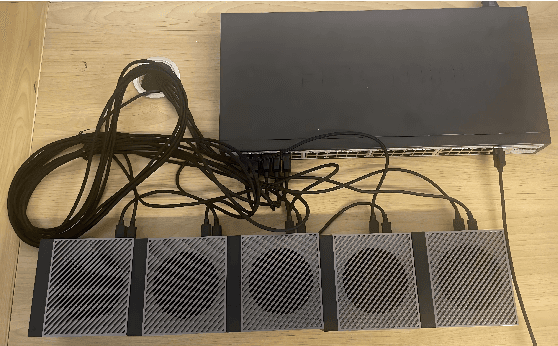
Large language models (LLMs) have demonstrated remarkable capabilities across a wide range of natural language processing tasks. Exploiting the heterogeneous capabilities of edge LLMs is crucial for diverse emerging applications, as it enables greater cost-effectiveness and reduced latency. In this work, we introduce \textit{Mixture-of-Edge-Experts (MoE$^2$)}, a novel collaborative inference framework for edge LLMs. We formulate the joint gating and expert selection problem to optimize inference performance under energy and latency constraints. Unlike conventional MoE problems, LLM expert selection is significantly more challenging due to the combinatorial nature and the heterogeneity of edge LLMs across various attributes. To this end, we propose a two-level expert selection mechanism through which we uncover an optimality-preserving property of gating parameters across expert selections. This property enables the decomposition of the training and selection processes, significantly reducing complexity. Furthermore, we leverage the objective's monotonicity and design a discrete monotonic optimization algorithm for optimal expert selection. We implement edge servers with NVIDIA Jetson AGX Orins and NVIDIA RTX 4090 GPUs, and perform extensive experiments. Our results validate that performance improvements of various LLM models and show that our MoE$^2$ method can achieve optimal trade-offs among different delay and energy budgets, and outperforms baselines under various system resource constraints.
3D Registration in 30 Years: A Survey
Dec 19, 2024


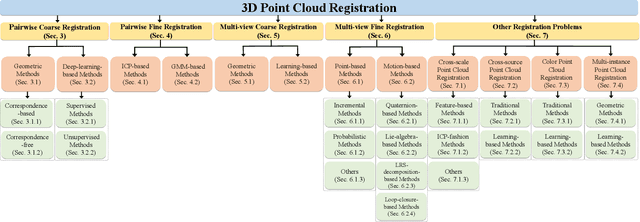
3D point cloud registration is a fundamental problem in computer vision, computer graphics, robotics, remote sensing, and etc. Over the last thirty years, we have witnessed the amazing advancement in this area with numerous kinds of solutions. Although a handful of relevant surveys have been conducted, their coverage is still limited. In this work, we present a comprehensive survey on 3D point cloud registration, covering a set of sub-areas such as pairwise coarse registration, pairwise fine registration, multi-view registration, cross-scale registration, and multi-instance registration. The datasets, evaluation metrics, method taxonomy, discussions of the merits and demerits, insightful thoughts of future directions are comprehensively presented in this survey. The regularly updated project page of the survey is available at https://github.com/Amyyyy11/3D-Registration-in-30-Years-A-Survey.
Unbiased General Annotated Dataset Generation
Dec 14, 2024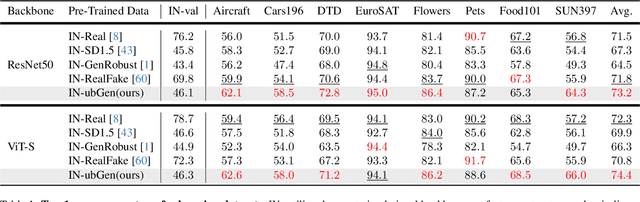
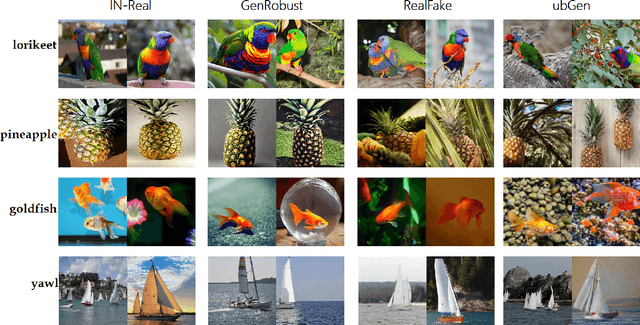
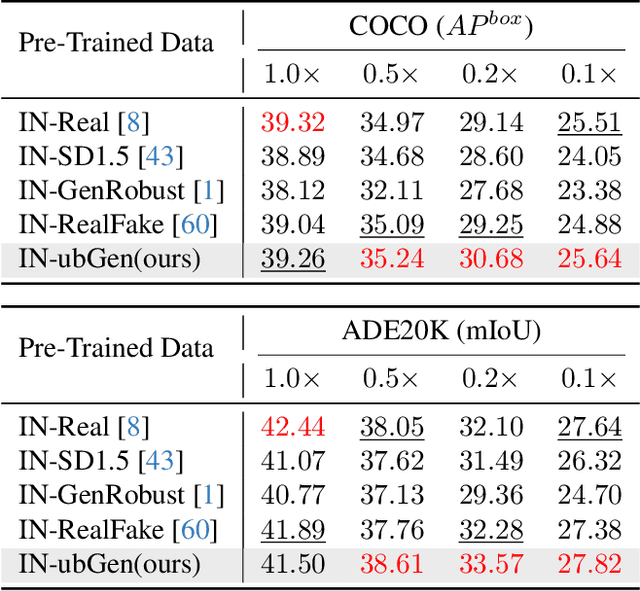

Pre-training backbone networks on a general annotated dataset (e.g., ImageNet) that comprises numerous manually collected images with category annotations has proven to be indispensable for enhancing the generalization capacity of downstream visual tasks. However, those manually collected images often exhibit bias, which is non-transferable across either categories or domains, thus causing the model's generalization capacity degeneration. To mitigate this problem, we present an unbiased general annotated dataset generation framework (ubGen). Instead of expensive manual collection, we aim at directly generating unbiased images with category annotations. To achieve this goal, we propose to leverage the advantage of a multimodal foundation model (e.g., CLIP), in terms of aligning images in an unbiased semantic space defined by language. Specifically, we develop a bi-level semantic alignment loss, which not only forces all generated images to be consistent with the semantic distribution of all categories belonging to the target dataset in an adversarial learning manner, but also requires each generated image to match the semantic description of its category name. In addition, we further cast an existing image quality scoring model into a quality assurance loss to preserve the quality of the generated image. By leveraging these two loss functions, we can obtain an unbiased image generation model by simply fine-tuning a pre-trained diffusion model using only all category names in the target dataset as input. Experimental results confirm that, compared with the manually labeled dataset or other synthetic datasets, the utilization of our generated unbiased datasets leads to stable generalization capacity enhancement of different backbone networks across various tasks, especially in tasks where the manually labeled samples are scarce.
Building a Multi-modal Spatiotemporal Expert for Zero-shot Action Recognition with CLIP
Dec 13, 2024Zero-shot action recognition (ZSAR) requires collaborative multi-modal spatiotemporal understanding. However, finetuning CLIP directly for ZSAR yields suboptimal performance, given its inherent constraints in capturing essential temporal dynamics from both vision and text perspectives, especially when encountering novel actions with fine-grained spatiotemporal discrepancies. In this work, we propose Spatiotemporal Dynamic Duo (STDD), a novel CLIP-based framework to comprehend multi-modal spatiotemporal dynamics synergistically. For the vision side, we propose an efficient Space-time Cross Attention, which captures spatiotemporal dynamics flexibly with simple yet effective operations applied before and after spatial attention, without adding additional parameters or increasing computational complexity. For the semantic side, we conduct spatiotemporal text augmentation by comprehensively constructing an Action Semantic Knowledge Graph (ASKG) to derive nuanced text prompts. The ASKG elaborates on static and dynamic concepts and their interrelations, based on the idea of decomposing actions into spatial appearances and temporal motions. During the training phase, the frame-level video representations are meticulously aligned with prompt-level nuanced text representations, which are concurrently regulated by the video representations from the frozen CLIP to enhance generalizability. Extensive experiments validate the effectiveness of our approach, which consistently surpasses state-of-the-art approaches on popular video benchmarks (i.e., Kinetics-600, UCF101, and HMDB51) under challenging ZSAR settings. Code is available at https://github.com/Mia-YatingYu/STDD.