 Add to Chrome
 Add to Firefox
 Add to Edge
MCGS-SLAM: A Multi-Camera SLAM Framework Using Gaussian Splatting for High-Fidelity Mapping
Sep 17, 2025
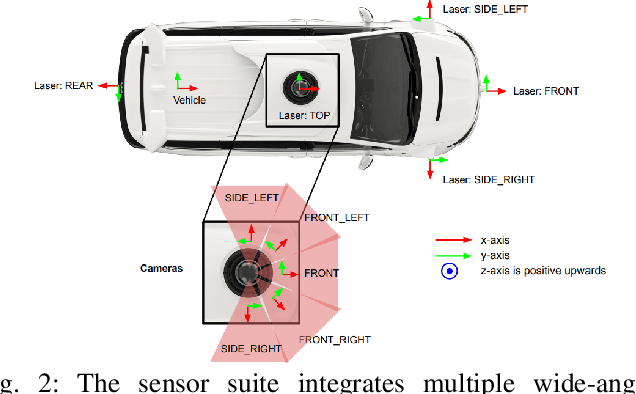
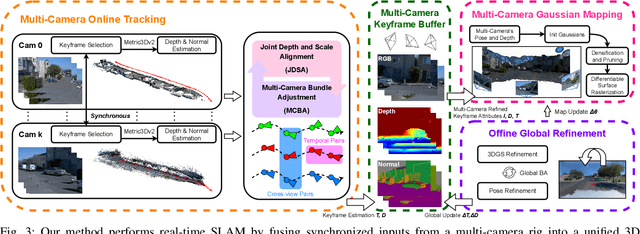
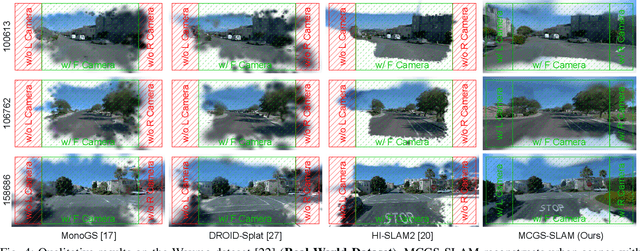
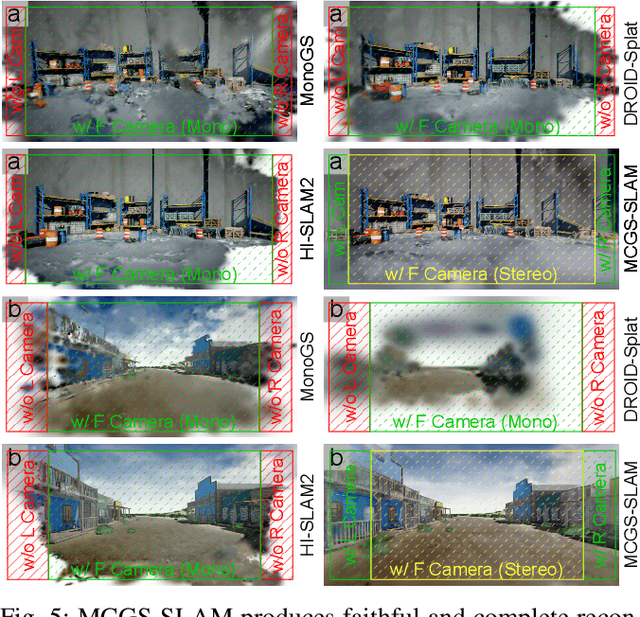
Recent progress in dense SLAM has primarily targeted monocular setups, often at the expense of robustness and geometric coverage. We present MCGS-SLAM, the first purely RGB-based multi-camera SLAM system built on 3D Gaussian Splatting (3DGS). Unlike prior methods relying on sparse maps or inertial data, MCGS-SLAM fuses dense RGB inputs from multiple viewpoints into a unified, continuously optimized Gaussian map. A multi-camera bundle adjustment (MCBA) jointly refines poses and depths via dense photometric and geometric residuals, while a scale consistency module enforces metric alignment across views using low-rank priors. The system supports RGB input and maintains real-time performance at large scale. Experiments on synthetic and real-world datasets show that MCGS-SLAM consistently yields accurate trajectories and photorealistic reconstructions, usually outperforming monocular baselines. Notably, the wide field of view from multi-camera input enables reconstruction of side-view regions that monocular setups miss, critical for safe autonomous operation. These results highlight the promise of multi-camera Gaussian Splatting SLAM for high-fidelity mapping in robotics and autonomous driving.

A Scenario-Driven Cognitive Approach to Next-Generation AI Memory
Sep 16, 2025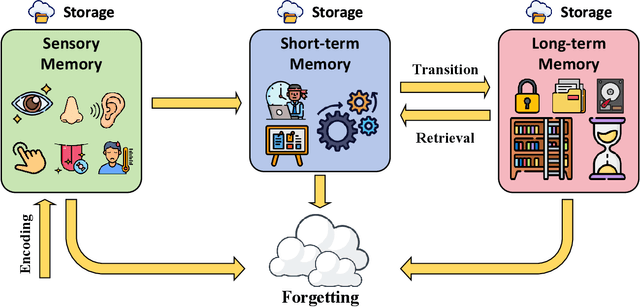
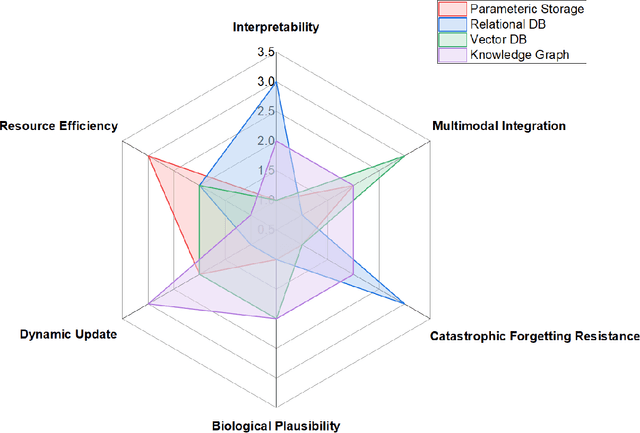
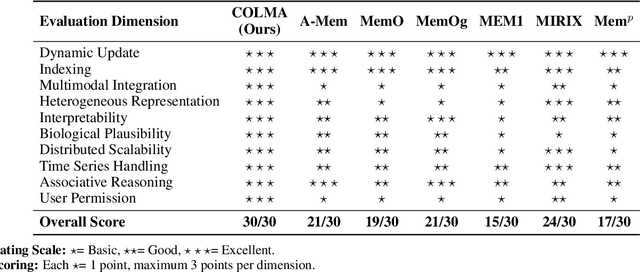
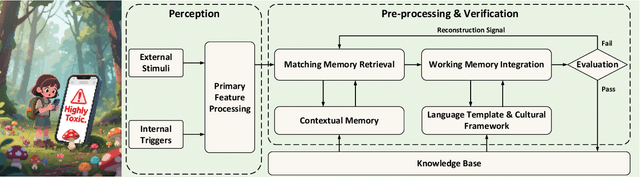
As artificial intelligence advances toward artificial general intelligence (AGI), the need for robust and human-like memory systems has become increasingly evident. Current memory architectures often suffer from limited adaptability, insufficient multimodal integration, and an inability to support continuous learning. To address these limitations, we propose a scenario-driven methodology that extracts essential functional requirements from representative cognitive scenarios, leading to a unified set of design principles for next-generation AI memory systems. Based on this approach, we introduce the \textbf{COgnitive Layered Memory Architecture (COLMA)}, a novel framework that integrates cognitive scenarios, memory processes, and storage mechanisms into a cohesive design. COLMA provides a structured foundation for developing AI systems capable of lifelong learning and human-like reasoning, thereby contributing to the pragmatic development of AGI.
PromptSculptor: Multi-Agent Based Text-to-Image Prompt Optimization
Sep 15, 2025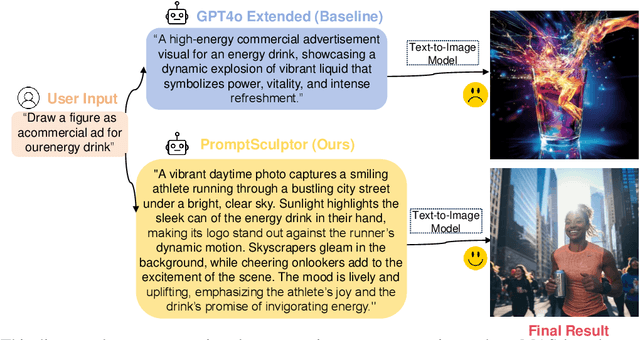
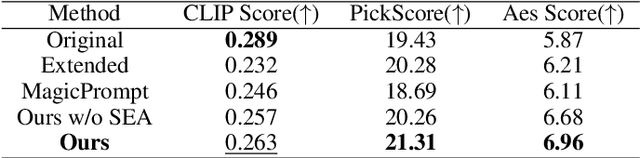
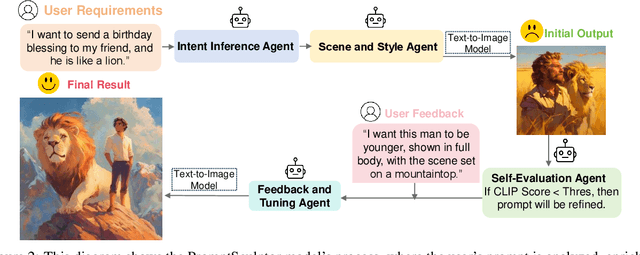
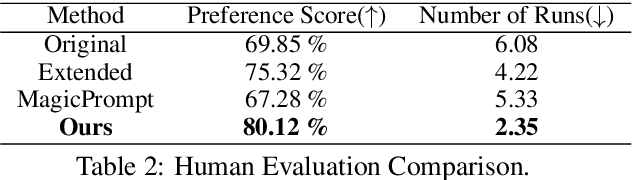
The rapid advancement of generative AI has democratized access to powerful tools such as Text-to-Image models. However, to generate high-quality images, users must still craft detailed prompts specifying scene, style, and context-often through multiple rounds of refinement. We propose PromptSculptor, a novel multi-agent framework that automates this iterative prompt optimization process. Our system decomposes the task into four specialized agents that work collaboratively to transform a short, vague user prompt into a comprehensive, refined prompt. By leveraging Chain-of-Thought reasoning, our framework effectively infers hidden context and enriches scene and background details. To iteratively refine the prompt, a self-evaluation agent aligns the modified prompt with the original input, while a feedback-tuning agent incorporates user feedback for further refinement. Experimental results demonstrate that PromptSculptor significantly enhances output quality and reduces the number of iterations needed for user satisfaction. Moreover, its model-agnostic design allows seamless integration with various T2I models, paving the way for industrial applications.
LIPM-Guided Reinforcement Learning for Stable and Perceptive Locomotion in Bipedal Robots
Sep 11, 2025Achieving stable and robust perceptive locomotion for bipedal robots in unstructured outdoor environments remains a critical challenge due to complex terrain geometry and susceptibility to external disturbances. In this work, we propose a novel reward design inspired by the Linear Inverted Pendulum Model (LIPM) to enable perceptive and stable locomotion in the wild. The LIPM provides theoretical guidance for dynamic balance by regulating the center of mass (CoM) height and the torso orientation. These are key factors for terrain-aware locomotion, as they help ensure a stable viewpoint for the robot's camera. Building on this insight, we design a reward function that promotes balance and dynamic stability while encouraging accurate CoM trajectory tracking. To adaptively trade off between velocity tracking and stability, we leverage the Reward Fusion Module (RFM) approach that prioritizes stability when needed. A double-critic architecture is adopted to separately evaluate stability and locomotion objectives, improving training efficiency and robustness. We validate our approach through extensive experiments on a bipedal robot in both simulation and real-world outdoor environments. The results demonstrate superior terrain adaptability, disturbance rejection, and consistent performance across a wide range of speeds and perceptual conditions.
PegasusFlow: Parallel Rolling-Denoising Score Sampling for Robot Diffusion Planner Flow Matching
Sep 10, 2025Diffusion models offer powerful generative capabilities for robot trajectory planning, yet their practical deployment on robots is hindered by a critical bottleneck: a reliance on imitation learning from expert demonstrations. This paradigm is often impractical for specialized robots where data is scarce and creates an inefficient, theoretically suboptimal training pipeline. To overcome this, we introduce PegasusFlow, a hierarchical rolling-denoising framework that enables direct and parallel sampling of trajectory score gradients from environmental interaction, completely bypassing the need for expert data. Our core innovation is a novel sampling algorithm, Weighted Basis Function Optimization (WBFO), which leverages spline basis representations to achieve superior sample efficiency and faster convergence compared to traditional methods like MPPI. The framework is embedded within a scalable, asynchronous parallel simulation architecture that supports massively parallel rollouts for efficient data collection. Extensive experiments on trajectory optimization and robotic navigation tasks demonstrate that our approach, particularly Action-Value WBFO (AVWBFO) combined with a reinforcement learning warm-start, significantly outperforms baselines. In a challenging barrier-crossing task, our method achieved a 100% success rate and was 18% faster than the next-best method, validating its effectiveness for complex terrain locomotion planning. https://masteryip.github.io/pegasusflow.github.io/
Quantum-Classical Hybrid Molecular Autoencoder for Advancing Classical Decoding
Aug 28, 2025Although recent advances in quantum machine learning (QML) offer significant potential for enhancing generative models, particularly in molecular design, a large array of classical approaches still face challenges in achieving high fidelity and validity. In particular, the integration of QML with sequence-based tasks, such as Simplified Molecular Input Line Entry System (SMILES) string reconstruction, remains underexplored and usually suffers from fidelity degradation. In this work, we propose a hybrid quantum-classical architecture for SMILES reconstruction that integrates quantum encoding with classical sequence modeling to improve quantum fidelity and classical similarity. Our approach achieves a quantum fidelity of approximately 84% and a classical reconstruction similarity of 60%, surpassing existing quantum baselines. Our work lays a promising foundation for future QML applications, striking a balance between expressive quantum representations and classical sequence models and catalyzing broader research on quantum-aware sequence models for molecular and drug discovery.
Beyond Semantic Understanding: Preserving Collaborative Frequency Components in LLM-based Recommendation
Aug 14, 2025Recommender systems in concert with Large Language Models (LLMs) present promising avenues for generating semantically-informed recommendations. However, LLM-based recommenders exhibit a tendency to overemphasize semantic correlations within users' interaction history. When taking pretrained collaborative ID embeddings as input, LLM-based recommenders progressively weaken the inherent collaborative signals as the embeddings propagate through LLM backbones layer by layer, as opposed to traditional Transformer-based sequential models in which collaborative signals are typically preserved or even enhanced for state-of-the-art performance. To address this limitation, we introduce FreLLM4Rec, an approach designed to balance semantic and collaborative information from a spectral perspective. Item embeddings that incorporate both semantic and collaborative information are first purified using a Global Graph Low-Pass Filter (G-LPF) to preliminarily remove irrelevant high-frequency noise. Temporal Frequency Modulation (TFM) then actively preserves collaborative signal layer by layer. Note that the collaborative preservation capability of TFM is theoretically guaranteed by establishing a connection between the optimal but hard-to-implement local graph fourier filters and the suboptimal yet computationally efficient frequency-domain filters. Extensive experiments on four benchmark datasets demonstrate that FreLLM4Rec successfully mitigates collaborative signal attenuation and achieves competitive performance, with improvements of up to 8.00\% in NDCG@10 over the best baseline. Our findings provide insights into how LLMs process collaborative information and offer a principled approach for improving LLM-based recommendation systems.
A Pseudo Global Fusion Paradigm-Based Cross-View Network for LiDAR-Based Place Recognition
Aug 12, 2025LiDAR-based Place Recognition (LPR) remains a critical task in Embodied Artificial Intelligence (AI) and Autonomous Driving, primarily addressing localization challenges in GPS-denied environments and supporting loop closure detection. Existing approaches reduce place recognition to a Euclidean distance-based metric learning task, neglecting the feature space's intrinsic structures and intra-class variances. Such Euclidean-centric formulation inherently limits the model's capacity to capture nonlinear data distributions, leading to suboptimal performance in complex environments and temporal-varying scenarios. To address these challenges, we propose a novel cross-view network based on an innovative fusion paradigm. Our framework introduces a pseudo-global information guidance mechanism that coordinates multi-modal branches to perform feature learning within a unified semantic space. Concurrently, we propose a Manifold Adaptation and Pairwise Variance-Locality Learning Metric that constructs a Symmetric Positive Definite (SPD) matrix to compute Mahalanobis distance, superseding traditional Euclidean distance metrics. This geometric formulation enables the model to accurately characterize intrinsic data distributions and capture complex inter-class dependencies within the feature space. Experimental results demonstrate that the proposed algorithm achieves competitive performance, particularly excelling in complex environmental conditions.
Capsizing-Guided Trajectory Optimization for Autonomous Navigation with Rough Terrain
Aug 11, 2025It is a challenging task for ground robots to autonomously navigate in harsh environments due to the presence of non-trivial obstacles and uneven terrain. This requires trajectory planning that balances safety and efficiency. The primary challenge is to generate a feasible trajectory that prevents robot from tip-over while ensuring effective navigation. In this paper, we propose a capsizing-aware trajectory planner (CAP) to achieve trajectory planning on the uneven terrain. The tip-over stability of the robot on rough terrain is analyzed. Based on the tip-over stability, we define the traversable orientation, which indicates the safe range of robot orientations. This orientation is then incorporated into a capsizing-safety constraint for trajectory optimization. We employ a graph-based solver to compute a robust and feasible trajectory while adhering to the capsizing-safety constraint. Extensive simulation and real-world experiments validate the effectiveness and robustness of the proposed method. The results demonstrate that CAP outperforms existing state-of-the-art approaches, providing enhanced navigation performance on uneven terrains.
Segmenting and Understanding: Region-aware Semantic Attention for Fine-grained Image Quality Assessment with Large Language Models
Aug 11, 2025No-reference image quality assessment (NR-IQA) aims to simulate the process of perceiving image quality aligned with subjective human perception. However, existing NR-IQA methods either focus on global representations that leads to limited insights into the semantically salient regions or employ a uniform weighting for region features that weakens the sensitivity to local quality variations. In this paper, we propose a fine-grained image quality assessment model, named RSFIQA, which integrates region-level distortion information to perceive multi-dimensional quality discrepancies. To enhance regional quality awareness, we first utilize the Segment Anything Model (SAM) to dynamically partition the input image into non-overlapping semantic regions. For each region, we teach a powerful Multi-modal Large Language Model (MLLM) to extract descriptive content and perceive multi-dimensional distortions, enabling a comprehensive understanding of both local semantics and quality degradations. To effectively leverage this information, we introduce Region-Aware Semantic Attention (RSA) mechanism, which generates a global attention map by aggregating fine-grained representations from local regions. In addition, RSFIQA is backbone-agnostic and can be seamlessly integrated into various deep neural network architectures. Extensive experiments demonstrate the robustness and effectiveness of the proposed method, which achieves competitive quality prediction performance across multiple benchmark datasets.