 Add to Chrome
 Add to Firefox
 Add to Edge
DECOR: Auditing LLM Deception via Information Manipulation Theory
May 19, 2026
Large language models can deceive by subtly manipulating truthful information -- omitting key facts, shifting focus, or obscuring meaning -- making such behavior difficult to detect. Existing black-box methods rely on coarse-grained judgments, offering limited interpretability and failing to pinpoint which facts were distorted and how. We introduce DECOR, a multi-agent framework grounded in Information Manipulation Theory for fine-grained auditing of strategic deception in LLM responses. DECOR decomposes input contexts into atomic informational units and scores each unit against the response across four dimensions of manipulation, producing interpretable manipulation profiles that are aggregated into a global deception index. We comprehensively evaluate DECOR on both single-turn and multi-turn deception detection benchmarks spanning real-world domains, and show that DECOR achieves state-of-the-art performance on both, outperforming competitive baselines. The framework generalizes across 15 frontier models, and ablation studies confirm the contribution of each key design component. Our findings demonstrate that fine-grained, theory-grounded auditing of information manipulation offers an effective and interpretable path for LLM deception detection.

CreAgentive: An Agent Workflow Driven Multi-Category Creative Generation Engine
Sep 30, 2025We present CreAgentive, an agent workflow driven multi-category creative generation engine that addresses four key limitations of contemporary large language models in writing stories, drama and other categories of creatives: restricted genre diversity, insufficient output length, weak narrative coherence, and inability to enforce complex structural constructs. At its core, CreAgentive employs a Story Prototype, which is a genre-agnostic, knowledge graph-based narrative representation that decouples story logic from stylistic realization by encoding characters, events, and environments as semantic triples. CreAgentive engages a three-stage agent workflow that comprises: an Initialization Stage that constructs a user-specified narrative skeleton; a Generation Stage in which long- and short-term objectives guide multi-agent dialogues to instantiate the Story Prototype; a Writing Stage that leverages this prototype to produce multi-genre text with advanced structures such as retrospection and foreshadowing. This architecture reduces storage redundancy and overcomes the typical bottlenecks of long-form generation. In extensive experiments, CreAgentive generates thousands of chapters with stable quality and low cost (less than $1 per 100 chapters) using a general-purpose backbone model. To evaluate performance, we define a two-dimensional framework with 10 narrative indicators measuring both quality and length. Results show that CreAgentive consistently outperforms strong baselines and achieves robust performance across diverse genres, approaching the quality of human-authored novels.
A Scenario-Driven Cognitive Approach to Next-Generation AI Memory
Sep 16, 2025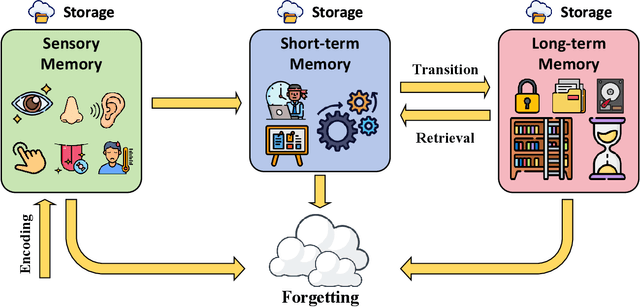
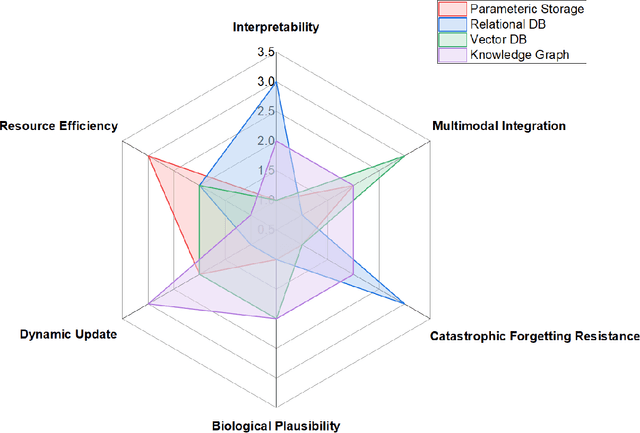
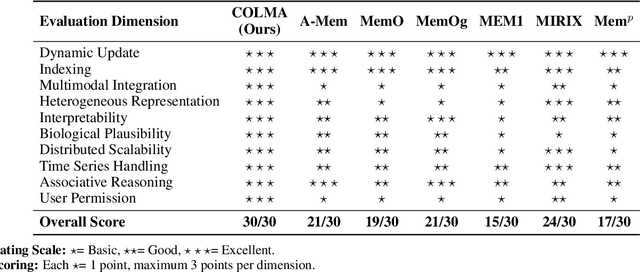
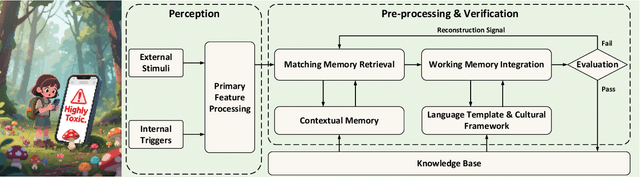
As artificial intelligence advances toward artificial general intelligence (AGI), the need for robust and human-like memory systems has become increasingly evident. Current memory architectures often suffer from limited adaptability, insufficient multimodal integration, and an inability to support continuous learning. To address these limitations, we propose a scenario-driven methodology that extracts essential functional requirements from representative cognitive scenarios, leading to a unified set of design principles for next-generation AI memory systems. Based on this approach, we introduce the \textbf{COgnitive Layered Memory Architecture (COLMA)}, a novel framework that integrates cognitive scenarios, memory processes, and storage mechanisms into a cohesive design. COLMA provides a structured foundation for developing AI systems capable of lifelong learning and human-like reasoning, thereby contributing to the pragmatic development of AGI.